

Business
US economy slows in final months after turbulent year





New food items are freezing over into retailers.
Business
JPMorgan taps CHIPS, defense officials for $1.5 trillion security initiative push, memo says


JPMorgan taps CHIPS, defense officials for $1.5 trillion security initiative push, memo says

Form 8K SRX Health Solutions Inc For: 20 February

MYR Group stock hits all-time high at 283.87 USD

In today’s market, every single company is a technology company. It does not matter if you sell clothing, offer financial advice, or run a local delivery service. Your customers find you online, they buy from you through digital platforms, and they expect your services to be available 24 hours a day.
Because of this massive shift, the pressure on business owners has never been higher. Consumers today have zero patience. If your mobile application is slow, or if your website lacks the features they want, they will instantly move to a competitor. To survive and grow, a modern business must be able to create and update its digital tools incredibly fast. However, rushing to build technology introduces a terrible risk: you might accidentally leave your digital doors wide open to criminals.
In this article, we are going to explore the ultimate balancing act for modern business leaders. We will explain, using simple and clear language, how you can speed up the way your company builds its digital products while ensuring that your customer data remains completely safe.
The Speed Limit of the Past
To understand how to move faster today, we must look at why companies used to move so slowly. In the past, creating new software or updating a website was a long, divided process.
Imagine a factory where the people who design the cars never speak to the people who actually put the engines together. That is how the tech world used to work. One group of people (the developers) would spend months writing computer code in a quiet room. When they finally finished, they handed the code over to a completely different group of people (the operations team) whose job was to put that code on the internet.
Because these two teams never communicated, things broke constantly. The developers would write a great feature, but it would crash the operations team’s computer servers. They would argue, blame each other, and spend weeks trying to fix the mess. This clunky, divided system meant that releasing a simple update could take months or even years. In today’s business world, waiting months to give your customers what they want is a guaranteed way to go out of business.
Breaking Down the Walls
To survive, the most successful companies realized they had to break down the wall between the code writers and the server runners. They needed them to work together as one single, fast-moving machine.
This new way of working is known as DevOps (a simple combination of the words Development and Operations). The goal is to use teamwork and clever automated tools to build, test, and release new software every single day, rather than once a year.
However, changing the entire culture of how a business operates is incredibly difficult. You cannot just tell two different teams to start working together and expect perfect results. They need new rules, new communication skills, and new software tools to automate the boring parts of their jobs.
Because this change is so complex, smart business leaders rarely try to figure it out alone. Instead, they look for outside guidance and invest in professional Devops Consulting.
Bringing in an expert consultant is like hiring a master coach to train your staff. These experts study how your business currently builds its technology. Then, they introduce specialized tools that act like a digital assembly line. Instead of a human manually moving files around, the automated tools take the new code, test it for basic errors, and push it live to the internet in a matter of minutes. This expert guidance helps a business transform from a slow, divided company into a high-speed digital powerhouse, allowing them to release new features to their customers constantly.
The Hidden Risks of High Speed
Thanks to these new methods, businesses can now build and update their digital products faster than ever before. But moving at lightning speed brings a very serious new danger.
When humans work quickly, they make mistakes. In a physical factory, a tired worker moving too fast might forget to tighten a bolt. In the digital world, a programmer rushing to release a new app update might accidentally make a tiny typing error in the computer code. They might accidentally leave a digital folder unlocked, or they might use an older piece of code that has a known flaw.
To the average person, these tiny mistakes are completely invisible. But to a cybercriminal, they are massive opportunities. Hackers are always scanning the internet, looking for companies that have left a digital window open by mistake.
Many small and medium-sized business owners think they are safe because they are not massive corporations. This is a dangerous myth. Cybercriminals actually prefer targeting smaller businesses because they know smaller companies usually have weaker security. If a hacker finds a mistake in your fast-moving code, they will break in. They can steal your private business plans, copy your customers’ credit card numbers, or lock your entire computer system until you pay a massive ransom. The financial and reputational damage from this kind of attack can destroy a growing business overnight.
Automating Your Security Guards
So, here is the ultimate business puzzle: how do you build technology fast enough to beat your competitors, but safely enough to keep the hackers out?
You cannot ask a human security guard to stop and read every single line of code you produce. If you do that, you lose all the speed you just worked so hard to gain. The only way to fight automated, fast-moving hackers is with automated, fast-moving defense systems.
You must set up a system that constantly checks your own digital building for open windows before the criminals find them. The most effective way to do this is by making regular Vulnerability Scanning a core part of your daily business routine.
Think of this scanning process like having a team of robotic security guards that never sleep. These advanced software tools are programmed with a massive, constantly updated dictionary of every trick and attack that hackers are currently using to break into businesses.
Day and night, these scanners inspect your company’s website, your cloud storage, and the new code your team is building. They rapidly test your defenses over and over again. If the scanner finds a mistake—like a password that is too weak, or a digital door that a programmer forgot to lock—it instantly sounds an alarm.
It alerts your technology team and tells them exactly where the weak spot is located. The team can then quickly write a “patch” to fix the mistake and lock the digital door tightly. Because this entire process is automated, it does not slow down your business. It runs quietly in the background, keeping you safe while you continue to move at top speed.
Conclusion: The Mark of a Modern Leader
Leading a successful business today requires a deep understanding of how technology drives your growth. It is no longer enough to just have a website; you must have an engine that can adapt and improve constantly.
By bringing in expert consultants to unite your teams and automate your building process, you ensure your company can keep up with the demands of modern customers. At the same time, by implementing constant, automated security scanners, you ensure that every fast step forward is a safe one.
When you master both speed and security, you do more than just survive in the digital age. You build a strong, resilient, and highly trusted business that will thrive for years to come.

eBay to Buy Etsy’s Depop for $1.2 Billion. Both Stocks Are Jumping.
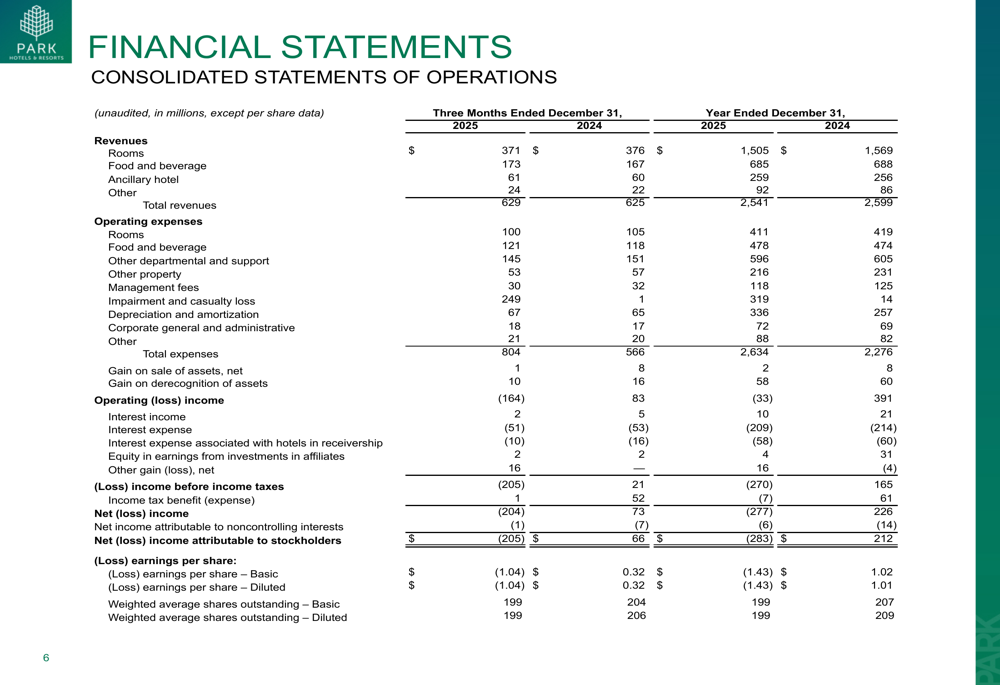
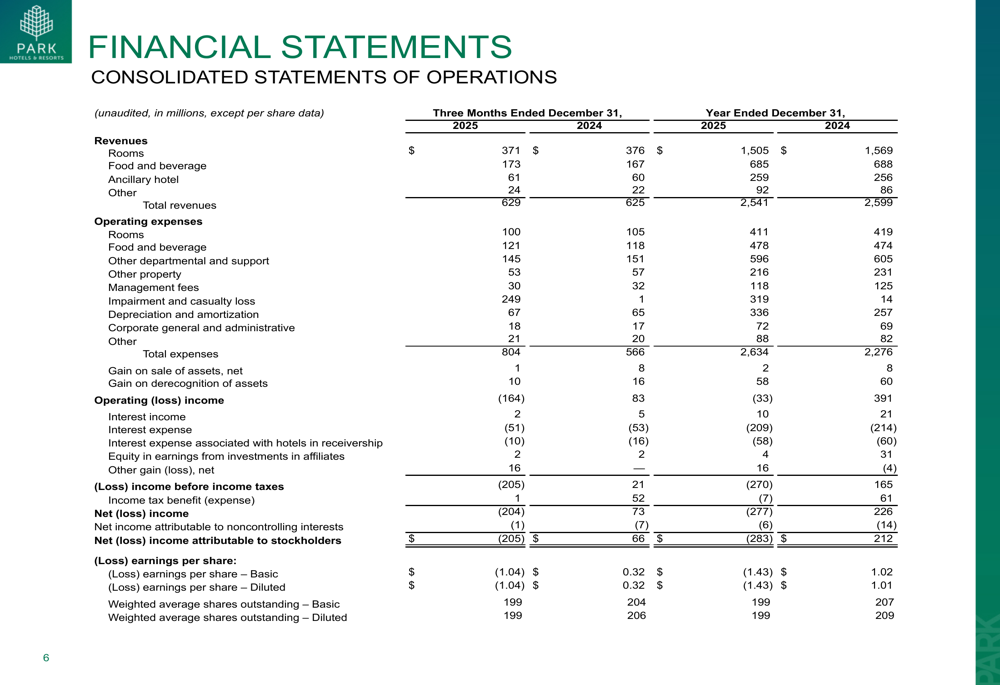
Park Hotels Q4 2025 slides: portfolio split drives mixed results

Recently published figures for Q3 of the 2025-26 financial year revealed gross gambling yield (GGY) for UK online casinos of £1.5 billion. Will they be able to continue posting such results amid rising costs in the coming months?
The cost of a UK Gambling Commission (UKGC) licence is likely to be increased later this year. It’s the latest piece of bad financial news for UK online casinos. Although the online gambling industry continues to post impressive results, there are also concerns about the dangers of addiction.
Last year saw a new mandatory levy come into force. UK gambling sites reviewed by Dailystoke.com had been making voluntary payments with funds going towards researching gambling harm and treatment of those who have been affected. However, the government felt not all companies were making an equal contribution and introduced a mandatory levy. This is aimed at raising £100 million a year with some of the funds going to the NHS.
Then came the Autumn Budget which included details of a rise in Remote Gaming Duty. A rise had been considered long overdue but companies were shocked when the rate went up from 21% to 40%. This will come into force in April of this year. A further rise in sports betting tax rates will take place next year.
There has been stricter regulation introduced in the past year and more is likely to come into force in the future. One major rule change last year saw maximum stakes for online slots introduced and this year, action has been taken against the bonuses UK online casinos offer.
Financial results published since the maximum stakes for online slots were introduced haven’t been bad news for online casinos. Slots provide a large proportion of GGY for sites and for Q3 the figure was £788 million 10% higher than recorded in the same period 12 months ago.
The average length of sessions for players has fallen from 18 minutes to 16 minutes but sites will be relieved to see the high GGY figure. The overall GGY of £1.5 billion was up from the £1.42 recorded in Q2. However, compared to Q3 of the previous financial year, there was a 2% fall.
Last month saw a consultation period begin regarding a rise in the cost of a UKGC licence. These are required for a company to legally operate in the UK. As you will read, there are many companies who are unlicensed and causing serious problems for the Treasury, legal operators and gamblers.
The UKGC has a tough task regulating the gambling industry and regularly investigates companies who may have committed regulatory breaches. This has seen several companies issued with fines when breaches have been confirmed. With the UKGC also looking to deal with the problems being caused by illegal sites, their costs have been steadily increasing and not been matched by their level of funding, hence the existence of a shortfall that needs to be closed.
That is why they are calling for a rise of an average 30% but there are other options currently being discussed in the consultation period. Other options are a 20% increase and the one that the government prefers. That would see a 30% rise in licence fees but only 20% would be used for commission-related costs with the remaining 10% ring-fenced and only used for specific regulatory priorities. These would include strengthening their enforcement capabilities and taking action against illegal operators.
The UKGC say that if the increase was to be only 20%, this would lead to savings of £15.8 million needing to be made and possibly a 10% cut in staffing levels by 2030-31. They would find it difficult to be able to carry on their current level of investigating suspected regulatory breaches.
How would UK online casinos be affected by a further rise in costs on top of the mandatory levy and tax increases? Stricter regulation is driving players to the black market and that is a worrying problem for the legal sites. It’s not good news for players either as the levels of customer protection are not as high as they do not need to adhere to the new rules. The Treasury does not receive any mandatory levy or tax contributions so a strong UKGC is needed to lead the fight against the illegal operators.
Top companies such as bet365, Flutter Entertainment and Entain are global businesses. If the levels of regulation continue to increase as well as the higher costs, they may be forced to make cuts in the UK and concentrate more on overseas interests in South America, the USA and Asia.

The dollar was trading near a two-week high as the minutes of the Federal Reserve’s meeting last month showed several policymakers were open to potentially raising interest rates if inflation remains elevated.
“The mere suggestion that the key interest rate could rise again is obviously making some market participants sit up and take notice,” Commerzbank’s Antje Praefcke said in a note.
A rate cut in March appears unlikely and the market isn’t even fully pricing in two rate cuts this year, she said. Friday’s U.S. PCE inflation and fourth-quarter U.S. economic growth data could boost the dollar further if they exceed expectations, she said.

The Supreme Court during a rain storm in Washington, Feb. 20, 2026.
Annabelle Gordon | Bloomberg | Getty Images
The Supreme Court on Friday ruled that President Donald Trump’s country-specific “reciprocal” tariffs are unconstitutional, delivering a win for many consumer companies facing higher import costs.
But the ruling doesn’t cover all sectors.
The Supreme Court reviewed tariffs enacted under the International Emergency Economic Powers Act of 1977, or IEEPA, which the Trump administration used to justify the sweeping tariff agenda. The act had never before been used by a president to impose tariffs.
In a 6-3 decision, the Supreme Court ruled that IEEPA “does not authorize the President to impose tariffs.”
Still, the Supreme Court’s ruling does not cover tariffs enacted under Section 232 of the Trade Expansion Act of 1962. Those duties are intended to target specific products that threaten national security, and they remain in effect after Friday’s ruling.
Separate from his country-specific rates, Trump has raised tariffs on imports of steel, semiconductors, aluminum and other products deemed to impair national security.
Here are the sectors still facing higher levies even after the Supreme Court decision.
Autos
It’s not immediately clear how much the decision will impact the U.S. and global automotive industry. The industry continues to face billions of dollars in tariff costs, depending on where an imported auto part or vehicle originates.
The Trump administration last year broadly implemented 25% tariffs on vehicles and certain auto parts imported into the U.S., citing national security risks. It has since struck independent deals to lower the levies to 10% to 15% with countries such as the United Kingdom and Japan. Others, such as South Korea, have also struck deals for lower rates, but it’s unclear if those changes have actually taken effect.
“This is not a moment to ease up. The auto industry must stay nimble and ready to adapt, as further developments could quickly shift the operating environment,” said Lenny LaRocca, U.S. automotive lead for consulting firm KPMG. “Automakers should continue planning for multiple scenarios and keep supply chain considerations top of mind as the trade and tariff landscape continues to evolve.”
America’s largest automaker, General Motors, last month said it expects between $3 billion and $4 billion in tariff costs this year, and Ford Motor earlier this month said its net tariff impact is expected to be roughly flat year over year at $2 billion in 2026.
Neither Ford nor GM immediately responded to a request for comment on the Supreme Court decision and whether it changes those forecasts.
Pharmaceuticals
The pharmaceutical industry is facing a lot of uncertainty over tariffs. Trump has repeatedly threatened tariffs on pharmaceutical imports, though they haven’t yet taken effect, in part because of negotiated multiyear deals between the administration and drugmakers.
If that were to change, however, pharmaceutical tariffs would still be covered under Section 232.
The administration has floated imposing tariffs on the industry that could eventually reach up to 250%. Last July, Trump threatened 200% tariffs on pharmaceuticals, and the administration has already opened a Section 232 investigation into pharmaceuticals to investigate the impact of imports on national security.
The tariff threats are a move to push drug companies to manufacture in the U.S. instead of abroad.
In December, multiple companies inked a deal with Trump to voluntarily lower their prices in exchange for a three-year exemption from any pharma tariffs — as long as they invest further in U.S. manufacturing. That deal included major players like Merck, Bristol Myers Squibb, Novartis and more.
Furniture
The furniture industry found little relief from Friday’s Supreme Court ruling.
Last fall, items like couches, kitchen cabinets, vanities and more were hit with higher tariffs under Section 232. The roughly 25% duties will remain in place even now that the IEEPA tariffs have been deemed unconstitutional.
The furniture industry is already facing greater uncertainty, with the 25% tariff expected to rise to 50% in 2027, and more broad pressures from higher interest rates and inflation.
Smaller companies are getting hit the hardest, with fewer resources to work with, while larger companies are facing bankruptcy, like Value City Furniture’s parent company, American Signature Furniture, which went out of business late last year.
Food and consumer packaged goods
Under Section 232, steel and aluminum imports into the U.S. are still carry tariffs.
With higher aluminum tariffs, companies like Coca-Cola, PepsiCo, Keurig Dr Pepper and Reynolds will continue to face higher costs associated with manufacturing their products.
Trump hiked aluminum tariffs to 50% last year.
Still, some of the key tariffs for the sector have been rolled back, even before Friday’s ruling.
In November, Trump issued an executive order exempting several hundred agricultural products, including bananas, coffee and spices, from tariffs. And in September, he similarly rescinded a 10% tariff on Brazilian pulp, a key component of paper towels, diapers and toilet paper.
— CNBC’s Mike Wayland, Annika Kim Constantino, Gabrielle Fonrouge and Amelia Lucas contributed to this report.
The Dream 2026 NFL Draft Prospects for the Minnesota Vikings

Why Islamic finance could provide an ethical model for funding the green transition

Slideshow: New products from Tattooed Chef, Kodiak and Caulipower


-

 Video4 days ago
Bitcoin: We’re Entering The Most Dangerous Phase
-

 Tech6 days ago
Luxman Enters Its Second Century with the D-100 SACD Player and L-100 Integrated Amplifier
-

 Crypto World3 days ago
Can XRP Price Successfully Register a 33% Breakout Past $2?
-

 Sports4 days ago
GB's semi-final hopes hang by thread after loss to Switzerland
-

 Video17 hours ago
XRP News: XRP Just Entered a New Phase (Almost Nobody Noticed)
-
 Tech4 days ago
The Music Industry Enters Its Less-Is-More Era
-

 Business3 days ago
Infosys Limited (INFY) Discusses Tech Transitions and the Unique Aspects of the AI Era Transcript
-

 Entertainment2 days ago
Kunal Nayyar’s Secret Acts Of Kindness Sparks Online Discussion
-

 Video3 days ago
Financial Statement Analysis | Complete Chapter Revision in 10 Minutes | Class 12 Board exam 2026
-

 Tech2 days ago
Retro Rover: LT6502 Laptop Packs 8-Bit Power On The Go
-

 Crypto World7 days ago
Bhutan’s Bitcoin sales enter third straight week with $6.7M BTC offload
-
 Sports2 days ago
Clearing the boundary, crossing into history: J&K end 67-year wait, enter maiden Ranji Trophy final | Cricket News
-

 Entertainment2 days ago
Dolores Catania Blasts Rob Rausch For Turning On ‘Housewives’ On ‘Traitors’
-

 Business2 days ago
Tesla avoids California suspension after ending ‘autopilot’ marketing
-
 NewsBeat5 days ago
The strange Cambridgeshire cemetery that forbade church rectors from entering
-

 Crypto World2 days ago
WLFI Crypto Surges Toward $0.12 as Whale Buys $2.75M Before Trump-Linked Forum
-
 NewsBeat5 days ago
Man dies after entering floodwater during police pursuit
-

 Crypto World22 hours ago
83% of Altcoins Enter Bear Trend as Liquidity Crunch Tightens Grip on Crypto Market
-

 NewsBeat6 days ago
UK construction company enters administration, records show
-

 Politics3 days ago
Eurovision Announces UK Act For 2026 Song Contest