
Business
(VIDEO) Two American Heroes Awarded Medal of Honor During Trump’s 2026 State of the Union Address

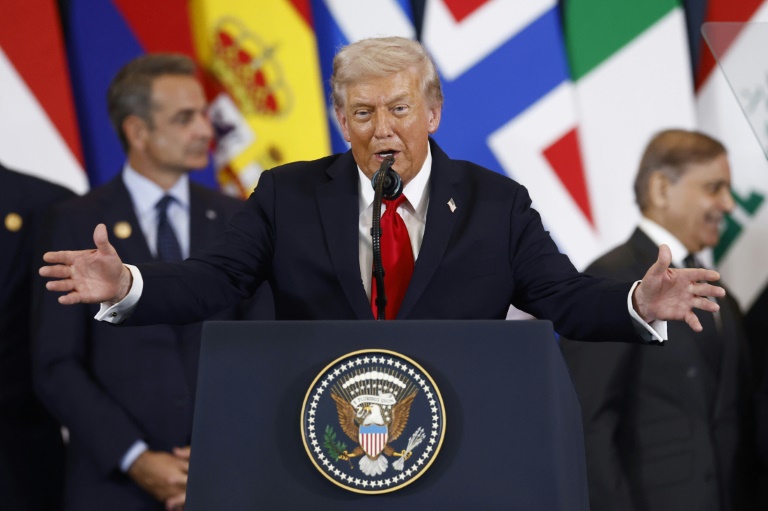
In a dramatic break from tradition during his 2026 State of the Union address on February 24, President Donald Trump presented the nation’s highest military decoration, the Medal of Honor, to two American service members—one for recent heroism in a covert operation in Venezuela and the other to a 100-year-old Korean War veteran whose valor remained classified for decades.
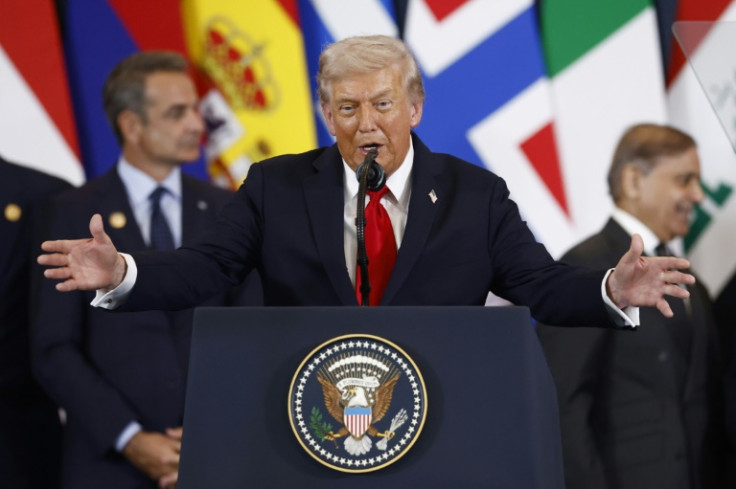
AFP
The awards to Army Chief Warrant Officer 5 Eric Slover and retired Navy Capt. E. Royce Williams marked the first time a president has bestowed the Medal of Honor during a State of the Union speech, drawing bipartisan applause in the House chamber and highlighting themes of military valor amid a lengthy address focused on domestic achievements and foreign policy.
Slover, an active-duty helicopter pilot, received the medal for extraordinary actions during a January 2026 special operations mission that resulted in the capture of former Venezuelan President Nicolás Maduro. Wounded in the operation, Slover continued to fly his aircraft under heavy fire, ensuring the safe extraction of his team and the successful abduction of the Venezuelan leader. Lt. Gen. Jonathan Braga, commander of U.S. Special Operations Command, placed the medal around Slover’s neck—a departure from the usual presidential presentation—after Trump described the pilot’s courage as “above and beyond the call of duty.”
Williams, now 100 years old and a San Diego resident, was honored for his heroism on November 18, 1952, during the Korean War. Flying an F9F Panther from the USS Oriskany, Williams single-handedly engaged seven Soviet MiG-15s in a dogfight over the Sea of Japan. Despite being outnumbered and sustaining damage to his aircraft, he shot down four enemy planes before safely returning to his carrier. The mission remained classified for nearly 50 years due to Cold War sensitivities involving Soviet involvement. First Lady Melania Trump presented the medal to Williams, who stood to receive a prolonged standing ovation from both sides of the aisle.
Trump praised both men as exemplars of American bravery. “These are true American heroes,” he said, noting Williams’ long wait for recognition. “Tonight, at 100 years old, this brave Navy captain is finally getting the recognition he deserves. He was a legend long before this evening.” The president added a lighthearted remark about the award: “I’ve always wanted the Congressional Medal of Honor, but I was informed I’m not allowed to give it to myself. That’s a big thing.”
The ceremony came amid a broader sequence of honors during the nearly two-hour speech—the longest State of the Union in recent history. Trump also presented Purple Hearts to National Guardsman Andrew Wolfe, who survived a gunshot wound in a 2025 Washington, D.C., attack, and posthumously to Spc. Sarah Beckstrom, who died in the same incident. He awarded the Legion of Merit to a Coast Guard rescue swimmer for flood operations and announced that U.S. men’s hockey goaltender Connor Hellebuyck would receive the Presidential Medal of Freedom for his performance in the recent Olympic gold medal win.
The Medal of Honor recognitions provided rare moments of unity in an otherwise partisan address. Democrats and Republicans alike rose in applause, particularly for the centenarian Williams, whose story bridged generations of service. Williams, who also served in World War II and Vietnam, acknowledged the crowd with a salute, drawing extended cheers.
The awards underscore the administration’s emphasis on military strength and recognition of service members. Slover’s citation highlights ongoing U.S. involvement in Venezuela following Maduro’s ouster, while Williams’ long-delayed honor reflects efforts to declassify and acknowledge Cold War-era actions.
The Medal of Honor, awarded in the name of Congress, is given for conspicuous gallantry at the risk of life above and beyond the call of duty. Fewer than 4,000 have been bestowed since its creation during the Civil War.
As reactions poured in February 25, veterans’ groups and military leaders praised the spotlight on heroism. The Navy highlighted Williams as embodying “the fighting spirit and enduring legacy of the United States Navy.” Slover’s unit and Special Operations community expressed pride in the recognition of recent valor.
The dual presentations added emotional weight to Trump’s address, which also covered economic gains, immigration enforcement, and international developments. While critics noted the speech’s length and award-show style, the Medal of Honor moments stood out as bipartisan tributes to sacrifice and courage.
The recognition of Slover and Williams serves as a reminder of the enduring cost of service and the nation’s commitment to honoring those who go beyond the call of duty—whether in the skies over Korea seven decades ago or in a high-stakes mission last month.

Business
Five of Trump’s Most Recent Notable Quotes on the Iran Situation “A whole civilization will die tonight”
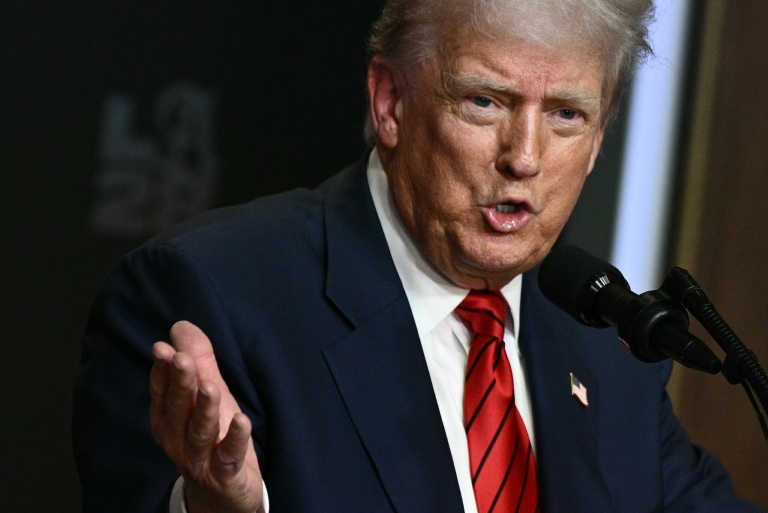
WASHINGTON — President Donald Trump issued a series of increasingly stark warnings to Iran this week as the United States sought to pressure Tehran into reopening the Strait of Hormuz and accepting a fragile ceasefire in the ongoing Middle East conflict, blending apocalyptic rhetoric with offers of potential peace.
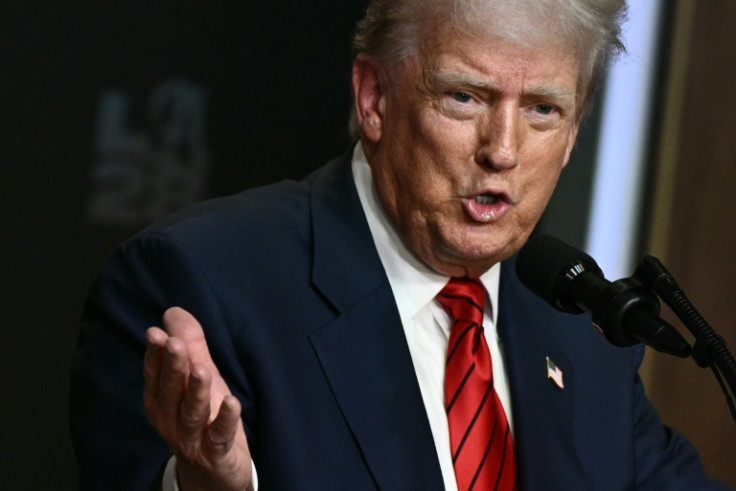
Trump’s comments, delivered via Truth Social posts, White House remarks and interviews over recent days, have drawn sharp international condemnation while highlighting the high-stakes diplomacy aimed at ending weeks of escalation involving U.S., Israeli and Iranian forces. The rhetoric peaked Tuesday with a deadline for Iran to comply or face what the president described as devastating consequences for the nation’s infrastructure.
Here are five of Trump’s most recent notable quotes on the Iran situation, drawn from public statements between April 5 and April 9, 2026:
April 5, Truth Social (Easter Sunday post): “Tuesday will be Power Plant Day, and Bridge Day, all wrapped up in one, in Iran. There will be nothing like it!!! Open the Fuckin’ Strait, you crazy bastards, or you’ll be living in Hell – JUST WATCH! Praise be to Allah.”
This expletive-filled message set the tone for the week, directly threatening Iran’s energy and transportation infrastructure unless the critical shipping chokepoint was reopened. The post quickly went viral, sparking debate over its tone and potential impact on negotiations.
April 6 or 7, remarks to reporters/Truth Social follow-up: “The entire country could be taken out in one night, and that night might be tomorrow night. … Because of the power of our military, every bridge in Iran will be decimated, every power plant in Iran will be out of business, burning, exploding and never to be used again. I hope I don’t have to do it.”
Trump doubled down on the threat of rapid, overwhelming strikes, emphasizing U.S. military superiority while expressing reluctance. He framed the potential action as a last resort to protect global energy flows through the Strait of Hormuz, which carries about 20% of the world’s oil and gas shipments.
April 7, Truth Social (deadline day): “A whole civilization will die tonight, never to be brought back again. I don’t want that to happen, but it probably will. … Maybe something revolutionarily wonderful can happen, WHO KNOWS? We will find out tonight, one of the most important moments in the long and complex history of the World.”
This post represented the peak of Trump’s apocalyptic rhetoric, suggesting near-total destruction if Iran failed to meet the 8 p.m. EDT deadline. He simultaneously hinted at the possibility of regime change leading to a brighter future, blending dire warnings with optimism about “less radicalised minds” prevailing in Tehran.
April 7-8, announcement of ceasefire: “The reason for doing so is that we have already met and exceeded all Military objectives, and are very far along with a definitive Agreement concerning Longterm PEACE with Iran, and PEACE in the Middle East.”
Hours before or after the deadline, Trump announced a two-week ceasefire, crediting progress in talks and claiming U.S. goals had been achieved. He described Iran’s proposals as a “workable starting point” despite earlier threats, marking a rapid pivot from confrontation to de-escalation.
April 9, Truth Social warning on compliance: “If for any reason it is not [honored], which is highly unlikely, then the ‘Shootin’ Starts,’ bigger, and better, and stronger than anyone has ever seen before. … NO NUCLEAR WEAPONS and, the Strait of Hormuz WILL BE OPEN & SAFE.”
In a follow-up post, Trump stressed that U.S. forces would remain deployed until full implementation, warning of resumed or intensified strikes if Iran breached terms. He reiterated demands for no nuclear weapons and secure navigation in the strait.
The quotes reflect Trump’s signature style: blunt, personal and high-pressure negotiating tactics that mix threats with deal-making overtures. They emerged against the backdrop of a conflict that began escalating in recent weeks, with U.S. and Israeli strikes targeting Iranian assets and Iran responding by disrupting shipping in the Strait of Hormuz.
International reaction was swift and largely critical. The United Nations secretary-general expressed being “deeply troubled” by threats that could endanger civilian infrastructure, while Pope Leo XIV and human rights groups like Amnesty International condemned language suggesting large-scale civilian harm. Critics argued the statements risked escalating the conflict further or violating international norms regarding protected sites like power plants.
Supporters, however, viewed the approach as effective hardball diplomacy. Within hours of the Tuesday deadline, Trump announced the temporary ceasefire, citing Iranian willingness to negotiate. Israeli Prime Minister Benjamin Netanyahu’s office initially pushed back on some terms, conducting operations in Lebanon that complicated the pause, but Trump claimed a phone call helped scale back activity.
The Strait of Hormuz remains central to the dispute. Iran has used threats to close or disrupt the waterway as leverage, prompting Trump to demand its immediate reopening as a condition for de-escalation. Oil prices fluctuated in response, with Brent crude rising amid uncertainty before easing slightly on ceasefire news.
Analysts note the rapid shift from “Power Plant Day” threats to ceasefire talks illustrates Trump’s preference for dramatic pressure followed by claimed victories. The two-week pause is intended to allow negotiations toward a longer-term agreement addressing nuclear issues, regional proxies and security guarantees.
On the domestic front, the statements have divided opinion. Some Republicans praised the tough stance as necessary to deter Iran and protect U.S. interests, while Democrats and some international allies criticized the rhetoric as reckless and potentially illegal under laws of war. Legal experts debated whether targeting civilian infrastructure like bridges and power plants would comply with international humanitarian law.
Trump has also claimed U.S. intercepts show some Iranians urging continued strikes or regime change, though such assertions remain unverified publicly. In one remark, he suggested Iranians were “begging” for action near certain targets, framing it as evidence of internal discontent with the current leadership.
As the ceasefire holds tenuously into its early days, focus shifts to upcoming talks. Trump has signaled optimism about a “definitive Agreement” that could bring broader peace to the Middle East, potentially including normalized relations or reduced proxy conflicts. However, divisions between U.S. and Israeli goals — with Netanyahu emphasizing continued pressure on Iranian allies — pose risks to sustainability.
The episode underscores the volatile nature of U.S.-Iran relations under Trump’s second term. His first-term “maximum pressure” campaign featured similar rhetoric, including the 2020 killing of Iranian General Qasem Soleimani. This round, tied to the broader Israel-Iran shadow war that spilled into direct exchanges, has raised global concerns over energy security, nuclear proliferation and humanitarian impacts.
With U.S. forces still positioned in the region and deadlines looming for full compliance, markets and diplomats are watching closely. Oil shipments through the strait have faced disruptions, contributing to economic ripple effects worldwide.
Trump’s blend of colorful language, military threats and sudden deal announcements has once again dominated headlines. Whether the current pause leads to lasting de-escalation or renewed confrontation remains uncertain as negotiations begin in earnest.
For now, the president appears to claim partial victory, having used high-stakes rhetoric to force movement on a key chokepoint while avoiding immediate large-scale strikes on Iranian infrastructure. The coming weeks will test whether the approach yields a more stable outcome or further volatility in one of the world’s most dangerous flashpoints.

TUCSON, Ariz. — The mysterious abduction of Nancy Guthrie, the 84-year-old mother of NBC’s “Today” co-anchor Savannah Guthrie, took a grim new turn this week as TMZ received fresh ransom-style notes claiming the missing woman is dead and offering information about her body and kidnappers for Bitcoin payments.

Guthrie was taken from her home in the Catalina Foothills suburb of Tucson in the early hours of Feb. 1, 2026. Authorities believe she was abducted against her will after finding blood near the doorstep and signs of forced entry. More than two months later, as the case entered its 69th day on Friday, her whereabouts and condition remain unknown, with no arrests or named suspects.
The latest purported ransom notes arrived Monday, coinciding with Savannah Guthrie’s emotional return to the “Today” show after weeks away supporting the search. According to TMZ, one note from a repeat sender claimed Nancy Guthrie “is dead” and demanded half a Bitcoin — roughly $34,000 at current prices — in exchange for details on her body’s location and the identity of those responsible. A second note allegedly stated she had been seen alive with suspects in Sonora, Mexico, before her reported death.
Former FBI agent Jennifer Coffindaffer told Newsweek the notes appear designed to torment the family for profit rather than provide genuine leads, describing the timing as “incessant” and exploitative. The FBI is investigating the communications, which follow earlier ransom demands that some law enforcement sources initially viewed as potentially credible.
Pima County Sheriff Chris Nanos has maintained that the case is a targeted abduction, not a random burglary or wandering incident. He has said investigators believe they know a possible motive, though details remain undisclosed. The sheriff previously cleared all immediate family members, including Savannah Guthrie and her siblings, as suspects. No one has been identified as a person of interest.
Evidence at the scene included blood on the doorstep, and surveillance video released by the FBI showed a masked, armed individual on the porch the night of the disappearance. Additional doorbell camera footage captured vehicles on nearby back roads that morning. A black glove recovered early in the investigation yielded DNA, but it belonged to an unrelated restaurant worker, marking a setback.
Nancy Guthrie, who relied on medication and had limited mobility, was last seen around 9:45 p.m. the evening before her disappearance. She had plans to watch an online church service the next morning with friends. When she failed to appear, her oldest daughter, Annie, went to check on her and discovered the troubling signs.
The family has offered a $1 million reward for information leading to Nancy Guthrie’s safe recovery, plus additional rewards exceeding $200,000 in some reports. Savannah Guthrie has made public appeals, including tearful messages begging for her mother’s return and describing the “grievous and uniquely cruel injury of not knowing.”
On her return to “Today” this week, Savannah Guthrie appeared emotional but composed, telling co-anchor Craig Melvin it was “good to be home” while acknowledging the profound personal toll. She has spoken openly about leaning on faith amid the uncertainty and has described the moment she learned of her mother’s disappearance as shattering.
The case has captivated the nation, drawing parallels to other high-profile missing persons investigations while highlighting the unique pain of an elderly victim with a famous family member. Experts note the abduction’s strange elements: minimal signs of struggle inside the home, the victim’s frailty, and the lack of clear ransom demands directly to the family early on.
Retired detectives and cold-case experts have speculated that the kidnappers may have underestimated Nancy Guthrie’s health. Some suggest she could have suffered a medical event during the abduction, leading captors to abandon or dispose of her body when she was no longer “of value” for ransom purposes. Others point to the difficult desert terrain around Tucson as a challenge for both searchers and potential perpetrators.
Searches in the initial weeks involved hundreds of law enforcement officers, volunteers and cadaver dogs combing rugged areas with cactuses, boulders and extreme temperatures. The FBI joined the investigation, providing additional resources, and has described it as a priority. Thousands of tips have poured in, but leads have repeatedly hit dead ends.
Critics have questioned aspects of the early response, with some reports suggesting initial investigators spent too much time exploring the possibility that Guthrie had wandered off before shifting fully to an abduction theory. A source close to the probe told NewsNation there were “no signs of an assault” inside the home itself, adding to the mystery.
As the investigation drags into its third month, frustration grows among the family and the public. Savannah Guthrie has described the limbo as excruciating, telling interviewers that not knowing is the hardest part. She has urged anyone with information to come forward, emphasizing that it is “never too late to do the right thing.”
The Bitcoin demands in the latest notes have raised questions about whether the sender has genuine knowledge or is simply exploiting the case’s high profile for financial gain. Previous ransom communications reportedly stopped for about five weeks before resuming this week, according to media reports.
Pima County authorities and the FBI continue to treat the disappearance as an active kidnapping investigation. Sheriff Nanos has warned there is a chance the perpetrator could strike again, though he has not provided specifics on that assessment.
Nancy Guthrie’s other children and extended family have remained largely out of the spotlight, focusing on private support for the search efforts. The family has coordinated with law enforcement while offering substantial rewards in hopes of generating fresh leads.
The broader public response has included widespread media coverage, true-crime podcasts dissecting every detail, and social media campaigns calling for tips. Ring camera footage and neighborhood surveillance videos have been scrutinized by amateur sleuths and professionals alike.
As of Friday, no new physical evidence or breakthroughs have been publicly announced following the latest ransom notes. Officials have urged caution with unverified communications, reminding the public that hoaxes and false tips can hinder genuine progress.
The case has also spotlighted vulnerabilities faced by elderly residents living alone, even in seemingly safe suburban neighborhoods. Nancy Guthrie’s home had security features, yet the abduction occurred with apparent ease in the middle of the night.
Savannah Guthrie, a respected journalist known for her poise on air, has shown remarkable strength while balancing her high-profile role and personal crisis. Her return to the anchor desk this week was widely viewed as a step toward normalcy amid ongoing heartache.
For the Guthrie family and investigators, the priority remains finding Nancy — whether alive or to bring closure. With the desert landscape, potential cross-border elements suggested in the notes, and a still-unidentified masked figure on video, the puzzle remains unsolved.
Law enforcement continues pursuing thousands of leads, testing additional evidence and analyzing digital records. The FBI has emphasized that tips from the public remain crucial.
As the search enters its third month with no resolution in sight, the emotional weight on the family is immense. Savannah Guthrie has spoken of the “not knowing” as a unique form of grief, one shared by many families of missing loved ones but amplified here by intense national attention.
Authorities and the family continue to appeal for information. Anyone with details is urged to contact the Pima County Sheriff’s Department or the FBI tip line. A $1 million reward stands as powerful incentive in what has become one of the most closely watched missing persons cases in recent memory.


US appeals court declares 158-year-old home distilling ban unconstitutional
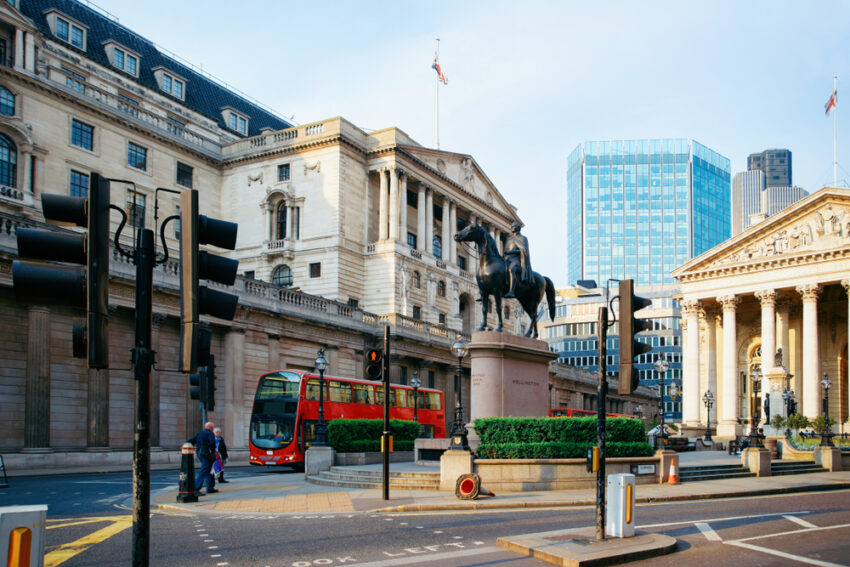
Britain’s homeowners and small businesses are facing a fresh squeeze on credit as the fallout from the Iran crisis works its way through the financial system, with the Bank of England reporting the sharpest rise in mortgage defaults in more than a year.
The Bank’s latest Credit Conditions Survey, which gauges lenders’ appetite and the level of demand for new borrowing, showed that defaults on secured loans, chiefly residential mortgages, climbed to 6.2 per cent in the first three months of 2026. That is the highest reading since the final quarter of 2024, when defaults peaked at 7.8 per cent following a succession of interest rate rises by Threadneedle Street.
Unsecured lending told a bleaker story still. Defaults on credit cards, personal loans and overdrafts rose for a fourth consecutive quarter to 18.6 per cent, the highest level since the closing months of 2023, when the figure stood at 25.7 per cent. Taken together, the data suggests that household finances, which had begun to stabilise in the latter half of last year, are once again under serious strain.
According to the Bank’s report, demand for home loans and other forms of credit had remained buoyant in the run-up to the conflict, aided by a steady retreat in borrowing costs. That brief window of optimism has now slammed shut. Since hostilities escalated in the Middle East, lenders have rapidly repriced risk, pushing the average two-year fixed mortgage rate from around 4.8 per cent to beyond 5.5 per cent in a matter of weeks.
For a typical borrower with a £200,000 mortgage, that shift translates into roughly an extra £1,000 a year on repayments, a sum that few stretched households can comfortably absorb on top of stubborn food and energy bills.
Raj Abrol, chief executive of the risk platform Galytix, said the pain was radiating well beyond the front doors of British homeowners. “What started as a conflict in the Middle East is now showing up in borrowing costs right across the economy,” he said, warning that the turmoil had “spooked” the country’s big banks and triggered a surge in mortgage pricing.
Mr Abrol cautioned that defaults were likely to continue creeping upwards for some months yet, with inflation proving sticky and the cost of living crisis grinding on. As lenders retreat behind tighter underwriting standards, he argued, access to credit would become “a bigger challenge for consumers” and for the small firms that depend on them.
The deeper concern, he added, lies beneath the surface of the headline numbers. The cost of short-term corporate borrowing has more than doubled for lower-rated companies since late February, investment-grade credit spreads have widened by 15 basis points, and UK gilt yields briefly touched 5 per cent for the first time since 2008. When wholesale funding becomes dearer, the pain seldom stops with homeowners. It filters through to employers juggling payroll, to SMEs hunting for refinancing, and to consumers whose credit card rates and car finance deals quietly ratchet higher.
With close to a million fixed-rate mortgage deals due to expire by September and inflation drifting back towards 3.5 per cent, Mr Abrol warned that defaults risked moving from “a slow creep to something banks have to take seriously”.
Kenny MacAulay, chief executive of the accounting software platform Acting Office, struck a similar note of caution from the perspective of Britain’s small business community. He said that surging inflation and higher rates, against the backdrop of a stagnating economic outlook, would “heap fresh misery on homeowners and businesses alike” for as long as the Iran crisis rumbled on. In such an environment, he argued, building extra reserves and cash buffers was no longer optional but essential for any owner-manager hoping to keep the wolves from the door.
For SMEs already contending with weaker consumer demand, tighter trade credit and rising wage bills, the Bank’s survey is an unwelcome reminder that geopolitical shocks rarely stay confined to the headlines. They eventually land, with interest, on the balance sheet.

Amy Ingham
Amy is a newly qualified journalist specialising in business journalism at Business Matters with responsibility for news content for what is now the UK’s largest print and online source of current business news.

Genco Shipping: Freight Rates Offer Hope, But The Cycle Isn't On Your Side


Writer | Investment Advisor | Economics Wonk | Top 5% on TipRanks | Long Signal, Short Noise | Author of The Macro Obsession, a weekly newsletter on current events and trends in finance, tech, and the real economy. My work focuses on my quest to uncover narrative trends before mainstream financial media, a process I’ve been describing as the hunt for information alpha. It is chart-heavy, macro-oriented, and data-driven.I invest across securities and asset classes. My focus has largely been on ETF investing, and I am known as a macro analyst, though I do cover stocks that I am personally trading or considering for my portfolio. These are typically technology and next-gen energy stocks or large caps with a juicy story.“Successful investing requires holding uncomfortably idiosyncratic positions.” — Howard Marks, paraphrasing David Swensen “History does not repeat, it instructs.” — Timothy Snyder, On Tyranny
Analyst’s Disclosure: I/we have a beneficial long position in the shares of MSFT either through stock ownership, options, or other derivatives. I wrote this article myself, and it expresses my own opinions. I am not receiving compensation for it (other than from Seeking Alpha). I have no business relationship with any company whose stock is mentioned in this article.
Seeking Alpha’s Disclosure: Past performance is no guarantee of future results. No recommendation or advice is being given as to whether any investment is suitable for a particular investor. Any views or opinions expressed above may not reflect those of Seeking Alpha as a whole. Seeking Alpha is not a licensed securities dealer, broker or US investment adviser or investment bank. Our analysts are third party authors that include both professional investors and individual investors who may not be licensed or certified by any institute or regulatory body.

Financial influencer Taylor Price joins ‘Varney & Co.’ to break down how shifting your mindset can help Americans grow wealth and achieve the American Dream.
The bipartisan leaders of Congress’ Joint Economic Committee are sounding the alarm about tax season scams that fraudsters may look to use on unsuspecting taxpayers as filing season winds down.
Taxpayers have until Wednesday, April 15, to file their 2025 tax return or request an extension, and scammers may take advantage of the approaching deadline to take advantage of taxpayers.
Scammers have victimized roughly one in four Americans with tax season scams, which have become increasingly common, particularly amid the rise of artificial intelligence (AI) and software that enables deepfakes.
JEC’s scam alert notes several tips for taxpayers to keep in mind when confronted with a potential scam. It warns taxpayers to beware of IRS impostor scams, which can be initiated by phone calls or via emails or texts using spoofed caller ID or addresses while purporting to be the IRS.
AVERAGE TAX REFUND UP NEARLY 11% FROM A YEAR AGO, IRS DATA SHOWS

Scammers are looking to exploit taxpayers during filing season. (iStock)
Taxpayers should be aware that the IRS almost always initiates outreach by mail and will never reach out on social media, as it only texts or emails in limited circumstances and doesn’t do so to demand immediate payment.
If they receive a suspicious message, taxpayers should refrain from scanning any QR codes or clicking on links as it could contain malware or refer them to a website designed to steal their information.
Outreach claiming to be from the IRS that is urgent or threatening, requests identifying information, or demands payment through nontraditional methods should be a red flag for taxpayers.
IRS REFUND TRACKER EXPLAINED: WHAT YOU NEED TO KNOW BEFORE THIS YEAR’S TAX FILING DEADLINE
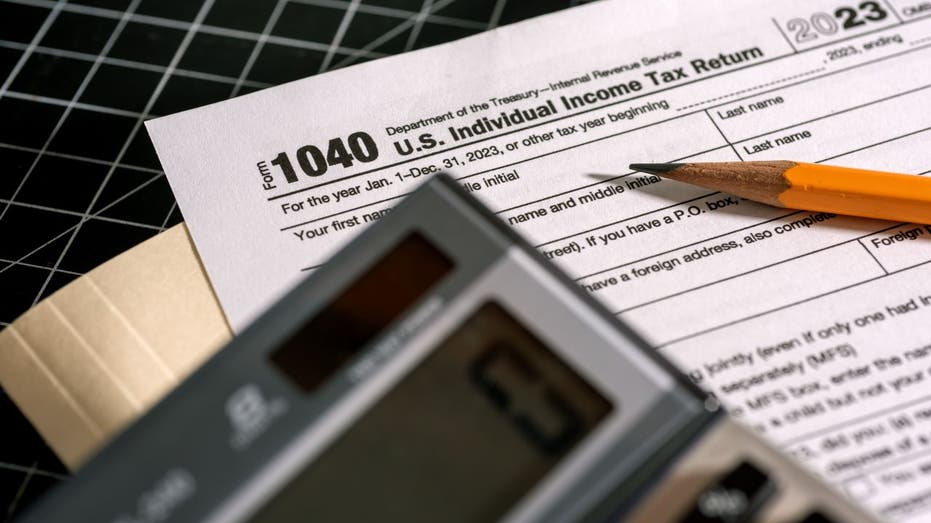
Taxpayers should verify communications purporting to be from the IRS if they have concerns about what they’re being asked to provide. (Michael Bocchieri/Getty Images)
When the IRS reaches out, it won’t threaten to call law enforcement, demand the taxpayer’s driver’s license or business license, request immediate payment through gift cards, wire transfers or crypto, or direct the taxpayer to a non-IRS website.
Taxpayers can verify communications that purport to be from the IRS by reaching out to the agency directly by calling the IRS help line at 800-829-1040 or creating an IRS account online to access up-to-date information on their tax records.
If they’re concerned about a website they’re on, they should confirm it’s actually the IRS website and not a sham website, which can be detected through suspicious signs like subtle misspellings or extra letters or words in the website’s URL.
IRS WARNS AMERICANS TO BEWARE OF DANGEROUS NEW SCAMS THIS TAX SEASON

The IRS generally initiates contact by mail, and won’t call or text demanding payment or personal information. (Jordan Vonderhaar/Bloomberg via Getty Images)
Third-party tax preparer scams are also something that taxpayers should be aware of when working with tax services or other non-IRS tax entities.
Taxpayers should be wary of tax preparers who demand high upfront fees or guarantee large refunds. They should also research unfamiliar companies through sites like the Better Business Bureau, or verify a preparer’s professionally required Preparer Tax Identification Number (PTIN) on the IRS website and avoid preparers who refuse to provide their PTIN.
Fraudsters may also seek to impersonate reputable tax preparation companies, so taxpayers should verify unexpected communications by calling the number on the company’s official website.
GET FOX BUSINESS ON THE GO BY CLICKING HERE
The scam alert was issued by the bicameral Joint Economic Committee, which includes leaders from both the House and Senate on both sides of the partisan aisle.
The panel is led by JEC Chairman Rep. David Schweikert, R-Ariz.; Ranking Member Sen. Maggie Hassan, D-N.H.,; Vice Chairman Sen. Eric Schmitt, R-Mo.; and Senior House Democrat Don Beyer of Virginia issued the warning to taxpayers on Thursday.

Perimeter Solutions: Appealing Business, Complicated Finances
Business
Tesla Model Y Tops China Auto Sales in March 2026 With 39,827 Registrations, Beating Cheaper EVs and Gas Cars
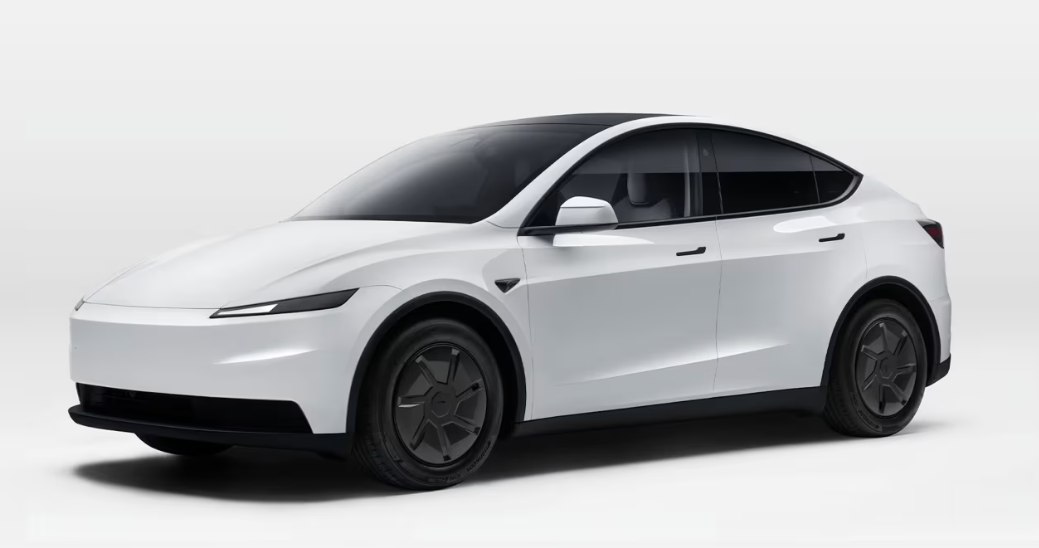
SHANGHAI — Tesla Inc.’s Model Y surged to the top of China’s passenger vehicle sales rankings in March 2026, registering 39,827 retail units and outpacing every electric vehicle, hybrid and internal combustion engine model in the world’s largest auto market, according to data cited by prominent EV analyst Sawyer Merritt.

The achievement marks a striking comeback for the premium electric SUV in a brutally competitive environment dominated by low-cost domestic brands. Priced between roughly 263,500 and 313,500 yuan (about $36,500 to $43,400), the Model Y stood alone among the top 10 as the only vehicle commanding a premium above 200,000 yuan, while many rivals — including the Geely Galaxy Xingyuan and BYD Yuan UP — sell for under 100,000 yuan.
The March retail registrations data, shared Friday on X by Merritt, underscore Tesla’s enduring brand strength and product appeal even as the broader Chinese new energy vehicle sector grapples with intense price wars, subsidy phase-outs and slowing overall demand. The Model Y’s performance beat out mass-market favorites across sedans, SUVs and MPVs, highlighting consumer preference for its combination of range, technology, safety features and over-the-air software updates.
NEWS: The Tesla Model Y was the top-selling passenger vehicle in China in March 2026, with 39,827 retail registrations, beating all EVs and ICE models. It outpaced competitors across sedans, SUVs, and MPVs.
It was also the only premium-priced model in the top ten, standing out…
— Sawyer Merritt (@SawyerMerritt) April 10, 2026
Tesla’s Shanghai Gigafactory, the company’s largest production hub, played a central role. Wholesale shipments from the plant — which include both domestic deliveries and exports — reached 85,670 vehicles in March, up 8.7% from a year earlier and a robust 46.2% rebound from February, according to the China Passenger Car Association. While exact Model Y breakdowns within wholesale figures are not public, analysts attribute much of the strength to sustained Model Y output paired with aggressive export growth.
Exports from Shanghai hit a quarterly record in the first three months of 2026, helping offset softer domestic retail trends earlier in the year. Q1 retail sales for Tesla in China fell about 16% year-over-year overall, but the March surge in Model Y registrations signals a potential inflection point as the refreshed Model Y lineup gains traction and seasonal factors ease.
The results come amid a challenging backdrop for the Chinese auto industry. A brutal price war has seen domestic EV makers slash prices aggressively to stimulate demand after the expiration of certain tax incentives. Brands like BYD, Geely and Xiaomi have flooded the market with affordable options, yet the Model Y’s premium positioning and superior ecosystem appear to have resonated with buyers willing to pay more for perceived quality, advanced driver assistance and brand prestige.
Commentators on social media noted the irony: despite cheaper alternatives boasting features like larger screens or massage seats, Chinese consumers continue to favor the Tesla for its software sophistication, build quality and long-term value. One analyst highlighted that “software, safety and brand ecosystem are still winning out over pure cost-cutting.”
Tesla has maintained a lean but highly efficient operation in China. The Shanghai factory has repeatedly demonstrated its ability to scale production rapidly and adapt to shifting export demands. In March alone, exports contributed significantly to the wholesale total, with some estimates suggesting Tesla shipped tens of thousands of vehicles overseas — a strategic move that keeps the plant running at high utilization even when domestic retail softens.
Globally, the Model Y continues its reign as the world’s best-selling passenger vehicle for the third consecutive year, with cumulative sales surpassing 4 million units by early 2026. Tesla itself highlighted the milestone on Chinese social media earlier this year, citing data from research firms including JATO Dynamics, Statista and Focus2Move.
In China specifically, the Model Y has shown remarkable resilience. February 2026 retail sales already showed strength with the SUV leading SUV rankings, and March’s broader market-topping performance extends that momentum. The vehicle’s success spans segments, appealing to urban families, tech enthusiasts and even ride-hailing fleets seeking reliable, low-operating-cost electric options.
Industry observers point to several factors behind the March surge. Tesla’s recent software updates, including enhanced Full Self-Driving capabilities tailored for Chinese roads, have boosted appeal. The company has also expanded its Supercharger network and service infrastructure, addressing range anxiety more effectively than many domestic newcomers. Additionally, the refreshed Model Y — sometimes referred to in local markets with extended-wheelbase variants — has helped refresh consumer interest.
Yet challenges remain. Tesla’s overall China retail sales for Q1 2026 trailed some expectations, with analysts noting a post-holiday slowdown and the impact of aggressive pricing by local competitors. Some reports indicate domestic retail registrations for Tesla vehicles dipped in the first two months before the March rebound. Exports have become a critical buffer, with shipments to Europe and other markets surging more than 160% in Q1 compared to the prior year.
The price premium narrative is particularly noteworthy. While many top-10 models in March sold for under 150,000 yuan, the Model Y’s higher sticker price did not deter buyers. Industry insiders attribute this to Tesla’s strong resale value, lower total cost of ownership over time due to minimal maintenance needs, and the intangible prestige associated with the brand. In a market where status still matters, owning a Tesla remains a statement.
Broader implications for the global EV industry are significant. China accounts for a massive share of worldwide electric vehicle demand, and Tesla’s ability to lead sales there despite intense local competition reinforces its technological edge. The Shanghai Gigafactory’s dual role as both a domestic powerhouse and export engine gives Tesla unique flexibility that pure-play Chinese manufacturers lack.
Looking ahead, analysts will watch April and May figures closely for signs of sustained momentum. Tesla has teased further updates to its China lineup, including potential localization of more features and continued integration of advanced AI capabilities. The company’s upcoming earnings report, expected later this month, will likely provide more color on China performance and global delivery trends.
For now, the March data offers a clear win for Tesla in one of its most strategically important markets. As the price war rages and new entrants flood showrooms with ever-cheaper options, the Model Y’s ability to claim the outright top spot underscores a powerful message: in China’s hyper-competitive auto landscape, quality, innovation and brand trust can still trump rock-bottom pricing.
The development also carries symbolic weight. Just weeks after broader Q1 wholesale figures showed Tesla holding its own against giants like BYD and Geely, the retail registration crown for the Model Y highlights consumer-level demand that goes beyond factory shipments. It suggests that even as the market matures and competition intensifies, Tesla’s formula continues to resonate with a significant segment of Chinese buyers.
As the EV transition accelerates worldwide, Tesla’s performance in China serves as a bellwether. With the Model Y once again proving its mettle against a sea of lower-priced alternatives, the company appears poised to maintain its leadership position in the premium segment while leveraging its massive Shanghai operation for both local and global growth.

ASML: GDP Fears Are Rising, But The Technology Edge Isn't Cracking

Google Had Pages. AI Has One Answer. Is It You?

How ‘The Pitt’ Helped Patrick Ball Axe An 80K Burden

2000$ le bitcoin ? L’endroit parfait pour en miner ?


-

 Business5 days ago
Three Gulf funds agree to back Paramount’s $81 billion takeover of Warner, WSJ reports
-

 Sports6 days ago
India men’s 4x400m and mixed 4x100m relay teams register big progress | Other Sports News
-

 Politics4 hours ago
US brings back mandatory military draft registration
-

 Business7 days ago
Expert Picks for Every Need
-

 Tech3 days ago
How Long Can You Drive With Expired Registration? What Florida Law Says
-

 Business6 days ago
No Jackpot Winner, Prize to Climb to $231 Million
-

 Fashion4 hours ago
Weekend Open Thread: Veronica Beard
-

 Fashion4 days ago
Massimo Dutti Offers Inspiration for Your Summer Mood Board
-
 Sports5 hours ago
Man United discover Nico Schlotterbeck transfer fee as defender reaches Dortmund agreement
-

 Fashion3 days ago
Let’s Discuss: DEI in 2026
-

 Crypto World2 days ago
Bitcoin recovers as US and Iran Agree a Ceasefire Deal
-

 Business6 days ago
Akebia Therapeutics, Inc. (AKBA) Discusses Pipeline Progress and Strategic Focus on Kidney Disease Treatments at R&D Day – Slideshow
-

 Crypto World1 day ago
Canary Capital Files SEC Registration for PEPE ETF
-

 Business1 hour ago
Tesla Model Y Tops China Auto Sales in March 2026 With 39,827 Registrations, Beating Cheaper EVs and Gas Cars
-

 Business10 hours ago
OpenAI Halts Stargate UK Data Centre Project Over Energy Costs and Copyright Row
-

 Politics7 days ago
The UK should not pay a penny in slavery reparations
-

 Tech5 days ago
Samsung just gave up on its own Messages app
-

 Tech5 days ago
Haier is betting big that your next TV purchase will be one of these
-

 Tech5 days ago
The Xiaomi 17 Ultra has some impressive add-ons that make snapping photos really fun
-

 Tech5 days ago
Gamer Restores the Original PlayStation Portal From Two Decades Ago
You must be logged in to post a comment Login