

Business
Warren Buffett sits on $400 bn cash as Michael Burry warns of AI bubble. Is a massive market crash coming?

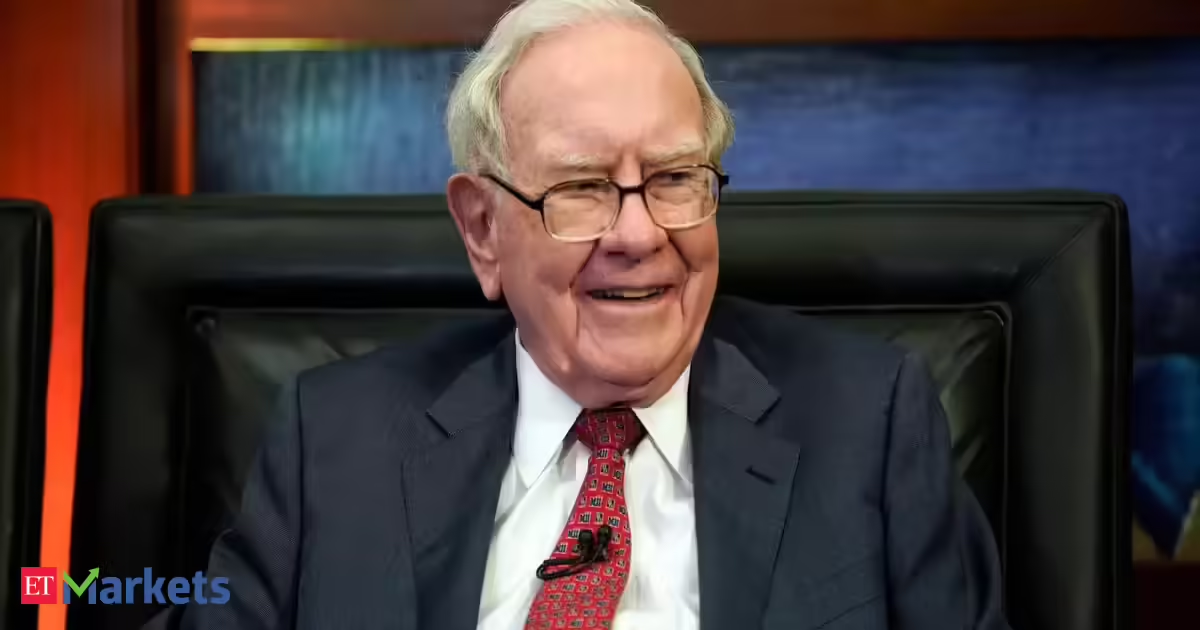
Berkshire Hathaway recently reported a record cash pile near $400 billion at the end of the first quarter of 2026. Earlier this month, Buffett told CNBC that it is not the ideal environment to invest Berkshire’s record cash hoard. Several market analysts explained that the rationale behind this move may be expectations of a sharper crash ahead.
Buffett also played down recent volatility in global markets, suggesting that current conditions are far from the dislocations that historically created major buying opportunities. He pointed out that Berkshire has seen far sharper drawdowns in the past, including declines of more than 50%, adding that the present environment does not warrant aggressive deployment of capital.
Michael Burry, popularly known for correctly predicting the 2008 housing crisis, remained firm on his bets against AI tech giants, triggering AI bubble worries. The analyst in a recent Substack Chat said that he sees many indicators, both technical and fundamental, lining up for the same conclusion as the Dotcom crash.
“1999 went where no market had gone before, and I would say so can this one…It is already there on a number of indicators,” he said, arguing that massive venture capital flows, rising AI debt issuance, and extreme market optimism are creating conditions where valuations may detach from economic reality.

AI boom reshuffles global market order
This comes as the AI boom coupled with the ongoing Iran-US war led to a major reshuffling of the global stock market hierarchy, with South Korea and Taiwan overtaking several long-established Western exchanges.
South Korea’s Kospi has emerged as the shining star among all stock markets so far this year, skyrocketing to fresh lifetime highs last week while most of the global markets crashed. According to a report by The Financial Times, Kospi has surged multi fold in less than 18 months, with this bull run outpacing tech-heavy Nasdaq’s bull run in the 1990s, just before the Dotcom crash.
Despite worries, South Korea has leapfrogged the UK into eighth place, according to HSBC data tracking global equity-market capitalisation rankings, as quoted by CNBC.
Late in April this year, another Asian market boomed. Taiwan’s stock market overtook Canada’s to become the world’s sixth-largest, helped by strong investor demand for artificial intelligence-related stocks and the sharp rise in shares of Taiwan Semiconductor Manufacturing Co. (TSMC).
Notably, Taiwan’s stock market was only the world’s twelfth largest in 2004 while South Korea ranked 13th, the report by CNBC further said, highlighting how the market order has changed over the years. Currently, the top 10 stock markets in terms of total market capitalisation, as per data by HSBC quoted by the report are as follows: US, China, Japan, Hong Kong, India, Taiwan, Canada, South Korea, UK and France.
While optimism around AI remains high, the report highlighted that the rally has led to an extreme concentration of capital into a handful of AI firms. TSMC alone accounts for over 40% of Taiwan’s market capitalization, while Samsung Electronics and SK Hynix together make up a record 42.2% of South Korea’s Kospi index, the report said.
Dotcom crash
Around 25 years ago, the roughly five-year dot-com bubble burst, leaving trillions of dollars in investment losses in its wake. Between 1995 and 2000, the S&P 500 nearly tripled while the Nasdaq 100 soared 718%.
However, as the tech bubble driven by extreme enthusiasm around the internet collapsed, more than 80% of Nasdaq’s value was erased and the S&P 500 was almost cut in half by October 2002.
As global markets crashed, Indian equities were no exception. Between 2000 and 2002, the Nifty 50 tumbled roughly 51% peak-to-trough, NSE said. They however soon recovered all losses.
(Disclaimer: Recommendations, suggestions, views and opinions given by the experts are their own. These do not represent the views of The Economic Times)


I aim to provide alpha-generating investment ideas. I am an independent investor managing my family’s portfolio, primarily via a Self Managed Super Fund. My articles deliver 5-Minute Pitches focused on the core fundamental and technical drivers of the security.I have a generalist approach as I explore, analyze and invest in any sector so long there is perceived alpha potential vs the S&P500. The typical holding period ranges between a few months to multiple years.I am very much focused on adding value via alpha generation. I always start with a Performance Assessment section for each follow-up article. I publish unusually detailed analytics on my long-only, zero-leverage global equity portfolio performance on my Hunting Alphas website every month. At Hunting Alphas, you can also access the models to all the tickers I publish on.A bit about how I approach research and coverage of a stock:I build and maintain spreadsheets showing historical data on the financials, key metric disclosures, data on the guidance and surprise trends vs consensus estimates, time-series values of the valuations vs peers, data on key coincident or leading indicators of performance and other monitorables. In addition to the company’s filings, I also keep tabs on relevant industry news and reports plus other people’s coverage of the stock. In some cases, such as during times of a CEO change, I will do a deep dive on a key leader’s background and his/her past performance record.I very rarely build DCFs and project financials many years out into the future as I don’t think it adds much value. Instead, I find it more useful to assess how a company has delivered and the broad outlook on the 5 key drivers of a DCF valuation: revenues, costs and margins, cash flow conversion, capex and investments and the interest rates (which affect the discount rate/opportunity cost of capital). In some cases, especially for companies trading at very high multiples on a TTM or 1-yr fwd basis, I do a reverse DCF to make sense of the implied growth CAGR implications.Note: Hunting Alphas is related to VishValue Research on Seeking Alpha.
Analyst’s Disclosure: I/we have no stock, option or similar derivative position in any of the companies mentioned, and no plans to initiate any such positions within the next 72 hours. I wrote this article myself, and it expresses my own opinions. I am not receiving compensation for it (other than from Seeking Alpha). I have no business relationship with any company whose stock is mentioned in this article.
Seeking Alpha’s Disclosure: Past performance is no guarantee of future results. No recommendation or advice is being given as to whether any investment is suitable for a particular investor. Any views or opinions expressed above may not reflect those of Seeking Alpha as a whole. Seeking Alpha is not a licensed securities dealer, broker or US investment adviser or investment bank. Our analysts are third party authors that include both professional investors and individual investors who may not be licensed or certified by any institute or regulatory body.


My name is María Fernanda and I’m currently studying an MBA. My inspiration investors are Warren Buffett, Peter Lynch and Terry Smith, so I look for quality companies at a reasonable valuation. I believe that, in the long term, fundamentals are what drive the share price, so I look to predict what a business’s earnings per share will do.
Analyst’s Disclosure: I/we have a beneficial long position in the shares of CLFD either through stock ownership, options, or other derivatives. I wrote this article myself, and it expresses my own opinions. I am not receiving compensation for it (other than from Seeking Alpha). I have no business relationship with any company whose stock is mentioned in this article.
Seeking Alpha’s Disclosure: Past performance is no guarantee of future results. No recommendation or advice is being given as to whether any investment is suitable for a particular investor. Any views or opinions expressed above may not reflect those of Seeking Alpha as a whole. Seeking Alpha is not a licensed securities dealer, broker or US investment adviser or investment bank. Our analysts are third party authors that include both professional investors and individual investors who may not be licensed or certified by any institute or regulatory body.

Sezzle: All-In-One Platform Strategy Drives Operating Leverage
Nvidia: Market's Skepticism Creates A Massive Mispricing


Turkish riot police enter opposition headquarters to evict ousted leadership

Lam Research’s SWOT analysis: stock faces cleanroom constraints

Steven Cress is VP of Quantitative Strategy and Market Data at Seeking Alpha. Steve is also the creator of the platform’s quantitative stock rating system and many of the analytical tools on Seeking Alpha. His contributions form the cornerstone of the Seeking Alpha Quant Rating system, designed to interpret data for investors and offer insights on investment directions, thereby saving valuable time for users. He is also the Founder and Co-Manager of Alpha Picks, a systematic stock recommendation tool designed to help long-term investors create a best-in-class portfolio.Steve is passionate and dedicated to removing emotional biases from investment decisions. Utilizing a data-driven approach, he leverages sophisticated algorithms and technologies to simplify complex, laborious investment research, creating an easy-to-follow, daily updated grading system for stock trading recommendations.Steve was previously the Founder and CEO of CressCap Investment Research until its acquisition by Seeking Alpha in 2018 for its unparalleled quant analysis and market data capabilities. Prior to that, he had also founded the quant hedge fund Cress Capital Management, after spending most of his career running a proprietary trading desk at Morgan Stanley and leading international business development at Northern Trust.With over 30 years of experience in equity research, quantitative strategies, and portfolio management, Steve is well-positioned to speak on a wide range of investment topics.
Analyst’s Disclosure: I/we have no stock, option or similar derivative position in any of the companies mentioned, and no plans to initiate any such positions within the next 72 hours. I wrote this article myself, and it expresses my own opinions. I am not receiving compensation for it. I have no business relationship with any company whose stock is mentioned in this article.
Seeking Alpha’s Disclosure: Past performance is no guarantee of future results. No recommendation or advice is being given that any particular security, portfolio, transaction or investment strategy is suitable for any specific person. The author is not advising you personally concerning the nature, potential, value or suitability of any particular security or other matter. You alone are solely responsible for determining whether any investment, security or strategy, or any product or service, is appropriate or suitable for you based on your investment objectives and personal and financial situation. Steven Cress is the Head of Quantitative Strategy at Seeking Alpha. Any views or opinions expressed herein may not reflect those of Seeking Alpha as a whole. Seeking Alpha is not a licensed securities dealer, broker or US investment adviser or investment bank.

Gold's Collapse Is Ignoring The Stagflationary Recession Ahead
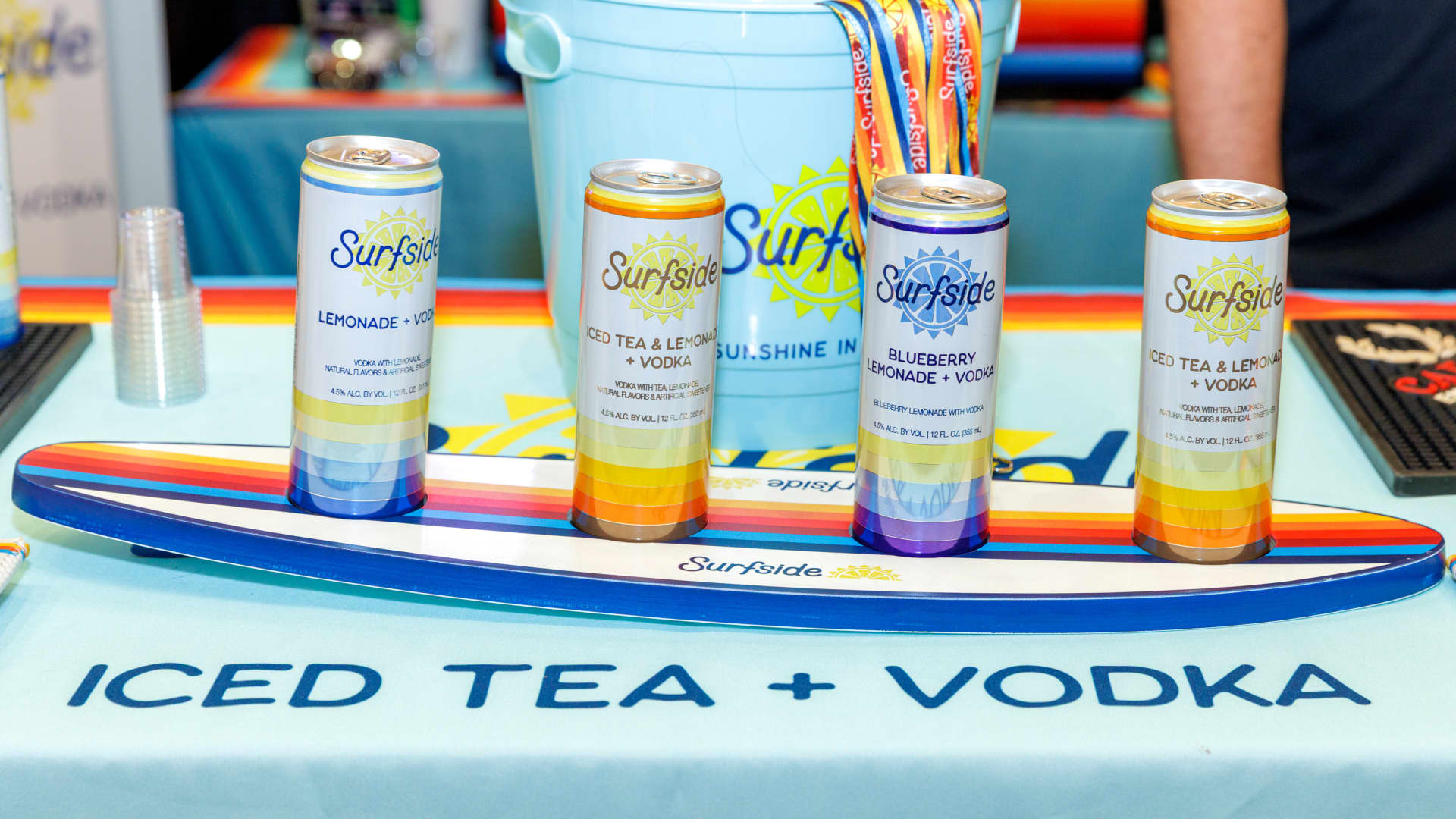
Surfside drinks on display at the trade show during CinemaCon 2026 at Caesars Palace in Las Vegas on April 15, 2026.
Travis P Ball | AP
About a decade ago, sales of LaCroix began to skyrocket. Soon, flavored seltzers were everywhere, from grocery store refrigerators to liquor store shelves.
But the era of bubbles looks like it is winding down, thanks to seltzer fatigue. Now, non-carbonated drinks, from Liquid Death to Surfside Iced Teas, are taking the spotlight.
“If you think about where there’s more growth, where there’s more consumer interest relative to a few years ago, it’s a shift more to still, across both [alcohol] and non-alc,” said Randy Burt, Americas director of consumer products at consulting firm AlixPartners.
That’s not to say seltzers and other carbonated beverages will disappear. But their growth has slowed, as Generation Z increasingly seeks out options without bubbles and beverage companies focus more of their innovation efforts on fizz-free drinks.
Look no further than the alcohol category. Malt-based hard seltzers, which includes White Claw, saw volume drop 1.1% in the 52 weeks ended April 26, compared with the year-ago period, according to data from market research firm Circana. On the other hand, ready-to-drink premixed cocktails saw volume grow 46.4% in the same time, fueled by growth from Surfside, Sun Cruiser, BuzzBallz and Anheuser-Busch InBev’s Cutwater Spirits, which has both carbonated and non-carbonated options.
Bursting bubbles
Much of the driving force behind the switch from bubbly to noncarbonated drinks is coming from Gen Z, which is typically defined as people born between 1997 and 2012. Over their lifetime, soda consumption has dropped dramatically from its peak in 1998, reusable water bottles have become a staple accessory, and a plethora of new drinks like refreshers and dirty soda have gone mainstream.
Broadly, Gen Z wants to try new products. While older generations show more brand loyalty to their favorite beer or cocktail, younger consumers have a different mentality.
“We’re seeing a lot of promiscuity within consumption and alcohol around new products,” said Scott Scanlon, executive vice president of alcoholic beverages for Circana, citing the rise of White Claw and Truly about eight years ago. “Now what we’re seeing is then consumers jump to the newest product — that’s Surfside, Sun Cruiser because of that.”
He sees a generational shift between Gen Z and their predecessors, millennials, who couldn’t get enough of seltzers.
As Gen Z reaches drinking age, their alcoholic preferences reflect that generational divide. Non-carbonated alcoholic drinks like Surfside and BeatBox are stealing “share of throat” from hard seltzers, which have seen their growth slow.
“Gen Z is a lot more likely to order tea-based beverages at happy hour, and they’re sort of moving from carbonated — or seltzers — as their default, ‘better for you’ pick,” Burt said. “I think that’s part of the shift, toward wellness and functionality that you’re seeing happen, especially from a Gen Z perspective.”
For fans of some beverages, like functional teas and coffees that target stress relief or immune support, going fizz-free makes more sense, given the drinks’ non-carbonated base.
Plus, some consumers do not view carbonation as the healthy option.
Carbonated water is slightly acidic, which can wear down tooth enamel when consumed in large quantities, especially if the seltzer uses citric acid for flavoring. Plus fizzy drinks can cause bloating and burping for some people. And then there’s the association bubbles of any kind can share with sugary sodas.
What’s the tea?
Alcohol is leading the trend, thanks to the meteoric rise of Surfside.
Indie vodka distiller Stateside Brands launched the hard iced tea brand in 2022. The ready-to-drink beverage uses vodka as a base and iced tea and lemonade as a mixer.
At the time of its launch, carbonation was everywhere across the alcohol industry.
“Among the options out there were carbonated iced tea and carbonated lemonade, which is a little less unusual, but we were just like ‘What the heck, man? Who carbonates iced tea?’ That seems unholy,” said Stateside co-founder and CEO Clement Pappas.
Consumers seemed to agree. By 2024, Surfside was the fastest-growing alcohol brand in the U.S., based on Nielsen IQ data.
“I think there was a huge pent-up demand for non-carbonated options,” Pappas said. “There are very few out there, especially in a ready-to-drink format.”
Surfside’s customer base skews female. Pappas said that many of the brand’s fans dislike carbonation because they find it leads to bloating, particularly after consuming several drinks in a sitting.
Stateside is leaning further into fizz-free beverages with its latest brand: Super Lyte. The brand still uses vodka as a base, but the mixer is inspired by classic sports drinks.
While Surfside may have popped the seltzer bubble, other non-carbonated alcoholic drinks have grown quickly since then.
Volume growth of Cutwater’s canned cocktails has nearly doubled over the last year, according to Scanlon. BeatBox, a wine-based punch brand that is majority owned by InBev, has also seen demand for its drinks skyrocket since the alcohol giant has ramped up its distribution. And then there is BuzzBallz pre-mixed cocktails, which launched in 2009 but has seen its growth rocket after its acquisition by Sazerac in 2024.
Established alcohol players have also been trying to take on Surfside, further boosting the profile of non-carbonated drinks in the category. Twisted Tea owner Boston Beer launched Sun Cruiser in 2024 with the aim of directly competing with Surfside.
So far, Surfside retains a bigger slice of overall market share, although Sun Cruiser is growing faster these days.
Bubble-free Celsius heats up
Cases of Celsius energy drinks at a store in San Francisco on March 17, 2025.
David Paul Morris | Bloomberg | Getty Images
On the non-alcoholic side, the shift toward bubble-free drinks isn’t as strong, according to AlixPartners’ Burt. Some carbonated drinks are still showing strong growth; PepsiCo’s Poppi, as well as energy drinks like Celsius and Ghost, are seeing strong demand.
But there are signs that the soft drink landscape is shifting.
Celsius, for example, expanded its fizz-free line of energy drinks earlier this year, inspired by Gen Z’s focus on wellness and the general trend toward noncarbonated beverages in other categories. Typically, carbonated options dominate the energy drink aisle, allowing Celsius to stand out and win over customers who might otherwise stick to tea or coffee for their caffeine fix.
The brand’s pre-existing noncarbonated peach mango green tea flavor is consistently a top 10 performer for Celsius and is currently in the number four slot across all of its flavors, according to Celsius Chief Brand Officer Kyle Watson.
The expanded line has helped Celsius grow sales from Gen Z and women, two key segments in the energy drink category.
“In focus groups that we’ve had … even our brand ambassadors across all of our universities, a lot of them talk about how they don’t like drinking sparkling,” Watson said.
When consumers drink “functional beverages — like those touting high protein content, prebiotics, caffeine or other benefits — they want “a better flavor experience,” according to Watson.
Watson said that part of the appeal of the fizz-free line is how it goes down “really smooth,” making it a better pairing for meals. About 37% of Celsius consumers consume their energy drinks with a meal, according to Watson.
And Celsius has made sure to put its noncarbonated bona fides front and center of the line’s packaging.
“With the expansion, we also wanted to make sure that the callout around being fizz-free and that attribute of it being noncarbonated and having that smooth, refreshing flavor profile was more prevalent on the actual can design,” Watson said.
Some other beverage brands are betting big on the swing away from fizz.
“Our product is extremely drinkable because of the lack of carbonation,” Hint CEO Michael Pengue said in an interview.
Founded in 2005, the flavored water company has a devoted fan base, particularly in Silicon Valley. But the brand has gotten “dusty,” and its growth has stagnated, according to Pengue. He is hoping that consumers’ shift away from bubbles will boost sales, along with new packaging and a sexy new ad campaign. (While Hint has some sparkling options, it is a much smaller part of the brand’s portfolio, according to Pengue.)
Earlier in Pengue’s career, he led Nestle’s water and tea brands, which includes Perrier and San Pellegrino.
“I was on the other side of carbonation when carbonated soft drink consumers were looking for healthier alternatives, getting away from aspartame or high fructose corn syrup, and they moved over to Perrier, San Pellegrino, Polar, LaCroix,” he said. “All of sparkling [water] exploded. We’re seeing the same exact thing now, just the opposite.”
Hint’s still flavored water offers “drinkability” and “pure hydration”, giving the brand an edge over sparkling waters that cannot be drank as quickly, according to Pengue. He said it also has a “sensory softness” that appeals to consumers who do not like the bite of carbonation.
Can-do attitude
For decades, an aluminum can with a pull tab usually meant a carbonated beverage like beer, soda or seltzer was inside.
But these days, most new non-carbonated drinks are coming in cans, resembling the seltzers and bubbly drinks from which they are stealing share.
“The can is winning,” Ball CEO Ronald Lewis said on the company’s earnings conference call earlier this month.
Liquid Death canned water drinks at a store in Pinole, California, US, on Monday, March 11, 2024.
David Paul Morris | Bloomberg | Getty Images
He would know. Ball is the world’s largest manufacturer of aluminum packaging.
Celsius’s Watson credits Liquid Death with paving the way for consumers to accept fizz-free canned drinks.
When Liquid Death founder Mike Cessario started the company in 2017, he could not find a single bottler in the U.S. capable of putting still water in cans. Non-carbonated drinks require a quick dose of nitrogen to keep the can from collapsing on itself, presenting one issue for bottlers; carbonation creates high internal pressure to allows a can to keep its shape.
Cessario told CNBC that the key to getting consumers to buy canned water — an otherwise unthinkable proposition — was by positioning Liquid Death as a cool brand.
“We designed it to look more like a beer than a water, so it felt like something a lot more familiar to people than just like a weird bottled water in a can,” Cessario said.
Liquid Death has since launch sparkling and flavored sparkling lines, although it returned to its non-carbonated roots with iced tea in 2023.
For beverage companies, aluminum cans are typically cheaper than glass bottles and a more sustainable option than plastic bottles.
And for consumers, cans feel colder — and maybe even cooler, a callback to the last wave of trendy beverages during the seltzer boom.

My professional journey in the investment field began in 2011. Today, I combine the roles of an Investment Consultant and an Active Intraday Trader. This synergistic approach allows me to maximize returns by leveraging deep knowledge in economics, fundamental investment analysis, and technical trading. What You Will Find in My Analysis: Clear, actionable investment ideas designed to build a balanced portfolio of U.S. securities. A combination of macro-economic analysis and direct, real-world trading experience. My two university degrees in Finance and Economics were merely the starting point—my true expertise was forged through active practice in management and trading. My Goal on Seeking Alpha: To identify the most profitable and undervalued investment opportunities (primarily in the U.S. market) that are capable of forming a high-yield, balanced portfolio. Follow me for a balanced view, backed by active trading practice.
Analyst’s Disclosure: I/we have a beneficial long position in the shares of ALMU either through stock ownership, options, or other derivatives. I wrote this article myself, and it expresses my own opinions. I am not receiving compensation for it (other than from Seeking Alpha). I have no business relationship with any company whose stock is mentioned in this article.
Seeking Alpha’s Disclosure: Past performance is no guarantee of future results. No recommendation or advice is being given as to whether any investment is suitable for a particular investor. Any views or opinions expressed above may not reflect those of Seeking Alpha as a whole. Seeking Alpha is not a licensed securities dealer, broker or US investment adviser or investment bank. Our analysts are third party authors that include both professional investors and individual investors who may not be licensed or certified by any institute or regulatory body.
More news for XRP & Ripple this week! #xrp #ripple #crypto #cryptocurrency #bitcoin #btc #xrpnews

Saint Catherine and York Against Cancer’s new mobile clinic

How To Get The Best Slice Of Annaly Capital (NYSE:NLY)

US brings back mandatory military draft registration

Steven Gerrard disagrees with Gary Neville over ‘shock’ Chelsea and Arsenal claim | Football

Register Renaming | Hackaday
More news for XRP & Ripple this week! #xrp #ripple #crypto #cryptocurrency #bitcoin #btc #xrpnews

Joe Rogan Reacts to Trump’s EPIC Financial Comeback Before Presidency #shorts #trump

BIG NEWS COMING FOR CRYPTO MARKET? | BITCOIN | ETHEREUM
-

 Crypto World3 days ago
Blockchain.com files with SEC for U.S. IPO
-

 Fashion2 days ago
Holiday Weekend Open Thread – Corporette.com
-

 Business2 days ago
Dell Technologies DELL Stock Surges 15% on AI Server Momentum and Analyst Upgrades in 2026
-

 Crypto World2 days ago
Space X IPO Is ‘Bad News’ for Tech Stocks: But What About Bitcoin?
-

 Crypto World2 days ago
Bitcoin Accumulation Weakens as BTC Realized Losses Hit $600M
-

 Crypto World1 day ago
Robinhood crypto COO Tanya Denisova exits
-

 Politics2 days ago
Makerfield: a tale of two social-media histories
-

 Tech3 days ago
WhatsApp ads could make Irish debut after discussions with DPC
-

 Crypto World2 days ago
AI infrastructure race heats up as IREN pitches full-stack strategy, WhiteFiber lands $160M deal
-
 Tech2 days ago
A 0.12% parameter add-on gives AI agents the working memory RAG can’t
-

 Business2 days ago
Trump Invests $1M-$5M in Kura Sushi USA Chain With 27 California Locations
-
 Crypto World6 days ago
Revolut Launches Dogecoin Debit Card Across UK and EU
-

 Tech2 days ago
You Can Now Add ChatGPT To PowerPoint
-

 Sports2 days ago
2026 CJ Cup Byron Nelson leaderboard: Brooks Koepka finds putting stroke in Round 1
-

 Crypto World2 days ago
Trump Media’s Bitcoin Stash Shrinks Again as 2,650 BTC Lands on Crypto.com
-
 NewsBeat3 days ago
Charity run by Reform leader Malcolm Offord accused of ‘law breaking’ over Scottish registration
-
Business2 days ago
Goldman Sachs reinstates Ageas stock coverage with neutral rating
-

 Crypto World6 days ago
SEC to propose tokenized stock framework as Wall Street efforts deepen: Bloomberg
-

 Politics7 days ago
SECOND secret Israeli base discovered in Iraqi desert
-

 Crypto World4 days ago
Exa Labs raises $250 million in funding led by a16z
You must be logged in to post a comment Login