





The family-owned bakery is investing in a new production facility with its own cafe

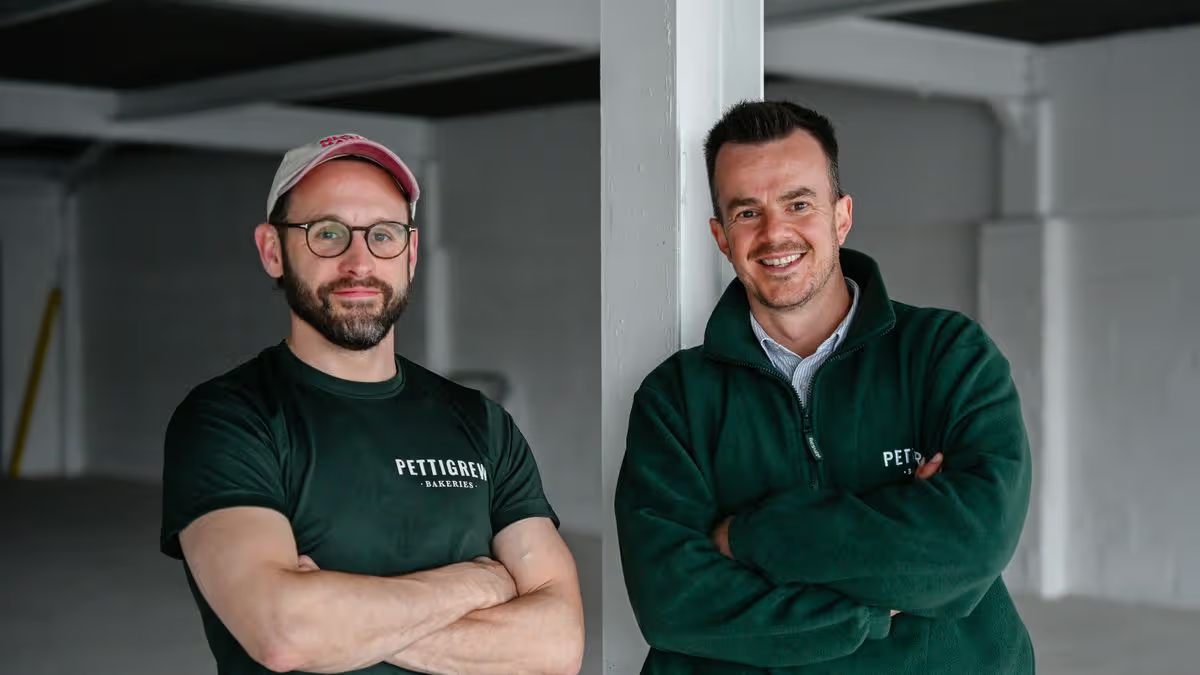
David and Lee Le Masurier of Pettigrew Bakeries.
Cardiff-based and family-owned Pettigrew Bakeries is expanding with a new baking headquarters operation and cafe. The new 5,500 sq ft facility, at the Design Quarter on Colchester Avenue in the Penylan area of the city, will bring all its baking activities under one roof for the first time.
It has taken a 10 year lease for its new site, that as well as increasing production capacity will create ten new jobs. Scheduled to open in June it will also feature customer-facing bakery café with a theatre-style window into the heart of the bakery.
READ MORE: Centre for Alternative Technology looking to plug short-term funding gapREAD MORE: We need a plan to revive and renew struggling universities in Wales
The move comes after sustained growth for the business, which currently employs 45 full and part-time staff and operates across four sites in the city (Victoria Park, Roath Garage, Castle Arcade and Rhiwbina High Street) alongside a weekly presence at all three Cardiff farmers markets in Rhiwbina, Roath and Riverside.
Until now, production has been split across two separate bakery spaces in Victoria Park and Moy Road in Roath – a model the team says has become increasingly complex and restrictive as demand has grown.

Pettigrew Bakeries.
The increased production capacity is also expected to support future wholesale growth. Both the Victoria Park and Roath Garage sites will be upgraded.
David Le Masurier, founder of Pettigrew Bakeries, said: “We have outgrown every inch of space we own, so this is just the logical next step for us. For ten years, we have relentlessly focused on our craft, putting consistency above everything else and incrementally improving what we do in response to what our customers tell us they love
” Growth for us now is a necessity. It solves overly complicated daily operations, but it also gives us the room to be more creative and ambitious about what Pettigrew Bakeries can become.
“We are investing in new technology to help us bake on a larger scale, but Pettigrew is still about highly skilled professional bakers, hand-producing bread, pastries and more, seven days a week, 363 days of the year. The difference is that this new space will allow our bakers to spend more time baking, and less time carrying things up and down stairs or in and out of provers”
Pettigrew’s new site has been designed by Alistair Nicoll Architect. For Mr Le Masurier, the move also carries a personal significance. A graduate of what was then Cardiff Metropolitan University’s hospitality management course 25 years ago, the new bakery sits just next to the former campus site.
He added, “We probably could have made this move a year ago, but we wanted to make sure this was right for everybody involved in this business. After an exhaustive search and a list of requirements that would have made Mary Poppins seem under-qualified, we found this site. It gives us the access and infrastructure we need as a working bakery, but it also sits right alongside residential neighbourhoods, which makes it the perfect place to create a comfortable bakery café space, too.”



















































You must be logged in to post a comment Login