Connect with us

Business

When Experience Becomes a Liability: Leadership in a World without a Playbook

Published

on

When Experience Becomes a Liability: Leadership in a World without a Playbook
For decades, leadership was built on a quiet assumption: that the world, while imperfect, was fundamentally stable. Markets cycled. Institutions endured. Rules evolved slowly enough for experience to accumulate and guide decisions with confidence. Leaders learned patterns, applied frameworks, and relied on what had worked before.

Much of my early career was built in that environment – where five-year plans were tangible, strategy decks held their relevance, and continuity was a reasonable expectation.

That assumption no longer holds.

Today’s leaders operate in an environment defined less by cycles and more by sustained disruption – geopolitical fractures, technological acceleration, demographic shifts, climate shocks, and a growing erosion of institutional trust.

Advertisement

Volatility is no longer an interruption. It is the baseline.

Across restructurings, reorganizations, and crises – including the Global Financial Crisis – I learned how quickly institutions that appear durable can become fragile.

In this environment, a difficult truth emerges: experience, once leadership’s greatest asset, can quietly become its greatest liability.

The Comfort of Familiarity

Most senior leaders are not short on data or advice. If anything, they are overwhelmed by it. They have accumulated decades of firsthand lessons.

Advertisement

The greater risk is false certainty – the instinct to solve today’s problems using models formed yesterday. Many leadership frameworks and governance models were designed for continuity. When disruption was episodic, experience functioned as a reliable map. But when disruption becomes persistent, maps age quickly.

What once provided clarity can become comfort. And comfort can dull judgment.

I have caught myself, more than once, assuming “we’ve seen this before” – only to realize the underlying dynamics had fundamentally changed.

From Maps to Compasses

The leaders who struggle most today are not those without experience, but those who treat experience as instruction rather than input.

Advertisement

There is an important distinction:

  • Experience as memory anchors leaders to the past.
    • Experience as wisdom sharpens judgment in the present.

In stable systems, detailed maps are useful. In unstable terrain, leaders need a compass.

A compass does not tell you exactly where to step. It provides direction when visibility is poor. It requires interpretation, trade-offs, and decisions without the comfort of precedent.

Leadership is shifting – from execution grounded in certainty to judgment exercised under ambiguity.

The Real Leadership Currency: Judgment

Judgment is not instinct. It is not confidence. And it is certainly not speed alone.

Advertisement

Judgment is the ability to:

  • Act without full information
    • Move with urgency without eroding trust
    • Hold conviction without ego
    • Adapt without abandoning values

It is forged through exposure to uncertainty – when outcomes are unclear and accountability is real.

I have seen confident decisions unravel within weeks when regulations shifted, politics changed, or market shocks rewrote their underlying assumptions. Experience did not prevent the surprise – but judgment determined how quickly we recalibrated.

Many leaders built their experience in systems that absorbed mistakes. Today, systems are thinner, faster, and less forgiving. Decisions ripple across borders and markets instantly.

Leadership becomes less about certainty and more about calibrated action under pressure.

Advertisement

Strengthening Judgment in Practice

Judgment does not improve by accident. It sharpens through deliberate effort.

Leaders can strengthen it by:

  • Actively seeking diverse viewpoints – especially from younger colleagues, different geographies, or adjacent industries.
    • Separating signal from ego by asking: Am I relying too heavily on past success?
    • Building a pause into decisions – not hesitation, but calibration.
    • Running rigorous debriefs, including after successful outcomes: What did we assume? What surprised us? What would we adjust next time?

Some of the most valuable course corrections in my career came not from failures, but from dissecting decisions that “worked” – and recognizing how much luck or timing had contributed.

Adapting the Lens

I experienced this recalibration early in my time leading teams in Asia. In many Western environments, participation in meetings is equated with engagement. Leaders ask open questions. Hands go up. Debate signals commitment.

That model does not automatically translate across many Asian cultural contexts. Norms around hierarchy, respect, and group harmony shape how people contribute. Silence does not imply disengagement – but it can be misinterpreted that way.

Advertisement

Executives accustomed to Western norms may repeat questions, assuming hesitation reflects lack of preparation. I learned that if I wanted contribution, I needed to redesign the structure. Rather than posing broad questions to the room, I invited individuals to lead topics where they had expertise, share success stories, or frame discussion around achievements.

Participation increased – not because competence changed, but because the format did.

Operating across Thailand, China, Vietnam, Hong Kong, Taiwan and Singapore reinforced a consistent lesson: leadership frameworks do not travel intact. They must be translated, not transplanted.

Experience had given me a template. The environment required adaptation.

Advertisement

Why Nostalgia Is Dangerous

One of the most underestimated risks in leadership today is nostalgia.

Across industries and geographies, leaders still say:

  • “We’ve seen this before.”
    • “This is just another cycle.”

Sometimes they are right. Many times, they are not.

I have learned to treat that instinct – especially in myself – as a warning signal rather than reassurance.

Successful leaders recognize the need to consciously unlearn parts of their own success. Careers are built on repetition. Reputation is built on consistency. Letting go of proven approaches can feel like abandoning identity.

Advertisement

But leadership is not about preserving the past. It is about stewarding the future.

The Discipline of Unlearning

Unlearning is not forgetting. It is consciously retiring assumptions.

Leaders can begin by:

  • Identifying one “rule” that shaped their early success and testing whether it still holds under current conditions.
    • Expanding exposure across functions, geographies, and generations to broaden perspective.
    • Encouraging dissent early, so disagreement surfaces before disruption forces it.

Unlearning becomes less emotional when it becomes systematic.

Leading Without False Confidence

In uncertain times, there is a temptation to project certainty before it exists. Yet people increasingly detect performative confidence. What they respond to instead is credible calm -leaders who acknowledge uncertainty without being paralyzed by it.

Advertisement

The most trusted leaders consistently:

  1. Clearly identify what is unknown
  2. Explain how decisions will be made despite uncertainty
  3. Anchor action in values rather than predictions

Trust today is built not on omniscience, but on honesty, coherence, and follow-through.

Across multiple markets in Asia, I have reorganized teams in response to shifting strategy and external volatility. Even when strategically sound, such changes create anxiety.

Earlier in my career, I might have presented those changes with more certainty than the environment warranted. Over time, I learned that false certainty erodes trust.

Instead, I outlined clearly what we knew, what we did not yet know, and the assumptions guiding our decisions. I explained why change was necessary and how it aligned with market realities. Most importantly, I made one principle explicit: if our assumptions proved wrong, we would adjust.

Advertisement

The message was no longer “trust the plan.” It became “trust the process.”

Credibility comes not from projecting certainty, but from demonstrating judgment – and the willingness to recalibrate.

Experience, Upgraded

None of this diminishes the value of experience. It reframes it.

Experience still matters – deeply – but only when it evolves with the environment. The most effective leaders treat experience as a reference library, not a rulebook.

Advertisement

They ask:

  • Which parts of my experience still apply?
    • Which assumptions no longer hold?
    • What must be relearned?

Every generation of leaders faces a defining shift. For today’s leaders, it is moving from certainty to judgment – from maps to compasses – from authority rooted in answers to authority earned through clarity under pressure.

The future will not reward those who wait for stability. It will reward those who can lead responsibly while instability persists.

Before your next major decision, pause and ask:

  • Is my confidence grounded in current reality – or inherited from past success?
    • Where might I be over-indexing on familiarity?
    • What belief would I be willing to abandon if the evidence required it?

In an environment where precedent is unreliable, the ultimate competitive advantage is not experience alone.

It is the courage to examine it – and upgrade yourself before the world forces you to.

Advertisement

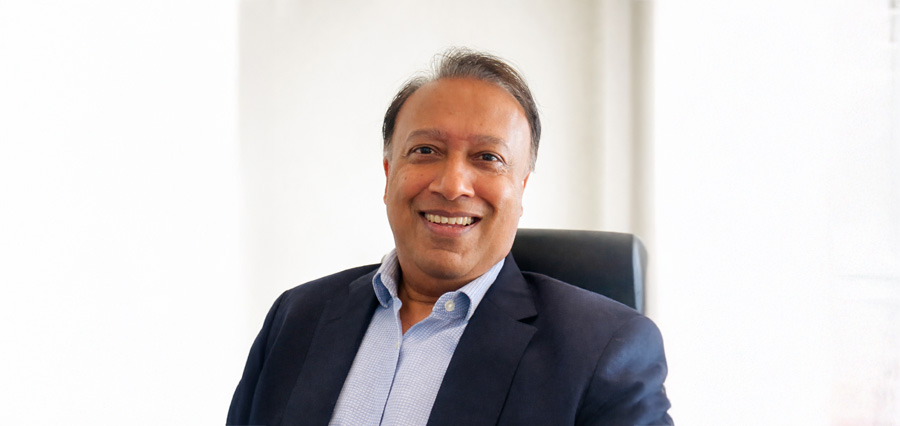
Aseem Goyal

Global Financial Services Executive & Advisor

Author of the forthcoming Bridging Borders: Leadership, Crises, and Reinvention from 35 Years in Eight Global Markets

Most impactful quotes:

  1. Volatility is no longer an interruption. It is the baseline.
  2. Experience becomes a liability when it is treated as instruction rather than input.
  3. In unstable terrain, leaders need a compass.
  4. The message was no longer “trust the plan.” It became “trust the process.”
  5. The ultimate competitive advantage is not experience alone – it is the courage to examine it.
  6. Leadership today demands the courage to upgrade yourself before the world forces you to.

Continue Reading
Click to comment

Leave a Reply

Your email address will not be published. Required fields are marked *

Business

Netflix boss defends bid for Warner Bros as Paramount deadline looms

Published

on

Netflix boss defends bid for Warner Bros as Paramount deadline looms

Ted Sarandos says his company’s offer is better for industry growth as it is “buying assets we don’t currently have”.

Continue Reading

Business

Wetherspoons boss Tim Martin warns minimum wage is lowering living standards

Published

on

Business Live

He argues it is causing a reduction in investment and job vacancies

Founder and Chairman of JD Wetherspoon, Tim Martin, speaking at a press conference in the Hamilton Hall pub, in central London, following the publication of the pub chain's full year results in October 2020.

Founder and chairman of JD Wetherspoon Sir Tim Martin

The founder and chairman of JD Wetherspoon has warned the minimum wage is diminishing people’s living standards by restricting companies’ capacity to boost pay and recruit staff.

Sir Tim Martin, who lives in Devon, argues that rather than function as a safety net to safeguard workers, minimum wage is now causing more damage than benefit, following rises under both the previous Conservative administration and the current Labour government.

In an interview with the Telegraph, Sir Tim said: “The minimum wage seems to be lowering the standards of living by reducing investment and job vacancies and by increasing pay for new starters at the expense of experienced staff.

“It was a supposed to be a safety net but it’s turned into a competition between political parties as to who will offer the biggest rise.”

Advertisement

Most recently, the government confirmed the hourly rate for over-21s will climb by 50p to £12.71, whilst workers aged 18-20 will witness an 85p increase to £10.85, from April 2026, as reported by City AM.

A decade ago, the minimum wage stood at £7.20, with the policy introduced in 1999 to eliminate low pay.

Sir Tim’s remarks position him as the latest senior figure to question the standards of minimum wage, after Reeves’s hike was claimed to be pushing up employers’ labour expenses.

Scrutiny has gathered momentum, as Britain continues to wrestle with a cooling employment market, with the latest data showing headline unemployment has reached a five-year high of 5.2 per cent.

Advertisement

Inflation-busting rises have resulted in businesses recruiting fewer staff, particularly younger and less experienced workers, with the hospitality sector especially hard hit as pubs grappled with increasing business rates.

However, from April 2026, pubs in England will benefit from a 15 per cent reduction on business rates following widespread outcry. Official data revealed that the number of payrolled employees dropped by 124,000 in the 12 months to January.

Sir Tim has also previously supported Reform’s proposed pub support package, contending it would “utterly transform” the pub landscape.

In a stock exchange announcement, Martin said Reform’s proposals would provide pubs with “tax parity” with supermarkets.

Advertisement

He said: “By eliminating the tax differential between supermarkets and the hospitality industry, and restoring margins to devastated businesses, these changes would enable pubs to regain some, or all, of their lost trade.”

Reform’s £2.3bn pub package includes a commitment to reduce VAT in the hospitality sector by 10 per cent as well as beer duty by 10 per cent.

The party has also vowed to reverse Labour’s rise in employers’ national insurance contributions and progressively remove business rates for pubs.

The government has also committed to abolishing what it described as “discriminatory age bands” by scrapping the youth rate of minimum wage, which has existed since the system was introduced in 1999. However, the government is now understood to be reconsidering the move amid concerns it could exacerbate youth unemployment.

Advertisement

Graduates have increasingly been raising alarm about the jobs market, as fierce competition, reduced recruitment across certain sectors and a decline in vacancies has left many struggling to find work.

Combined with employers’ economic anxieties and technological shifts, entry-level positions in particular have taken a significant hit.

Alan Morgan, chief executive of Bella Italia owner Big Table Group, cautioned that the government’s ambition to scrap the youth rate of minimum wage would result in fewer employment opportunities.

Morgan said: “We completely agree with giving people the same pay for the same experience and outputs.

Advertisement

“However, by making the pay rates the same for age groups who have less or no experience, it does create a risk of employers reducing the amount of younger people they employ.”

Jeremy Hunt abolished the youth rate for 21 and 22-year-olds during his tenure as chancellor in 2024.

Continue Reading

Business

Floods shut Western Australian freight rail link

Published

on

Floods shut Western Australian freight rail link

Western Australia’s stores of goods could be tested after flooding damaged the TransAustralian Railway over the weekend.

Continue Reading

Business

Dollar retreats amid renewed trade uncertainty; euro, sterling edge higher

Published

on


Dollar retreats amid renewed trade uncertainty; euro, sterling edge higher

Continue Reading

Business

West African to continue govt dialogue

Published

on

West African to continue govt dialogue

West African Resources says it will continue to engage in discussions with the government of Burkina Faso in relation to ownership of its Kiaka gold project.

Continue Reading

Business

Helicopter maker Leonardo ‘hopeful’ about future of Somerset factory

Published

on

Business Live

The Italian-headquartered firm has been in talks for months over £1bn contract with the UK government

Leonardo's AW149 demonstrator landing at Thorne House

A Leonardo helicopter completes a flight from Bristol Airport to Yeovil, in Somerset(Image: Simon Pryor)

A Somerset helicopter maker says it has had “good dialogue” with the government regarding a £1bn contract just three months after it warned its only UK factory was under threat.

Italian-headquartered Leonardo owns Britain’s last helicopter plant in Yeovil. The West Country site has been an aerospace hub for more than 100 years and employs thousands of people directly and in the supply chain.

Although the site makes helicopters for civil use, such as search and rescue, the MoD is the company’s most important customer. A decision to withdraw from the historic Somerset site would have major implications for the local economy.

In November, Leonard chief Roberto Cingolani told investors the company could not “subsidise Yeovil forever” after delays to an agreement with the British government over the contract. The company is the only bidder and has been in talks with ministers for months, leaving the site’s 3,000-strong workforce in limbo.

Advertisement

However, it is understood that Leonardo’s vice president of market development, Adam Wardrope, is “feeling hopeful” after recent discussions with officials.

The contract is for Leonardo’s conventional helicopters, but earlier in February the firm unveiled its latest model – Britain’s first autonomous full-size helicopter, known as Proteus. The helicopter has been designed to conduct various missions such as anti-submarine warfare.

Mr Wardrope told the BBC that Proteus is “part of the future of Yeovil” but that Leonardo’s Somerset workforce was “desperate” to learn about the company’s future.

“We’re still very busy, things like Proteus, support contracts, and international customers we’re servicing,” Mr Wardrope told the BBC. “Everyone’s very busy, there’s still a future in the fact that there’s lots of work to do.”

Advertisement

Ben Clarke of workers union Unite said: “Any employee who works on the Yeovil site is definitely in a slight confusion as to what’s happening at the moment.

“The Government needs to wake up and understand we’re having these delays by not giving an answer to Leonardo either way, it’s putting huge pressure on Leonardo and the constituency.”

The news comes just days after Prime Minister Sir Keir Starmer was reported to be considering a hike in the UK’s defence spending.

Advertisement
Continue Reading

Business

Tracy Brabin leads West Yorkshire trade mission to Switzerland and Germany

Published

on

Tracy Brabin leads West Yorkshire trade mission to Switzerland and Germany

Tracy Brabin has launched a five-day trade mission to Switzerland and Germany aimed at deepening economic ties, unlocking inward investment and creating new export opportunities for West Yorkshire firms.

The mayor arrived in Zurich at the head of a 12-strong business delegation, marking the first leg of a visit that will also take in Karlsruhe, Heilbronn and Stuttgart. Organised by the West Yorkshire Combined Authority and supported by KPMG, the mission focuses on three priority sectors: financial and digital services, health technology and advanced manufacturing.

Backed by the UK government, the trip is designed to strengthen trade links with two of Europe’s most advanced industrial economies and support thousands of jobs across Bradford, Halifax, Huddersfield, Leeds and Wakefield.

“Europe is our most important trading partner,” Brabin said. “Investment from Swiss and German firms, and exports from our homegrown businesses, support thousands of good jobs across our region.”

A key objective of the visit is to promote West Yorkshire’s £160m Healthtech Investment Zone, which aims to accelerate innovation in medical technology, diagnostics and digital health. The region’s seven universities and strong clinical research base are being positioned as natural partners to Switzerland’s biotech ecosystem.

Advertisement

Delegates will also highlight the strength of Leeds as a financial hub. Often described as the “Northern Square Mile”, the region is home to 30,000 financial and professional services firms employing almost 300,000 people, with institutions including the Bank of England and the Financial Conduct Authority represented locally.

The mayor is expected to stress the opportunities created by the UK-Switzerland Berne Financial Services Agreement and recent regulatory reforms aimed at boosting competitiveness.

Lucy Rigby, Economic Secretary to the Treasury, said the mission signalled that the UK was “open for business” and ready to deepen European partnerships.

In Germany, discussions will centre on AI-enabled manufacturing and sustainable transport systems, areas where Stuttgart and Karlsruhe are seen as global leaders.

Advertisement

West Yorkshire is preparing to launch its landmark Weaver Network in 2027, a major transport integration programme, and is seeking to draw lessons from Swiss and German expertise in rail, engineering and urban mobility.

Business leaders on the trip say the mission offers access to new markets and investors. Carly Walter, chief executive of healthtech firm MAGI, said collaboration with European partners would accelerate product development and regulatory pathways. Representatives from digital firms including The Data City and sustainability consultancy NextGen Zero are also participating.

The trade mission forms part of West Yorkshire’s Local Growth Plan and leverages £2bn of devolved funding to attract additional private investment into transport, housing and skills.

For Brabin, the message is clear: West Yorkshire intends to position itself as an outward-looking, export-driven region competing on the global stage, and sees closer European ties as central to that ambition.

Advertisement

Amy Ingham

Amy is a newly qualified journalist specialising in business journalism at Business Matters with responsibility for news content for what is now the UK’s largest print and online source of current business news.

Advertisement
Continue Reading

Business

Southern Cross Radio-Seven West CEO departs on eve of first financial results

Published

on

Southern Cross Radio-Seven West CEO departs on eve of first financial results

The chief executive of merged media giants Seven West Media and Southern Cross Austereo, Jeff Howard, has suddenly stepped down on the eve of his first financial results.

Continue Reading

Business

At Close of Business podcast February 23 2026

Published

on

At Close of Business podcast February 23 2026

Mark Beyer and Justin Fris discuss Genus’ power up.Plus: Austal delivers bumper result despite US mistake; Legislation to stop alleged offenders driving; Murdoch chancellor appointed South Perth monitor.

Continue Reading

Business

clean max enviro ipo gmp: Clean Max Enviro IPO opens today: Check GMP, subscription status and what brokerages say

Published

on

clean max enviro ipo gmp: Clean Max Enviro IPO opens today: Check GMP, subscription status and what brokerages say
Clean Max Enviro Energy has launched its Rs 3,100 crore IPO for subscription on Monday, with the grey market premium indicating a marginal 0.3% upside over the upper end of the price band, suggesting limited listing gains. The issue, priced at Rs 1,000-1,053 per share, comprises a fresh issue of Rs 1,200 crore and an offer for sale of Rs 1,900 crore.

The IPO will close on February 25 and is scheduled to list on March 2. At the upper price band, the company is valued at a pre-IPO market capitalisation of Rs 12,325 crore.

CleanMax, incorporated in 2010, is India’s largest commercial and industrial renewable energy provider, with 2.80 GW of operational, owned and managed capacity and 3.17 GW of contracted capacity under execution as of October 2025. The company operates across solar, wind and hybrid solutions and focuses on long-term power purchase agreements with commercial and industrial customers.

Financially, the company has shown a turnaround. Revenue rose to Rs 1,610 crore in FY25 from Rs 1,425 crore in FY24, while net profit stood at Rs 19.43 crore in FY25 compared with a loss in the previous year. EBITDA margins improved to 63.1% in FY25 from 52% in FY24.

Advertisement

However, leverage remains elevated. Net debt stood at Rs 5,938 crore in FY25 and net debt-to-equity at 1.9 times. A large portion of the IPO proceeds will be used to repay borrowings, which could strengthen the balance sheet.


At the upper price band, the issue is valued at around 16 times EV/EBITDA, which analysts described as expensive, though there is strong growth visibility from rising renewable penetration and demand from data centres and AI-linked industries.

Should you subscribe?

Swastika Investmart assigned a “Neutral” rating and said the issue appears aggressively valued on recent financials, though superior EBITDA margins and operating metrics justify the pricing to some extent. It added that the IPO may be avoided for short-term or listing gains but can be considered by well-informed investors for the medium to long termAditya Birla Money has recommended Subscribe for long-term, citing under-penetration in C&I renewable energy, projected capacity additions and strong capital efficiency. It expects demand visibility to improve as renewable penetration rises and sectors such as data centres require round-the-clock green power.

With grey market premium at just 0.3%, the issue does not indicate strong short-term listing excitement. Investors looking for quick gains may remain cautious, while those with a longer investment horizon and comfort with capital-intensive renewable businesses may evaluate the company’s growth prospects and debt reduction plans before taking a call.

(Disclaimer: Recommendations, suggestions, views and opinions given by the experts are their own. These do not represent the views of Economic Times)

Advertisement
Continue Reading

Trending

Copyright © 2025