
Business
Will we see signs of economic growth in 2026?

Andrew SinclairEast of England political editor, Colchester

 Andrew Sinclair/BBC
Opinion polls suggest just over half of voters see the economy and the cost of living as the most important issues facing the country, while local chambers of commerce say business confidence is at its lowest level for some time.
How the government addresses these two key issues will dominate politics in 2026 and have a major bearing on whether Sir Keir Starmer is still Prime Minister by the end of the year.
Will we see clear signs of economic growth in 2026 after a year of flatlining, to give businesses confidence to invest and employ more people? Will the measures announced in November’s budget, such as raising the minimum wage, scrapping the two-child benefit cap and removing some of the so-called “green taxes” from energy bills, make voters feel better off?
Staff at food banks are on the frontline of the cost of living crisis, while the hospitality sector is one of the East’s main employers. How do they see the year ahead?
‘The new normal’
 Andrew Sinclair/BBC
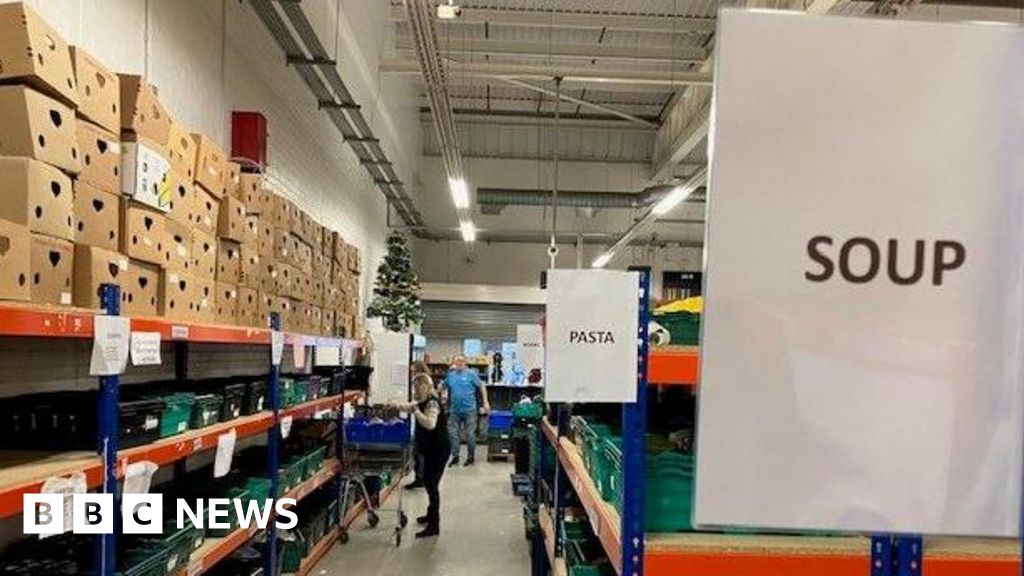
There are people arriving at Colchester’s Foodbank every few minutes. The charity’s 11 centres, which are dotted around the town, help as many as 3,000 people every month.
“The stories all come back to not having enough money to buy food and the choice between putting food on the table or heating the house” says co-director Nikki Ranson.
“We have schoolteachers coming in, we have police officers and nurses. We had a nurse not so long ago who always grabs all the overtime [she can get] but hadn’t been able to for a few weeks and was in dire straits.
“We’re supposed to be an emergency food service that is supposed to be a three-day food parcel a couple of times a year. We’ve become a normal. We’re now a go-to and that’s not right.”
According to the Trussell Trust anti-poverty charity, 332,500 food parcels were handed out across the East of England in the last year. This was a 5% decline on the previous year.
Ms Ranson says the changes announced in the budget will take a while to work through to people’s pockets and she says there’s still more to be done to help with benefits and wages. She expects the numbers using her food bank to stay the same this year.
A Treasury spokesman said: “We know there’s more to do to help families with the cost of living.
“That’s why the Chancellor took action at the Budget to freeze rail fares and prescription charges and will cut £150 off the average energy bill this year.”
The number of people using food banks by next Christmas will be an important indicator about whether cost of living pressures are easing.
‘Betrayed’
 Andrew Sinclair/BBC
“This year is going to be a fight for survival. If I make it to Christmas I’ll be impressed” says Matthew Alum who runs two pubs in the Colchester area.
He has recently had to hand back a third pub to the brewery because he could no longer afford to it.
“I feel betrayed by the budget. We were promised loads of support, and all we had was another rise in the minimum wage and another rise in business rates.”
He says every time the minimum wage goes up it adds £100,000 to his wage bill. He has already had to increase prices and is now thinking about reducing staff hours to help.
The increase in employers’ national insurance contributions, the phasing out of business rate relief and a rates revaluation has also added to his costs.
“When Labour came to power I was paying £445 a month, now it could be as much as £3,200 a month” he says.
The industry body Hospitality UK estimates that the average business will see its rates rise by 94% over the next three years.
Chief Executive Allen Simpson says: “Every high street is going to feel a massive hit and so will our communities when much-loved venues are forced to close”
Back at the Cricketers pub in Fordham Heath, near Colchester, Mr Allum says the Government must rethink the rates revaluation and cut VAT for hospitality.
“If a Labour MP comes to talk to me about what’s going on, I’ll talk to them – howeve,r until they’re prepared to have a proper conversation with me about what needs to be done i’ll be asking them to leave.
“This isn’t party politics… for me this is betrayal.”
A Treasury spokesman said the budget contained a £4.3bn support package for hospitality.
“This comes on top of our efforts to help more venues offer pavement drinks and put on one-off events, maintaining our cut to alcohol duty on draught pints, and capping Corporation Tax,” he said.
The High Street has been struggling for years but there are many in the hospitality industry who wonder if this year will be make or break.



