CryptoCurrency
10 Cheapest Crypto License Countries in 2026 for Fast, Legal Crypto Launches

The explosive growth of Web3, DeFi, and digital asset markets has pushed entrepreneurs, founders, and institutional players to look beyond traditional financial hubs for jurisdictions that offer crypto license frameworks friendly to innovation, compliance, and growth. Whether you’re building the next big exchange, launching a blockchain platform, or managing a crypto license services business, choosing the cheapest crypto exchange license jurisdiction with clear compliance pathways can make or break your venture.
In this definitive 2026 guide, we explore the Top 10 Cheapest Crypto License Countries that combine crypto legal consulting support, forward-looking regulation, and investor-friendly environments. These are jurisdictions that startups, exchanges, and Web3 founders should seriously consider for incorporation, licensing, and scaling.
Why Jurisdiction Matters: Beyond the Cost of a Crypto License
Before diving into the list, it’s important to understand that the cheapest crypto license isn’t just about low fees. It’s about:
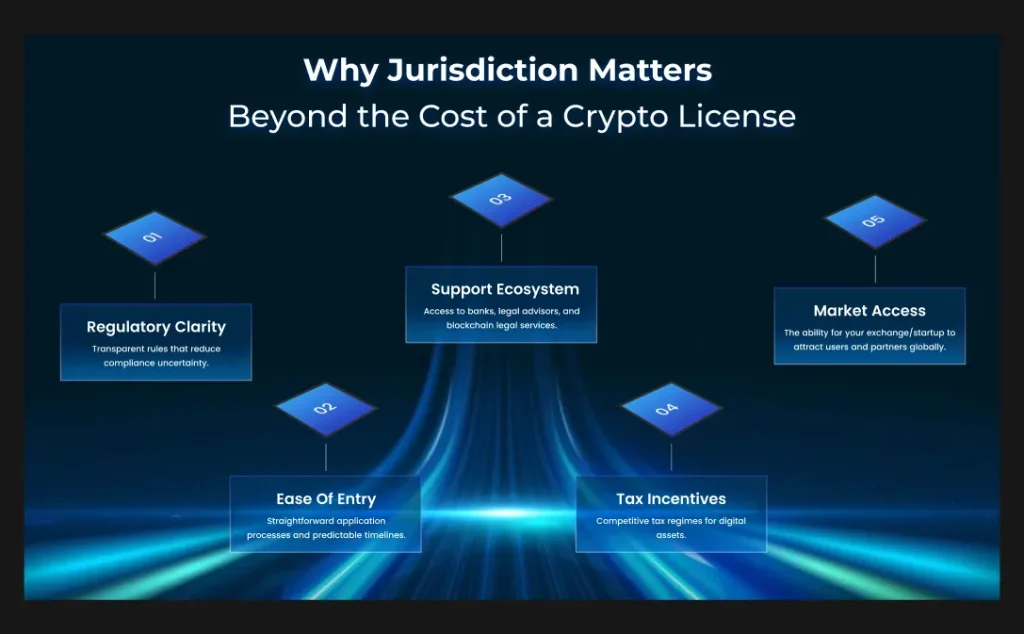
- Regulatory clarity: Transparent rules that reduce compliance uncertainty.
- Ease of entry: Straightforward application processes and predictable timelines.
- Support ecosystem: Access to banks, legal advisors, and blockchain legal services.
- Tax incentives: Competitive tax regimes for digital assets.
- Market access: The ability for your exchange/startup to attract users and partners globally.
These factors distinguish a short-term “cheap” license country from a sustainable jurisdiction that supports long-term success.
Top 10 Most Affordable Crypto License Countries for Web3 Entrepreneurs in 2026
Now let’s dissect the leading destinations for 2026, curated using global regulatory data and market insights showing which countries are competitively priced and crypto-friendly.
1. El Salvador – The Bitcoin Nation & Crypto Advocate
Among the most trending jurisdictions for entrepreneurs seeking crypto license services, El Salvador remains a standout due to its pioneering stance: it was the first country in the world to adopt Bitcoin as legal tender. This radical move has generated a legal environment where crypto usage is mainstream, and businesses benefit from clear acceptance of digital currencies.
What Makes El Salvador Attractive
- Bitcoin Legal Tender Law: Official recognition of cryptocurrency drives confidence for exchanges and Web3 projects.
- Crypto-Friendly Taxes: No capital gains tax on crypto income for individuals – a huge draw for investors and founders.
- Fast Licenses: Compared to many Western regulators, El Salvador’s licensing process is considered more accessible, with lower overall regulatory friction and quicker timelines.
When combined with local interest in Bitcoin-powered innovation and an expanding market of everyday users, El Salvador earns its place as a top destination for cost-effective crypto legal consulting and licensing opportunities.
2. United Arab Emirates (UAE) – The Middle East’s Crypto Powerhouse
While the UAE is often thought of when considering expensive global financial hubs, its regulatory strategy around virtual assets has made it a compelling choice for exchanges and startups seeking sustainable licensing frameworks.
Key Advantages
- Zero Personal & Capital Gains Tax: A rare benefit in the region, boosting adoption and investment.
- VARA & ADGM: The Virtual Assets Regulatory Authority in Dubai and the financial free zones in Abu Dhabi have modernized licensing for digital asset service providers.
- Strong Ecosystem: A growing Web3 community and deep pockets of institutional capital.
Although licensing costs can be moderate compared with purely “cheap” regimes, the UAE’s crypto license frameworks give startups strategic advantages – transparency, global respect, and access to capital markets. This balance of affordability and prestige makes it one of the most desirable jurisdictions for serious exchanges and blockchain ventures.
3. Portugal – Europe’s Crypto Freelancer & Startup Hub
Portugal ticks many boxes for the cheapest crypto exchange license seekers looking to build in a European jurisdiction without extreme regulatory burdens.
Highlights for Crypto Startups
- Tax Benefits: Portugal remains popular for individuals and startups due to favorable tax treatment for crypto gains, especially for long-term holders.
- Startup Friendly: Lisbon and Porto are becoming tech hotspots with increasing blockchain adoption.
- EU Access: Eurozone participation allows easier market access across EU countries through passporting.
While Portugal’s full crypto license services process can involve standard EU regulatory steps, the overall ecosystem, including attractive living conditions, makes it worthwhile for founders and developers alike.
4. Estonia – Digital-First & E-Residency Innovation
For startups prioritizing speed and blockchain legal services efficiency, Estonia has been a perennial favorite in the crypto world. Its E-residency program allows entrepreneurs to establish companies remotely, speeding up licensing and business setup – a big advantage for early-stage exchanges and fintech builders.
Estonia’s Crypto Advantages
- Transparent Licensing: Clear applications and relatively light bureaucracy for virtual asset service providers.
- E-Residency: Enables global founders to register and operate businesses without relocating.
- Competitive Compliance: Progressive AML frameworks attract compliance-minded projects.
Estonia’s crypto license regime has periodically tightened, particularly under MiCA-aligned EU standards, but it remains cost-effective compared to traditional European regulators.
5. Germany – Innovation Within a Structured Regulatory System
Germany strikes a unique balance – robust protection for investors, and a structured framework that exchanges and fintechs can reliably navigate with proper guidance from web3 legal consulting firms.
Germany’s Standout Features
- Clear Legal Framework: BaFin oversight offers predictable compliance expectations.
- Tax Clarity: Long-term crypto holdings can be exempt from capital gains tax.
- Banking Integration: German banks are increasingly integrating crypto services, easing operations for licensed entities.
Though not “cheap” in a bare-bones cost sense, Germany’s clarity and institutional trust reduce indirect costs associated with uncertain regulation, which is invaluable for founders serious about scaling internationally.
6. Malta – The Blockchain Island with Global Recognition
Malta’s rise as the “Blockchain Island” was built on forward-looking legislation aimed at making crypto legal consulting and licensing accessible. Even with increased scrutiny from EU bodies in recent years, Malta’s framework remains popular among exchanges and service providers.
Why Malta Still Matters
- Tiered Licensing: Offers different licenses for exchanges, custody, and ICOs.
- EU Membership: Access to the European single market upon regulatory approval.
- Talent Pool: An active local ecosystem of blockchain specialists.
While evolving regulatory expectations have increased compliance requirements, Malta remains one of the most globally recognized destinations for obtaining a crypto license with credibility and EU reach.
7. The U.S.A. – Large Market, Safe Regulatory Ground
The United States may not have been the cheapest in licensing fees alone, but its market size, institutional participation, and clarity in certain states make it a key contender for any serious exchange planning global scale.
The U.S. Crypto Edge
- State & Federal Oversight: Licensing and SEC/CFTC engagement provide rigour and investor confidence.
- Vast Market: One of the largest populations of crypto users in the world.
- Deep Capital Pools: Access to venture and institutional funding unmatched elsewhere.
The cheapest crypto exchange license path in the U.S. is typically state-by-state, but when built strategically, especially in crypto-friendly states like Wyoming or Texas, companies access enormous market potential.
8. The U.K. – Regulated Access & Business Infrastructure
The U.K. continues to be one of the most well-regulated and professionally serviced countries for digital asset enterprises, supported by a mature financial sector and deep consulting expertise.
U.K. Highlights
- FCA Licensing: Clear listing requirements for virtual asset service providers (VASPs).
- Supportive Legal Services: A robust ecosystem of web3 legal consulting firms and international advisers.
- Global Connectivity: Proximity and access to European and Commonwealth markets.
A cost-efficient route may involve structured planning with experienced crypto legal consulting partners, ensuring regulatory success and minimized cost over the lifecycle of your business.
9. Canada – Stable & Transparent Regulatory Environment
Canada’s approach to crypto licensing is defined by clarity and enforcement, rather than high cost or complexity. Its well-structured frameworks and supportive blockchain legal services make it an attractive destination for startups and exchanges aiming for long-term growth and investor confidence.
Why Canada Stands Out
- CSA & IIROC Registration: Centralized frameworks for exchanges and custodians.
- Investor Protection: Strong compliance standards foster trust for institutional clients.
- Evolving Innovation: Canada supports ETFs, stablecoins, and digital finance solutions.
For startups and exchanges wanting blockchain legal services support in a system with predictable expectations and strong enforcement, Canada remains an appealing choice.
10. Hong Kong – Asia’s Rising Crypto Hub
Hong Kong has rapidly emerged as a major global destination for crypto firms due to its accelerated licensing approvals and strategic location bridging East and West. With clear regulatory guidance from the Securities and Futures Commission(SFC) and access to a vibrant financial ecosystem, it is ideal for startups and exchanges seeking reliable crypto license services and long-term growth in Asia.
What Makes Hong Kong Competitive
- Swift Licensing Process: Regulators have approved multiple cryptocurrency exchanges, making licensing more operational.
- Financial Hub: Proximity to major financial institutions and markets in Asia.
- Regulatory Clarity: Active guidance from the SFC.
Thanks to a dynamic regulatory environment and global visibility, Hong Kong provides a compelling mix of cost-efficiency and strategic advantage, especially for Asia-focused projects.
How to Choose the Right Jurisdiction for Your Crypto License in 2026
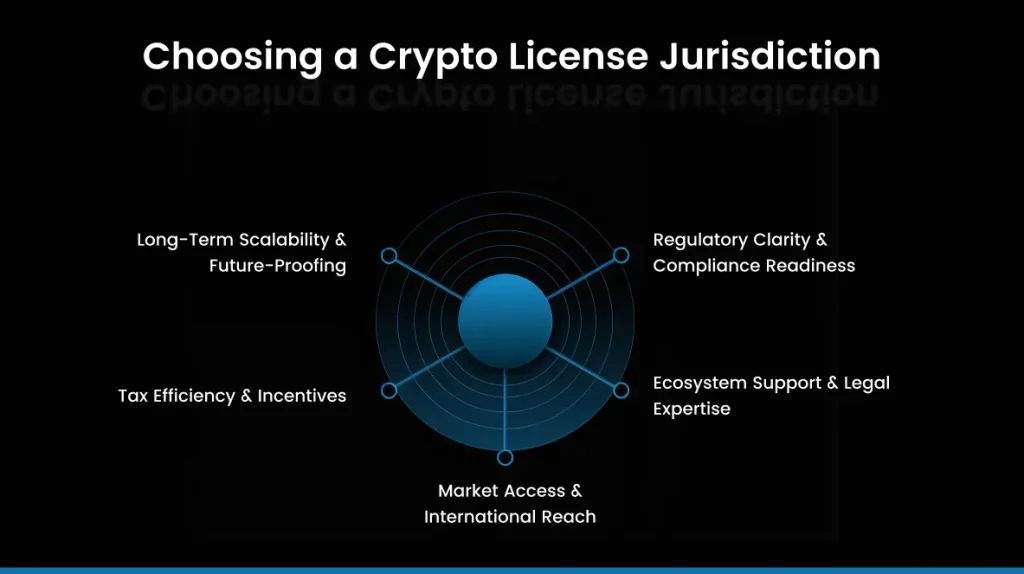
Selecting the right country for your crypto license in 2026 goes far beyond simply comparing fee structures. With global regulatory landscapes evolving rapidly and countries adopting more robust frameworks, founders and exchanges need a strategic approach. Here are the most important factors to consider when choosing the best jurisdiction:
1. Regulatory Clarity & Compliance Readiness
In 2026, regulators are no longer reactive; they are proactively shaping crypto ecosystems. Countries with transparent and enforceable rules reduce the risk of fines, shutdowns, or license revocations. Look for jurisdictions that clearly define:
- Virtual Asset Service Provider (VASP) requirements
- AML/KYC obligations
- Custody and operational compliance standards
Well-defined regulatory environments, such as the UAE’s VARA framework or Germany’s BaFin guidance, ensure that your crypto license services are both legitimate and future-proof.
2. Ecosystem Support & Legal Expertise
Access to experienced crypto legal consulting and blockchain legal services is critical in 2026, as licensing processes become more technical and compliance-heavy. Jurisdictions with a vibrant support ecosystem provide:
- Specialized law firms and consultants in crypto & Web3
- Banking partners familiar with digital asset operations
- Networking opportunities with investors, incubators, and fintech accelerators
Countries like Estonia and Malta stand out for offering both supportive regulatory environments and a growing ecosystem of expert advisors.
3. Market Access & International Reach
When choosing a jurisdiction, consider its ability to support cross-border operations. Key factors include:
- Access to major markets: Such as the EU, the Middle East, or the Asia-Pacific regions
- Compatibility with global payment systems and banking partners
- Recognition of licenses by foreign regulators
Examples:
- Malta: MiCA licensing allows crypto service providers to operate across the EEA, giving them regional reach without separate national approvals.
- UAE: VARA and SCA frameworks enable firms to scale nationally with strong regulatory backing and credibility.
4. Tax Efficiency & Incentives
The cheapest crypto license is not just about lower application fees. Tax incentives play a huge role in operational profitability. Evaluate:
- Corporate tax rates on crypto trading and holdings
- Capital gains and income tax policies for digital assets
- Government grants, subsidies, or innovation incentives for blockchain startups
Countries like Portugal and El Salvador continue to attract founders due to favorable tax treatment and supportive crypto regulations, making them ideal for early-stage startups seeking efficiency and growth.
5. Long-Term Scalability & Future-Proofing
Finally, consider whether the jurisdiction allows for growth without legal roadblocks. Licensing costs may be low now, but a restrictive regulatory environment can impede future expansion, fundraising, or product diversification. Prioritize:
- Jurisdictions updating regulations proactively (e.g., adapting to MiCA in the EU)
- Legal frameworks compatible with DeFi, NFTs, stablecoins, and emerging Web3 protocols
- Ability to scale operations, integrate with global banking, and attract institutional investors
Strategically choosing your crypto license location in 2026 ensures your business is not only compliant but also positioned for sustainable growth and global reach.
Ready to Secure Your Crypto License? Talk to Our Experts Today
Smart Licensing for Sustainable Growth
The 2026 landscape for crypto license services and the cheapest crypto exchange license jurisdictions reflects a balance between affordability, startup friendliness, and regulatory credibility. Countries like El Salvador, Estonia, and Portugal provide excellent starting points for lean operations, while established financial hubs like the U.S., U.K., and Hong Kong offer unparalleled market reach and investor confidence. Partnering with a seasoned web3 legal consulting firm and leveraging expert blockchain legal services ensures that your licensing strategy aligns with regulatory expectations and global expansion plans.
Antier Blockchain Legal Services specializes in guiding startups and exchanges through complex licensing processes, offering end-to-end support from compliance advisory to global expansion strategies. Whether your focus is launching a decentralized exchange, a wallet service, or a Web3 fintech platform, the right jurisdiction can empower faster licensing, stronger credibility, and sustainable growth while keeping your compliance costs optimized.