
Crypto World
6 Swiss Banks Launch Swiss Franc (CHF) Stablecoin Sandbox


Six Swiss banks have joined forces with Swiss Stablecoin AG to test a Swiss franc-pegged stablecoin. UBS, PostFinance, Sygnum, Raiffeisen, Zürcher Kantonalbank, and BCV announced the initiative on April 8.
The sandbox runs on Ethereum using ERC-20 and will operate throughout 2026.
No Regulated CHF Stablecoin Exists Yet
Stablecoins have grown rapidly in international importance, but the market remains dominated by USD-pegged tokens like USDT and USDC. Switzerland currently lacks a regulated Swiss franc stablecoin with broad application. The sandbox aims to address that gap.
The participating institutions will test selected use cases in a controlled live environment with defined safeguards, including transaction limits and a restricted participant pool. Swiss Stablecoin AG provides the technical infrastructure for issuing the stablecoin.
Two Systemically Important Banks Involved
The consortium includes two of Switzerland’s four systemically important banks: UBS and the Raiffeisen Group. The combination of traditional banking institutions like UBS and Raiffeisen alongside digital-first players like Sygnum signals that Switzerland’s financial establishment is taking stablecoin infrastructure seriously.
Several participants are not new to tokenized finance. UBS, BCV, Raiffeisen Switzerland, and Zürcher Kantonalbank already participated in the Swiss National Bank’s Project Helvetia pilot, which tested wholesale CBDC on six Digital Exchange for settlement. The new sandbox is a private stablecoin test rather than a central bank project, but the operational experience carries over.
Stablecoin Sandbox Open to Additional Participants
The sandbox remains open to other interested banks, companies, and institutions. This positions the project as a framework that could expand rather than a closed pilot. The focus is on building a Swiss ecosystem for digital money, developing capabilities in digital payments, and gaining practical insights for the industry.
The initiative follows similar efforts in Europe. A consortium of 12 banks, including BBVA, ING, and UniCredit, announced Qivalis, a digital euro stablecoin set to launch in the second half of 2026. A separate group of 10 banks, including Bank of America, Deutsche Bank, Goldman Sachs, and UBS, is also exploring stablecoin issuance.
What This Means for Switzerland
The sandbox represents Switzerland’s largest multi-bank collaboration on digital finance infrastructure. While MiCA-compliant Swiss franc stablecoins like AllUnity’s CHFAU already exist, the Swiss banking consortium aims at the institutional settlement layer.
The test runs through 2026. A sandbox interim report is expected in the second half of the year. For the broader market, access terms and specific use cases remain undisclosed. For banks and tokenization platforms watching the Swiss stablecoin infrastructure, this is the first multi-bank live test of its kind in the country.
The post 6 Swiss Banks Launch Swiss Franc (CHF) Stablecoin Sandbox appeared first on BeInCrypto.

Crypto World
MEXC Launches VVIP System Powered by M Score, Redefining Elite Access Beyond Asset Thresholds

MEXC, one of the world leaders in zero‑fee digital asset trading, announced the launch of the industry-first VVIP system that went live on April 2, 2026. The system redefines VVIP access by moving beyond traditional asset-based eligibility toward a dynamic, multi-dimensional user value-based model. It gives every trader the opportunity to access elite privileges and lays the foundation for a more user-centric ecosystem.
At the core of the VVIP system is M-Score, a dynamic metric that reflects user value based on trading activity, account security, and platform engagement. Unlike conventional models that rely primarily on asset holdings or trading volume, M-Score is continuously updated to capture real-time user behavior, offering a more comprehensive and flexible framework for tier qualification.
The MEXC VVIP system unlocks a comprehensive suite of premium benefits for users with an M Score of 800 or above. Eligible users can receive exclusive loss coverage to help manage downside during volatile markets, claim APR boosters to earn enhanced interest on their idle assets, and access 24/7 rapid-response support along with expedited handling for large withdrawals through a priority channel. In addition, users can participate in popular platform events with rewards credited instantly, with no manual review required, and receive Elite Experience Cards to share top-tier privileges with their friends. Users at Standard and Premier tiers also receive tier-appropriate benefits, with full details available on the VVIP page.
The system is being rolled out in phases, with initial access granted to eligible users. Eligible users can access the VVIP section via the MEXC platform. MEXC will also unveil a major platform event on April 13, with further details to be announced in due course. Access will be reserved for users who achieve a minimum M-Score of 600 (Premier tier and above).
MEXC continues to put users first by combining multi-dimensional user value-based evaluation with platform participation, making it easier for users to access premium benefits. This approach reflects the company’s broader commitment to supporting the sustainable development of the digital asset industry. Looking ahead, MEXC will further enhance its VVIP system to help users seize opportunities in a changing market.
About MEXC
Founded in 2018, MEXC is committed to being “Your Easiest Way to Crypto.” Serving over 40 million users across 170+ countries, MEXC is known for its broad selection of trending tokens, everyday airdrop opportunities, and low trading fees. Our user-friendly platform is designed to support both new traders and experienced investors, offering secure and efficient access to digital assets. MEXC prioritizes simplicity and innovation, making crypto trading more accessible and rewarding.
MEXC Official Website| X | Telegram |How to Sign Up on MEXC
Risk Disclaimer: This content does not constitute investment advice. Given the highly volatile nature of the cryptocurrency market, investors are encouraged to carefully assess market fluctuations, project fundamentals, and potential financial risks before making any trading decisions.
The post MEXC Launches VVIP System Powered by M Score, Redefining Elite Access Beyond Asset Thresholds appeared first on BeInCrypto.


Disclosure: This article does not represent investment advice. The content and materials featured on this page are for educational purposes only.
AI-driven crypto tools are becoming essential as traders seek automation to manage volatility.
Summary
- AI trading tools surge in 2026, helping crypto traders automate strategies and manage risk more effectively
- AccuQuant offers 24/7 automated trading with real-time AI optimization and one-click setup for beginners
- AI bots democratize crypto trading, enabling users to capture market opportunities without constant monitoring
In the ever-changing world of cryptocurrency, automation is more than just a buzzword; it’s a necessity. With the rapid rise of AI-powered solutions for cryptocurrency trading, traders are increasingly relying on automation to navigate volatile markets.
This article highlights 10 innovative tools that combine intelligent analytics with user-friendly design to give traders a competitive edge. Whether they’re a beginner or a seasoned trader, these AI-driven tools can improve their trading strategies and better manage risk.
The evaluation criteria for these robots are:
- Key features include advanced tools such as a visual strategy builder, backtesting capabilities, and automated risk management.
- Unique value lies in its unique elements, including AI integration, community support, open-source flexibility, and seamless multi-exchange support.
- Use cases: Specific scenarios where each robot can excel, from entry-level automation to complex algorithmic trading.
After extensive research, we selected three outstanding solutions that have proven their value in the field of artificial intelligence for cryptocurrency trading.
Best AI-powered cryptocurrency trading bots:
1. AccuQuant
With its easy setup and fully automated system, AccuQuant captures market opportunities 24/7. No experience is required to get started quickly and easily generate passive income amidst market fluctuations.
AccuQuant’s main functions:
- One-click trading start: No complicated setup required, start intelligent trading in minutes.
- AI real-time optimization: Automatically identifies market opportunities and dynamically adjusts strategies to improve performance.
- Automated profit mechanism: No need to constantly monitor the market; the system runs 24/7, and you can start earning passive income.
How AccuQuant works: A step-by-step guide for beginners
- Register and create an account: New users will receive a $20 real bonus upon registration!
- Choose a strategy: Select a strategy that fits a particular budget and purchase.
- Start automated trading: Once the purchase is successful, activate the AI system to process all trades 24/7.
For more information, visit the official website.
2. PionexGPT
PionexGPT combines the insights enabled by GPT with customizable robots, making it one of the best solutions. This platform leverages natural language market analysis to help traders enhance their decision-making process, making it a versatile option for anyone looking to improve their strategies.
3. 3Commas
3Commas is known for its cloud-based automation, featuring advanced tools such as trailing stops and portfolio management. Its vibrant community and strategy marketplace allow traders to exchange ideas and adopt proven strategies, solidifying its reputation as a top AI-powered cryptocurrency trading platform.
Why use artificial intelligence in cryptocurrency trading?
Speed and Efficiency
Artificial intelligence (AI) can process massive amounts of data and execute trades far faster than humans. This speed allows traders to capitalize on even the smallest market fluctuations, gaining a competitive edge.
Data-Driven Decision Making
AI utilizes advanced algorithms to analyze vast amounts of data, including historical price trends, market news, and social media sentiment.
Automation
AI allows for automated trading, eliminating the human element in the trading process. Automated systems can continuously monitor the market and execute trades according to predefined criteria without constant supervision.
Risk Management
AI can create personalized risk management strategies, dynamically adjusting trading positions, stop-loss orders, and portfolio allocation to minimize risk in volatile markets such as cryptocurrencies.
Predictive Capabilities
AI models, especially those driven by machine learning, can predict market trends based on historical data.
Factors to Consider
Choosing the right AI-powered cryptocurrency trading bot depends on needs. Here are some factors to consider:
- Skill Level: Assess whether the platform is suitable for beginners or advanced traders with technical expertise.
- Cost Structure: Understand subscription fees, commission models, or any hidden costs that could impact trading success.
- Integration: Ensure the bot supports your preferred exchanges and integrates seamlessly with your existing trading tools.
- Community and Support: A strong user community and reliable customer support can significantly enhance your experience.
- Testing: Validate performance starting small, even with the best AI-powered cryptocurrency trading bots, the cryptocurrency market is unpredictable.
- Security: Always check for robust security protocols to protect funds and personal data.
Summary
In summary, AI-powered cryptocurrency trading bots offer significant advantages through automated trading and the provision of insights based on key technical indicators, making them indispensable tools for both novice and experienced traders. They address the 24/7 challenges of the cryptocurrency market, allowing traders to capitalize on opportunities without constant monitoring.
These bots not only improve performance but also democratize profitable trading strategies, enabling non-professional traders to participate effectively. With so many bots available, each with unique features and capabilities, traders can choose the one that best suits their needs and preferences.
Disclosure: This content is provided by a third party. Neither crypto.news nor the author of this article endorses any product mentioned on this page. Users should conduct their own research before taking any action related to the company.
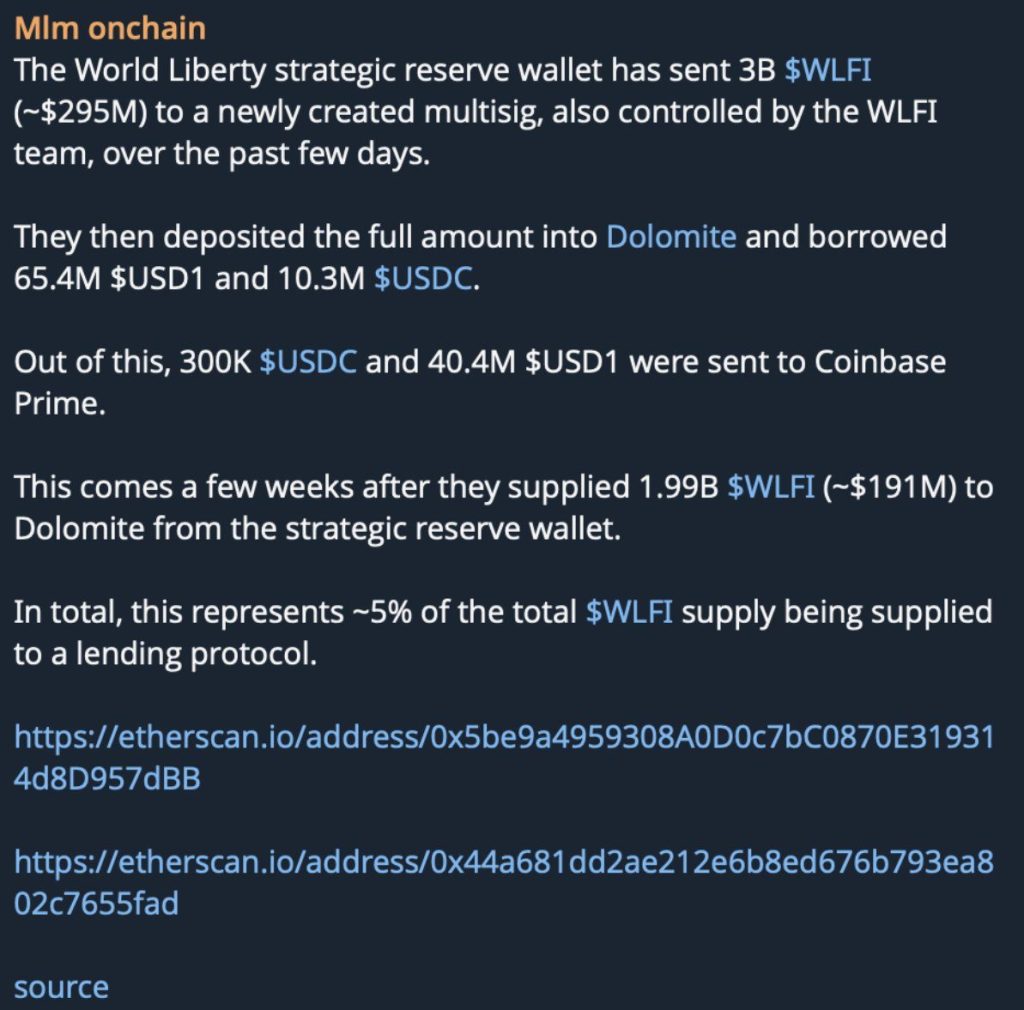
Are Trump crypto insiders back at it again? $484 million in Trump WLFI crypto tokens deposited on Dolomite Protocol. Borrowed against for USDC. And a governance token with almost no real market depth sits as the collateral backstop.
If this unwinds, Dolomite lenders don’t get a haircut; they get wiped.
DeFi analyst Ignas flagged the pattern on X, identifying the leverage structure as a potential systemic threat to Dolomite’s lending pools. The on-chain footprint is already public. The question isn’t whether the risk exists – it’s whether lenders understand what they’re sitting inside.
- The Deposit: Approximately $484M in $WLFI tokens has been deposited into Dolomite Protocol as collateral.
- The Mechanism: That collateral is being used to borrow USDC – extracting real stablecoin value against a token with minimal on-chain liquidity.
- The Bad Debt Risk: If $WLFI price drops sharply, collateral value falls below outstanding USDC debt, leaving Dolomite lenders with unrecoverable DeFi bad debt.
- The Yield Trap: USDC lending APY on Dolomite has spiked to 13.5% – attractive on the surface, but potentially unredeemable if a bank run triggers on bad debt confirmation.
- The Political Trigger: Analysts tie the likely $WLFI dump window to the fading political utility of the token post-cycle – a timeline tied directly to the Trump orbit’s exit incentives.
- What to Watch: DOLO’s $15M market cap makes it acutely vulnerable to protocol insolvency fears; any public confirmation of bad debt could detonate the token in hours.
Explore: The best pre-launch token sales with asymmetric upside potential
How the $484M Trump WLFI Crypto Leverage Play Actually Works – and Where It Breaks
The structure is direct and that’s what makes it dangerous. Entities linked to World Liberty Financial deposited $484M worth of WLFI into Dolomite Protocol, using those tokens as collateral to borrow USDC.
On paper, it looks like a standard DeFi leverage position. In practice, it’s a liquidity time bomb.
WLFI is a governance token. It has politically generated demand and almost no organic secondary market depth.
That means the $484M figure is a valuation on-paper, not $484M that can actually be liquidated into the open market without collapsing the token’s price by 60%, 70%, or more in a single session.
The collateral isn’t real in any liquidation scenario that matters.
When collateral value drops below the outstanding USDC borrow, and with WLFI’s liquidity profile, the threshold is not far, Dolomite’s liquidation engine cannot recover the debt.
No buyer exists at the price needed to make lenders whole. That’s the DeFi bad debt scenario: the USDC is gone, the collateral is worthless at scale, and the protocol is left insolvent in all but name.
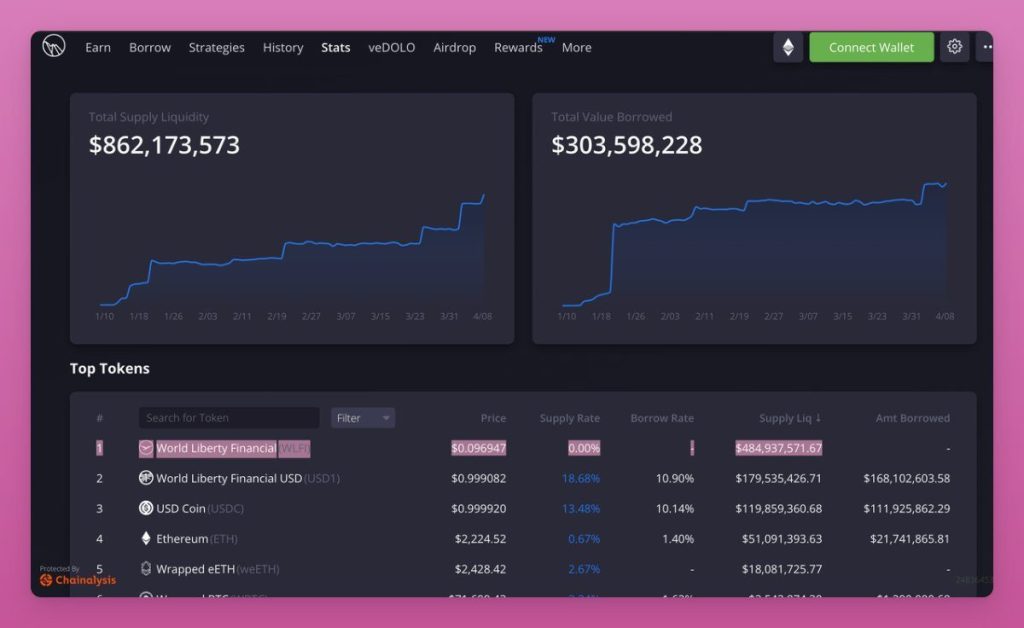
Ignas’s alert on X specifically called out the borrow pressure dynamics, USDC lending rates on Dolomite have already spiked to 13.5% as the protocol attempts to attract fresh liquidity to service the growing borrow demand.
That rate spike is not a yield opportunity. It’s a distress signal. Similar warning patterns preceded the Stabble protocol’s 62% TVL collapse on Solana, where liquidity pressure built silently before the exit hit.
The math on DOLO exposure is brutal at this scale. A $15M market cap token absorbing a protocol-wide insolvency event involving nine figures of bad debt doesn’t survive the news cycle intact.
What DOLO Lenders Are Actually Facing – The Bad Debt Exposure Quantified
DOLO sits at approximately $15M in market cap. That number matters because it tells you exactly how much bad news the token can absorb before the math becomes unsurvivable.
Dolomite does not appear to operate a protocol-level insurance fund sufficient to cover a nine-figure bad debt event. There is no backstop that absorbs $484M in underwater collateral.
IYKYK.
New USDC incentives from @worldlibertyfi are now live on Dolomite.$USDC
→ 14.02% APY
→ 6.52% WLFI
→ 0.59% oDOLO https://t.co/in1nMNXWjz pic.twitter.com/mfgtv5mhu7— Dolomite
(@Dolomite_io) April 7, 2026
The 13.5% USDC APY that Dolomite is currently advertising to new depositors is the yield trap Ignas explicitly warned about.
Depositors chasing that rate are walking into a pool that may not be redeemable at par if the borrow position unwinds badly. This is the same dynamic that burned depositors in DeFi platform controversies where advertised yields masked structural insolvency risk.
If bad debt is confirmed on-chain – whether through a WLFI price collapse or a forced liquidation event – DOLO’s reaction will be immediate. A $15M cap token doesn’t need institutional selling pressure to crater. Retail panic alone is sufficient at that size.
Discover: The Best Crypto Presales Live Right Now
The post Lending Pool Heist: Are Trump Crypto Insiders Setting Up To Crash DOLO Crypto? appeared first on Cryptonews.
Crypto World
Bitcoin $80,000 play is now the most popular bet in derivatives: Crypto Daybook Americas


Sentiment in the bitcoin market appears to have flipped after a long time, suggesting an investor positioning for a potential rally to $80,000.
On Deribit, which accounts for a majority share of the multi-billion dollar global crypto options market, the $80,000 call — a derivatives bet that prices will rise beyond that level — has emerged as the most popular trade. It has overtaken the $60,000 put, which dominated positioning in recent months as prices declined.
As of writing, open interest at the $80,000 strike stands at over $1.6 billion, with each contract representing one bitcoin, according to Deribit data. The $60,000 put has an open interest of $1.41 billion.
BTC has already rebounded above $70,000 from early-week lows near $67,000, supported in part by a temporary ceasefire between the U.S. and Iran that weighed on oil prices. Analysts say continued weakness in oil could help ease inflation concerns, potentially strengthening the case for Federal Reserve rate cuts — a backdrop that tends to support risk assets, including bitcoin.
On-chain data offers some additional supports the bullish case.
“For only the second week in 2026, Bitcoin wallets holding more than 10,000 BTC have recorded net inflows. This points to whale accumulation rather than ETF-driven demand. If sustained, it raises the likelihood of a supply squeeze that could push Bitcoin toward the $75,000–$80,000 range,” said Paul Howard, senior director at crypto liquidity provider Wincent.
Separately, analysts at 21Shares see scope for further upside, with a potential move toward $100,000 by the end of June under favorable conditions.
“Over the past month, we’ve seen more than $1.5 billion in net inflows into BTC ETFs, alongside an increase in holdings by larger investors of around 6% since the start of the year — pointing to continued demand from more sophisticated participants,” said Matt Mena, crypto research strategist at 21Shares. “If geopolitical tensions ease and regulatory clarity improves, a move toward $100,000 by the end of Q2 cannot be ruled out.”
Still, risks remain. The ceasefire is fragile, and any renewed escalation could send oil prices higher again, potentially dampening risk appetite and capping bitcoin’s gains.
Later today, the U.S. fourth-quarter GDP data is due. While the backward-looking release may have limited immediate impact, a significant surprise in either direction could still trigger short-term volatility. Stay alert!
What’s trending
- Trump vows to keep US troops in Persian Gulf before Iran talks (Bloomberg): As both sides accused each other of violating the truce, Trump vowed to keep U.S. troops in the Persian Gulf ahead of talks with Iran that are planned to firm up a fragile ceasefire.
- Everyone’s awaiting U.S. inflation figures, but bitcoin traders couldn’t care less (CoinDesk): The latest U.S. inflation report for March, due Friday, is seen as a key indicator by several observers, given the backdrop of the Iran war and its inflationary impact. Yet, the latest BTC market activity shows that traders couldn’t care less.
- ‘NATO in grave danger after Iran war,’ former US NATO ambassador says (euronews): Former US ambassador to NATO, Ivo Daalder, said repeated threats by Trump to withdraw from NATO and other concerning confrontations, have created the ‘worst crisis’ the alliance has ever faced.
- Inflation data, Iran talks: What to watch for the rest of the week (The Wall Street Journal): After Wednesday’s big stock-market rally, investors will watch if the U.S.-Iran ceasefire holds and await inflation data updates, Q4 GDP estimates, and new data on consumer sentiment.
Today’s signal

The chart shows bitcoin’s daily price swings in candlestick format since October 2025. It also has a yellow trendline drawn off the record high of over $126,000 in October represents the brutal bear market.
As of writing, BTC’s price traded close to that trendline resistance, a make or break level.
A decisive breakout above the trendline – ideally on strong volume and sustained follow-through – would mean the downtrend has likely tun its course. That could open the door for a broader bullish trend reversal, with scope for a move toward the $75,000–$80,000 region initially, and potentially higher if momentum builds.
On the other hand, a rejection at the trendline would reinforce it as a valid resistance level, suggesting continuation of the bear market. This would raise the risk of another pullback toward recent support levels, potentially ito $65,000 or lower.
Read more: For analysis of today’s activity in altcoins and derivatives, see Crypto Markets Today . For a more comprehensive list of events this week, see CoinDesk’s “Crypto Week Ahead“.

Crypto World
Bitcoin under $71,000, ETH, SOL, XRP drop as Iran ceasefire frays within 48 hours of being signed


Bitcoin traded at $70,981 on Thursday, down 0.5% over 24 hours but still up 6.1% on the week, as the two-week ceasefire between the U.S. and Iran that triggered Tuesday’s broad rally began showing cracks less than 48 hours after it was announced.
Iranian Parliament Speaker Mohammad Bagher Ghalibaf said three clauses of the ceasefire proposal had been contravened, without specifying which ones. Israeli attacks continued in Lebanon.
And the Strait of Hormuz, the critical shipping lane whose reopening was supposed to be the centerpiece of the deal, remains effectively closed with minimal tanker traffic passing through despite Iran’s pledge to allow “coordinated” transit.
Brent crude rebounded 2% to about $97 after Wednesday’s collapse of more than 10%, its worst single-day plunge in six years. The reversal reflects how quickly the market has moved from pricing in peace to pricing in uncertainty about whether the ceasefire holds through the weekend, let alone for the full two weeks.
Ether fell 2.6% to $2,180 after leading the ceasefire rally with a 5.2% weekly gain. Solana’s SOL dropped 3.1% to $81.96, XRP lost 3% to $1.33, and dogecoin slid 3.4% to $0.091. BNB held relatively flat at $600, down 2.2%.
The MSCI Asia Pacific Index fell 0.9% with two stocks declining for every one that rose, after surging the most in a year on Wednesday’s ceasefire euphoria. S&P 500 and European futures pointed to a 0.2% decline, signaling the four-day winning streak for global equities was about to end. Treasuries were steady after wiping out an earlier rally on concern that higher oil prices would feed back into inflation.
Meanwhile, The Federal Reserve continues to highlight upside inflation risks alongside softening labor conditions, keeping the higher-for-longer rate narrative intact. Japan’s wage growth has hit multi-decade highs, strengthening expectations for further rate hikes.
That combination amounts to what one analyst described as “uncoordinated tightening” across major economies, layered on top of geopolitical uncertainty that prevents any stable anchor for rate expectations.
For bitcoin specifically, the move from $67,000 to $72,700 on the ceasefire and the subsequent hold above $70,000 despite Thursday’s wobble is the most constructive price action since the war began six weeks ago.
The $65,000 to $73,000 range that has contained every move since late February is still intact, but bitcoin is now testing the upper half rather than grinding along the bottom.


A South Korean court has canceled the Financial Intelligence Unit’s (FIU) three-month partial business suspension of Dunamu, the operator of crypto exchange Upbit, according to local reports.
Yonhap News Agency reported on Tuesday that the Seoul Administrative Court sided with Dunamu in its lawsuit against the FIU, overturning the sanction tied to alleged Anti-Money Laundering (AML) violations.
The court said clear rules existed for transactions above 1 million won (about $675), but found that regulations for smaller transfers were not specific enough, weakening the basis for enforcement within the case.
The ruling narrows the FIU’s ability to impose major AML sanctions on crypto exchanges where the underlying compliance standards are not spelled out clearly enough in practice. It also ends a dispute that began after FIU imposed the sanction in February 2025, and that was later paused by the court while Dunamu’s challenge was under review.
Court cites lack of guidance in Dunamu decision
Addressing the FIU’s claim that Dunamu failed to take adequate measures, the court said the regulator had not provided specific guidance on what actions were required. In that context, the court found that the company had taken its own measures.
The court said that even if those measures appear insufficient in hindsight, it is difficult to conclude that Dunamu failed to fulfill its obligations due to intent or gross negligence, undermining the basis for the sanction.
Related: Bithumb launches legal action to recover 7 Bitcoin from payout error
FIU sanction triggered a legal challenge from Dunamu
On Feb. 25, 2025, the FIU imposed a three-month partial suspension on Dunamu, restricting new Upbit users from transferring digital assets.
The regulator said the measure followed an on-site inspection that found Dunamu had facilitated transactions with unregistered overseas virtual asset providers (VASPs) and failed to meet customer due diligence requirements.
The FIU previously said it identified over 600,000 suspected Know Your Customer violations during a review of Upbit’s exchange business license.
In response to the sanction, Dunamu filed a lawsuit and requested an injunction to halt its enforcement shortly after the penalty was announced. On Feb. 28, 2025, Dunamu said it had submitted the case seeking to overturn the partial suspension order.
On March 27, 2025, the court granted the injunction, allowing Upbit to continue onboarding new users while the case was under review.
Magazine: Asia Express: Phantom Bitcoin checks, China tracks tax on blockchain
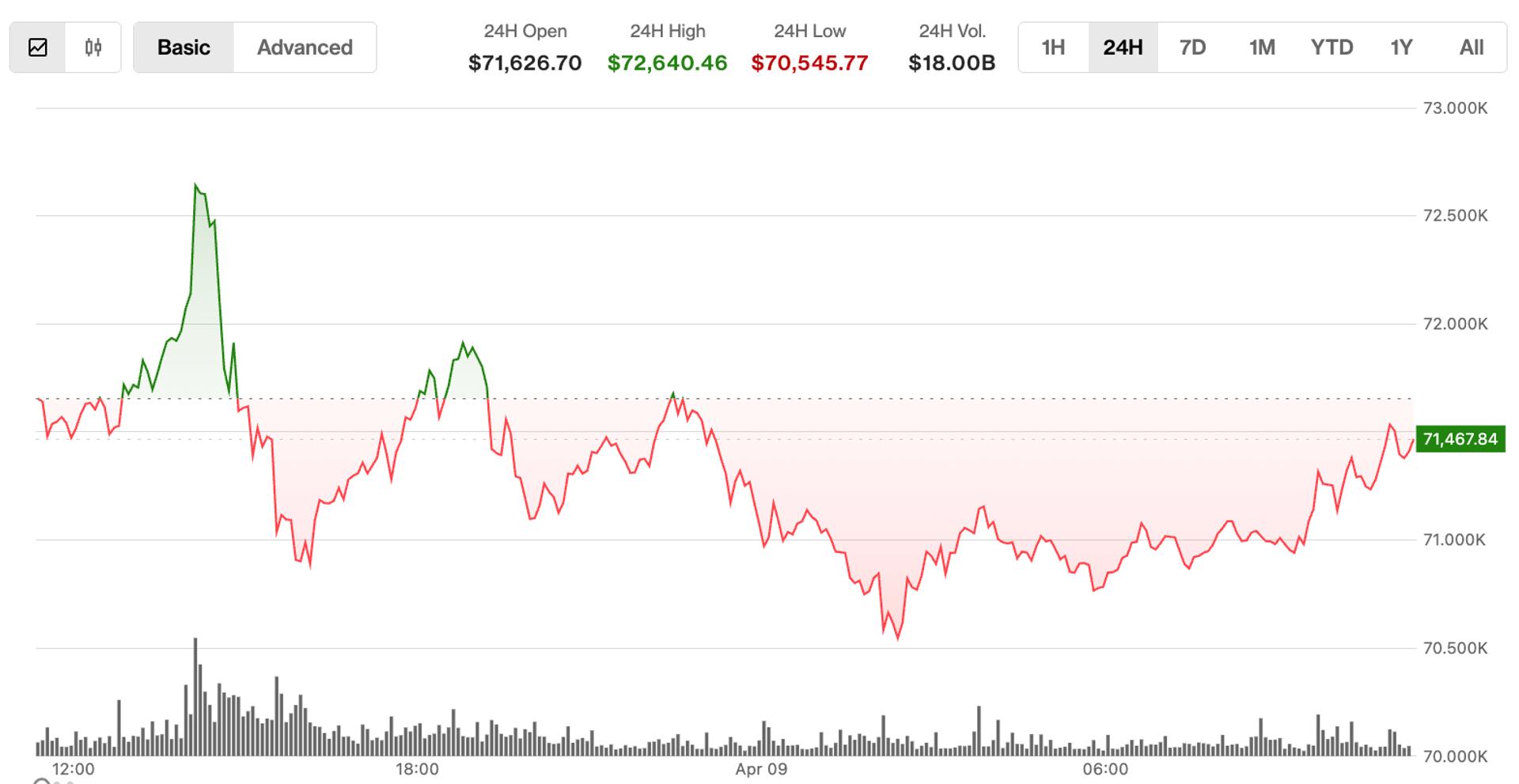
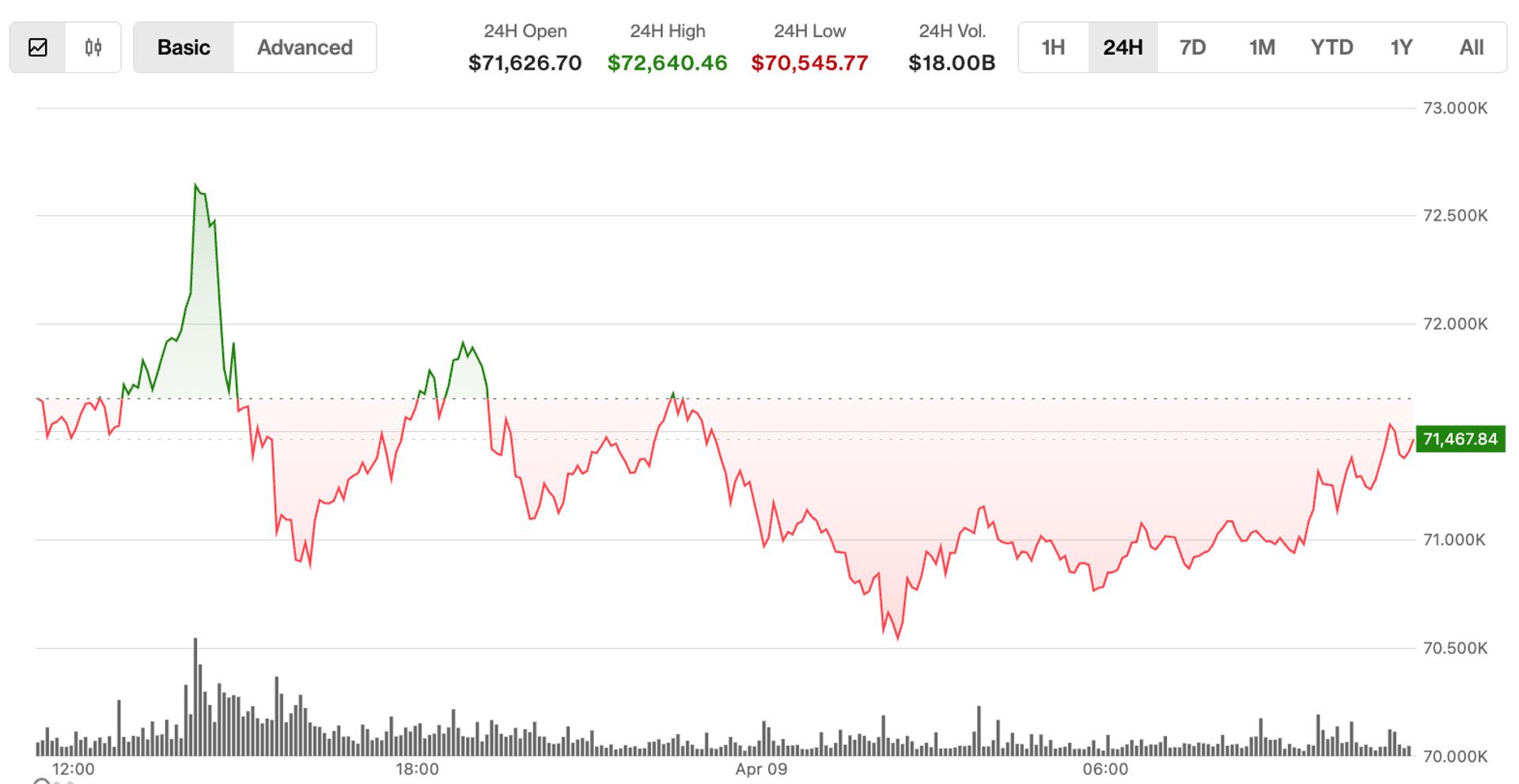
The crypto market remains pinned just below its early-February ceiling, with bitcoin hovering at $71,200 and ether (ETH) trading at $2,185. The sideways crawl comes despite a risk-on boost from the recent US-Iran ceasefire, leaving analysts sharply divided on the next leg.
Bloomberg’s Mike McGlone said this week that BTC needs to reclaim $75,000 or risk a meltdown to $10,000. Fundstrat Tom Lee has taken a contrasting view, claiming that the “bottom is in” on Wednesday, although it’s worth noting that his fund holds $10.4 billion worth of ETH.
BTC is up by around 0.3% since midnight UTC while ETH is flat having outperformed the broader market on Wednesday, and while BTC has posted a modest gain, all eyes remain on whether this range-bound stability is a launchpad or a trap.
Derivatives positioning
- Bitcoin’s futures open interest (OI) has increased to 726,000 BTC, a one-week high, bouncing sharply from 693,000 BTC over the weekend. The tally has increased by over 1% in the past 24 hours, a sign of continued capital inflows despite spot price’s stalled ascent.
- BTC’s 24-hour cumulative volume delta (CVD) remains positive for the second straight day and perpetual funding rates hover just above zero. These datasets, coupled with OI increase, suggests a persistent bias for bullish plays.
- OI in ether, XRP and solana futures has also increased by 1% to 2%. However, CVD and funding rates for these tokens are slightly negative, which suggests growing demand for bearish bets.
- CVD readings for top meme coins like DOGE and SHIB remain negative – a signal some see as constructive for the broader market, as heavy bullish positioning in speculative tokens is often viewed as a sign of excess froth.
- Bitcoin and ether volatility indices continue to decline in a sign of market calm. 10x Research said the market is pricing just 2.5% swing in either direction on the back of Friday’s inflation data.
- On Deribit, BTC and ETH continue to show a mild bias for put options, which offer downside protection, although its much weaker than a week ago. Speaking of flows, the $80,000 bitcoin call has seen the biggest increase in number of open positions in the past 24 hours followed by the $82,000 call.
Token talk
- The altcoin market continued to impress on Thursday with the likes of MANA and AERO rising by 6% apiece, while decentralized finance (DeFi) tokens MORPHO and PENDLE rose by 3.7% and 2.7% respectively since midnight UTC.
- It’s worth noting that MANA’s move comes alongside a 25% increase in open interest, suggesting the move was backed by leverage as opposed to spot buying.
- The CoinDesk Computing Select Index (CPUS) and CoinDesk Smart Contract Platform Select Capped Index (SCPXC) were the best performing benchmarks on Thursday, posting gains between 0.4% and 0.5% while the broader CoinDesk 100 (CD100) is unchanged.
- Traders will be keeping a close on on whether bitcoin can break above $75,000 and establish a level of support, which would likely lead to a period of capital rotation into altcoins, many of which are still oversold following a selloff in February and subsequent period of consolidation.


The United States Treasury Secretary Scott Bessent has urged Congress to pass the CLARITY Act without further delay, as Senate floor time is limited.
Summary
- Scott Bessent has urged Congress to pass the CLARITY Act quickly, warning that limited Senate floor time could stall progress.
- Debate over stablecoin yields has delayed the bill with banks warning of lending risks.
In an op-ed for The Wall Street Journal, Bessent stressed the importance of the legislation, especially as crypto use was rising across the United States. He highlighted that the crypto market had reached $3 trillion and that nearly one in six Americans now hold digital assets.
“To preserve it and rise to the challenge before us, Congress must pass the Clarity Act. Senate floor time is scarce, and now is the time to act,” he wrote.
Since passing in the House of Representatives in July last year, progress around the CLARITY Act has been delayed in the Senate as industry participants and bankers debated over how stablecoin yields should be treated.
Proponents of stablecoin yield argue that without such incentives, there would be reduced user participation and slower innovation. Bankers, meanwhile, are concerned that the practice could draw deposits away from traditional institutions and impact lending capacity.
White House economists have challenged these concerns in a recent report, where they assessed the impact on traditional lending. The economists found that banning yields on stablecoins could result in an $800 million annual welfare loss for users.
On the other hand, banks would see total US bank lending increase by only $2.1 billion, or just 0.02% of the $12 trillion market.
U.S. President Donald Trump has also backed the legislation, warning that delays risk pushing innovation to China and other jurisdictions.
He also accused banks of trying to hold the CLARITY Act “hostage” and undercut what he described as a “powerful Crypto Agenda.”


Disclosure: This article does not represent investment advice. The content and materials featured on this page are for educational purposes only.
Crypto gifting emerges as new trend blending digital assets with real-world experiences.
Summary
- Custom crypto gifts are gaining popularity by turning digital assets into tangible items that build identity and connection
- Personalized physical gifts like mugs, apparel, and coins offer utility, sentiment, and long-term value
- Demand grows for crypto-themed collectibles and wearables as users seek unique, meaningful gift options
In the era of information technology, the world of cryptocurrency is becoming more alluring with its own charm and possibilities. As people exchange and create value in the form of digital assets, the emotional power of crypto gifts is not replaceable.
The fusion of crypto and physical gifts is a sure way to please a gift recipient and make real the connection between the virtual and physical worlds.
Why custom physical gifts work better
Creating a tangible connection to the crypto world
Many of us experience crypto spaces in the virtual, intangible realm of our screens only. Custom physical gifts are a way to bridge that gap by making digital elements tangible. Bitcoin personalized keychains or Ethereum T-shirts, for instance, can help it to build real emotional connections that boost a sense of identity and community.
Personalization and uniqueness
One of the finest benefits of custom physical gifts is the level of personalization, which ensures that someone can give something that meets the personal needs or tastes of the gift recipient. When a gift is personalized, the recipient’s favorite crypto details can be added. Such a present is unique not only in design, but it also shows that someone cares for their loved ones, and the recipient feels truly appreciated and respected.
Practical use and long-term value
Unlike virtual gifts, bespoke physical gifts can be used in daily life. A crypto mug or hat, for instance, is utilitarian and fashionable. Certain products like custom lapel pins and coins can also be collectible and increase in value over time, allowing the owner to have instant use and long-term sentimental and investment value.
Types of custom physical gifts
Custom gifts can be categorized based on purpose and style to better match different recipient needs:
Everyday Practical Items
Mugs
The classic mug is an everyday essential. A custom mug with crypto designs or symbols is functional and thoughtful.
Personalized Keychains
Personalized Keychains are mini space-capable items that can be carried around to show love for crypto and blockchain. They can be made out of metal or plastic, and they can have different shapes. The products can be engraved with crypto symbols and messages, in case someone wants to have a permanent and discreet reminder of the world of crypto.
Stickers
Stickers are versatile, and they can be stuck to laptops, phones, notebooks, and much more. They tend to be popular with younger crypto fans, and are fairly cheap to mass customize, hence really good for community events or promotions.
Wearable and Display Items
Hats
Custom hats like baseball caps or beanies can include embroidered or printed crypto logos and catchphrases. Practical for sun or warmth protection, they also allow us to express ourselves through fashion.
Clothing
Important for everyday life, the likes of T-shirts and hoodies – or jackets – can be personalized with designs and wording. These comfortable and multifaceted pieces allow recipients to take daily life with a touch of crypto culture, or simply appeal to the fashion-savvy.
Socks
While it is niche, custom socks are practical and can even have someone’s crypto token icons, a simple meme, or the recipient’s favorite color.
Cufflinks
Perfect for professionals and detail-oriented receivers, cufflinks may be made of metal with engraved crypto logos, simple blockchain designs, or even a recipient’s initials. They work well with dress clothes while making a subtle statement about crypto interest, fusing usefulness and sophistication.
Collectible and decorative items
Custom lapel pins
Custom lapel pins come with collectible value and can be engraved with the recipient’s name, a wallet address abbreviation, or important dates. Custom lapel pins may be added to articles of clothing or backpacks, or they can be collected in albums or frames as mementos of crypto coin memories.
Custom Coins
Custom Coins make great keepsakes. A coin with crypto-related designs can commemorate notable occasions in the crypto world.
Medals
Ideal for community recognition, event prizes, or individual accomplishments. Custom medals can be engraved with award titles, recipient names, and crypto-themed designs. Together with sophisticated packaging, they recognize accomplishment and build enduring crypto memories.
Neon sign
A Neon sign is a one-off decoration item. A neon sign will perfectly complement any home or office environment. With crypto logos or patterns, or words, neon signs bring a colorful mood that best shows the charm of the crypto world.
How to choose the right crypto gift
Choose Based on Recipient Type
Levels of interest people have in cryptocurrency influences cryptocurrency gifting. Beginners in cryptocurrency can be gifted functional and easy-to-understand items that can be used in everyday life, like mugs or keychains with cryptocurrency logos, which help them to slowly understand the cryptocurrency area and bring it into their everyday lives.
For experienced investors or developers, a collectible or unique token of affection is ideal. These can be custom lapel pins or luxury items that speak to their identity and accomplishments.
Choose based on usage scenario
Take into account the usage environment of the recipient who will be using or wearing the gift. If the recipient is working in an office, they can always be delighted with an office-friendly gift like cryptographically themed notebooks or mugs.
For the one who likes to attend the crypto meetings or clubs, get them items that let them do so more, such as customizable t-shirts, hats, pins, and help them stand out.
If they’re a household fan, choose a gift that doubles as a collector’s item and is household-friendly, like a neon sign for a cozy corner, giving them yet another one of those unique tools they get to play with whenever they transform their own living space.
Choose based on budget
Crypto gift shopping should also consider the budget. Various personalized physical gifts keep changing their prices, be it stickers that cost a few dollars or precious metal commemorative coins that are worth thousands of dollars. For tight budgets, a practical little gift can still be a memorable one; for heftier budgets, luxurious wearable accessories or collectibles can provide a stronger buzz of delight and value.
Conclusion
As the world of crypto keeps on growing, physical custom gifts provide a novel and heartfelt way to show affection and support for the culture surrounding crypto. As they bridge the digital world by catering to personal tastes and providing practical and long-term utility, these gifts are gaining recognition in the crypto community.
Whether as birthday presents, holiday gifts, or collector’s items, these customized crypto gifts work as a connection between the virtual and real worlds, capturing feelings and financial worth. They’re more than just a gift – they’re experiences that bring the crypto universe to life, make it unforgettable, and personal.
Disclosure: This content is provided by a third party. Neither crypto.news nor the author of this article endorses any product mentioned on this page. Users should conduct their own research before taking any action related to the company.


Dubai’s Virtual Assets Regulatory Authority has published a detailed guidance document detailing how token issuers should operate.
Summary
- VARA has published detailed guidance clarifying how virtual assets should be structured, disclosed, and distributed in Dubai.
- The framework defines three issuance categories and assigns clear responsibilities to issuers and licensed intermediaries.
- Stablecoins and asset-referenced tokens now face specific requirements on reserves, disclosures, and investor protections.
Rather than introducing new legislation, the document interprets VARA’s existing Virtual Asset Issuance Rulebook, offering clearer direction on how different types of tokens should be handled in practice.
The update comes as the regulator continues to refine its bespoke framework for digital assets, distancing itself from jurisdictions that rely on traditional securities or payments laws to govern token launches.
Classifications based on risks
At the core of the guidance is a three-part classification system that separates token issuances based on their structure and risk profile.
Category 1 covers fiat-referenced and asset-referenced virtual assets, including stablecoins and RWA-style tokens, while Category 2 applies to issuances that must be distributed through VARA-licensed intermediaries. A third group carves out exempt virtual assets with limited functionality, reducing compliance burdens for simpler use cases.
Each pathway comes with clearly defined responsibilities. In Category 2 issuances, licensed distributors are tasked with conducting due diligence and ensuring ongoing compliance, placing accountability not just on issuers but also on entities involved in distribution. The framework moves away from treating all tokens as uniform products, instead aligning oversight with how each asset functions in the market.
The framework includes specific provisions for stablecoins and asset-referenced tokens, setting expectations around reserve assets, redemption rights, and legal structuring.
Speaking to crypto media, Ruben Bombardi, general counsel at Virtual Assets Regulatory Authority, said the regime offers “greater regulatory clarity,” as many virtual assets do not map neatly onto existing categories.
Bombardi said the framework is designed to support “informed decision-making” by improving how risks and asset characteristics are disclosed to users.
The update builds on a series of recent moves by the regulator to expand its rulebook in line with market activity. Earlier this month, VARA expanded its framework for exchanges to cover crypto derivatives.

Avalanche Energy lands share of $5.2M DOD award to develop long-lasting ‘nuclear batteries’

Concerns Shift From Obsolescence To Oil
MEXC Launches VVIP System Powered by M Score, Redefining Elite Access Beyond Asset Thresholds


-

 NewsBeat7 days ago
Steven Gerrard disagrees with Gary Neville over ‘shock’ Chelsea and Arsenal claim | Football
-

 Business6 days ago
No Jackpot Winner and $194 Million Prize Rolls Over
-

 Fashion6 days ago
Weekend Open Thread: Spanx – Corporette.com
-

 Business5 days ago
Expert Picks for Every Need
-

 Business3 days ago
Three Gulf funds agree to back Paramount’s $81 billion takeover of Warner, WSJ reports
-

 Sports5 days ago
India men’s 4x400m and mixed 4x100m relay teams register big progress | Other Sports News
-

 Tech2 days ago
How Long Can You Drive With Expired Registration? What Florida Law Says
-
Business4 days ago
No Jackpot Winner, Prize to Climb to $231 Million
-

 Fashion3 days ago
Massimo Dutti Offers Inspiration for Your Summer Mood Board
-

 Tech7 days ago
Commonwealth Fusion Systems leans on magnets for near-term revenue
-

 Fashion2 days ago
Let’s Discuss: DEI in 2026
-
Politics6 days ago
Wings Over Scotland | The quality of mercy
-

 Business5 days ago
Akebia Therapeutics, Inc. (AKBA) Discusses Pipeline Progress and Strategic Focus on Kidney Disease Treatments at R&D Day – Slideshow
-

 Fashion7 days ago
Statement Sunglasses: The Accessory Shaping Modern Fashion
-

 Crypto World21 hours ago
Bitcoin recovers as US and Iran Agree a Ceasefire Deal
-

 Politics6 days ago
East Jerusalem Palestinian families eviction orders
-

 Fashion7 days ago
Thursday’s Workwear Report: Merino Wool Blend Short-Sleeved Sweater
-

 Sports7 days ago
Which German players will make final cut?
-

 Fashion7 days ago
For Love & Lemons’ Spring 2026 Line is for the Romantics
-

 Politics6 days ago
Why so many children are now classified as ‘disabled’
You must be logged in to post a comment Login