

Crypto World
AI Crypto Coins: Hedera Charts Path To Recovery While NEAR Targets $2, But DeepSnitch AI Records Presale Success With 145% Surge Amid 200x Rally Rumors


AI crypto coins are back in the spotlight after fresh developments reignited market interest. Recently, attention turned to Ethereum as MetaMask’s head of AI confirmed that a new smart contract standard for trustless AI agent communication is likely heading to mainnet, a move that could accelerate adoption across AI crypto projects.
That renewed momentum is already showing up across the market. While artificial intelligence cryptocurrencies like Hedera and NEAR attempt recovery, traders are looking towards early-stage AI-powered tokens with growth potential.
One project drawing attention is DeepSnitch AI, which has recorded a 145% presale surge as speculation builds around a potential 200x rally.

Ethereum prepares to roll out trustless AI agent framework on mainnet
Ethereum may be days away from a major upgrade for artificial intelligence infrastructure. According to MetaMask’s head of AI, Marco De Rossi, a new smart contract framework designed to support trustless AI agent interaction is expected to reach Ethereum mainnet by midweek, with the morning of Thursday, January 29 currently the likely target.
Development work on the proposed ERC-8004 standard has now been finalized, with De Rossi confirming that changes have been locked in ahead of deployment. Ethereum’s official X account has echoed that sentiment, stating the protocol is set to go live on mainnet “soon,” adding to expectations of an imminent launch.
AI crypto coins: DeepSnitch AI records presale success as traders rush in for potential 200x rally
DeepSnitch AI is quickly becoming the focal point of the AI crypto coins narrative as traders look for something that actually works in a very volatile market. While most AI crypto projects are still pitching roadmaps and promises, DeepSnitch AI is already live with amazing features and huge growth potential.
Through DeepSnitch AI, holders have access to live AI agents all on a single, working dashboard. These agents including, SnitchFeed, SnitchScan, SnitchGPT, and the newly deployed AuditSnitch are all operational right now.
One of these agents, SnitchGPT, acts as an AI trading assistant trained on blockchain data, social signals, and market structure. Rather than forcing traders to manually piece together charts, wallets, and sentiment, SnitchGPT turns raw data into plain English insights for traders. Ask it what is moving liquidity, where risk is building, or whether a trend looks real or fake, and it responds in real time.
Currently in the 4th stage of its presale. DeepSnitch AI has surged more than 145% from its initial price of $0.01510 to $0.03681, as traders position ahead of launch. Among AI crypto coins, this is the type of setup that historically produces huge rallies.
For traders hunting the next 100x to 300x moonshot, now is the best time to join before it’s too late.
Hedera teases recovery as HBAR continues to range
HBAR has been stuck in a tight trading band this past week, barely budging from its established range between $0.10 and $0.11. After opening the week at $0.1094 on January 22, the price was still at $0.1086 by January 28, showing week-over-week stability.
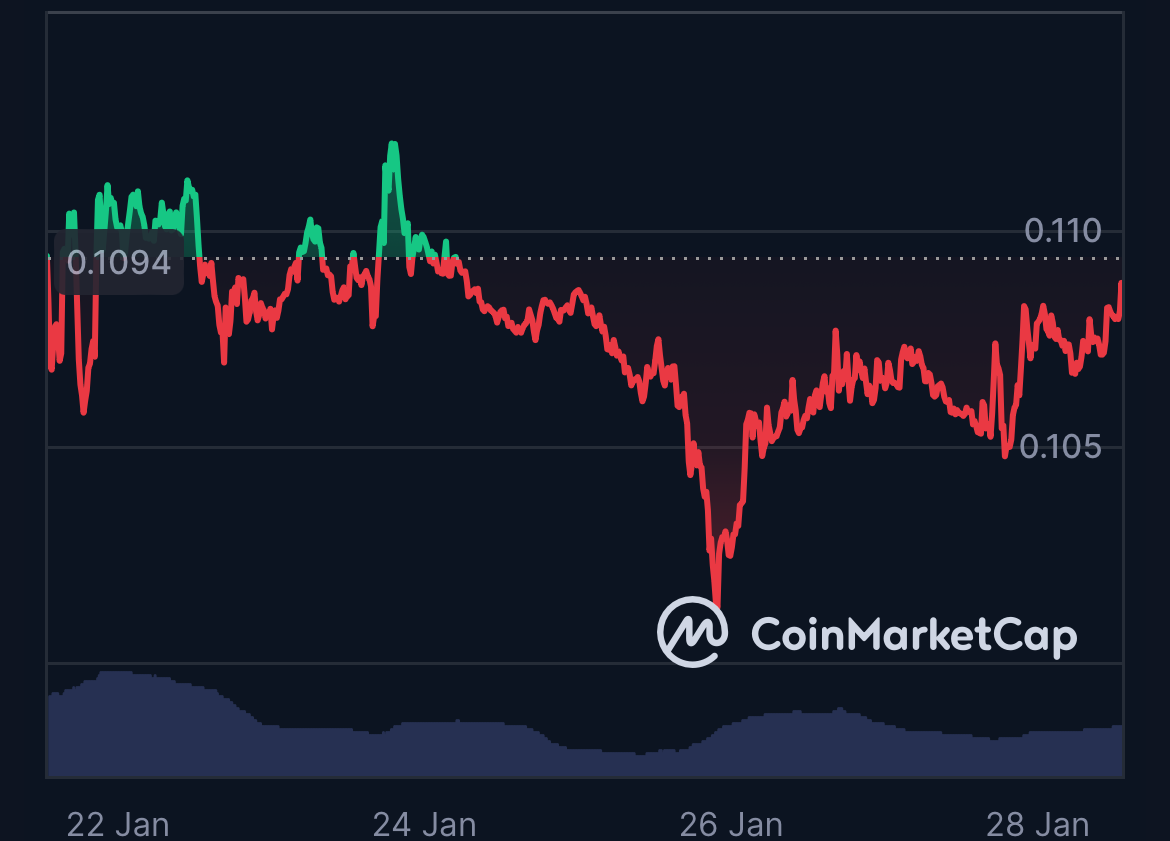
Meanwhile, network developments like a mainnet upgrade scheduled on January 28, 2026 and continued institutional accumulation could lay the groundwork for renewed interest, even if the short-term momentum stays muted.
NEAR targets $2 as price moment suggests potential breakout
Recognised as one of the top AI crypto coins, Near Protocol has shown signs of stabilization this past week, with price action reflecting a slight uptick that’s fueling optimism for a breakout toward the $2 level.
After beginning the week at $1.52 on January 22, NEAR was trading at $1.58 by January 28, marking a modest improvement in sentiment despite the market uncertainty.
Conclusion
As the market faces volatility, there seems to be a renewed interest in AI crypto coins. While Hedera charts a path to recovery and NEAR flirts with the $2 level, DeepSnitch AI is standing out as the project delivering live utility, actionable intelligence, and early-stage growth potential.
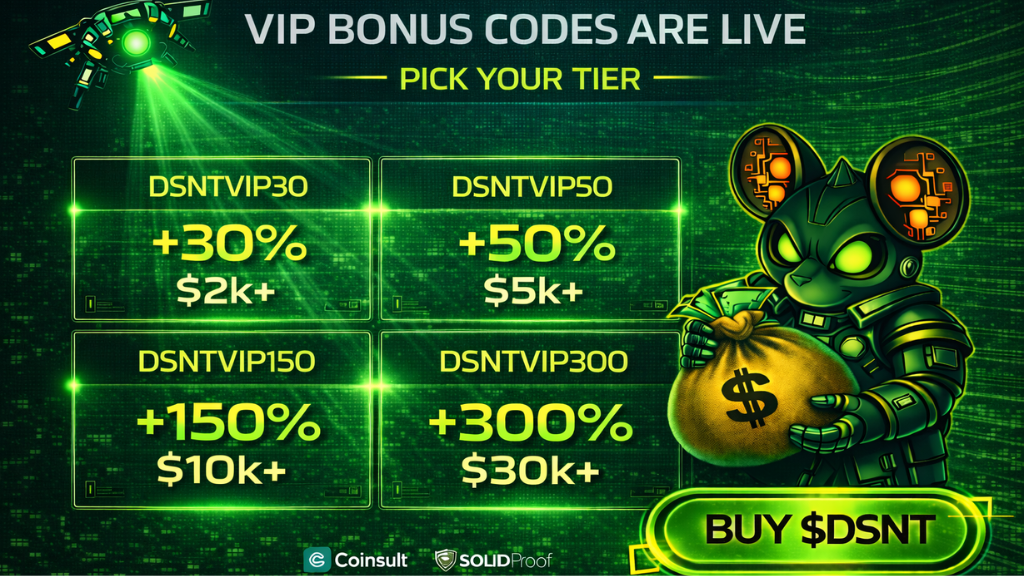
Currently in Stage 4 of its presale at $0.03681, DeepSnitch AI has already surged over 145% and features unique bonus offers for investors. For example, a $5,000 buy gives roughly 136,000 DSNT tokens, and using a 50% bonus code like DSNTVIP50, this rises to 204,000 tokens.
With the brief launch delay giving holders extended access and learning cycles, now is an opportune moment for traders seeking huge growth in AI crypto coins.
Visit the official website for priority access and check out X and Telegram for their latest community updates.
FAQs
What are the best AI crypto coins to buy in the market in 2026?
While several AI crypto coins show promise, DeepSnitch AI stands out due to its operational features and presale success. Other tokens like NEAR and Hedera have potential, but DeepSnitch AI offers both actionable intelligence and early-stage positioning, making it a top pick for 2026.
Is it still possible to buy DeepSnitch AI shortly before its launch?
Yes. DeepSnitch AI remains in its 4th presale stage at $0.03681, allowing investors to gain access. Before its launch, holders can use live tools, test alerts, and learn the system, providing a late-stage early advantage that other AI crypto coins do not currently offer.
Why are traders picking DeepSnitch AI as one of the top AI crypto coins?
While other AI crypto coins rely mostly on speculation or roadmap promises, DeepSnitch AI gives holders immediate utility and actionable insights, which is why many see it as a potential 100x to 200x moonshot before launch.
Disclaimer: This is a Press Release provided by a third party who is responsible for the content. Please conduct your own research before taking any action based on the content.



TLDR
- Meta plans to reenter the stablecoin market in the second half of 2026 through a third-party partnership.
- The company has issued a request for product to select a vendor for stablecoin payments integration.
- Stripe has emerged as a likely candidate to pilot the stablecoin payment system.
- Meta intends to integrate a new wallet to support dollar-pegged stablecoin transactions.
- The renewed effort follows the shutdown of the Libra and Diem projects in 2022.
Meta is preparing to reenter the stablecoin market later this year through a third-party partnership. The company aims to integrate a dollar-pegged token for payments across its platforms. Sources said the rollout could begin early in the second half of 2026, pending vendor selection.
Meta Revives Stablecoin Strategy With External Partner
Meta has sent a request for product to several payment firms, according to two people familiar with the process. One source said the company prefers a third-party issuer instead of launching its own token.
The source said Meta plans to integrate a vendor to manage stablecoin-backed payments and a new wallet. The person added that the company wants operational readiness before the second half launch window.
Stripe has emerged as a likely pilot partner, according to a second person. Stripe acquired stablecoin firm Bridge last year and maintains a long partnership with Meta.
Patrick Collison joined Meta’s board in April 2025, strengthening ties between the companies. However, Meta, Stripe, and Bridge did not respond to requests for comment.
Meta owns Facebook, Instagram, and WhatsApp, which together serve more than three billion users. The company aims to use stablecoin rails to reduce payment processing costs and expand digital transactions.
Sources said the integration would support cross-border transfers and in-app purchases. However, Meta has not disclosed technical specifications or launch markets.
Regulatory Shift Shapes Meta’s Renewed Effort
Meta attempted to launch Libra in 2019 but faced regulatory resistance in the United States and Europe. Lawmakers criticized the project and raised concerns about financial stability and data privacy.
The Libra Association later rebranded the project as Diem and narrowed its scope. It shifted from a global basket-backed currency to individual currency-pegged stablecoins.
Meta shut down the Diem project in early 2022 and sold its assets. The company has since avoided direct issuance of digital currencies.
The current regulatory landscape in the United States has evolved. President Donald Trump’s GENIUS Act established a legal framework for stablecoin issuers.
Regulators are still drafting detailed compliance rules for token providers. However, the new law has encouraged more companies to explore stablecoin services.
One source said the Libra experience shaped Meta’s new approach. The person stated that Meta now prefers to rely on an established stablecoin issuer.
The company aims to integrate payments without assuming direct regulatory responsibility for issuance. Sources said Meta continues internal planning while it evaluates vendor proposals.
Crypto World
Crypto’s biggest exchange fights back against allegations of moving billions of Iran-linked money


Crypto exchange Binance accused The Wall Street Journal Tuesday of publishing “false information” in a Monday article about the exchange allegedly firing employees investigating funds moving through the exchange to sanctioned entities.
Richard Teng, Binance co-CEO, accused the WSJ of “inaccurate reporting about our compliance program” in an X post. He included a letter to the news organization from the crypto exchange’s counsel in New York City, which said “The Wall Street Journal published defamatory claims,” despite the exchange’s attempts to “set the record straight.” The letter is similar to one Binance directed to Fortune last week over a similar article which said the exchange fired investigators who reported sanctions concerns.
The Journal’s article on Monday said the crypto exchanged fired staff investigators who identified $1 billion that moved to “a network funding Iran-backed terror groups.”. The report claimed to have Binance documents and statements from people familiar with Binance operations, saying that the crypto exchange dismantled the staff investigation into the $1 billion..
Binance claims staff were disciplined
The Journal article includes a statement from a Binance spokeswoman saying the investigators resigned and denied they were fired or suspended for raising compliance concerns.
“Documents, foreign law-enforcement officials and the people familiar with Binance’s operations said the same conduct that broke the sanctions and anti-money-laundering laws has persisted at the exchange,” the Journal article said, referring to Binance’s 2023 settlement with the U.S. Department of Justice and other authorities, in which the exchange and founder Changpeng “CZ” Zhao admitted to violating federal money laundering statutes..
The news report also mentions $1.7 billion more in 2024 and 2025 that were transferred from Binance-registered Chinese clients to Iran-backed groups, including Yemen’s Houthi militants. The New York Times’ article also published on Feb. 23 alleges the same information.
Both influential U.S. newspapers said the four individuals “fired” by Binance, who worked in compliance and market oversight roles, were dismissed after the crypto exchange concluded they had failed to adequately escalate red flags related to suspicious trading activity and potential policy violations.
A Binance spokesperson told CoinDesk the exchange conducted an “internal review and did not find evidence of violations of applicable sanctions laws or regulations related to the transactions described.”
However, the spokesperson, who stated no investigator was dismissed for raising compliance or potential sanctions issues, said suspicious activity was detected and reported, which is “evidence that our controls are working, not the opposite.”
Rachel Conlan, another spokesperson, told the Times, there is an ongoing investigation and that a full report will be sent to the U.S. Justice Department on Feb. 25.
Binance said in a blog post on Sunday that its “sanctions-related exposure is minimal.”
“Recent reporting on our top-tier compliance is, at best, inaccurate. It presents a distorted, jumbled account that relies on false claims by disgruntled former employees. This incomplete and flawed viewpoint reflects a lack of understanding of general compliance control processes for crypto exchanges,” the blog post, which was published prior to the Wall Street Journal’s report.
Large US investors reduced their Bitcoin ETF holdings in late 2025, and new breakdowns show the selling came mainly from a few specific groups rather than the entire market.
Bloomberg Intelligence data shared by analysts shows that 13F filers — large institutions that report quarterly holdings to the US SEC — were net sellers of Bitcoin ETFs in Q4 2025, cutting exposure by nearly $1.6 billion.
The biggest reductions came from investment advisors and hedge funds, the two largest holder categories.
13F Filers Sold Their Bitcoin Shares
A 13F filer is a large US money manager (usually with over $100 million in qualifying assets) that must report its holdings every quarter. These filings show a snapshot of positions at quarter-end.
These firm’s reported Bitcoin ETF holdings were lower in Q4 than in Q3. In other words, they reduced ETF shares, not necessarily that they sold physical Bitcoin directly on exchanges.
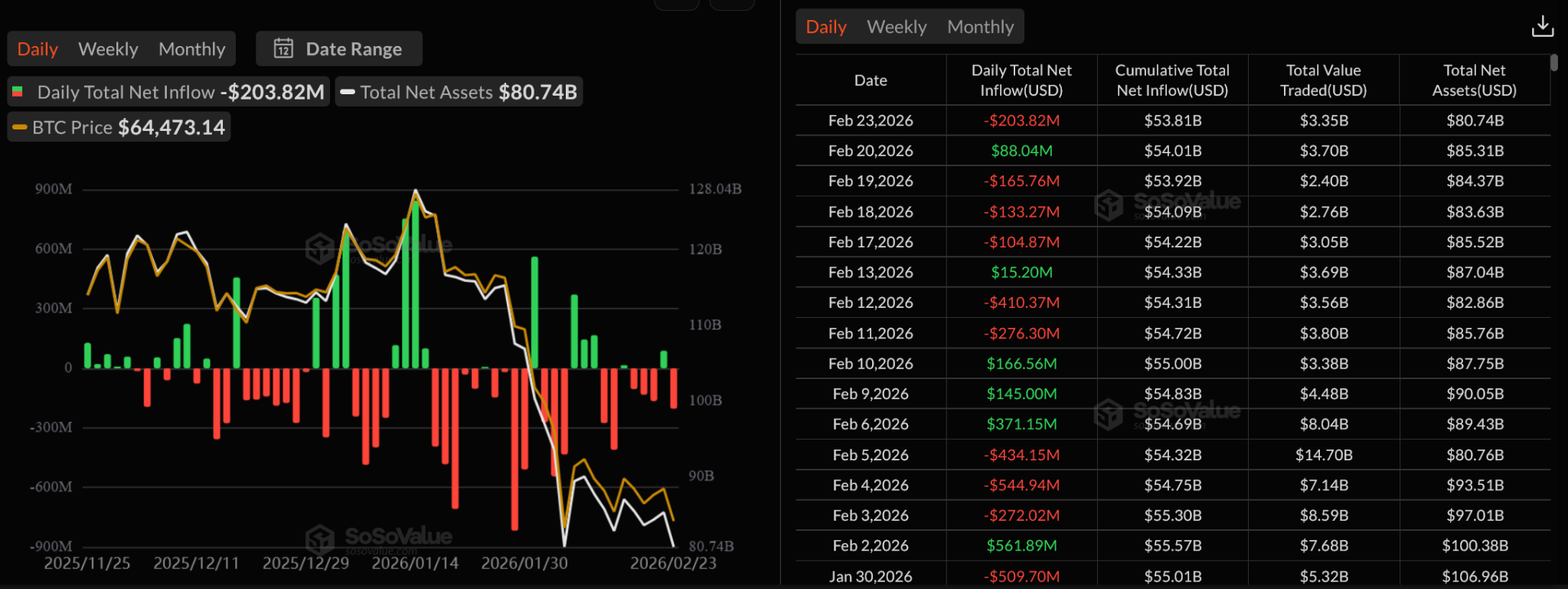
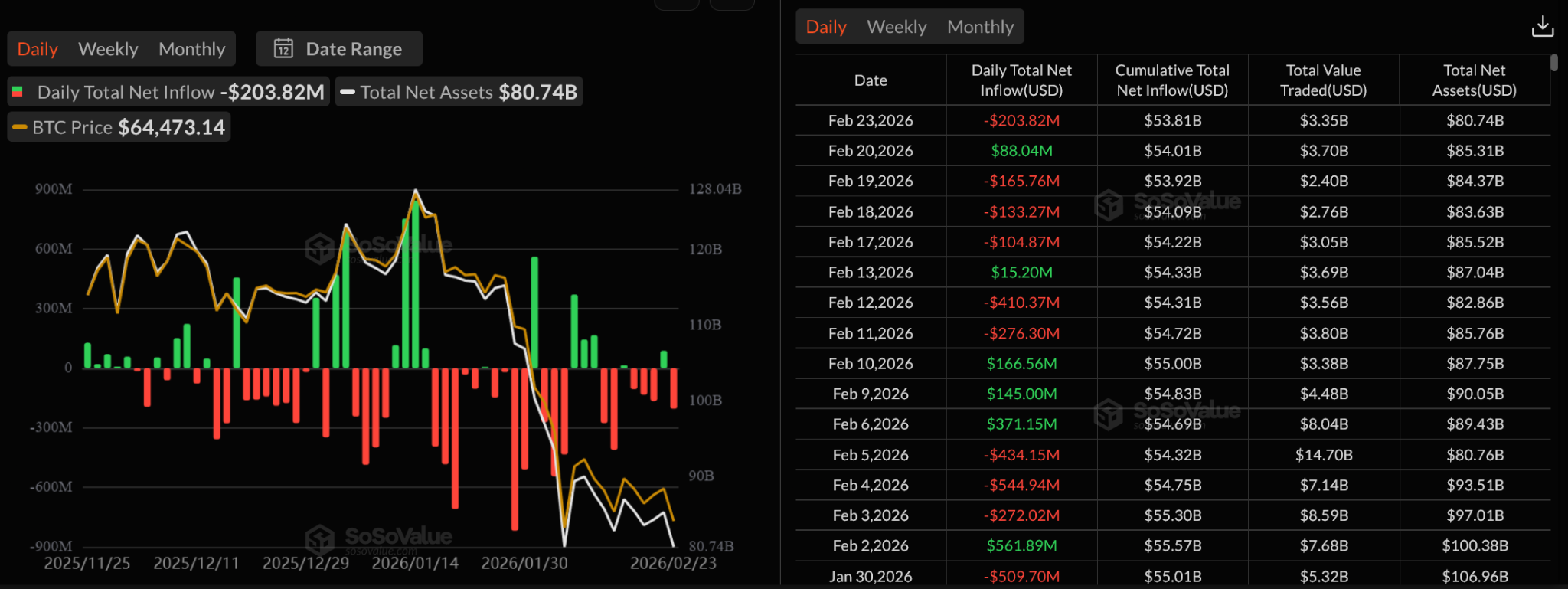
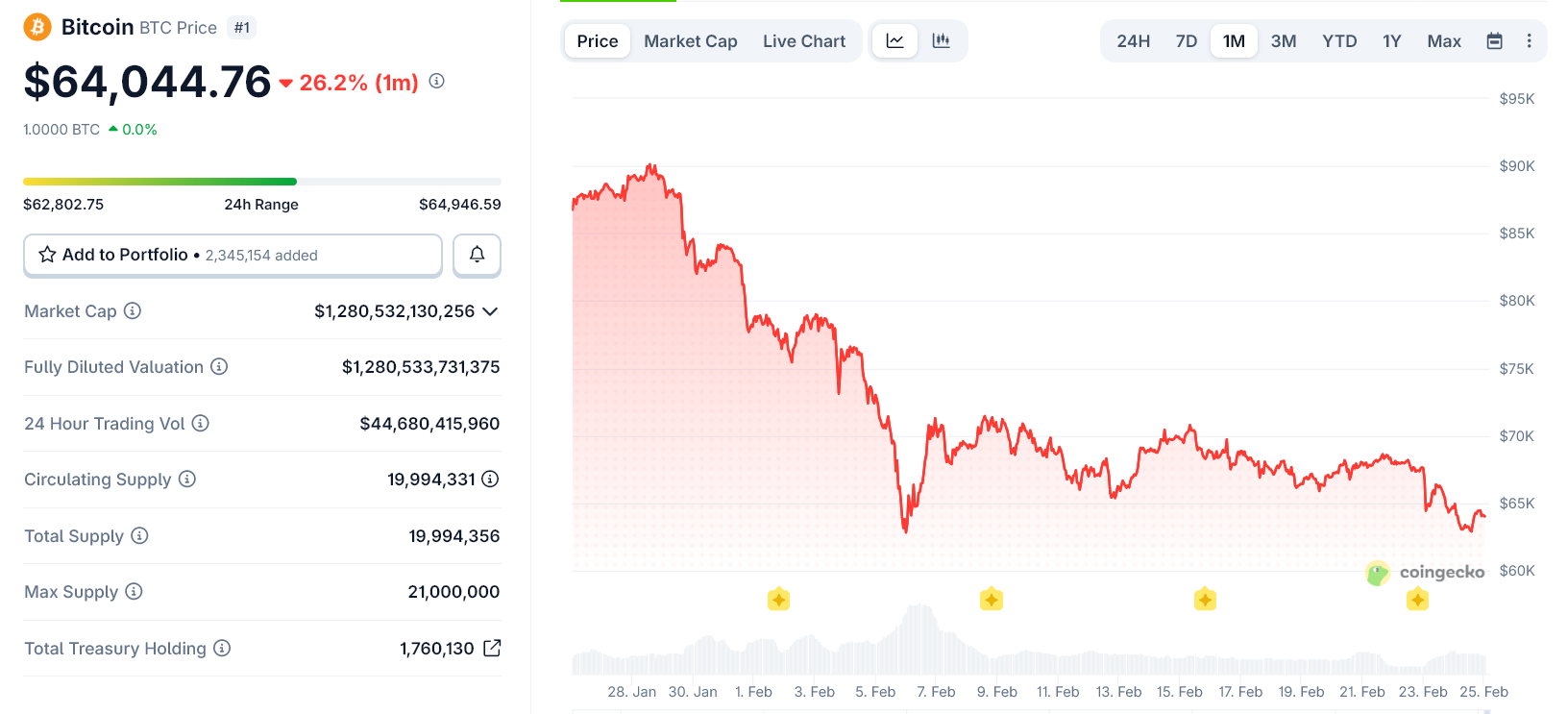
That helps explain why Bitcoin has remained under pressure even during short-term rebounds. ETF flow data shows repeated daily outflows in recent weeks, including several large red days in February.
Who Sold the Most
The category-level data shows the largest net reductions came from:
- Investment Advisors: about -21,831 BTC
- Hedge Fund Managers: about -7,694 BTC
Other categories, such as brokerages and banks also reduced exposure.
However, some groups increased holdings, including holding companies and government-related entities.
This does not mean “all institutions turned bearish.” Many firms use Bitcoin ETFs for hedging, arbitrage, or short-term trading, not just long-term bets.
However, the broader signal is clear. Big-money positioning weakened, and that matches the recent ETF outflow trend.
Until daily ETF flows stabilize and turn positive for more than a few sessions, Bitcoin may remain in a fragile, relief-rally phase rather than a full recovery.


Gold prices have recovered to $5,161 per ounce after January’s dramatic crash — and the epicenter of the rebound points squarely at China.
But this time, the story is bigger than speculation. Beijing is making a coordinated push to reshape the global gold market from the ground up.
The Hainan Arbitrage
Hainan’s new zero-tariff regime was designed to showcase China’s openness to foreign imports. The early numbers suggest it’s working — at least on the surface.
Hainan launched island-wide customs-free operations on Dec. 18. The nine-day Spring Festival holiday was the first major test. Offshore duty-free sales hit 2.72 billion yuan ($390.8 million), up 30.8% year-on-year, with 325,000 shoppers, according to Haikou Customs data reported by the Moodie Davitt Report on Feb. 24. The momentum had been building since December. January sales reached 4.86 billion yuan ($693.5 million), up 46.8% year-on-year, per Xinhua.
Gold jewelry remained a top draw during the holiday. China Daily reported on Feb. 23 that zodiac-inspired pieces and investment-grade bullion flew off shelves even as prices vaulted back above 1,500 yuan per gram. The Moodie Davitt Report confirmed jewellery and watches ranked among the top-selling categories at CDF Sanya, the island’s flagship duty-free complex.
The Global Times reported on Feb. 25 that leading brands Laopu Gold and Chow Tai Fook launched aggressive promotional campaigns during the holiday, including gram-based discounts and fee waivers for craftsmanship. A Chow Tai Fook salesperson in Beijing confirmed the increased foot traffic and purchases.
The price advantage in Hainan remains significant. Yicai Global reported in January that Chow Tai Fook gold costs roughly 1,250 yuan per gram in Hainan versus 1,430 yuan on the mainland. A 40-gram bracelet can save buyers 13,000 to 14,000 yuan with government subsidies factored in.
The pattern suggests something deeper about China’s consumer economy. Given a tax break, the middle class isn’t spending on luxury — it’s hedging with gold.
Hong Kong’s Bid for Global Bullion Dominance
While retail buyers flock to Hainan, Beijing is playing a far larger game. Hong Kong’s Undersecretary for Financial Services Joseph Chan announced at the Year of the Horse’s first gold trading session that the government will make a “full push” to transform the city into a regional gold storage and trading hub.
The plan is ambitious: expand Hong Kong’s gold storage capacity to over 2,000 metric tonnes within three years, launch a fully state-owned gold clearing system with trial operations later this year, and deepen alignment between the Shanghai Gold Exchange and Hong Kong’s market.
The objective is explicit — expanding China’s market share and influence over international gold pricing. Western financial centers have historically controlled that domain.
The initiative goes beyond domestic ambitions. Several Asian nations have expressed interest in storing sovereign gold with the SGE as it expands offshore vaults. Cambodia’s central bank is expected to be among the first to use SGE offshore vaults. It may store part of its 54 tonnes of gold reserves in Shenzhen’s bonded zone.
The Structural Bid Beneath the Speculation
January’s blowout — gold down 9%, silver crashing 26% in a single day — exposed the speculative froth. Leveraged retail traders were wiped out, gold ETFs saw nearly $1 billion in single-day outflows, and exchanges hiked margin requirements.
Yet physical gold demand in China barely flinched. Shanghai Gold Exchange premiums widened to $30-32 per ounce above London spot even as global prices cratered. Bank deposit rates have been crushed by monetary easing, the property market offers no refuge, and gold remains the most compelling store of value for households with few other options.
With gold currently accounting for just 1% of Chinese household assets — compared to a projected 5% in the near term — the structural bid from the world’s largest gold consumer is far from over. And now, Beijing isn’t just buying gold. It’s building the infrastructure to price it.
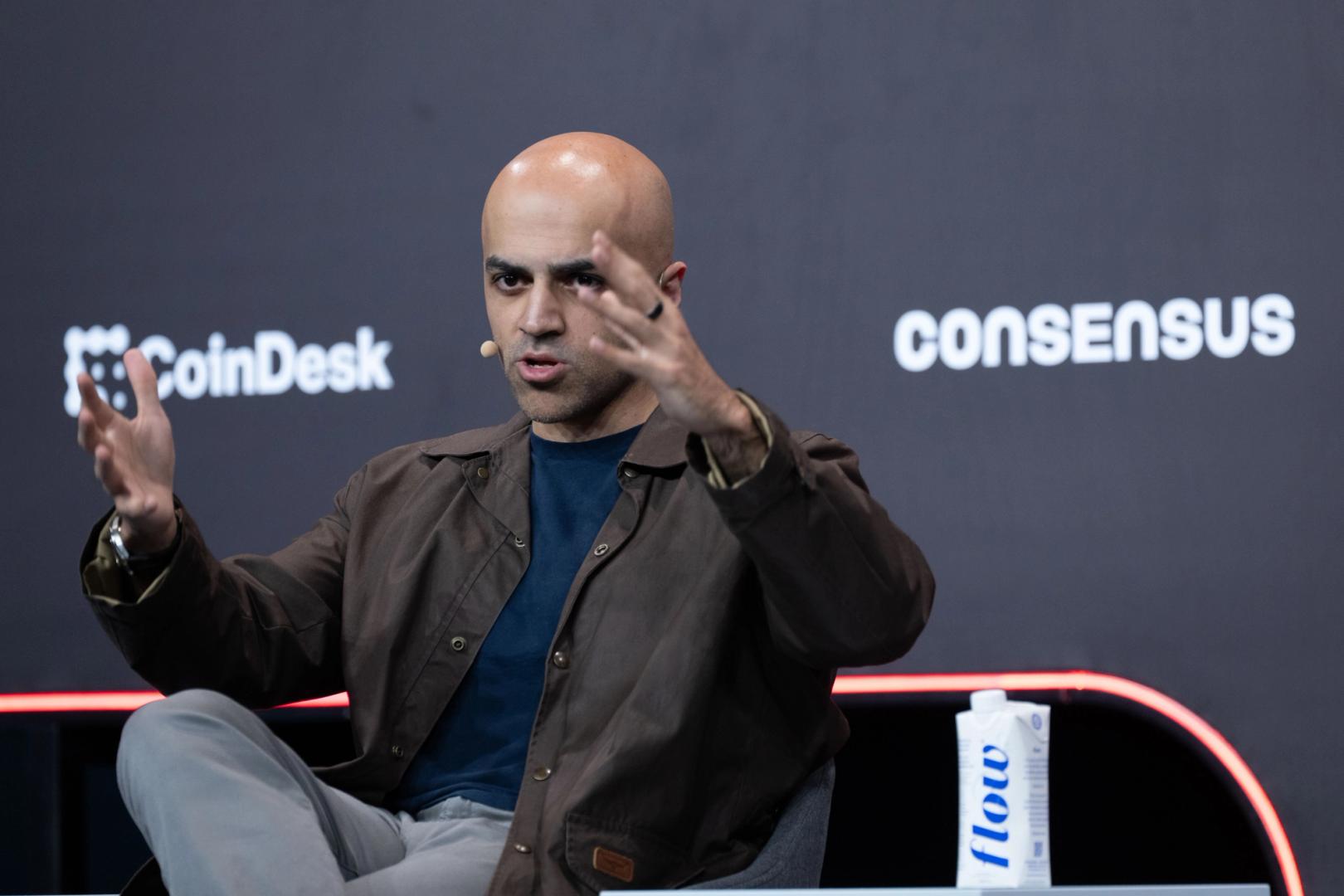
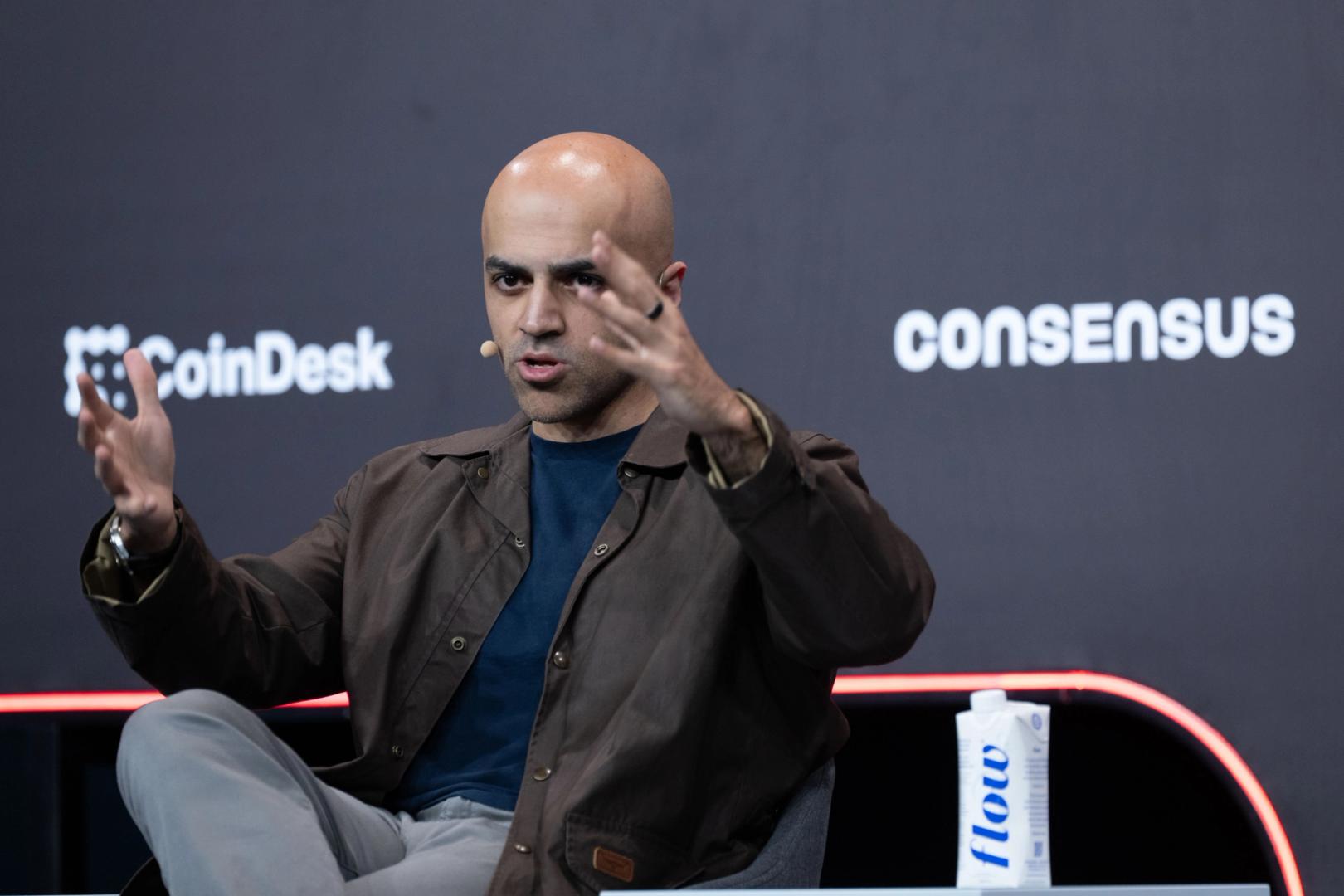
SAN FRANCISCO, CA – As artificial intelligence dominates venture funding and headlines alike, some in crypto have begun to wonder whether the industry has missed its “ChatGPT moment” — or worse, whether capital is permanently rotating away.
Haseeb Qureshi, managing partner at crypto venture firm Dragonfly, rejects that framing outright.
“I would completely dispute this framing,” Qureshi said in an interview with CoinDesk at NEARCON 2026. “Less than 1% of AI users are paying. That means 99% are using the free tier. Crypto doesn’t have a free tier.”
Comparisons between AI’s explosive consumer adoption and crypto’s trajectory misunderstand the nature of the products, he argued. “There is no free Bitcoin. There’s no free Ethereum,” he said, noting that while roughly 80% of Americans have tried some form of AI tool, about 15% have owned crypto — a figure he calls “a mass-market phenomenon.”
To Qureshi, the better lens is global utility, particularly in payments. Stablecoins, he noted, have grown steadily regardless of price swings. “Stablecoin supply has been growing 50% year over year,” he said. “That’s exponential growth.”
Qureshi said the underlying fundamentals of crypto remain intact even if sentiment has cooled.
Following the money
Venture dollars have undeniably shifted toward AI. But Qureshi views that less as an indictment of crypto and more as the market doing what markets do.
“Money is a leading indicator,” he said. “Human beings respond to money — they don’t respond to the reality on the ground.”
Crypto, even after multiple drawdowns, remains a $2 trillion asset class. And unlike AI giants such as OpenAI, which employ thousands, crypto projects often scale with lean teams.
“We don’t have any 9,000-person companies like OpenAI — and that’s a good thing,” Qureshi said. “Crypto is incredibly high leverage as a technology. You don’t need very many people to build things that are world scale.”
He sees the recent contraction as a correction after years of overfunding. “To the extent that there were too many people building too many things in crypto, the market’s correcting that. That’s capitalism doing its job.”
In fact, Dragonfly recently announced a $650 million fund — a move some observers characterized as bold given the current market malaise.
“That’s the best time to double down,” Qureshi said. “Why would you want to double down when prices are high? If you’re raising money and deploying into all-time high prices, that’s when you should be nervous.”
Asked whether something more existential had changed in crypto over the past four months, he was blunt: “Did the fundamentals of the industry change that much? No.”
Crypto and AI: convergence or mirage?
While Dragonfly is exploring investments at the intersection of crypto and AI, Qureshi cautioned against assuming AI will revive crypto’s momentum.
“Is AI going to save crypto? F*** no,” he said. “AI agents using crypto are so far away — it’s going to take years.”
He sees a familiar pattern of crypto attaching itself to whatever technological trend is ascendant. “Chatbots are exciting? Great — we have chatbots with tokens. Agents are exciting? Great — you can buy the layer one for agents,” he said. “As an investor, you just have to slow down.”
That doesn’t mean crypto’s identity is shifting away from its roots. Recent narratives suggesting that the industry has capitulated to Wall Street miss the point, Qureshi said.
“There’s a lot of people saying crypto capitulated and became a tool of Wall Street. I think that’s stupid,” he said. “The whole point of bitcoin is that it encompasses everybody’s usage of the same technology. Nobody’s usage impinges on anybody else’s.”
Cycles, not collapse
Qureshi attributes much of today’s gloom to short time horizons and simple fatigue.
“People in crypto are pathologically short-time horizon,” he said. “Prices were down a lot of times.”
From ETF-driven rallies to tariff-induced pullbacks, volatility has defined the industry for over a decade. The pattern, he suggests, is neither new nor fatal.
“This idea that because prices are down, nobody’s going to use stablecoins anymore? Absurd,” he said.
For Qureshi, the story isn’t about AI replacing crypto, nor about crypto’s decline. It’s about cycles — and patience.
“Chill out,” he said. “It’s not a catastrophe.”
Read more: Kraken’s co-CEO could trust AI with 100% of his crypto — Dragonfly’s Haseeb Qureshi isn’t convinced
A new report from BestBroker highlights ETH ETF assets shrinking since the start of the year.
U.S. spot Ethereum ETFs are recording major outflows as demand weakens across the crypto market, according to a new report from BestBrokers.
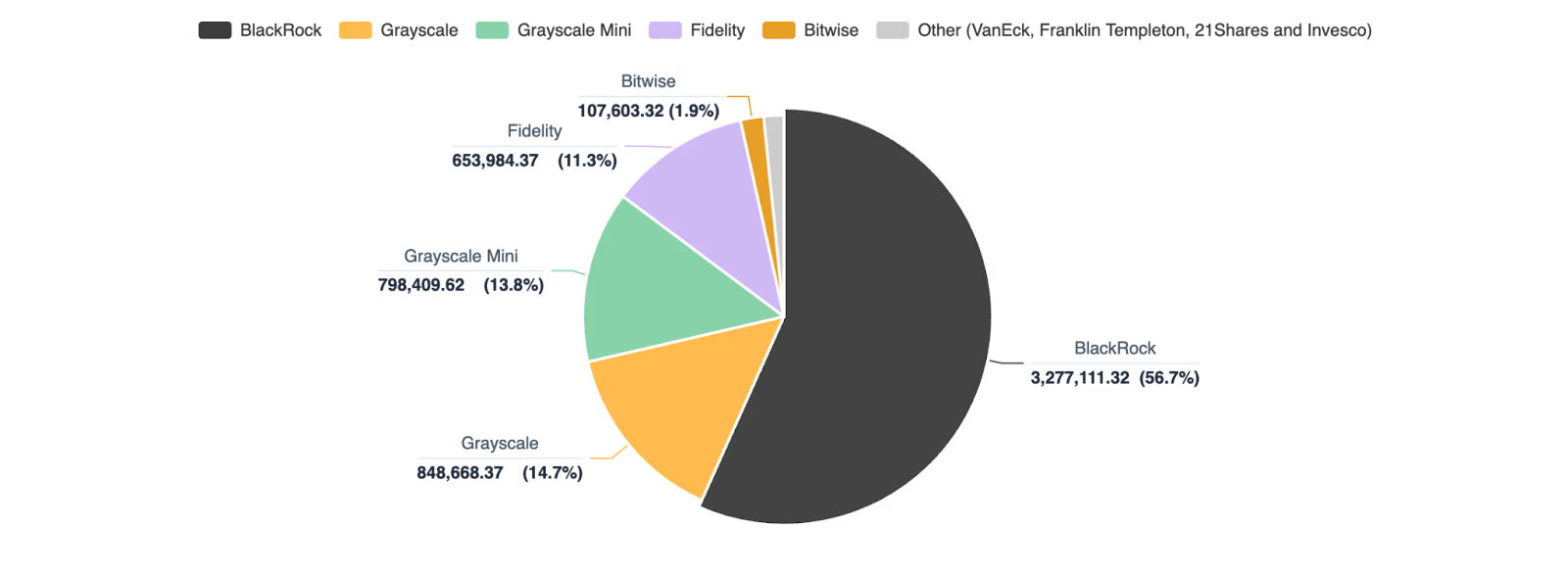
ETH ETF holdings dropped from more than 6.1 million ETH in late January to about 5.8 million by Feb. 23. Total assets in those funds also fell from $18.6 billion to about $11.9 billion. The data also shows that the market is highly concentrated, with BlackRock holding about 57% of all ETH in U.S. ETFs – well ahead of Grayscale and Fidelity.
Ether (ETH) has fallen sharply, down about 35% over the past month and nearly 40% over the past three months. Currently, the world’s second-largest cryptocurrency by market capitalization is trading at around $1,850, per CoinGecko.

The findings highlight how quickly sentiment toward crypto has soured over the past few months. It also shows how investors continue to pull money from riskier assets amid rising volatility.
Bitcoin Findings
On the Bitcoin side, the report said spot Bitcoin ETFs have also had a weaker start to 2026 after steady inflows in 2024 and 2025. BestBrokers estimates more than $4 billion in net outflows since the start of the year, with total ETF holdings slipping to 1.26 million BTC as of Feb. 23 – the first mid-quarter decline since launch.
BlackRock’s iShares Bitcoin Trust (IBIT) led the pullback, posting outflows of 19,300 BTC in February, while Grayscale and Fidelity also recorded outflows.
BestBrokers’ report said the divergence suggests institutions are treating Bitcoin as longer-term exposure, while Ethereum funds are more sensitive to market sentiment.
TLDR
- BSTR plans to go public through a SPAC merger with Cantor Equity Partners I.
- Adam Back said shareholder approval for the listing could come as soon as April.
- The company intends to debut with 30,000 bitcoin on its balance sheet.
- Founding shareholders will contribute 25,000 bitcoin to the new entity.
- Early investors will add 5,000 bitcoin in kind to complete the holdings.
Bitcoin Standard Treasury Company is advancing plans for a public listing through a SPAC merger. Adam Back said shareholders could approve the transaction as soon as April. The company aims to debut with 30,000 bitcoin on its balance sheet despite recent market weakness.
BSTR Plans Public Debut With 30,000 Bitcoin
BSTR will merge with Cantor Equity Partners I, a SPAC led by Brandon Lutnick. The companies announced the proposed transaction in the summer of 2025 during a surge in crypto treasury formations.
Back and other founding shareholders will contribute 25,000 bitcoin to the new entity. Early investors will add 5,000 bitcoin in kind, bringing total holdings to 30,000 coins.
Back confirmed the timeline during an interview with CNBC on Monday. He said shareholder approval for the public listing could arrive as soon as April.
He stated that BSTR intends to launch with a large bitcoin reserve from day one. He added that the company structured the contributions to ensure balance sheet strength at listing.
Market Conditions and Strategy Ahead of Listing
Bitcoin has declined to about $63,000 after trading at higher levels earlier in the year. At the same time, several bitcoin treasury companies have lost large portions of their market value.
Back said a lower bitcoin price could support BSTR before it lists publicly. He explained that a reduced reference price may allow the company to accumulate more bitcoin at discounted levels.
He told CNBC that such positioning could strengthen the balance sheet over time. He said this approach may increase long-term upside if market conditions improve.
Back addressed the recent bitcoin pullback during the interview. He said the decline occurred despite what he described as a favorable regulatory backdrop in the United States.
He attributed the weakness to macroeconomic pressures affecting risk assets. He cited geopolitical tensions and tariff uncertainty as factors weighing on broader markets.
Back also discussed the role of bitcoin treasury companies in the market. He said these firms focus on acquiring and holding bitcoin as a core strategy.
He acknowledged that accumulation often slows during bear markets. However, he said, treasury companies remove bitcoin from circulation, which supports long-term supply dynamics.
Crypto World
Bitwise CEO says AI Is ‘Unstoppable freight train’ for Crypto, Haun’s Monica urges caution


SAN FRANCISCO, CA – As artificial intelligence races ahead, some crypto executives believe it could become the force that finally pushes blockchain infrastructure into widespread use. Others aren’t convinced the leap is so straightforward.
In a recent panel discussion at NEARCON 2026, Bitwise CEO Hunter Horsley described AI as “an unstoppable freight train,” arguing that its pace of development is unlike anything crypto has experienced. “AI is accomplishing a quarter’s worth of roadmap every two weeks right now,” he said, suggesting that projections based on previous crypto adoption cycles may already be outdated. “You have to dump the last six years of data and cut it fresh from the last six months.”
For Horsley, the implication is that public blockchains could benefit disproportionately from AI’s rise. “If there’s one space that will be an unmitigated benefactor of the adoption proliferation of AI, it will be public blockchains and crypto assets,” he said.
As autonomous agents begin to act on behalf of users, he suggested, crypto-native tools may offer practical advantages. “Agents, obviously, you’re not going to want to authorize OpenClaw with your credit card… You’re gonna want to fund them with stablecoins. They’re gonna want to transact confidentially,” Horsley said, pointing to stablecoins and onchain infrastructure as potential guardrails for machine-driven activity.
Diogo Monica, general partner at Haun Ventures and co-founder of Anchorage Digital, pushed back on the assumption that agentic commerce automatically requires new rails.
“There is a chance that the agent payments commerce looks exactly like the current payment commerce for the foreseeable future,” Monica said. “You are telling me that a superhuman intelligence cannot use the current payment rails, the current credit cards, the current instant settlement, to pay for things and to figure it out on their own.”
“You can’t tell me that AGI is coming and agents are going to be super smart… and tell me that they’re not going to be smart enough to figure out different systems,” he added.
Still, Monica acknowledged a deeper alignment between the technologies. “AI creates digital abundance and crypto versus digital scarcity. These are actually complementary technologies,” he said, adding that crypto’s privacy and verification tools could help mitigate some of the risks AI introduces.
Whether blockchains become the default rails for autonomous commerce remains unresolved. But as AI accelerates, the debate over crypto’s role in that future is clearly intensifying.
Read more: NEAR Launches Near.com super app, touting AI capabilities and confidential transactions


- BNB coin struggles below $600 as regulatory noise clouds short-term sentiment.
- Falling stablecoin reserves point to weaker liquidity and cautious traders.
- A key Binance coin price support sits near $573, while bulls must reclaim $597 to regain momentum.
Binance Coin (BNB) is under pressure as the broader crypto market flashes mixed signals.
As the BNB coin continues to fall, recent exchange data from CryptoQuant shows that stablecoin reserves held on the Binance crypto exchange have fallen to their lowest levels in several months.
Falling stablecoin reserves raise liquidity concerns
Stablecoins are often treated as dry powder in the crypto market.
When reserves decline on major exchanges, it usually means capital is being pulled out rather than positioned for new buys.
The latest drop in Binance’s stablecoin balances suggests traders are either de-risking or waiting on the sidelines.
This reduction in available liquidity can weaken short-term price support across major assets, including Binance Coin.
Lower reserves also reduce the market’s ability to absorb large sell orders, increasing the risk of sharper moves during periods of volatility.
For BNB, this matters because its price tends to be closely linked to activity and confidence on the Binance platform.
Bitcoin inflows and shifting trader sentiment
As the stablecoin reserves on Binance drop, Bitcoin balances on Binance have climbed to their highest levels since late 2024.
An increase in BTC held on exchanges is often interpreted as potential selling pressure or preparation for active trading.
This shift can increase short-term volatility across the market and spill over into altcoins like BNB coin.
Combined with falling stablecoin reserves, it paints a picture of traders repositioning rather than aggressively buying.
Such an environment usually favours range-bound trading instead of strong trend moves.
Market hesitation
Binance Coin has failed to hold above the $600 level, a zone that had acted as support earlier in the year.
Although momentum indicators like the Relative Strength Index (RSI) suggest selling pressure has cooled slightly since the coin is currently oversold, there is not enough buying pressure to confirm a trend reversal.

While buyers appear active near lower support zones, follow-through has been limited.
This type of price behaviour often precedes either a consolidation phase or a sharper move once liquidity returns.
BNB coin price forecast
The BNB price forecast now depends heavily on how it reacts around well-defined technical levels.
The first level traders should watch, according to analysts, is $573.49, which has acted as short-term support.
A clean break below that area could open the door for a move toward the next support near $543.03.
On the upside, $597.41 remains the key resistance level that bulls must reclaim.
A decisive move above that zone would likely encourage a push toward $619.48, with $642.11 standing as the next major resistance.
However, as long as stablecoin liquidity remains tight, upside moves may struggle to sustain momentum.


ASTER traded flat into mid-February as traders priced in March mainnet launch.
Summary
- ASTER consolidated in an accumulation zone into Feb. 19, with traders watching a key resistance level that could open upside targets if broken amid broader market weakness.
- Token Terminal showed 6 daily, 44 weekly and 340 monthly active addresses as of Feb. 18, highlighting thin underlying usage versus the bullish technical and positioning setup.
- A fee-to-buyback model directs up to 80% of platform fees to on-chain buybacks, while a Stage 6 airdrop distributing 64m ASTER (0.8% supply) runs through Mar. 29 alongside a March mainnet window.
ASTER token consolidated through mid-February as market participants positioned ahead of the project’s scheduled March mainnet launch, according to trader analysis and project roadmap data.
Trader Don Wedge identified an accumulation zone in a chart posted February 19, highlighting a key resistance level that, if breached, could enable movement toward higher price targets, according to the posted analysis.
The token’s price movement occurred during a broader cryptocurrency market decline, suggesting positioning centered on project-specific developments rather than general market sentiment shifts, according to market observers.
Trader Shuarix stated February 19 that momentum was building ahead of the March mainnet window, citing confirmed mainnet timing, increased on-chain activity, and pre-launch positioning as factors driving price action.
Aster Chain‘s official roadmap lists the Layer 1 mainnet launch in the first quarter of 2026, with multiple reports indicating March as the target delivery period. Mainnet launches typically establish token utility through transaction fees, staking mechanisms, and governance functions.
Token Terminal data as of February 18 showed six daily active addresses, 44 weekly active addresses, and 340 monthly active addresses on the network. The usage figures raised questions about whether fundamental network adoption supported the technical price setup.
A whale position on Hyperliquid held a four-times leveraged long position open for 22 days as of February 19, according to on-chain data. Large leveraged position exits can trigger selling pressure and cascading liquidations, according to market analysts.
Aster implemented a fee-to-buyback mechanism starting February 4, directing up to 80 percent of daily platform fees toward on-chain token buybacks, according to project documentation. Approximately 40 percent functions as automatic daily buybacks, with 20 to 40 percent allocated to a strategic wallet for discretionary purchases.
The buyback structure creates proportional bid support tied to platform volumes and fees, according to the mechanism’s design. If activity increases ahead of mainnet, buyback flows rise correspondingly; reduced activity diminishes the bid structure.
Aster’s Stage 6 airdrop phase, designated “Convergence,” runs from February 2 through March 29, 2026, allocating approximately 64 million ASTER tokens, representing 0.8 percent of total supply, according to project announcements. The distribution marks the final transaction-activity-based phase before emissions transition to staking-based rewards.
Airdrop completion could reduce selling pressure from participants accumulating points, potentially affecting price volatility post-claim, according to market analysts.
The project roadmap lists fiat on-ramp and off-ramp integration via third-party providers for the first quarter of 2026. Staking and governance features are scheduled for the second quarter of 2026, according to the published timeline.
The mainnet launch window, fee buyback mechanism, and airdrop phase conclusion provide structural developments supporting technical price action, according to market analysis. Token Terminal’s usage metrics indicate fundamental gaps that mainnet delivery may not resolve without sustained adoption growth, according to the data.
Market participants positioned for resistance breakouts face execution risk if large leveraged holders exit before key price levels clear, according to trading analysts monitoring the setup.

‘Not a Palestinian in sight’: Inside Gaza after the ceasefire | World News
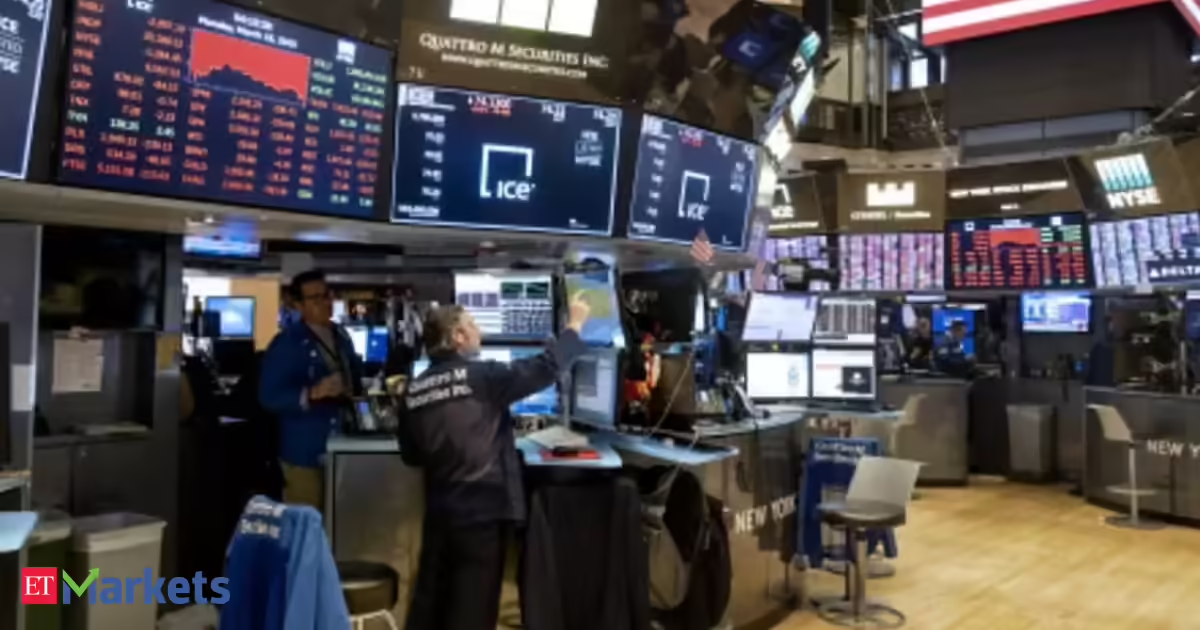
US Stock Market | Wall Street bounces back, ending higher on renewed tech vigor, easing AI concerns

Meta Plans Stablecoin Return With Third-Party Partner


-

 Video5 days ago
XRP News: XRP Just Entered a New Phase (Almost Nobody Noticed)
-

 Fashion4 days ago
Weekend Open Thread: Boden – Corporette.com
-

 Politics3 days ago
Baftas 2026: Awards Nominations, Presenters And Performers
-

 Entertainment7 days ago
Kunal Nayyar’s Secret Acts Of Kindness Sparks Online Discussion
-

 Sports1 day ago
Women’s college basketball rankings: Iowa reenters top 10, Auriemma makes history
-

 Politics1 day ago
Nick Reiner Enters Plea In Deaths Of Parents Rob And Michele
-

 Tech7 days ago
Retro Rover: LT6502 Laptop Packs 8-Bit Power On The Go
-
 Sports6 days ago
Clearing the boundary, crossing into history: J&K end 67-year wait, enter maiden Ranji Trophy final | Cricket News
-

 Business3 days ago
Mattel’s American Girl brand turns 40, dolls enter a new era
-

 Crypto World19 hours ago
XRP price enters “dead zone” as Binance leverage hits lows
-

 Business2 days ago
Law enforcement kills armed man seeking to enter Trump’s Mar-a-Lago resort, officials say
-

 Entertainment6 days ago
Dolores Catania Blasts Rob Rausch For Turning On ‘Housewives’ On ‘Traitors’
-

 Business7 days ago
Tesla avoids California suspension after ending ‘autopilot’ marketing
-

 Tech2 days ago
Anthropic-Backed Group Enters NY-12 AI PAC Fight
-
 NewsBeat2 days ago
‘Hourly’ method from gastroenterologist ‘helps reduce air travel bloating’
-

 NewsBeat2 days ago
Armed man killed after entering secure perimeter of Mar-a-Lago, Secret Service says
-

 Politics2 days ago
Maine has a long track record of electing moderates. Enter Graham Platner.
-

 Crypto World6 days ago
WLFI Crypto Surges Toward $0.12 as Whale Buys $2.75M Before Trump-Linked Forum
-

 Tech8 hours ago
Unsurprisingly, Apple's board gets what it wants in 2026 shareholder meeting
-
 NewsBeat4 hours ago
Police latest as search for missing woman enters day nine