
CryptoCurrency
AI Development Services for Inventory Optimization & Warehouse Automation

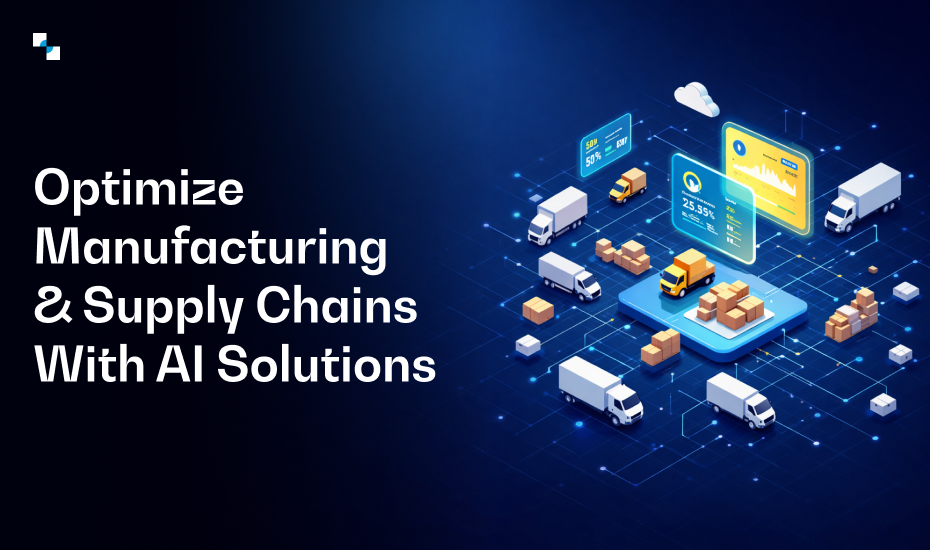
In today’s rapidly evolving manufacturing and supply chain landscape, traditional processes struggle to keep pace with dynamic demand, global disruptions, and rising customer expectations. Enterprises are increasingly turning to cutting-edge AI Development Services to optimize operations, enhance forecasting accuracy, and enable intelligent decision-making. By leveraging AI, organizations can transform manual, error-prone workflows into predictive, automated, and highly efficient systems, ensuring inventory is managed effectively while warehouses operate at peak productivity. An experienced AI Development company helps businesses deploy customized AI solutions that align with strategic goals, seamlessly integrate with existing technology, and deliver measurable ROI.
From AI inventory management solutions to warehouse automation with AI, these technologies are redefining how supply chains operate, creating a new standard for efficiency, responsiveness, and operational excellence.
The Cost of Inefficient Supply Chains: Pain Points AI Fixes
Despite advancements in logistics software, many enterprises continue to struggle with persistent challenges that hinder growth and profitability:
1. Unreliable Forecasting and Manual Planning
Traditional statistical forecasting often fails to capture real‑time market volatility or demand shifts. Gartner predicts that by 2030, 70% of large organizations will adopt AI‑based supply chain forecasting, enabling touchless, machine‑learning‑driven prediction that reduces error risk and manual dependency.
2. Inventory Inaccuracy and Overstocking
Stockouts and excess inventory remain major cost drivers. Without intelligent systems, companies often tie up working capital in surplus stock or lose revenue because of unmet demand.
3. Operational Inefficiency and Labor Constraints
Manual picking, packing, and cycle‑counting tasks lead to cost overruns and lower throughput. Organizations are struggling to optimize labor amidst rising wages and competitive pressures.
4. Lack of Real‑Time Visibility
Siloed systems and delayed data processing limit visibility across the supply chain. Without AI‑powered insights, decisions are often reactive rather than proactive.
These foundational pain points, from forecasting inaccuracies to a lack of visibility, make it imperative for enterprises to seek AI for inventory optimization and smart warehouse AI solutions that address strategic inefficiencies end‑to‑end.
What AI Development Services Enable Across Inventory and Warehousing
AI Development Services help organizations transition from fragmented, manual operations to cohesive, intelligent ecosystems:
1. Predictive Analytics for Advanced Demand Planning
AI models learn from historical and real‑time data, delivering predictions that outperform legacy tools and reducing reliance on human guesswork.
2. Automated Replenishment and Dynamic Policies
Machine learning algorithms automatically trigger replenishment at optimal times, adjusting safety stock and reorder points based on evolving demand signals.
3. End‑to‑End Data Integration
By unifying data across ERP systems, warehouse management tools, IoT sensors, and fulfillment platforms, AI enables a single source of truth, thus eliminating silos and accelerating insights.
4. Continuous Learning and System Evolution
Unlike static rule engines, AI continuously improves as it ingests new data, making AI inventory management solutions increasingly accurate and adaptive.
Partnering with a specialized AI Development company ensures these capabilities are tailored to organizational goals, accelerating ROI and minimizing disruption.
Deep Dive: AI Inventory Management Solutions and Smart Warehouse AI in Action
Let’s explore how these solutions produce measurable impact in real world operations:
1. AI Inventory Management Solutions
- Touchless forecasting: AI‑based forecasting reduces dependency on manual forecast cycles and improves prediction accuracy.
- Dynamic inventory alignment: stock levels automatically adjust based on real‑time consumption and demand trends.
- Reduced working capital tied to inventory: smarter stock policies free up cash flow for innovation and growth.
2. Warehouse Automation with AI
- Robot‑Driven Operations: Gartner data indicates that warehouse automation strategies will increasingly shift human roles toward managing robots with one in 20 supply chain managers expected to oversee robotic fleets by 2030.
- AI Vision Systems: By 2027, 50% of warehouse operations are predicted to adopt AI‑enabled vision systems thus replacing manual scanning with automated, real‑time tracking of inventory and safety conditions.
- Faster Picks and Fewer Errors: AI‑enhanced robotics and routing reduce cycle times and increase order accuracy; boosting throughput while reducing labor costs.
3. AI‑Powered Inventory Tracking
Linking AI with barcode scanners, RFID, and sensor data yields unmatched visibility enabling organizations to monitor item movement, predict stockouts, and synchronize inventory across multiple locations in real time.
These intelligent systems make supply chains far more resilient – a key competitive advantage in an uncertain global environment.
4. Autonomous AI Agents
According to Gartner, by 2030 half of supply chain management solutions will embed agentic AI capabilities, enabling AI agents to autonomously execute complex tasks across planning and execution layers.
These solutions transform traditional supply chain practices into intelligent, responsive systems designed for modern complexity.
Explore AI Solutions for Supply Chain!
What’s Next: Emerging AI Trends Redefining Inventory and Warehouse Operations
Looking ahead, several trends will further accelerate AI’s impact on supply chains:
1. Agentic AI for Autonomous Execution
AI agents capable of independently executing tasks such as replenishment decisions or supplier coordination will reduce human workload and accelerate responsiveness across operational layers.
2. Vision‑Driven Automation
AI‑enabled cameras and computer vision will automate quality inspections, inventory cycle counts, and safety monitoring thus reducing reliance on manual intervention.
3. Integration with IoT and Edge Analytics
AI combined with IoT devices will offer real‑time sensor intelligence enabling proactive insights that drive faster decisions and resilient operations.
4. Generative AI for Strategic Planning
Emerging large‑language models will enable natural language querying of operational data, scenario testing, and intelligent plan creation making executive decision‑making faster and more reliable.
These trends illustrate the next phase of innovation where AI for inventory optimization and smart warehouse AI solutions become mainstream drivers of efficiency, cost control, and resilience.
AI‑Powered Supply Chains Will Define the Next Manufacturing Decade
Artificial intelligence is transforming manufacturing and supply chain operations from reactive systems into intelligent, self‑adjusting networks. With AI inventory management solutions, warehouse automation with AI, and AI‑powered inventory tracking, businesses can reduce costs, improve forecast accuracy, and gain end‑to‑end visibility at scale.
Antier, as a leading AI Development company, offers top-rated AI Development Services to embed AI strategically into inventory & warehouse management seamlessly and sustainably. As global operations become increasingly complex, organizations that harness AI effectively will secure distinct advantages in efficiency, responsiveness, and growth, setting the standard for success in the decade ahead.



