
Crypto World
Arkham to turn forgotten CEX into future DEX

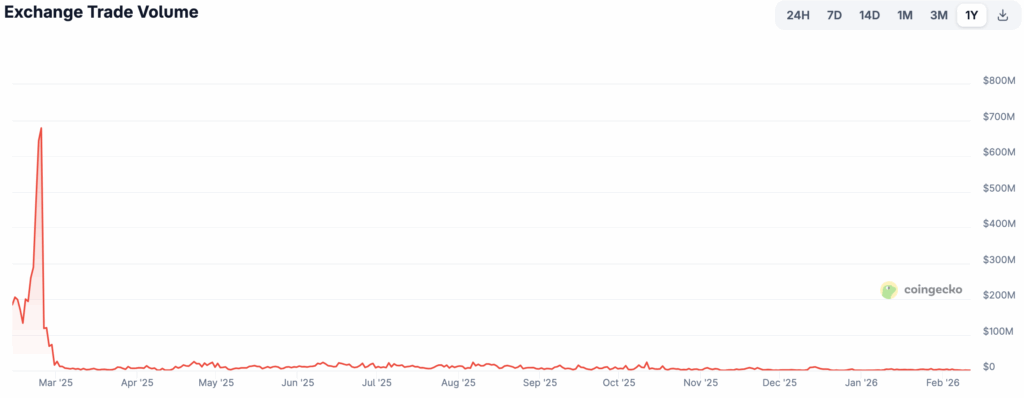
Data analytics firm Arkham Intelligence says it plans to pivot its crypto exchange spin-off to a fully decentralized model amid struggles to attract enough trading volume to compete with its multi-billion-dollar rivals.
That’s according to a report by CoinDesk.
Arkham’s founder, Miguel Morel, told CoinDesk, that Arkham “is becoming a fully decentralized exchange rather than a centralized exchange,” adding, “The future of crypto trading is decentralized, and that’s what we’re building towards.”
Arkham launched its exchange in late 2024 with the aim of competing with the likes of Binance and other established crypto exchanges for retail interest.
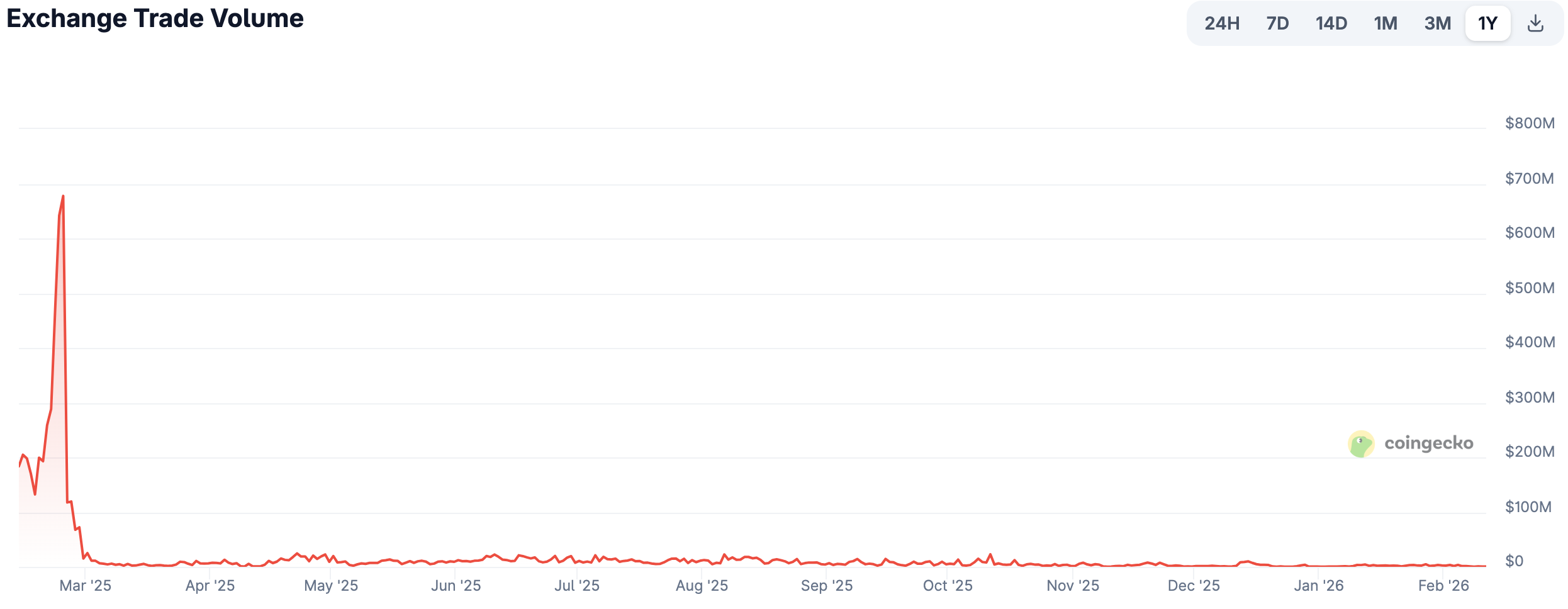
The exchange saw over $677 million in trading volume across February 2025, however, since then, it’s struggled to push daily trading volume beyond $22 million.
Read more: Arkham accused of misrepresenting Zcash data in viral post
Big-name exchanges such as Coinbase and Bybit, however, pull in billions of dollars worth of trading volume with Binance averaging tens of billions on most days.
The Arkham token (ARKM) has fallen by 2.6% in the last 24 hours and is down 82.4% since it was launched in 2023.
Arkham Exchange volume kept alive by airdrop
Users on X noted how many crypto traders were just using the exchange to farm one of its airdrops. One user said, “Season 1 paid out, fomo marketing did its job and now they are sunsetting the platform 😂.”
Arkham claims to have previously given away over $20 million for the Season 1 airdrop. It then tied its Season 2 airdrop to the newly launched exchange and rewarded trading activity with points that can be redeemed for ARKM.
It claimed that the Season 2 airdrop was still ongoing back in April 2025. It’s unclear what will happen to the points accrued by users.
Read more: Arkham ‘deanonymizes blockchains,’ obscures its own ARKM token sales
Late last year, Arkham announced that its exchange was getting its own app and that it was partnering with MoonPay to expand on its fiat on and off-ramps.
Arkham offers users dashboards that are able to track the crypto holdings of various entities, from the likes of Donald Trump’s “Trump Media” to Ethereum treasury firms like Bitmine.
It was founded by Morel in 2020 and is backed by the likes of OpenAI’s Sam Altman, Binance Labs, Bedrock, and Draper Associates.
Protos has reached out to Arkham for comment and will update this piece should we hear back.
Got a tip? Send us an email securely via Protos Leaks. For more informed news and investigations, follow us on X, Bluesky, and Google News, or subscribe to our YouTube channel.

The Reserve Bank of Australia is putting its support behind the real-world asset tokenization sector, citing recent analysis that it could contribute 24 billion Australian dollars ($16.7 billion) to the economy per year.
Australia’s central bank assistant governor Brad Jones shared findings from Project Acacia on Wednesday, commenting that tokenized finance and related infrastructure upgrades will be “revolutionary,” according to advocates.
He said that potential gains for the Australian economy from RWA tokenization were on the order of $16.7 billion per year, “and larger still if new markets emerged.”
“First, we no longer see the main question as whether tokenization has a future in Australia’s financial system, but rather, how.”
Global consulting firm McKinsey & Company has forecasted that the value of tokenized assets could hit nearly $2 trillion by 2030. The head of Australia’s securities regulator, Joe Longo, in November urged the country to “seize the opportunity” or be left behind.
Project Acacia is the RBA’s collaborative research project run with the Digital Finance Cooperative Research Centre and industry groups.
It was built on a previous central bank digital currency pilot and explored whether tokenized assets could improve the functioning of Australia’s wholesale financial markets.
New digital finance sandbox to be explored
Jones said the RBA will partner with agencies and industry groups to explore a “new digital financial market infrastructure (DFMI) sandbox.”
He added that this could allow industry and policymakers to build on the learnings from Project Acacia.
Related: Major Australian pension fund mulls crypto offerings amid growing demand
It could also “smooth the path to practical implementation by providing a safe space for the testing and scaling of tokenized money, assets, and new infrastructure in a longer-term, stage-gated environment,” he said, adding that it could be tied in with a CBDC.
“The interaction of wholesale CBDC with bank deposit tokens and stablecoins, and the synchronisation of tokenized asset ledgers with RITS [Reserve Bank Information and Transfer System], will be particular areas of interest.”
RWA onchain value surges 234% in a year
Jones concluded that ensuring Australia’s payments, monetary and financial infrastructure arrangements are “fit for purpose” in the digital age is a “strategic priority for the RBA.”
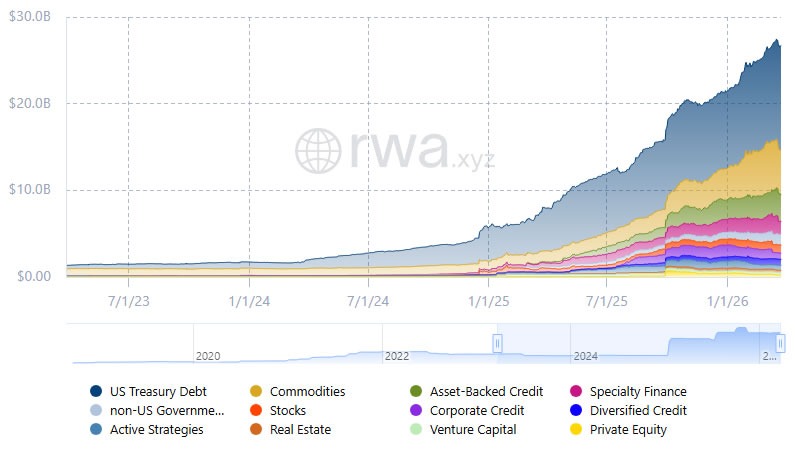
The total RWA market onchain value hit a record high of $27.5 billion last week, excluding stablecoins, according to RWA.xyz. The sector has seen huge growth, surging by 234% over the past 12 months despite the broader crypto asset bear market.

Magazine: Banks want to run Vietnam’s crypto exchanges, Boyaa’s $70M BTC plan: Asia Express

Bitcoin Depot has appointed Alex Holmes—already a member of the company’s board—as chief executive and chair, replacing Scott Buchanan who stepped down after less than three months in the top role. The move comes as the crypto ATM operator faces growing regulatory pressure across multiple U.S. states over alleged scams and money-laundering concerns tied to its kiosks. In the company’s regulatory filing, Bitcoin Depot stressed that Buchanan’s departure “was not due [to] a disagreement.”
Holmes, a veteran MoneyGram executive who spent 16 years at the payments firm in roles including chief financial officer and CEO, is known for his emphasis on regulatory compliance. He said his priorities center on stabilizing operations, advancing regulatory progress, and accelerating the company’s evolution into a broader fintech platform. Mintz, the founder and former CEO, will shift from executive chair to non-executive board member and serve as an adviser to Holmes.
Key takeaways
- Bitcoin Depot appoints Alex Holmes as CEO and chair, with founder Brandon Mintz moving to a non-executive advisory role.
- The leadership transition comes as U.S. states intensify scrutiny of crypto ATMs amid concerns about scams and money laundering.
- Connecticut suspended Bitcoin Depot’s money transmission license and issued a cease-and-desist order; Massachusetts has sued the company; Maine paid $1.9 million to a consumer protection bureau; Missouri opened an investigation; Iowa filed a lawsuit against Bitcoin Depot and another operator.
- The company lowered its 2026 revenue outlook amid a “dynamic regulatory environment.”
- Bitcoin Depot’s stock traded around the low-dollar range, with a recent intraday reaction reflecting the ongoing regulatory headwinds.
Regulatory pressure frames the leadership shuffle
The executive transition arrives at a time when Bitcoin Depot faces heightened regulatory risk across several states. Connecticut’s banking regulator announced a suspension of the company’s state money transmission license and issued a temporary cease-and-desist order, citing multiple alleged violations of state money transmission laws, including excessive fees and refunds to scam victims. The action underscores the ongoing tension between fast-growing crypto kiosk networks and traditional consumer protections frameworks.
Earlier in the year, Massachusetts prosecutors filed suit accusing Bitcoin Depot of overcharging consumers, facilitating scams, and failing to issue refunds. The legal actions across New England reflect a broader pattern of state attorneys general and regulators scrutinizing crypto ATM operations for consumer harm and compliance shortcomings.
Widening regulatory net and what it means for operators
Beyond Connecticut and Massachusetts, Bitcoin Depot has encountered regulatory actions in Maine, Missouri, and Iowa. Maine’s consumer protection agency announced a settlement in January, requiring the company to pay $1.9 million to compensate consumers for fraudulent transactions. In Missouri, the attorney general opened an investigation into Bitcoin Depot and four other crypto ATM operators in December, focusing on potentially deceptive fees and the misuse of kiosks by unscrupulous actors. Iowa followed with a lawsuit filed in February against Bitcoin Depot and rival CoinFlip, accusing the firms of enabling scams and costing Iowans more than $20 million.
These actions illustrate a pattern: as crypto kiosks proliferate, state regulators are increasingly willing to pursue enforcement actions tied to fees, refunds, and the overall integrity of the customer experience. The regulatory backdrop has translated into operational and financial headwinds for Bitcoin Depot, contributing to a broader reassessment of how crypto-access points are governed in the United States.
As Cointelegraph reported in related coverage, the sector has seen a notable uptick in losses and fraud linked to crypto ATMs, a trend that underscores the tension between rapid expansion and consumer protection. The industry’s evolving risk profile makes leadership choices at public or near-public operators all the more consequential for investors and users alike.
Financial outlook and investor reception
Bitcoin Depot disclosed in its 2025 results that it had reduced its 2026 revenue outlook, projecting a decline of roughly 30% to 40% due to what it described as a dynamic regulatory environment. The update was a frank acknowledgment that the path to growth in a highly regulated landscape will require careful navigation of state-by-state compliance regimes, alongside the ongoing need to secure consumer trust.
Market reaction to the leadership change and regulatory developments has been modestly negative in the immediate term. The company’s shares closed lower on the latest trading session, then recovered slightly after hours, a reflection of investor caution in light of the mounting legal and regulatory pressures. Bitcoin Depot (BTM) has been under severe pressure this year, with the stock down significantly from its 2022–2023 highs as state actions and corporate governance scrutiny mounted.
Strategic implications for a diversified fintech play
Holmes’ appointment signals a potential shift in Bitcoin Depot’s strategy toward a broader fintech platform, leveraging his deep experience in payments compliance. If executed well, the pivot could help the company balance growth in crypto-enabled services with stronger risk controls, potentially broadening its appeal to financial partners and retailers wary of compliance exposure. Yet the immediate priority remains stabilizing operations amid a tightening regulatory environment that could influence licensing, fee structures, and consumer protections across multiple jurisdictions.
In the near term, observers will be watching how Bitcoin Depot renegotiates its licensing posture in states where enforcement actions were initiated and whether it can restore consumer confidence through transparent refunds, clearer fee disclosures, and robust anti-scam measures. The outcome of ongoing investigations and lawsuits will also be a bellwether for the broader blockchain kiosk sector, which has seen rapid expansion but uneven regulatory clarity.
What to watch next
Investors and users should monitor how Holmes reshapes the operational backbone of Bitcoin Depot, including any concrete steps to strengthen regulatory compliance, refine fee policies, and improve dispute resolution processes. State regulators’ ongoing actions will continue to play a decisive role in determining the company’s ability to scale its network and sustain revenue growth in a constrained regulatory landscape. As the sector evolves, further clarity on a national framework for crypto kiosks could either ease the path for expansion or impose new guardrails that reshape a still-nascent market.
A Texas court has dismissed a lawsuit filed by crypto developer Michael Lewellen, seeking a declaratory judgment that his software, Pharos, which facilitates donations to charitable crowdfunding campaigns, won’t be prosecuted for violating money-transmission laws.
Chief US District Judge Reed O’Connor dismissed the case on Wednesday, finding that Lewellen had failed to demonstrate a credible threat of imminent prosecution.
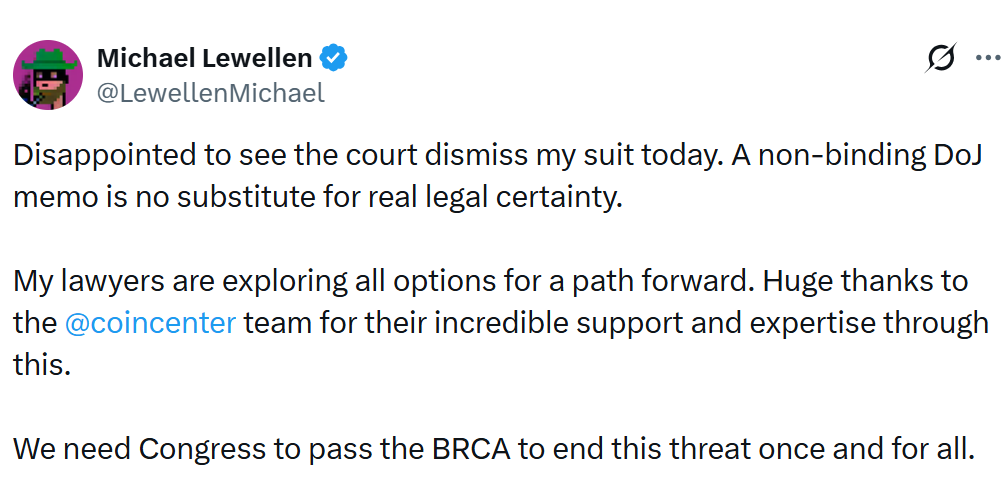
“Disappointed to see the court dismiss my suit today,” said Lewellen on X on Wednesday.
In its dismissal, the court also cited a Department of Justice memo stating that it will no longer target virtual currency exchanges, mixing and tumbling services or offline wallets for the acts of their end users or for unwitting violations of regulations.
“A non-binding DoJ memo is no substitute for real legal certainty,” added Lewellen.
Crypto software developers are increasingly seeking legal protections to shield themselves from criminal liability over the software they create.
Other crypto software developers prosecuted
Lewellen, a fellow at crypto advocacy group Coin Center, which backed the suit, argued in his legal complaint last January that developers of software similar to his product, such as those behind Tornado Cash and Samourai Wallet, have faced prosecution under these laws.

Tornado Cash co-founder Roman Storm was convicted last year on charges of conspiracy to operate an unlicensed money-transmitting business. The co-founders of privacy-focused Bitcoin wallet Samourai Wallet were found guilty on the same charge — both cases cited by Lewellen as evidence of a real legal threat to developers like himself.
However, Judge O’Connor argued that the “core conduct of those cases is money laundering.”
“By contrast, the core conduct here would be running a business. And Lewellen disclaims any knowing transmission of criminal funds, which is central to the prosecutions he invokes,” Judge O’Connor wrote.
Case dismissed for now but it might not be over
Lewellen said his lawyers are exploring all options for a path forward.
Judge O’Connor dismissed the case without prejudice, meaning Lewellen could pursue the same action again with certain corrections or modifications.
Related: SEC sends proposed crypto interpretation to White House for review
Peter Van Valkenburgh, the executive director at Coin Center, said the memo cited by Judge O’Connor “has not provided meaningful protection to developers, given the outcomes in the Tornado Cash and Samourai Wallet cases.”
Both Valkenburgh and Lewellen have now called for Congress to pass the Blockchain Regulatory Certainty Act of 2026.
Introduced by Senator Cynthia Lummis in January, the legislation aims to clarify that developers and providers of non-custodial software who do not control user funds are not subject to money transmitter laws.

“So while I hope the court is right that non-custodial software developers are not at real risk, the Blanche memo is not enough to secure their rights. It is a vague enforcement signal, not a durable limit on government power,” Valkenburgh added.
“Worse, the court has now used that vague signal as a reason not to provide actual judicial clarity on the scope of developer liability. Instead of a clear rule, developers get a revocable memo and a court telling them not to worry.”
Magazine: Nobody knows if quantum secure cryptography will even work
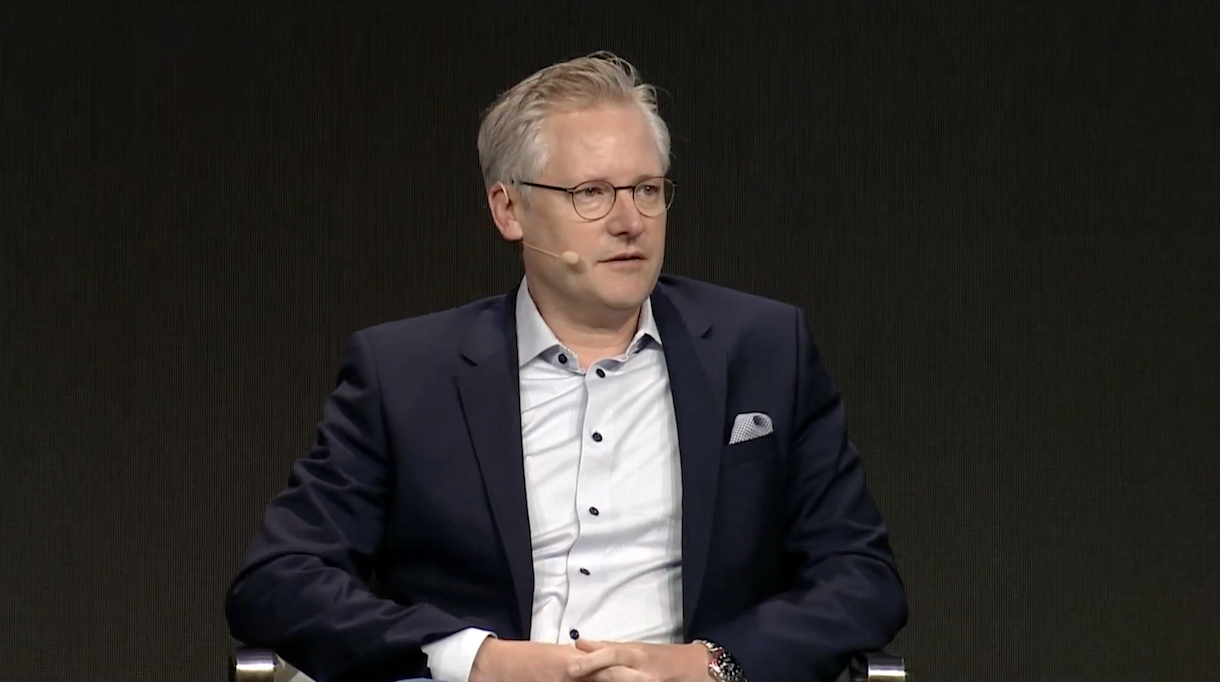
Bitcoin Depot has named the former CEO of payments giant MoneyGram as its new boss amid mounting regulatory pressure from US states over crypto ATM’s use in scams and money laundering.
The company said on Tuesday that Scott Buchanan had immediately stepped down as CEO, a role he served in for less than three months after starting on Jan. 1. It added in a regulatory filing that his resignation “was not due [to] a disagreement.”
Bitcoin Depot appointed Alex Holmes, who was already a board member, as CEO and chair. He has held various executive roles, including finance chief and CEO, over a 16-year period at MoneyGram, where he focused on regulatory compliance.
“As I step into the role, my priorities are operational stability, regulatory progress, and accelerating the Company’s evolution into a more diversified fintech platform,” Holmes said in a statement.

The leadership shake-up comes as Bitcoin Depot has faced legal and regulatory challenges in multiple US states, as crypto ATM operators come under increased scrutiny over the kiosks’ use in scams and money laundering.
Bitcoin Depot said its founder and former CEO, Brandon Mintz, would also transition from executive chair to a non-executive member of the board and would work as an adviser to Holmes.
Multiple US states take action against Bitcoin Depot
Bitcoin Depot most recently faced state action in Connecticut, whose banking regulator suspended its state money transmission license and issued a temporary cease-and-desist order earlier this month.
The order alleged multiple violations of the state money transmission laws, including excessive fees and incomplete refunds to scam victims.
Bitcoin Depot has also faced action from at least four additional states since early 2025, with Massachusetts’ attorney general suing Bitcoin Depot in early February for allegedly overcharging consumers, knowingly facilitating scams and refusing to issue refunds.
The company paid $1.9 million to Maine’s Consumer Credit Protection Bureau in January to compensate consumers for fraudulent transactions, and Missouri’s attorney general opened an investigation into Bitcoin Depot and four other crypto ATM operators in December over concerns of deceptive fees and use by bad actors.
Related: Crypto ATM losses surge 33% in 2025 as AI superpowers scams: CertiK
Iowa also sued Bitcoin Depot and CoinFlip in February 2025 over alleged failures that allowed scammers to transfer millions of dollars through their kiosks.
Bitcoin Depot had lowered its 2026 outlook in its 2025 results released earlier this month, estimating its revenues would be down 30% to 40% due to a “dynamic regulatory environment.”
Shares in Bitcoin Depot (BTM) ended trading on Wednesday down 6.6% to $2.62, but saw a 4.7% bump after the bell to $2.74.
The stock is down 71% so far this year and has fallen more than 94% from its closing all-time high of $45.36 in mid-June.
Magazine: Bitcoin may take 7 years to upgrade to post-quantum — BIP-360 co-author
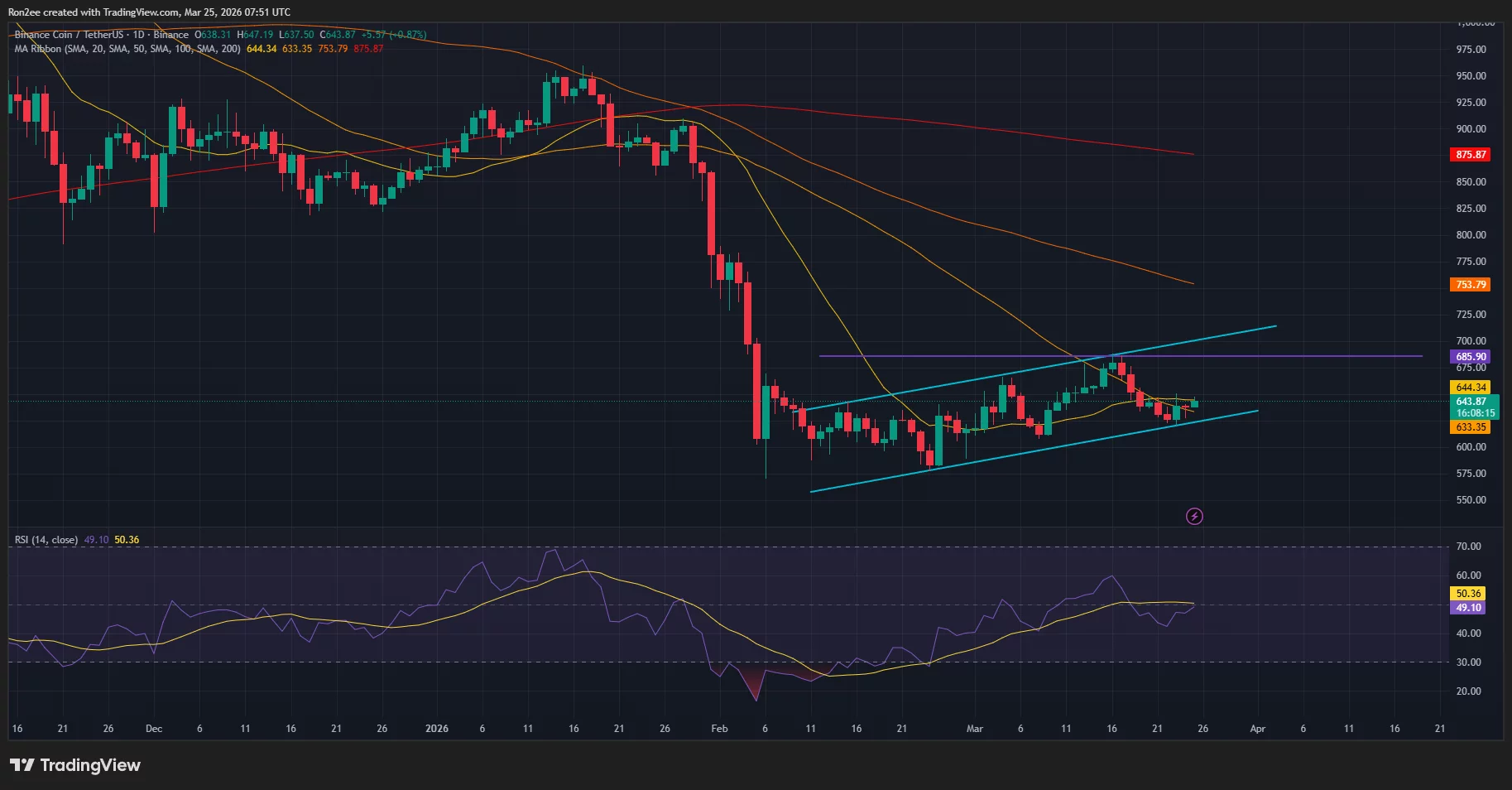
BNB price surged back towards $650 as futures traders increasingly bet on further upside for the token.
Summary
- BNB rebounded from $627 to near $650 as improving risk sentiment followed easing U.S.-Iran tensions and a drop in crude oil prices.
- Futures activity strengthened, with open interest rising 6.5% to $923 million and a long-short ratio above 2.21, signaling bullish positioning.
- Technical setup remains positive, with price holding above an ascending trendline and a bullish SMA crossover pointing toward resistance near $685 and potentially $750.
After touching an intraday low of $627 on Sunday, BNB (BNB) price rebounded back to $646 at the last check on Monday morning, March 25.
BNB price rebounded in tandem with the broader crypto market as investor appetite for risk assets improved on hopes of peace between the U.S. and Iran. Notably, crude oil prices fell sharply back below $100 to trade around $87 per barrel as geopolitical tensions eased. Bitcoin (BTC) has climbed back above $71,000 while Ethereum (ETH) approached the $2,200 level.
The traditional market also seemed to catch a bid with Asian stocks, such as Japan’s Nikkei 225, the Hang Seng, and the Shanghai Composite, all posting gains.
On the derivatives market, traders have scaled up their bets on BNB, adding more liquidity to the ecosystem.
CoinGlass data show that open interest for BNB futures has increased by 6.5% to $923 million over the past 24 hours, with a long/short ratio of over 2.21 on the crypto exchange Binance. This indicates that market participants are overwhelmingly positioned for a breakout as bullish conviction reaches its highest point this month.
BNB’s price action on the daily chart presents a bullish outlook for the token over the coming sessions.
BNB price has rebounded above an ascending trendline that has been acting as a dynamic support for the token over multiple weeks. As long as BNB price remains above the support trendline, the overall structure remains firmly in the hands of the buyers.
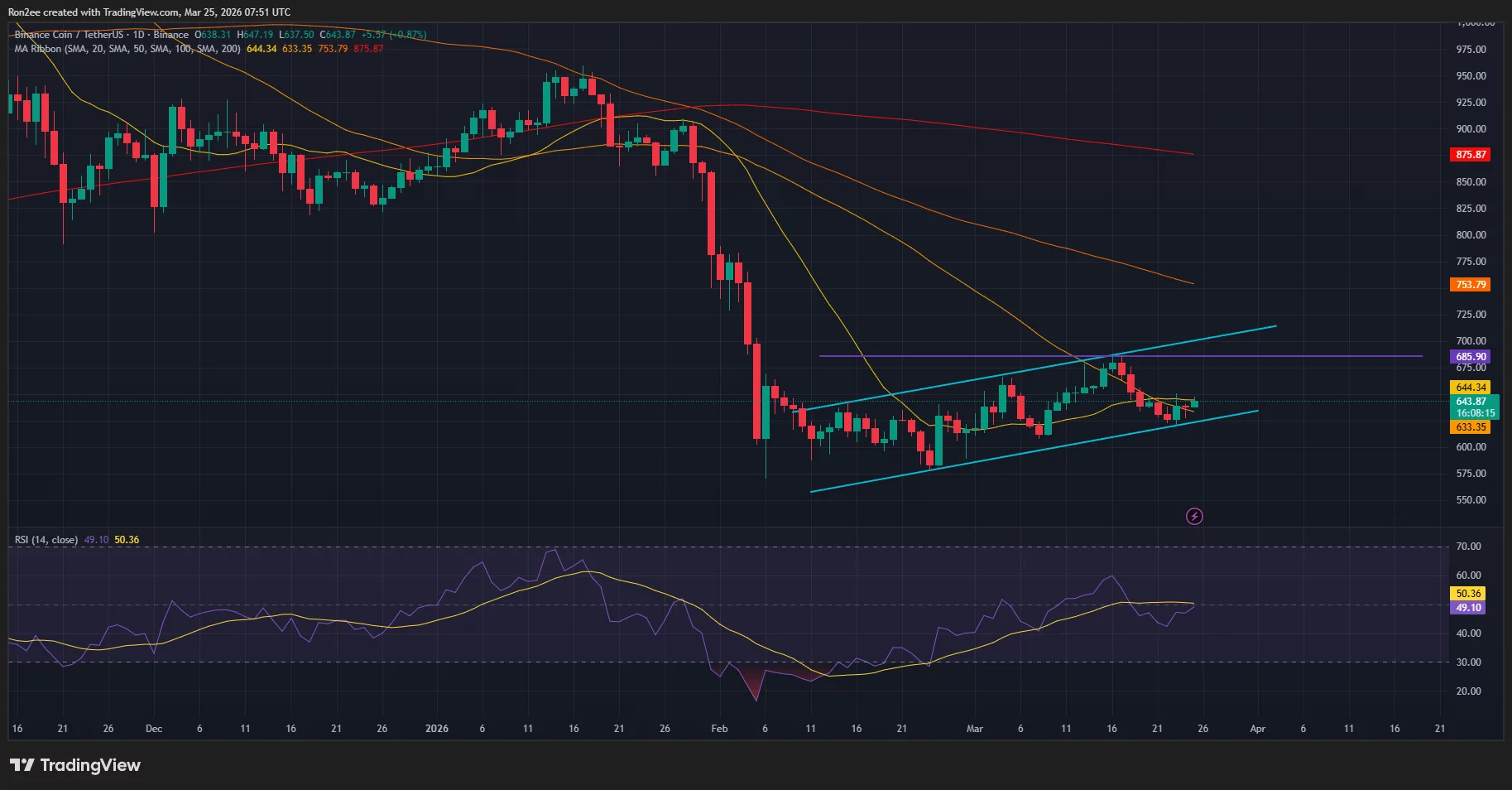
The trendline forms the lower boundary of an ascending parallel channel pattern, another popular bullish pattern in technical analysis.
Additionally, a look at technical indicators shows that bulls are regaining their momentum and control over the market. Notably, the 20-day SMA has formed a bullish crossover with the 50-day SMA, while the relative strength index is close to breaking above neutral levels to signal that the path of least resistance is now to the upside.
While this still means that volatility could persist, especially if the broader market sentiment improves as further details emerge over the potential peace negotiations between the U.S. and Iran, the outlook is promising.
For now, traders should keep an eye on $685 as the next key resistance level where BNB faced stiff rejection several times during its rally earlier this month.
A breach above the neckline could catapult the price towards the 100-day SMA above $750. On the contrary, if BNB price slips below the $600 support, it could invalidate the current bullish thesis and lead to a retest of lower demand zones.
Disclosure: This article does not represent investment advice. The content and materials featured on this page are for educational purposes only.


Enlivex has raised $21 million through a debt financing deal as it expands its treasury tied to the prediction market token Rain.
Summary
- Enlivex used debt funding to buy 3 billion more RAIN tokens at a 62% discount.
- The company also extended rights to buy 272.1 billion more RAIN tokens through December 2027.
- RAIN stayed mostly flat, while Enlivex shares dipped in regular trading and rose after hours.
The immunotherapy company said the new funding will support its operating plan and help it buy more RAIN tokens while extending its purchase option through December 2027.
Enlivex said it exercised an option on Sunday to buy another 3 billion RAIN tokens for $10 million. The company said the purchase price reflected a 62% discount. It also extended its option to buy another 272.1 billion RAIN tokens at the same price through December 2027.
The financing came from The Lind Partners, a New York-based asset manager. Enlivex executive chair Shai Novik said,
“We are continuing to execute our prediction markets treasury strategy, and we are pleased that Lind provided us with substantial capital, allowing us to continue the execution of our operating plan, as well as to acquire approximately three billion additional RAIN tokens.”
Debt deal comes with share buyback plan
Enlivex said it also approved a $20 million share buyback program. The company said the move is aimed at supporting shareholder value while it continues to build its treasury strategy around prediction markets.
The company is known for developing cell therapy products for knee osteoarthritis. At the same time, it has joined a growing group of non-crypto firms that are adding digital assets to their balance sheets. These companies are using token holdings as part of broader capital and treasury plans.
In addition, the value of Enlivex’s RAIN treasury depends on activity on Rain’s decentralized prediction market platform. Rain has a built-in 2.5% fee, and the protocol uses that fee to buy back and burn RAIN tokens. The model is designed to reduce supply while linking token demand to platform usage.
Rain runs on Arbitrum, an Ethereum layer-2 network. DeFiLlama data places Rain among the top 10 prediction market platforms by total value locked and fees over the past seven days. Prediction markets have grown fast over the past year, with trading volume rising more than 1,200% to $23.3 billion between February 2025 and February 2026.
RAIN and ENVL traded near flat after the news
RAIN rose 7% after the announcement and reached $0.009 before easing to $0.0088. CoinGecko data showed the token was up 0.3% over the past 24 hours by the time of reporting.
Enlivex shares also moved only slightly during regular trading. The stock closed Tuesday down 0.9% at $1.10, then rose 4.5% in after-hours trading to $1.15. Kalshi and Polymarket still lead the prediction market sector and account for more than 80% of total trading volume.


Bitcoin (BTC) rose back to around $71,000 on March 25 after falling below $69,000 a day earlier, as traders reacted to fresh uncertainty linked to the Middle East conflict.
Summary
- Bitcoin rebounded to $71,000 after renewed conflict reports pushed prices below $69,000, unsettling broader markets.
- XLM and HYPE outperformed major tokens, while Ethereum, BNB, XRP, and Solana recorded smaller gains.
- SIREN rebounded above $2 after a sharp plunge, extending volatility and drawing fresh community scrutiny.
The recovery added to a mixed market session in which most large-cap altcoins posted limited daily moves. The broader crypto market also moved higher. Total market capitalization added about $20 billion in one day and approached $2.53 trillion, while Bitcoin’s market share held near 56.5%.
Bitcoin faced pressure over the past week after it failed to hold the $76,000 level. The pullback pushed the asset down to $69,000 last Thursday, with market sentiment turning cautious after the Federal Reserve kept interest rates unchanged and geopolitical tension increased.
The asset later bounced to $71,000 over the weekend, but another wave of selling followed after Donald Trump made statements about Iran. Bitcoin then fell back to $69,000 on Tuesday before recovering again to around $71,000 at press time.
The latest price swings came as traders responded to reports tied to the Middle East conflict. Trump said he would “pause all military actions against Iran’s power plants” and claimed both sides had reached a “deal.”
Iranian officials rejected those claims, which added more uncertainty to the market. Bitcoin briefly moved higher after Trump’s remarks, then lost momentum after the denial and the release of more disputed reports from the war front.
Altcoins Post Mixed Daily Performance
Most major altcoins traded in a narrow range during the session. Ethereum moved close to $2,200 after a small daily gain, while BNB neared $650. XRP held the $1.40 support level, and Solana climbed back above $90.
Among the larger-cap assets, Stellar posted one of the strongest gains. XLM rose about 8% to $0.18, while HYPE advanced more than 6% and traded above $40.
SIREN remained one of the most active tokens in the market. The AI-linked asset had surged to a record high of $3.65 after several triple-digit moves, then dropped by more than 70% before rebounding again.
At press time, SIREN traded near $2.20 after gaining more than 100% in one day. The move came as community members continued to question the token’s purpose and wallet concentration.
Disclosure: This article does not represent investment advice. The content and materials featured on this page are for educational purposes only.


Aave Labs plans to use idle liquidity in its lending system to generate extra yield as it moves closer to its V4 upgrade.
Summary
- Aave V4 will redeploy idle liquidity into approved strategies while keeping depositor access unchanged throughout.
- Roughly $6 billion in stablecoin deposits sits unused and may now generate extra yield onchain.
- The Aave DAO moved V4 closer to launch as governance tensions and contributor exits continued.
According to a blog post, the firm said the new Reinvestment Module will deploy unused funds into low-risk strategies while keeping assets available for withdrawals and borrowing. The update comes as Aave also moves through governance changes tied to the V4 rollout.
Aave Labs said a large share of capital on the protocol sits unused at any given time. Out of about $20 billion in stablecoin deposits, roughly $6 billion remains idle to support instant withdrawals and loan demand.
The firm said V4 will address that gap through a new Reinvestment Module. The module will monitor unused liquidity and direct part of it into approved strategies that can generate added returns without locking user funds.
Under the V4 design, a central liquidity hub will collect supplied assets and route them across lending markets, also called spokes. Each spoke will operate with its own rules, use cases, and risk settings.
When excess liquidity builds up, the Reinvestment Module will allocate capital into strategies approved through governance. These may include short-term Treasuries, money markets, and delta-neutral trades. When borrowing demand rises again, the module will pull capital back and rebalance automatically.
Furthermore, Aave Labs said the system will be configured for each asset separately. Stablecoins, ether, and other supported assets may follow different strategies, limits, and activation settings based on the asset profile.
For users, the change is meant to stay in the background. Depositors will still be able to access funds without lockups, while idle reserves may earn added yield. Aave said,
“The module also makes Aave more useful to institutions and protocol integrators by increasing yields and adding strategy flexibility.”
V4 advances as governance changes continue
The firm said historical data suggest the approach could improve returns. Based on Aave’s estimates, reinvesting excess stablecoin liquidity at rates close to SOFR would have raised average yields from about 4% to 4.9%.
At the same time, the Aave DAO has advanced a request-for-comment proposal tied to V4 deployment. The upgrade now moves closer to launch as several long-time contributors, including BGD Labs and the Aave Chan Initiative, prepare to step back.
These exits came during a governance dispute and broader changes pushed by founder Stani Kulechov to speed up the V4 path and tighten DAO control over resources.
Opinion by: Xin Yan, co-founder and CEO of Sign.
Financial exclusion remains one of the most persistent challenges for national governments. World Bank data highlights how more than 1.3 billion adults remain unbanked, without access to a financial account. These people rely on cash, creating a ‘cash-digital divide’, which excludes them from the formal economy.
To bridge the divide, governments need to promote CBDCs actively. As a trusted, risk-free alternative to physical cash, CBDCs are ideal instruments for the financially excluded demographic. With a seamless entry point to the financial ecosystem, mass adoption of CBDCs is a vital catalyst and a foundational pillar for achieving universal financial inclusion.
Wider access to financial institutions is key to stimulating a country’s growth. As more people invest and participate in the formal economy, the total capital base will expand, leading to greater financial stability. Further, bringing people within the formal economy ensures the benefits of policy rate changes reach the masses, bolsters regulatory oversight and prevents fraud.
Most people within the low-income demographic depend on cash payments because cash is easy to use, accepted everywhere, does not incur transaction charges and functions as a trusted medium of exchange.
The infrastructure needed to handle cash creates a gap between the unbanked population and the formal economy.
Financial inclusion as government policy
Establishing physical touchpoints to manage, store and handle cash at remote locations is resource-intensive. That’s why most service providers back out of offering cash-dependent financial services due to the high operational expenses.
Cash transactions also don’t leave a digital record, leading to an information vacuum for financial service providers. Consequently, institutions club the entire unbanked population as a high-risk group, denying access to insurance and credit markets.
Related: US lawmakers warn temporary CBDC ban isn’t enough, demand ‘permanent’ block
The lack of access to affordable digital payments and the absence of transaction history erode financial well-being and hinder a country’s economic growth. In this scenario, widespread access to formal financial services becomes an important government agenda.
Some central banks consider financial inclusion to be a key component of their mandate and adopt policies to ensure universal access to the formal economy. To this end, some central banks have considered issuing CBDCs to fast-track the process of developing an inclusive financial ecosystem.
CBDCs can accelerate financial inclusion
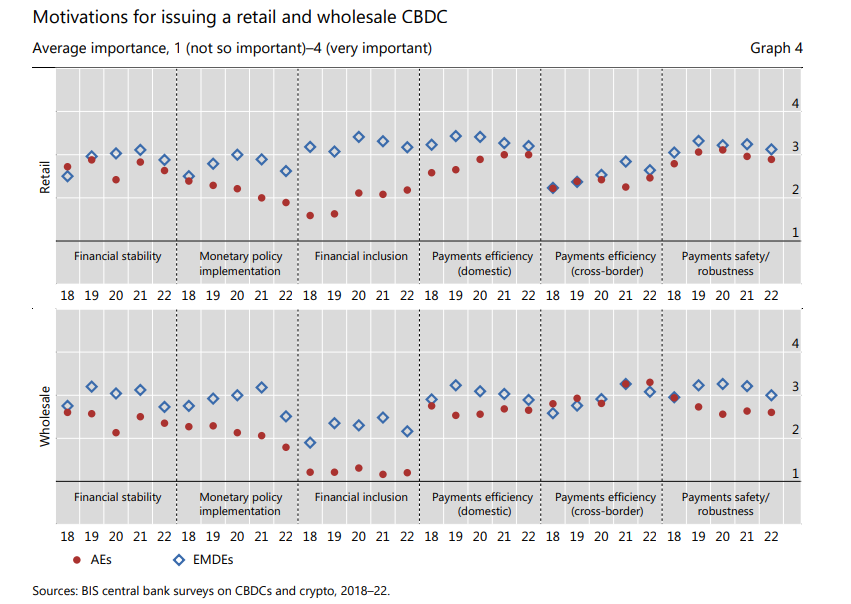
According to a 2023 study by Kosse and Mattei referenced by the IMF, about 60% of emerging and low-income countries consider financial inclusion to be one of the top three motivations for issuing a CBDC. The high confidence in CBDC stems from its properties to become the ideal bridge to the formal economy for the unbanked demographic.

CBDCs can operate via a two-tier distribution model. This model allows both commercial banks and non-banking entities to reach the financially excluded demographic. Besides expanding the financial ecosystem’s reach, non-banking intermediaries lower the high overhead costs of legacy branch-based banking.
As a significant portion of the unbanked population doesn’t have stable internet or mobile connectivity, offline transaction support is necessary. Experts have noted how CBDCs are being designed to support robust offline capabilities. Exploring high-potential technologies for short-range communication ensures resilient CBDC payments in remote areas where there is limited connectivity.
As a public-sector digital infrastructure, CBDCs are designed to prioritize public welfare over commercial profit. Stripping away the bloated overhead of legacy intermediary layers, CBDCs enable a highly optimized cost structure.
Instead of burdensome charges, users benefit from marginalized transaction costs that are de minimis, ensuring the network remains both accessible to the unbanked and economically resilient for the sovereign issuer.
Moreover, the underbanked population is more likely to trust CBDCs as a digital alternative to cash because they are aided by a credible institution. Unlike the liquidity constraints of private financial entities, CBDCs will always remain a direct liability of the central bank, making them somewhat safe.
Most importantly, CBDCs provide a portal for the financially excluded population to participate in the formal economy. It happens through the smooth exchange of transaction data between CBDCs and the broader financial services industry.
CBDCs can support privacy-preserving data sharing, allowing users to voluntarily share their transaction history to build credit scores to access savings, credit, and insurance services.
In the absence of formal credit history, lenders can use CBDC transaction data as a legitimate source to evaluate financial behavior and creditworthiness. Service providers would therefore be able to measure a customer’s risk profile and verify identity to offer credit and other financial products.
Toward CBDC mass adoption
CBDC usage is subject to digital literacy, electricity infrastructure, and access to hardware. Data shows that nations have already made enormous progress on all these fronts.
The 2025 Global Findex Database from the World Bank Group has reported that 86% of adults now own a mobile phone. Also, 79% of adults now have a bank account, and 61% are making digital payments across low and middle-income economies.

The report interestingly states that “despite high mobile phone ownership and growth in account ownership, 1.3 billion people still lack financial accounts.” This group of people have phones, personal ID, and SIM cards, which are necessary for a digitally enabled account.
Yet, they remain financially excluded from the formal economy.
In this situation, CBDCs remain one of the primary products that can offer safe, affordable, and convenient financial services to consumers.
Central banks and national governments must adopt a holistic approach and use CBDCs to help the financially inexperienced demographic integrate with the formal economy.
Opinion by: Xin Yan, co-founder and CEO of Sign.
This opinion article presents the author’s expert view, and it may not reflect the views of Cointelegraph.com. This content has undergone editorial review to ensure clarity and relevance. Cointelegraph remains committed to transparent reporting and upholding the highest standards of journalism. Readers are encouraged to conduct their own research before taking any actions related to the company.
TLDR:
- XRP’s combined spot and perpetual CVD on Binance recovered by $315M between March 23 and March 25.
- Binance open interest held between $185M and $192M, showing buying returned without added leverage pressure.
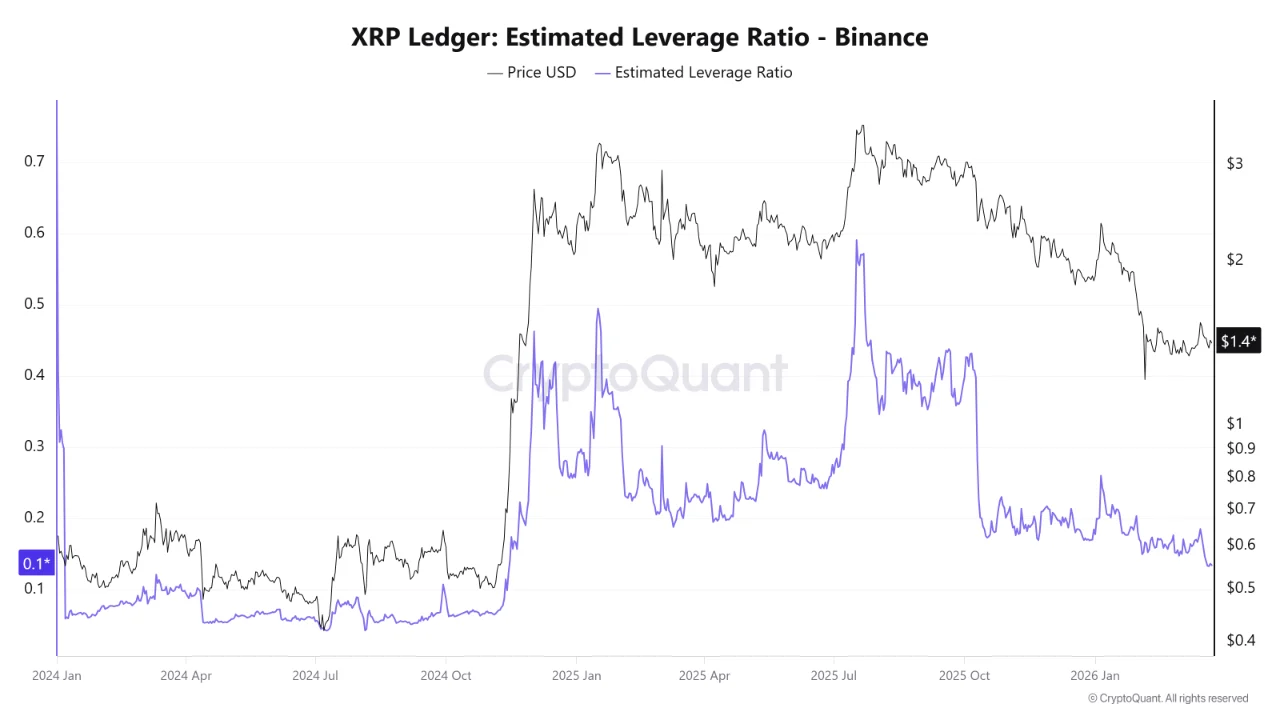
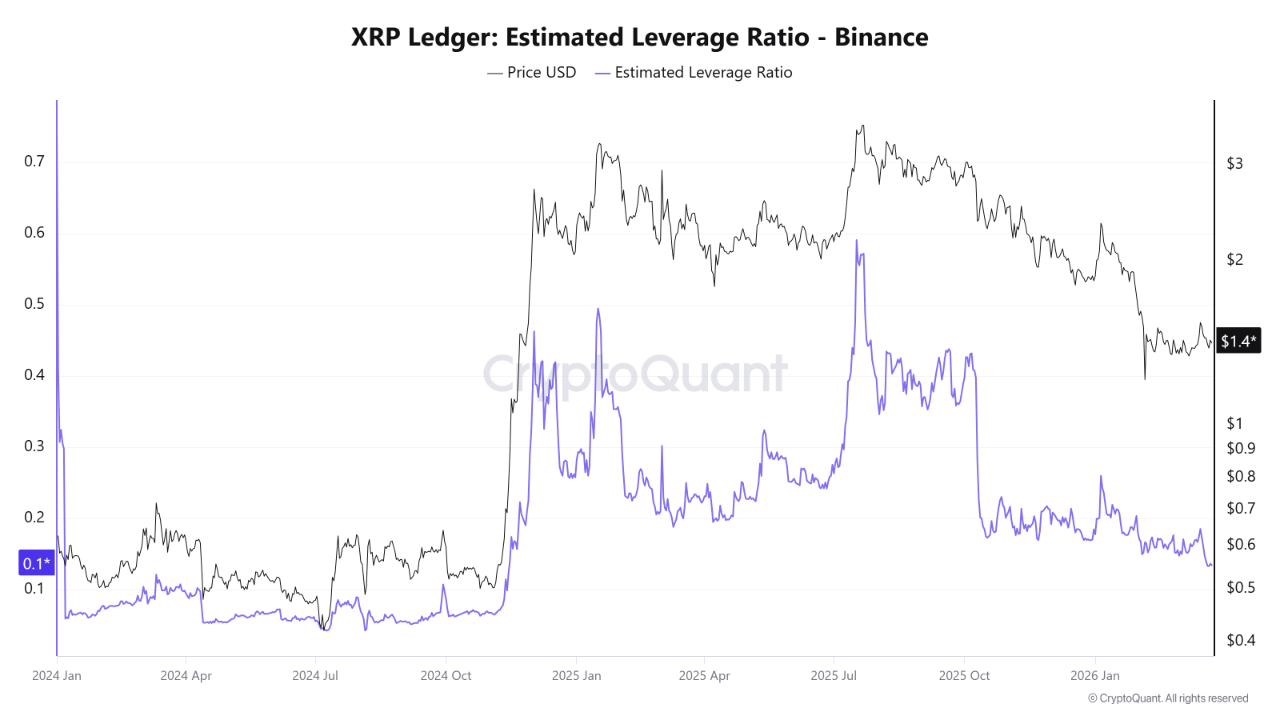
- XRP’s Estimated Leverage Ratio dropped to 0.134 on Binance, marking the lowest reading recorded since 2024.
- Multi-exchange OI delta averaged -$14M daily from March 18–22, preceding the two-day CVD rebound on Binance.
XRP is showing renewed buying activity on Binance, with key derivatives and spot metrics improving over a two-day window.
Between March 23 and March 25, combined spot and perpetual cumulative volume delta recovered by $315 million.
At the same time, the estimated leverage ratio dropped to its lowest point since 2024. These developments suggest a shift in market structure that traders are closely watching.
Binance CVD Recovers Across Spot and Perpetual Markets
XRP’s perpetual CVD on Binance moved from -$2.12 billion to -$1.88 billion between March 23 and March 25. That represents a net improvement of roughly $240 million within just two days. Alongside this, spot CVD climbed from -$202 million to -$127 million over the same period.
The spot CVD improvement added another $75 million to the overall recovery. Together, these two figures account for the $315 million combined rebound seen across both markets. This kind of recovery across both segments tends to reflect broader participation from buyers.
What adds weight to this move is how open interest behaved during the same window. Binance open interest stayed within a narrow band of $185 million to $192 million throughout this period. That range shows buying pressure picked up without a notable rise in leverage.
As analyst Amr Taha noted, the broader derivatives market had already gone through a cooling phase before this rebound appeared.
On the Multi Exchange Open Interest Delta chart, negative readings dominated from March 18 to March 22, averaging around -$14 million daily. The CVD recovery therefore followed a multi-day period of reduced activity.
XRP Leverage Ratio Drops to Levels Not Seen Since 2024
The Estimated Leverage Ratio for XRP on Binance recently fell to approximately 0.134, coinciding with XRP trading near $1.41.
According to analyst Arab Chain, this marks the lowest reading since 2024. It reflects a clear change in how traders are positioning themselves in the derivatives market.
Source: Cryptoquant
During 2025, the ELR climbed above 0.50 at several points, which aligned with periods of heightened price swings.
Starting in early 2026, the ratio began a steady decline before reaching its current level. The drop points to an ongoing deleveraging phase across the market.
Lower leverage generally reduces the risk of large-scale liquidations. Liquidation events often cause sudden price swings and short-term volatility. A reduction in open leverage therefore tends to stabilize price action over time.
The decline in leverage also appears to coincide with a price drop from higher levels seen in recent months. This pattern often reflects a rebalancing phase, where over-leveraged positions are unwound. Historically, such phases have preceded stronger and more sustained price movements.


Managing finances with ADHD is overwhelming, says Norwich woman

Bhagwan wins Barrow Island decommissioning contract

Sid Haig’s Unrated Clown Saga Is Captain Spaulding’s Redemption Arc


-
 Crypto World5 days ago
NIO (NIO) Stock Plunges 6.5% as Shelf Registration Sparks Dilution Worries
-

 Fashion5 days ago
Weekend Open Thread: Adidas – Corporette.com
-

 Politics5 days ago
Jenni Murray, Long-Serving Woman’s Hour Presenter, Dies Aged 75
-
 NewsBeat19 hours ago
Manchester United reach agreement with Casemiro over contract clause amid transfer speculation
-

 Crypto World4 days ago
Best Crypto to Buy Now: Strategy Just Spent $1.57 Billion on Bitcoin During Fear While Early Investors Quietly Enter Pepeto for 150x Potential
-

 Crypto World4 days ago
Bitcoin Price News: Bhutan Sells $72 Million in BTC Under Fiscal Pressure, but the Smart Money Entering Pepeto Sees What the Market Does Not
-

 Tech6 days ago
inKONBINI Lets You Spend Summer Days Behind the Register
-

 News Videos2 hours ago
Parliament publishes latest register of MPs’ financial interests
-

 Sports3 days ago
Remo Stars and Kano Pillars Strengthen Survival Hopes in NPFL
-

 Politics6 days ago
Gender equality discussions at UN face pushbacks and US resistance
-

 Business4 days ago
No Winner in March 21 Drawing as Prize Rolls to $133 Million for Next
-

 Sports3 days ago
Gary Kirsten Accuses Pakistan Cricket Board Of ‘Interference’, Mohsin Naqvi Responds
-

 Tech3 days ago
Give Your Phone a Huge (and Free) Upgrade by Switching to Another Keyboard
-
 NewsBeat7 days ago
Val Kilmer to appear posthumously in new film using generative AI
-

 Sports5 days ago
2026 Kentucky Derby horses, odds, futures, preview, date: Expert who nailed 12 Derby-Oaks Doubles enters picks
-
Sports7 days ago
Vikings Free Agency Enters Phase 2 with Key Questions
-

 Tech3 days ago
AI enters the chat: New Seattle dating app relies on tech to facilitate meaningful human connections
-

 Politics6 days ago
Scotland’s rejection of assisted dying is a victory for humanity
-
Business5 days ago
Columbia Sportswear enters $500 million credit agreement with JPMorgan Chase
-

 NewsBeat7 days ago
Missile lands next to presenter during live report
You must be logged in to post a comment Login