
CryptoCurrency
Bitcoin Market Metrics Signal Begin of Bear Market

Bitcoin Enters Bear Market Cycle as Demand Suppresses Prices
Recent analyses indicate that Bitcoin’s demand has significantly waned since October 2025, signaling the onset of another bearish phase in its market cycle. CryptoQuant analysts highlight that investor interest in Bitcoin has dwindled across multiple demand waves, reflecting a potential shift in market sentiment and technical support.
Key Takeaways
- Demand growth for Bitcoin has fallen below trend since early October 2025, weakening its price support.
- Institutional holdings in Bitcoin ETFs declined by approximately 24,000 BTC during Q4 2025.
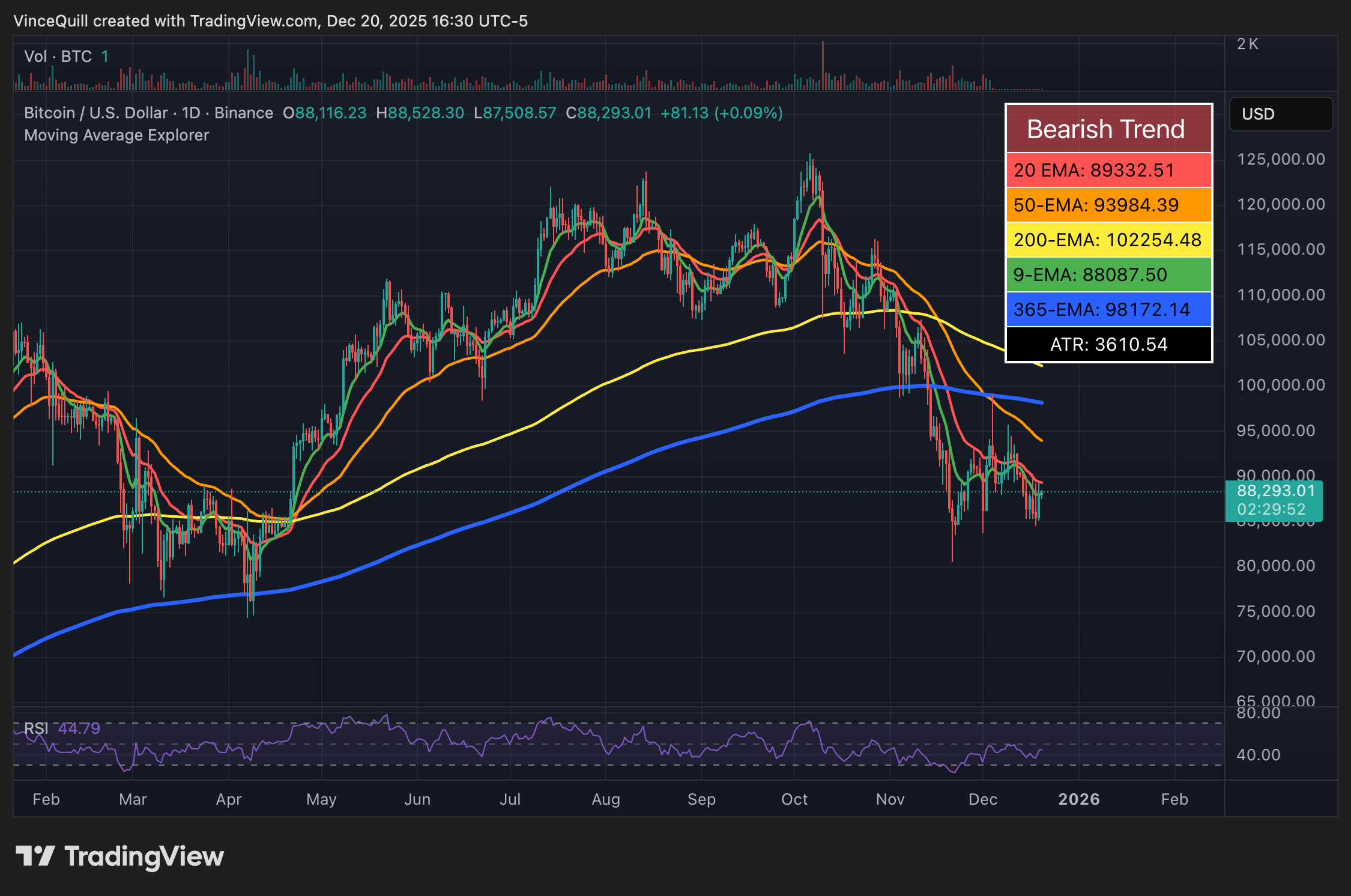
- Bitcoin’s price has broken below the critical 365-day moving average, which now acts as a key resistance level.
- Funding rates for perpetual futures have dropped to their lowest since December 2023, further confirming a bearish outlook.
Tickers mentioned: Bitcoin
Sentiment: Bearish
Price impact: Negative. The decline in demand and breaking critical technical levels suggest further downside potential for Bitcoin.
Market context: A combination of waning institutional interest, technical breakdowns, and macroeconomic factors has aligned to reinforce bearish pressures on Bitcoin.
Demand Deteriorates, Technicals Confirm Bearishness
CryptoQuant’s latest analysis underscores a marked slowdown in Bitcoin demand, which had previously surged during three distinct phases. The first demand wave materialized in January 2024 following the launch of Bitcoin ETFs in the United States, attracting institutional and retail investors. The second wave was driven by the outcomes of the 2024 US presidential election, sparking renewed speculation. The third emerged around the hype of Bitcoin treasury holdings by companies. However, according to CryptoQuant, these demand increments have now dissipated.
“Demand growth has fallen below trend since early October 2025. This indicates that the bulk of this cycle’s incremental demand has already been realized, removing a key pillar of price support.”
Moreover, institutional demand has contracted, with Bitcoin holdings in ETFs declining by roughly 24,000 BTC in the last quarter, contrasting sharply with the accumulation trend observed in Q4 2024. Funding rates, which represent the fees traders pay to hold perpetual futures positions, have also declined to their lowest levels since December 2023, further indicating a bearish sentiment.
Another critical technical signal is Bitcoin’s price falling below its 365-day moving average, a significant support level near $98,172. This breakdown suggests increased downside risk, as technical momentum shifts against the previous bullish trend.
Market Sentiment and Outlook
While some analysts remain optimistic about a potential recovery in 2026 fueled by falling interest rates and renewed demand, current market sentiment reflects widespread apprehension. According to CoinMarketCap’s Crypto Fear and Greed Index, investor sentiment remains in ‘fear’ territory, with only 22.1% expecting the Federal Reserve to lower interest rates at the upcoming January meeting, as per CME Group’s FedWatch tool.
In an era of macroeconomic uncertainty, geopolitical pressures like President Donald Trump’s attempts to influence Fed policy—threatening to fire Chair Jerome Powell—add to market instability. Powell’s term concludes in May 2026, and speculation continues over potential replacements expected to favor rate cuts, potentially offering bullish catalysts for crypto markets in the future.



