
CryptoCurrency
BSP & SEC-Ready White Label Cryptocurrency Exchange For the Philippines

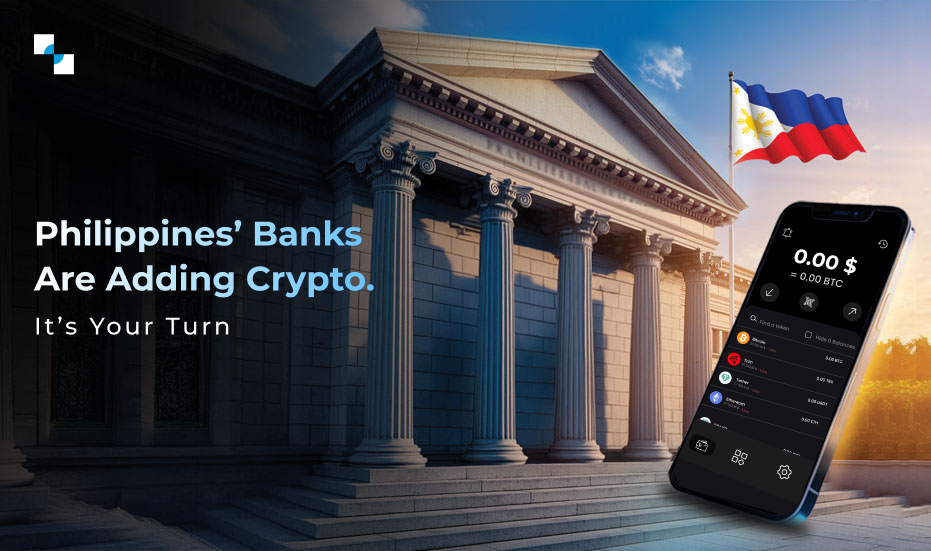
The Philippines just crossed an important threshold in digital finance. GoTyme, a Philippine digital bank, has introduced in-app crypto trading services for 6.5 million users in collaboration with Alpaca. The feature rollout enables users to buy and securely store 11 cryptocurrencies, including Bitcoin, Ethereum, and Solana.
A licensed bank’s interface now gives access to major digital assets and effortless Peso-to-dollar conversions in a single app. The signal is now clear: Regulated institutions in the Philippines are ready to embrace crypto the way they adopted mobile banking a decade ago.
No external exchange accounts. No user drop-off. No trust gap.
Why Should Philippine Financial Institutions Start Offering Crypto Services In 2026?
Embedded crypto in financial services is no longer an experiment or an additional feature. It is one of the most expected financial features in 2026 and beyond. Global crypto owners count stood at 735.32 million at the end of October 2025. Banks, fintech applications, and regulated financial institutions are not adding crypto because it’s fashionable but because their future revenue, user retention, and competitiveness depend on it.
A major digital bank has now stepped in, and many will follow, so the question is no longer “Should we offer crypto?”
It is “How fast can we launch compliant, secure, and regulator-ready crypto services?”
A BSP- and SEC-compliant white label crypto exchange software enables banks, e-money issuers, fintech wallets, payment providers, remittance services providers, and regulated trading platforms to deploy crypto trading infrastructure without breaking the bank. They don’t need to hire 50+ blockchain engineers to build a full crypto exchange software from scratch. Neither do they require navigating multi-year compliance cycles.
What a BSP & SEC-Compliant White Label Crypto Exchange Development Must Deliver in the Philippines
Here’s what a BSP & SEC-Compliant white label cryptocurrency exchange development must deliver:
1. AML & Travel Rule Compliance (BSP Requirement)
- Native Travel Rule Support
The white label cryptocurrency exchange software must support IVMS 101 and integrate with leading Travel Rule protocols, such as:
-
- Notabene
- Sygna Bridge
- TRISA
- VerifyVASP
This ensures legitimate inter-VASP transfers and BSP-aligned reporting.
- Automated KYT + Sanctions Screening
The white label crypto exchange development company must also ensure integration with blockchain analytics vendors:
-
- Chainalysis
- Elliptic
- TRM Labs
By implementing this, crypto exchange software doesn’t receive deposits from sanctioned or high-risk wallets. They are auto-flagged and auto-frozen before hitting the user ledger.
2. Market Surveillance & Trading Integrity
A regulated Philippine exchange must detect:
- Wash trading (self-trades)
- Spoofing/layering
- Pump-and-dump patterns
The matching engine must include a real-time surveillance layer and configurable circuit breakers that halt trading in various scenarios (such as when a token drops 10% in 5 minutes). This directly addresses SEC expectations and makes white label cryptocurrency exchanges ready for the US, Philippines and various other regulated markets.
3. Wallet Architecture & Asset Segregation
Client assets must be isolated from operating funds. This is a critical rule for Philippine VASPs and exchanges. A white label crypto exchange development solution must provide secure custody for both types of funds.
Cryptocurrency exchanges operating under the BSP and SEC supervision must implement the following:
-
- MPC or Multi-sig vaults
- Configurable sweep rules (hot → cold)
- Automated risk-reduction flows
The white label crypto exchange platform should support Merkle tree-based proofs that allow users to verify balances independently without revealing total assets.
4. Reporting, Data Privacy & Encryption
Admin dashboards in the white label cryptocurrency exchange must export the following in the formats accepted by AMLC (CSV / XML).
-
- CTR (Covered Transaction Report)
- STR (Suspicious Transaction Report)
The database must run on local servers or Philippines/Australia/Singapore AWS or Azure regions to meet data localization requirements.
All PII, including IDs, addresses, and liveness selfies, must be AES-256 encrypted at rest.
5. Token Listing & Delisting Controls
- Admin-Controlled Immediate Delisting
If the SEC flags a token as a potential unregistered security, the centralized or hybrid crypto exchange software operator must be able to do the following without engineering intervention.
-
- Halt trading
- Disable deposits
- Freeze withdrawals
- Delist the token
- Mandatory Risk Disclosures
The white label cryptocurrency exchange development solution’s UI must support pop-up notices for high-risk or newly listed tokens, ensuring compliance and transparent user protection.
Who Should Be Thinking About Embedded Crypto in the Philippines Right Now
| Segment | Why It Matters |
|---|---|
| Banks & Neo-Banks | Fighting deposit outflows to offshore exchanges; users want crypto inside trusted apps. |
| Fintech Apps & Wallets | Competing for stickiness, crypto boosts DAU and AUM instantly. |
| Payment Providers & EMIs | Expanding into investments for revenue diversification. |
| Brokerages & Institutions | Need regulated digital asset rails; tokenization is rising. |
| Startups | Racing to MVP without the cost of in-house engineering. |
| Super Apps | Adding trading, savings, rewards, and stablecoins to increase lifetime value. |
The segments listed above all share one challenge: users are moving their money to platforms that already offer digital assets. Whether it’s trading, stablecoin transfers, or simple crypto exposure, the demand is shifting from standalone exchanges to trusted financial crypto exchange superapps where people perform various functions.
This is why banks, fintechs, EMIs, brokerages, super apps, and startups are accelerating crypto integration with regulation-ready white label crypto exchange software solutions instead of building parallel products. They offer the fastest, safest, and most cost-effective path to offering regulated digital asset services in the Philippines.
The Philippines is one of the world’s most active digital asset markets, and operators across finance are realizing that crypto is a baseline expectation for customer retention and revenue growth.
If your platform handles deposits, payments, remittances, investments, or stored value, the shift toward embedded crypto affects you directly. Users want access where they already transact. Regulators have established clear requirements. And early adopters are already converting this into market share.
Why Institutions Aren’t Building Exchanges In-House
Banks and regulated operators avoid internal builds because of:
- Compliance complexity
- Matching engine performance requirements
- Liquidity sourcing challenges
- Custody and security obligations
- Multi-million peso engineering costs
- 12–18 months development time
A BSP-aligned white label exchange software removes these barriers while giving operators enterprise-grade control.
Explore Antier’s BSP & SEC-Ready White Label Crypto Exchange
The Philippines Is Ready, and Institutions Need a Compliant Blueprint
GoTyme has proven that regulated, in-app crypto trading isn’t just viable in the Philippines, but also a competitive advantage. Banks defend deposits. Fintechs extend AUM. Institutions modernize financial products. Startups accelerate launches.
The next wave of growth in the Philippines will belong to platforms that:
- Embed crypto directly into banking and fintech experiences,
- Meet all BSP, SEC, and AMLC expectations, and
- Launch without the delays of internal engineering builds.
Antier, a leading white label crypto exchange development company, offers a fast, secure, and regulation-ready crypto exchange infrastructure built for enterprise scalability.
Share your project requirements today!
Frequently Asked Questions
01. What new feature has GoTyme introduced for its users in the Philippines?
GoTyme has introduced in-app crypto trading services, allowing 6.5 million users to buy and securely store 11 cryptocurrencies, including Bitcoin, Ethereum, and Solana.
02. Why is it important for Philippine financial institutions to offer crypto services by 2026?
Offering crypto services is crucial for Philippine financial institutions as it is expected to enhance future revenue, user retention, and competitiveness in a market where global crypto ownership is rapidly increasing.
03. What compliance requirements must a white label crypto exchange software meet in the Philippines?
A BSP & SEC-compliant white label crypto exchange software must support AML and Travel Rule compliance, including integration with leading Travel Rule protocols and automated KYT and sanctions screening.



