
CryptoCurrency
Building and scaling the ecosystem


Disclosure: This article does not represent investment advice. The content and materials featured on this page are for educational purposes only.
Building one of today’s busiest blockchain ecosystems takes focused execution, and BNB Chain’s Sarah Song shares how she’s driving that growth.
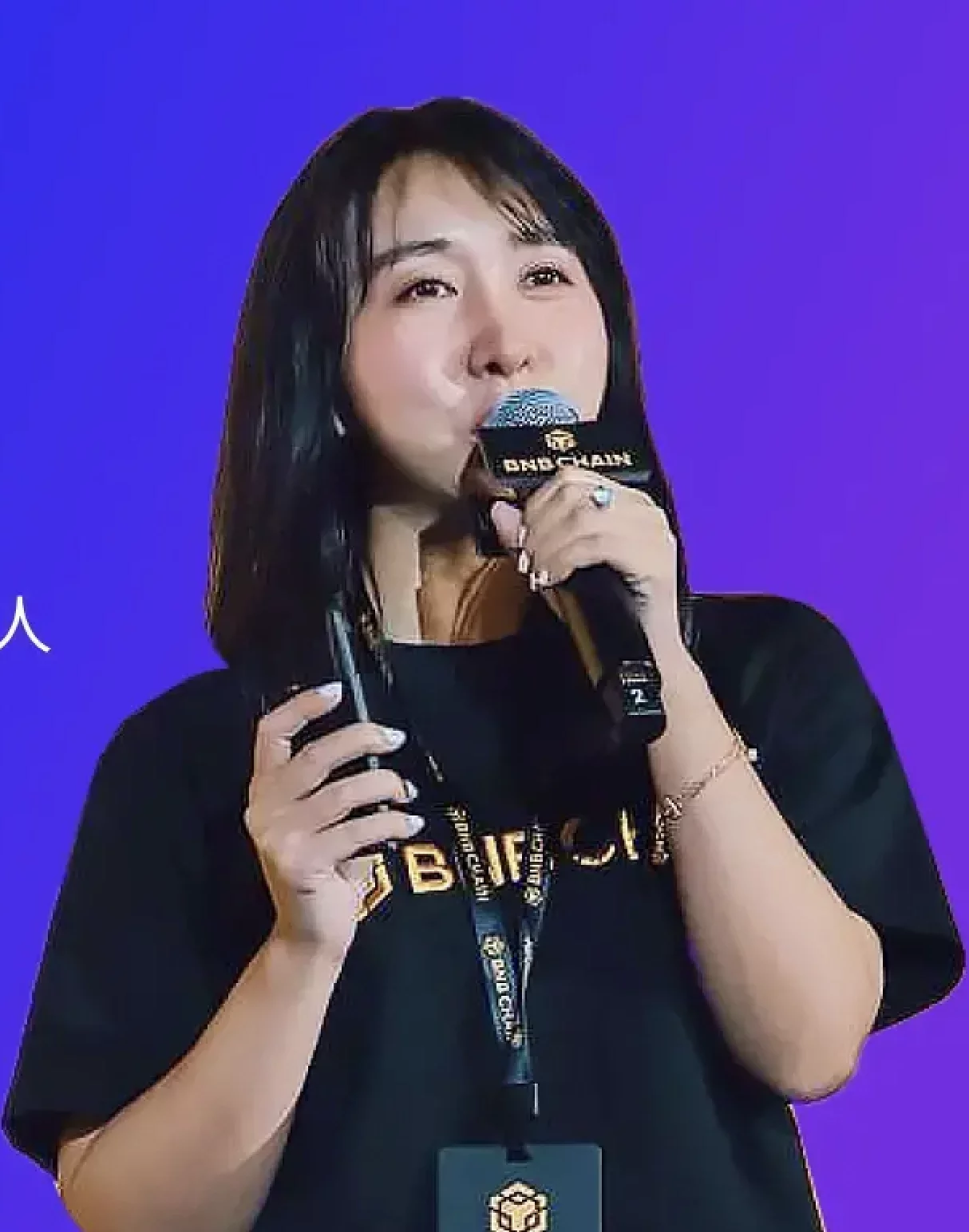
What does it take to lead business development at one of the most active blockchain ecosystems today? To understand this, we spoke with Sarah Song, Head of Business Development at BNB Chain at the Binance Blockchain Week in Dubai, about ecosystem growth, developer support, RWAs, stablecoin payments, and expansion into emerging markets. She also shares her perspective on building credibility in the industry and exploring leadership as a woman in web3.
Q: Sarah, what originally inspired you to join the blockchain industry, and what led you to BNB Chain specifically?
Sarah: Back in 2017 or 2018, I was invited to an event hosted by HKUST, which is also the university I graduated from. The event brought in experts from the crypto space, and that was the first time I heard about Bitcoin and peer-to-peer digital money.
I was very inspired by Bitcoin’s concept, and by the vision and mission of people working in crypto. After that event, I started researching blockchain technology more deeply, looking at the infrastructure layer, Ethereum, and other protocols. Very quickly, I decided that I wanted to join the crypto and blockchain industry.
Since I didn’t have prior experience, I joined one of the major Layer 1 protocols at the time, in 2018. I worked in ecosystem and ecosystem fund roles, speaking with developers, supporting projects, and even investing in some of them.
From the beginning, my goal was to help builders and developers create things that are usable and valuable on blockchain, things that are decentralized, more efficient, and that can benefit investors, retail users, and even web2 users.
When it came to BNB Chain, it is one of the most active and widely used Layer 1 ecosystems in the industry. I felt that joining a larger platform would allow me to work with more real builders and developers. That’s why I joined BNB Chain in 2023.
For the past three years, I’ve been leading the BD team. We are a team of 10, and our role is exactly what I wanted to do from the start: build relationships with developers, infrastructure providers, and key partners, and help them build DeFi, GameFi, RWA, and other solutions on top of BNB Chain.
Q: Given BNB Chain’s focus on DeFi, gaming, and other sectors, which areas are you most excited about right now?
Sarah: At the end of last year and the start of this year, we identified three main areas to focus on. These are AI, stablecoin payments, and RWAs.
RWAs in particular have grown very fast on BNB Chain. At the start of the year, there was only about $4 million in RWA-related TVL. As of early December, that number has grown to around $1.6 billion.
We’ve onboarded many major players in the RWA space, including BlackRock’s BUIDL, Franklin Templeton’s BENJI, and USYC. We also work with Securitize and several Asian institutions such as China Merchants Bank and China Merchants Securities.
We’ve also diversified the types of RWA assets on BNB Chain. It’s not just money market funds. We now have tokenized stocks live on mainnet, pre-IPO assets, digital gold, tokenized art collectibles, and other assets. We’re even exploring tokenizing things like wine and Pokémon cards.
Stablecoin payments are another major area. This year, stablecoin circulation on BNB Chain grew from about $7 billion to $40 billion. We’ve launched a native stablecoin and onboarded several regional and European stablecoins.
We also launched a stablecoin transfer campaign where users don’t need BNB for gas fees when transferring stablecoins. This led to strong growth in stablecoin usage, and BNB Chain is now one of the top chains for stablecoin activity.
AI is still early, but I’m very bullish on areas like AI agents, AI payments, and AI tools that can help traders with research and decision-making. We’re actively working with AI protocols and onboarding them to BNB Chain.
These three areas, RWAs, stablecoin payments, and AI, will continue to be our main focus over the next few years.
Q: What makes a project high quality in today’s crypto environment?
Sarah: First, the team needs to clearly understand product–market fit. You shouldn’t just come into crypto to launch a token. You need to understand how your product creates value and how it can sustain itself.
Second, the team itself is very important. We always look at the founders’ backgrounds, how they know each other, and whether they can work together long-term. Strong relationships and shared vision matter a lot.
We also look at what the project is building and whether it aligns with the directions we believe have strong potential, like AI, RWAs, or payments.
Q: As BNB Chain expands into emerging markets like Asia and Africa, what challenges and opportunities do you see?
Sarah: In many emerging markets, the traditional financial system is not very accessible or easy to use. That creates strong opportunities for stablecoins, payments, DeFi, lending, and even simple asset holding.
The main challenge is understanding local users. You need people on the ground who understand local needs and problems. Since our team is relatively small, we can’t be everywhere at once.
To address this, we host events, travel to different regions, and work with strong local partners and institutions. This helps us educate developers, support local builders, and grow together in those markets.
Q: What has been the most surprising or challenging part of your role at BNB Chain?
Sarah: One big challenge is that you can’t support every project in the same way. Some projects we incubate, some receive investment support, and others get help through partnerships or exchange relationships. You can’t make everyone happy.
Clear communication is very important. We need to explain our standards, expectations, and how support works. Since market trends change quickly, we also need to keep developers updated so we can stay aligned.
Another challenge is that the industry is still figuring out what really works when combining blockchain with areas like AI and real-world adoption. We experiment a lot, brainstorm internally, and test ideas. It’s uncertain, but it’s also exciting.
Q: Web3 is still a male-dominated field. How has your experience been as a woman in a leadership role?
Sarah: In the beginning, it was difficult. People often questioned my age, my appearance, and whether I really understood blockchain technology.
But after many conversations and working closely with builders and teams, people started to see the value I bring. Respect comes from showing your capability and delivering results.
The situation for women in crypto is improving. There are more women stepping into important roles, and that’s encouraging. In my own team, I work with many talented women who are passionate and capable.
I try my best to support young women who are entering this industry, and I hope we can continue to build a better and more inclusive space together.
Disclosure: This content is provided by a third party. Neither crypto.news nor the author of this article endorses any product mentioned on this page. Users should conduct their own research before taking any action related to the company.



