

Crypto World
China’s tech firms feast on OpenClaw as companies race to deploy AI agents

A man wears a lobster hat that represent the OpenClaw logo, an open-source AI assistant at the Baidu headquarter in Beijing on March 11, 2026.
Adek Berry | Afp | Getty Images
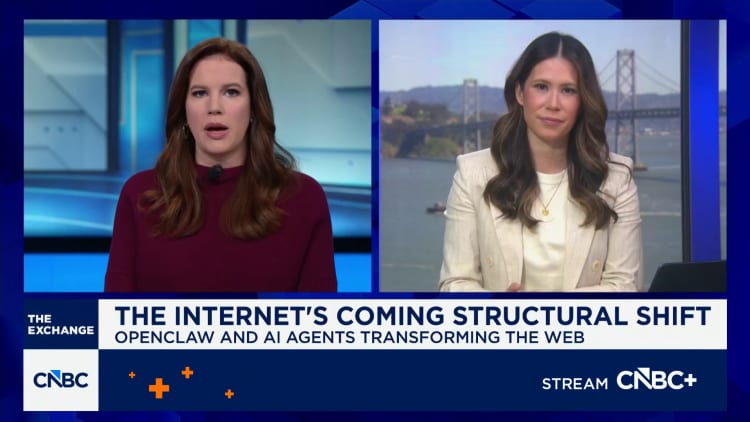
China is rapidly embracing the popular artificial intelligence tool OpenClaw, with major tech companies and even local governments rushing to expand access to the lobster-themed, open-source AI agent in recent weeks.
AI agents are digital assistants that can handle tasks such as sending emails, scheduling meetings and booking restaurant reservations with minimal human guidance. Unlike chatbots that simply respond to prompts, AI agents can take proactive actions, which often require broader access to data and systems and raise privacy and security concerns.
Chinese tech giant Tencent said Tuesday it had launched a full suite of easy-to-use AI products built on OpenClaw, which it dubbed “lobster special forces” and compatible with its popular superapp WeChat.
The same day, startup Zhipu AI launched its own local version of OpenClaw, offering an AI agent pre-installed with over 50 popular skills through “one-click installation.”
Similar moves by other Chinese companies have helped drive consumer interest, with usage of OpenClaw in China surpassing the U.S., according to American cybersecurity firm SecurityScorecard.
“In terms of adopting the new technologies, I think China definitely has a really large community that always wants to try what’s there, what’s new, and don’t want to be left behind,” said Jaylen He, CEO of Violoop, a Shenzhen-based startup building a device that claims to have similar features to OpenClaw but with lower security risks.
“I have friends who are not even in the tech industry … they are doing this, they are also running it,” he said.

As China’s economy continues to face headwinds, OpenClaw offers an opportunity that domestic tech companies, eager to attract paying users, are rushing to capture.
The nationwide OpenClaw craze has boosted the popularity of Chinese-developed large language models, said Winston Ma, adjunct professor at NYU School of Law.
Autonomous AI agents like OpenClaw are typically model-agnostic, which means they can be integrated with various large language models, such as OpenAI’s ChatGPT and Anthropic’s Claude.
According to OpenRouter, a startup offering developers access to AI models through a single interface, the top three tools used by OpenClaw users on its marketplace in the past month were all Chinese companies, with combined usage double that of the three most-used Google Gemini and Anthropic Claude models.
Chinese-made AI models released this year have increasingly narrowed the gap with their U.S. rivals, while offering AI capabilities at a fraction of the price.
That significantly lowers the bill for users running OpenClaw. First launched in November, the tool allows users to send requests through popular messaging apps such as Telegram and WhatsApp, enabling the AI agent to perform multiple tasks autonomously. The Austrian developer behind the tool, Peter Steinberger, joined OpenAI in mid-February.
Easing installation hurdles
While OpenClaw has surged in popularity in the tech world, experts have previously pointed out limitations to the AI agent’s mass adoption, including a complex installation process that’s challenging for nontechnical users.
Chinese technology companies are also trying to simplify installation for less technical users.
After an initial surge of interest last month, Chinese social media platforms have been flooded with posts about company-organized installation events. Some organizers have handed out red lobster plush toys, highlighting the project’s crustacean-themed branding.
Engineers (L) install and set OpenClaw, an open-source AI assistant for users at the Baidu headquarter in Beijing on March 11, 2026.
Adek Berry | Afp | Getty Images
TikTok owner ByteDance’s cloud unit Volcano Engine recently unveiled a version of OpenClaw called ‘ArkClaw,’ that can be used in a web browser, eliminating the need for complex local setup.
Meanwhile, some companies have even provided support to consumers in China who are looking to use OpenClaw with their tools.
Tencent held a free in-person OpenClaw setup session last week in the Chinese tech hub of Shenzhen, where it is headquartered, to help “hundreds” of people install the tool on TencentCloud.
JD.com on Tuesday launched a dedicated page where users can pay 399 yuan ($58) to get remote help from Lenovo’s information technology maintenance team, Baiying, to deploy the software. Meituan reportedly announced a similar partnership with Lenovo on Monday.
The growing interest in OpenClaw is changing how Chinese consumers pay for AI.
Engineers (front) install and set OpenClaw, an open-source AI assistant at the Baidu headquarter in Beijing on March 11, 2026.
Adek Berry | Afp | Getty Images
Violoop, which plans to launch its first device on Kickstarter in April at roughly $300 per unit and $30 a month for AI services, originally intended to focus on the U.S. and other overseas markets, CEO He said.
But now, the startup is focusing on a China launch instead.
“After 2026, after OpenClaw, I think we are seeing a significant rise, both in terms of [interest in] paying for good models and also that MiniMax and Kimi have released very capable models,” he said Wednesday. “I wouldn’t say that they can surpass maybe ChatGPT or Anthropic, but they are definitely approaching that and definitely are creating value for users. So this is a new change for us.”
The startup has already closed at least two rounds of initial funding this year, primarily to cover production costs.
Governments get involved
Despite official warnings published by China’s state media about OpenClaw’s security risks, several local governments have proposed incentives in the past week to encourage companies to develop applications using the AI tool.
Shenzhen’s Longgang district and Hefei’s high-tech development zone proposed equity financing support of up to 10 million yuan ($1.46 million), along with other direct subsidies aimed at “one-person companies” using OpenClaw. A district of Suzhou city said it would offer similar subsidies, along with 30 days of free office space, accommodation and meals.
The term “one-person company,” referring to one or a few individuals using AI to quickly build a business, has become increasingly popular in China, especially as Beijing this week wrapped up a meeting to formalize a five-year plan to spur domestic tech development.

Subscribe now
Increased Chinese participation in the OpenClaw craze is just adding to a global phenomenon. In a sign of its popularity, the AI agent project has gained more stars on the GitHub coding platform than Linux, a transformative open-source operating system that underpins modern computing.
“This is like the 2022 ChatGPT moment. This is like the 202[5] DeepSeek moment,” Violoop’s He said. “I think the craving, the desire, for a personal assistant that can really help the user, the desire has been there, and has been suppressed for a very long time.”
— CNBC’s Anniek Bao contributed to this report.
People queue to have their laptops install with OpenClaw, an open-source AI assistant at the Baidu headquarter in Beijing on March 11, 2026.
Adek Berry | Afp | Getty Images

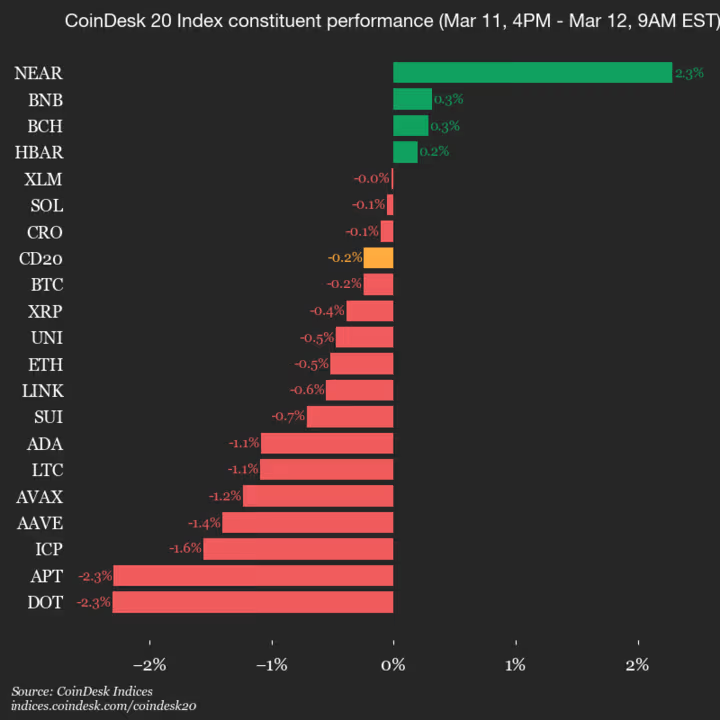
CoinDesk Indices presents its daily market update, highlighting the performance of leaders and laggards in the CoinDesk 20 Index.
The CoinDesk 20 is currently trading at 2012.94, down 0.2% (-4.89) since 4 p.m. ET on Wednesday.
Four of 20 assets are trading higher.

Leaders: NEAR (+2.3%) and BNB (+0.3%).
Laggards: DOT (-2.3%) and APT (-2.3%).
The CoinDesk 20 is a broad-based index traded on multiple platforms in several regions globally.
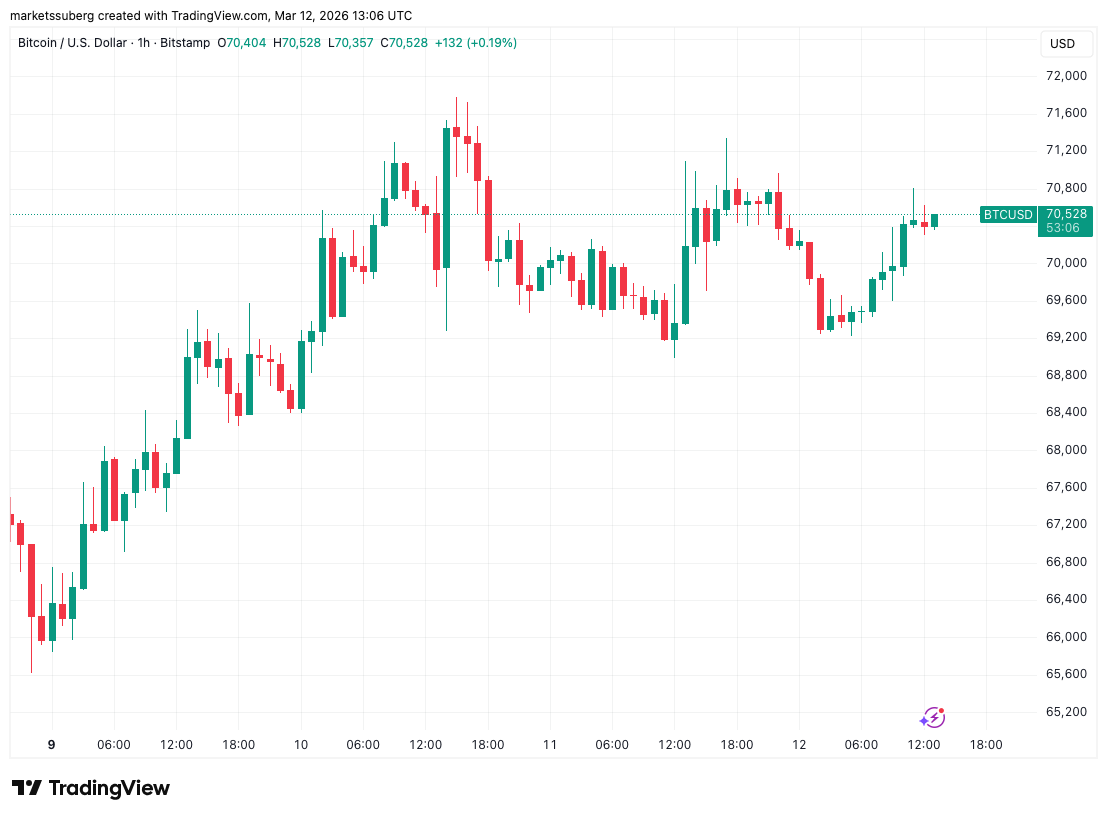
Bitcoin (BTC) circled $70,000 into Thursday’s Wall Street open after US jobs data matched expectations.
Key points:
-
Bitcoin shrugs off more US macro data as jobless claims copy flat CPI numbers.
-
Oil stays volatile, while markets ignore almost any chance of a March interest-rate cut.
-
BTC price action stays indecisive around the $70,000 mark.
Bitcoin surfs new US jobless claims release
Data from TradingView showed ongoing BTC price compression on the day, with BTC/USD acting in an increasingly narrow range.

US initial jobless claims were 213,000 for the week through March 7, just 1,000 below the previous week’s print and 2,000 below market consensus.
The numbers furthered relief over the US economy after Wednesday’s Consumer Price Index (CPI) release also avoided major deviations from its expected values.
Volatility, however, remained in oil, which was up by more than 5% on the day at the time of writing after initially rising above $95. News of a coordinated release of 400 million barrels from reserves to counteract the Strait of Hormuz impasse thus failed to alter the price trend.

Analyzing the situation, trading resource The Kobeissi Letter suggested that a lack of clarity from US President Donald Trump over how long the Middle East conflict would last was fueling oil’s ongoing surge.
“The reason behind this rally was largely that President Trump was not signaling how long the Iran war would last,” it wrote on X.
“Since then, the ONLY factor that has changed is that President Trump has said the war will be over ‘pretty quickly.’ However, this also implies that military action will likely continue until at least the end of March.”

The latest inflation prints, meanwhile, did nothing to alter the market’s views of future Federal Reserve policy.
The latest data from CME Group’s FedWatch Tool showed the odds of an interest-rate cut at the Fed’s March 18 meeting — a key potential crypto tailwind — at less than 1%.
BTC price breakout can take “several more weeks”
Key Bitcoin price levels remained in place as traders waited for directional cues.
Related: Bitcoin braces for oil shock and death crosses: 5 things to know this week
Trader Daan Crypto Trades flagged $72,000 and $62,000 as lines in the sand around spot price, with the Point of Control (PoC) at around $68,000.
“Anything in between will just chop you up as we have been seeing already. Ranges like these can easily take several more weeks before resolving,” he told X followers on Wednesday.

As Cointelegraph reported, consensus stayed bearish on the mid-term outlook, favoring a drop to new macro lows to come.
Trader and analyst Rekt Capital noted that by historical standards, Bitcoin’s bear market should continue from here.
“Time-wise, Bitcoin will soon be halfway through its Bear Market,” he summarized in one of several recent X updates.
“Retracement-wise however, Bitcoin has already performed 75% of the downside in its Bear Market correction.”

This article does not contain investment advice or recommendations. Every investment and trading move involves risk, and readers should conduct their own research when making a decision. While we strive to provide accurate and timely information, Cointelegraph does not guarantee the accuracy, completeness, or reliability of any information in this article. This article may contain forward-looking statements that are subject to risks and uncertainties. Cointelegraph will not be liable for any loss or damage arising from your reliance on this information.
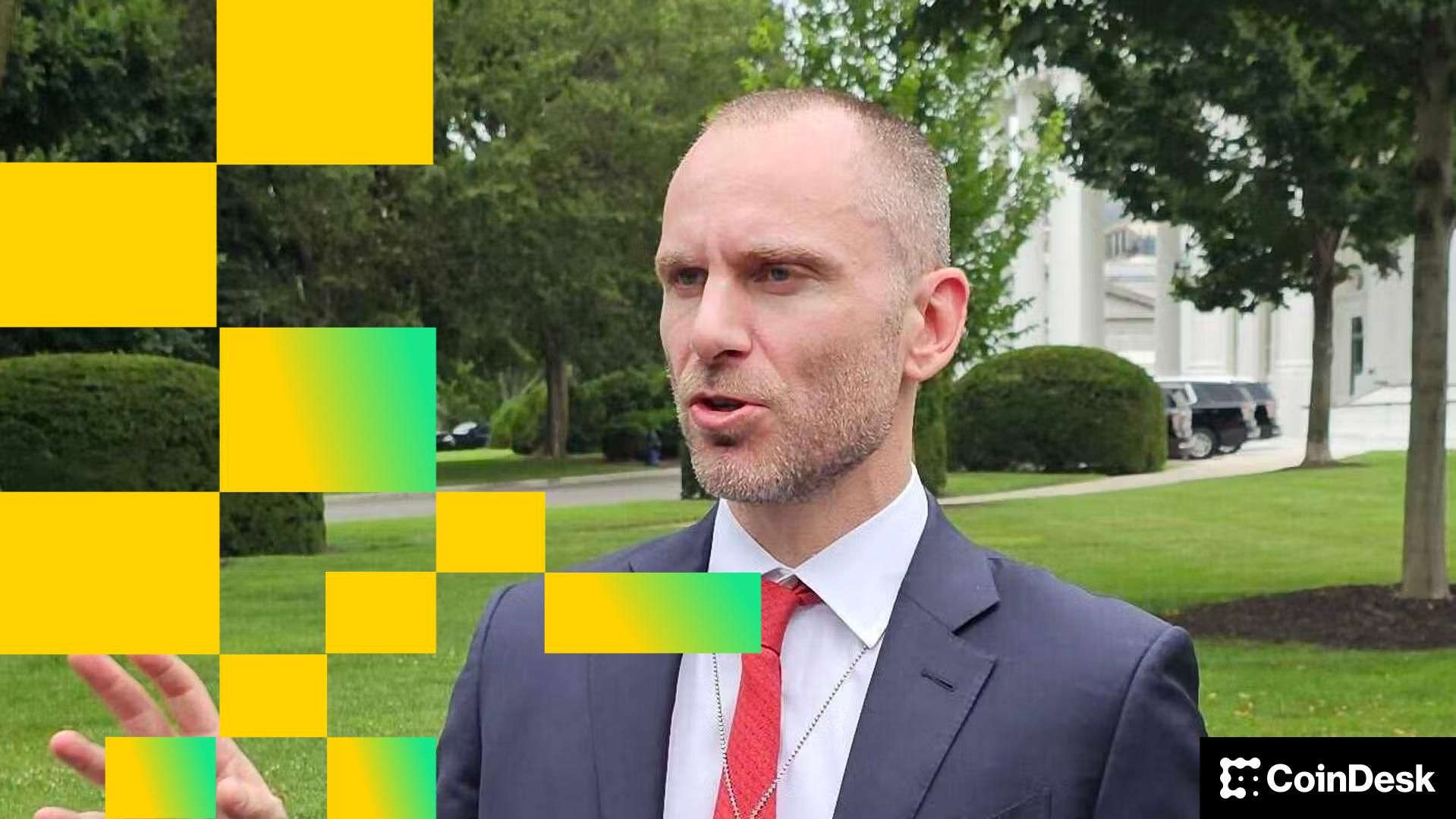
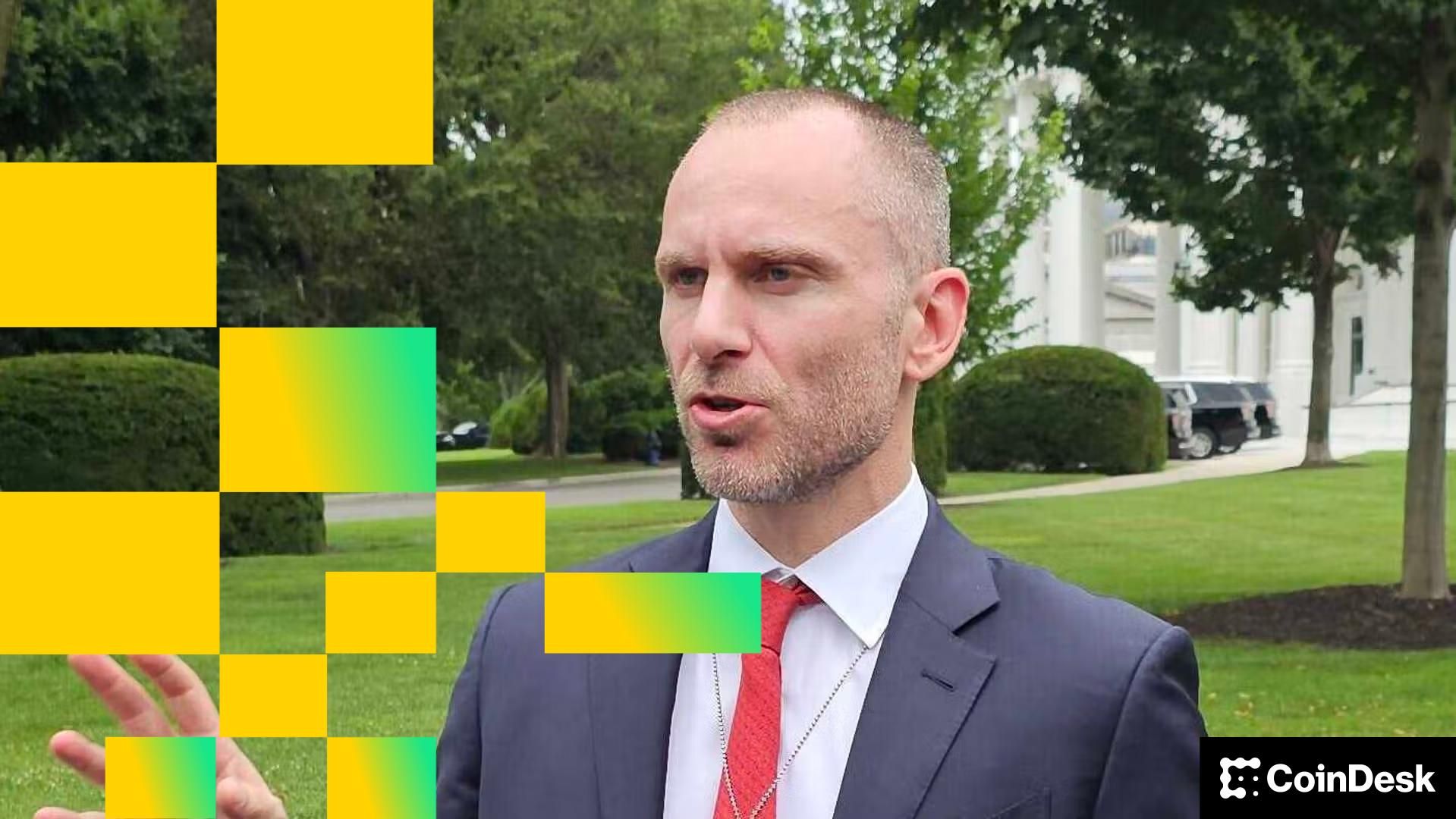
Tether, the crypto firm behind the most popular stablecoin USDT, said Thursday it has invested in Ark Labs to bring programmable payments to the Bitcoin network.
The backing formed part of a $5.2 million funding round for the startup. Ark Labs develops Arkade, a system that aims to allow faster transactions and application building on top of Bitcoin. With the new funding, the start-up said it has raised about $7.7 million in total.
The project focuses on making Bitcoin usable for payments and financial tools that often require faster settlement and automation. Arkade acts as an execution layer that developers can use to build services such as payment networks, lending tools and digital asset platforms.
“Bitcoin is the most liquid digital asset in the world, but it has lacked the programmable infrastructure that financial applications require,” said Marco Argentieri, CEO of Ark Labs. “Arkade aims to change that,” he added.
Tether said the funding will help expand infrastructure that could support stablecoins on Bitcoin. Stablecoins are digital tokens pegged to fiat currencies such as the U.S. dollar and often move across other blockchains like Ethereum or Tron.
“Stablecoins were born on Bitcoin, and expanding access on the Bitcoin network remains a priority for us,” Tether CEO Paolo Ardoino said in a statement.
The investment is part of Tether’s effort to expand beyond its stablecoin issuance roots and enhance the use of its $185 billion digital dollar token USDT. Last month, the firm invested in online marketplace Whop and cross-chain protocol LayerZero.

Key Takeaways
- AAL declined approximately 3% to $11.11 during pre-market hours on March 11, continuing a steep slide from mid-February highs
- Crude oil-linked jet fuel has jumped from $85–90 per barrel to a range of $150–200 per barrel amid escalating Middle East conflict
- Unlike competitors, American maintains zero fuel hedging exposure, leaving it vulnerable to a $50M annual cost increase per penny of fuel price rise
- Wall Street consensus has shifted toward caution, with TD Cowen and Rothschild slashing forecasts and lowering ratings
- Internal pressure mounts as the flight attendants’ union delivered an unprecedented no-confidence declaration targeting CEO Robert Isom
American Airlines (AAL) delivered an adjusted pre-tax profit of merely $352 million for 2025. Meanwhile, Delta achieved $5 billion and United reached $4.6 billion during the same period. This performance disparity has become increasingly critical.
American Airlines Group Inc., AAL
Brent crude currently hovers near $91 per barrel, with industry analysts projecting sustained levels above $95 through the next eight weeks should Middle Eastern supply chain disruptions persist. Jet fuel costs have rocketed from their previous $85–90 baseline to peaks approaching $200 per barrel, based on Air New Zealand’s reporting.
While most global carriers employ fuel hedging strategies to mitigate risk, American has chosen a different path. Without hedging contracts, the carrier faces complete vulnerability to volatile spot market pricing — and current conditions are proving particularly harsh.
AAL stock plummeted over 5% on March 5 following both a downgrade announcement and a crude price surge connected to intensifying geopolitical tensions surrounding the Strait of Hormuz. Shares recently traded near $11.04, representing a significant retreat from mid-February valuations.
During March 11 pre-market activity, AAL extended losses with another ~3% decline to $11.11. Delta experienced a 2.2% drop while United fell 3.6% in parallel trading, yet American’s unhedged position amplifies its vulnerability considerably.
Company disclosures reveal that each additional penny per gallon translates to approximately $50 million in added annual fuel expenses for American. By comparison, Delta faces $40 million per penny, while Southwest’s exposure stands at just $22 million.
Financial Outlook Faces Headwinds
Executive leadership has projected a Q1 2026 loss ranging from $0.10 to $0.50 per share, with full-year earnings estimated between $1.70 and $2.70 per share. These full-year projections rest on the assumption that fuel prices stabilize — an increasingly questionable premise.
The carrier’s most recent quarterly results disappointed expectations. Actual EPS registered approximately $0.16 against consensus estimates of $0.38. Operating margins compressed to roughly 0.2%.
On March 9, American took steps to strengthen its financial position, expanding revolving credit facilities from $3.0 billion to $3.11 billion while pushing maturity dates to March 2031.
The airline closed 2025 carrying $36.5 billion in total debt obligations, with management targeting a reduction below $35 billion before 2026 concludes. Sustained elevated fuel costs threaten this deleveraging objective.
Wall Street Sentiment Deteriorates
Investment firms have grown increasingly cautious. TD Cowen reduced its price objective from $17 to $13 while maintaining a Buy rating with diminished enthusiasm. Rothschild & Co downgraded AAL from Buy to Neutral while slashing its target from $17 to $12.50, pointing to “constrained financial maneuverability amid rising cost pressures.”
Among 17 analysts monitored by MarketBeat, current ratings show 9 Hold recommendations, 6 Buy ratings, and 2 Sell ratings. The consensus 12-month price target stands at $16.22 — suggesting potential upside exceeding 40% from present levels, though achieving this outcome faces mounting obstacles.
Compounding financial challenges, the flight attendants’ union delivered an unprecedented no-confidence resolution against CEO Robert Isom, highlighting operational shortcomings and competitive underperformance.
Industry observers are focused on American’s upcoming appearance at the J.P. Morgan Industrials Conference scheduled for March 17, where Isom is anticipated to detail the carrier’s strategy for managing escalating costs while pursuing debt reduction commitments.



Bitcoin remains pinned around $70,000, showing impressive price stability even as market sentiment remains deeply pessimistic amid the Iran war and oil price volatility.
Crypto’s fear and greed index, a widely tracked sentiment indicator, has persistently signaled extreme fear in recent weeks, suggesting traders remain cautious despite the lack of a major price breakdown.
Market positioning also paints a dour picture. Annualized funding rates for bitcoin perpetual futures have been negative since early March, reflecting a growing bias for bearish short bets. The current stretch marks the longest period of negative funding since April 2025, when bitcoin ultimately formed a market bottom, around $76,000.
This is consistent with fear on Wall Street, where the VIX index jumped to 25 this week, its highest in over a year.
Yet bitcoin’s price action has been notably resilient. Since the escalation of the Middle East conflict on Feb. 28, the largest cryptocurrency has gained roughly 7%. That compares favorably with other major assets over the same period. The Nasdaq 100 has been largely steady while the S&P 500 has dropped about 1%, gold has slipped roughly 3% and silver has fallen nearly 9%.
This is in addition, to brent crude briefly pushing back above $100 per barrel earlier today amid ongoing tensions in the region.
The contrast was also visible during Wednesday’s U.S. trading session. BlackRock’s iShares Bitcoin Trust (IBIT) traded 1% higher. While major equity benchmarks were in the red, including the S&P 500 (SPX), the Nasdaq 100 (QQQ), the Russell 2000 (IWM) and the Dow Jones Industrial Average (DJI), highlighting bitcoin’s relative resilience during U.S. market hours.
The outperformance likely stems from big traders and institutions snapping up coins in privately negotiated transactions, keeping demand steady.
For now, bitcoin appears to be performing better than the market mood surrounding it, holding steady despite persistent fear across the broader financial landscape.
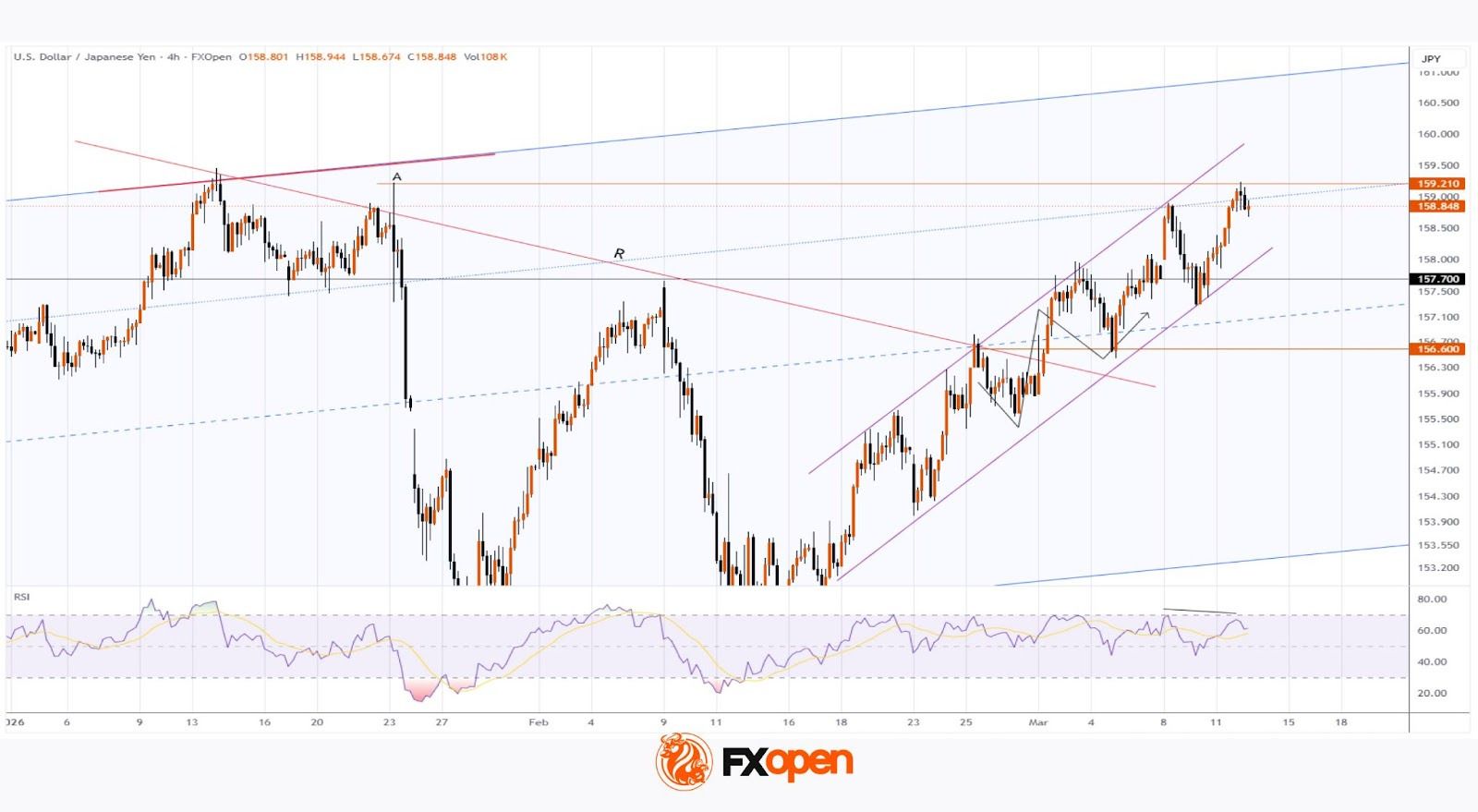
The USD/JPY chart shows a bullish trend at the start of March, influenced by the escalation of military activity in the Middle East.
On one hand, the US dollar is strengthening due to increased demand for safe-haven assets. On the other, the Japanese economy is under pressure because of its heavy reliance on oil imports from the Middle East.
These factors have pushed the pair above 159.20 JPY per USD this week, surpassing the January high (point A). The 2026 peak lies nearby; however, technical analysis suggests that bullish momentum may be fading.
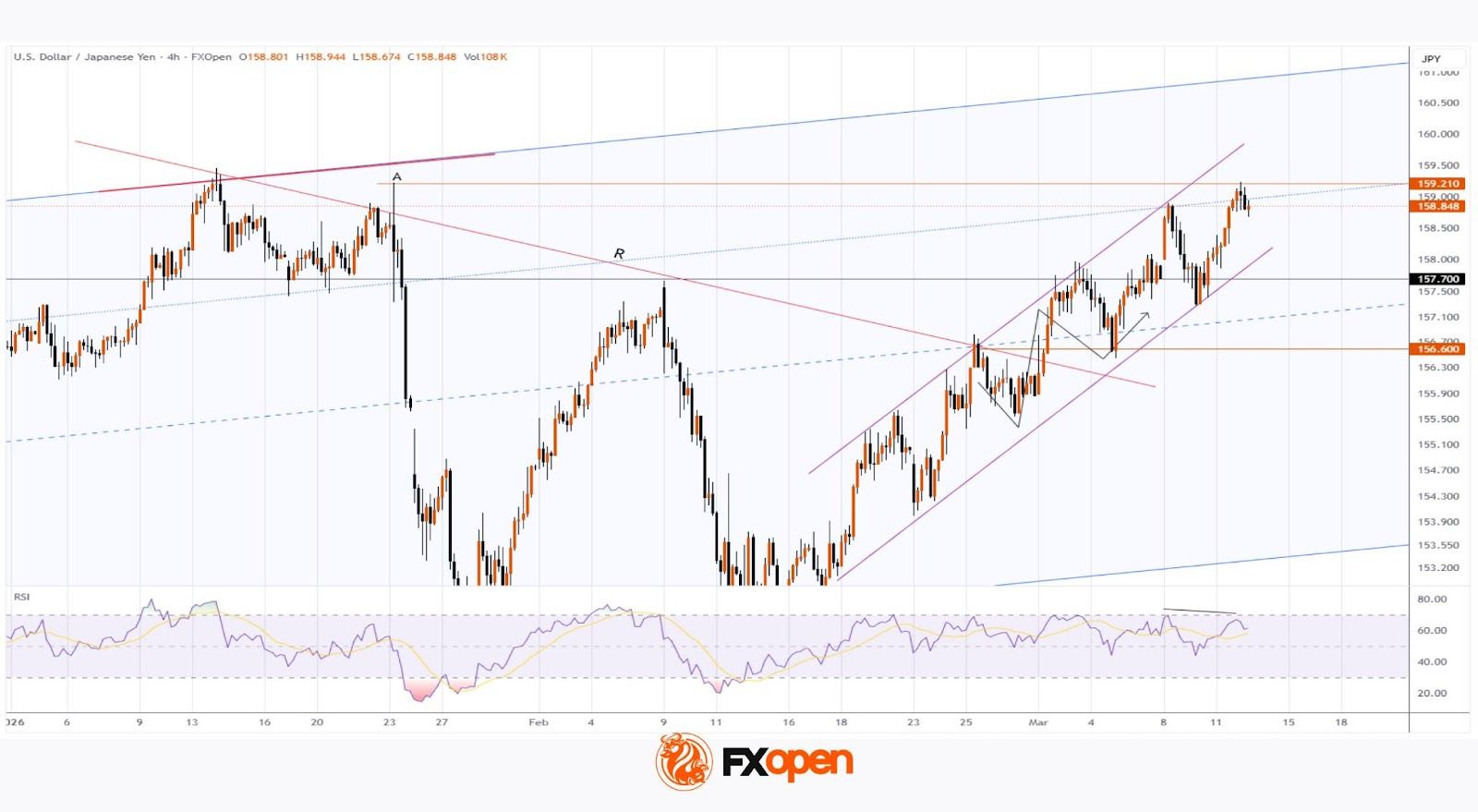
In our note of 26 February, we:
→ updated the wide ascending channel along with the intermediate growth trajectory (shown in purple);
→ highlighted signs of seller activity near 156.600.
As indicated by the arrow on the USD/JPY chart, after a small pullback to the lower purple line, buyers resumed their efforts, with the 156.600 level now acting as support.
Currently, we can observe that:
→ the RSI indicator is forming a bearish divergence;
→ it is becoming increasingly difficult for the price to reach the upper boundary of the purple channel;
→ the brief breach of point A resembles a bearish Liquidity Grab.
Additional bearish factors include:
→ the line dividing the upper half of the long-term channel into two parts;
→ proximity to the psychological 160 JPY per USD level.
It is worth recalling that in 2024, 1 USD briefly exceeded 160 JPY, but this level did not hold, as the Bank of Japan intervened. This context adds significance to the upcoming BOJ announcements, scheduled for next Thursday. Ahead of this event, USD/JPY may consolidate around current levels.
Trade over 50 forex markets 24 hours a day with FXOpen. Take advantage of low commissions, deep liquidity, and spreads from 0.0 pips (additional fees may apply). Open your FXOpen account now or learn more about trading forex with FXOpen.
This article represents the opinion of the Companies operating under the FXOpen brand only. It is not to be construed as an offer, solicitation, or recommendation with respect to products and services provided by the Companies operating under the FXOpen brand, nor is it to be considered financial advice.
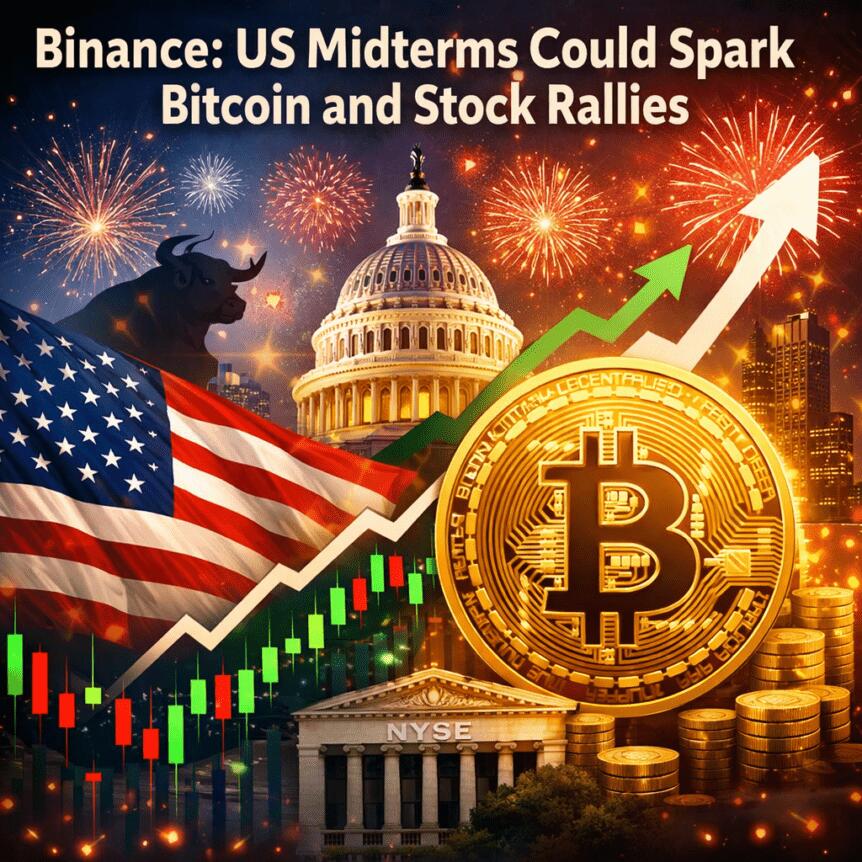
Geopolitical frictions and a shifting macro backdrop are sharpening focus on what could emerge as a tipping point for crypto and broader risk assets: the US midterm elections. In a March 11, 2026 market commentary, Binance Research surveys how election cycles historically fed rebounds in equities and Bitcoin, suggesting the upcoming vote might unlock a constructive window for risk-on assets. The report flags that the 12 months after past midterms have seen the S&P 500 rise by about 19% on average, while Bitcoin delivered roughly a 54% gain across the three post-midterm years on record. With the midterms slated for November 3, 2026, the study frames the coming year as a potentially pivotal phase for markets trading around political uncertainty.
Key takeaways
- Historical post-midterm performance shows a potential upside for risk assets, with the S&P 500 up ~19% on average and Bitcoin up ~54% over the three post-midterm years in prior cycles.
- Bitcoin has experienced negative returns during several midterm years (example declines: 2014, 2018, 2022), but the pattern in subsequent years has generally been a rebound.
- The near-term direction hinges on geopolitics, notably US-Israel-Iran tensions, with oil prices a potential pressure point if energy supply is disrupted.
- The energy market narrative was reinforced by an emergency energy stock release of 400 million barrels, the largest coordinated drawdown on record.
- Market participants appear to be in a wait-and-see phase, awaiting clearer directional signals once election outcomes are known.
Tickers mentioned: $BTC
Sentiment: Neutral
Price impact: Positive. The historical pattern of post-midterm rebounds in both equities and Bitcoin suggests a potential uplift in risk assets once political uncertainty subsides.
Trading idea (Not Financial Advice): Hold. Investors may want to wait for clearer post-election directional cues and macro signals before taking sizable new positions.
Market context: The narrative arcs around the midterms intersect with macro risk sentiment, regulatory discourse, and energy-market dynamics, all of which can shape liquidity and appetite for crypto assets in the near term.
Why it matters
The Binance Research framework emphasizes that the political risk hurdle commonly cleared after election outcomes has historically unlocked a more robust risk-on regime. In practical terms, if the 2026 midterms resolve with a clearer policy outlook, traders could see renewed bid activity across both traditional markets and crypto. The historical lens does not guarantee future moves, but it provides a reference for how sentiment has tended to shift when political ambiguity diminishes.
From a trader’s vantage point, the divergence between headline risk and market mechanics is notable. Even as Bitcoin (CRYPTO: BTC) has flirted with key levels and traded within ranges shaped by liquidity flows, the broader message of the Binance analysis is that the cycle often accelerates once electoral uncertainty recedes. In prior midterm years, Bitcoin’s trajectory has been punctuated by sharp corrections during the year itself, followed by significant recoveries in the ensuing periods. That pattern could inform risk budgeting and timing considerations for funds that aim to participate in the rebound without overexposure to interim volatility.
Oil and energy markets add another layer of complexity. As geopolitical tensions intensify, crude prices have shown sensitivity to supply expectations. Recent data suggest the market could spike further if disruptions endure, a scenario that tends to weigh on risk assets in the short run even as longer-term cycles remain dependent on policy clarity and liquidity dynamics. A one-day spike to the vicinity of $95 per barrel framed the current stress, underscoring how energy risk can spill over into equities and crypto markets.
In parallel, market infrastructure signals have pointed to a broader risk-off posture in the near term. The energy-release maneuver by international authorities, described as the largest-ever coordinated drawdown, adds a layer of supply-side management that could temper volatility in the energy complex—but it does not eliminate the risk of further macro shocks. Analysts cautioned that continued geopolitical escalation could keep risk assets under pressure, at least until a clearer post-election framework emerges. For readers interested in the on-the-ground links to these developments, recent reporting from Reuters outlined the energy dynamics and the rhetoric around price stability amid the conflict.
Despite the near-term headwinds, the longer historical arc highlighted by Binance Research remains relevant: the period after the election and the associated resolution of political uncertainty has historically produced meaningful rallies. The message is not to extrapolate a foolproof blueprint, but to recognize that policy clarity can reframe risk appetite. Bitcoin’s own history of midterm-year drawdowns, followed by rebounds, adds a layer of complexity but also a potential pathway for investors who can weather the interim noise. To see a related compilation of market context including the energy shock and its ripple effects, readers can review the linked analyses and the energy market data sources cited in the coverage, including the market commentary that anchors these observations.
For a quick snapshot of the broader narrative in motion, a concise explainer video on market dynamics related to this cycle can be found here: Video discussion.
The analysis arrives as markets enter a period of heightened attention ahead of the November 3, 2026 vote, when the 120th Congress will take shape and set the tone for policy and regulatory signals in the year ahead. While the near term may ride a roller-coaster of headlines, the data from prior cycles provides a reference point for investors assessing whether a recovery window could be opening for equities and digital assets alike. The key takeaway: the post-election horizon could be the most constructive phase of the cycle, provided geopolitical tensions do not diverge into a sustained risk-off regime before the dust settles.
The crosscurrents at play—geopolitics, energy stability, and the timing of policy clarification—mean that market moves could be as much about risk sentiment and liquidity flows as about fundamentals. In the coming months, traders will be watching for progress in diplomatic channels, oil market signals, and any regulatory developments that could influence market structure or capital flows into crypto. The interplay of these factors will help determine whether the long-hoped-for recovery accelerates or remains restrained by ongoing uncertainty.
As with all such analyses, the caveat remains: past performance is not a guarantee of future results. However, the framework outlined by Binance Research provides a structured lens to interpret how the upcoming midterms might align with broader macro and crypto-market rhythms. The next few quarters will be telling as investors weigh the odds of a meaningful reset against continued geopolitical volatility and policy debates that will shape the market landscape for the remainder of the year.
What to watch next
- November 3, 2026 — US midterm elections determine the composition of the 120th Congress and influence policy signals for the year ahead.
- Post-election period — watch for any substantive shifts in regulatory discourse that could affect crypto market structure and liquidity.
- Geopolitical developments in the Middle East — escalation or de-escalation can impact energy prices and risk sentiment.
- Official energy-market actions — monitor further commentary on energy security and any additional emergency stock management outcomes.
- Market commentary updates — ongoing analyses that correlate election outcomes with volatility and liquidity in crypto markets.
Sources & verification
- Binance Research, Weekly Market Commentary (March 11, 2026) — historical post-midterm performance data and interpretation.
- Reuters reporting on energy disruptions and price implications related to Middle East tensions.
- Trading Economics data on crude oil price movements and daily price spikes.
- International Energy Agency announcements on emergency stock releases (largest coordinated drawdown).
- Election date and political timeline for the November 3, 2026 midterms.
Post-midterm dynamics could reshape crypto and risk assets
The central premise is that the political fog surrounding election outcomes has historically been a wind at the back of risk assets once it lifts. Binance Research’s synthesis shows a pattern of strength following periods of uncertainty, with the S&P 500 and Bitcoin delivering memorable advances in the year or years after midterm cycles. That pattern does not imply a guaranteed rally, but it offers a framework for considering how a calmer political horizon might influence price action across markets that have become increasingly interlinked in recent years.
In practice, the near-term trajectory will be colored by geopolitics and macro data arrivals. The immediate risk premiums tied to the US-Israel-Iran dynamic could push energy prices higher, which tends to compress risk appetite in the short run. Yet if the election outcomes resolve in a way that reduces political risk, liquidity could improve and traders may reallocate toward risk assets, including digital currencies. Bitcoin’s own history in midterm years—marked by episodic declines followed by longer-term recoveries—adds nuance to how investors should position themselves during this transition window. The historical signal is not a guarantee, but it is a lens for weighing potential outcomes as the cycle evolves.
Market participants will also be watching for any policy shifts or legislative milestones that could affect the crypto market structure, such as regulatory proposals or framework updates that impact market access and capital flows. The energy-market backdrop, with its flashpoints and emergency stock actions, will continue to feed volatility but also to shape the tempo of risk-taking. In a landscape where liquidity and risk sentiment are closely tethered to macro and geopolitical developments, the post-midterm period could offer a clearer directional signal for traders, investors, and builders navigating the crypto ecosystem.
Cryptio, a developer of accounting software for digital assets, raised $45 million in a Series B funding round as financial institutions and corporations expand their use of blockchain-based assets.
The round closed about three weeks ago and was led by BlackFin Capital Partners and Sentinel Global. Existing investors 1kx, BlueYard Capital and Ledger Cathay Capital also participated, Fortune reported, citing a company announcement. The company’s valuation wasn’t disclosed.
Cryptio’s platform helps companies track the digital assets they hold and where those assets are stored across wallets, custodians and exchanges. In January last year, the firm raised $15 million in an extension to its Series A funding round from mid-2022.
The software also helps firms manage crypto loans and monitor other blockchain-based assets. The system organizes this data so companies can produce accounting records and financial reports.
Cryptio was founded eight years ago by Antoine Scalia, after he graduated from business school in Paris. Early customers were startups and smaller crypto companies.
The firm now employs about 110 people and serves more than 450 clients. Those clients include stablecoin issuer Circle Internet (CRCL) and the blockchain subsidiary of French bank Société Générale (GLE).
Cryptio operates in a growing market for crypto accounting tools. In January, crypto infrastructure firm Fireblocks acquired competing platform TRES Finance for $130 million.
Sentinel Global managing partner Jeremy Kranz said Cryptio has gained traction by working closely with large financial institutions and explaining how its system integrates with their existing accounting processes.
The fundraise comes as U.S. corporate adoption of the crypto space has accelerated, with the Trump administration pushing policies meant to strengthen the industry in the U.S. His cyber strategy has vowed to “support the security” of cryptocurrencies and blockchain.
Regulatory and accounting changes have also lowered barriers for institutions. Regulators replaced the SEC’s SAB 121 guidance with SAB 122, easing custody rules for banks, while new Financial Accounting Standards Board rules that took effect in 2025 require companies to report crypto assets at fair value.


After the first wave of spot ether (ETH) exchange-traded funds launched without staking, BlackRock’s iShares Staked Ethereum Trust ETF (ETHB), one of the industry’s most anticipated versions, begins trading on Nasdaq on Thursday.
The fund marks the asset manager’s third crypto ETF and the first from BlackRock to incorporate staking. ETHB will hold spot ether and stake a portion of those holdings on the Ethereum network, allowing investors to potentially earn rewards while benefiting from price movements.
The new vehicle expands BlackRock’s existing digital asset lineup, which includes the iShares Bitcoin Trust (IBIT) and the iShares Ethereum Trust (ETHA). Those funds have grown rapidly since their launches, with IBIT today managing more than $55 billion in assets and ETHA about $6.5 billion.
“This is really about investor choice,” Jay Jacobs, BlackRock’s U.S. head of equity ETFs, told CoinDesk in an interview. “While ETHA has developed liquidity and a growing derivatives market, some investors are focused on maximizing total returns by combining ether price exposure with staking rewards, he added.”
Ethereum uses a proof-of-stake system that allows holders of its native token to lock up coins to help validate transactions and secure the network. In return, participants receive rewards, which many investors view as a yield-like feature of the asset.
Until now, most ether ETFs have offered only price exposure without staking, although some asset managers, including Grayscale, have recently launched ETFs with staking capabilities. Jacobs said that gap may have discouraged some crypto-native investors from moving assets into exchange-traded funds.
“Some investors who already hold ether directly were staking it and weren’t ready to move into an exchange-traded product because they would lose that feature,” he said. “By incorporating staking, the ETF allows investors to keep the benefits of staking while gaining the operational advantages of an ETF structure.”
Those advantages include institutional-grade custody, the ability to trade through traditional brokerage accounts and integration with standard portfolio allocations alongside stocks and bonds.
The product may also appeal to certain institutional investors who prefer assets that generate income or cash flow.
“For some institutions, when they evaluate an investment, they want to think about it from a cash flow perspective,” Jacobs said. Staking rewards may help make ether more comparable to other assets in portfolio models.
Read more: Crypto ETFs with staking can supercharge returns but they may not be for everyone
BlackRock expects interest in the product to come from a wide range of investors, including individual traders, financial advisors and institutional allocators such as hedge funds and family offices.
The fund carries a 0.25% sponsor fee, though BlackRock is waiving part of the cost for the first year, reducing it to 0.12% on the first $2.5 billion in assets. Jacobs said the temporary discount is intended to help the product gain traction in its early months.
Despite the growth of crypto investment products, allocations to digital assets remain relatively small in traditional portfolios. Institutions are typically allocating in the “low single digits,” often around 1% to 2%, according to Jacobs. At those levels, he said, the risk contribution of bitcoin or other digital assets can be comparable to the exposure investors already accept from large technology stocks within diversified portfolios.
BlackRock has rapidly become one of the largest players in crypto investment products. The firm oversees roughly $130 billion across crypto-related exchange-traded products, tokenized liquidity funds and stablecoin reserve management. According to the company, iShares captured about 95% of flows into digital asset ETPs in 2025.
For now, Jacobs said the firm remains focused on expanding adoption of its existing crypto products, particularly bitcoin and ether, as many investors are still learning about the asset class.
“We’re still in the early days of digital asset ETF adoption,” he said. “For many investors, this is the first step.”

Key Takeaways
- Ofgem has approved Tesla Energy Ventures’ application for a UK electricity supply license, now in effect.
- The licensing procedure spanned from July 2025 through March 2026 before final authorization.
- Tesla is now authorized to retail electricity to residential and commercial properties throughout Great Britain.
- The company enters competition with major British energy providers including Octopus Energy, British Gas, and EDF.
- A different Tesla entity, Tesla Motors Limited, previously obtained an electricity generation license in the UK.
Tesla Energy Ventures Limited has received authorization from Ofgem to retail electricity throughout Great Britain. The regulatory approval became effective Wednesday following a review process that commenced in July 2025.
The authorization encompasses both residential and commercial customer segments, enabling Tesla to distribute electricity directly to British households and enterprises.
This positions Tesla as a new competitor against Britain’s established energy retailers, including Octopus Energy, British Gas, and EDF.
Tesla has existing operations within the UK energy sector. Through Tesla Motors Limited, the company maintains an electricity generation license, and customers with Powerwall batteries can already monetize surplus solar generation through grid feed-in.
The newly granted supply license represents a logical progression — enabling Tesla to manage the entire cycle and distribute electricity directly as a retail provider.
Market Entry During Price Volatility
The authorization arrives during a challenging period for British consumers. Energy costs across Britain have increased following conflict in Iran, creating widespread concern about escalating utility expenses.
Most British households currently enjoy temporary protection from volatile gas prices through July under regulated pricing structures. However, this safeguard is temporary.
Tesla’s entrance into the market provides consumers with an additional choice among retail energy providers, although competitive pricing details have not been disclosed.
The automaker brings international energy market experience. Tesla Energy currently maintains operations in Australian and American energy markets.
Tesla’s British Market Standing
Tesla’s automotive sales in the UK have faced headwinds. Vehicle deliveries declined 8.9% year-over-year during 2025, impacted by competitive pressure from budget-friendly Chinese electric vehicle manufacturers.
Additionally, some markets have experienced consumer resistance connected to Elon Musk’s involvement in political discourse.
The energy sector provides Tesla an alternative growth channel in Britain — one independent of automotive performance.
Tesla has yet to reveal pricing structures, rate plans, or an official launch timeline for its electricity retail services in Great Britain.
Ofgem confirmed the license approval through an official regulatory announcement released this week.

Iran war cripples Rapid Support Forces’ supply lines

‘I don’t see a point’: Cheteshwar Pujara questions MS Dhoni’s batting position at CSK | Cricket News

Grammarly wisely killed off feature that plagiarized top writers' voices


-
Business6 days ago
Form 8K Entergy Mississippi LLC For: 6 March
-

 News Videos3 days ago
10th Algebra | Financial Planning | Question Bank Solution | Board Exam 2026
-

 Fashion6 days ago
Weekend Open Thread: Ann Taylor
-

 Crypto World3 days ago
Paradigm, a16z, Winklevoss Capital, Balaji Srinivasan among investors in ZODL
-
 Tech1 day ago
A 1,300-Pound NASA Spacecraft To Re-Enter Earth’s Atmosphere
-
 Sports7 days ago
499 runs and 34 sixes later, India beat England to enter T20 World Cup final | Cricket News
-

 Politics6 days ago
Top Mamdani aide takes progressive project to the UK
-

 Business2 days ago
ExxonMobil seeks to move corporate registration from New Jersey to Texas
-

 Tech2 days ago
ChatGPT will now generate interactive visuals to help you with math and science concepts
-

 Sports5 days ago
Three share 2-shot lead entering final round in Hong Kong
-

 Sports4 days ago
Braveheart Lakshya downs Lai in epic battle to enter All England Open final | Other Sports News
-

 NewsBeat19 hours ago
Residents reaction as Shildon murder probe enters second day
-

 NewsBeat7 days ago
Piccadilly Circus just unveiled ‘London’s newest tourist attraction’ and it only costs 80p to enter
-

 Entertainment5 days ago
Hailey Bieber Poses For Sexy Selfies In New Luscious Lip Thirst Traps
-

 Business4 days ago
Search for Nancy Guthrie Enters 37th Day as FBI Probes Wi-Fi Jammer Theory
-

 Business1 day ago
Search Enters Sixth Week With New Leads in Tucson Abduction Case
-
 NewsBeat3 days ago
Pagazzi Lighting enters administration as 70 jobs lost and 11 stores close across Scotland
-

 Tech3 days ago
Despite challenges, Ireland sixth in EU for board gender diversity
-

 Business3 days ago
Search Enters 39th Day with FBI Tip Line Developments and No Major Breakthroughs
-

 NewsBeat23 hours ago
I Entered The Manosphere. Nothing Could Prepare Me For What I Found.