
Crypto World
Circle Unveils Stablecoin Infrastructure Upgrades to Drive Adoption


Circle Internet Group is positioning 2026 as a year of stronger, more durable rails for enterprise crypto use. In a blog post, Circle’s chief product and technology officer Nikhil Chandhok outlined a two-pronged plan: move Arc, the layer-1 blockchain designed for institutional and large-scale use, from testnet toward production, and deepen the utility and reach of Circle’s stablecoins by expanding to more networks. The aim is to give corporations a reliable, cross-chain foundation for treasury operations, payments, and programmable money that does not require them to operate the underlying infrastructure themselves. The vision reflects Circle’s longstanding push to mature the infrastructure around stablecoins for business adoption, rather than only consumer-facing use cases.
Chandhok’s post frames Arc as a backbone for institutions, pointing to closer native support on high-impact networks and tighter integration with Arc as keys to making stablecoins a routine part of enterprise workflows. The strategy hinges on reducing the “chain complexity” that enterprise teams encounter when using tokens across multiple ecosystems and on delivering tools that let developers build more rapidly on top of Circle’s rails.
Beyond Arc, Circle’s 2026 agenda centers on expanding the footprint of its dollar-backed assets. USDC, EURC, USYC, and various partner-provided stablecoins are slated for broader cross-chain reach, with efforts aimed at enabling smoother hold-and-move capabilities for institutions. The company’s leadership says this is not merely software expansion; it’s about delivering a more seamless user experience so enterprises can program with these assets as part of everyday operations. In practical terms, that means deeper integrations with existing enterprise payments networks, enhanced wallet experiences, and more robust developer tools that reduce friction for treasury teams that want to automate reconciliation, settlement, and liquidity management across chains.
In the broader context of the crypto market, stablecoins have become a focal point of policy and institutional interest. In 2025, the sector captured significant attention as lawmakers moved to regulate tokens more clearly, and banks and large corporations increasingly eyed launching their own stablecoins and related payment rails. Circle’s emphasis on cross-chain stability and institutional-grade tools sits at the intersection of policy developments and real-world demand for efficient, regulated digital dollars. As the US and other jurisdictions refine stablecoin rules, the ability to operate on a broad, well-integrated technical stack could become a differentiator for incumbents and newcomers alike.
Key takeaways
- Arc’s transition from testnet to production is a central milestone for Circle in 2026, signaling a push for institutional-grade on-chain infrastructure.
- Circle plans to broaden the native support and interconnectivity of its dollar-linked assets across multiple chains, including USDC, EURC, and USYC, to simplify cross-network operations for enterprises.
- The company emphasizes reducing chain complexity and delivering enhanced developer tools to accelerate enterprise adoption and streamline treasury workflows.
- Circle intends to scale its payments network so institutions can opt for stablecoin payments rather than building underlying rails themselves.
- USDC remains a major driver in the sector with over $70 billion in market capitalization, behind USDT’s roughly $186 billion, as of market data cited by DefiLlama; the overall stablecoin market sits north of $300 billion.
Tickers mentioned: $USDC, $USDT
Sentiment: Neutral
Market context: The shift toward enterprise-ready stablecoins and cross-chain rails occurs as institutional demand for regulated, scalable digital dollars grows in a macro environment of evolving crypto policy and renewed liquidity considerations.
Why it matters
The move to production for Arc represents more than a single product milestone; it signals a broader architectural bet that stablecoins can function as the core “internet money” layer for businesses. If Arc delivers the reliability and performance Circle promises, companies could increasingly rely on a single multi-chain hub for treasury operations, disbursements, and programmable payments. That has potential knock-on effects for liquidity provisioning, settlement speed, and risk management, as institutions gain visibility and control across multiple networks without managing disparate infrastructures.
Expanding USDC and other Circle-stablecoins across more chains ties directly into the ongoing trend of tokenized, cross-border finance. By focusing on reducing friction and providing robust developer tools, Circle aims to accelerate productization—transforming what is today a mostly consumer-centric asset into an embedded corporate utility. This aligns with broader market expectations that regulated stablecoins will become more integral to institutional finance, not just a niche crypto-native feature.
From a market perspective, the stablecoin sector has grown rapidly and reached a market capitalization exceeding $300 billion in recent months. The sector is led by USDT, followed by USDC, with the remainder spread across a growing array of dollar-pegged tokens. The explicit emphasis on cross-chain usability and institutional acceptance may influence how capital flows within the space, potentially affecting liquidity, treasury management strategies, and the risk posture of corporate crypto programs. As policy developments continue to evolve—especially in the United States—the ability to operate on a mature, compliant, multi-chain stack could become a differentiator for firms choosing between competing white-label rails and bespoke internal solutions.
What to watch next
- Arc’s production timeline: any anticipated milestones or public release dates for moving from testnet to mainnet in 2026.
- Cross-chain expansions: which networks will gain native support for Circle’s assets in the near term and how this affects developer tooling and UX.
- Regulatory developments: updates on stablecoin regulation in the US and UK, including any policy changes that could influence enterprise adoption.
- Developer ecosystem growth: new tools, SDKs, or partnerships designed to streamline integration with stablecoins and Arc-based applications.
Sources & verification
- Circle blog post detailing the 2026 product vision and Arc’s roadmap: Building the Internet of Financial System – Circle’s product vision for 2026.
- DefiLlama stablecoins page for market-cap data (USDC and USDT figures cited).
- USDC price index page on Cointelegraph for context on liquidity and price disclosures.
- USDt price index page on Cointelegraph for comparative market data.
Circle’s enterprise-grade stability rails: Arc production and cross-chain expansion
Circle’s forward-looking 2026 plan centers on delivering a production-ready Arc that can handle institutional-scale settlement and treasury operations. The goal is to convert Arc from a testnet-oriented prototype into a dependable production layer that corporations can trust for critical activities, such as cross-border payments, payroll, and liquidity management. The underlying premise is simple: a mature, audited, and developer-friendly layer-1 can reduce the operational overhead for firms that want to leverage stablecoins without building bespoke rails from scratch. In practical terms, that means closer native support across notable networks, tighter integration with Arc’s core features, and tools that simplify how institutional users hold, transfer, and program with digital dollars and related tokens.
On the asset side, Circle remains committed to expanding the reach of USDC, EURC, USYC, and partner-issued stablecoins across additional networks. The emphasis is not only on token availability but on the quality of the user experience. Enterprises need frictionless onboarding, predictable transaction costs, and clear governance and compliance controls across networks. By deepening native integration on high-traffic networks, Circle hopes to reduce the “chain complexity” burden and empower treasurers to automate routine tasks—reconciliation, settlement, and cash-management workflows—without sacrificing security or regulatory compliance. The blog notes that improving developer tooling and documentation is a core component of this strategy, aiming to accelerate adoption and integration cycles for enterprise teams.
Security, compliance, and interoperability are central to Circle’s enterprise narrative. As the US and other jurisdictions sharpen stablecoin rules, the ability to operate on a robust, multi-chain stack with clear governance could help Circle differentiate itself from competitors that rely on fewer networks or less mature tooling. The practical implication for institutions is a potential reduction in the cost and complexity associated with managing digital-dollar programs across multiple chains, paired with a more predictable regulatory posture as policies mature. In this light, Arc’s production trajectory and the cross-chain strategy for USDC and related assets are not just technical ambitions; they are part of a broader push to standardize and stabilize digital-dollar operations for institutional users.
The sector’s current distribution emphasizes the scale of stablecoins in the crypto economy. USDC has a substantial share of the market among dollar-pegged tokens, with several dozen billions of dollars in circulation, while USDT remains the dominant instrument by a wide margin. The total market cap for stablecoins sits in the hundreds of billions, reflecting ongoing demand from users seeking faster settlement, reduced settlement risk, and transparent, regulated rails for digital dollar transactions. Circle’s strategy to embed stablecoins deeply within cross-chain infrastructure is, therefore, as much about market mechanics as it is about product design—an effort to align enterprise-grade finance with the evolving regulatory and technical landscape of crypto markets.
Ultimately, Circle’s 2026 roadmap signals a measured confidence in multi-chain stability and the practical utility of digital dollars for corporate finance. If Arc can demonstrate reliable performance and broad network support, and if USDC and its companions can deliver a seamless developer and user experience across networks, the technology could become a foundational layer for institutional crypto activities. The combination of a production-ready Arc, expanded cross-chain asset support, and a strengthened ecosystem around payments and tooling positions Circle at a critical juncture in the maturation of stablecoins from niche crypto instruments to everyday corporate finance infrastructure.



A UK resident has accused his estranged wife of stealing over 2,323 Bitcoin from a Trezor hardware wallet, allegedly using a security camera to capture his seed phrase and wallet access codes.
Summary
- Ping Fai Yuen alleges 2,323 Bitcoin were taken from his hardware wallet after his wife and her sister obtained his seed phrase through covert surveillance.
- Funds were moved to 71 wallet addresses, with no activity recorded since December 2023 as police arrested the accused and seized related devices
- A UK High Court judge said the claimant has a strong chance of success.
A court judgment filed in the UK’s High Court of Justice outlines claims by the plaintiff, Ping Fai Yuen, alleging that his wife, Fun Yung Li, and her sister secretly recorded him using surveillance equipment to obtain his seed phrase. Subsequently, the funds were transferred to 71 different wallet addresses.
Ping figured something was wrong after allegedly being tipped off by his daughter, following which he installed audio recording equipment that he claims captured conversations related to the alleged theft and plans to move the funds.
However, court documents claim no transactions have taken place from the wallets since Dec. 21, 2023.
Ping reported the alleged theft to the police, after which authorities arrested his wife and confiscated several cold wallets and luxury watches as part of the investigation.
Last year, Ping filed an application asking the court to freeze all crypto assets linked to his wife, formally recognize his ownership of the Bitcoin, and either return the funds or award him their equivalent value in fiat currency. At the time, he also raised concerns about a potential crypto dusting attack, which involves sending small amounts of cryptocurrency to wallets to track activity and identify high-value holders.
According to the judge presiding over the case, Ping has a high chance of success, noting that the defendant had not provided “any alternative (or any) explanation for the movement of the Bitcoin.”
“The evidence is that he was warned of what the First Defendant was seeking to do, the transcripts are damning; and when the First Defendant’s property was searched, the necessary equipment to exfiltrate the Bitcoin was found,” the judge wrote.
Further, the judge stated that the court will schedule a case management hearing if the parties fail to agree on the next steps and have recommended an early trial, citing the security risks and price volatility associated with Bitcoin.
As previously reported by crypto.news, last month, John Daghita was arrested in Saint Martin for allegedly stealing more than $46 million in cryptocurrency. Authorities allege Daghita misappropriated over $46 million in cryptocurrency from wallets held by the U.S. Marshals Service while working as a government contractor.
Crypto World
BTC price hits a wall at $75,000 while onchain energy markets run hot: Crypto Daybook Americas
By Omkar Godbole (All times ET unless indicated otherwise)
While bitcoin’s price rise since the Iran conflict began more than two weeks ago is impressive, the performance of Hyperliquid is even more notable.
Users of the decentralized perpetuals exchange have traded millions in commodity futures, particularly those tied to oil, highlighting the utility of blockchain-based markets in price discovery when traditional markets are closed.
That trend looks set to continue as industry pundits grow increasingly bullish on commodities, especially energy.
“Energy contracts – particularly refined products such as heating oil and gasoline – exhibit stronger expected Sharpe ratios, tighter physical markets, and supportive term structures,” Prometheus Research said
The Iran conflict has already driven gains in commodity ETFs, and Mining.com predicts a lasting impact on key metals, including nickel and other critical minerals.
All this suggests onchain commodity markets could siphon capital away from bitcoin and various parts of the crypto market. Booming AI stocks supposedly did that in 2024-25, limiting gains in the largest cryptocurrency.
Another tail risk: Economists are predicting an increase in inflation due to the oil price rally, which could prompt central banks to proceed cautiously with interest-rate cuts, further weighing on risk assets. Remember, the Fed is due to announce its rate decision tomorrow.
So while BTC looks buoyant, rapid gains may not come easily. Prices briefly topped $75,000 earlier Tuesday on the back of short-covering in futures and options markets.
“When you pair that heavily hedged options market with the persistently negative perpetual funding rates we saw over the last couple of weeks, it became clear the market was heavily skewed — hedged, short, and under-owned,” Monarq Asset Management told CoinDesk.
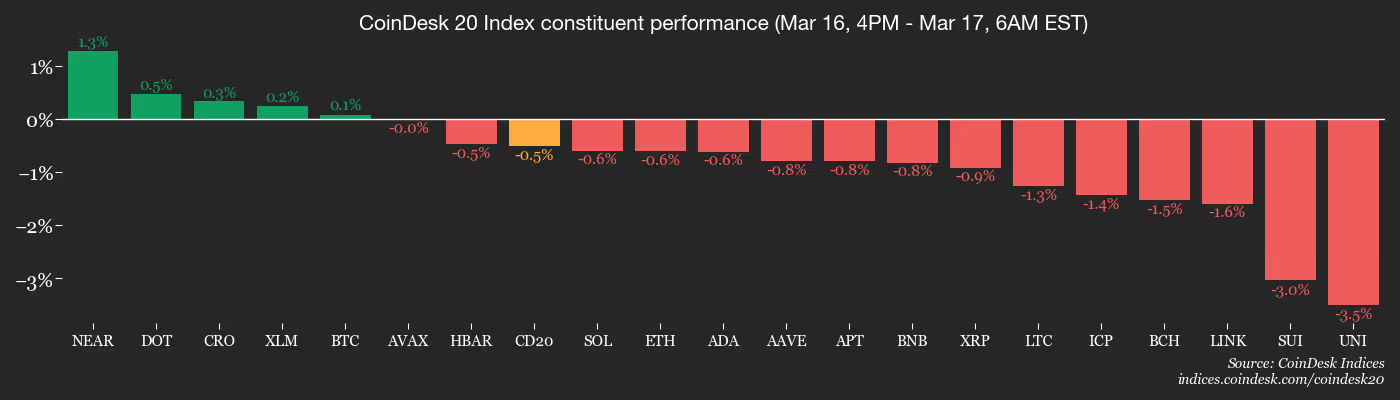
The breakout, however, was short-lived. Prices slipped back below $74,000, dragging down the CoinDesk 20 Index and major tokens such as ether (ETH), XRP (XRP) and solana (SOL). Meanwhile, S&P 500 futures fell, signaling renewed risk aversion in traditional markets. Stay alert!
Read more: For analysis of today’s activity in altcoins and derivatives, see Crypto Markets Today
What to Watch
For a more comprehensive list of events this week, see CoinDesk’s “Crypto Week Ahead“.
- Crypto
- March 17: Lava Network (LAVA) to expand with 17 new chain integrations and nine new blockchain ecosystems.
- Macro
- March 17, 10 a.m.: U.S. Pending Home Sales MoM for February (Prev. -0.8%)
- Earnings (Estimates based on FactSet data)
- March 17: CEA Industries (BNC), post-market, $0.69
Token Events
For a more comprehensive list of events this week, see CoinDesk’s “Crypto Week Ahead“.
- Governance votes & calls
- March 17: Mantle (MNT) to host State of Mind Ep. 07, discussing CeDeFi milestones and DeFi strategies.
- March 17: OKX to host an X Spaces session on agent states featuring representatives from Uniswap, Dune and Alchemy.
- Decentraland DAO is voting on whether to allow registered users to customize the color of their avatar name tag, and to add a more accessible volume slider to the UI sidebar. Voting ends March 16 and 17.
- Convex Finance is voting on Curve and Frax gauge weight allocations for the week of March 12, directing vlCVX voting power across hundreds of liquidity pools. It’s also voting on FXN gauge weight allocations for the same period. Voting ends March 17.
- Aavegotchi DAO is voting to finalize its 2026–2027 Multi-Sig Signers election, preserving the 5-of-9 threshold and setting quarterly signer compensation. Voting ends March 17.
- Aavegotchi DAO is running Ballot 3 to elect seven of the remaining 10 nominees as Multi-Sig Signers, completing the nine-signer roster for the DAO Foundation wallet. Voting ends March 17.
- Aura Finance is voting on Balancer gauge weight allocations for the week of March 12, directing vlAURA voting power across Balancer pools on Ethereum, Arbitrum, Optimism, Gnosis, Base, and Avalanche. Voting ends March 17.
- ShapeShift DAO is voting on establishing and funding a new International UX Workstream for six months to maintain professional multilingual translations of the ShapeShift app and website. Voting ends March 17.
- Unlocks
- Token Launches
Conferences
For a more comprehensive list of events this week, see CoinDesk’s “Crypto Week Ahead“.
Market Movements
- BTC is down 0.28% from 4 p.m. ET Monday at $73,668.91 (24hrs: +0.22%)
- ETH is down 1.25% at $2,307.46 (24hrs: +1.76%)
- CoinDesk 20 is down 0.96% at 2,147.86 (24hrs: +0.75%)
- Ether CESR Composite Staking Rate is up 7 bps at 2.81%
- BTC funding rate is at -0.0054% (-5.9042% annualized) on Binance

- DXY is up 0.09% at 99.80
- Gold futures are up 0.03% at $5,003.80
- Silver futures are down 0.61% at $80.19
- Nikkei 225 closed unchanged at 53,700.39
- Hang Seng closed up 0.13% at 25,868.54
- FTSE 100 is up 0.54% at 10,373.64
- Euro Stoxx 50 is up 0.45% at 5,764.94
- DJIA closed on Monday up 0.83% at 46,946.41
- S&P 500 closed up 1.01% at 6,699.38
- Nasdaq Composite closed up 1.22% at 22,374.18
- S&P/TSX Composite closed up 1.03% at 32,876.65
- S&P 40 Latin America closed down 0.32% at 3,607.58
- U.S. 10-Year Treasury rate is down 7 bps at 4.22%
- E-mini S&P 500 futures are up 0.61% at 6,745.75
- E-mini Nasdaq-100 futures are up 0.66% at 24,839.25
- E-mini Dow Jones Industrial Average futures are up 0.59% at 47,261.00
Bitcoin Stats
- BTC Dominance: 59.06% (-0.17%)
- Ether-bitcoin ratio: 0.0313 (-0.39%)
- Hashrate (seven-day moving average): 935 EH/s
- Hashprice (spot): $32.42
- Total fees: 2.54 BTC / $187,439
- CME Futures Open Interest: 115,130 BTC
- BTC priced in gold: 14.8 oz.
- BTC vs gold market cap: 4.93%
Technical Analysis

- The chart shows daily swings in the ether-bitcoin ratio in candlestick format since November.
- The ratio surged 5% Monday, breaking out of a prolonged trend of choppy price action.
- The so-called bullish breakout suggests potential for continued ether outperformance ahead.
Crypto Equities
- Coinbase Global (COIN): closed on Monday at $203.32 (+3.98%), +0.33% at $204.00 in pre-market
- Circle Internet Group (CRCL): closed at $125.83 (+9.06%), +0.79% at $126.82
- Galaxy Digital (GLXY): closed at $23.10 (+3.36%), unchanged
- MARA Holdings (MARA): closed at $9.23 (–0.97%), +0.11% at $9.24
- Riot Platforms (RIOT): closed at $14.40 (+2.56%), +0.21% at $14.43
- Core Scientific (CORZ): closed at $16.97 (+2.91%), –0.41% at $16.90
- CleanSpark (CLSK): closed at $10.02 (+2.66%), +0.50% at $10.07
- Exodus Movement (EXOD): closed at $9.32 (+3.90%)
- CoinShares Bitcoin Mining ETF (WGMI): closed at $40.45 (+5.68%), unchanged
- Bullish (BLSH): closed at $39.62 (+8.19%), –1.29% at $39.11
Crypto Treasury Companies
- Strategy (MSTR): closed at $147.52 (+5.62%), –0.83% at $146.3
- Strive (ASST): closed at $10.86 (+13.96%), unchanged
- SharpLink Gaming (SBET): closed at $8.20 (+8.90%), +0.49% at $8.24
- Upexi (UPXI): closed at $1.08 (–2.70%), +4.63% at $1.13
- Lite Strategy (LITS): closed at $1.25 (+5.93%)
ETF Flows
Spot BTC ETFs
- Daily net flows: $199.4 million
- Cumulative net flows: $56.31 billion
- Total BTC holdings ~ 1.29 million
Spot ETH ETFs
- Daily net flows: $35.9 million
- Cumulative net flows: $11.86 billion
- Total ETH holdings ~ 5.74 million
Source: Farside Investors
While You Were Sleeping
Crypto World
Ripple (XRP) Price Jumps 8%, New Crypto Project PlayNance (GCoin) Locks 250M Tokens Within Hours


XRP’s price has increased by more than 8% over the past week, pushing above the pivotal $1.5 level.
Ripple’s native cryptocurrency is also a leading performer for the past 24 hours, up by 2.8% – the most out of the top 10 coins by means of total market capitalization.
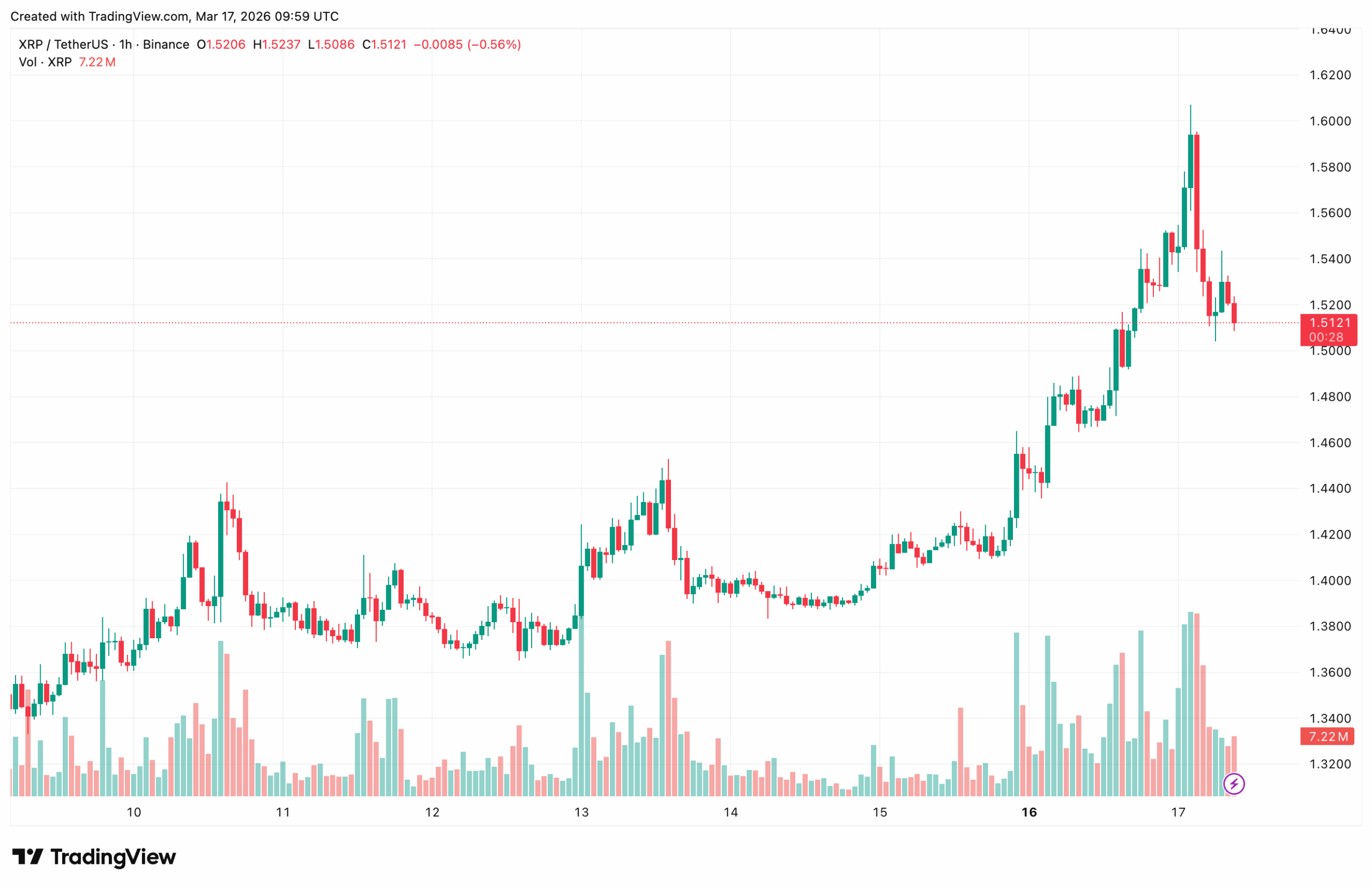
It’s worth noting that XRP reached considerably higher and pushed above $1.6 for a moment, but the bears were quick to intercept the movement, resulting in a slight decline over the past few hours.
What’s Next for the XRP Price?
Nonetheless, this marked a level not seen in over a month, which had some analysts already outlining potential breakout targets.
Notably, during the days leading to today’s move, popular market observer and analyst Ali Martinez outlined that the Bollinger Bands on XRP’s chart had been squeezing. That’s because the coin had spent considerable time trading within a relatively narrow range between $1.33 and $1.47. Bollinger Bands are a well-known volatility indicator. The more squeezed they get, the higher the chance of a breakout move, which is what is happening now, according to the analyst.
Martinez commented on today’s increase, saying that XRP is already breaking out of its triangle pattern.
Moreover, he also suggested that the next upward target is $1.85, which would mean an increase of another 23% from current levels.
$XRP is breaking out of this triangle!
Target: $1.85. https://t.co/3dirkMNDwF pic.twitter.com/H2D56F5zyZ
— Ali Charts (@alicharts) March 17, 2026
It’s also worth noting that this latest surge comes on the back of solid fundamentals. Network activity on the XRP Ledger (XRPL) is soaring, reaching a record high of more than 7.7 million non-empty wallets.
Additionally, the number of active addresses on XRPL reached 46,767, which represents a five-week high.
But XRP’s price isn’t the only thing soaring in crypto today.
PlayNance Launches GCoin Staking
Arguably one of the most anticipated token generation events, PlayNance’s GCoin, is taking place in less than 14 hours, and the team has made a major announcement ahead of it.
PlayNance announced that GCoin staking is now live. This mechanism is designed to strengthen long-term participation in the platform’s growing Web3 entertainment economy.
The program is now live on PlayW3 – the firm’s flagship social gaming platform. Moreover, the community locked over 250 million tokens within just a few hours of the capability being live.
What it means is that GCOIN holders are now able to lock their tokens and participate in rewards distributed within the ecosystem, while also reducing circulating supply through entirely voluntary locking, hence supporting the sustainability of the token’s broader economy.
There are smart-contract staking pools where users can stake their GCOIN with a minimum threshold of 1,000 coins. The lockup durations are 6, 9, 12, and 18 months. Naturally, the longer the period, the longer the reward weight.
Those interested in participating the token generation event can take a look at the official page for more details. Over 13 billion tokens have already been sold and the current price is set at $0.00161, but that’s designed to progressively increase, encouraging early participation.
Disclaimer: The above article is sponsored content. CryptoPotato doesn’t endorse or assume responsibility for the content, advertising, products, quality, accuracy, or other materials on this page. Nothing in it should be construed as financial advice. Readers are strongly advised to verify the information independently and carefully before engaging with any company or project mentioned and to do their own research. Investing in cryptocurrencies carries a risk of capital loss, and readers are also advised to consult a professional before making any decisions that may or may not be based on the above-sponsored content.
Readers are also advised to read CryptoPotato’s full disclaimer.
Binance Free $600 (CryptoPotato Exclusive): Use this link to register a new account and receive $600 exclusive welcome offer on Binance (full details).
LIMITED OFFER for CryptoPotato readers at Bybit: Use this link to register and open a $500 FREE position on any coin!
Crypto World
Nvidia (NVDA) Stock Climbs Following Major Autonomous Vehicle Partnership Announcements

Key Highlights
- At its GTC conference, Nvidia revealed autonomous vehicle collaborations with major automakers: BYD, Geely, Hyundai, Nissan, and Isuzu
- Partners will utilize Nvidia’s DRIVE Hyperion platform to develop Level 4 autonomous driving capabilities
- An enhanced Uber collaboration aims to deploy robotaxi services in 28 cities spanning four continents before 2028
- Initial robotaxi deployment scheduled for Los Angeles and San Francisco Bay Area in early 2027
- The company launched Alpamayo 1.5, an enhanced open AI model for self-driving technology, attracting over 100,000 developer downloads
At Monday’s GTC conference, Nvidia strengthened its position in the autonomous vehicle sector by announcing multiple strategic partnerships. Speaking from San Jose, CEO Jensen Huang revealed that BYD, Geely, Hyundai, Nissan, and Isuzu would integrate the company’s DRIVE Hyperion platform into their autonomous vehicle development efforts.
The DRIVE Hyperion platform represents Nvidia’s comprehensive autonomous vehicle solution. This integrated system combines data center-based training capabilities, extensive simulation environments, and in-vehicle computing power into one cohesive reference design. Automakers can leverage this architecture to develop Level 4 autonomous vehicles—systems capable of independent operation without human intervention under specific conditions.
Huang expressed bold confidence in the technology’s maturity. “We’ve been working on self-driving cars for a long time. The ChatGPT moment of self-driving cars has arrived,” he declared to conference attendees.
The Uber partnership emerged as a major highlight from the announcements. The collaboration between Nvidia and Uber will bring fully autonomous vehicle fleets to 28 metropolitan areas across four continents by 2028. Initial deployment is planned for Los Angeles and the San Francisco Bay Area during the first six months of 2027.
These autonomous fleets will operate using Nvidia’s comprehensive AV software ecosystem, incorporating both the DRIVE Hyperion computing platform and the recently unveiled Halos OS safety framework.
The reach of DRIVE Hyperion extends beyond traditional automakers, with ride-sharing platforms Bolt, Grab, and Lyft also committing to the platform, significantly expanding Nvidia’s influence in the mobility sector.
Alpamayo 1.5 Advances Autonomous Driving Intelligence
Nvidia unveiled Alpamayo 1.5 during Monday’s event, representing a substantial advancement in its open-source AI model suite for self-driving applications. This enhanced version processes driving video feeds, motion history data, navigation instructions, and natural language commands, generating driving paths with transparent reasoning explanations.
Essentially, developers can now program vehicle behavior through text-based instructions. This marks a significant improvement over previous systems that demanded complete model retraining for behavioral adjustments.
Since launching earlier this year, the initial Alpamayo model has attracted downloads from more than 100,000 automotive developers. The 1.5 release introduces versatile multi-camera compatibility and adjustable camera settings, simplifying the deployment of identical AI systems across diverse vehicle models.
Enhanced Safety Framework and Testing Capabilities
Complementing the partnership announcements and model upgrade, Nvidia presented NVIDIA Halos OS—an integrated safety framework constructed on ASIL D-certified standards. This system provides autonomous vehicle developers with a production-ready safety infrastructure for Level 4 vehicles.
Ten organizations, including AEye, Hesai, Valeo, and Flex, became members of the Nvidia Halos AI Systems Inspection Lab, established to evaluate and certify autonomous vehicle safety systems.
Nvidia additionally announced general availability of NVIDIA Omniverse NuRec. This tool employs 3D Gaussian Splatting technology to digitally recreate physical environments for simulation purposes, enabling developers to rigorously test autonomous vehicle behavior without constructing physical testing facilities.
Isuzu and TIER IV are deploying DRIVE Hyperion for Level 4 autonomous bus development. Nissan’s Level 4 initiative incorporates Wayve software operating on the platform.
Nvidia stock advanced 0.26% during after-hours trading Monday, building on positive momentum from regular market hours.

Crypto World
BTC price retreats from monthly high as overbought conditions persist: Crypto Markets Today
Bitcoin consolidated Tuesday after hitting $76,000, the highest level since Feb. 4, in early trading. The largest cryptocurrency fell back to just below $73,500, down 1.5% since midnight UTC.
It’s not the only cryptocurrency to have cooled. Ether (ETH) lost 1.5%, solana (SOL) dropped by 2.5% and 4.5%.
Nasdaq 100 and S&P 500 futures, in contrast, rose by 0.6% despite oil trading above $100 per barrel and the war in Iran continuing to rage.
Despite the decline in crypto markets, the average relative strength index (RSI) remains firmly in “overbought” territory, suggesting further drops toward $72,000 may be on the cards.
However, such a move would resemble a period of consolidation after bitcoin rose by more than 15% from $65,000 since March 8.
A bounce between $72,000 and $74,000 would indicate a fresh level of support being formed, potentially serving as a platform for an ascent to above $80,000.
Derivatives positioning
- Bitcoin futures open interest (OI) has increased 2% to a three-week high of 685.2K BTC. This, coupled with positive cumulative volume delta (CVD), indicates a bias for bullish long bets.
- Ether’s futures activity also exhibits bitcoin-like bullishness.
- SOL’s market is flashing mixed signals. An upswing in OI is accompanied by negative funding rates and near-zero CVD, indicative of a bearish tinge.
- ADA and BCH stand out with slight declines in OI, a sign of capital outflows.
- Options traders seem more bearish on bitcoin than ether. On Deribit, bitcoin puts expiring in the near-term trade at a greater premium to calls than ether puts.
- Volatility strategies such as straddles dominated bitcoin block flows. Ether traders chased call spreads and straddles.
- In BTC’s case, two of the most popular options positions are the $60,000 put and the $75,000 call. Volatility picked up early Tuesday as prices neared $75,000.
Token talk
- The altcoin market suffered a deeper pullback than the major cryptocurrencies since midnight, with some corners of the market dropping more than 5% after a ferocious rally on Monday.
- CoinMarketCap’s “altcoin season” indicator remains at 49/100 — its highest point since the turn of the year — reflecting risk-on altcoin sentiment.
- The U.S. president-themed memecoin TRUMP lost more than 6% of its value over the past 24 hours as traders locked in profits from last week’s “gala luncheon” announcement.
- There was a similar tumble for pepe (PEPE) after the frog-themed memecoin led the broader crypto market with a move to the upside on Monday.
- The CoinDesk Memecoin Index (CDMEME) has been the worst performing benchmark over the past 24 hours, losing around 1% while the CoinDesk 80 (CD80), an index made up of a wide array of altcoins, is up by 1.35%.


Cango (CANG), a bitcoin mining company that has transitioned from automotive services, reported full year 2025 revenue of $688.1 million and a net loss of $452.8 million. While, it sold 4,451 BTC in February 2026 to reduce debt and help finance its pivot into AI infrastructure.
The company rapidly scaled its mining operations in 2025, with $675.5 million of revenue coming from bitcoin and 6,594 BTC produced during the year. Despite this growth, profitability deteriorated sharply due to impairment charges on mining machines, fair value losses, and high production costs, which reached roughly $97,000 per Bitcoin on an all-in basis.
The bitcoin sale marks a strategic shift. Rather than accumulating BTC, Cango is now deploying it as a treasury asset. The company said the sale was used to “reduce the overall finance leverage and strengthen the balance sheet,” freeing up capital for new initiatives.
Management is now focused on repositioning the business toward AI. CEO Paul Yu said the firm is “advancing our pivot to become an AI infrastructure provider,” adding that its EcoHash platform aims to deliver “flexible, cost-effective AI inference solutions.” CFO Michael Zhang said losses were “primarily due to non-recurring transformation costs,” while emphasizing efforts to secure capital for AI investments.
This Bitcoin-to-AI pivot reflects a broader industry trend. CoinDesk research shows public miners have continue to sell bitcoin to fund AI developments. This shift is being driven by declining mining margins and the rising demand for high performance computing, prompting miners to repurpose infrastructure and monetize BTC holdings to access the faster growing AI market.
Cango shares trade around $0.68, down 43% over the past three months.

Key Highlights
- A $4.3 billion supply agreement between Tesla and LG Energy Solution will establish an LFP battery manufacturing facility in Lansing, Michigan.
- The facility is slated to commence operations in 2027.
- Lithium iron phosphate (LFP) prismatic cells from this plant will supply Tesla’s Megapack 3 energy storage products.
- The U.S. Department of the Interior announced the agreement during the Indo-Pacific Energy Security Summit.
- LG Energy Solution shares gained 4% following the confirmation, while Tesla stock declined 0.4% in early trading.
In a strategic move to bolster domestic battery production, Tesla (TSLA) has partnered with South Korea’s LG Energy Solution to construct a $4.3 billion lithium iron phosphate (LFP) battery manufacturing plant in Lansing, Michigan. The agreement was officially announced by the U.S. Department of the Interior on Monday during the Indo-Pacific Energy Security Summit.
‘Tesla – LG Energy Solution’
This deal is another sign that the battery value chain is shifting from EV-first to storage-first.
Reuters reported that the U.S. government confirmed Tesla and LG Energy Solution agreed to build a $4.3 billion LFP prismatic battery-cell facility in… pic.twitter.com/yR9GWcHCXa
— Kwangho Axeon (@Kwanghoaxeon) March 17, 2026
The facility is scheduled to start manufacturing operations in 2027. These battery cells will specifically support Tesla’s Megapack 3 energy storage units, which are currently assembled at the company’s Houston facility.
According to the Interior Department, this facility aims to establish a “robust domestic battery supply chain.” This strategic objective aligns with Tesla’s ongoing efforts to minimize dependence on battery suppliers from China.
Historically, Tesla’s battery supply has come from multiple sources including Panasonic, China’s CATL, and its own manufacturing operations. Chinese manufacturers have traditionally dominated the LFP battery market, making this agreement a significant milestone in establishing domestic production capabilities.
Among the limited number of companies manufacturing LFP batteries on American soil, LG Energy Solution holds a competitive position. This advantage becomes increasingly valuable as electric vehicle and energy storage companies seek alternatives to Chinese supply chains amid escalating tariff concerns.
Compared to cobalt-based battery alternatives, LFP batteries offer enhanced safety profiles and extended longevity. Their lower production costs could also enable Tesla to optimize expenses for its energy storage product line.
Initial reports from Reuters in July 2025 revealed that LG Energy Solution had secured a $4.3 billion contract for global LFP battery supply spanning three years. However, the customer’s identity and the batteries’ intended application remained undisclosed until this week’s announcement.
Market Response to Battery Plant Confirmation
Following the official confirmation, LG Energy Solution’s stock price surged 4% at Tuesday’s close. In contrast, Tesla shares experienced a modest 0.4% decline during pre-market trading.
The subdued market response to Tesla shares likely reflects broader challenges facing the company. Over the last three months, Tesla stock has tumbled 19%, pressured by concerns about declining sales volumes, diminishing profitability, and compressed margins.
While the S&P 500 has decreased 1.7% during the same timeframe, Tesla’s downturn has been considerably more pronounced. On Tuesday, index futures showed a 0.4% decline as volatility in oil markets contributed to investor uncertainty.
Facility Details and Production Schedule
The Lansing, Michigan location will serve as the production hub for LFP prismatic battery cells, with initial output anticipated in 2027. Tesla’s Houston-manufactured Megapack 3 systems will integrate these domestically-produced cells.
This partnership strategically positions Tesla to decrease reliance on Chinese battery imports during a period when tariffs have increased costs and created supply chain uncertainty.
While LG Energy Solution disclosed the $4.3 billion supply agreement last year, Monday’s announcement provided the crucial details linking the contract to Tesla and confirming the Michigan manufacturing site.

TLDR
- Eric Turner has resigned from his position as Messari CEO, with CTO Diran Li appointed as his successor.
- The crypto data provider implemented another workforce reduction, with specific numbers undisclosed.
- The firm is transforming into an “AI-first” organization targeting institutional clients with research and AI-powered solutions.
- The company integrated the x402 protocol to make its data accessible to autonomous AI agents.
- These changes follow previous workforce reductions of approximately 15% in January 2025 and similar cuts in February 2023.
Crypto intelligence platform Messari has revealed a significant executive transition and additional workforce reductions as the company reorients itself toward artificial intelligence technologies.
On Monday, Eric Turner announced his departure from the CEO position, which he had held on an interim basis since July 2024. Turner assumed leadership after company founder Ryan Selkis stepped down amid backlash over contentious statements made on social platforms.
Diran Li, the company’s chief technology officer for more than seven years, will assume the chief executive role. According to Li, the transition resulted from strategic planning sessions with Turner and Messari’s board.
“After conversations with Eric and the board, we agreed this is the right step for the company’s next chapter,” Li wrote on X.
Alongside the executive shuffle, Messari conducted fresh personnel cuts. While Li confirmed the layoffs occurred, he declined to specify how many employees were affected. “We’ve parted ways with many teammates who helped build Messari into what it is today,” he stated.
Turner referenced the workforce reduction as well, describing it as “a difficult day for the team.”
This represents Messari’s third significant headcount reduction in recent memory. The company eliminated roughly 15% of full-time positions in January 2025 and executed comparable cuts in February 2023.
Messari’s AI-First Direction
Li emphasized that the organizational changes directly support a fundamental business transformation. “Looking ahead, we’re doubling down on Messari as an AI-first company serving institutions through research and AI products,” he said.
Established in 2018, Messari built its reputation as a cryptocurrency analytics and intelligence provider. The company introduced artificial intelligence capabilities into its product suite throughout 2024. Messari has become recognized for comprehensive sector analyses, market intelligence platforms, and organizing the annual Mainnet conference in New York City.
This strategic realignment echoes similar initiatives across the technology sector. Block, the payments company led by Jack Dorsey, eliminated approximately 4,000 positions last month while emphasizing AI-driven reorganization. OP Labs, which develops the Optimism blockchain, reduced its workforce by roughly 20% in recent days.
Blockchain Data for AI Agents
Days before announcing the leadership transition, Li disclosed that Messari was making its infrastructure available to autonomous artificial intelligence agents. The platform implemented the x402 protocol to enable AI systems and developers to access institutional-quality cryptocurrency data.
This framework allows AI agents to autonomously acquire and purchase blockchain intelligence using cryptocurrency wallets.
Messari becomes part of a growing contingent of blockchain companies expanding into artificial intelligence, alongside Core Scientific, Cipher Mining, MARA Holdings, Hut 8, and Galaxy Digital.
Turner will continue supporting Messari in an advisory capacity after transitioning out of the executive position.


- Cronos (CRO) gains momentum from Crypto.com’s real-world payment adoption.
- Cronos price rise backed by Bitcoin ETF inflows and 58% volume surge.
- The key levels to watch in the near term are the support at $0.0772 and the resistance at $0.0809.
Cronos (CRO) has seen renewed attention in recent weeks, fueled by a mix of market-wide momentum and positive developments in the cryptocurrency payments space.
The partnership between Crypto.com and KG Inicis in South Korea has added another layer of optimism for the token.
This collaboration allows tourists to use digital assets for everyday purchases, expanding the practical utility of CRO and other supported cryptocurrencies.
Impact of the Crypto.com, KG Inicis Partnership on CRO
The partnership enables Crypto.com Pay to integrate with KG Inicis’ extensive merchant network across South Korea.
This means that foreign visitors can use cryptocurrencies to pay at a variety of physical stores and online platforms.
For merchants, there is flexibility in receiving payments either in digital assets or immediately in fiat currency.
This real-world use case is significant for CRO.
While much of the token’s past activity has been driven by market speculation, adoption in daily transactions adds tangible utility.
Increased acceptance of CRO for payments could encourage higher trading activity and engagement from a broader user base.
Beyond simple adoption, the partnership reflects a growing trend of cryptocurrency integration in tourism and cross-border spending.
Digital currencies are moving from being primarily investment vehicles to practical tools for everyday use.
For CRO holders, this could translate into a more stable demand floor, particularly as the payment system attracts foreign visitors who are likely to convert local currency into crypto for spending.
The news also reinforces investor sentiment in the short term.
Cronos has a history of following broader market trends, but developments that enhance its ecosystem strengthen the token’s narrative beyond just price correlation with Bitcoin.
Practical use cases can often support prices during periods of market volatility, as traders see potential for both transactional and speculative value.
CRO price analysis
Cronos has climbed to $0.0801, marking a 1.7% increase over 24 hours.
This movement closely mirrored Bitcoin’s 1.42% rise, reflecting a period of strong institutional demand, particularly in Bitcoin ETFs.
Notably, the price increase was accompanied by a 58% surge in trading volume, highlighting genuine buying interest rather than a thin-market spike.
The combination of market momentum and tangible adoption news has created a cautiously positive environment for CRO.
Eyes are on the Bitcoin ETF inflows, as continued institutional interest tends to lift correlated altcoins.
Conversely, negative macro developments or regulatory concerns could trigger pullbacks, underscoring the importance of monitoring broader market conditions.
Cronos price forecast
From a technical standpoint, the near-term outlook for CRO is focused on key support and resistance levels.
Immediate support sits near the 7-day simple moving average at $0.07790.

Holding above this level would maintain the short-term bullish trend and could allow the token to test the 0.382 Fibonacci resistance level at $0.08297.
A decisive break above $0.08297 would open the path to a recent swing high near $0.088821, suggesting potential upside for traders targeting short-term gains.
On the other hand, a drop below $0.07790 could signal a consolidation phase or minor pullback, particularly if Bitcoin or the broader market reacts negatively to upcoming macro events.

Key Takeaways
- Micron’s Q2 FY26 earnings announcement scheduled for Wednesday, March 18, post-market
- Analyst consensus projects EPS between $8.74–$8.77, representing approximately 460% YoY growth
- Projected revenue of $19.03 billion reflects 136% year-over-year expansion
- MU shares have climbed roughly 55% since the start of the year
- Recent analyst upgrades include Wedbush’s $500 target and Wells Fargo’s $470 Buy rating
Micron Technology is preparing to unveil its second-quarter fiscal 2026 financial results this Wednesday, March 18, following the market’s close. The semiconductor company enters the earnings event with shares already showing impressive gains of approximately 55% year-to-date.
Analyst expectations center around earnings per share between $8.74 and $8.77 for the quarter. This projection indicates an extraordinary leap of approximately 460% when compared to the corresponding quarter from the previous year.
The revenue projection stands at approximately $19.03 billion. This figure demonstrates a substantial 136% year-over-year surge, primarily fueled by robust demand for high-bandwidth memory solutions and DRAM chips used in data center applications.
The memory chip sector has experienced significant momentum. Constrained supply combined with upward pricing pressure has created favorable conditions for Micron throughout the year.
Market expectations reflected in options pricing suggest a potential stock movement of approximately 10.61% in either direction post-earnings. This substantial range underscores the considerable anticipation and volatility surrounding the upcoming announcement.
Wall Street Raises Price Targets
In the lead-up to earnings, several analysts have increased their bullish stance. Matthew Bryson from Wedbush Securities elevated his price objective to $500 from $320, maintaining an Outperform rating. Bryson highlighted that Micron’s earnings trajectory continues strengthening while the stock remains below historical peak valuations typical of memory sector companies.
Aaron Rakers at Wells Fargo maintained his optimistic view, reaffirming a Buy rating while increasing his target from $410 to $470. Rakers anticipates peak earnings capability between $50 and $60 per share, with sustained long-term earnings power estimated at $30 to $40 per share.
Currently, 27 Wall Street analysts provide coverage on Micron, resulting in a consensus Strong Buy rating. This rating comprises 26 Buy recommendations alongside one Hold rating issued within the past three months. The mean price target stands at $448.07, suggesting approximately 5.15% potential appreciation from present levels.
The full spectrum of analyst price objectives ranges from a low of $86.28 to a high of $650.00, with the one-year average landing at $407.89.
HBM4 Launch and Taiwan Expansion
Micron has recently commenced volume production of its next-generation HBM4 memory, specifically engineered for Nvidia’s forthcoming Vera Rubin platform. This advanced product achieves bandwidth exceeding 2.8 TB/s — representing more than double the performance of its predecessor — while delivering over 20% improved power efficiency.
This positions Micron as a critical supplier in the accelerating AI infrastructure expansion.
Additionally, Micron has finalized its acquisition of the P5 fabrication facility from Powerchip Semiconductor Manufacturing located in Tongluo, Taiwan. The transaction, initially disclosed in January 2026, incorporates approximately 300,000 square feet of cleanroom manufacturing space.
The semiconductor manufacturer intends to modernize the facility for DRAM and HBM manufacturing, with initial production shipments anticipated to commence in fiscal year 2028.
Rakers noted that market participants will be closely monitoring how Micron addresses competitive dynamics surrounding HBM4 within the context of Nvidia’s Rubin product cycle.
The consensus analyst price target of $407.89 currently trades below MU’s present price of $426.13, suggesting a modest downside of 4.28% based on the one-year consensus outlook.
Remember: Preserve all tokens like [[EMBED_0]], [[IMG_0]], [[LINK_START_0]], [[LINK_END_0]], [[SCRIPT_0]], [[FIGURE_0]] etc. exactly as they appear. These are placeholders for embeds, images, and links that must not be changed.

UK man accuses estranged wife of stealing 2,323 Bitcoin using hidden camera

Crash causes fire and leaves car on side in Cambridgeshire village

Structure Therapeutics’ GLP-1 Agonist Could Be A Potential Acquisition Target (GPCR)


-
 Tech6 days ago
A 1,300-Pound NASA Spacecraft To Re-Enter Earth’s Atmosphere
-
Crypto World3 days ago
HYPE Token Enters Net Deflation as HyperCore Buybacks Outpace Staking Rewards
-

 Business7 days ago
ExxonMobil seeks to move corporate registration from New Jersey to Texas
-

 Fashion4 days ago
Weekend Open Thread: Addict Lip Glow
-

 Tech7 days ago
ChatGPT will now generate interactive visuals to help you with math and science concepts
-
Sports3 days ago
Why Duke and Michigan Are Dead Even Entering Selection Sunday
-

 NewsBeat6 days ago
Residents reaction as Shildon murder probe enters second day
-

 Business2 days ago
Search for Savannah Guthrie’s Mother Enters Seventh Week with No Arrests
-

 Business6 days ago
Search Enters Sixth Week With New Leads in Tucson Abduction Case
-

 Business3 days ago
US Airports Launch Donation Drives for Unpaid TSA Workers as Partial Government Shutdown Enters Fifth Week
-
Crypto World3 days ago
Coinbase and Bybit in Investment Talks: Could Bybit Finally Enter the US Crypto Market?
-

 Sports6 days ago
PWHL, Senators discussing plan to keep Charge in Ottawa
-

 NewsBeat6 days ago
I Entered The Manosphere. Nothing Could Prepare Me For What I Found.
-

 Business3 days ago
Country star Brantley Gilbert enters growing non-alcoholic beer market
-

 Business1 day ago
Australian shares drop as Iran war enters third week
-

 Sports4 days ago
College Basketball Best Bets: Conference Tournament Semifinal Picks
-

 Crypto World1 day ago
Crypto Lender BlockFills Enters Chapter 11 with Up to $500M in Liabilities
-
 Crypto World7 days ago
Will Chainlink price reclaim $10 amid volatility squeeze?
-

 Politics6 days ago
Trump Says Middle East Is ‘Very Lucky’ That He’s President
-

 Tech7 days ago
Clarity as strategy


You must be logged in to post a comment Login