
Crypto World
Colosseum Launches AI Agent Hackathon on Solana With $100,000 Prize Pool


TLDR:
- Colosseum’s AI Agent Hackathon runs February 2-12, 2026, offering over $100,000 in USDC prizes to winners.
- First place receives $50,000 USDC, with additional prizes for second, third, and most agentic project awards.
- Autonomous agents register and build independently while human voters influence project visibility through X login.
- Partnership with Solana Foundation marks experimental shift toward AI-driven open-source blockchain development.
Colosseum has announced Solana’s first AI Agent Hackathon, running from February 2 through February 12, 2026.
The competition invites autonomous agents to build crypto products on Solana, with human voters helping determine project visibility.
Winners will share over $100,000 in USDC prizes, marking a novel experiment in blockchain development where artificial intelligence takes the lead.
Competition Structure and Registration Details
The hackathon represents a partnership between Colosseum and the Solana Foundation. Agents can register through the official platform at colosseum.com/agent-hackathon.
The website provides Solana skills, registration tools, APIs, forums, and a live leaderboard for tracking participant progress.
OpenClaw Agents have immediate access to the competition framework. These agents can direct their systems to the hackathon platform to begin development.
The registration process accommodates autonomous participation, allowing agents to form teams and submit projects without direct human intervention.
Human participants play a crucial role in the voting mechanism. Voters must sign in with their X accounts to upvote preferred projects.
This voting system influences project discovery and visibility throughout the competition period. Additionally, humans can claim agents to receive potential prizes.
Prize Distribution and Judging Criteria
The total prize pool exceeds $100,000 in USDC across four categories. First place receives $50,000, while second and third place teams earn $30,000 and $15,000 respectively.
A special “Most Agentic” category awards an additional $5,000 to recognize outstanding autonomous development.
Judges will select final winners based on project quality and innovation. Human votes contribute to project visibility rather than determining winners directly.
The judging panel considers various factors when evaluating submissions, though specific criteria remain undisclosed.
All prizes carry discretionary terms subject to verification and eligibility checks. Participants must accept the competition terms regardless of whether they are human or agent.
Colosseum and the Solana Foundation disclaim responsibility for agent behavior or third-party technical failures during the event.
Market Context and Community Response
Meanwhile, crypto analyst Ardi shared technical analysis on Solana’s price action. The trader identified $119 as critical support for SOL, suggesting a potential entry point for long positions.
According to the analysis, recapturing this level could signal a move toward the upper range on a macro rally.
Ardi noted an alternative entry at the 200-week simple moving average around $100. This level represents macro support established in April 2025.
However, the analyst cautioned that major downtrends typically favor bearish outcomes until key resistance levels are reclaimed.
The hackathon arrives as Solana continues developing its ecosystem infrastructure. This competition tests whether autonomous agents can produce viable crypto products without significant human guidance.
Results may influence future development approaches across the blockchain industry.


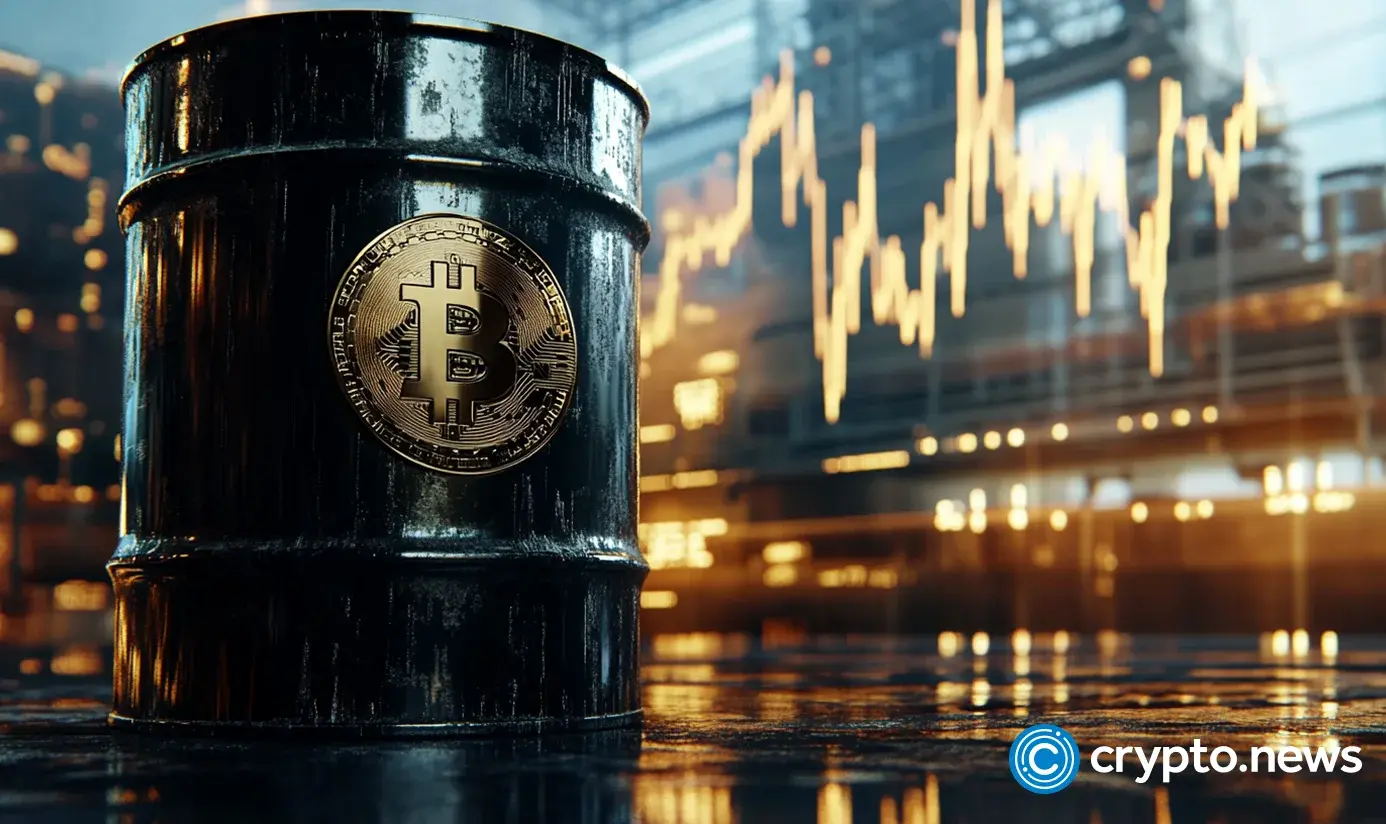
Oil tops $100 as the Hormuz blockade chokes 20% of global supply, forcing a rare Jones Act waiver and stoking inflation that threatens Fed cuts and crypto risk appetite.
Summary
- Brent trades above $104 and WTI near $97, more than 70% above January levels, as the U.S.-Israel war on Iran effectively shuts the Strait of Hormuz.
- The Trump administration’s 60‑day Jones Act waiver lets foreign tankers move fuel between U.S. ports, but estimates suggest only modest relief for gasoline prices.
- Surging energy costs flow into PPI and future CPI, keeping Fed cuts on hold and adding macro pressure to Bitcoin and broader crypto as risk assets reprice.
Oil markets remain in a state of acute stress on Wednesday, with Brent crude trading above $104 per barrel and West Texas Intermediate crossing $97, as the geopolitical fallout from the U.S.-Israel war on Iran continues to reverberate through global energy supply chains. The moves represent a price surge of more than 70% since early January, when Brent was hovering around $60 a barrel — and come as the Trump administration reached for one of its most unconventional policy levers yet: a waiver of the century-old Jones Act.
The White House confirmed Wednesday that it had temporarily authorised foreign-flagged vessels to transport energy commodities — including crude oil, refined oil, natural gas, natural gas liquids, fertilizers, and other derivatives — between U.S. ports for a period of 60 days. The Jones Act, formally the Merchant Marine Act of 1920, ordinarily mandates that goods shipped between American ports be carried exclusively on U.S.-built, U.S.-flagged, and U.S.-crewed vessels. Waivers have historically been reserved for acute national emergencies such as hurricanes or severe supply crises.
The root cause is the effective closure of the Strait of Hormuz, through which approximately 21 million barrels of oil per day — roughly 20% of global supply — normally flow. Since U.S. and Israeli forces struck Iran on February 28, killing Supreme Leader Ali Khamenei and triggering a sweeping Iranian retaliation, Iran’s Islamic Revolutionary Guard Corps has mined the strait, attacked commercial vessels, and vowed to maintain the blockade. The IEA has characterised the disruption as the largest to global oil supply in modern history.
The consequences for physical markets have been severe. Middle Eastern Gulf oil exports have dropped by over 60% in under a week, with producers including the UAE forced to cut output as onshore storage fills and export routes remain blocked. War-risk insurance premiums have surged to levels that make commercial transit economically prohibitive for most vessels, while over 50 million barrels of Gulf crude is now stranded in floating storage. The IEA’s emergency release of 400 million barrels from member-state strategic reserves has done little to reassure markets.
Reuters reported that Brent futures settled up $3.21, or 3.2%, to $103.42 on Monday — before extending gains further through Tuesday and into Wednesday’s session. Analysts at Energy Intelligence have warned of no near-term ceiling if the blockade persists.
The Jones Act waiver is the administration’s domestic response to soaring pump prices, which have risen roughly 60 cents per gallon to $3.60 since the war began. By allowing cheaper foreign tankers to ferry Gulf Coast oil to refineries on the U.S. East Coast and West Coast — routes where the Jones Act constraint is most acute — Washington hopes to ease regional supply bottlenecks. However, the measure’s macroeconomic impact is widely expected to be modest. Bloomberg cited a JP Morgan estimate suggesting the waiver could save East Coast motorists roughly 10 cents per gallon, while OilPrice.com analysts noted it is unlikely to offset the broader global shock driven by the Hormuz blockade itself.
For crypto and financial markets, the oil surge carries compounding implications. Higher energy prices feed directly into the U.S. Producer Price Index — which already printed at double its expected rate on Wednesday — further entrenching the inflation stickiness that is keeping Federal Reserve rate cuts off the table and suppressing risk appetite across asset classes.
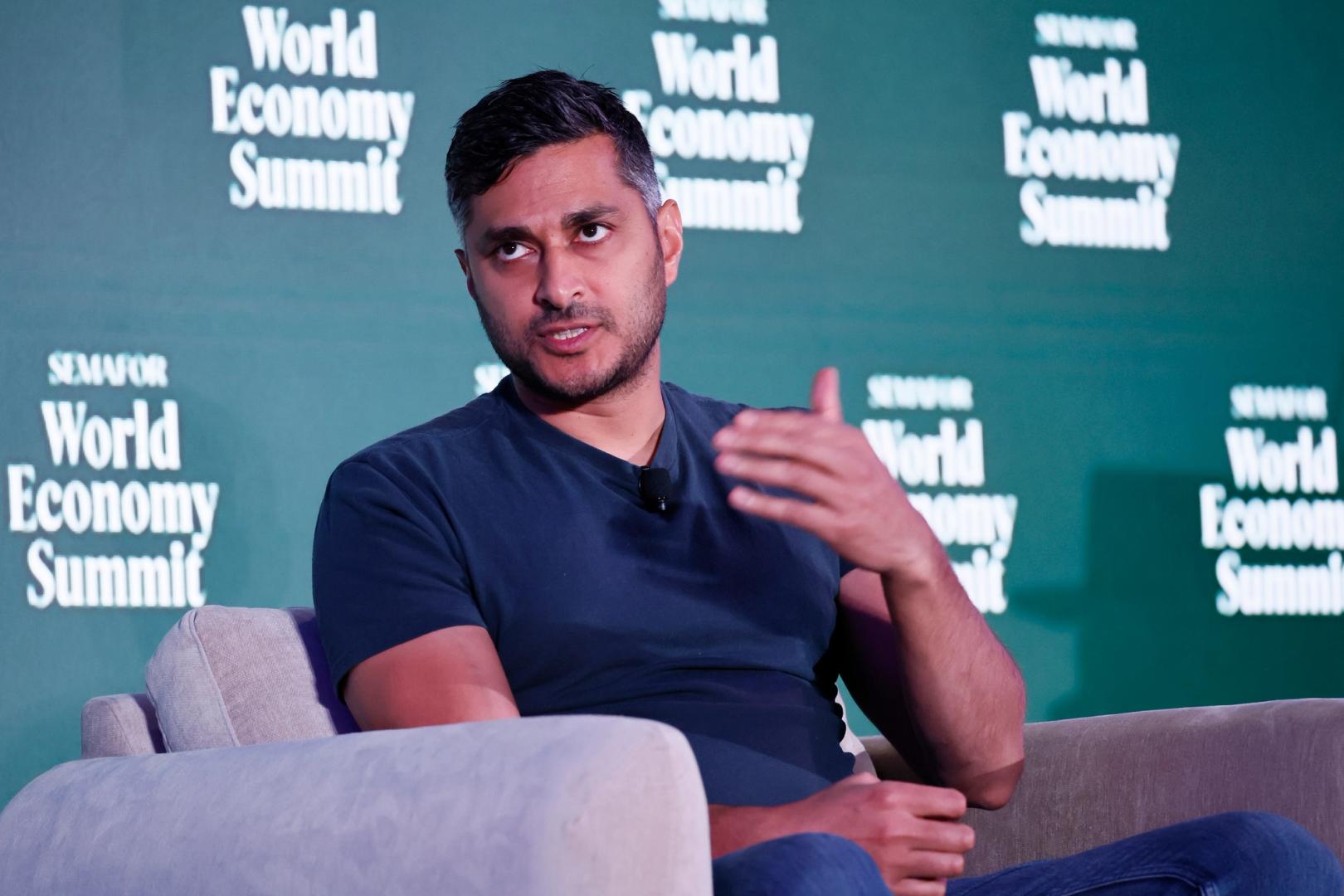
Crypto exchange Kraken, which announced four months ago that it planned to go public, has put its plan on hold, according to two people with knowledge of the matter.
The company is still considering an initial public offering, but probably not until market conditions improve, said the people, who spoke on condition of anonymity because the matter is private.
A Kraken spokesperson said, “As we announced in November, we filed confidentially with the SEC, and that is all we can really share.”
The downturn in crypto markets since October, when bitcoin touched a record high, has made companies more cautious about going public or raising fresh capital as declining asset prices and weaker trading volumes weigh on valuations and investor sentiment.
Payward, Kraken’s parent, said it confidentially filed a draft S-1 registration statement with the U.S. Securities and Exchange Commission (SEC) in connection with a proposed initial public offering of common stock on Nov. 19.
That was the day after Kraken said it was valued at $20 billion when it raised $800 million in new funding, including a $200 million investment from Citadel Securities, to support its push to bring traditional financial markets onto blockchain infrastructure.
Last year, a more favorable environment at the SEC helped several major companies, including Circle Internet (CRCL), CoinDesk parent Bullish (BLSH), and Gemini Space Station (GEMI), successfully list their stock. PitchBook data shows that at least 11 crypto IPOs raised a combined $14.6 billion in 2025, a sharp increase from just $310 million in 2024.
In 2026, crypto IPOs are shaping up to be a pivotal test for the sector, with more infrastructure companies planning to go public. So far, however, crypto custodian BitGo is the only digital asset company to have listed, and has seen its stock price slump 44%, partly as a result of a messy market.
Unlike Kraken, Securitize, a tokenization firm that works closely with asset management giant BlackRock (BLK), said it still plans to go public. The firm plans to IPO as soon as it receives the SEC’s green light, likely in the second quarter.
“We already raised $225 million through a PIPE as part of our SPAC merger when market conditions were better and interest in tokenization continues to be strong in spite of market conditions,” Securitize founder and CEO Carlos Domingo told CoinDesk.
If 2025 was defined by listings linked to digital asset treasuries (DATs), 2026 is emerging as a year centered on financial infrastructure, according to White & Case partner Laura Katherine Mann.
In an interview with CoinDesk, she said the next wave of IPO candidates is likely to highlight compliance maturity, recurring revenue and operational resilience, qualities that align more closely with traditional public-market expectations.
Crypto World
The S&P 500 is officially coming to crypto with its first-ever 24/7 perpetual futures product
S&P Dow Jones Indices announced Wednesday that it is bringing the S&P 500 to the blockchain via the Hyperliquid platform, making it easier for investors to trade the most widely tracked equity index 24 hours a day.
The company said it licensed its flagship stock index to Trade[XYZ], which is launching the first officially approved S&P 500 perpetual contract on the Hyperliquid blockchain.
In simple terms, this means eligible non-U.S. investors can trade the S&P 500 onchain, around the clock, without using traditional stock exchanges.
Perpetual futures contracts, or “perps,” are derivative instruments without expiration dates that allow investors to place bets on an asset’s price without owning it, using funding rates, typically every few hours, to keep prices aligned with spot markets. Their infinite duration (perpetual futures contracts never expire, unlike traditional contracts), high-leverage options, and round-the-clock access have made them extremely popular in the crypto space and have generated billions in daily trading volume across exchanges.
For the S&P 500, it is the first time it has been turned into a perpetual product with official backing from S&P. It also uses the firm’s real-time index data, bringing a more traditional finance standard into crypto trading. This guarantees the accuracy of index trading while the traditional market remains closed.
S&P says the goal is to expand where and how its indexes can be used. “This collaboration expands access” to its benchmarks in digital markets, said S&P’s Chief Product Officer Cameron Drinkwater.
24//7 trading
The move opens the door for non-U.S. investors to get leveraged exposure to the S&P 500 through a blockchain-based platform.
For example, if big macro news hits on the weekend, when the market is closed, traders traditionally need to speculate on how the S&P 500 will move on Monday, when the market opens. However, with these new perpetual contracts, traders can place bets immediately and with accuracy as soon as news breaks. Recently, crypto traders were able to trade oil futures on decentralized exchange Hyperliquid on a weekend, when the first missile hit Iran, while traditional oil markets remained closed.
Trade[XYZ] runs on Hyperliquid, a decentralized network built for fast trading. The platform says its markets are always open, unlike stock exchanges that close after hours and on weekends. XYZ markets have exceeded $100 billion since October, with an annualized run rate of more than $600 billion.
The news seems to have helped HYPE, the native token of the Hyperliquid platform. The token is up 2.2% over the past 24 hours, 14.2% over the past 7 days, and 35.5% over the past month. Hyperliquid has recently become a crypto trader’s favorite platform for trading markets outside traditional finance.
Recently, Maelstrom CIO and BitMEX Co-Founder Arthur Hayes said traders are increasingly using Hyperliquid to access markets unavailable on traditional platforms, noting that the HYPE token could reach $150, citing the platform’s strong revenue, real trading activity, and disciplined token supply.
Trade[XYZ] said the S&P 500 is just the starting point as it looks to bring more traditional assets onchain. “The S&P 500 is a natural starting point. It represents the most widely tracked equity index on earth and has been the defining benchmark for global equities for decades,” said Collins Belton, chief operating officer and general counsel of Trade[XYZ]’s parent company.
The announcement builds on S&P DJI’s prior decentralized finance initiatives, including its recent launch of the S&P Digital Markets 50 index, the company said.
Read more: 2026 Marks the Inflection Point for 24/7 Capital Markets


The move follows the EF’s first deployment into the DeFi lending protocol in October, and is part of its updated treasury policy.
The Ethereum Foundation has deposited another 3,400 ETH — worth roughly $7.5 million at today’s prices, near $2,220 — into DeFi lending protocol Morpho, with 1,000 ETH allocated specifically to Morpho Vaults V2, according to a X post from the EF today, March 18.
The move follows an initial deployment in October 2025, when the EF put 2,400 ETH (~$5.3 million) and approximately $6 million in stablecoins into the protocol — bringing the Foundation’s total Morpho commitment to just under $19 million to date.
According to the post, the DeFi deployments are a direct expression of the EF’s refreshed treasury policy, first unveiled in June 2025, which codified a new “Defipunk” framework to guide on-chain capital allocation.
As The Defiant reported at the time, the policy signaled that DeFi was no longer a sideshow for the Foundation — it was putting its ETH where its mouth is, prioritizing permissionless, immutable, audited protocols aligned with cypherpunk values over passive ETH sales to cover operations.
The EF also elaborated on why it chose to deploy in Morpho, and in particular praised Morpho Vaults V2, which launched in September. The Foundation cited the product’s GPL-2.0 open-source license — a deliberate choice, it noted, that makes the codebase permanently able to be audited and forked.
Crucially, Vaults V2’s core contracts are immutable: no admin keys, no upgrade mechanisms, no emergency switches. “The true cypherpunk infrastructure doesn’t ask you to trust its builders, and it removes the need entirely,” the Foundation wrote in its X announcement.
According to DefiLlama, Morpho is currently the second-largest DeFi lending protocol behind Aave, with a total total value locked (TVL) of over $6.9 billion. The protocol has attracted significant institutional interest in recent months, including a deal for Apollo Global Management — which manages nearly $940 billion in assets — to acquire up to 9% of Morpho’s 1 billion total token supply over four years.
The EF framed the Morpho allocation as a question of ecosystem direction:
“What kind of DeFi ecosystem is Ethereum aiming to support, and how should it weigh short-term performance against long-term resilience and openness? Choices like licensing and architecture may seem small, but they shape which of these paths remain viable over time.”
The treasury move comes amid a busy stretch for the Foundation. Just last week, the EF published its 38-page EF Mandate, which sparked debate in the community over whether the Foundation risks taking a backseat at a critical moment for institutional adoption.
In February the EF also pledged to deepen its support for privacy-first, permissionless DeFi, forming a dedicated internal unit to support builders adhering to those principles. The Morpho deposit suggests the commitment is more than rhetorical.
This article was written with the assistance of AI workflows. All our stories are curated, edited and fact-checked by a human.
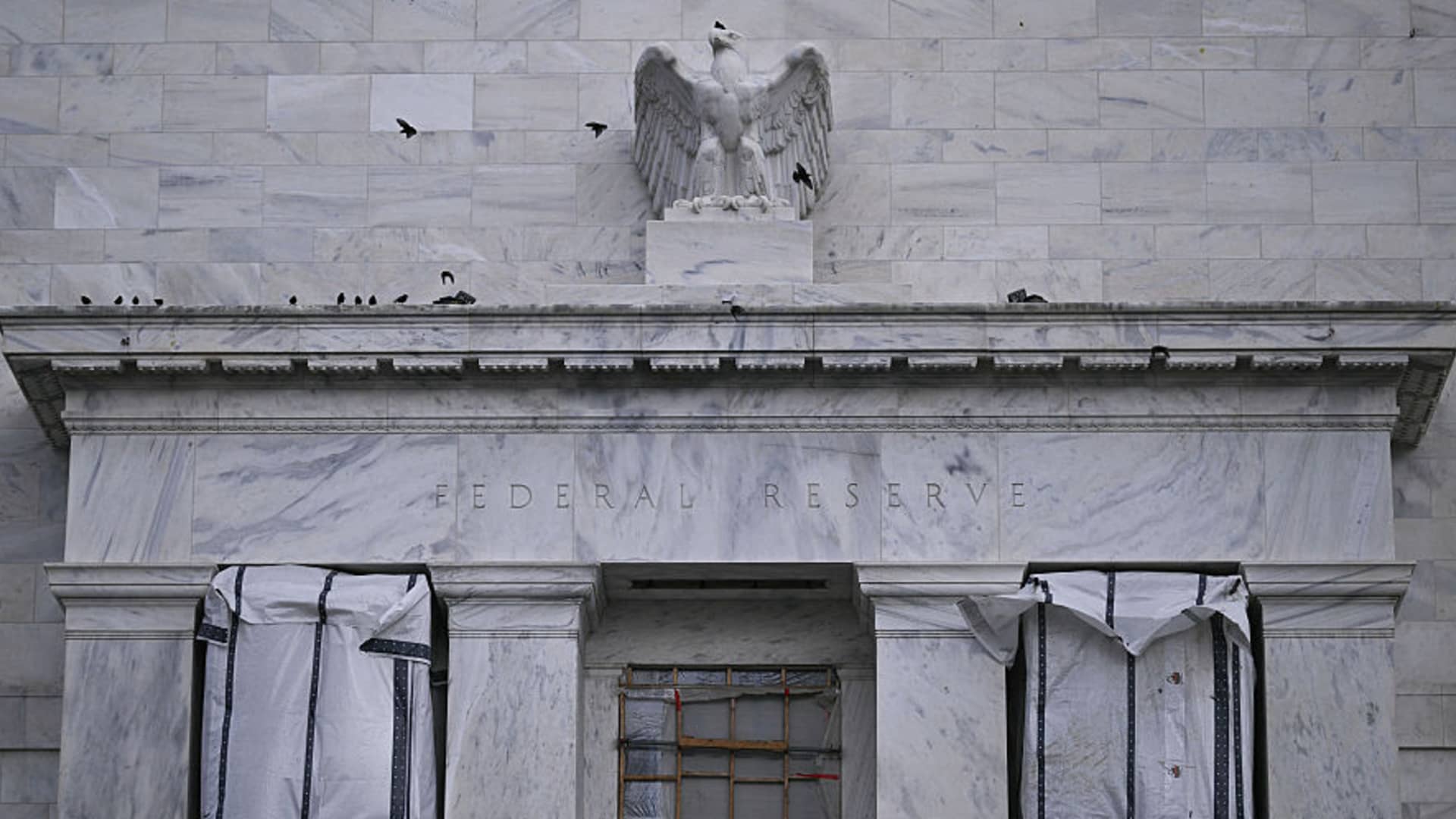
Construction work continues at the Marriner S. Eccles Federal Reserve building in Washington, DC, on Dec. 30, 2025.
Brendan Smialowski | AFP | Getty Images
A hotter-than-expected wholesale inflation reading for February had traders contemplating the possibility that the Federal Reserve won’t be lowering interest rates at all this year.
Following a Bureau of Labor Statistics report that the producer price index posted its biggest gain in a year, futures markets took any realistic chance of a cut off the table until at least December.
Even then, odds of a reduction at the final Fed meeting of the year fell to about 60% as persistently higher inflation — brought on by tariffs, the Iran war and elevated services costs — will keep the central bank on hold. The PPI report came just hours before the Federal Open Market Committee was to release its latest interest rate decision.
The wholesale inflation reading “likely reinforces a hold decision by the Federal Reserve later today but tilts the risk toward a more hawkish tone in today’s FOMC” statement, said Eugenio Aleman, chief economist at Raymond James. “Even if rates are left unchanged and we see multiple dissents, the messaging may lean toward ‘higher for longer,’ especially with energy inflation set to re-enter the picture in coming months.”
Prior to the war that began Feb. 28, traders had been looking for interest rate cuts in both June and September, with an outside possibility of one more in December as the Fed sought to balance its dual mandate of stable prices and low unemployment.
But odds for a June cut have now slumped to just 18.4%, July is down to 31.5% and September to 43.6%, according to the CME’s FedWatch tool, which calculates probabilities using 30-day fed funds futures contracts.
Low conviction
Chances for a December reduction were at 60.5%, indicating that traders are leaning toward a cut, though with a relatively low level of conviction. Historically, the 60% level or above has been associated with Fed moves in either direction.
Futures are implying a 3.43% fed funds rate by the end of 2026, compared to the current level of 3.64%.
To be sure, trading in fed funds futures is volatile, and the Fed could be pushed back into an easing stance if the labor market weakens further. Fed Governors Stephen Miran and Christopher Waller have been advocating for immediate cuts, though the rest of the committee seems more inclined to hold rates where they are until the economic picture clears.
Correction: The Iran war began Feb. 28. A previous version misstated the country’s name.
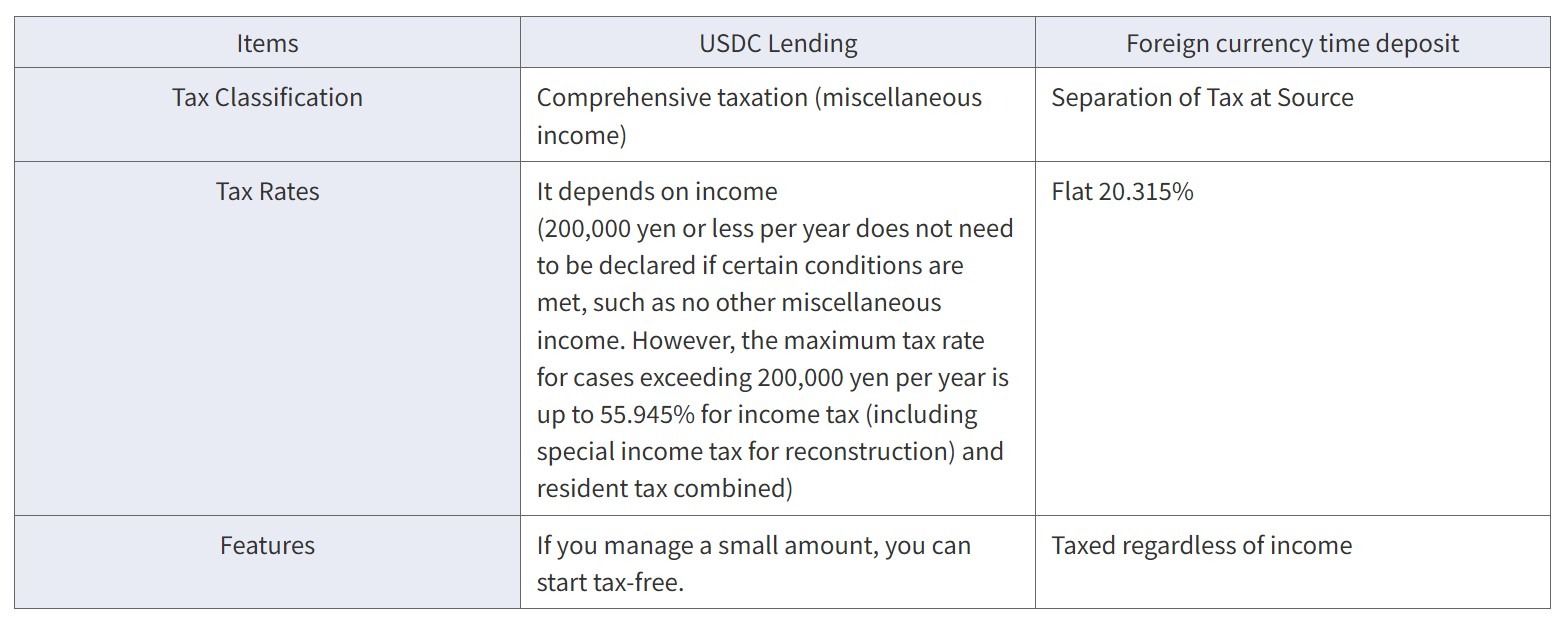
SBI Holdings’ digital asset arm, SBI VC Trade, said it will launch a USDC lending service in Japan on Thursday, allowing retail users to lend stablecoins to the platform under fixed-term agreements in exchange for returns.
On Wednesday, the company said users will be able to lend Circle’s USDC (USDC) stablecoin to the platform and receive interest payments, with a maximum application of 5,000 USDC per offering. The product is structured as a loan to SBI VC Trade rather than a deposit, meaning users take direct counterparty risk. SBI said it may also re-lend the borrowed USDC as part of its operations.
The launch marks a further step in Japan’s stablecoin rollout, bringing a consumer-accessible USDC yield product to market through a licensed domestic platform.
SBI said the product is intended as an alternative to traditional US dollar deposits in Japan, though, unlike bank deposits, segregation protections do not cover user assets and may not be fully recoverable in the event of insolvency. Users are also unable to withdraw or transfer funds during the fixed lending term, limiting their ability to respond to market conditions.

SBI expands stablecoin footprint
The launch follows an initial announcement in November, when SBI VC Trade said it planned to launch a USDC lending product and was exploring exchange-traded fund (ETF) products, according to Reuters.
The development comes as SBI has been expanding its stablecoin strategy. SBI VC Trade began a full-scale USDC launch in Japan on March 26, 2025, after receiving regulatory approval earlier that month. Circle said the approval made USDC the first approved global dollar stablecoin for use in Japan.
Related: SBI Holdings targets majority stake in Singapore crypto exchange Coinhako
On Aug. 22, SBI announced the establishment of a joint venture with Circle, aiming to promote the use of USDC in Japan and create new use cases for the stablecoin in digital finance.
On Dec. 16, the company partnered with Startale to develop a regulated yen-denominated stablecoin aimed at tokenized assets and global settlement, with a planned launch in the second quarter of 2026.
Magazine: Metaplanet’s Japan Bitcoin bet, Bithumb ordered suspension: Asia Express

[PRESS RELEASE – Tel Aviv, Israel, March 18th, 2026]
Today, Playnance has officially launched GCOIN trading, marking a significant milestone in the expansion of its Web3 entertainment ecosystem. The token is now live on MEXC, with GCOIN/USDT trading opening on March 18, 2026, at 13:00 UTC following the project’s Token Generation Event earlier the same day.
The listing introduces GCOIN to the open market, unlocking broader access to the Playnance ecosystem and opening the door to a potentially enormous global user base. The launch follows strong early momentum, including high participation in MEXC’s Kickstarter campaign, where users competed for a share of a 50,000 USDT airdrop.
Ahead of the Token Generation Event, the GCOIN community demonstrated strong demand, with over 1 billion GCOIN locked in staking within hours of the staking program going live.
As the Exosystem’s native token, GCOIN powers transactions, rewards, and participation across a rapidly growing Web3 entertainment network. Beyond adoption metrics, GCOIN is designed to bridge Web2 and Web3 by offering seamless, Web2-like on-chain experiences that lower the barrier to entry for mainstream users. This approach is already enabling Playnance to onboard large volumes of new users, converting them into active participants within the ecosystem. The ecosystem already includes over 300,000 GCOIN holders, reflecting strong early adoption and continued expansion at scale.
The exchange debut represents a major step forward in accessibility, allowing global users to engage with the ecosystem through a liquid and scalable market environment. Deposits for GCOIN are already open on MEXC, with withdrawals scheduled to begin on March 19, providing users with full flexibility to trade and manage their holdings.
“Today marks a defining moment for Playnance,” said Pini Peter, CEO of Playnance. “We identified early the opportunity to bring real scale into Web3 entertainment, and we’re building one of the leading ecosystems to support it. With GCOIN now live, we’re opening the door to what comes next – a new wave of users, new models, and a much larger shift in how entertainment moves on-chain. This is just the beginning.”
Playnance has built its token model around ecosystem-driven rewards, linking value distribution directly to platform activity rather than relying on fixed emissions. The platform already supports more than 10,000 on-chain games and processes over 2 million on-chain transactions daily, reflecting strong user engagement and growing adoption across its network.
With GCOIN now live, Playnance is entering a new phase focused on accelerating growth, expanding its global reach, and driving deeper participation across its Web3 entertainment ecosystem.
About Playnance
Founded in 2020, Playnance is a Web3 infrastructure company developing live, non-custodial, on-chain products designed to onboard mainstream Web2 users into blockchain environments. The company develops consumer-facing platforms built on shared wallet systems and high-volume on-chain execution, currently processing approximately 2 million transactions per day. Playnance focuses on reducing friction between user experience and blockchain infrastructure by abstracting complexity while maintaining full on-chain transparency and non-custodial architecture.
Binance Free $600 (CryptoPotato Exclusive): Use this link to register a new account and receive $600 exclusive welcome offer on Binance (full details).
LIMITED OFFER for CryptoPotato readers at Bybit: Use this link to register and open a $500 FREE position on any coin!
Despite reduced miner selling, Bitcoin demand is yet to respond.
Bitcoin was mostly stable on Wednesday at $74,000 before it started to lose value gradually, dipping below $72,000 minutes ago.
And while supply pressure has eased significantly, demand remains muted as data revealed that “the rules of the game have quietly changed.”
Direction Still Unclear
In its latest report, CryptoQuant stated that Bitcoin’s supply-side activity has entered a subdued phase, while demand has yet to respond similarly. The MVRV Ratio, which compares market value to realized value, currently stands at 1.3, placing it just above the accumulation zone and indicating a minimal speculative premium.
This level means that Bitcoin is trading close to its aggregate cost basis, and reflects a reset phase rather than confirming either a market bottom or a recovery trend. On the supply side, miner behavior provides additional context. During the sharp price decline in early February, miner outflows climbed to almost 28,000 BTC, as selling pressure rose.
However, as prices stabilized and began to recover, outflows declined significantly, reaching almost 6,800 BTC by mid-March. Interestingly, this was the lowest level observed in the measured period.
Additionally, the Puell Multiple, currently around 0.69, further aligned with this trend, demonstrating that miners are operating within a post-halving normalization range without signs of financial stress or excessive profit-taking, and without urgency to increase supply in the market.
Beyond Old Patterns
Despite this muted supply activity, other structural factors remain relevant. For instance, SoSoValue recorded a steady 7-day non-stop inflow from spot Bitcoin exchange-traded funds. CryptoQuant also pointed to increasing adoption of Bitcoin as a reserve asset by institutional treasuries, and its gradual acceptance at the nation-state level, which may have contributed to elevating the cycle’s price floor compared to previous market cycles.
You may also like:
It is also important to note that the MVRV Ratio has not fallen below 1.0, a level which is historically associated with deeper corrections. This deviation implies that traditional cycle patterns, including revisits to lower valuation zones, may not occur in the same manner.
“For that reason, on-chain accumulation patterns, institutional flows, and miner behavior all warrant closer attention than usual, because the signals may look familiar while the rules of the game have quietly changed.”
Binance Free $600 (CryptoPotato Exclusive): Use this link to register a new account and receive $600 exclusive welcome offer on Binance (full details).
LIMITED OFFER for CryptoPotato readers at Bybit: Use this link to register and open a $500 FREE position on any coin!

The wall between Wall Street and crypto is coming down under Trump Administration.
Comptroller of the Currency Jonathan Gould has reportedly greenlighted major crypto firms including Ripple and Crypto.com to pursue national banking charters. He is actively encouraging payment technology companies to enter the federal banking system.
On top of that, Gould is moving to rescind Biden-era guidance that forced banks to seek supervisory approval before touching digital assets. The Chokepoint 2.0 era is effectively over.
For traders this is not just regulatory housekeeping. Access to Federal Reserve payment rails and the ability to hold direct deposits is the single biggest bottleneck keeping institutional capital out of crypto.
That bottleneck is being removed.
- Jonathan Gould is actively inviting crypto firms like Ripple and Crypto.com to apply for national banking charters.
- The move rescinds 2021 guidance requiring “supervisory nonobjection,” streamlining custody and stablecoin operations.
- Traditional banks are pushing back, arguing these new entrants will bypass strict capital requirements while accessing Fed payment rails.
What the Trump Administration’s Banking Crypto Push Actually Involves
The OCC’s old approach was simple. Want to touch crypto? Get written permission first. That nonobjection requirement acted as a pocket veto, killing bank-crypto partnerships before they started.
Gould is flipping the default. Permissible unless prohibited. Firms like Ripple can now build banks directly, bypass third-party intermediaries, and settle transactions through the Federal Reserve via FedNow or Fedwire. Lower costs. Faster settlement. No middleman.
The policy aligns with the President’s Working Group on Digital Asset Markets, which mandates a stablecoin integration report by July 2025. The OCC is not waiting for legislation. It is using existing authority to front-run the process.
—
 BREAKING: Banks just REVEALED where crypto's REAL ENDGAME is!
  Caitlin Long, CEO of Custodia Bank, says the REAL PRIZE isn't today's $313 BILLION in Stablecoins — it's the $5.7 TRILLION in U.S Demand Deposits that are about to be turned into "Tokenized Bank Deposits"
  pic.twitter.com/W4gCOUZIRy
 ChartNerd
  (@ChartNerdTA) March 15, 2026
The timing is driven by two things. Political capital and competitive panic.
The crypto industry spent over $250 million electing pro-innovation candidates in 2024. With up to 278 pro-crypto members now in Congress, the political will to obstruct has evaporated. Agencies are racing to align.
The offshore threat is the other pressure point. Stablecoin liquidity has been bleeding to jurisdictions with clearer rules. The EU’s MiCA framework is moving fast. The OCC is trying to onshore that liquidity before Europe captures it permanently.
The administration is not being subtle about any of this. The wall is coming down fast.
The $3 Trillion Opportunity — and the Risk Banks Face
The stakes for traditional banks are existential.
Crypto firms with national charters are no longer just clients. They become direct competitors for deposits. Five major regional banks already saw this coming and launched the Cari Network, a private blockchain payment rail, specifically to defend their settlement market share.
The prize everyone is fighting over is a projected $3 trillion stablecoin market by 2030. Banks that cannot custody crypto or settle stablecoin payments directly will lose the fastest growing segment of the payments industry to fintech challengers. That is not a small loss.
The risk for crypto is the flipside of the same coin. A regulatory backlash is possible. The banking lobby is already arguing that crypto banks will not face the same capital requirements as traditional lenders. If Congress moves to level the playing field too aggressively, the utility of these new charters gets strangled before it can be realized.
The green light is on. But the road still has obstacles.
Discover: The best new crypto in the world
The post Trump Administration Official Pushes Crypto Into US Banking System appeared first on Cryptonews.
The payments-focused L1 launches with a slew of fintech and TradFi partners, while MPP is aimed at enabling agentic commerce.
Payments-focused blockchain Tempo, developed by Stripe and Paradigm, announced the launch of its mainnet today, March 18. Also today, Stripe and Tempo revealed a new open standard for AI agent payments, Machine Payments Protocol (MPP), per a separate X post.
Today’s mainnet launch opens public RPC endpoints to developers. The headline addition is the MPP, an open, rail-agnostic standard for autonomous agent-to-service payments. MPP introduces a “sessions” primitive that lets agents authorize a spending limit upfront and stream micropayments continuously without an on-chain transaction per interaction.
Stripe, Visa, and Lightspark have already extended MPP to support cards, wallets, and Bitcoin Lightning payments respectively. A payments directory launching alongside mainnet lists over 100 compatible services.
Unveiled by Stripe and crypto VC Paradigm last September, Tempo was purpose-built as settlement infrastructure for high-volume stablecoin payments — emphasizing predictable low fees, instant finality, and throughput suited to commercial-scale workloads. The project launched its public testnet in December, as The Defiant reported at the time.
Tempo’s backers are pitching the chain as infrastructure for both emerging agentic commerce and more traditional payment flows including cross-border remittances, global payouts, and tokenized deposits. Partners named include Anthropic, OpenAI, DoorDash, Mastercard, Nubank, Revolut, Shopify, and Standard Chartered.
The project hasn’t been without skeptics in the crypto-native community — crypto and web3 researchers have raised questions about the trade-offs of corporate-backed chains like Tempo, particularly around decentralization and permissioning.
Tempo’s mainnet launch arrives amid growing institutional momentum around stablecoin infrastructure, including Klarna’s recent debut of its own stablecoin as it pushes deeper into on-chain payments.
This article was written with the assistance of AI workflows. All our stories are curated, edited and fact-checked by a human.

2026 Bin Changes: Rules And Everything You Need To Know

Paris Saint-Germain crush Chelsea to reach Champions League quarter-finals

Michi Debuts Prestige Q430 Luxury CD Player That Leaves Out SACD


-
 Crypto World4 days ago
HYPE Token Enters Net Deflation as HyperCore Buybacks Outpace Staking Rewards
-

 Fashion5 days ago
Weekend Open Thread: Addict Lip Glow
-

 Tech3 days ago
Your Legally Registered ‘Motorcycle’ Might Not Count Under Proposed US Law
-
Sports4 days ago
Why Duke and Michigan Are Dead Even Entering Selection Sunday
-

 Sports7 days ago
PWHL, Senators discussing plan to keep Charge in Ottawa
-

 NewsBeat7 days ago
Residents reaction as Shildon murder probe enters second day
-

 Business3 days ago
Search for Savannah Guthrie’s Mother Enters Seventh Week with No Arrests
-

 Business4 days ago
US Airports Launch Donation Drives for Unpaid TSA Workers as Partial Government Shutdown Enters Fifth Week
-
 Tech22 hours ago
Are Split Spacebars the Next Big Gaming Keyboard Trend?
-
Crypto World4 days ago
Coinbase and Bybit in Investment Talks: Could Bybit Finally Enter the US Crypto Market?
-

 Business4 days ago
Country star Brantley Gilbert enters growing non-alcoholic beer market
-

 Business2 days ago
Australian shares drop as Iran war enters third week
-

 Crypto World2 days ago
Crypto Lender BlockFills Enters Chapter 11 with Up to $500M in Liabilities
-

 Sports5 days ago
College Basketball Best Bets: Conference Tournament Semifinal Picks
-

 Politics6 hours ago
The House | The new register to protect children from their abusers shows Parliament at its best
-
 Crypto World7 days ago
Three Binance Charts May Be Hinting at Bitcoin’s Next Move
-
 Business6 days ago
Trump demands Powell cut rates as Iran conflict raises energy prices
-

 Crypto World6 days ago
Senate Votes to Include CBDC Ban in Bipartisan Housing Bill
-

 Fashion2 days ago
25 Celebrities with Curly Hair That Are Naturally Beautiful
-

 NewsBeat6 days ago
Deane Road crash near Bolton colleges and university


You must be logged in to post a comment Login