CryptoCurrency
Crypto Exchanges Compete to Become the Gateway for Digital Assets

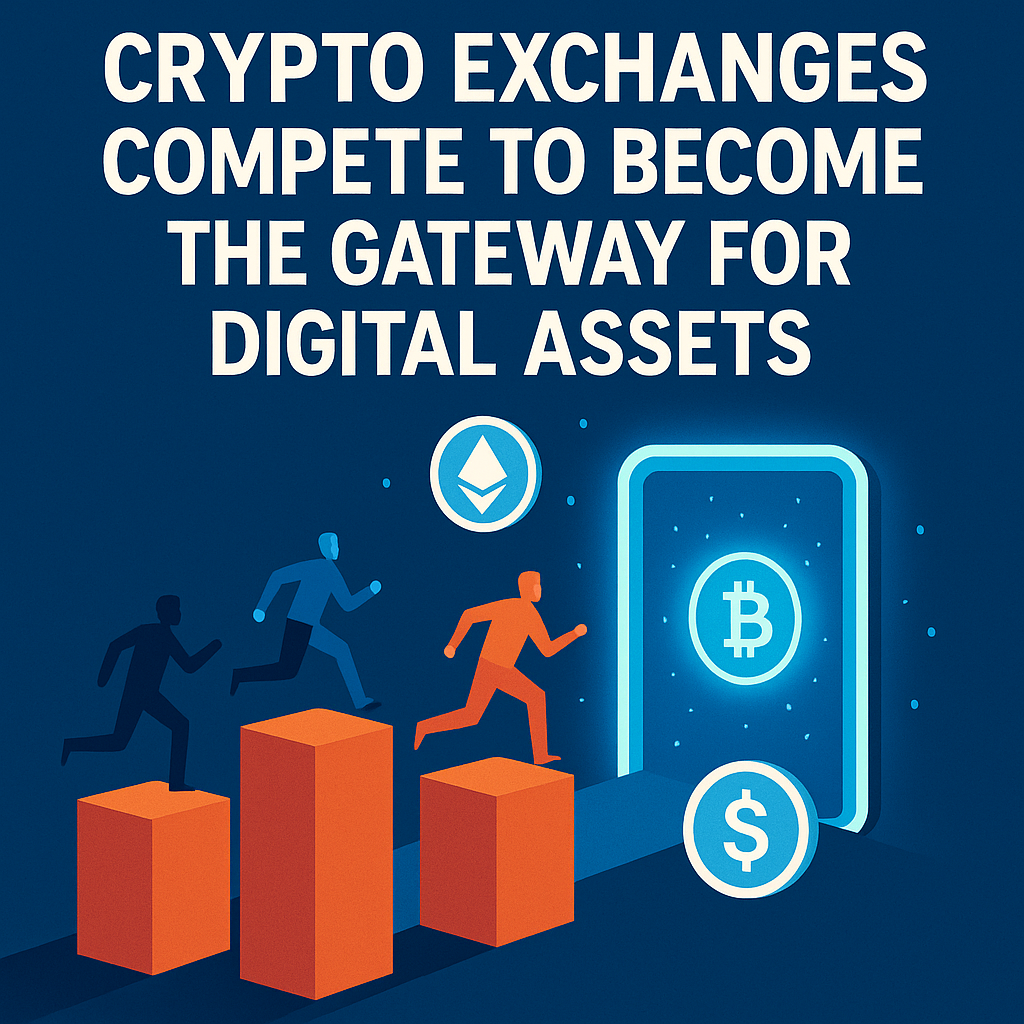
Crypto Platforms Transition Toward Dominant Distribution Layers
Recent insights from Delphi Digital highlight a transformative shift in the crypto landscape, where platforms are evolving into comprehensive distribution layers. These platforms are not only facilitating trading but are also integrating on-chain applications, payments, yield strategies, and more—aiming to become the primary gateway for users worldwide.
The Rise of the Aggregation Era
The report describes this period as the beginning of an “aggregation era,” where control ultimately resides with the entity that manages the user relationship. Rather than focusing solely on foundational protocols, the emphasis is shifting toward platforms that serve as the initial point of contact—where users log in, transfer funds, and explore various crypto products and services. As a result, exchanges and large-scale platforms are vying to become the dominant interfaces, distributing liquidity, stablecoins, non-fungible tokens, gaming, and other services.
Binance’s One-Stop Super App Strategy
Binance exemplifies this trend through its comprehensive “super app” approach, akin to the WeChat model popular in Asia. While starting as a trading venue, Binance has progressively expanded its ecosystem to include derivatives trading, staking, lending, payments via Binance Pay, a Web3 wallet, and institutional services—all within a unified, dense interface. This integrated approach aims to capture more user engagement and retain control over the user journey.
Kraken’s Constellation Model
In contrast, Kraken is adopting a federated “constellation” model that relies on shared liquidity, custody, and identity infrastructure. Rather than consolidating all user activity into a single app, Kraken offers specialized front-ends—such as Inky for memecoins, Krak for remittances and yield, and Kraken Pro for advanced trading. Delphi Digital notes that this model aims to unbundle the user interface while maintaining a unified backend, effectively decentralizing the experience but centralizing the underlying distribution channels.

The Role of Other Major Exchanges
Platforms like Coinbase, OKX, and Bybit are similarly expanding their distribution capabilities, blending centralized trading with in-app Web3 wallets, NFT markets, and DeFi services. Coinbase, in particular, advances its position as a regulated, user-friendly hub for trading and on-chain activities through smart wallets, on-chain discovery, and payment integrations. Meanwhile, others aim to package their existing user bases with on-chain assets, further embedding themselves into the broader crypto ecosystem.
Strategic Implications and Challenges
According to Delphi Digital, the core contest lies in controlling discovery—deciding which third-party apps and protocols gain visibility—and navigating regulatory classifications. An all-in-one super app consolidates risk and oversight in a single platform, offering unmatched convenience. Conversely, a federated multi-app ecosystem disperses user interfaces but retains control of the underlying infrastructure. The outcome of this competition could shape the future of crypto’s distribution layer, influencing who welcomes the next wave of mainstream adoption and on what terms.