
Crypto World
Crypto’s quantum threat is real and its driving diverging strategies across Bitcoin, Ethereum, Solana

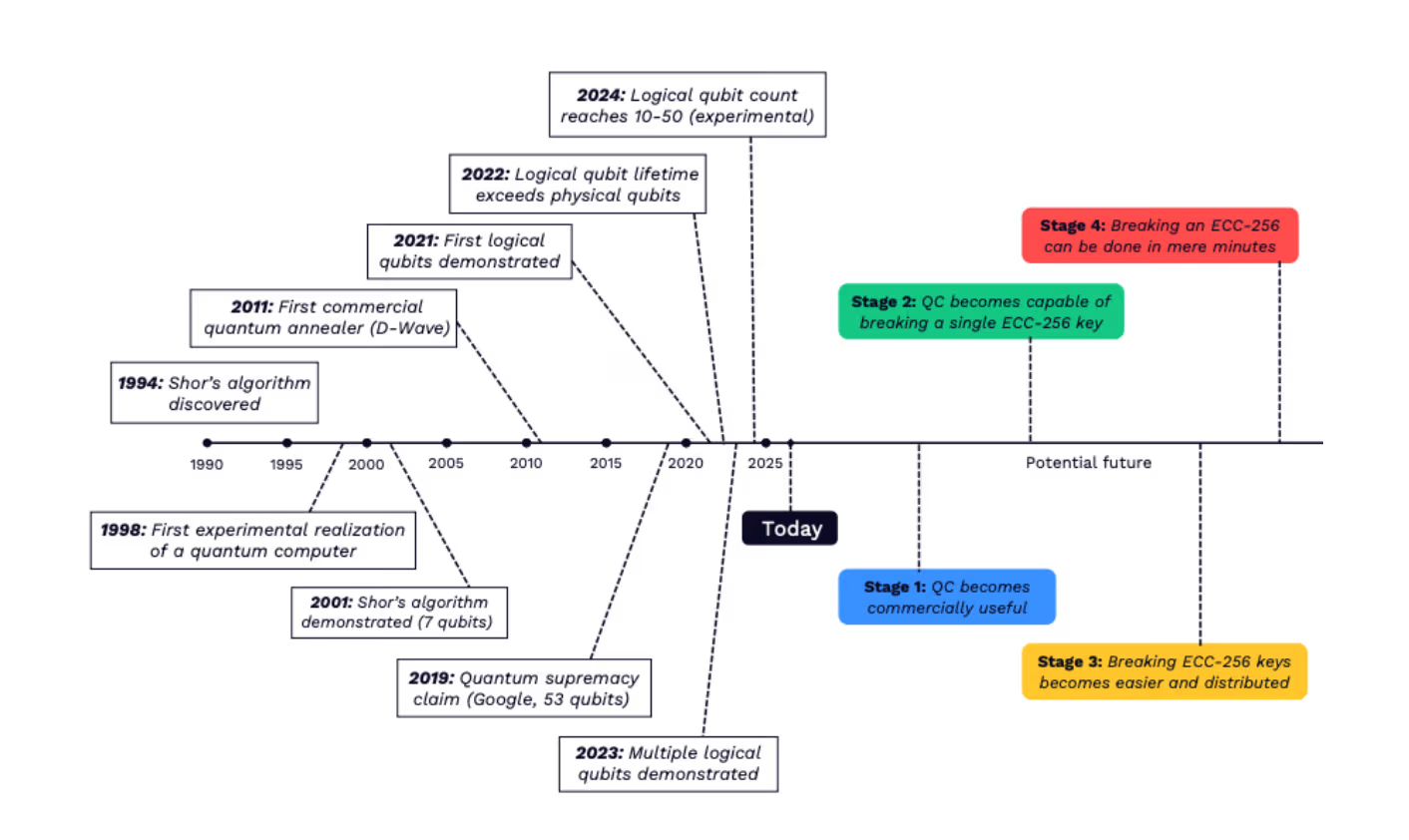
As quantum computing edges closer to practical reality, the crypto industry is beginning to confront a question it has long deferred: what happens if the cryptography underpinning trillions of dollars in digital assets no longer holds?
The answers, so far, are anything but uniform.
Across many of the most well-known ecosystems like Bitcoin, Ethereum, and Solana, responses are diverging along familiar lines: what to do on social consensus and technical iteration, and community members are split between caution and acceleration.
Quantum computing is a fundamentally different approach to computation that uses the principles of quantum mechanics rather than classical physics. Instead of traditional bits that are either 0 or 1, quantum computers use “qubits,” which can exist in multiple states at once, a property known as superposition, allowing them to process many possibilities simultaneously.
Combined with another feature called entanglement, this enables quantum machines to solve certain complex problems far more efficiently than classical computers, particularly tasks like factoring large numbers that underpin modern encryption.
How threatening is quantum computing? Consider this: Quantum computers can solve extremely complex problems within seconds, whereas ‘Supercomputers,’ the most powerful computing machines available today, would take thousands of years for the same problems, according to IBM.
And that’s why the threats to cryptographic networks stemming from quantum computing are concerning. And even Google, developer of Willow, a quantum supercomputer, is setting a 2029 deadline to migrate its authentication services to post-quantum cryptography, citing progress in the technology.
Fierce Bitcoin debate
Nowhere is the tension more visible than in Bitcoin.
While the risks posed by quantum computing have been understood since the network’s earliest days, the debate began meaningfully a few years back, when developers started more seriously discussing post-quantum signature schemes and the long-term implications of exposed public keys.
The threat became very real recently, when some Wall Street analysts, such as Jefferies, said investors should drop bitcoin from their portfolios altogether because of the looming risk to the network. While that has struck a nerve with some investors, others, including Cathie Wood’s Ark Invest, came to defend Bitcoin, saying quantum computing is a long-term risk but a risk nonetheless.

For years, these discussions remained largely academic, but as Taproot activated in 2021 and quantum research continued to advance, attention shifted toward practical questions — how to migrate funds, how to handle vulnerable coins, and whether upgrades could be introduced without breaking Bitcoin’s core guarantees. More recently, that abstract concern has started to crystallize into concrete proposals.
Developers are now focusing on a basic issue: some older bitcoin could be easier to break if quantum computers improve. One proposal, called BIP360, is about helping users move those coins into safer addresses over time, rather than forcing a sudden network-wide change. At the same time, more experimental ideas are being discussed. One, known as “Hourglass,” would gradually limit the use of vulnerable coins unless they’re moved, giving owners time to act while reducing the risk of theft. While some estimates say millions of bitcoin — including about 1 million linked to Satoshi — could be exposed, not everyone sees this as a major threat. Some argue the market could absorb it, and that the bigger risk is making drastic changes that go against Bitcoin’s core principles.
That tension underscores a deeper challenge: any solution must navigate Bitcoin’s core ethos of immutability and minimal intervention. As a result, Bitcoin’s quantum strategy is emerging not as a single roadmap, but as a spectrum of proposals whose fate will depend less on technical feasibility than on whether the community can reach consensus without compromising the principles that define the network.
Read more: Bitcoin’s quantum threat is real, but far from an existential crisis, Galaxy says
Ethereum and Coinbase
If Bitcoin is still debating ‘whether’ to act, Ethereum and its surrounding ecosystem have largely moved on to ‘how.’
Throughout 2025, the Ethereum Foundation quietly ramped up efforts by creating a dedicated quantum research team and elevating post-quantum security from a theoretical concern to a strategic priority. The shift reflects a growing sense among core developers that timelines may be compressing, and that preparation cannot wait for definitive breakthroughs in quantum hardware.
The Ethereum roadmap is not about a single upgrade, but a phased transition. Research has focused on integrating post-quantum signature schemes into future iterations of the protocol, alongside broader architectural changes like LeanVM, which aim to make the system more adaptable to new cryptographic primitives. Rather than forcing an abrupt migration, the goal is to build optionality: allowing developers and users to adopt quantum-resistant tools incrementally, without breaking compatibility with existing infrastructure.
That same philosophy is visible with some of the biggest companies in crypto. Coinbase, one of the largest U.S.-based crypto exchanges, recently established an independent advisory board composed of cryptographers, academics and quantum computing experts. The group is tasked with assessing risks, guiding implementation strategies and ensuring that defenses evolve alongside the threat landscape. The move signals that quantum preparedness is no longer confined to protocol developers — it is becoming a business and operational concern as well.
Ethereum layer-2 networks are also beginning to map their own paths. Optimism, a major Ethereum scaling solution, has outlined early thinking around post-quantum upgrades. While still at a conceptual stage, the effort underscores a broader trend: rather than waiting for a single, ecosystem-wide solution, different layers of the stack are beginning to experiment in parallel.
Taken together, Ethereum’s approach has recognized that quantum risk is real, but that the transition must be carefully managed to avoid introducing new vulnerabilities.
Solana’s quiet shift
Solana, by contrast, has taken a quieter and more experimental route.
In December 2025, developers in its orbit began introducing early designs for quantum-resistant tooling, including a concept known as the “Winternitz Vault.” The idea is to give users the option to store assets in smart contract-based vaults secured by hash-based, one-time signatures—an approach widely considered more resistant to quantum attacks.
Unlike a protocol-level overhaul, these vaults function as an additional security layer. Users who are concerned about long-term quantum risk can opt in, while the broader network continues to operate unchanged. For now, Project Eleven will lead the charge to advance post-quantum security for Solana.
The initial reaction from the Solana community has been broadly positive, with developers and users welcoming the experimentation. Still, quantum computing has not emerged as a sustained flashpoint in ecosystem discourse, and discussion remains relatively subdued compared to the more urgent debates playing out elsewhere.
This divergence in approaches highlights a deeper truth about the crypto industry: there is no consensus yet on how urgent the quantum threat really is. Some argue that practical attacks may still be years away, or that they are overblown. Others warn that the transition to quantum-resistant systems could take just as long, meaning preparation must begin well in advance.
What is clear is that the issue is no longer hypothetical. The creation of dedicated research teams, advisory boards and experimental tools marks a shift from abstract concern to active planning. Even in Bitcoin, where change is hardest, the mere fact that freezing coins is being discussed signals how far the conversation has moved.
For now, the industry’s response resembles an early stress test rather than a coordinated defense.
Read more: Quantum threat gets real: Ethereum Foundation prioritizes security with leanVM and PQ signatures

Crypto World
Global M2 Hits New Highs as Central Banks Quietly Expand Money Supply Across Six Major Economies

TLDR:
- Global M2 is pushing toward new highs, with China, Europe, and the US all recording monthly gains in money supply.
- China’s M2 has reached $49.96T, and its liquidity flows into global commodities, emerging markets, and risk assets.
- Germany and the UK have already hit record M2 levels, while Japan remains the only major economy yet to expand.
- Bitcoin historically follows global M2 with a three-to-four month lag, meaning current gains may not yet be priced in.
Global M2 is climbing again across the world’s six largest economies, and the data is pointing in one direction. Central banks have continued to speak about keeping policy tight, yet money supply figures tell a different story.
China, Europe, and the United States have all recorded monthly gains. Germany and the United Kingdom have reached new record levels. Japan remains the lone exception in this otherwise synchronized expansion cycle now underway.
Money Supply Data Contradicts Central Bank Messaging
The numbers across major economies reflect a clear and consistent shift this month. China leads with an M2 reading of $49.96 trillion, marking a 2.73% rise in one month. Europe follows closely at $19.4 trillion, up 2.71%, while the United States sits at $22.67 trillion, gaining 1%.
Crypto market analyst Bull Theory brought attention to this pattern in a recent post. The account stated that central banks are expanding money supply again while still maintaining that policy remains tight.
Germany and the United Kingdom have already moved past previous highs in their respective money supply readings.
M2 is a measure of the total money circulating within an economy. When that figure rises, more capital flows into financial markets and begins chasing available assets. When it falls, liquidity tightens and asset prices tend to adjust lower accordingly.
This same dynamic played out between 2020 and 2022. During the 2020–2021 period, aggressive M2 expansion drove rallies across stocks, crypto, and real estate.
The 2022 tightening cycle reversed those gains, with nearly all major asset classes correcting sharply. US M2 has since recovered and moved back to all-time highs.
China’s Liquidity Expansion Reaches Beyond Its Own Borders
China’s position in this cycle carries weight beyond its domestic market. At close to $50 trillion in M2 with continued monthly growth, China has been consistently adding liquidity to its financial system. That capital does not stay confined to Chinese markets.
Through commodities, emerging markets, and risk assets, Chinese liquidity moves into the broader global financial system.
This flow contributes to overall financial conditions across regions and tends to push capital toward higher-risk assets over time.
Bull Theory also pointed to the historical relationship between global M2 and Bitcoin specifically. According to the account, Bitcoin tends to follow global M2 movements with a lag of roughly three to four months. That pattern, if it holds, means current liquidity growth has not yet fully appeared in crypto prices.
Stocks and gold historically track alongside M2 more closely than Bitcoin does. However, all three asset classes tend to respond as liquidity conditions shift over time.
With global M2 now pushing toward new highs, market participants are watching whether this expansion follows the same pattern seen in previous cycles.

Crypto World
Prediction market platform secures license to offer margin trading to institutional investors


Prediction market platform Kalshi has been cleared to offer margin trading to professional clients, a move designed to make its platform more appealing to institutional investors.
The license, granted to Kalshi’s affiliate Kinetic Markets, allows it to operate as a futures commission merchant, according to a filing with the National Futures Association.
Before margin trading goes live, the company still needs a sign-off from the Commodity Futures Trading Commission (CFTC) for rule changes that would enable trading without full collateral up front.
Margin trading lets investors open positions with less upfront capital, a practice common in traditional markets but new to regulated prediction markets. Competitors, which include crypto-native prediction markets like Polymarket, do not offer margin trading and instead operate with fully collateralized positions.
Prediction markets let users bet on the outcomes of real-world events, ranging from elections to economic data releases. These have seen trading volumes explode over the last few months, while facing legal pushback from state regulators who argue that some event contracts constitute unlicensed gambling.
Still, prediction markets have continued to grow. Earlier in the month, Kalshi raised more than $1 billion in a funding round that valued the prediction market at $22 billion.
Meanwhile, the Intercontinental Exchange, owner of the New York Stock Exchange, doubled down on its investment in rival prediction market Polymarket, bringing its total commitment to nearly $2 billion.
Kalshi’s margin feature is set to debut for institutional clients only, and could be rolled out first for new products rather than for core event contracts.


Canada’s federal government has moved to ban cryptocurrency donations to political campaigns, shutting down a fundraising channel that appears to have seen little to no real-world use in the country’s previous elections.
Bill C-25, the Strong and Free Elections Act, introduced March 26, would prohibit political contributions made in BTC and other cryptoassets, as well as in money orders and prepaid payment products, grouping them as forms of funding that are difficult to trace.
The ban applies broadly across the political system, covering registered parties, riding associations, candidates, leadership and nomination contestants, and third parties engaged in election advertising.
The move comes as U.K. government has also recently announced an immediate moratorium on cryptocurrency donations to political parties, citing concerns that digital assets could be used to hide the origins of foreign money in British politics.
Second attempt
Canada’s Bill C-25 addresses a theoretical vulnerability rather than a documented problem.
Canada has permitted crypto donations since 2019 under an administrative framework that classified them as non-monetary contributions, similar to property. But no major federal party has publicly accepted crypto, and no contributions have been disclosed in either the 2021 or 2025 elections.
Under the 2019 framework, contributions were not eligible for tax receipts, a significant disincentive in a system where donors routinely claim credits.
Contributors of more than $200 had to be publicly identified by name and address. Only cryptocurrencies with verifiable public blockchains qualified — privacy coins such as Monero or ZCash were excluded. Candidates had to liquidate holdings into fiat before spending.
Yet the Chief Electoral Officer (CEO) grew increasingly uncomfortable with the arrangement.
In a June 2022 post-election report, the CEO recommended adopting tighter rules for crypto contributions, including eliminating a provision that deemed contributions of $200 or less from non-professional sellers to have nil value, effectively exempting them from the regulated financing regime.
By November 2024, the CEO’s position had shifted from regulate to prohibit, recommending an outright ban on the grounds that cryptocurrency’s pseudo-anonymity creates transparency challenges and that contributor identification is “fundamentally difficult.”
Bill C-25 is the second attempt to enact a crypto donation ban. Its predecessor, Bill C-65, contained identical provisions but died when Parliament was prorogued in January 2025.
The new bill gives recipients 30 days to return, destroy, or convert and remit any crypto contributions received in violation of the ban, with proceeds forwarded to the Receiver General. Maximum administrative penalties reach twice the value of the offending contribution, plus $100,000 for corporations.
In the United States, the Federal Election Commission provides guidance on how to properly disclose BTC and other crypto donations to campaigns. Crypto donations have been permitted in the U.S. since 2014.
Canada’s bill is currently at first reading in the House of Commons.

Google is lining up a major bet on AI infrastructure in Texas, backing a multibillion-dollar data-center project leased to Anthropic and operated by Nexus Data Centers. The venture signals a deepening race to host ever-larger AI workloads, with the initial phase reportedly pushing past $5 billion and construction financing being lined up from a consortium of banks. Google is anticipated to provide construction loans, according to Financial Times reporting, with bank financing expected to be arranged by mid-year.
Anthropic recently signed a lease for a sprawling 2,800-acre campus that forms part of its broader infrastructure tie-up with Google. Construction already underway, supported by early-stage debt from Eagle Point, a publicly traded closed-end investment company. When completed, the site is expected to deliver around 500 megawatts of capacity by late 2026—roughly the energy needed to power 500,000 homes—with potential expansion to as much as 7.7 gigawatts. The location sits near substantial gas pipelines operated by Enterprise Products Partners, Energy Transfer and Atmos Energy, enabling the project to leverage on-site gas turbines to support power-intensive compute operations.
Key takeaways
- Google’s financing role and Anthropic’s Texas campus signals a concerted push by a major tech giant to anchor AI compute capacity in the United States, with ft.com reporting a possible >$5 billion initial phase and a mid-year financing close.
- The campus is designed for rapid scale, with a target of 500 MW by 2026 and an ultimate expansion pathway toward 7.7 GW of capacity.
- Energy strategy hinges on proximity to natural-gas pipelines and on-site turbines, underscoring how AI workloads drive sophisticated on-site energy planning.
- A separate legal development places Anthropic at the center of a federal dispute over national-security designations, with a preliminary injunction blocking a Pentagon bid to classify Anthropic as a supply-chain risk.
- Beyond civil-military policy, reports indicate Anthropic’s Claude AI played a role in U.S. military operations, highlighting ongoing tensions between AI deployment, governance, and defense use cases.
A Google-backed AI compute hub takes shape in Texas
The Nexus Data Centers project near Anthropic’s operations represents a notable convergence of cloud-scale AI infrastructure with a leading AI developer. The lease and development plan align with Anthropic’s strategy of building robust compute ecosystems to support its Claude models, while Google’s involvement signals a willingness to finance and potentially co-locate large-scale AI workloads with end users and partners. Construction activity is already underway, bolstered by early-stage debt financing from Eagle Point, and the Financial Times reports that Google will provide construction loans, with a consortium of banks competing to arrange broader financing by mid-year.
The site’s size—about 2,800 acres—reflects the ambition to deploy vast amounts of energy-intensive compute capacity. The initial 500 MW target by late 2026 would position the campus among the larger AI-focused data-center builds in North America, and the prospect of expanding to 7.7 GW underscores the long horizon for AI training and inference workloads as models continue to scale.
Financing race and energy strategy
Financing for projects of this scale is a central part of the story. The Financial Times notes the potential $5 billion-plus initial phase, with Google expected to contribute construction loans and a broader banking syndicate aiming to finalize financing by mid-year. The mix of funding reflects a broader trend in AI infrastructure: large industrial players coordinating capital to accelerate capacity growth, often pairing cloud-scale data-center know-how with strategic partnerships with AI developers.
Energy resilience and reliability are baked into the plan. The Texas site benefits from proximity to major gas pipelines, enabling on-site gas turbines to supply a significant portion of the campus’s electricity needs. This approach not only supports the heavy power draw of AI training and inference but also helps address concerns about cost and grid resilience in high-severity load periods. If the expansion to a handful of gigawatts materializes, the project could become a major anchor for regional energy demand, with potential ripple effects on local economies and energy markets.
Governance and legal tangle around Anthropic
In a separate development that could influence how AI vendors engage with government programs, a U.S. federal judge in San Francisco granted a preliminary injunction blocking the Pentagon from labeling Anthropic a national security risk and halting federal use of its Claude AI. The court’s order paused a Trump-era directive that sought to bar government use of Anthropic’s models, describing the government’s action as arbitrary and cautioning against branding a U.S. company as a threat without a firm legal basis. Anthropic filed suit arguing that Defense Secretary Pete Hegseth overstepped his authority by designating the company as a supply-chain risk through executive action rather than statute.
The ruling adds a nuanced layer to the governance of AI tools deployed in sensitive contexts. While it preserves a pathway for continued federal access to Anthropic’s technology, it also underscores the ongoing policy tension around how such tools are classified, regulated, and used within defense and national-security frameworks. The outcome matters for developers seeking to balance public or defense-related deployments with concerns over safety, ethics, and the prohibition of certain use cases, including lethal autonomous weapons or mass surveillance, a stance Anthropic has publicly affirmed.
AI in defense and broader policy implications
Beyond the court ruling, there are broader questions about how AI models are integrated into defense and government operations. Reports cited by Cointelegraph indicate that Anthropic’s Claude was used by U.S. military units in operational planning for a major strike against Iran, illustrating how AI assistance is increasingly woven into decision-making processes even amid policy debates and regulatory scrutiny. This dynamic highlights the tension between rapid AI adoption in critical domains and the need for clear guardrails, governance structures, and oversight to address safety, privacy, and strategic risk concerns.
For investors and developers, the intersection of giant-capacity AI compute hubs, sovereign policy, and the evolving regulatory environment suggests a shifting landscape. The Texas project exemplifies a future where AI model developers, cloud providers, and financiers collaborate to create purpose-built ecosystems that can meet the escalating demands of next-generation AI workloads. But it also points to potential policy and compliance headwinds that could shape timelines, deployment strategies, and financing terms for similar ventures in the near term.
As this ambitious build proceeds, market participants will be watching several key indicators: milestones in construction progress, the pace and terms of financing from the banking consortium, regulatory developments around government use of AI tools, and the practical outcomes of ongoing governance debates surrounding AI in defense contexts. The convergence of energy infrastructure with AI compute capacity and the regulatory landscape will likely influence how quickly, and at what scale, future AI platforms are deployed across the industry.
What remains uncertain is how quickly the broader ecosystem—cloud providers, AI developers, and regulators—will align to support or constrain such megaprojects. Investors and builders should stay tuned to updates on financing closings, energy-supply arrangements, and any new policy guidance that could affect Anthropic’s deployments and similar AI-enabled data centers in the United States.
Bitcoin may have already priced in the effects of tighter monetary policy, leaving stocks more exposed to the latest macroeconomic shocks, according to asset manager Bitwise.
The firm’s comments come as the cryptocurrency continues to correct below $70,000, down more than 23.7% year-to-date.
Geopolitical unrest and energy disruptions, particularly from the U.S.-Iran conflict choking the Strait of Hormuz, have driven oil and gas prices higher in recent weeks. That surge has put pressure on inflation expectations, causing markets to walk back earlier bets on Federal Reserve rate cuts.
On prediction markets including Polymarket and Kalshi, the perceived odds of the Fed cutting interest rates this year went from near-certainty to doubtful. Traders are now pricing in a near 40% chance that rates aren’t cut at all, up from less than 3%.
“Energy prices remain closely linked to inflation expectations,” said Luke Deans, senior research associate at Bitwise. “The recent surge has led to a meaningful shift in monetary policy pricing, with previously anticipated Federal Reserve rate cuts for the year largely reversing toward expectations of renewed tightening.”
While equities have started to fall in response, with the S&P 500 index losing nearly 8% over the past month, Bitwise argues that bitcoin has already adjusted. The cryptocurrency has been drifting lower since October 2025, reflecting its sensitivity to liquidity and investor risk appetite.
“Bitcoin, a highly reflexive and liquidity-sensitive asset, typically responds earlier to shifts in risk appetite,” Deans said. This suggests that digital assets began reflecting tighter financial conditions ahead of many traditional risk assets. Relative valuation indicators further reinforce this dynamic.”
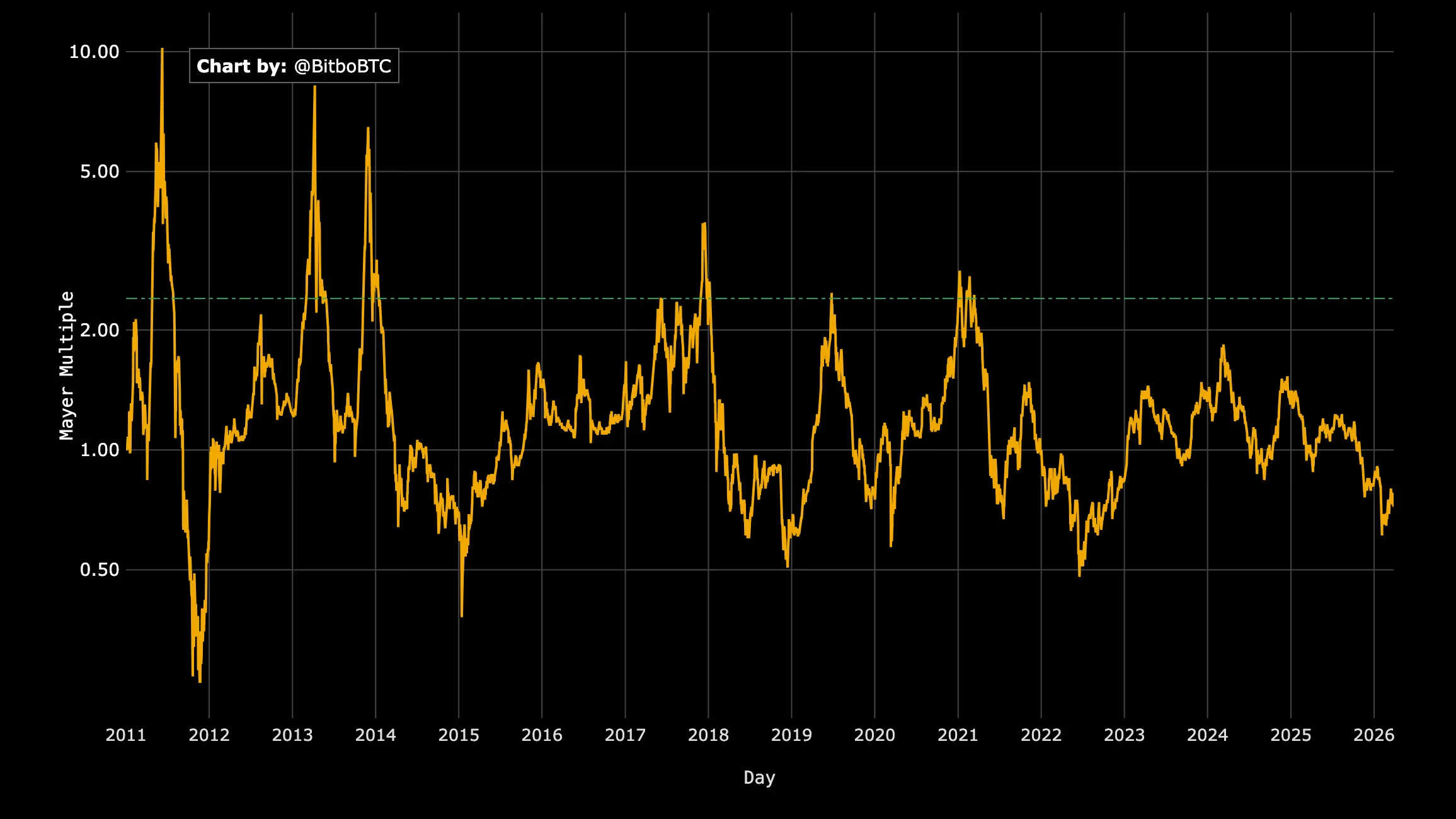
One indicator, the Mayer Multiple, which compares bitcoin’s spot price to its 200-day average, has sat in the lower percentiles of its historical range since January, Deans said. That suggests BTC has already endured a broad reset in expectations.

In contrast, he said, equities entered the year “at elevated valuation levels and have only more recently begun to reprice as macro conditions deteriorated.”
“Historically, assets that have undergone substantial valuation compression tend to exhibit reduced downside sensitivity as leverage and speculative positioning are progressively unwound,” Deans told CoinDesk. “Alternatively, markets trading closer to cyclical highs often retain greater vulnerability to negative macro catalysts.”
Within crypto, bitcoin’s dominance has tightened the market structure. Bitwise noted that correlations across altcoins have surged, pointing to a single-factor environment driven by BTC’s price.

Bitcoin advocates are questioning a newly drafted bipartisan tax bill, arguing the legislation aggressively penalizes miners with prohibitive tax structures.
The draft legislation, known as the PARITY Act, was circulated by US Reps. Max Miller and Steven Horsford. The bill aims to overhaul the Internal Revenue Code to clarify the taxation of digital assets in the United States.
Why Crypto Leaders Against the PARITY Act?
However, the proposal has instead ignited dispute within the broader cryptocurrency industry.
At the center of the controversy is the bill’s divergent treatment of different blockchain consensus mechanisms. The draft intends to classify earnings from cryptocurrency production as gross income, calculated at fair market value upon receipt.
Crucially, the legislation allows participants in proof-of-stake networks, such as Ethereum and Solana, to defer these taxes until the asset is eventually sold.
Bitcoin, conversely, operates on a proof-of-work system that requires substantial upfront capital for specialized hardware and substantial ongoing energy costs. Under the current PARITY Act draft, Bitcoin miners are excluded from this tax deferral.
Conner Brown, managing director of the Bitcoin Policy Institute, stated that the draft retains double taxation on Bitcoin mining while providing targeted relief to staking operations. Brown argued the proposed legislation arbitrarily picks economic winners and losers.
“[The bill] creates a two-tier tax regime, offering deferral to stakers while leaving miners stuck with the same phantom income problem that both parties acknowledged needed fixing,” the Bitcoin Policy Institute argued.
Furthermore, the draft legislation would ease tax treatment for the use of certain GENIUS Act-defined payment stablecoins in everyday payments.
The Bitcoin Policy Institute said the provision would make it harder for consumers to use Bitcoin for small retail purchases. It said those transactions could still trigger capital gains reporting requirements, adding a tax burden to everyday spending.
“[The draft] provides a $200 de minimis exemption for payment stablecoins but not bitcoin, which alone represents 60% of the market cap of all digital assets. This means that a person who buys a cup of coffee with bitcoin still faces a capital gains calculation. A de minimis exemption for everyday bitcoin transactions is necessary for the digital asset’s maturation as it grows into a global medium of exchange. Any legislation serious about promoting parity must include it,” the think tank added.
Industry Experts Highlight Room For Improvements
While Bitcoin purists push back against the exemptions, broader industry lobbying groups are attempting to leverage the draft as a starting point for wider legislative reform.
Cody Carbone, CEO of The Digital Chamber, welcomed the PARITY Act legislation but emphasized the need for significant revisions to prevent the industry from moving overseas.
“We’re excited to see a bipartisan digital asset tax discussion draft. We have been prioritizing tax clarity for this entire Congress – hence the excitement the draft was out so we can begin truly advocating in a public forum,” he stated.
While expressing excitement that a public discussion draft is finally available, he noted that the current iteration requires major improvements.
Against that backdrop, Carbone outlined several core revisions his organization is demanding. These include taxing both staking and mining rewards only upon sale or disposition, establishing a broader de minimis exemption beyond stablecoins, and shielding basic technical actions, such as moving crypto between personal wallets, from taxation.
He also called for simplified tax forms to avoid duplicative reporting and clearer guidelines for lending and donating digital assets.
The post Bitcoin Advocates Oppose New PARITY Act Over Mining Tax appeared first on BeInCrypto.

Coin’s Resistance Brings About Reaction
Firms such as Coinbase have opposed the stablecoin yield model. According to them, the rules inhibit user reward systems and expansion of the platforms. Therefore, the leaders of the industry currently organise the work to appear with a single offer to the legislators. The proposal offered in the current version prohibits access to rewards on idle balances and the incentives in activity-related programs. Such rewards should, however, not resemble the interest on bank deposits. Besides, companies assert that these restrictions might dilute consumer interaction on crypto sites.
Senator Thom Tillis will issue the text of the reward rules and regulatory measures as the draft. In the meantime, discussions about stakeholders are ongoing with lawmakers narrowing down on key provisions. In addition, the White House’s recent consent is intended to lessen tensions between banks and crypto companies. Both sides of the legislature are working in collaboration to perfect the language of the bill. Senator Tim Scott claimed that there are talks between Republicans, Democrats, and administration officials. Therefore, the leaders want to create the framework that favours innovation and keeps the financial control.
Senator Cynthia Lummis also mentioned the issues of the protection of developers of decentralized finance. According to her, amendments to the bill enhanced protection of Title 3. Moreover, she encouraged the actors in the market to help in continuous bipartisan work to amend the legislation. Also, they emphasise that there is a need to maintain rewards systems that appeal to users. This interest is indicative of increased pressure in the industry as the bill advances to consideration. The chances of passing the bill have decreased as differences still exist. Latest data indicate that there is less confidence in approval this year. As a result, the unaddressed problems may postpone the markup process that was planned to take place in April.

Detroit is officially stepping into the massive legal battle between Coinbase and the state of Michigan over the future of prediction markets. But the question dominating trading circles right now is whether to buy DeepSnitch AI after it officially launches.
The honest answer? Waiting for the public market means missing out on the absolute lowest entry point available. The presale is ending in just a few days on March 31, and the hype surrounding the DSNT token is reaching a new level.
Traders are still watching DSNT closely because the early entry is about to close permanently. But here’s why you can still buy after the presale.
Detroit enters the prediction market legal fight
Lawyers representing the city of Detroit plan to file an amicus brief in Coinbase’s ongoing lawsuit against Michigan authorities. District Judge Shalina Kumar recently approved an order allowing Detroit to formally support state officials, giving them until April 3 to submit their filing.
At the center of this battle is a massive jurisdictional dispute. Coinbase argues that prediction markets should fall under the purview of the federal Commodity Futures Trading Commission. Michigan, however, insists these platforms violate state gambling laws and demand local regulation.
The best crypto to buy now
DeepSnitch AI’s March 31 deadline demands immediate action
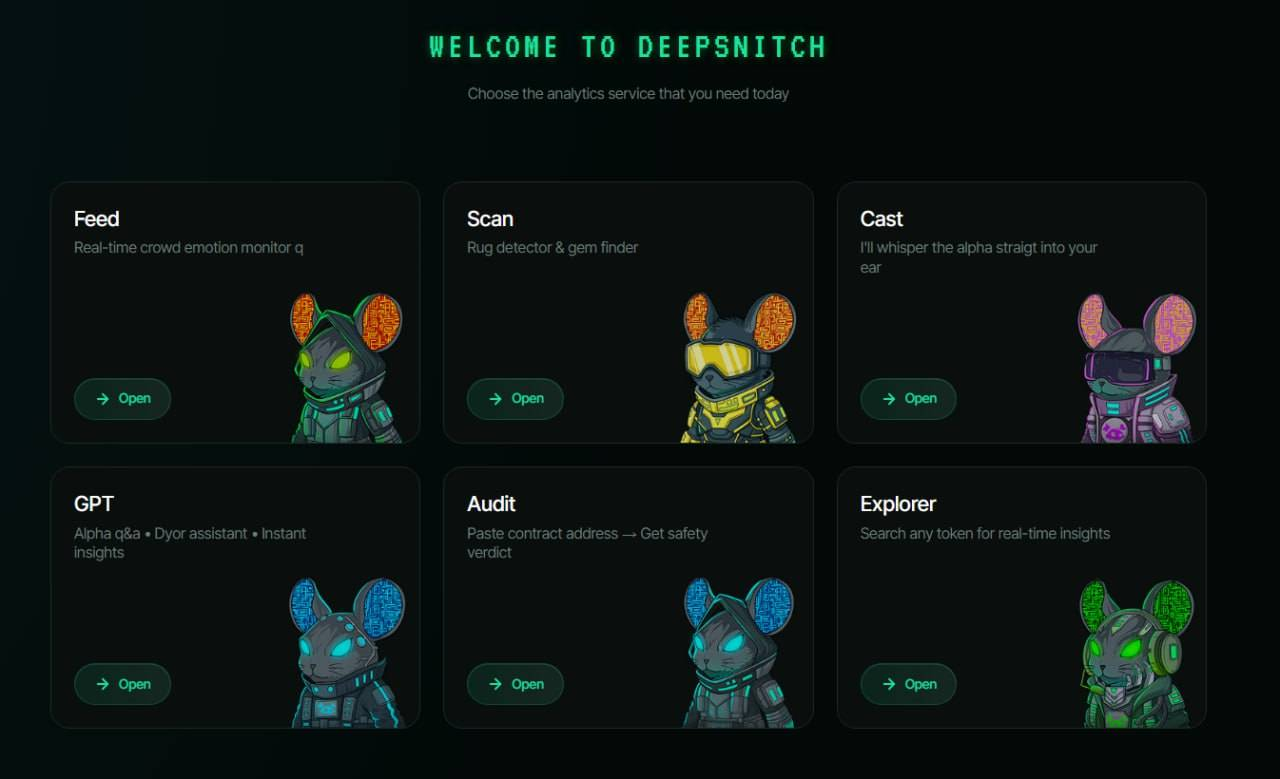
DeepSnitch AI is a smart contract auditing and market intelligence tool. The kind of infrastructure that becomes more valuable precisely because the broader market is getting more complicated and more contested. That’s why you should still watch this project closely even after the presale.
While Coinbase litigates jurisdiction and Detroit files briefs, DeepSnitch is scanning on-chain data in real time, flagging malicious contracts before they can drain wallets, and giving everyday retail investors the same quality of information that institutional players have always had access to.
Capital allocated to DeepSnitch AI before March 31 is capital positioned in a utility platform with a clean use case, a small market cap, and a Uniswap launch at 12 PM on March 31.
A $5,000 entry at $0.04669 gets you approximately 107,089 DSNT tokens. The market cap is still small enough that a 100x move from this position to $500k profits is very possible.
Waiting until after the public launch to buy means paying whatever price a market full of people who missed the presale decides those tokens are worth. This presale closes March 31, and the deadlines are not negotiable.
THETA lacks the velocity for massive wealth
THETA currently fluctuates in the $0.15 to $0.17 range. When you analyze the long-term mathematical forecasts, the outlook is not very positive for those who want massive profits found in DeepSnitch AI. Cryptocurrency experts predict that by the end of December 2026, THETA will only reach a maximum trading value of $0.587.
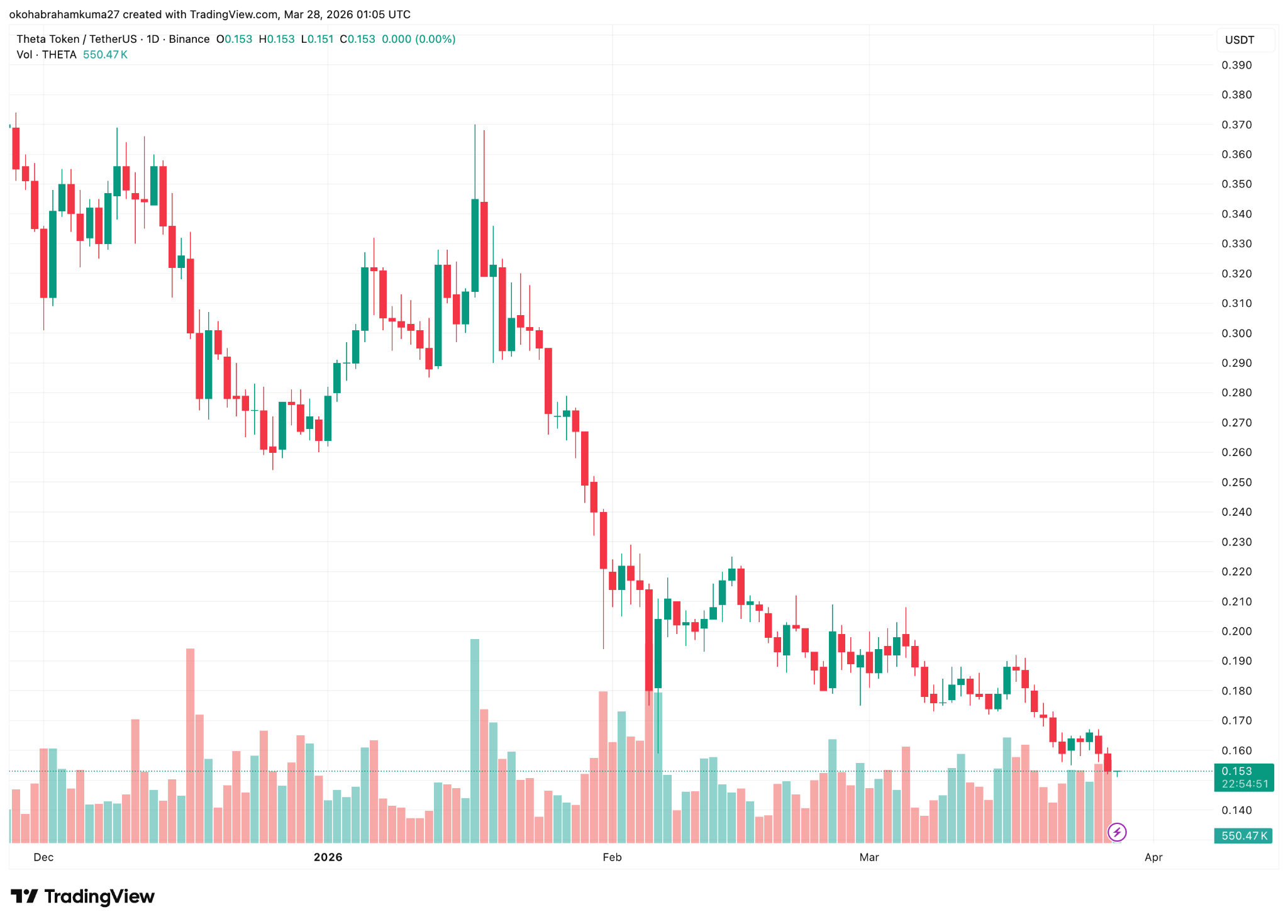
Moving into 2027, the average expected trading cost sits at $0.682. This represents a potential return on investment of roughly 80% over the next couple of years. Established coins like Theta simply demand too much capital for a small growth compared to DeepSnitch AI, which is still early and small.
Golem faces a stagnant outlook
The GLM token is trading around the $0.13 mark as of March 27th, but its future outlook is deeply concerning. Technical analysts have scrutinized its historical price fluctuations and forecast a maximum price of just $0.137 by December 2027.
Looking further ahead to 2028, experts believe the average trading cost will actually reduce to $0.0983. This represents a devastatingly low potential ROI of just 4%. Golem cannot compete with the aggressive upside and extreme hype of a highly demanded presale launch of DeepSnitch AI.
Final verdict
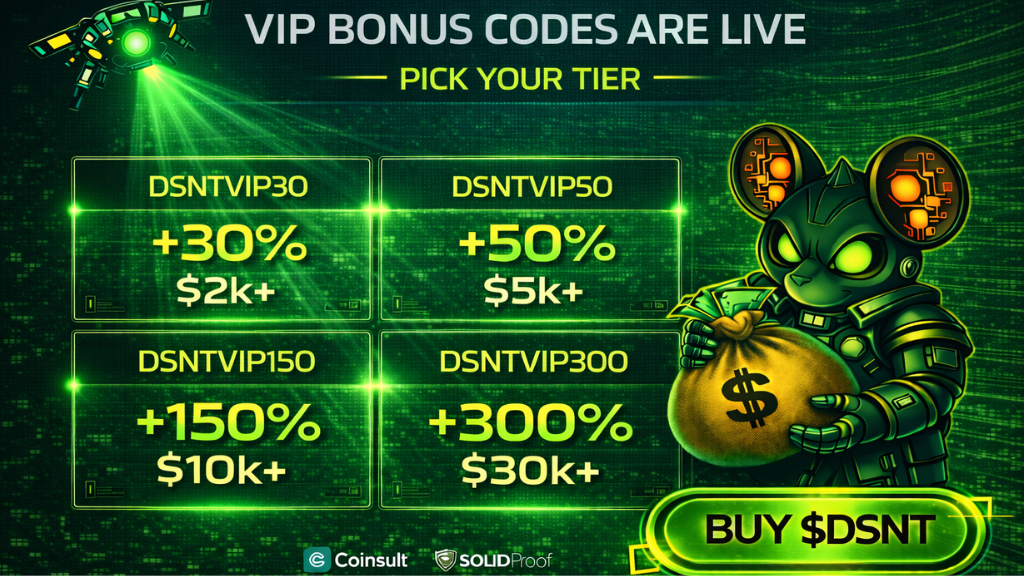
DeepSnitch AI is currently in its final accumulation phase, and the chance to participate is shutting down. The presale officially ends on March 31, 11 am UTC, and missing this deadline means forfeiting your early-adopter advantage. Make sure to use the promo code DSNTVIP50 for an extra 50% bonus.
Visit the official DeepSnitch AI website, join Telegram, and follow on X for more updates.
FAQs
Is buying after the public launch smart?
Waiting for the public release means you lose the fixed, heavily discounted entry price.
Why do experts avoid tokens like Golem?
Financial forecasters project Golem to generate a small 4% return over the next several years. That’s why it’s better to put your money in the DeepSnitch AI presale before it ends.
What holds THETA back from massive growth?
Heavy, established networks like THETA require billions of dollars in fresh capital just to inch their price upward.
Disclaimer: This is a Press Release provided by a third party who is responsible for the content. Please conduct your own research before taking any action based on the content.

Focus on Stablecoin Rules
The proposed changes target provisions related to stablecoin rewards and yield programmes. Industry participants have raised concerns about limits on how firms distribute incentives to users. Moreover, current language allows only activity-based rewards while restricting returns linked to idle balances. Coinbase has taken a central role in opposing the existing compromise on stablecoin yields. Company representatives argue that the restrictions could weaken user participation and reduce innovation. Additionally, industry analysts have supported calls for clearer and more flexible rules.
Senator Thom Tillis plans to publish the draft text in the coming days. The release will outline detailed provisions on stablecoin rewards and broader regulatory measures. Besides, lawmakers continue to engage stakeholders while refining the bill. Lawmakers from both parties have worked to align positions on the crypto legislation. Senator Tim Scott confirmed ongoing coordination between Congress and the White House. Hence, the process reflects efforts to reach consensus before formal review stages begin.
Senator Cynthia Lummis has responded to concerns about decentralised finance protections in the bill. She stated that recent revisions aim to strengthen safeguards for developers and blockchain networks. Moreover, she emphasised continued bipartisan cooperation on these provisions. The legislation seeks to address tensions between traditional banks and crypto firms. Lawmakers have attempted to balance stablecoin reward structures with concerns over deposit shifts. Consequently, negotiations have focused on maintaining financial stability while supporting innovation.
Timeline for Review
The Senate is expected to move toward a markup phase in April. This stage will allow lawmakers to review and amend the draft text. Additionally, stakeholder input could influence final adjustments before further legislative steps. Recent developments have affected expectations around the bill’s progress. Prediction data indicates declining confidence in near-term passage. However, discussions remain active as both sides continue negotiations. Crypto leaders continue to push for revisions as the CLARITY Act advances toward formal review. The upcoming draft release will shape the next phase of negotiations. Consequently, the outcome will depend on how lawmakers address industry concerns.
Crypto World
Euro Stablecoins Surge as DeepSnitch AI Nears March 31 Deadline with 500x Potential Amid SOL & ETH Volatility

Today’s crypto news points to a shift in the stablecoin market, with euro-denominated assets accounting for over 80% of the non-US-dollar supply.
This latest crypto news comes amid market uncertainty, as SOL and ETH continue to experience volatility.
However, the breaking crypto news today is that the DeepSnitch AI (DSNT) presale deadline is fast approaching. It has raised $2.5 million and surged more than 220% from $0.0151 to its current price of $0.04669.
With news of its approaching deadline, many are hinting at a possible rally as the project has already shown its explosive growth potential.
Euro stablecoins take the lead in the non-dollar stablecoin market
According to analytics from Dune Analytics, the stablecoin sector has expanded to roughly $1.2 billion in total supply, signaling steady growth in alternatives to dollar-based digital currencies.
Data from the report also shows that euro stablecoins account for about 85% of transaction volume in this segment.
Despite this growth, the non-dollar stablecoin market has remained small even though it now processes close to $10 billion in monthly transfers.
Crypto news: DeepSnitch AI presale deadline boosts optimism as analysts project 500x rally
Today’s crypto news has been filled with different headlines, but one that has stood out so far is the DeepSnitch AI presale deadline. Analysts are already projecting a 500x rally after its launch, and with just a few days away, this is the last chance to join.
These projections are driven by several factors, most of which are tied to the token’s utility and growth potential. DeepSnitch AI features five AI agents that perform different functions but operate from a single accessible dashboard.
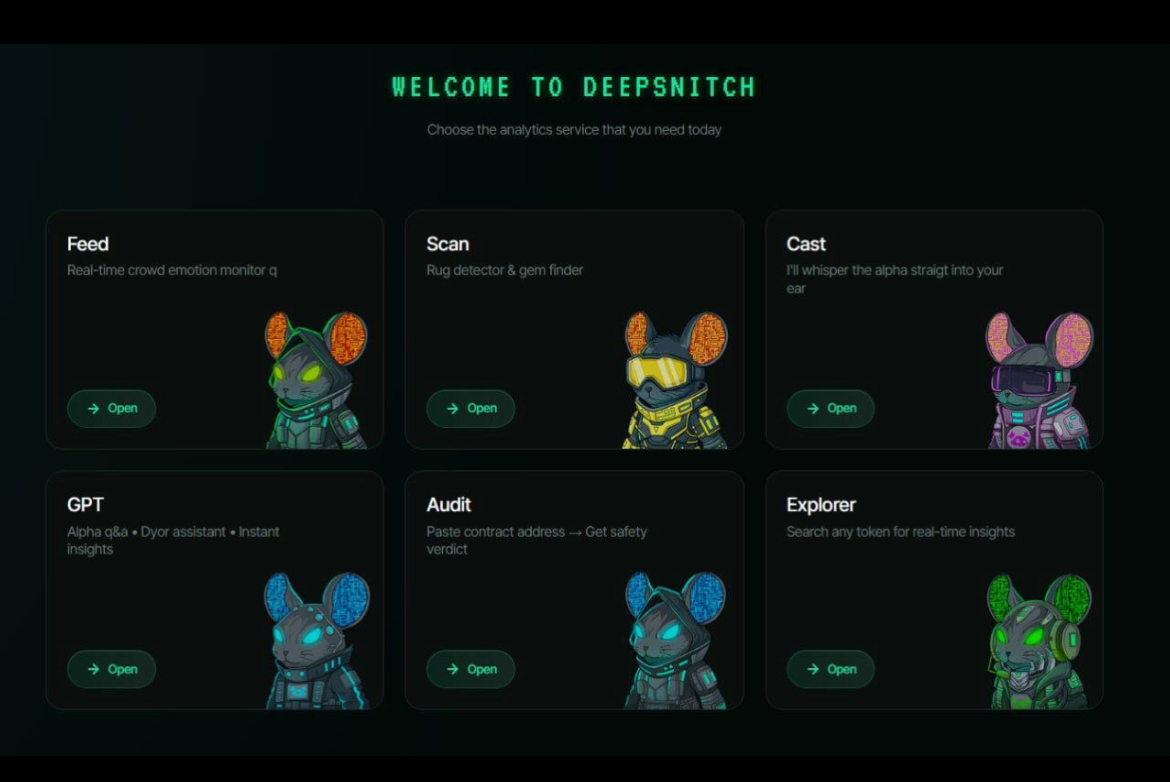
These AI agents are a must-have, and many traders are already talking about how the agents provided information on market trends, helped them scan for potential scams, and answered all their questions with SnitchGPT, all within minutes.
These tools are rapidly becoming a daily habit for traders because of their value. Even the latest crypto news indicates growing adoption, which would help maintain and boost the token’s value in the long run.
With the presale deadline slated for March 31, investors have only days to take advantage of these offers. There are also rumors of CEX and DEX listings, another catalyst for a huge price surge. To be part of this huge portfolio booster, now is the best time to join.
ETH records 7% monthly surge, but volatility keeps it within a $2k range
In recent crypto news, while Ethereum has seen a substantial 7% gain over the past month, the bigger issue is how little it has moved.
The token opened on March 2 and has been hovering at $1,989 until March 27, when it is still trading at $1,989. Despite the minor upticks in price, the Ethereum token has been unable to rise above the $2,000 mark.
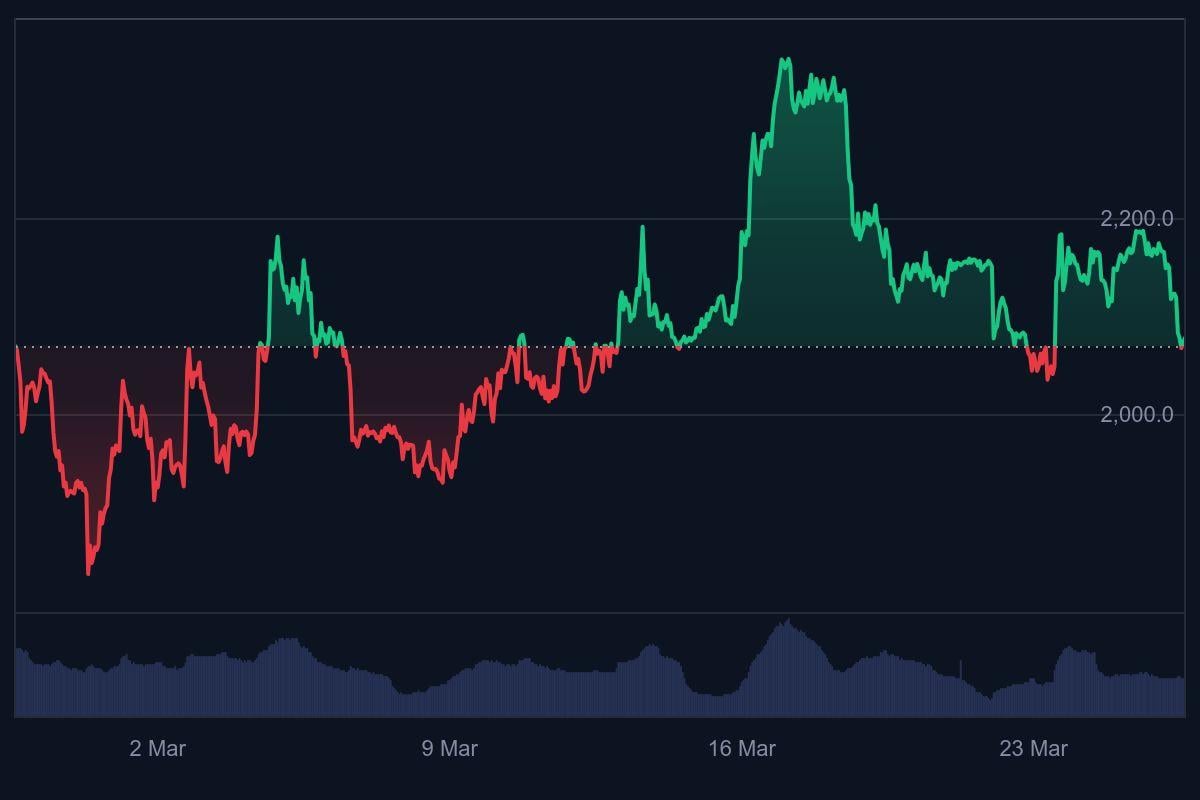
This is not uncommon and can be a precursor to further price movements. However, it also indicates the uncertainty plaguing the market.
According to the latest crypto news, traders are now being more careful before making bigger bets on ETH’s next breakout.
Solana consolidates within the $80-$85 range amid volatility
Solana is showing a clear pattern of sideways movement, reflecting a project that hasn’t fully decided its next direction. It opened on March 2 at $84.75 and has fallen to $83.21 as of March 27, remaining firmly within the $80–$85 range.
Data from AliCharts shows a key demand zone between $91.45 and $82.60, where over 100 million SOL have previously been traded. However, if that zone fails to hold, lower levels around $53.10, $35.40, and even $23.60 may come into focus.
Conclusion
There are a lot of headlines in the crypto news today, but the focus for a while has been the DeepSnitch AI presale deadline. Slated for March 31, the deadline is just a few days away, leaving a small window for investors to join.
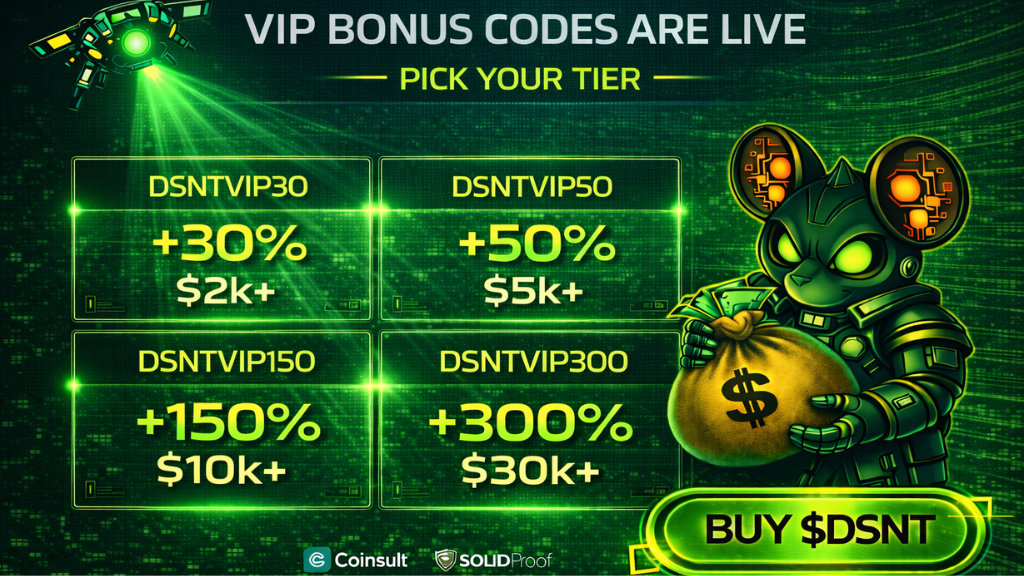
Users who join early are entitled to exclusive benefits before the general public, including some impressive bonus incentives. For instance, a $2,000 purchase would deliver 42,836 DSNT tokens. Applying the 30% bonus code (DSNTVIP30) increases this to 55,687 DSNT tokens, giving early buyers a meaningful boost.
To join this moonshot project, visit the DeepSnitch AI website and follow them on X and Telegram for updates.
FAQs
Why is DeepSnitch AI dominating the crypto news this week?
DeepSnitch AI is making rounds in the crypto news due to its presale deadline on March 31. Investors have only a short time to be part of this potential 500x project.
How high can DeepSnitch AI rise in its presale?
While there are no guaranteed numbers, DeepSnitch AI is projected to see a significant rise after its presale. There have been projections around a possible 500-1000x, and these numbers are not far-fetched.
Can the DeepSnitch AI bonuses still be accessed?
Yes. The DeepSnitch AI bonuses are available up until the end of its presale. Investors have only this short window to take advantage of it and multiply their holdings.
Disclaimer: This is a Press Release provided by a third party who is responsible for the content. Please conduct your own research before taking any action based on the content.

Wings Over Scotland | Protest But Don’t Survive

‘A legend’: Retiring Kingsbury gets high praise from Bilodeau
5 Of The Best Goodyear Tires For SUVs


-
 NewsBeat3 days ago
Manchester United reach agreement with Casemiro over contract clause amid transfer speculation
-

 News Videos3 days ago
Parliament publishes latest register of MPs’ financial interests
-

 Crypto World7 days ago
Best Crypto to Buy Now: Strategy Just Spent $1.57 Billion on Bitcoin During Fear While Early Investors Quietly Enter Pepeto for 150x Potential
-

 Crypto World7 days ago
Bitcoin Price News: Bhutan Sells $72 Million in BTC Under Fiscal Pressure, but the Smart Money Entering Pepeto Sees What the Market Does Not
-

 Sports5 days ago
Remo Stars and Kano Pillars Strengthen Survival Hopes in NPFL
-

 Sports5 days ago
Gary Kirsten Accuses Pakistan Cricket Board Of ‘Interference’, Mohsin Naqvi Responds
-

 Business6 days ago
No Winner in March 21 Drawing as Prize Rolls to $133 Million for Next
-

 Tech6 days ago
Give Your Phone a Huge (and Free) Upgrade by Switching to Another Keyboard
-

 Tech6 days ago
AI enters the chat: New Seattle dating app relies on tech to facilitate meaningful human connections
-

 News Videos5 days ago
Ch 9 Financial Management Part 1 | Detailed One Shot | Class 12 Business Studies Boards 2026
-

 Business2 days ago
Instagram, YouTube Found Responsible for Teen’s Mental Health Struggle in Historic Ruling
-

 Tech7 days ago
Today’s NYT Connections Hints, Answers for March 22 #1015
-

 Business6 days ago
Will Duke Basketball Win It All? Duke Basketball Enters Second Round as Third Favorite to Claim NCAA Title
-

 NewsBeat20 hours ago
The Story hosts event on Durham’s historic registers
-

 Sports6 days ago
2026 Kentucky Derby horses, odds, futures, preview, date: Expert who hit 12 Derby-Oaks Doubles enters picks
-
 NewsBeat3 days ago
Tesco is selling new Cadbury Dairy Milk bar and people can’t wait to try it
-
 NewsBeat6 days ago
Update on Wisbech river crash as search for teenage boy enters fifth day
-
 Entertainment5 days ago
Cynthia Bailey Dishes on ‘RHOA’ Season 17, Discusses Kandi
-

 Tech5 days ago
Samsung will soon let you control smart home devices from your car’s dashboard
-

 Fashion4 days ago
Does It Matter What You Wear When You’re Laid Off and Looking?
You must be logged in to post a comment Login