
CryptoCurrency
Enterprise-Ready Hyper Casual Game Development Strategies

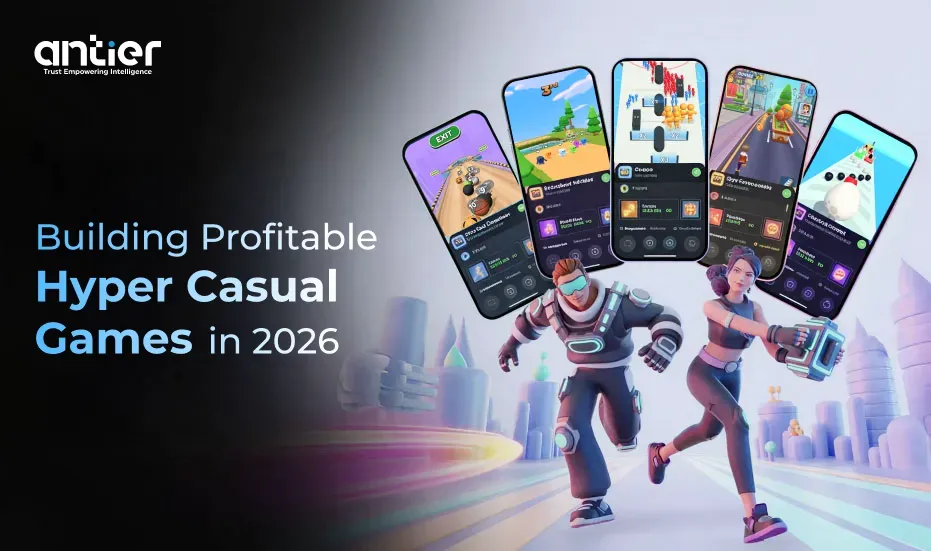
Hyper casual games have long been associated with simplicity, rapid development cycles, and massive download volumes. However, by 2026, hyper casual game development has evolved far beyond minimal mechanics and short-lived engagement. What was once a volume-driven genre is now a strategically engineered business model focused on scalable engagement, data-driven retention, and predictable profitability.
For enterprises, publishers, and large gaming studios, hyper casual gaming in 2026 represents a mature opportunity, one that blends speed-to-market with sophisticated monetization, analytics, and cross-platform scalability. This evolution is redefining how hyper casual game development services are planned, built, and scaled.
The Evolution of Hyper Casual Games: From Simple to Strategic
Early hyper casual games relied on ultra-simple mechanics, minimal art, and short play sessions designed primarily to drive ad revenue. While this model succeeded in achieving massive reach, it also suffered from low retention and rapid player churn.
By 2026, hyper casual games are no longer disposable experiences. They are strategically designed products supported by:
- Smarter gameplay loops that encourage repeat sessions
- Lightweight progression systems without increasing complexity
- Modular content updates that extend game lifespan
- Data-driven tuning for player behavior and monetization
This transition allows developers and enterprises to maintain the simplicity that defines hyper casual gaming while significantly improving lifetime value.
Why Hyper Casual Game Development Still Dominates Mobile Gaming?
In spite of the rise of mid-core and immersive gaming experiences, hyper casual games continue to dominate mobile gaming ecosystems for one key reason: accessibility at scale.
Hyper casual games in 2026 succeed because they:
- Require zero learning curve for new users
- Load instantly across devices and regions
- Appeal to a global, non-gamer audience
- Perform well in emerging markets with lower-end devices
For enterprises, this accessibility translates into predictable user acquisition, faster testing cycles, and global reach without heavy infrastructure investment.
Scaling Engagement Without Sacrificing Simplicity
One of the biggest challenges in hyper casual game development is scaling engagement without adding complexity. In 2026, leading hyper casual titles solve this by designing depth through repetition, not mechanics.
Some of the key engagement strategies include:
- Micro-challenges that subtly evolve difficulty
- Visual progression systems instead of narrative-heavy content
- Time-based rewards and daily incentives
- AI-driven difficulty balancing based on player behavior
These systems ensure players remain engaged while preserving the core hyper casual promise that is instant playability.
Speed-to-Market as a Competitive Advantage
Speed has always been a defining factor in hyper casual game development. In 2026, speed-to-market is not just about launching fast, it is about iterating faster than competitors.
Modern hyper casual game development services focus on:
- Rapid prototyping and soft launches
- A/B testing across gameplay, ads, and UI
- Continuous performance optimization post-launch
- Live ops pipelines tailored for hyper casual formats
This approach allows enterprises to validate concepts quickly, kill underperforming ideas early, and double down on scalable successes.
Launch Faster. Retain Longer. Monetize Smarter
Monetization Models Driving Profitability in 2026
Hyper casual monetization has matured significantly. While ad-based revenue remains dominant, 2026 introduces more refined hybrid models.
Some of the most common monetization strategies include:
- Rewarded video ads integrated into natural gameplay breaks
- Interstitial ads optimized through behavioral triggers
- Lightweight in-app purchases for ad removal or cosmetic perks
- Cross-promotion funnels into hybrid casual or mid-core games
For enterprises managing large portfolios, this diversification reduces dependency on a single revenue stream and stabilizes long-term profitability.
Data, Analytics, and AI in Hyper Casual Game Development
In 2026, data is the backbone of successful hyper casual games. Advanced analytics and AI-driven insights allow developers to fine-tune engagement as well as monetization with great precision.
Key data-driven capabilities include:
- Real-time user behavior tracking
- Predictive churn modeling
- Automated difficulty and ad-frequency adjustments
- Performance segmentation across geographies and devices
These insights enable enterprises to operate hyper casual games as scalable digital products rather than short-term experiments.
Cross-Platform Expansion and Ecosystem Integration
Hyper casual games are no longer confined to standalone mobile experiences. In 2026, successful titles are designed to integrate into broader ecosystems. This includes:
- Cross-platform deployment across mobile and web
- Integration with publisher networks for traffic scaling
- Funnel-based transitions to hybrid casual games
- Portfolio-level analytics for enterprise studios
Such ecosystem thinking allows hyper casual games to act as entry points into larger gaming portfolios.
Importance of Strategic Planning in Hyper Casual Game Development
In hyper casual game development, strategic planning plays a significant role in evading challenges such as:
- Rising user acquisition costs
- Platform policy changes affecting ad monetization
- Market saturation requiring constant innovation
- Maintaining performance at global scale
Enterprises that succeed are those that invest in robust development pipelines, analytics infrastructure, and long-term live operations strategies.
The Role of Professional Hyper Casual Game Development Services
In 2026, the success of hyper casual games is no longer accidental. It is engineered through professional development practices, scalable architecture, and performance-driven design.
Professional hyper casual game development services help enterprises:
- Reduce time-to-market
- Optimize monetization and retention
- Scale games across regions and platforms
- Maintain consistent performance post-launch
This level of execution is critical for enterprises competing in a crowded global gaming market.
Closing Thoughts
Hyper casual game development in 2026 is defined by speed, scalability, and sustainable profitability. What was once a volume-driven genre has matured into a strategic business vertical powered by data, intelligent design, and continuous optimization.
Enterprises looking forward to building, scaling, or diversifying their gaming portfolios increasingly rely on experienced partners to deliver high-performing hyper casual games that align with evolving market dynamics. As a provider of advanced hyper casual game development services, Antier helps enterprises design, launch, and scale hyper casual games built for engagement, speed, and long-term profitability.



