CryptoCurrency
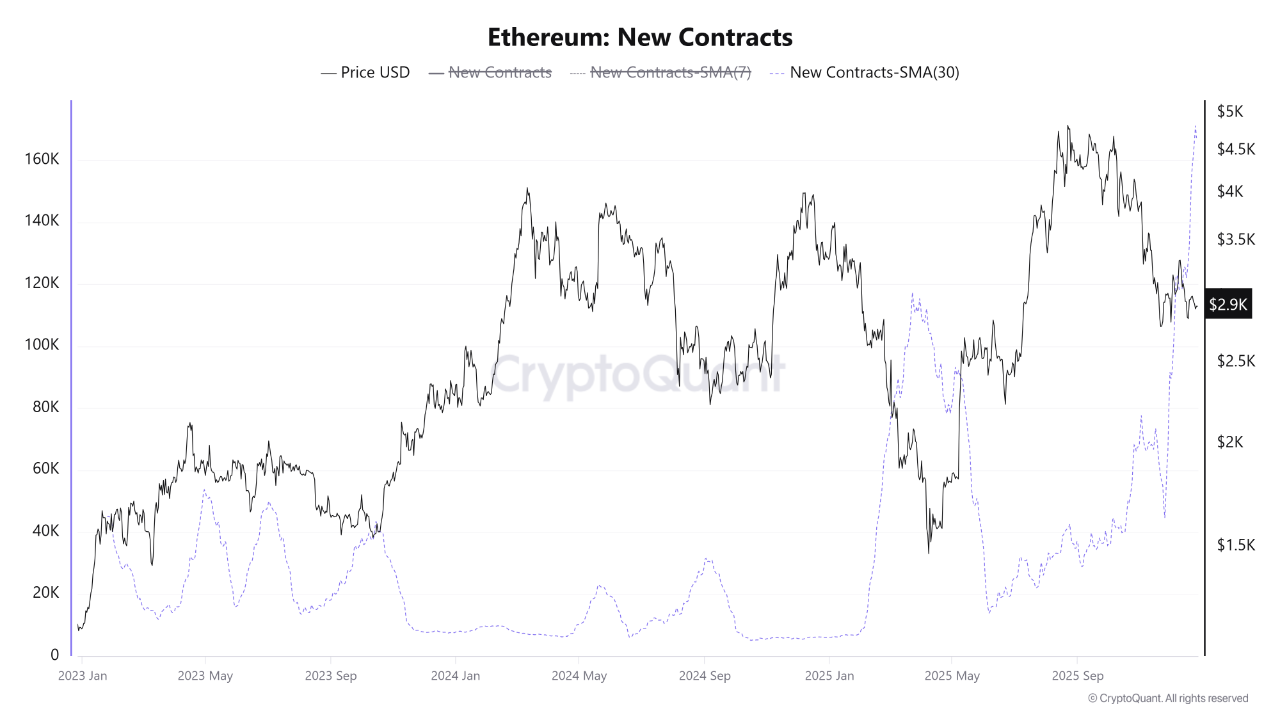
Ethereum Smart Contracts Hit 171K Monthly Average Amid Developer Growth Surge


TLDR:
- Ethereum’s 30-day moving average for new contracts reaches 171,000, showing consistent growth trend
- Layer 2 platforms like Arbitrum, Optimism, and Base reduce costs and boost developer participation
- DeFi, NFTs, GameFi, and restaking infrastructure drive demand for new smart contract deployments
- Network effect and robust developer tools maintain Ethereum’s position as top smart contract platform
Ethereum contracts have reached a 30-day moving average of 171,000 newly deployed smart contracts on the network.
This metric demonstrates sustained developer confidence and consistent growth in the ecosystem. The moving average smooths daily fluctuations to reveal a clear upward trajectory.
New decentralized applications, tokens, and protocols continue to launch at an accelerating pace. Network activity reflects robust health across multiple sectors of the blockchain industry. The steady climb in contract deployments establishes a foundation for future expansion.
Layer 2 Platforms Drive Development Momentum
Layer 2 solutions have transformed the economics of deploying Ethereum contracts for developers worldwide.
Arbitrum, Optimism, and Base now offer dramatically reduced transaction costs compared to mainnet operations.
Source: cryptoquant
These platforms have increased throughput capacity while maintaining security through mainnet settlement. Gas fees that once prohibited smaller projects now allow broader participation in the ecosystem.
The affordability of L2 deployments has encouraged experimental projects and iterative development cycles. Developers can now test concepts without prohibitive upfront costs that previously limited innovation.
This accessibility has opened doors for independent creators and smaller teams to compete. The barrier to entry continues to fall as L2 infrastructure matures and scales.
Transaction processing speeds on these scaling solutions complement the cost reductions. Projects requiring high-frequency interactions can now operate efficiently within the Ethereum ecosystem.
The combination of speed and affordability addresses previous pain points that drove developers elsewhere. L2 adoption has become standard practice rather than an alternative approach.
Ecosystem Expansion Across Multiple Verticals
DeFi protocols continue to generate demand for new smart contracts across lending, trading, and yield platforms. NFT projects maintain steady deployment despite market cycles affecting trading volumes.
GameFi applications represent a growing category with complex on-chain mechanics requiring sophisticated contracts. Restaking infrastructure has emerged as a newer category attracting development resources.
The developer community benefits from extensive tooling, libraries, and documentation accumulated over years. Established frameworks reduce development time and improve security through battle-tested components.
Knowledge sharing through open-source contributions accelerates the pace of innovation. Community support networks help newcomers navigate technical challenges.
Ethereum maintains its position as the preferred platform for serious smart contract development. The network effect creates a self-reinforcing cycle where existing infrastructure attracts new projects.
Each new deployment potentially increases the utility and value proposition for subsequent developers. This metric serves as a leading indicator for future transaction volume and user growth.