
Crypto World
Fed’s Neel Kashkari Says Crypto ‘Utterly Useless’


Neel Kashkari, the president of the US Federal Reserve Bank of Minneapolis, says that crypto is “utterly useless” in comparison to artificial intelligence and took a swipe at stablecoins, saying they don’t have many uses.
Speaking at the 2026 Midwest Economic Outlook summit on Thursday, Kashkari drew comparisons between AI and crypto, saying the latter “has been around for more than a decade, and it’s utterly useless.”
“AI has not been around very long, and people are using it every day,” he added. “This is demonstrating to me that this thing is real and it has real long-term potential for the US economy as opposed to crypto.”

Kashkari said that the way the crypto industry has framed how stablecoins can be used is “a buzzword salad.”
“I always ask people: What can I do with the stablecoin that I can’t do with Venmo today?” he said. “I could send any one of you $5 with Venmo, or PayPal, or Zelle, so what is it that this magical stablecoin can do? Then I get a buzzword salad answer, blah blah blah, tokenized deposits.”
Kashkari took specific aim at the notion of stablecoins being used for remittances, as he highlighted that this mainly serves people outside the US, and argued that its not as cheap as people think.
Related: SEC leaders seek to clarify how tokenized securities interact with existing regulation
He used the example of his father-in-law, based in the Philippines, arguing that while he could receive stablecoins quickly, he still needs to pay fees to convert them into the local currency to actually transact with them.
“If everybody in the world uses the same currency or the same payment platform. All these frictions go away. But all these other countries are not going to abandon their own monetary policy [for stablecoins],” he said.
“When it comes to anything about crypto or stablecoins, ask the most basic questions and don’t settle for word salad nonsense answers,” he said.
Magazine: Bitcoin may take 7 years to upgrade to post-quantum: BIP-360 co-author


Kalshi, the prediction market platform, announced that Stephanie Cutter—former Obama administration staffer and co-founder of Precision Strategies—will join the company as a policy adviser. The appointment, disclosed in a Thursday notice, comes as Kalshi seeks to deepen its political and regulatory engagement in Washington, D.C., and across the country. Cutter’s arrival adds a veteran of Democratic campaigns to Kalshi’s policy team at a moment when the industry faces intensifying regulatory scrutiny and evolving questions about the role of politics in prediction markets.
Kalshi said Cutter’s move would help the firm “deepen its relationships in DC and across the country.” CEO and co-founder Tarek Mansour highlighted Cutter’s governmental and political experience as a bridge to policymakers and other stakeholders. Cutter’s hiring follows Kalshi’s strategy of embedding itself more firmly in political circles as it navigates a regulatory landscape that has grown more complex over the past year.
Kalshi’s roster already includes staff with government ties, including the appointment of Donald Trump Jr. as a strategic adviser in January 2025, a development noted in the market’s broader push to align with political figures ahead of a changing regulatory climate. The recruitment of Cutter signals Kalshi’s intent to bring experienced policy voices directly into its decision-making as it seeks to balance growth with compliance in a jurisdiction that has seen ongoing legal and legislative debate surrounding event-based markets.
At the same time, the legal and regulatory environment for prediction markets remains unsettled. State-level authorities have pursued lawsuits against Kalshi and other platforms offering event contracts, arguing that such markets amount to illegal gambling or betting. In Washington, the U.S. Commodity Futures Trading Commission (CFTC), led by Michael Selig, has asserted that it holds exclusive jurisdiction over these markets and has pursued cases against state gaming regulators over the matter. The tension underscores a broader push by lawmakers to scrutinize, and potentially constrain, prediction markets—especially those tied to political events.
Key takeaways
- Kalshi hires Stephanie Cutter as policy adviser to strengthen policy outreach amid ongoing regulatory scrutiny of prediction markets.
- Cutter’s background in government and political campaigns is intended to help Kalshi communicate its position to policymakers and the public, per the company.
- The platform already counts high-profile political advisers, including Donald Trump Jr., illustrating Kalshi’s bid to embed in political circles during a sensitive regulatory era.
- Regulatory friction persists: the CFTC claims exclusive oversight of prediction markets, while state regulators challenge or enforce their own regimes, prompting lawsuits and legislative proposals.
Policy push in a contested space
The timing of Cutter’s arrival underscores Kalshi’s ambition to leverage policy expertise as a differentiator in a market where regulatory clarity remains elusive. Kalshi’s notice frames the hire as part of a broader effort to cultivate relationships with lawmakers, regulators, and stakeholders who will shape the framework governing event-based contracts. Mansour’s remark—emphasizing Cutter’s ability to “get the message to the right people”—illustrates how Kalshi views policy engagement as central to its long-term viability and competitive positioning.
The broader governance context is clear: while Kalshi positions itself as a legitimate financial technology, it operates in a space where opinions diverge on whether prediction markets should be permitted to operate with fewer restrictions, and if so, what guardrails are necessary to prevent manipulation or insider trading. The presence of political advisers on Kalshi’s payroll reflects a strategic bet that shaping policy conversations could yield a more favorable operating environment, or at least greater predictability for a product that depends on real-world events occurring as forecasted.
Regulatory battleground: courts, commissions, and state actions
Industry observers note that the past year has seen a wave of legal activity at the state level, where regulators have challenged or restricted prediction-market-like offerings. Proponents argue such markets can improve price discovery and information flows, while opponents point to concerns about gambling law, consumer protection, and the potential for insider information to drive bets. Kalshi and peers such as Polymarket have publicly discussed implementing guardrails intended to curb use by insiders, but legislative progress remains uneven.
On the federal side, the CFTC has framed the issue within the agency’s core remit: it asserts exclusive jurisdiction over derivative-like markets tied to events and has taken action against state authorities in other contexts to defend that stance. This legal backdrop matters for Kalshi’s strategy, because a clearer federal framework could reduce intergovernmental friction and open the door for broader user participation under explicit guidelines. For investors and users, the outcome of ongoing court fights and potential federal legislation will influence the platform’s risk profile and the types of markets Kalshi can legally offer in the coming years.
Meanwhile, congressional dynamics add another layer of potential change. Several bills have floated the idea of preventing politicians from participating in predictive markets and of imposing stricter disclosures around the use of such platforms. As of the latest developments, none of these proposals had been enacted into law, leaving a period of watchful waiting for operators, users, and policymakers alike. In this context, Kalshi’s move to strengthen its policy team can be viewed as a proactive approach to navigating a period of regulatory ambiguity, rather than a reaction to a discrete, imminent rule change.
Implications for users, builders, and investors
For users and market participants, the regulatory landscape remains the most consequential variable. A more defined federal framework could reduce the risk of sudden platform shutdowns or wholesale policy reversals, while also imposing stricter compliance requirements. For builders and operators in the prediction-market space, Cutter’s appointment highlights the increasing professionalization of policy oversight and the growing importance of credible governmental liaison functions in a sector where public perception and political legitimacy matter as much as product design.
Investors and observers should weigh the potential upside of regulatory clarity against the risk that stricter rules could curb certain market types or restrict access to insider-sensitive information. The presence of political advisers on Kalshi’s team signals a belief that, even in a patchwork regulatory regime, a well-connected operator can navigate policy changes more smoothly and carve out a defensible niche with robust governance standards. As the debate over prediction markets continues, the key questions will be whether Congress and state authorities converge on guardrails that protect users without stifling innovation, and whether Kalshi’s ecosystem can demonstrate resilience through regulatory transitions.
What to watch next: the trajectory of state and federal actions on prediction markets, any new guardrails or prohibitions affecting political participation, and how Kalshi’s newly expanded policy function translates into concrete policy wins or clearer operational guidelines. The coming months will reveal whether this hiring signals a durable edge in policy access, or if the market must weather a more uncertain regulatory horizon before broader adoption can occur.


Traders are pricing fewer Fed cuts in 2026 as U.S. unemployment dips to 4.3%, tempering the liquidity story for Bitcoin and Ethereum but not triggering a risk‑asset capitulation.
Summary
- Market pricing shows fewer bets on Federal Reserve rate cuts in 2026 as traders reassess the path of U.S. monetary easing.
- March U.S. unemployment came in at 4.3%, below the 4.4% consensus forecast and down from 4.4% in February, pointing to a still‑resilient labor market.
- For crypto markets, the mix of sticky employment and a shallower rate‑cut path argues for a slower liquidity tailwind, but not an outright macro shock.
Derivatives and rates markets have trimmed expectations for how aggressively the Federal Reserve will cut interest rates in 2026, according to Jinshi‑cited pricing data. That shift reflects growing skepticism that inflation will glide back to target quickly enough to justify deep easing, even as nominal policy rates sit at multi‑decade highs. Fewer cuts priced into 2026 effectively mean a higher “terminal” funding cost for leveraged players and a slower normalization of real yields — both headwinds to the kind of explosive liquidity conditions that fueled earlier crypto bull cycles.
At the same time, the U.S. labor market continues to look stubbornly robust. Jinshi reports that the March unemployment rate ticked down to 4.3%, beating expectations for 4.4% and edging lower from February’s 4.4%. That is hardly a recession print; if anything, it signals that job conditions remain tight enough to keep wage and service‑sector inflation from collapsing, giving the Fed political and analytical cover to hold rates elevated longer. For risk assets, including Bitcoin (BTC) and Ethereum (ETH), the combination of a still‑strong labor market and fewer rate cuts priced is a classic “higher for longer” setup: growth isn’t falling off a cliff, but the cheap‑money punch bowl stays out of reach.
Crypto traders react to US data news
For crypto traders, the implications are nuanced rather than outright bearish. A slower, shallower easing cycle tends to compress valuation multiples and cap speculative excess, making it harder for marginal capital to chase high‑beta altcoins with leverage. However, as long as unemployment hovers near 4–4.5% and the economy avoids a hard landing, on‑chain activity and real demand for digital assets can still grind higher, especially in narratives tied to stablecoins, tokenized treasuries and yield‑bearing infrastructure that directly intersect with rates markets. The immediate read‑through: expect less of a “melting‑up” liquidity rally in 2026 and more of a choppy, macro‑sensitive grind, where each shift in Fed‑cut odds and each monthly jobs print becomes a tradable event for both BTC and ETH volatility.

The White House no longer has a dedicated crypto policy lead, just days after President Donald Trump gave Vice President JD Vance a new enforcement mandate as “Fraud Czar.”
Trump announced the Vance appointment on Truth Social, directing the vice president to target what he called unprecedented taxpayer fraud in blue states. The move follows David Sacks’ quiet departure from the crypto czar position on March 26.
Sacks Out, No Replacement Coming
Sacks confirmed that he had used up his 130-day limit as a special government employee. The departure was not a resignation or termination. Federal law caps special government employee service at 130 days within a 12-month period.
The White House confirmed it will not appoint a replacement. Sacks transitioned to co-chair of the President’s Council of Advisors on Science and Technology (PCAST), an advisory body that produces recommendations but lacks operational policy authority.
He joins Mark Zuckerberg, Jensen Huang, and Marc Andreessen on the council.
His exit leaves the CLARITY Act stalled in the Senate and the broader crypto market structure bill unfinished.
Senator Bernie Moreno has warned that if the bill does not reach the Senate floor by May, it risks going dark until after the midterm elections.
Vance Turns to Fraud
Meanwhile, Trump’s “Fraud Czar” designation gives Vance a mandate focused on government spending enforcement.
Trump named California, Illinois, New York, Minnesota, and Maine as primary targets, claiming recovered funds could balance the federal budget.
Federal raids have already begun in Los Angeles, with arrests tied to $50 million in healthcare fraud.
The two czar roles are unrelated in scope. However, the contrast is notable.
The administration is deploying enforcement resources toward fiscal fraud while leaving the crypto policy seat empty at a critical legislative moment.
The post Trump’s Crypto Czar Role Sits Empty as White House Names Fraud Czar appeared first on BeInCrypto.
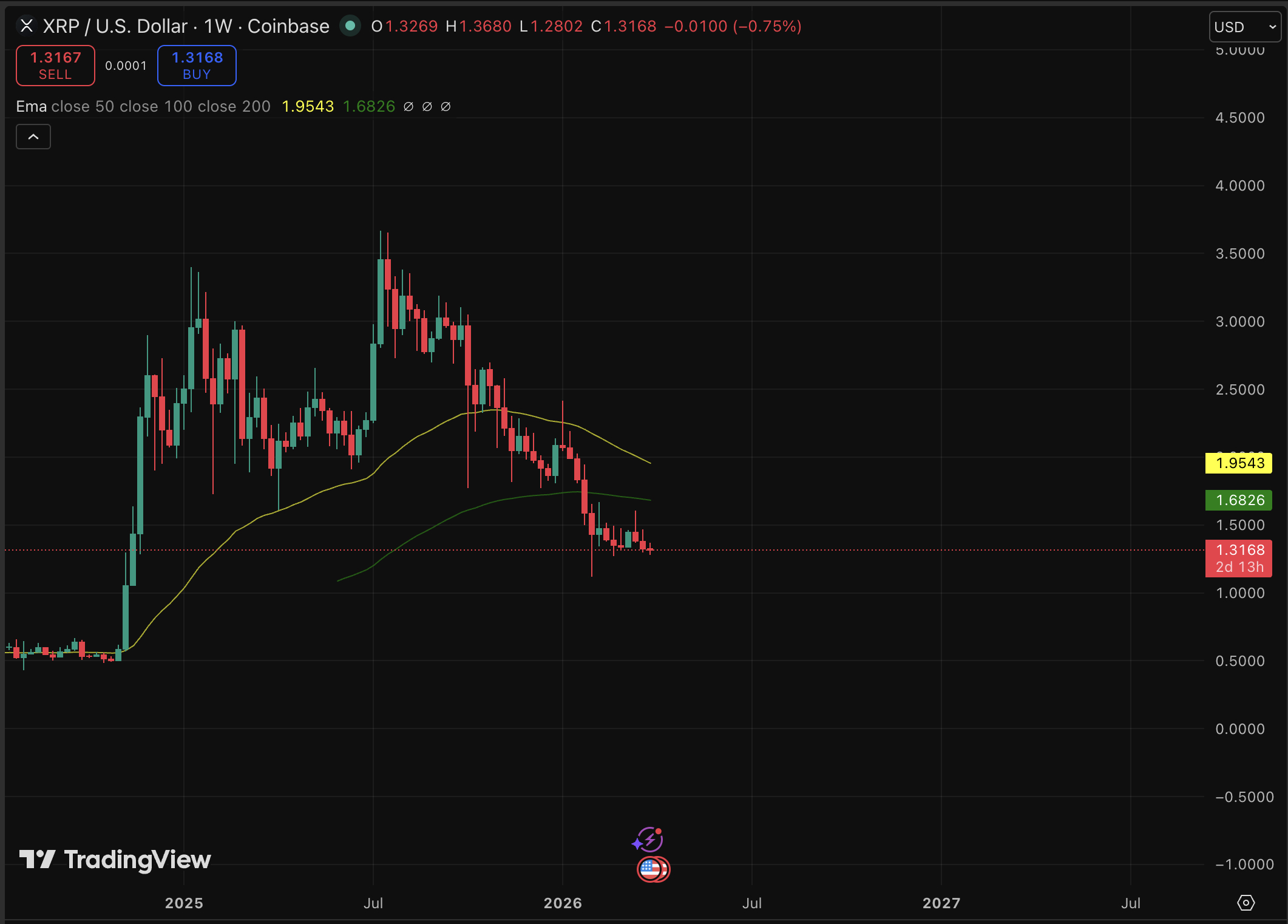
XRP is trading at $1.31, up by 0.9% in the last 24 hours, but price prediction still remains bearish for Ripple coin. Down nearly 30% year-to-date from a $1.88 open, the token is fighting to hold key support while the broader market registers extreme fear. What most traders haven’t priced in yet: a significant engineering overhaul quietly underway inside the XRP Ledger’s core repository.
Denis Angell, an XRPL core developer, outlined six active workstreams on April 2 that are reshaping the ledger’s foundational infrastructure, telemetry, nomenclature, type safety, refactoring, logging, and documentation.
“I’ve never been more excited for the XRP Ledger core development than I am now,” Angell posted, describing the effort as tedious but critical.
The work targets backend reliability and developer experience rather than user-facing features, a distinction that matters for long-term network competitiveness.
Whether these upgrades translate into price recovery depends entirely on market timing.
Discover: The best crypto to diversify your portfolio with
XRP Price Prediction: $1.40 Before the Next Wave of Selling?
XRP’s current level of $1.31 places it uncomfortably below both major moving averages. The 50-day SMA sits at $1.40–$1.42, acting as immediate overhead resistance. The 200-day SMA at $2.04–$2.07 represents a full recovery target that feels distant given current momentum.
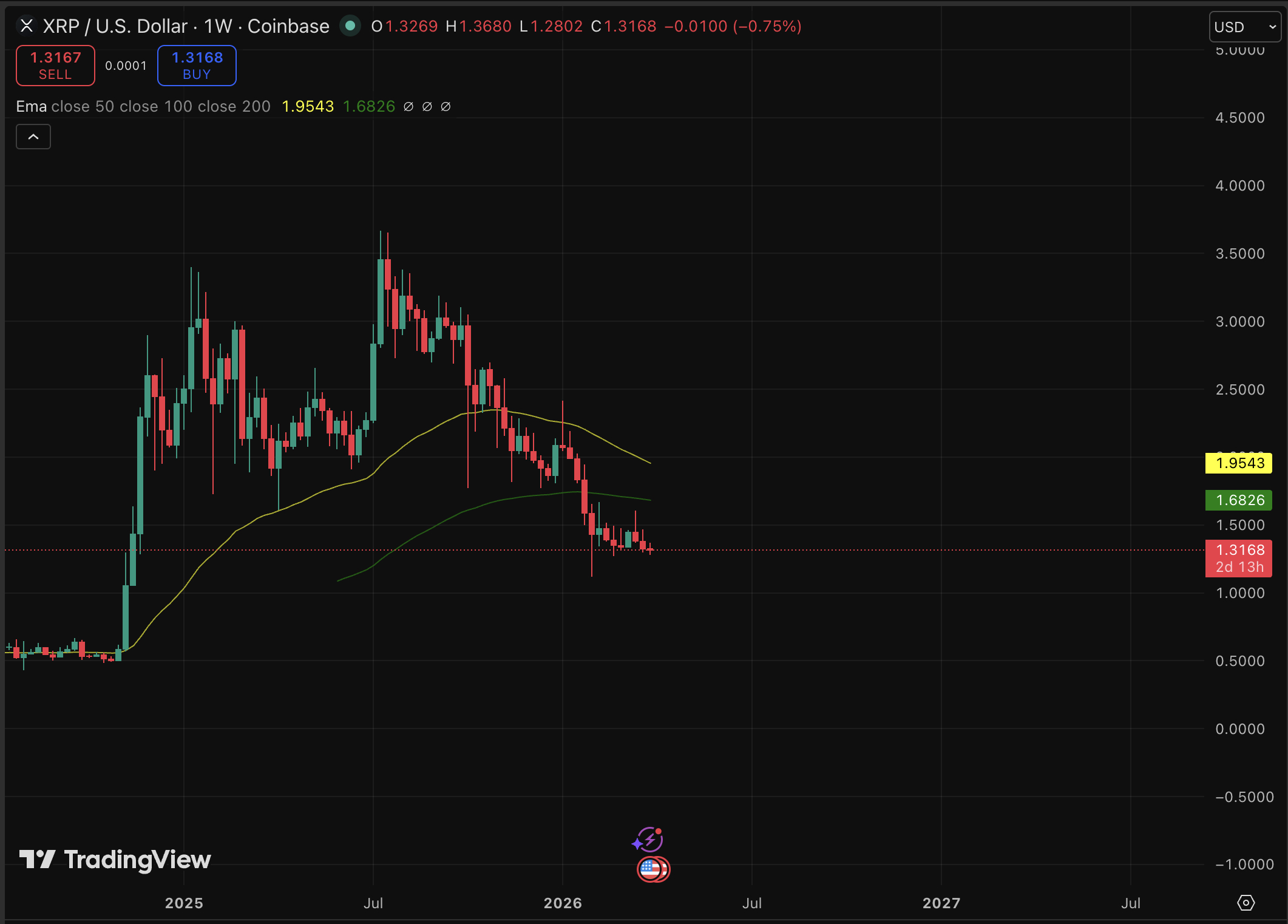
Support is clustered at $1.27–$1.29. That zone is thin. A clean break below it opens a more significant leg down with limited structural floors until the $1.10 range. The Fear and Greed Index reading Fear confirms capitulation sentiment, which historically precedes either a sharp reversal or a final flush.
Analyst consensus points to $2.04 as a potential recovery level by September 2026, achievable, but requiring sustained buying pressure that simply isn’t visible in current volume data.
Discover: The best pre-launch token sales
Bitcoin Hyper Targets Early-Mover Upside as XRP Tests Critical Support
XRP’s -29.6% year-to-date performance raises a legitimate question: at a $1.31 price point and a multi-billion-dollar market cap, how much asymmetric upside actually remains? For traders comfortable with the risk profile of early-stage assets, the calculus looks different at the infrastructure layer.
Bitcoin Hyper ($HYPER) is positioning itself as a genuinely novel infrastructure play, the first Bitcoin Layer 2 integrating the Solana Virtual Machine, delivering sub-second finality and low-cost smart contract execution while anchored to Bitcoin’s security model.
The presale has raised $32 million at a current price of just $0.013678, with healthy staking rewards available for early participants. The Decentralized Canonical Bridge enables native BTC transfers into the ecosystem, addressing Bitcoin’s longstanding programmability gap without sacrificing its trust layer.
More detail on Bitcoin Hyper is available here.
The post XRP Price Prediction: Can These 6 Ongoing Developments Save Ripple appeared first on Cryptonews.

TLDR
- Riot Platforms sold 3,778 Bitcoin for more than $250 million during the first quarter of 2025.
- The company reduced its total Bitcoin holdings to 15,680 BTC after the sale.
- Riot Platforms achieved an average selling price of over $76,000 per Bitcoin.
- The firm has now sold Bitcoin in consecutive quarters after raising nearly $200 million late last year.
- CEO Jason Les said earlier that sales were intended to fund ongoing growth and operations.
Riot Platforms sold more than $250 million in Bitcoin during the first quarter of 2025. The company confirmed it sold 3,778 BTC at an average price above $76,000. As a result, the firm reduced its total holdings to 15,680 BTC by the end of March.
Riot Platforms Cuts Bitcoin Holdings as Sales Extend Into Second Quarter
Riot Platforms reported that it sold 3,778 Bitcoin during the first quarter of 2025. The company achieved an average sale price above $76,000 per coin. Consequently, it reduced its Bitcoin reserves to 15,680 BTC at quarter’s end. The remaining holdings now carry a market value near $1.04 billion. Bitcoin traded at $66,844 at the time of valuation.
The Colorado-based miner has now sold Bitcoin in consecutive quarters. During November and December, it generated nearly $200 million from Bitcoin sales. The company has not yet disclosed detailed allocation plans for the recent proceeds. A company representative did not respond to a request for comment. However, earlier in 2025, CEO Jason Les addressed the purpose of prior sales.
Les stated that earlier Bitcoin sales aimed to “fund ongoing growth and operations.” He connected those operations to expanding infrastructure and computing capacity. The company outlined these objectives in its latest strategic business update. Riot Platforms has focused on increasing its data center capabilities. It also continues to adjust its capital structure through asset sales.
Riot Platforms Shifts Strategy Toward Data Center Development
Riot Platforms confirmed that it intends to expand beyond traditional Bitcoin mining. The firm stated that it plans to unlock its nearly two-gigawatt power portfolio. It aims to deploy that capacity for high-demand data center infrastructure. Les said, “2025 marked a watershed year for Riot.” He added that the company has transformed its future trajectory.
The company explained that it previously used most of its power portfolio for Bitcoin mining. Now, it seeks to reallocate that capacity toward data center development. Riot Platforms stated that its long-term goal is “to fully utilize our power portfolio for data center development.” This shift aligns with ongoing operational restructuring. The firm continues to balance mining output with infrastructure planning.
An activist investor, Starboard Value, urged the company to accelerate its transition strategy. Starboard Value stated that the opportunity could add as much as $21 billion to Riot’s valuation. The investor called for a “renewed sense of urgency” in pursuing this plan. Meanwhile, shares of RIOT closed up 2.47% on Thursday. The stock recently traded at $12.86.
Over the past six months, RIOT shares have fallen more than 33%. During the same period, Bitcoin has declined 47% from its all-time high of $126,080. The company continues to report updates through formal filings and public statements. Riot Platforms has not announced further Bitcoin sales beyond the first quarter.


Stephanie Cutter will join the prediction markets company as a policy adviser, having previously worked in Democratic lawmakers’ campaigns.
Predictions market platform Kalshi announced that a former staffer of US President Barack Obama had joined the company as a policy adviser.
In a Thursday notice, Kalshi said Stephanie Cutter would join the prediction markets company from Precision Strategies, a communications firm she co-founded in 2013. Kalshi said the addition of Cutter came as the company planned to “deepen its relationships in DC and across the country.”

According to Kalshi co-founder and CEO Tarek Mansour, Cutter’s experience allowed her to “get [the] message to the right people,” highlighting her background in government and politics. The predictions market already has staff with ties to the US government, including the appointment of the president’s son, Donald Trump Jr., as a strategic adviser in January 2025, the week before his father took office.
In the last year, Kalshi has come under scrutiny from many US state-level authorities, who have filed lawsuits against the platform and other companies offering event contracts on prediction markets for sports, alleging that they constituted illegal bets.
Under Trump nominee Michael Selig, the US Commodity Futures Trading Commission (CFTC) has claimed that the agency has the “exclusive jurisdiction” to oversee such markets, filing lawsuits against state gaming regulators.
Related: Polymarket expands into equities and commodities with Pyth price feeds
Lawsuits and proposed legislation
Many Democrats in US Congress have also called for scrutiny into prediction markets after what they called “suspicious trades” related to the country’s invasion of Iran. Although Kalshi and Polymarket announced plans in March to implement guardrails to prevent accounts from using insider information, some lawmakers introduced legislation that could ban politicians from engaging in such bets on prediction markets.
As of Friday, none of the bills proposed in Congress had been signed into law, and it was unclear what the outcome would be for many of the state-level lawsuits.
Magazine: Solana exec trolls crypto gamers, Pixel tackles play-to-earn issues: Web3 Gamer
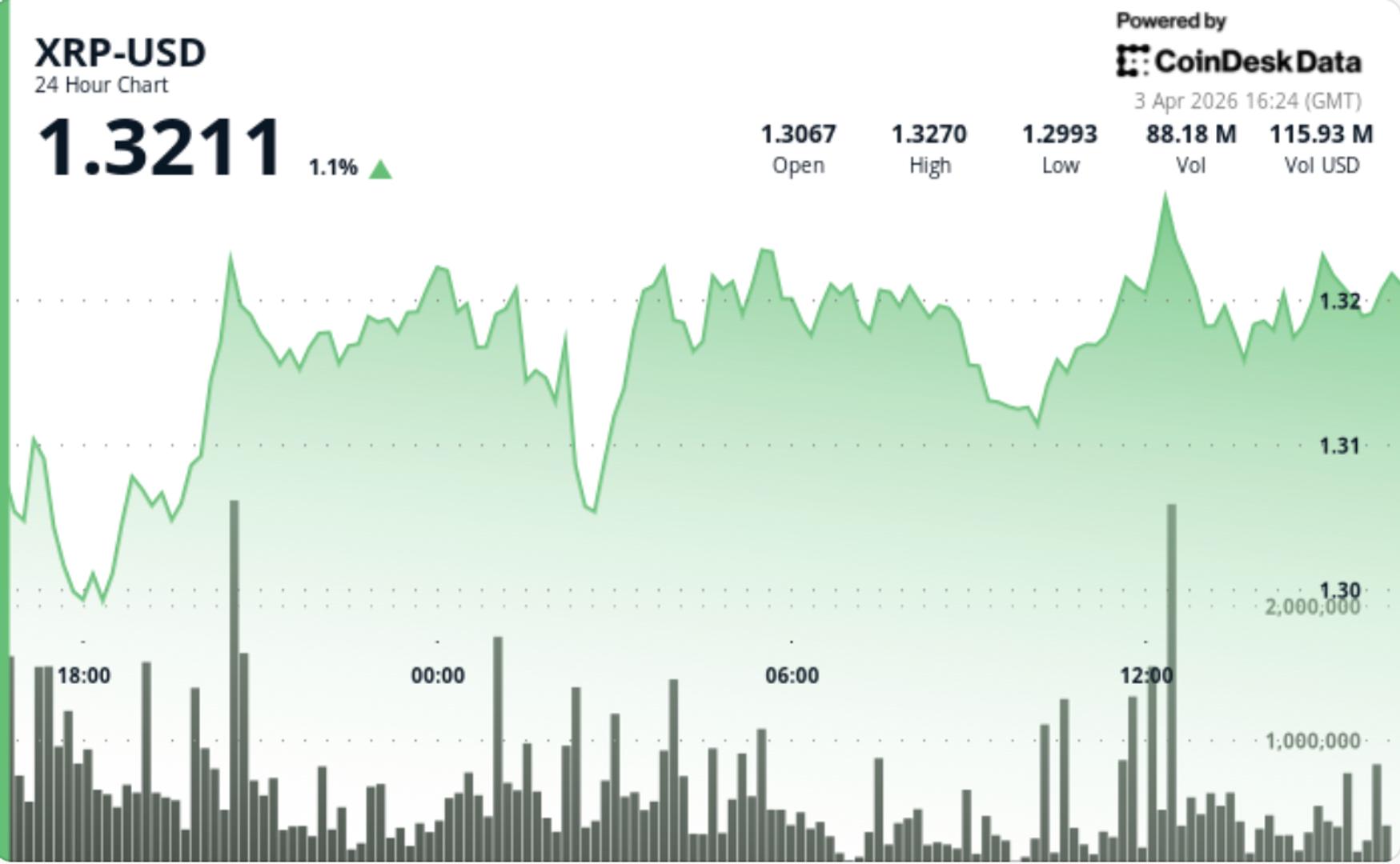
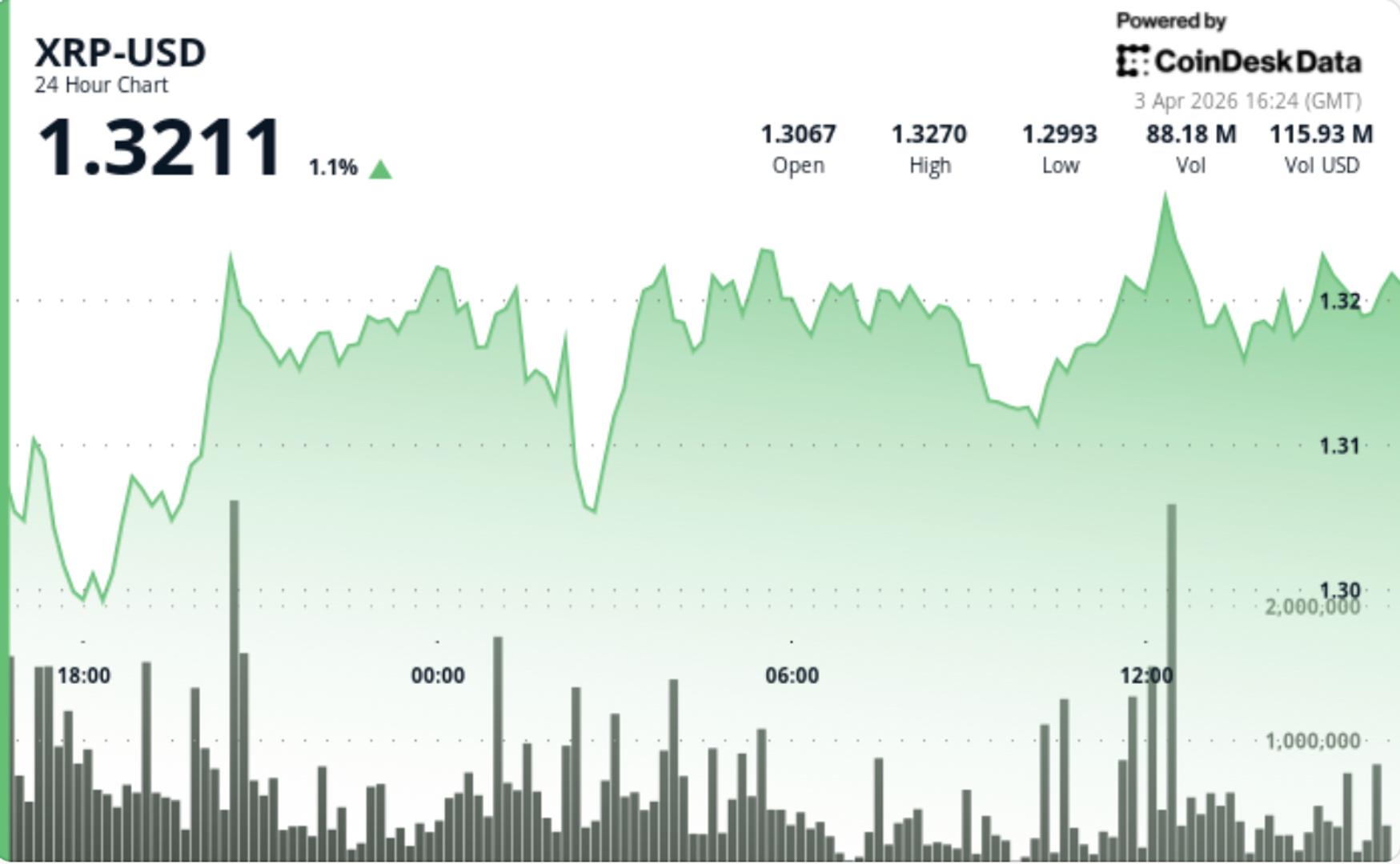
XRP is grinding higher, but not breaking out. The token is sitting around $1.33 after a modest move up, with higher volume coming in — yet price still isn’t escaping its range. That usually means positioning is building, not conviction.
News Background
- XRP rose just over 1% to $1.33 with volume about 23% above its weekly average
- Price moved almost in lockstep with the broader crypto market, showing little independent strength
- No major XRP-specific catalyst drove the session
Price Action Summary
- XRP traded in a tight range, holding above $1.30 while struggling near $1.33
- Buyers stepped in on dips, creating higher lows
- Breakout attempts toward $1.33-$1.34 were repeatedly sold into
- Late-session price action stabilized without follow-through
Technical Analysis
- The key theme is correlation — XRP is moving with the market, not leading it
- Higher volume without a breakout suggests traders are positioning, not committing
- Structure is slightly constructive (higher lows), but capped by overhead supply
- This keeps XRP stuck in a compression phase, where range tightens before expansion
What traders should watch
- $1.34-$1.35 is the near-term ceiling — break that and momentum can build
- $1.30 remains the floor holding the structure together
- Until one of those levels breaks, XRP is likely to stay range-bound and reactive to broader crypto moves

Stablecoin monthly transaction volume reached $7.2 trillion in February 2026, overtaking the Automated Clearing House (ACH) network’s $6.8 trillion for the first time.
The ACH is an electronic payment network in the United States that enables transfers directly between bank accounts. It has become the most widely used infrastructure for handling electronic money movement across the country.
Follow us on X to get the latest news as it happens
It’s a symbolically significant milestone showing how massive crypto payment rails have become. The February crossover did not happen in isolation.
Artemis data shows that stablecoin volume climbed further in March, reaching $7.5 trillion. That figure matched ACH over the same period.
Meanwhile, the stablecoin market has continued to grow. DefiLlama data showed that the market capitalization surpassed $316.7 billion, setting a new all-time high.
Notably, a recent report revealed that stablecoins dominated crypto markets in Q1 2026. They made up 75% of total trading volume, the largest share on record.
Overall transaction volume exceeded $28 trillion during the quarter, marking another all-time high. However, according to CEX.IO, automated trading played a major role, with bots responsible for 76% of the volume, the highest proportion seen in the past two years.
“Q1 2026 made the 2022 comparison hard to ignore. Stablecoin dominance rising sharply, capital rotating defensively, USDT and USDC diverging, automation surging, and retail pulling back — these patterns appeared together in mid-2022, and they are reappearing now. If broader bearish conditions persist through the year, stablecoins could see further demand and dominance gains in the coming quarters,” the report read.
The rising volumes reflect more than speculative activity. It also highlights the expanding use of these assets in real-world applications, including business-to-business (B2B) payments, cross-border transactions, and other financial activities.
Subscribe to our YouTube channel to watch leaders and journalists provide expert insights
The post Stablecoins Moved More Money Than the US Financial System’s Backbone appeared first on BeInCrypto.


The International Monetary Fund also warns that the distribution and speed of on-chain transactions bring new challenges and risks that require international coordination.
In a new staff research note published on Thursday, The International Monetary Fund (IMF) argues that tokenization represents a “structural shift in financial architecture,” not just an incremental efficiency gain.
Authored by Tobias Adrian — the IMF’s Financial Counsellor and Director of the Monetary and Capital Markets Department — the report focuses on the tokenization of real-world assets (RWAs) within the regulated financial system, namely banks, finance infrastructure, and asset managers, arguing that’s where “the most consequential transformation occurs.”
Settlement Speed Is a Double-Edged Sword
The IMF’s core thesis is that tokenization doesn’t just make existing finance faster, but represents a shift in how trust, settlement, and risk management work. In TradFi, trust is embedded in regulated intermediaries and time-delayed processes (end-of-day settlement, batch reconciliation). Those frictions, the report notes, actually serve a purpose: they give regulators and institutions time to intervene before a crisis cascades.
Tokenization, which the note defines broadly as “the representation of financial assets and liabilities on programmable digital ledgers,” collapses those frictions, bringing what is generally referred to as the primary benefits of blockchain: near instant settlement, 24/7 liquidity, etc. But, the report notes, that this reduction of barriers introduces new challenges and risks.
“Liquidity demands materialize instantaneously,” the note warns, creating conditions where a smart contract bug or oracle failure could trigger a chain reaction before anyone can respond. The IMF argues:
“When trading, settlement, custody, and compliance are embedded in code, supervision must extend beyond market participants to the design, governance, and resilience of market infrastructures themselves. Failures can
originate in smart contracts, data feeds, or consensus mechanisms, rather than firm balance sheets.”
Who Controls the Money?
A major focus of the report is on the quetion of settlement assets. The IMF identifies three competing models: tokenized commercial bank deposits, regulated stablecoins, and what the report refers to as wholesale central bank digital currencies (wCBDCs), with each carrying different risk profiles.
Cross-Border Gaps and the Fragmentation Risk
The report highlights that a major concern around the tokenization of RWAs in regulated financial markets is jurisdictional: tokenized transactions execute across borders at machine speed, while resolution and crisis management frameworks are still built around nationally domiciled institutions.
“Tokenization challenges crisis management and resolution frameworks that are built around nationally domiciled institutions, territorially bounded infrastructures, and jurisdiction-specific legal authority.“
In its research note, the IMF calls for international coordination and legal frameworks that can govern code itself, not just the institutions that deploy it.
“The key levers of control may lie in governance keys, consensus mechanisms, or smart contract logic operating across borders,” the note reads — a setup where no single regulator has a clear handle.
The report lands as the value of tokenized RWAs continue to surge, driven in part by tokenized funds from TradFi giants like BlackRock, Franklin Templeton, and Janus Henderson.
In 2025, tokenized RWA value tripled over the course of the year as a wave of financial institutions began tokenizing U.S. treasuries, private credit, and other RWAs.
Industry forecasts project the sector could hit $100 billion by end of 2026, with more than half of the world’s 20 largest asset managers expected to have launched RWA tokens by year-end.
Meanwhile, stablecoins have already begun functioning as mainstream financial infrastructure, with the GENIUS Act providing U.S. regulatory clarity in mid-2025.
This article was written with the assistance of AI workflows. All our stories are curated, edited and fact-checked by a human.
A solo Bitcoin miner secured a roughly $210,000 block reward on Thursday, proving that the so-called “mining lottery” is still paying out even if industrial operators dominate the network.
The miner, connected to CKPool’s solo service, found block 943,411 and earned 3.139 BTC in subsidy and transaction fees, according to data from block explorer mempool.space.
Solo mining remains rare. Statistics compiled by Bennet’s tracker show that solo mining pools have found just 20 Bitcoin (BTC) blocks over the last 12 months, paying out a total of 62.96 BTC, roughly one win every 18.7 days on average. The longest “drought” between blocks was 58 days, and the previous solo win came on Feb. 28.
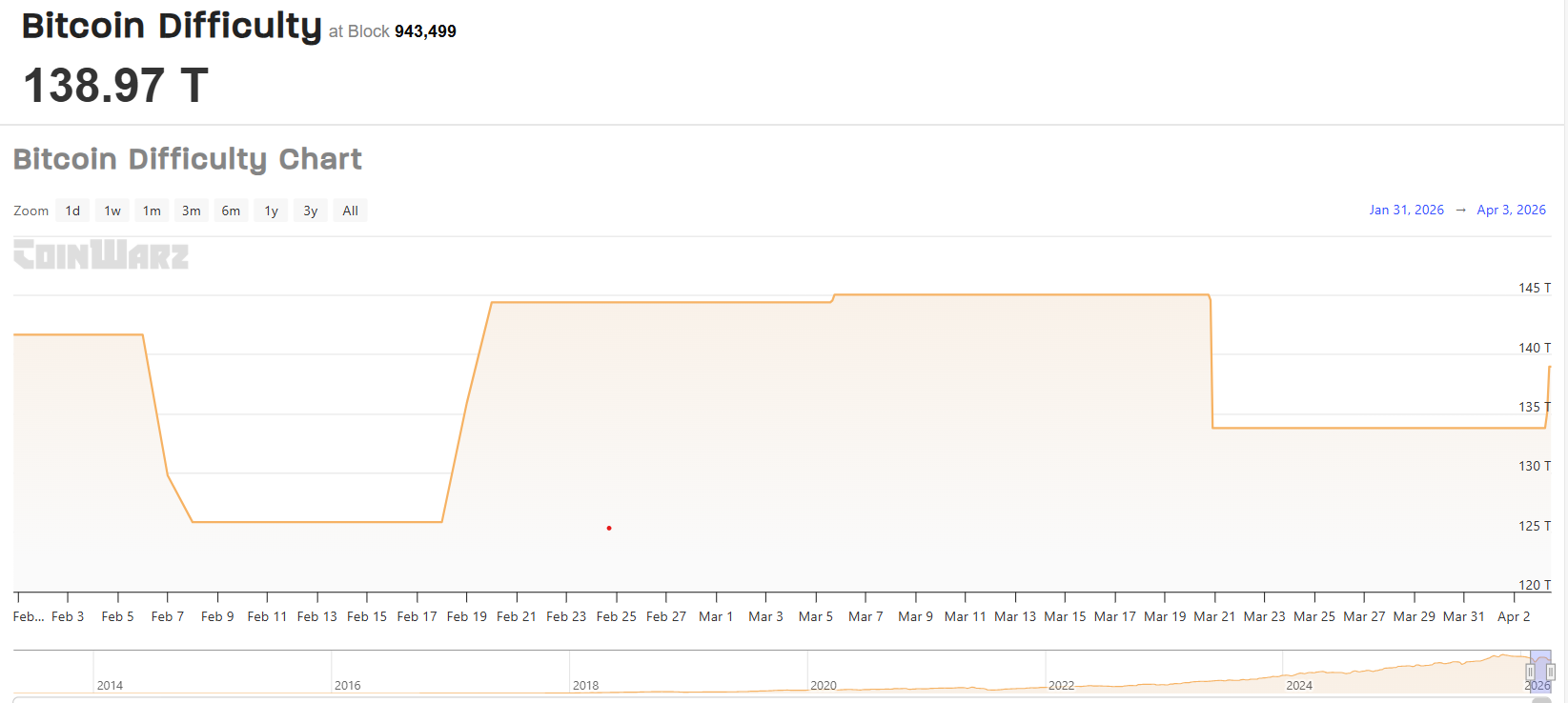
The win comes as Bitcoin mining grows increasingly competitive. Network difficulty, the measure of how hard it is to find a block, recently recorded its steepest adjustment since February, falling about 7.7% before rebounding 3.87% in the past 24 hours, reflecting weaker hashrate and briefly improving miners’ odds.
Bitcoin difficulty relief is fleeting
Even so, current difficulty levels remain near historic highs, meaning the probability of any single solo miner discovering a block is still vanishingly small.
Related: Solo Bitcoin miner bags over $200K block reward using rented hashrate
Public trackers like CoinWarz show Bitcoin’s difficulty has climbed orders of magnitude over the past decade, with only brief downward adjustments when miners switch off unprofitable rigs or redirect machines to other workloads such as artificial intelligence.

As difficulty grinds higher and input costs rise, the economics of mining increasingly favor large, well-capitalized operators over hobbyists.
Major listed Bitcoin miners are responding by reshaping their balance sheets and fleet strategies rather than betting on luck. Riot Platforms sold 3,778 BTC during the first quarter of 2026, according to a Thursday release, adding to a number of crypto miners and firms that have sold Bitcoin recently, including MARA Holdings, Genius Group and Nakamoto Holdings.
Against that institutional backdrop, the CKPool win stands out as a reminder that individuals can still, on rare occasions, beat the odds.
Magazine: Bitcoin may take 7 years to upgrade to post-quantum — BIP-360 co-author

French-owned ship passes through Strait of Hormuz

Kalshi hires ex-Democratic strategist amid legal troubles

Days of Our Lives: Stefano’s Will Delivers Shocking Bombshell – EJ’s Family War Ignites!


-

 NewsBeat7 days ago
The Story hosts event on Durham’s historic registers
-

 NewsBeat24 hours ago
Steven Gerrard disagrees with Gary Neville over ‘shock’ Chelsea and Arsenal claim | Football
-

 Sports7 days ago
Sweet Sixteen Game Thread: Tide vs Michigan
-
Entertainment4 days ago
Fans slam 'heartbreaking' Barbie Dream Fest convention debacle with 'cardboard cutout' experience
-

 Business19 hours ago
No Jackpot Winner and $194 Million Prize Rolls Over
-

 Crypto World2 days ago
Gold Price Prediction: Worst Month in 17 Years fo Save Haven Rock
-
 Entertainment6 days ago
Lana Del Rey Celebrates Her Husband’s 51st Birthday In New Post
-

 Tech5 days ago
The Pixel 10a doesn’t have a camera bump, and it’s great
-
Crypto World3 days ago
Dems press CFTC, ethics board on prediction-market insider trades
-

 Tech5 days ago
Avatar Legends: The Fighting Game comes out in July and it looks pretty slick
-

 Sports3 days ago
Tallest college basketball player ever, standing at 7-foot-9, entering transfer portal
-

 Tech3 days ago
EE TV is using AI to help you find something to watch
-

 Fashion6 days ago
Amazon Sundays: Soft Spring Layers
-

 Business2 days ago
Login and Checkout Issues Spark Merchant Frustration
-

 Fashion7 days ago
When Evening Dressing Gets Colorful for Spring
-

 Tech5 days ago
Elon Musk’s last co-founder reportedly leaves xAI
-

 Tech3 days ago
How to back up your iPhone & iPad to your Mac before something goes wrong
-

 Tech4 days ago
Apple will hide your email address from apps and websites, but not cops
-

 Politics4 days ago
Should Trump Be Scared Strait?
-

 Crypto World4 days ago
U.S. rule change may open trillions in 401(k) funds to crypto
You must be logged in to post a comment Login