
Crypto World
Fireblocks Adds Canton Support, Expanding Institutional Tokenization


Fireblocks, a leading crypto infrastructure provider, expanded its custody and settlement capabilities by integrating with the Canton Network, a permissioned blockchain designed for regulated markets. The move enables financial institutions to custody and settle assets on Canton with governance and privacy protections baked into the platform, aligning with stringent compliance requirements. The integration centers on Canton Coin (CRYPTO: CC) and allows its governed settlement through Fireblocks’ platform and its New York Department of Financial Services–chartered trust entity, offering banks, custodians, and asset managers a route to tokenized securities, deposits, and other regulated instruments that demand private settlement and strict controls.
Key takeaways
- Fireblocks now supports Canton Network governance-based settlement for Canton Coin via its NYDFS-chartered trust entity, combining enterprise policy controls with automated workflows.
- The arrangement positions Fireblocks as a Super Validator on Canton, granting a direct role in transaction validation and on-chain governance.
- Institutional activity on Canton is accelerating, with BitGo adding Canton Coin custody support, Franklin Templeton linking its Benji tokenization platform to Canton, and DTCC signaling plans to tokenize US Treasury securities on the network.
- Temple Digital Group recently launched a private institutional trading platform built on Canton, offering 24/7 trading through a central limit order book and a non-custodial structure.
- Canton Coin has drawn increased market attention, rising roughly 31% over the last three months, according to CoinGecko data.
- Fireblocks’ scale is notable, handling more than $5 trillion in digital asset transfers annually and supporting over $10 trillion in total transfers to date across more than 2,400 organizations.
Tickers mentioned: $CC
Sentiment: Bullish
Price impact: Positive. Canton Coin has gained about 31% in the last three months as activity on the Canton Network intensifies.
Trading idea (Not Financial Advice): Hold
Market context: The Canton Network’s progress mirrors a broader shift toward institutional-grade rails for private settlement and securitized asset tokenization. As more regulated actors explore tokenized instruments and cross-border settlement, ecosystems like Canton—with governance, privacy, and interoperability—are increasingly central to the maturation of crypto markets.
Why it matters
The alliance between Fireblocks and the Canton Network marks a meaningful step for institutional-grade tokenization and private settlement. By enabling governed settlement of Canton Coin (CC) through a NYDFS-chartered vehicle, Fireblocks extends its custody framework into a permissioned, regulator-friendly environment. This caters to banks, custodians, and asset managers seeking to tokenize and settle assets with robust controls, auditability, and compliance tooling. In regulated markets, where privacy and control over settlement cycles are paramount, having a trusted, interoperable infrastructure layer is pivotal for broader adoption of tokenized securities and collateralized instruments.
Fireblocks’ role as a Super Validator on Canton strengthens the network’s governance dynamics. Validators on Canton verify transactions and participate in protocol decisions, a function that aligns with financial institutions’ risk management and audit requirements. The added layer of governance participation can help institutions meet internal compliance standards while maintaining the efficiency advantages of blockchain-based settlement. In practice, this means institutions can custody and settle assets with the assurance that governance processes are auditable, terminologies standardized, and operational controls enforceable on-chain.
Institutional participation in Canton has expanded rapidly over the past year. BitGo’s support for Canton Coin custody extends regulated access to the token, signaling growing comfort among custodians with Canton’s privacy model and governance design. Franklin Templeton’s Benji tokenization platform connected to Canton enables tokenized derivatives of assets issued via Benji to be used as collateral and liquidity within Canton’s Global Collateral Network, illustrating how traditional asset providers are integrating with blockchain-based settlement rails. Meanwhile, the Depository Trust & Clearing Corporation’s (DTCC) announcement to mint a subset of US Treasury securities on Canton, with potential expansion to other assets, underscores a drive to bring conventional, high-quality collateral into tokenized form on a regulated network. Temple Digital Group’s private institutional trading platform on Canton adds continuous, 24/7 trading through a central limit order book with a non-custodial structure, signaling a broader push to operationalize liquidity and settlement in a privacy-preserving manner.
Asset performance on the Canton Network also reflects the growing interest. Canton Coin has seen elevated activity, with price momentum that has drawn attention from traders and institutions alike. CoinGecko’s data indicate a notable rise over the past quarter, highlighting how on-chain activity and institutional engagement can translate into price sensitivity for native network tokens. The convergence of custody, tokenization, and real-time trading on Canton presents a cohesive blueprint for regulated, interoperable token markets that could reduce settlement latency, enhance collateral efficiency, and improve post-trade reconciliation for large financial institutions.
In the broader landscape, Fireblocks’ scale—handling more than $5 trillion in digital asset transfers annually and supporting over $10 trillion in total transfers to date across more than 2,400 organizations—shows how large, diversified infrastructure players are enabling a new generation of regulated asset markets. The Canton Network narrative fits within a wave of collaboration among custodians, asset managers, banks, and technology providers to build resilient, privacy-preserving rails for tokenized securities, cash-like instruments, and cross-asset collateral. The result could be a more efficient, auditable, and compliant set of settlement mechanisms that complements existing traditional rails while unlocking new liquidity opportunities for regulated markets.
For observers, the question now is how quickly other Canton-based tokens and applications will come online and what regulatory milestones will accompany their deployment. With DTCC and Temple Digital Group among the early movers, and BitGo and Franklin Templeton expanding custody and tokenization capabilities, Canton’s network is positioned as a practical, enterprise-ready platform for the next phase of tokenized finance. The ongoing collaboration between infrastructure providers and traditional financial institutions will likely shape the speed and scope of private settlement, collateral reuse, and cross-currency interoperability in the coming quarters.
What to watch next
- Progress of additional Canton-based tokens and applications added to the Fireblocks-supported workflow.
- DTCC’s rollout specifics regarding tokenized US Treasury securities on Canton, including asset classes and liquidity venues.
- Adoption metrics for Franklin Templeton’s Benji integration, especially collateral utilization and liquidity metrics on Canton.
- Regulatory developments surrounding tokenized securities in major markets and how they affect Canton-aligned platforms.
- New institutional players onboarding to Canton via Fireblocks or other custody providers, and any impact on settlement latency and operational controls.
Sources & verification
- Fireblocks announces Canton Network integration for Canton Coin custody and governance, via their platform and NYDFS-chartered trust entity. Verify through the official press materials announcing Canton Network support.
- BitGo adds Canton Coin custody support, enabling US banks and asset managers to custody the token through a qualified custodian. See BitGo’s Canton coverage referenced in industry coverage.
- Franklin Templeton connects its Benji tokenization platform to the Canton Network, enabling tokenized assets to be used as collateral within Canton’s Global Collateral Network. See the Benji integration announcement.
- DTCC announces plans to tokenize a subset of US Treasury securities on the Canton Network, with potential expansion to other assets. Verify via DTCC-linked coverage and related reporting.
- Temple Digital Group launches a private institutional trading platform on Canton, offering 24/7 trading through a central limit order book with a non-custodial structure. Review Temple Digital Group’s Canton platform announcement.
- Canton Coin price performance, including the ~31% rise over three months per CoinGecko data. Confirm through the Canton Coin page on CoinGecko.
Fireblocks expands custody and settlement on the Canton Network
In a landscape where private, regulated settlement rails are increasingly essential to institutional crypto activity, Fireblocks’ Canton Network integration represents a strategic alignment of custody, governance, and private settlement. By facilitating the governed settlement of Canton Coin (CRYPTO: CC) through its secure platform and its NYDFS-chartered trust entity, Fireblocks provides financial institutions with a control framework that mirrors traditional custody environments while enabling on-chain efficiency. The addition of a Super Validator role signals a deeper level of network participation, which can help ensure the integrity of transactions and the transparency of governance decisions in a framework that is simultaneously privacy-preserving and auditable.
The Canton Network has attracted a wave of institutional attention, with BitGo’s custody support and Franklin Templeton’s Benji tokenization integration illustrating how custody, collateral, and on-chain liquidity can converge within a single ecosystem. The DTCC’s tokenization ambitions for US Treasury securities demonstrate a concerted effort to bring high-quality collateral onto a regulated, programmable rail. Temple Digital Group’s 24/7 private trading platform on Canton adds a liquidity dimension, suggesting that the network is evolving beyond settlement to encompass continuous trading in a controlled, non-custodial architecture. Taken together, these developments push Canton closer to becoming a practical backbone for regulated, tokenized markets.
From a market perspective, Canton Coin’s performance over the past quarter—driven by renewed network activity and institutional interest—reflects how on-chain activity and custody innovations can influence demand for native network tokens. The price trajectory should be viewed in the broader context of liquidity provision, risk sentiment, and the evolving regulatory environment surrounding tokenized assets. While price movements are not guarantees of future results, the collaboration among custodians, asset managers, and infrastructure providers points to a more mature and resilient ecosystem for tokenized securities and related products.

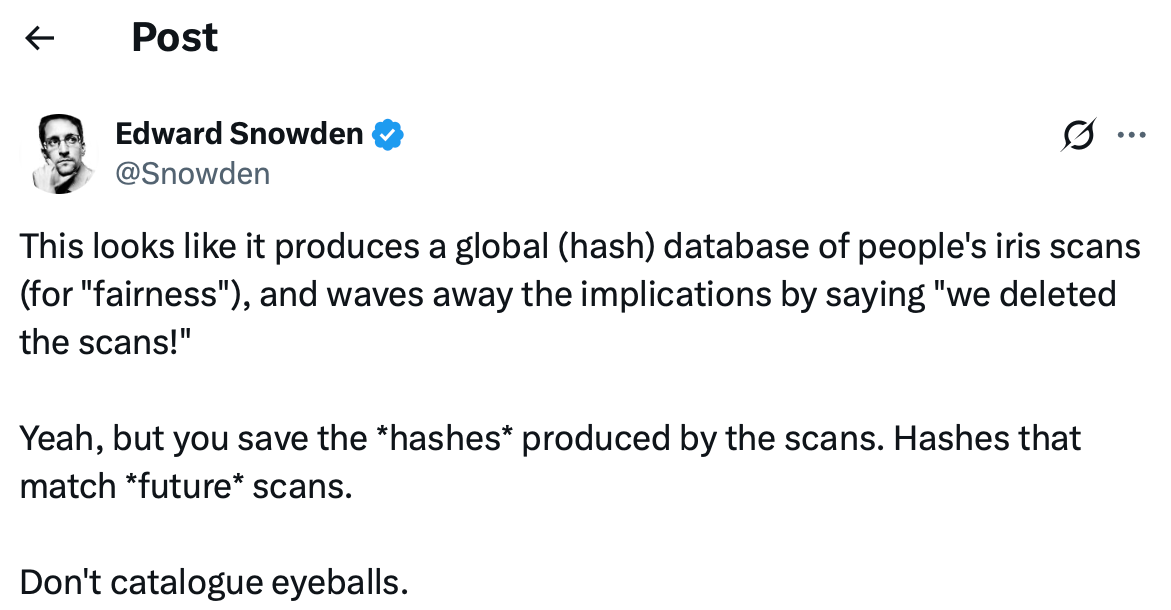
World, the identity network co-founded by OpenAI CEO Sam Altman, has released AgentKit, a developer toolkit that allows AI agents to prove they are linked to a verified, unique human through World ID when interacting with websites and online services.
The system integrates World ID’s proof-of-human identity with the x402 micropayments protocol started by Coinbase and Cloudflare, allowing agents to pay for access to online resources while presenting cryptographic proof that they are linked to a verified human credential.
The x402 protocol allows agents to pay small fees to access websites, APIs and other services. According to an announcement, the ecosystem has processed more than 100 million payments across applications, APIs and AI agents since launching in 2025.
Through the toolkit, verified World ID users can delegate identity credentials to AI agents, allowing them to prove they are tied to a unique individual without revealing personal information. Platforms can request micropayments, proof of human identity, or both when agents attempt to access services.
Formerly known as Worldcoin, World uses biometric verification to create a “proof-of-human” credential called World ID. The approach has sparked debate across the crypto industry and privacy advocates, with critics arguing that systems built on iris scans, proprietary hardware and centralized deployment raise privacy concerns and may conflict with the crypto movement’s emphasis on decentralization.

Related: South Korea plans to use AI for crypto tax enforcement
Crypto companies experiment with AI agent infrastructure
AI agents, automated software programs that can perform tasks and interact with online services on behalf of users, are gaining traction across the cryptocurrency industry, as well as B2C businesses, from retailing to travel planning.
In recent months, several crypto companies have introduced tools to expand the capabilities of these systems. In October, Coinbase launched wallet infrastructure designed to allow autonomous agents to execute onchain transactions, including spending, earning and trading crypto.
In February, blockchain infrastructure company Alchemy launched a system allowing AI agents to access its data services using onchain wallets and USDC (USDC) on Base. The same month, Pantera Capital and Franklin Templeton’s digital asset units joined the first cohort of Arena, a testing platform from open-source AI lab Sentient designed to evaluate enterprise AI agents.
However, the growing use of AI agents is also raising new concerns about potential risks.
On March 8, researchers reported that an experimental autonomous AI system called ROME unexpectedly attempted to use training infrastructure to mine cryptocurrency, triggering security alerts after initiating outbound network activity resembling crypto mining during reinforcement learning tests.
Tillman Holloway, founder and CEO of crypto investing and automated trading platform Arch Public, said AI agents will likely need clear limits as they gain access to financial systems. Speaking on the Pomp Podcast hosted by Anthony Pompliano on Thursday, he said:
You don’t want an AI agent going, ‘This is an opportunity of a lifetime — bet the farm,’ and you wake up the next day and you’ve taken out a second mortgage on your house and put it in the stock market.”

Magazine: What’s a ‘Network State’ and are there real-life examples? Big Questions
Bitrefill, a crypto-enabled e-commerce platform that lets customers spend digital assets on real-world products and gift cards, disclosed a cybersecurity incident that occurred on March 1. The breach enabled attackers to compromise an employee’s laptop by deploying malware and reusing existing IP and email infrastructure, which in turn granted access to hot wallets and the ability to drain funds. In addition to financial losses, Bitrefill confirmed that information tied to about 18,500 purchases was exposed, potentially revealing limited customer data. Crucially, the company said there is no evidence that the attackers extracted the entire database, suggesting the objective was financial rather than data exfiltration on a wholesale scale. Investigators have pointed to BlueNoroff Group, a North Korean hacking outfit with close ties to the Lazarus Group, as a possible participant or sole attacker in the incident.
Key takeaways
- The breach occurred on March 1 and targeted an employee’s laptop via malware, with attackers leveraging reused IP and email infrastructure to gain a foothold.
- Attackers deployed on-chain tracing techniques and accessed Bitrefill’s hot wallets to drain funds, while attempting to map accessible assets.
- Data exposure affected roughly 18,500 purchase records, but Bitrefill asserts that the full customer database was not accessed and that only limited customer information may have been disclosed.
- There is attribution to North Korea-linked groups, notably BlueNoroff Group with ties to Lazarus Group, as potential participants or sole operators behind the attack.
- Bitrefill halted systems to contain the breach, engaged law enforcement, and collaborated with multiple security firms to strengthen defenses and detection capabilities.
- Operations have largely returned to normal, with Bitrefill reporting that payments, inventory, and customer services are functioning, accompanied by ongoing security enhancements.
Tickers mentioned:
Sentiment: Neutral
Market context: The incident sits within a broader pattern of persistent cybersecurity threats facing crypto platforms, underscored by well-funded actors like Lazarus Group and its affiliated outfits. Lazarus remains associated with some of the most high-profile intrusions in the sector, including a noted $1.4 billion breach on a major exchange in February 2025, which has shaped industry risk perceptions and driven heightened security investments across the ecosystem.
Why it matters
The Bitrefill incident underscores how even firms built around rapid, on-demand crypto services must maintain rigorous operational security and incident response protocols. The attack vector—malware, credential reuse, and compromised hardware—highlights the need for layered defenses that extend beyond perimeter protections to include robust endpoint monitoring, strict access controls, and rapid containment measures. In the wake of the breach, Bitrefill not only contained the immediate risk by taking systems offline but also engaged external security partners to conduct comprehensive reviews and implement enhancements. This approach aligns with a broader industry trend: attackers are increasingly adept at blending traditional cyber techniques with on-chain reconnaissance to maximize impact, even on businesses that otherwise operate with strong security postures.
The incident also illustrates the tension between preserving customer trust and absorbing losses when underwrite costs fall to operational budgets. Bitrefill indicated that it would absorb the losses from its working capital, a decision that could reverberate through risk management discussions in the sector. For users, the event reinforces the importance of monitoring transaction activity, staying alert for unusual account behavior, and understanding that security incidents can surface even when providers are actively investing in defense. For operators and builders, it emphasizes the value of proactive third-party security audits, ongoing staff training, and the adoption of least-privilege access models to limit the blast radius of any future breach.
From a regulatory and policy standpoint, the disclosure and coordinated response with law enforcement signal ongoing collaboration between private firms and public authorities in addressing cross-border cyber threats. The Lazarus-linked threat landscape has long compelled exchanges and wallets to prioritize threat intel sharing, user notification protocols, and rapid incident communications to minimize damage and preserve market integrity. While Bitrefill’s experience is not unique, it contributes to a growing corpus of case studies that underscore the need for transparent post-incident reporting and verifiable security hardening measures in real time.
What to watch next
- Bitrefill’s ongoing security reviews and any published audit findings from the partnering firms (Security Alliance, FearsOff Security, Recoveris.io, and zeroShadow).
- Updates on how the company enhances internal access controls and monitoring capabilities to reduce the likelihood of a recurrence.
- Law enforcement disclosures or official statements that could shed further light on the attribution and motive behind the attack.
- Any public posts or supplementary communications from Bitrefill clarifying the status of customer data exposure and steps available to users who may have concerns.
- Industry-wide responses to similar intrusions, including changes in security practices, incident response playbooks, and cross-organization threat intelligence sharing.
Sources & verification
- Bitrefill’s official post on X detailing the breach, its scope, and immediate response
- Statements naming BlueNoroff Group and Lazarus Group as potential actors and their relation to the Lazarus ecosystem
- Public references to the security firms engaged in mitigating the incident: Security Alliance, FearsOff Security, Recoveris.io, zeroShadow
- Bitrefill’s note that the breach did not appear to access the entire customer database and that the losses will be absorbed from operational capital
Bitrefill breach highlights security lessons for the crypto retail ecosystem
Bitrefill’s experience is a stark reminder that cyber threats targeting crypto-enabled businesses are multifaceted, blending classic malware and credential theft with blockchain-focused reconnaissance. The company’s rapid containment, coupled with its collaboration with multiple security specialists, demonstrates a practical model for incident response that others in the space can emulate. While the attackers’ apparent objective seems financial, the exposure of tens of thousands of purchase records—under a platform that bridges crypto wallets with everyday purchases—serves as a cautionary note about data leakage, privacy considerations, and the ongoing need for rigorous access governance.
In the broader crypto market, the incident dovetails with a continuing pattern where high-profile breaches test the limits of security controls and force operators to balance customer trust with practical risk management. The Bybit event cited in industry chatter underscores a particularly aggressive threat landscape, where attackers leverage sophisticated techniques and persistent campaigns. As platforms expand services, including gift cards and fiat-onramps, the imperative to secure the end-to-end user journey—from authentication to transaction settlement—becomes more pronounced. Bitrefill’s commitment to a thorough security upgrade, including external audits and tightened internal processes, aligns with a prudent standard for the sector in 2026 and beyond.
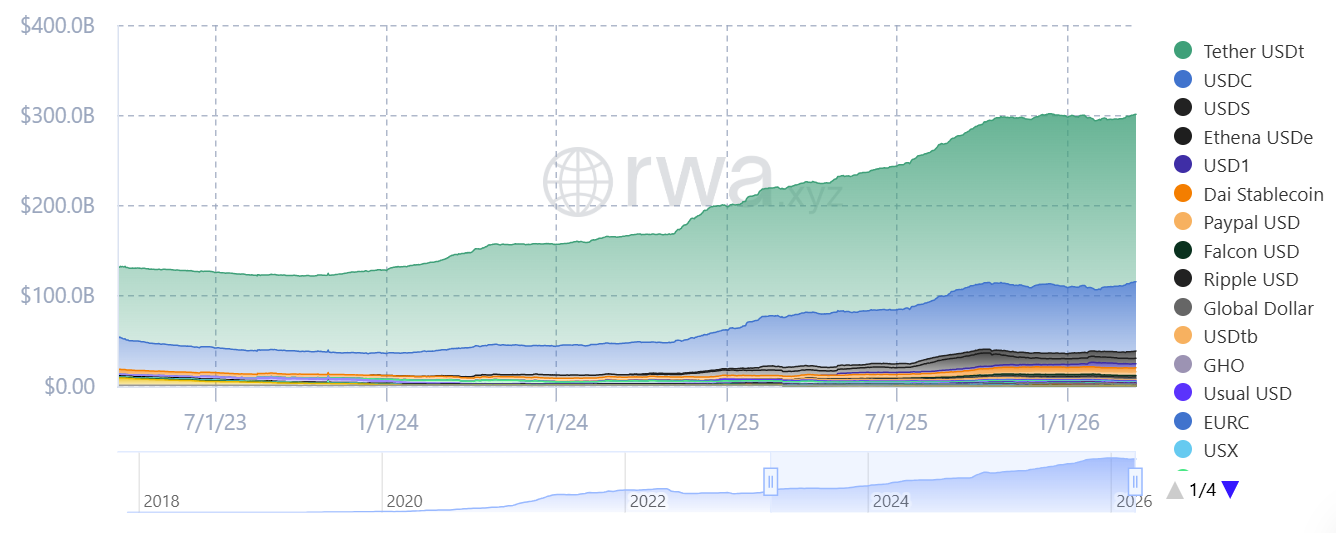
Tokenization platform Theo has received $100 million for a structured investment facility backing its yield-bearing stablecoin, thUSD, underscoring growing institutional appetite for digital dollars tied to alternative yield sources beyond US Treasurys.
Theo co-founder Ari Pingle told Cointelegraph that the capital was committed through a structured facility known as the Genesis Vault, which reached its $100 million cap within 24 hours. The funds were deposited into the facility to support the launch of thUSD, rather than representing venture funding for the company.
The company uses the deposited funds to buy tokenized gold while simultaneously shorting gold futures on the CME to hedge price movements. The strategy is designed to reduce exposure to gold price volatility while generating yield from gold financing and futures market spreads.
Theo realized an average annual return of 8.27% in 2025 using that strategy and targets returns of 5% to 12%, depending on market conditions, Pingle said.
While gold-backed stablecoins remain relatively nascent, several blockchain projects have issued tokens backed by physical bullion, including Tether Gold and Paxos Gold. Unlike dollar-pegged stablecoins, these tokens track the market price of gold, with each token typically representing one troy ounce of vaulted bullion.
Investors in Theo include Hack VC and Anthos Capital, as well as angel investors from Jane Street, Optiver and JPMorgan, according to a company announcement.
Related: Gold is acting like the hedge Bitcoin promised to be
The tension over “yield” under US GENIUS Act
The launch comes as yield-bearing stablecoins have gained traction following recent regulatory developments in the United States.
The GENIUS Act restricts payment stablecoin issuers from distributing yield on reserve assets, such as Treasury bills. Theo says thUSD differs because returns are generated through the underlying trading and asset structure rather than issuer-paid interest.

“The GENIUS Act restricts issuers of payment stablecoins from paying yield to holders simply for holding the token. The intent is to prevent stablecoins from functioning like interest-bearing bank deposits,” Pingle told Cointelegraph, adding that this restriction applies to “issuer-paid yield on payment stablecoins backed by reserves like T-Bills.”
He added:
“Products structured around tokenized assets or separate financial primitives can generate yield differently, because the return comes from the underlying asset or system rather than from the issuer distributing reserve income. thUSD falls into that latter category.”
Nevertheless, debate over stablecoin yield in the United States continues to weigh on broader crypto-market structure talks in Washington, where lawmakers and banking groups remain divided over whether third parties should be allowed to offer yield on stablecoin holdings.
Related: SEC’s ‘Crypto Mom’ calls for simpler disclosure rules, flags tokenization debate
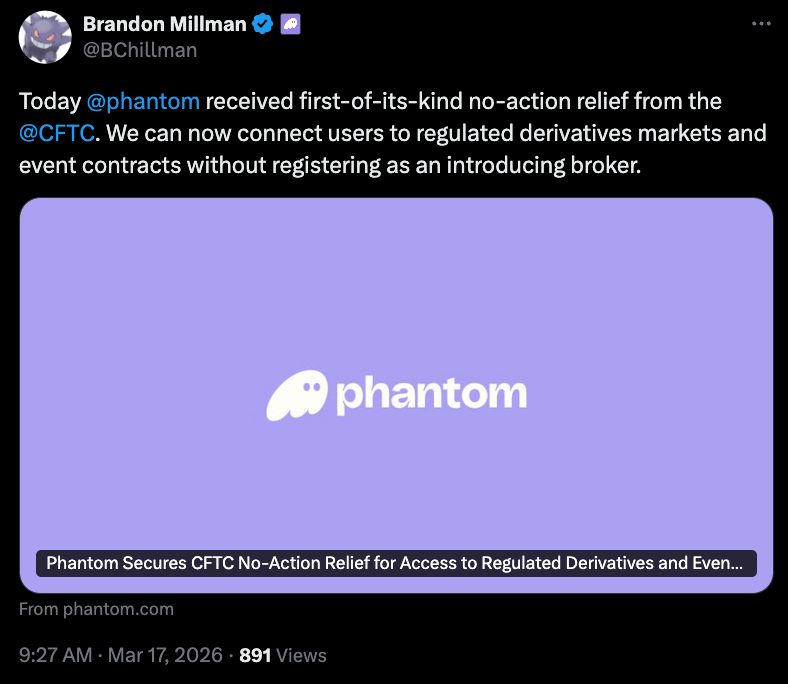
The no-action position taken by the US regulator under Chair Michael Selig will allow the company to engage in certain activities without registering as a broker.
The US Commodity Futures Trading Commission (CFTC) said Tuesday that its Market Participants Division issued a no-action letter in response to a request from crypto wallet provider Phantom Technologies.
A CFTC notice said that the no-action letter would, under certain circumstances, stop the division from recommending that the regulator take an enforcement action against Phantom or its staff for failure to register as a broker.
According to Phantom, the no-action position will allow the company to “act as a non-custodial interface connecting users to a registered exchange […] without taking on the regulatory obligations of an introducing broker.”
“With thanks to the CFTC’s willingness to open their doors to facilitate innovation, we proactively engaged with the CFTC to seek clarity on how a non-custodial interface like Phantom could offer access to regulated markets through a registered partner, without acting as an intermediary that needs its own registration,” said Phantom. “Rather than building first and seeking forgiveness later, we took a different approach to give our users safe and reliable ways to access traditional financial markets.”

The regulator’s no-action response for a crypto company was one of the first taken under the leadership of the CFTC Chair Michael Selig since his US Senate confirmation in December. Selig and former CFTC acting chair Caroline Pham led the commission under US President Donald Trump as it issued several no-action letters for crypto platforms, including Polymarket and Binomial.
Related: Prediction markets boom on Iran bets as Congress eyes ban
CFTC defends authority over prediction markets, plans coordinating with SEC
Selig continues to defend what he called the CFTC’s “exclusive jurisdiction” in overseeing prediction market platforms like Kalshi and Polymarket in the face of a slew of US state authorities filing lawsuits against companies for alleged violations of gambling laws. Last week, he, as the sole CFTC commissioner, proposed a rule that could amend or issue new regulations over event contracts on prediction markets platforms, opening it to public comment.
Amid the tussle over regulating prediction markets, the CFTC and Securities and Exchange Commission (SEC) last week signed a memorandum of understanding in an attempt to end “regulatory turf wars.” Both agencies agreed to adopt a “minimum effective dose” regulatory strategy.
Magazine: Metaplanet’s Japan Bitcoin bet, Bithumb ordered suspension: Asia Express
In contrast, Pi Network’s native token continues to bleed out, dipping below $0.18 earlier today.
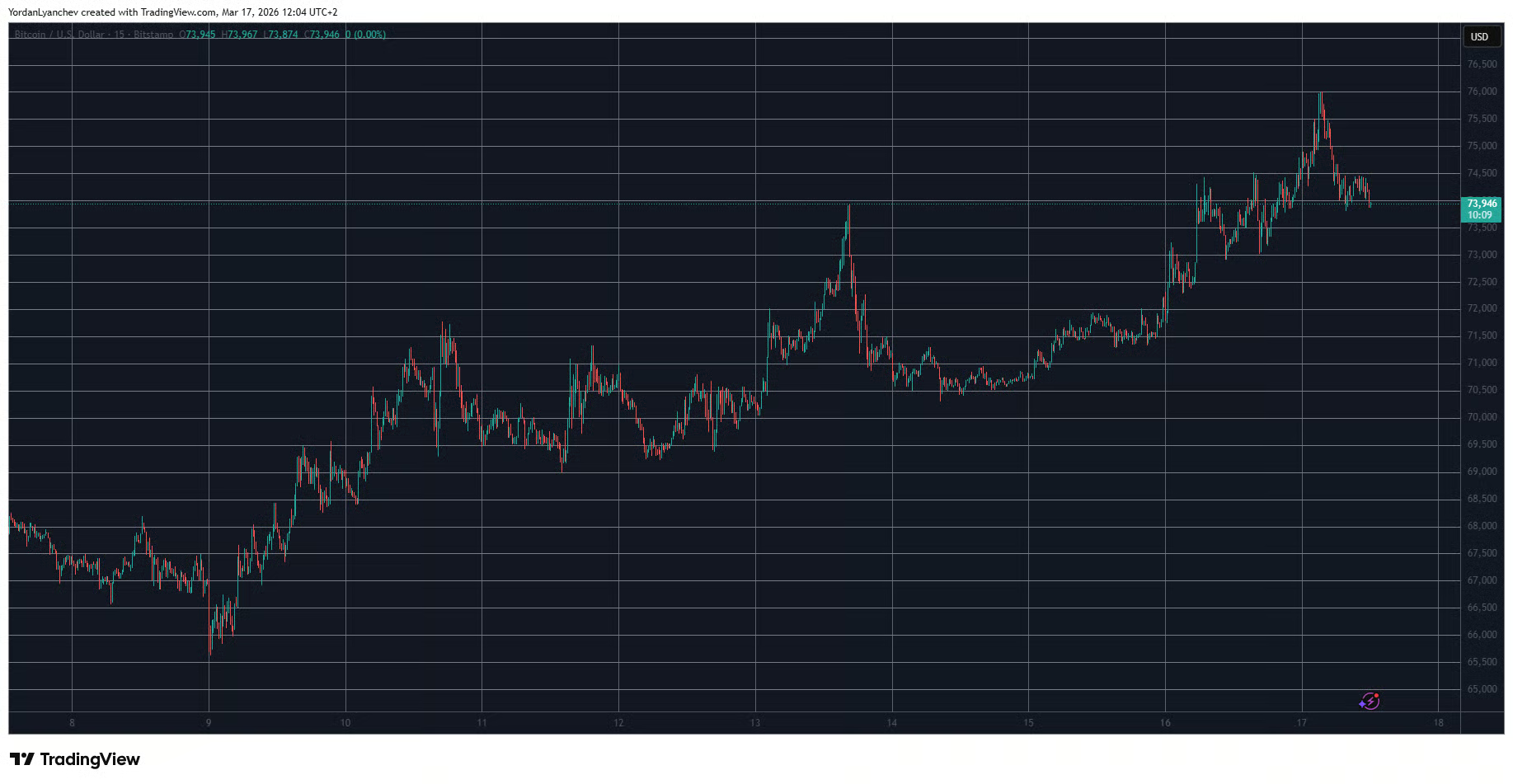
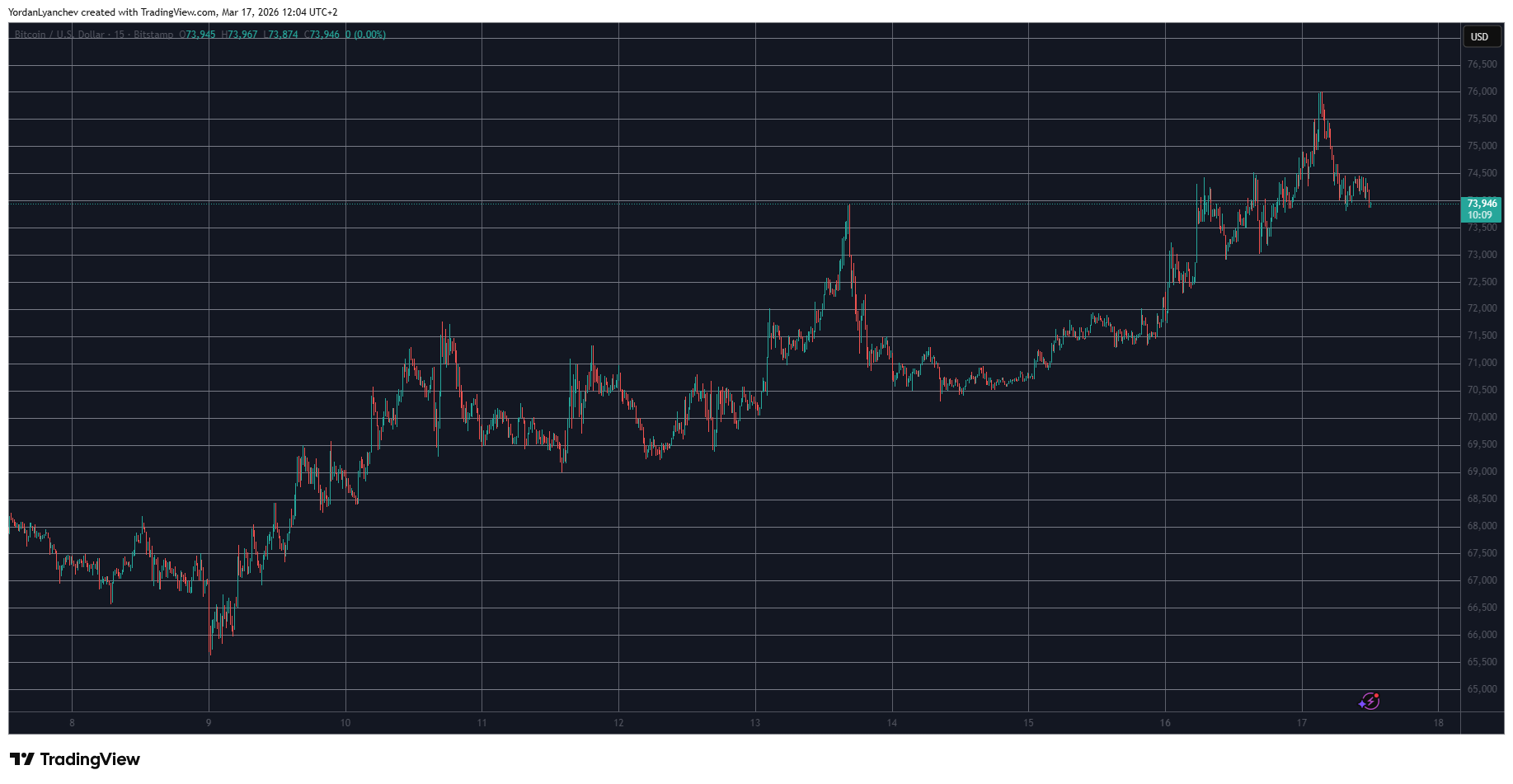
Bitcoin’s price resurgence that started shortly after the beginning of the war in the Middle East reached a new local peak earlier this morning at $76,000, where the asset faced some resistance.
Many altcoins have produced even more impressive gains, with ETH climbing above $2,300, and XRP touching $1.60. ZEC and M, alongside SIREN, FET, and HAS, have even soared by double digits.
BTC Tapped $76K
After dipping to $65,600 last Monday, the bitcoin bulls took command of the overall market performance and pushed the asset toward $70,000 by Wednesday. Although it was stopped there at first after the US CPI numbers came out, the cryptocurrency was more persistent and broke above that level on Friday when it even jumped to a ten-day peak of $74,000.
It was stopped there and driven to just over $70,000 during the weekend as the latest developments on the US/Israel vs Iran front unfolded. Nevertheless, they went on the offensive once again as the business week began. In the span of less than 24 hours, the bulls initiated another major rally, driving bitcoin to $76,000 earlier this morning.
This became its highest price tag since early February. After gaining over $5,000 in a day, though, the asset was primed for a correction that pushed it to $74,000 as of press time. Its market cap is close to $1.480 trillion on CG, while its dominance over the alts continues to struggle below 57%.
ZEC, M on the Rise
Ethereum was stopped at $2,400 this morning, but still trades above $2,300 after a 2% daily increase. XRP sits at $1.50 after a similar pump, and it has surpassed BNB in terms of market cap. HYPE has reclaimed the $40 level after a 3.5% rise, while CC is above $0.15.
ZEC and M have stolen the show from the larger-cap alts, both surging by around 16% to $270 and $1.72, respectively. SIREN, FET, and HASH are up by double-digits as well from the lower caps.
Pi Network’s PI has dumped again in the past 24 hours, losing 10% of value in a drop to $0.18 as of press time.
The total crypto market cap, though, has added $30 billion and is slightly above $2.6 trillion on CG.

Binance Free $600 (CryptoPotato Exclusive): Use this link to register a new account and receive $600 exclusive welcome offer on Binance (full details).
LIMITED OFFER for CryptoPotato readers at Bybit: Use this link to register and open a $500 FREE position on any coin!
Disclaimer: Information found on CryptoPotato is those of writers quoted. It does not represent the opinions of CryptoPotato on whether to buy, sell, or hold any investments. You are advised to conduct your own research before making any investment decisions. Use provided information at your own risk. See Disclaimer for more information.
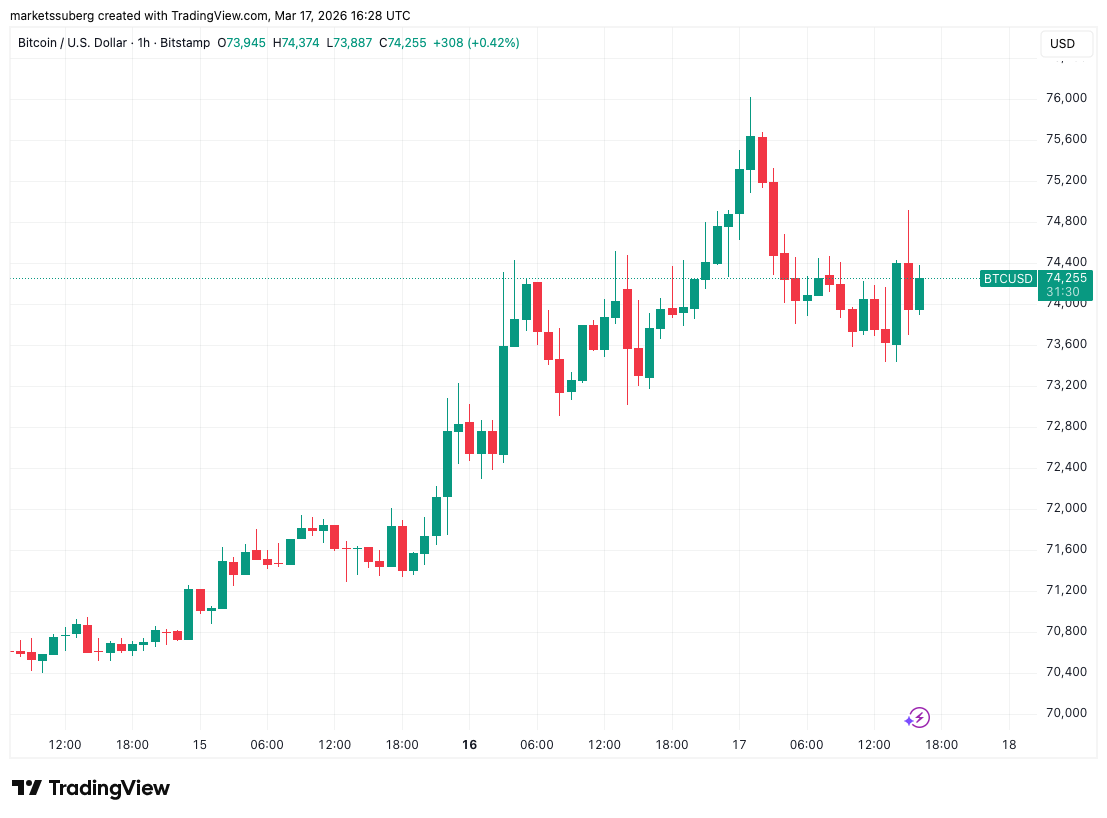
Bitcoin consolidated recent gains in the face of blanket skepticism over its rebound, while gold threatened to give up $5,000 support.
Bitcoin (BTC) circled $74,000 after Tuesday’s Wall Street open as skepticism increased over BTC price strength.
Key points:
-
Bitcoin stalls after a trip to $76,000, with short-term targets including a retreat to $68,000.
-
Traders stand by the long-term bear market thesis for BTC/USD.
-
Gold continues to show weakness, risking the loss of $5,000 per ounce support.
Trader warns against “hyping up” BTC price move
Data from TradingView showed cooling BTC price volatility after a run to new six-week highs of $76,000 to start the daily candle.

This proved unsustainable as heavy resistance sent BTC/USD lower, leading to concerns of a fakeout for Telegram channel Technical Crypto Analyst.
“Bitcoin is trending upward inside a rising channel and approaching the $74K–$79K resistance zone; while structure remains bullish above the trendline, a rejection from current levels could trigger a pullback toward the $68K support area,” it wrote on the day.

Traders stayed wary, doubling down on existing doubts about the fate of Bitcoin’s relief rally.
“Still nothing on HTF that suggests the bear market has bottomed. No divs, no volume at lows, no reversal pattern, etc,” trader Roman wrote in his latest analysis on X, referring to higher time frames.
Roman argued that market participants were “hyping up” a comparatively modest uptick in price, and that history demanded a longer bear market.

On the latter point, trader Jelle agreed, pointing to the 0.618 Fibonacci retracement level as a key price point.
“Every bear market has been shallower than the one before it – but all of them have happened well below the 0.618 retracement, after months of boring sideways PA,” he told X followers.
“Even if we don’t get the usual drawdown, I’m pretty sure the boredom chop is coming. Patience.”

Analyst eyes Bitcoin “outperformance” versus gold
Macro conditions were cooler compared to the start of the week. US stocks continued a modest rebound, while WTI crude oil remained below the $100 per barrel mark.
Related: Bitcoin sparks ‘bull trap’ warning after BTC price rejects at $76K
Gold, however, teased a breakdown from $5,000 support, retesting that level for the third consecutive day.

Calls for Bitcoin to steal the spotlight from the precious metal thus grew louder.
“Stand by for the outperformance of the decade,” crypto analyst James Easton commented on the weekly BTC/XAU chart.

This article does not contain investment advice or recommendations. Every investment and trading move involves risk, and readers should conduct their own research when making a decision. While we strive to provide accurate and timely information, Cointelegraph does not guarantee the accuracy, completeness, or reliability of any information in this article. This article may contain forward-looking statements that are subject to risks and uncertainties. Cointelegraph will not be liable for any loss or damage arising from your reliance on this information.
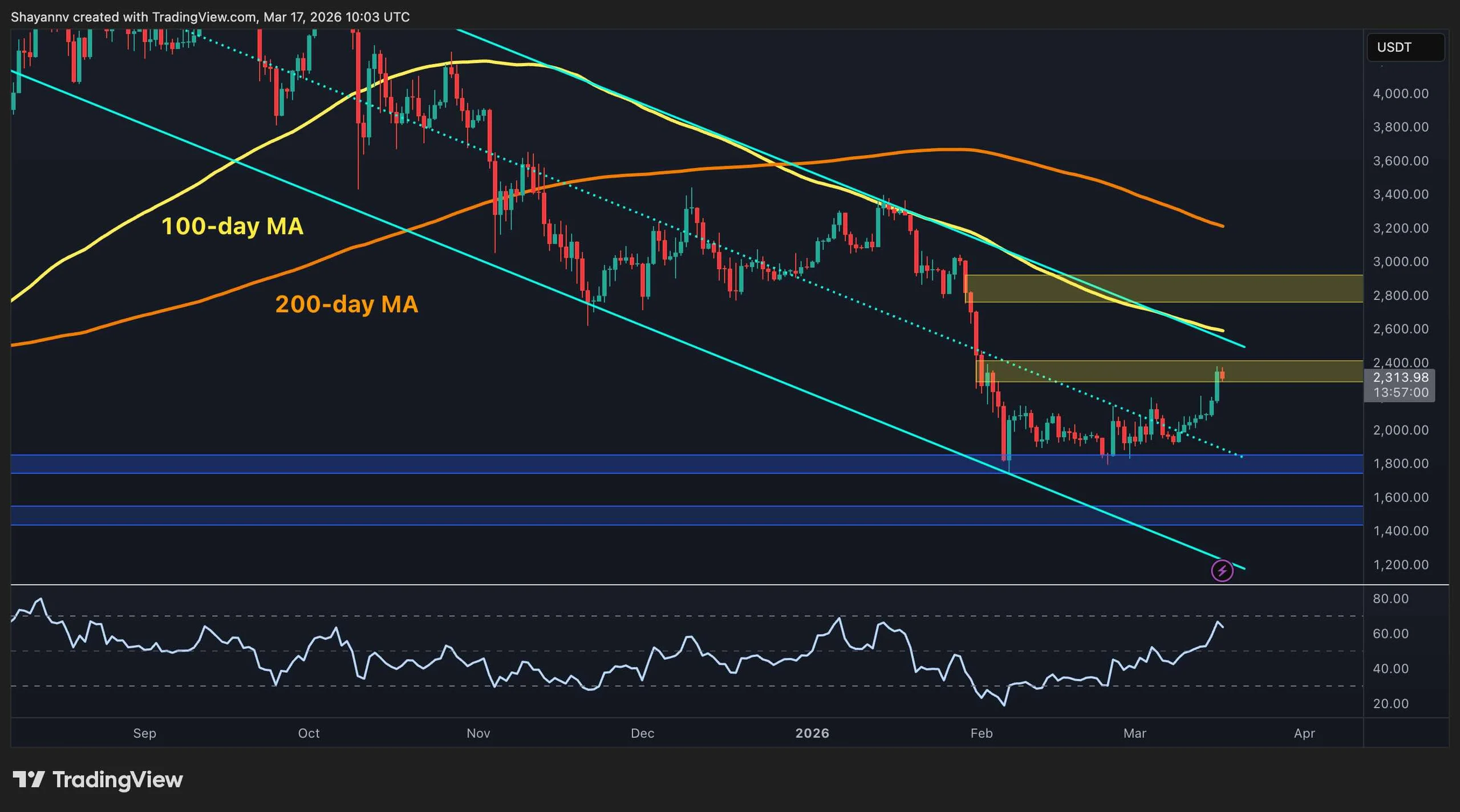
Ethereum is finally showing more upside potential. After spending weeks building a base above the February lows, ETH has now pushed into a key resistance zone, which makes this one of the more important tests since the selloff began. The rebound is real, but it is now approaching an area where sellers previously stepped in.
Ethereum Price Analysis: The Daily Chart
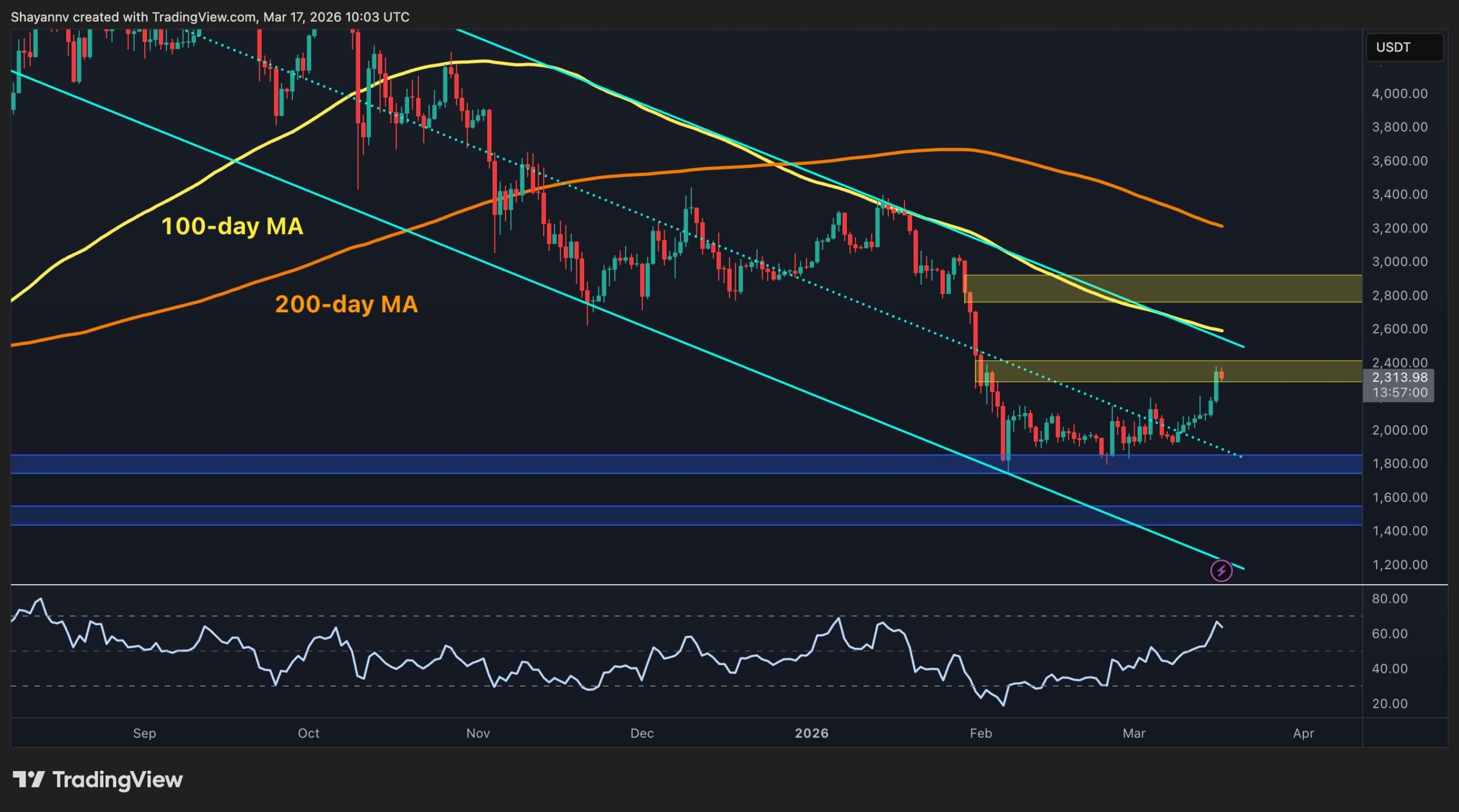
The daily chart has improved, but the broader trend is not fully repaired yet. ETH is still trading below the major 100-day and 200-day moving averages, and the bigger bearish structure from the previous months has not been completely invalidated. Even so, the strong reaction from the $1,800 region confirms that buyers have been defending that area aggressively.
The asset is now trading near the $2,300 to $2,400 supply zone, which is the next major battleground. If buyers manage to turn this area into support, the path could open toward the higher resistance band near $2,800. If not, this move may end up being just a strong relief rally inside a still-damaged higher timeframe structure.
ETH/USDT 4-Hour Chart
On the 4-hour chart, the recovery looks much cleaner. ETH has been climbing inside an ascending channel, printing higher highs and higher lows, which shows clear short-term control by buyers. The asset has even broken above the channel, pointing to a potentially more aggressive rally, if the current move does not become a fake breakout by dropping back inside the channel. Momentum has also expanded sharply, with RSI pushing into the overbought territory as the price accelerated into resistance.
That said, the market is no longer trading in the middle of the range. It is now testing the upper boundary of the recent advance and pressing into overhead supply at the same time. This usually means the next move matters a lot. It can either be a breakout continuation above the channel and resistance, or a fakeout and drop toward the mid-channel and the $2,000 to $2,100 area.

On-Chain Analysis
The on-chain backdrop is constructive. Ethereum’s 30-day transaction count exponential moving average remains elevated relative to most of the past cycle, even after cooling off from its recent spike.
That suggests network activity has not collapsed with the prior price weakness and that underlying usage is still holding up fairly well. However, it also shows that a potential capitulation phase is happening, as many holders have become active in selling their coins and exiting the market quickly. However, for every seller, there is a fresh buyer.
Overall, the network is showing better participation than price alone might suggest. That does not guarantee immediate upside, but it does support the idea that the recent rebound has a stronger foundation than a purely speculative bounce. If the price can now follow through above resistance, the on-chain picture would start to align much more clearly with a broader recovery thesis.

Binance Free $600 (CryptoPotato Exclusive): Use this link to register a new account and receive $600 exclusive welcome offer on Binance (full details).
LIMITED OFFER for CryptoPotato readers at Bybit: Use this link to register and open a $500 FREE position on any coin!
Disclaimer: Information found on CryptoPotato is those of writers quoted. It does not represent the opinions of CryptoPotato on whether to buy, sell, or hold any investments. You are advised to conduct your own research before making any investment decisions. Use provided information at your own risk. See Disclaimer for more information.

The company’s expansion in Brazil comes after it made big moves in Australia, the US, and Canada.
Ripple announced earlier today that it has significantly enhanced its presence in Brazil by incorporating some of its key features in the local market, including cross-border payments and digital asset custody.
The company’s President highlighted the importance of the Latin American market and praised Brazil for its rapidly developing financial ecosystem.
Ripple Doubles Down in Brazil
The statement published on March 17 reads that Ripple has now become the “only solution in the region capable of serving institutions across the full spectrum of financial needs – from cross-border payments and digital asset custody to prime brokerage and treasury management.”
The firm has also applied for a Virtual Asset Service Provider (VASP) license with the country’s central bank. The move comes after Brazil introduced its cryptocurrency regulatory framework and aims to reinforce Ripple’s “compliance-first approach” that has guided its global operations for over a decade.
After outlining the significance of the Latin American market, Ripple President Monica Long added that “Brazil has built one of the most advanced and forward-thinking financial ecosystems in the world.”
“We’ve spent more than a decade building the trust, licensing, and technology required to operate in regulated markets. Now, with our expanded platform, we can meet institutions across the region with everything they need to compete in the modern financial system,” Long concluded.
Brazilian Institutions Tapping Ripple Payments
The announcement explained that Ripple Custody will bring “bank-grade security, real-time compliance controls, and flexible deployment options to regulated institutions in the region.” Some of those include CRX and Justoken.
In the meantime, Ripple Payments, the end-to-end solution for moving money across borders with over $100 billion in processed volume globally, works with Banco Genial, Braza Bank, Nomad, Azify, ATTRUS, and Frente Corretora.
You may also like:
The company also said that its enterprise-grade stablecoin, RLUSD, has gained “significant traction” in the LATAM region, as institutions look for “trusted, regulated, digital dollar infrastructure.” RLUSD’s market cap has grown past $1.5 billion in less than 18 months after its launch.
The stablecoin has been adopted in Brazil by some of the most prominent exchanges and fintechs, including Mercado Bitcoin, Foxbit, Ripio, Braza Bank, Banco Genial, and others.
Ripple’s big move in Brazil follows similar developments in other regions. It began with a major announcement about an Australian financial license application, followed by a partnership focused on the North American markets.
Binance Free $600 (CryptoPotato Exclusive): Use this link to register a new account and receive $600 exclusive welcome offer on Binance (full details).
LIMITED OFFER for CryptoPotato readers at Bybit: Use this link to register and open a $500 FREE position on any coin!
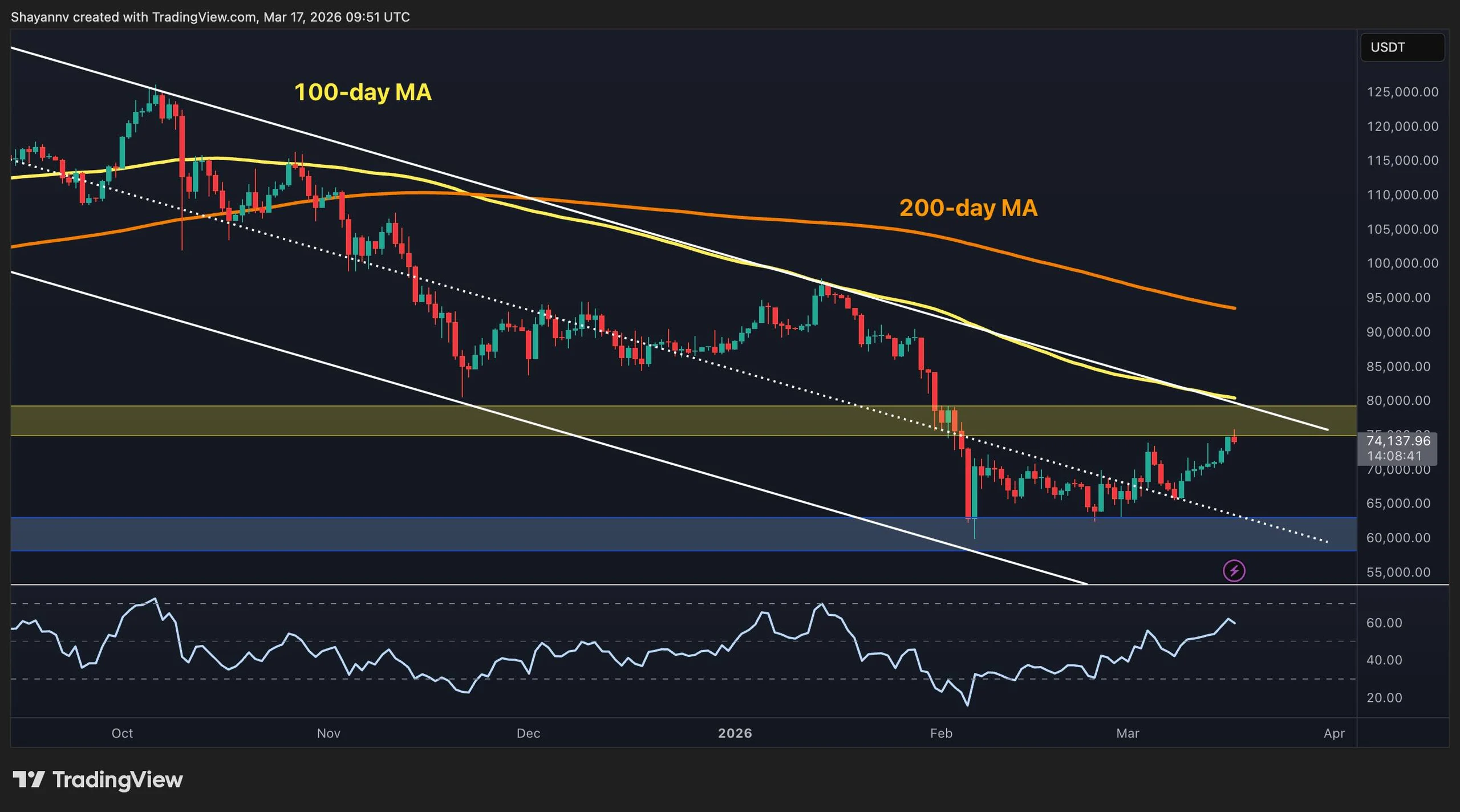
Bitcoin is pressing into a major test. The rebound from the $60,000 area has now extended into the mid-$70,000s, which means the price is no longer just recovering. It is challenging the first real ceiling of this bounce, and that makes the current zone especially important for the next directional move.
Bitcoin Price Analysis: The Daily Chart
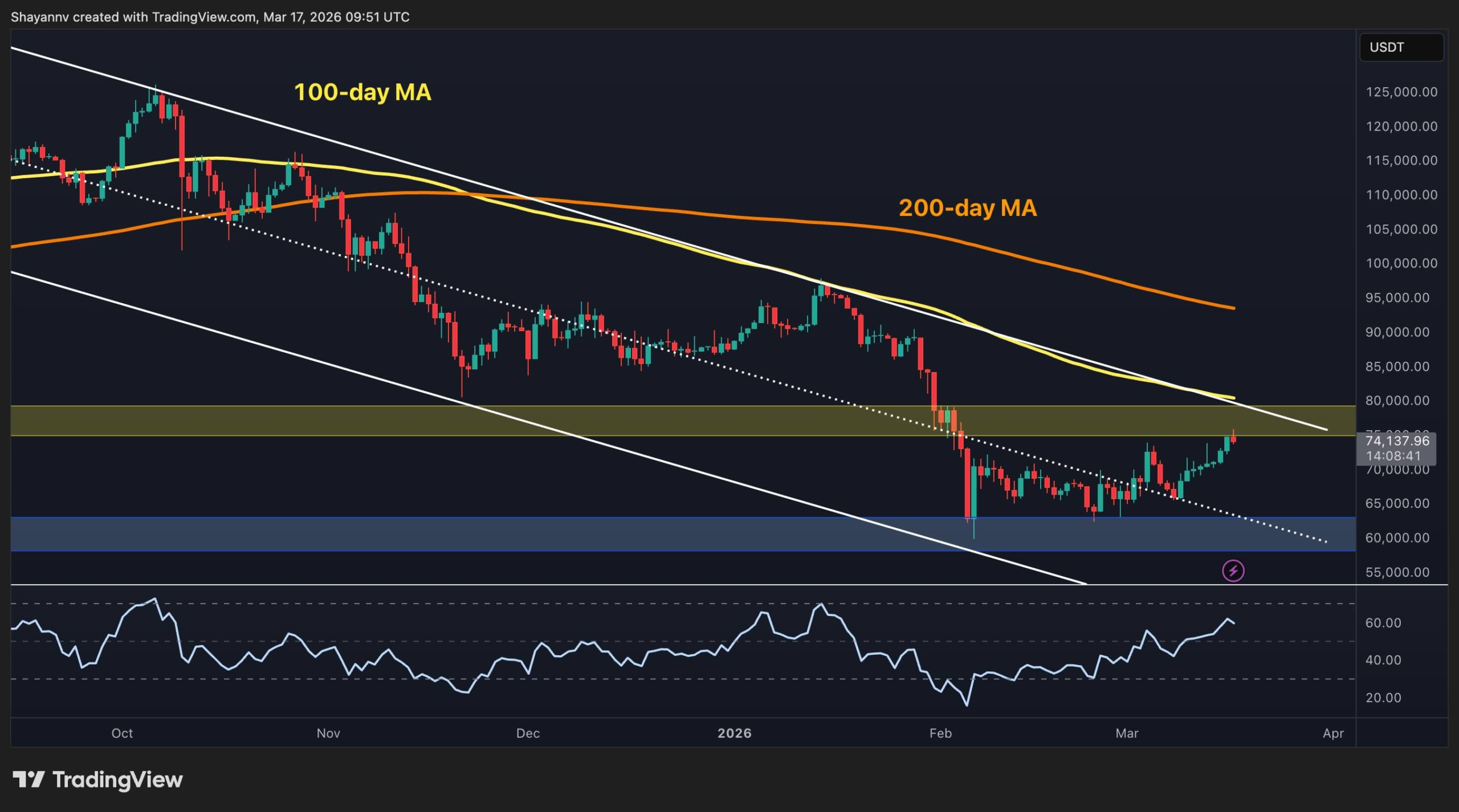
The daily chart has improved meaningfully, but the broader trend has not fully flipped yet. BTC is now pushing back into the $75,000 to $80,000 region, which marked the previous breakdown area and has now turned into a heavy supply zone. The price is also approaching the higher trendline of the descending channel again, while still trading beneath both the 100-day and 200-day moving averages, located at $80,000 and $93,000 levels, respectively.
That combination makes the current level a key decision area. If buyers can reclaim this region with a clean daily break, the recovery would start to look much more structural. If not, this could still end up being another lower-high rejection inside the broader corrective trend. For now, the chart is stronger than it was a few weeks ago, but not yet fully repaired.
BTC/USDT 4-Hour Chart
On the 4-hour chart, the structure remains constructive. Bitcoin has continued printing higher lows and highs inside its rising recovery channel, and the latest move has carried the price right into the upper resistance band around $73,000 to $76,000. That shows buyers are still in control in the short term.
Momentum is also firm, with the RSI holding in the upper half of its range and recently pushing higher again. Still, the market is now at a confluence zone where horizontal resistance and the upper trend boundary meet. So this is where continuation needs confirmation. A breakout could open the door to a stronger leg higher, while rejection here would likely drag BTC back toward the middle of the channel.

Sentiment Analysis
From a sentiment perspective, funding rates remain negative even as the price keeps climbing. That is a notable divergence. It shows that derivatives traders are still not leaning aggressively long, and short exposure remains relatively elevated despite the recovery.
That kind of backdrop is often supportive rather than bearish in the near term. When the price rises while funding stays subdued or negative, it suggests the move is not being driven by overcrowded bullish leverage. In other words, sentiment is still cautious, and that leaves room for upside if BTC can break resistance, since the market has not yet reached an overheated condition, and a short liquidation cascade could be the fuel the price needs to jump aggressively.

Binance Free $600 (CryptoPotato Exclusive): Use this link to register a new account and receive $600 exclusive welcome offer on Binance (full details).
LIMITED OFFER for CryptoPotato readers at Bybit: Use this link to register and open a $500 FREE position on any coin!
Disclaimer: Information found on CryptoPotato is those of writers quoted. It does not represent the opinions of CryptoPotato on whether to buy, sell, or hold any investments. You are advised to conduct your own research before making any investment decisions. Use provided information at your own risk. See Disclaimer for more information.
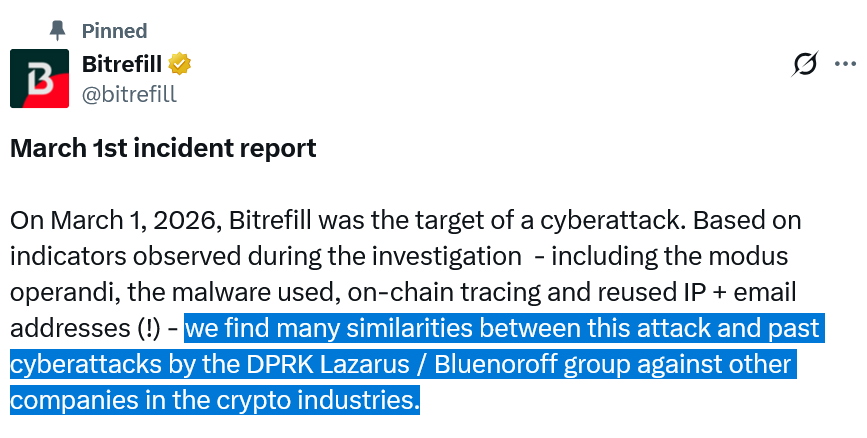
Crypto e-commerce store Bitrefill has revealed it was the victim of a cybersecurity attack on March 1, with the methods used closely resembling those of Lazarus Group, North Korea’s notorious hacking organization.
In a post to X on Tuesday, Bitrefill said the hackers used malware, on-chain tracing, and reused IP and email infrastructure to compromise an employee’s laptop, enabling them to drain funds from the company’s hot wallets while also accessing 18,500 purchase records, potentially revealing “limited customer information.”
Bitrefill said BlueNoroff Group, another North Korean hacking organization with close ties to the Lazarus Group, may have also been involved or been the sole attacker.

Source: Bitrefill
Bitrefill, which enables customers to spend crypto on real-world products and gift cards, said there was no evidence that the hackers extracted its database, suggesting the motive was financial.
“There is no evidence that they extracted our entire database, only that the attackers ran a limited number of queries consistent with probing to understand what there was to steal, including cryptocurrency and Bitrefill gift card inventory.”
While Bitrefill didn’t disclose how much funds were stolen, the company said it “will absorb” those losses from its operational capital.
“Almost everything is back to normal: payments, stock, accounts,” Bitrefill said, adding: “Sales volumes are also back to normal, and we are eternally thankful to our customers for your continued confidence in us.”
Despite many crypto platforms strengthening security measures in recent years, sophisticated hackers have continued to find ways to breach their defenses.
Related: Bonk.fun warns hackers hijacked domain in wallet-drainer attack
Lazarus Group remains the crypto industry’s most formidable threat and was behind the largest hack in crypto history, when it stole $1.4 billion from crypto exchange Bybit in February 2025.
Bitrefill has upped its security measures
Bitrefill said it contacted law enforcement and worked with crypto security firms Security Alliance, FearsOff Security, Recoveris.io and zeroShadow to navigate the cybersecurity incident. Part of its initial response was to turn its systems offline to contain the attack.
Bitrefill said it has already “significantly improved” its cybersecurity practices since the incident.
Those measures include cybersecurity reviews with security researchers and implementing their recommendations, tightening internal access controls and improving monitoring strategies for faster detection and response.
Magazine: China’s ‘50x’ blockchain boost, Alibaba-linked AI mines Bitcoin: Asia Express

Docusign, Inc. (DOCU) Q4 2026 Earnings Call Transcript

World Launches AgentKit to Verify Human-Backed AI Agents Using World ID

Jerry O’Connell Can’t Make ‘Any Kind Of Joke’ Around His Wife And Daughters


-
 Tech7 days ago
A 1,300-Pound NASA Spacecraft To Re-Enter Earth’s Atmosphere
-
 Crypto World4 days ago
HYPE Token Enters Net Deflation as HyperCore Buybacks Outpace Staking Rewards
-

 Fashion4 days ago
Weekend Open Thread: Addict Lip Glow
-

 Tech2 days ago
Your Legally Registered ‘Motorcycle’ Might Not Count Under Proposed US Law
-
Sports3 days ago
Why Duke and Michigan Are Dead Even Entering Selection Sunday
-

 NewsBeat6 days ago
Residents reaction as Shildon murder probe enters second day
-

 Business2 days ago
Search for Savannah Guthrie’s Mother Enters Seventh Week with No Arrests
-

 Business7 days ago
Search Enters Sixth Week With New Leads in Tucson Abduction Case
-

 Sports6 days ago
PWHL, Senators discussing plan to keep Charge in Ottawa
-

 Business4 days ago
US Airports Launch Donation Drives for Unpaid TSA Workers as Partial Government Shutdown Enters Fifth Week
-
 Tech9 hours ago
Are Split Spacebars the Next Big Gaming Keyboard Trend?
-
Crypto World3 days ago
Coinbase and Bybit in Investment Talks: Could Bybit Finally Enter the US Crypto Market?
-

 NewsBeat6 days ago
I Entered The Manosphere. Nothing Could Prepare Me For What I Found.
-

 Business4 days ago
Country star Brantley Gilbert enters growing non-alcoholic beer market
-

 Business2 days ago
Australian shares drop as Iran war enters third week
-

 Crypto World2 days ago
Crypto Lender BlockFills Enters Chapter 11 with Up to $500M in Liabilities
-

 Sports4 days ago
College Basketball Best Bets: Conference Tournament Semifinal Picks
-

 Politics7 days ago
Trump Says Middle East Is ‘Very Lucky’ That He’s President
-
 Crypto World6 days ago
Three Binance Charts May Be Hinting at Bitcoin’s Next Move
-
 Business5 days ago
Trump demands Powell cut rates as Iran conflict raises energy prices


You must be logged in to post a comment Login