The campaign includes an open letter to the deans and faculty of major U.S. business and law schools, co-signed by 20+ leading DeFi orgs.
1inch, the decentralized exchange aggregator with about $3 million in total value locked (TVL), has launched 1inch Forward, a DeFi education campaign across universities in the United States. According to a press release shared with The Defiant, the initiative was unveiled today, March 18, at the DC Blockchain Summit and is aimed at preparing students for a future career in decentralized finance.
Central to the campaign is an open letter to the deans and faculty councils of major U.S. business and law schools, co-signed by more than twenty crypto and DeFi organizations including the Blockchain Association, DeFi Education Fund, Aave Labs, Messari, Delphi Digital, and ETHGlobal.
The letter argues that DeFi and the tech behind it has long moved past its experimental phase — adopted by BlackRock, Franklin Templeton, JPMorgan, and the NYSE itself — yet most curricula still treat the subject as a fringe elective.
Advertisement
The coalition proposes four additions: blockchain architecture and decentralized technology applications as a core module; instruction on DeFi mechanisms like automated market makers and smart contract risk; digital asset regulatory frameworks; and hands-on engagement with live DeFi systems and on-chain data.
The broader 1inch Forward campaign also includes a campus tour of several institutions starting on March 27 at the University of Pennsylvania, with stops at Yale, Cornell Tech, Indiana University, Harvard, Stanford, and the University of Michigan across 2026 — featuring panels, mentorship, and one-on-one career sessions with 1inch staff.
Blockchain Job Searches Surge
1inch’s own analysis of Google search data, also included in today’s announcement, shows rapidly growing U.S. workforce interest in the space.
Comparing data from the past two years, searches for “Blockchain Jobs” rose 84% year-on-year, while “Crypto Jobs” more than doubled at +133%. At the specialist end, “DeFi Developer Jobs” searches nearly quadrupled, up 269%, and “Learn Blockchain Skills” climbed 44%.
Advertisement
“The 84% surge in blockchain job searches shows the next generation is already looking toward careers in the future of finance,” said 1inch co-founder Sergej Kunz.
With analysts flagging 2026 as the year DeFi goes fully mainstream, the question 1inch and the broader coalition of leading DeFi companies is placing before academia is how prepared U.S. graduates will be for the shift.
This article was written with the assistance of AI workflows. All our stories are curated, edited and fact-checked by a human.
Tom Brady looks on prior to an NFL game between the Baltimore Ravens and the Dallas Cowboys at AT&T Stadium in Arlington, Texas, Sept. 22, 2024.
Cooper Neill | Getty Images Sport | Getty Images
JPMorgan Chase has recruited some of the biggest names in American sports to help tackle a persistent problem: professional athletes going broke.
Advertisement
The bank on Wednesday announced an initiative called the JPMorgan Chase Athlete Council, led by two-time NBA Hall of Famer Dwyane Wade and featuring other high-profile athletes including Tom Brady, Sue Bird, Alex Morgan, Megan Rapinoe, A’ja Wilson and Jalen Brunson.
The stars will meet with JPMorgan executives to help the bank craft programs designed to serve athletes from college to professional life and retirement, JPMorgan said in a release.
The move reflects growing competition among banks and wealth managers to serve athletes, the most prominent of whom are increasingly becoming entrepreneurs, investors and media personalities.
Most athletes don’t receive personal finance education in school, and their relatively short careers leave a narrow earning window that requires careful planning, according to JPMorgan, the biggest U.S. bank by assets. About one in six NFL players declare bankruptcy within 12 years of retiring, the bank said.
Advertisement
“An athlete’s career and earning power are unique,” said Kristin Lemkau, head of JPMorgan Wealth Management. “Careers can be short and retirement unexpected. We want to develop a program by athletes for athletes.”
Wade said in the release that the initiative gives athletes a chance to share hard-won experiences with the next generation.
“Having the right educational resources and guidance is critical to making smart decisions about money as your career evolves,” he said.
The bank is also standing up an Athlete Center of Excellence staffed by financial professionals with sports experience and launching a content hub with checklists for athletes navigating the name, image and likeness, or NIL, system and guides for assembling a roster of advisors.
Gemini’s GEMI stock is down about 3% over 24 hours and trading below $6 even as Bitcoin, Ethereum and Coinbase rebound, signaling growing decoupling from the crypto rally.
Summary
GEMI opened near $5.95, about 3% below its 24‑hour level and near the bottom of today’s $5.92–$6.98 range, a pattern that suggests distribution rather than fresh accumulation.
After a 2025 IPO at $28 and a first‑day pop to ~$37, the stock has traced a classic post‑hype round‑trip as exploding losses, heavy spend and thin liquidity leave late‑cycle retail deep underwater.
Bitcoin and Ethereum have rebounded on ETF flows while Coinbase trades above $200, underscoring that institutions prefer COIN and spot BTC/ETH for beta, leaving GEMI as a second‑tier, execution‑risk bet on exchange earnings.
Gemini Space Station (GEMI), the listed parent of the Gemini crypto exchange, opened today at about 5.95 dollars per share, roughly 3 percent below where it changed hands 24 hours ago. While Bitcoin, Ethereum and the broader crypto complex have bounced into mid‑March, Gemini stock is drifting lower and bleeding off its IPO premium.
GEMI’s session opened near the bottom of today’s range at about 5.95 dollars, with prints so far between roughly 5.92 and 6.98 dollars. That profile – open near the low, fade from an early spike – screams distribution rather than accumulation. On free intraday feeds, the 24‑hour move screens at about -3 percent, leaving GEMI trading not only below the day’s high, but well under early‑March levels where dip‑buyers previously stepped in.
Advertisement
From IPO Darling To Sideways Grind
The context matters. Gemini priced its IPO at 28 dollars per share in September 2025 and opened around 37 dollars on debut, a 30‑plus‑percent first‑day pop that briefly pushed its valuation above 3 billion dollars. Yahoo Finance data now show a classic post‑hype pattern: a big initial squeeze, then months of sideways‑to‑down action as early investors recycle stock into a thinner secondary market. Retail that bought the story near the highs is deeply underwater; today’s sub‑6‑dollar print is brutal evidence of how quickly an exchange equity can round‑trip a cycle.
Fundamentals: Losses, Leverage And Reality
Pre‑IPO filings painted Gemini as a high‑beta growth vehicle with ugly near‑term P&L. Reported losses exploded over 580 percent in early 2025, with the firm burning roughly 282.5 million dollars in the first half as it piled spending into compliance, custody, and its GUSD stablecoin stack. That means GEMI is not just levered to trading volumes; it is also levered to management’s ability to slam the brakes on costs when the cycle cools. Unlike Bitcoin, which can rally on narrative alone, an exchange stock eventually has to show operating leverage in the numbers or the multiple compresses.
Against The Crypto Tape
The contrast with the underlying market is sharp. Bitcoin (BTC) clawed back from a flash crash to trade around 72,800 dollars last week, logging roughly 5 percent gains week‑on‑week, while Ethereum added close to 10 percent on ETF‑driven flows. Binance Research notes that February’s 21‑plus‑percent crypto drawdown is easing into a more constructive March as majors stabilize and alt rotation picks up. In that environment, a -3 percent 24‑hour move for GEMI says the stock is underperforming the asset class it is supposed to proxy.
Advertisement
Coinbase, the key listed comp, still trades above 200 dollars and enjoys green pre‑market prints tied to ETF flows and scale advantages. Institutions clearly prefer the incumbent with depth, derivatives, and regulatory moat to a newer IPO still digesting heavy losses. For traders, the message is simple: GEMI is becoming a second‑tier way to play the cycle. If you want clean beta to crypto, you own BTC, ETH or COIN; if you buy GEMI here, you are betting that management can close the gap by delivering real earnings leverage rather than just living off volatility.
Bitcoin’s latest update frames a period of geopolitical tension as a test of the asset’s maturity. The release notes Bitcoin has held a $65,000 to $76,000 range while outperforming gold and major equities, suggesting a broader base of demand beyond speculative trading. It points to growing institutional involvement, including spot Bitcoin ETFs, corporate treasury allocations, and sovereign wealth fund participation, and notes that more than 20 million Bitcoin have been mined, with over 95% of supply in circulation. For readers and market participants, the report signals how macro conditions and evolving demand dynamics could shape Bitcoin’s trajectory in the near term.
Key points
Bitcoin traded within a $65,000 to $76,000 range during the period described in the release.
Bitcoin outperformed gold, the S&P 500, and the Nasdaq in the same window.
Spot Bitcoin ETF inflows reached US$763 million last week, with additional institutional buying (US$1.28 billion) noted.
More than 20 million Bitcoin have been mined, placing over 95% of supply in circulation.
Why it matters
The pattern described points to a maturing market with stronger fundamental supports and institutional participation. If macro policy remains accommodative or the market absorbs supply-demand dynamics, Bitcoin could maintain resilience amid volatility and shifting risk sentiment, highlighting a potential longer-run framework for its price behavior.
What to watch
Federal Reserve policy signals on oil-driven inflation and the higher-for-longer rate path could influence risk assets, including crypto.
Guidance on rate cuts later in the year and how that might affect Bitcoin’s trajectory.
Ongoing spot ETF inflows and institutional demand trends to watch for sustained demand support.
Disclosure: The content below is a press release provided by the company or its PR representative. It is published for informational purposes.
Bitcoin Shows Resilience Amid Middle East Tensions, Outperforming Gold and Equities
Abu Dhabi, UAE – March 18, 2026
Bitcoin has demonstrated notable resilience amid ongoing geopolitical tensions in the Middle East, holding up better than many market participants anticipated, according to Josh Gilbert, Market Analyst at eToro.
Despite remaining approximately 45% below its October all-time highs, bitcoin has consolidated within a US$65,000 to US$76,000 range. This stability comes despite a backdrop of surging oil prices, a stronger US dollar, and heightened global uncertainty—factors that would historically have exerted significant downward pressure on risk assets.
“Bitcoin’s ability to hold its ground in the current environment signals a clear evolution in the asset’s maturity,” said Gilbert. “Rather than experiencing sharp sell-offs, we’re seeing consolidation, which reflects stronger structural support and more diverse demand drivers.”
Interestingly, bitcoin has outperformed traditional safe-haven and equity assets during this period, including gold, the S&P 500, and the Nasdaq. While gold initially rallied on safe-haven demand at the onset of the conflict, it has since pulled back amid a strengthening dollar and rising bond yields.
“Gold has had an exceptional run this year, while bitcoin entered this period already significantly retraced. This dynamic helps explain why bitcoin has shown relative strength, while gold has given back some gains,” Gilbert added.
The current market environment also highlights the growing institutionalisation of bitcoin. Compared to previous downturns—such as in 2022, when bitcoin fell between 60% and 70%—today’s market is underpinned by stronger fundamentals, including the presence of spot ETFs, corporate treasury allocations, and sovereign wealth fund participation.
Recent data underscores this shift. Spot bitcoin ETFs recorded inflows of US$763 million last week, while Strategy continued its accumulation with a US$1.28 billion purchase. Additionally, more than 20 million bitcoin have now been mined, meaning over 95% of the total supply is already in circulation, further tightening supply dynamics.
“We are seeing a unique convergence where supply is becoming increasingly constrained while institutional demand continues to build,” said Gilbert. “This creates a structurally supportive backdrop for bitcoin over the medium to long term.”
Looking ahead, macroeconomic policy—particularly from the US Federal Reserve—will play a critical role in shaping bitcoin’s trajectory.
Advertisement
“If the Fed signals that oil-driven inflation will keep interest rates higher for longer, risk assets, including crypto, could remain under pressure,” Gilbert explained. “However, if there is room for rate cuts later in the year, the combination of tightening supply and renewed institutional demand could see bitcoin retest its highs.”
While near-term uncertainty remains, bitcoin’s current performance suggests a more mature and resilient asset class, positioning it differently from previous market cycles.
Risk & affiliate notice: Crypto assets are volatile and capital is at risk. This article may contain affiliate links. Read full disclosure
BTC’s price action started to worsen as central bank decisions and oil prices outweighed crypto-specific drivers.
Bitcoin was trading below $72,000 on Wednesday after failing to hold within its post-shock range but showing limited ability to build momentum beyond its recent high.
According to a market update by QCP Capital, the cryptocurrency is no longer trading like a pure high-beta risk asset, but it is not yet attracting consistent safe-haven flows either.
Advertisement
Macro Dominance Grows
The broader market remains under pressure, although declines have been relatively contained compared to other macro-sensitive risk assets. The dip-buying activity at the lower end of the range has continued, while spot market volumes remain low. Such a trend indicates that near-term price direction is being driven primarily by macroeconomic factors rather than crypto-specific developments, QCP Capital explained.
In derivatives markets, the options backdrop remains firm but defensive, as 30-day implied volatility hovered around the 50 level. Still above both 10-day and 30-day realised volatility, maintained positive carry, and supported premium-selling strategies. The term structure is mildly in “contango,” though slightly softer on the day, while 30-day risk reversals continue to show higher demand for downside protection, as puts are priced richer than calls.
Skew levels are not at extremes, but implied volatility remains high relative to recent history. This means that volatility conditions are not significantly dislocated. The overall options surface points to a defensive positioning, as negative front-end skew and a residual geopolitical premium are embedded further along the curve.
Macro conditions remain the dominant influence, and the market is focused on a week for central bank decisions. The US Federal Reserve is set to conclude its March policy meeting on Wednesday, followed by the European Central Bank, Bank of Japan, and Bank of England on Thursday.
Advertisement
Expectations for monetary easing have been reduced as rising oil prices complicate the outlook for rate cuts, despite softer growth and labor market data. Oil prices are holding near the $100 level, and ongoing tensions in the Gulf are contributing to a stagflationary backdrop across global markets.
You may also like:
In this environment, QCP said that while Bitcoin is no longer trading purely as a high-beta risk asset, it has also not established itself as a consistent safe-haven, and its range-bound behavior is likely to persist until greater clarity emerges on monetary policy or geopolitical developments.
Downside Liquidity Expansion Risks
According to a Bitunix analyst, Bitcoin has entered a high-level consolidation phase after sweeping overhead liquidity. In a statement to CryptoPotato, they explained that the 75,000-76,000 zone represents a clear concentration of short-side liquidity, acting as a near-term resistance band subject to repeated testing.
“On the downside, the 72,800 level serves as a critical demand cluster, where long positioning overlaps with structural support. A breakdown below this region would likely trigger liquidity expansion toward 71,500-72,000, increasing the probability of cascading liquidations.”
SPECIAL OFFER (Exclusive)
Binance Free $600 (CryptoPotato Exclusive): Use this link to register a new account and receive $600 exclusive welcome offer on Binance (full details).
Advertisement
LIMITED OFFER for CryptoPotato readers at Bybit: Use this link to register and open a $500 FREE position on any coin!
Bitcoin is the most famous digital asset in the world. Most people think the only way to own it is by buying it or mining it with loud machines. A new platform called Bitcoin Everlight is changing that. It has built a simple way for anyone to help the Bitcoin network and earn real BTC rewards. This new system is called Everlight Shards.
Instead of needing a lot of technical skill, users can now support Bitcoin infrastructure through a very easy process. This is why many people are starting to look at Bitcoin Everlight as a better way to grow their Bitcoin balance.
What is a Bitcoin Everlight Shard?
An Everlight Shard is like a digital ticket that lets you join the network. In the past, if you wanted to help verify Bitcoin payments, you had to run a server or have a lot of computer knowledge. Shards take away all that hard work.
When you activate a Shard, you are helping Bitcoin process payments faster and cheaper. The network does the technical part, and you get rewarded for providing the support it needs. It is a simple way to “stack sats.” This means slowly building up your Bitcoin holdings over time.
Advertisement
Bank-Grade Security and Audits
Bitcoin Everlight is built with a Bank-Grade security plan. This means they use the same high standards that big financial companies use to keep money safe. To ensure total trust, the project has completed several major safety checks.
ISO/IEC 27001 Certification: The platform reached this gold standard for keeping information safe.
Smart Contract Audits: The code was 100% audited by Solidproof and Spywolf to prove it is secure.
Data Privacy: The network follows strict GDPR rules and has 24/7 monitoring to protect users.
4 Easy Steps to Start Earning
The team at Bitcoin Everlight wanted to make sure anyone could use this system. They have created a simple path that only takes four steps to complete.
Get BTCL Tokens: First, you acquire the BTCL utility tokens during the current presale phase.
Activate a Shard: Your Shard will turn on automatically once you have enough tokens in your balance to meet a tier.
Validate Transactions: Once your Shard is active, it starts helping the network route and verify Bitcoin payments.
Earn Real Bitcoin: As the network handles real transactions, you receive a share of the fees in native Bitcoin.
Understanding the Shard Tiers
The system uses different levels, or tiers, to help the network grow. The level you reach depends on how much you put into the project during the presale.
Azure Shard ($500): This is the entry level and gives you up to 12% rewards during the presale phase.
Violet Shard ($1,500): This is the middle level and increases your presale rewards to 18%.
Radiant Shard ($3,000): This is the top level for the biggest supporters and offers 28% or more in rewards.
If you have less than $500, your Shard is Dormant. This means it is waiting in line. Once you add more to reach the $500 mark, it turns on and starts earning for you.
Why Native Bitcoin Rewards Matter
Most crypto projects pay you in their own new tokens. If that new token drops in price, your rewards lose value quickly. Bitcoin Everlight is different because it pays you in Native BTC. This is the real Bitcoin that everyone knows.
After the network launches, you earn a share of the fees from people using the network. This means that as more people use Bitcoin for fast payments, your rewards can grow naturally. You are earning the strongest digital asset in the world just by helping the network run smoothly.
Advertisement
Phase 1 Presale: 6 Days Remaining
The project is currently in the very first stage of its launch. It is the best time to get involved because the price is at its lowest.
Current Stage: Phase 1
Token Price: $0.0008
Total Time: Six Days
Next Price Jump: $0.0010
There are only six days left in this phase. Once the six days are over, the price will automatically jump to $0.0010. Getting in now during Phase 1 means you can activate a higher Shard tier for a much lower cost.
Conclusion: A Simple Path to Bitcoin
Bitcoin Everlight has removed the hard parts of earning Bitcoin. You do not need to be a computer expert or buy expensive mining rigs. By using the Shard system, you can support the network and earn real rewards from your home. With strong security and a simple process, it is a great way for anyone to start stacking sats today.
Join Phase 1 and activate your Everlight Shard here.
Disclaimer: The above article is sponsored content; it’s written by a third party. CryptoPotato doesn’t endorse or assume responsibility for the content, advertising, products, quality, accuracy, or other materials on this page. Nothing in it should be construed as financial advice. Readers are strongly advised to verify the information independently and carefully before engaging with any company or project mentioned and to do their own research. Investing in cryptocurrencies carries a risk of capital loss, and readers are also advised to consult a professional before making any decisions that may or may not be based on the above-sponsored content.
Advertisement
Readers are also advised to read CryptoPotato’s full disclaimer.
SPECIAL OFFER (Exclusive)
Binance Free $600 (CryptoPotato Exclusive): Use this link to register a new account and receive $600 exclusive welcome offer on Binance (full details).
LIMITED OFFER for CryptoPotato readers at Bybit: Use this link to register and open a $500 FREE position on any coin!
Tally, which served over one million users and processed $1 billion in payments, is winding down operations as demand for DAO tooling declines.
Tally, a prominent DAO governance platform, has announced it is shutting down after six years of operation. The platform served more than one million users, supported governance across hundreds of organizations, and processed over $1 billion in payments before ceasing operations.
The shutdown marks a significant turning point for the DAO governance sector. Co-founder and CEO Dennison Bertram cited reduced demand for DAO tools, attributing the decline to relaxed regulatory stances and a lack of consumer-facing applications in the broader ecosystem. Tally had previously decided against pursuing an ICO, concluding it no longer made sense as the company prepared to wind down.
ETHEREUM COMMUNITY DEBATES FOUNDATIONS NEW MANDATE DOCUMENT: The Ethereum Foundation’s new mandate — a sweeping document released to clarify the organization’s role and principles — sparked a torrent of reactions, with supporters praising it as a long-overdue articulation of the blockchain’s ethos and critics saying it reinforces the foundation’s hands-off approach at a time when Ethereum needs stronger leadership to meet the growing needs of institutions. The 38-page document lays out what the foundation described as a constitutional guide to its mission, emphasizing its role as a neutral steward rather than a centralized authority. The mandate frames the foundation’s job as maintaining Ethereum as a decentralized and resilient infrastructure while supporting the protocol layer and public goods across the ecosystem. The document arrived at a pivotal moment for Ethereum. The network has matured into one of the world’s largest crypto ecosystems, and the foundation itself has gone through leadership changes and debates over how actively it should steer development. Reactions on X quickly divided into two camps. Critics were quick to argue the mandate was overly philosophical and failed to address Ethereum’s need to compete for real-world adoption — particularly as institutional interest in blockchain grows. Dankrad Feist, a former Ethereum Foundation researcher and key contributor to Ethereum’s scaling roadmap, said the document does little to address practical business development concerns about how the ecosystem serves real users. Others suggested the mandate risks reinforcing a status quo in which the foundation holds significant soft influence without clearly defined responsibilities. Supporters in the community welcomed the mandate as a reaffirmation of the network’s foundational principles. Chris Perkins, president and managing partner at crypto investment firm CoinFund, said the document helps clarify the foundation’s purpose as a nonprofit steward of the ecosystem. Infrastructure firms in the Ethereum ecosystem also voiced support for the mandate. Nethermind, a company that develops one of blockchain’s core client software implementations, said the document reflects many of the properties institutional buyers already look for when evaluating blockchain infrastructure. — Margaux Nijkerk Read more.
WORLD LAUNCHES AGENTKIT: As AI agents increasingly transact, shop, and act autonomously online — a market that can reach $3 trillion to $5 trillion by 2030 — a key issue comes into focus: how to verify that a real person is behind the activity. Sam Altman–backed identity project World (formerly WorldCoin) says it has the solution. On Tuesday, the company rolled out AgentKit, a developer toolkit that allows AI agents to carry cryptographic proof that they are backed by a unique human, using its World ID system. The product works with x402, a protocol developed by Coinbase and Cloudflare that enables “agentic payments” by embedding stablecoin micropayments into the internet’s communication layer so AI Agents and software can pay each other without human intervention. “Payments are the ‘how’ of agentic commerce, but identity is the ‘who,’” said Erik Reppel, head of engineering at Coinbase Developer Platform and founder of x402. “This is a massive step toward a web where agents aren’t just seen as automated traffic, but as legitimate economic participants.” The move comes as AI agents are rapidly evolving, handling time-consuming and often frustrating tasks from booking reservations to surfing e-commerce marketplaces for the best deals. — Olivier Acuna Read more.
VISA VS. COINBASE ON AI AGENTS: Your AI just made several payments while you read that headline. You approved none of them. Visa processed none of them. And if the crypto industry’s biggest bulls are right, that’s not a bug — it’s the entire future of the internet economy. Coinbase founder Brian Armstrong thinks there will soon be more AI agents than humans making transactions on the internet. Binance founder Changpeng Zhao went further, predicting agents will make one million times more payments than people, all in crypto. The posts landed on the same day last week and lit up crypto X.The core argument is structural. AI agents can’t open bank accounts because banks require identity verification that software cannot provide, whereas a crypto wallet only needs a private key. No KYC, no compliance review, no waiting — and that asymmetry is what Armstrong was pointing at. But the wallet problem is only half the picture. The other half is economics. Agents don’t shop the way humans do. When an AI agent is executing a task — such as researching a topic, coordinating a supply chain, building a report — it might call dozens of specialized APIs in a single session. Each call might be worth fractions of a cent, covering GPU compute time, real-time data feeds, web scraping services, or hiring a sub-agent to handle translation. None of these transactions resembles anything Visa or Mastercard was designed to process. — Shaurya Malwa Read more.
PREDICTION MARKETS AND AI AGENTS: Prediction markets have long promised to aggregate insights about future events. Increasingly, those signals are coming not just from people, but from machines. According to David Minarsch, CEO and co-founder of Valory AG, the team behind the crypto-AI protocol Olas, autonomous AI agents are emerging as powerful tools for trading prediction markets, particularly for retail users trying to compete in an increasingly automated environment. Valory builds products at the intersection of blockchain and multi-agent systems (MAS), and its current focus is Olas, formerly known as Autonolas. The protocol is designed as an infrastructure for autonomous software agents that can run services on blockchains, interact with smart contracts, and cooperate with one another while earning crypto rewards. The broader vision is what Minarsch calls an “agent economy”. A decentralized ecosystem where autonomous AI agents perform useful tasks and generate value for their users. One of the most visible experiments in that vision is Polystrat, an AI agent launched on the prediction-market platform Polymarket in February 2026. The agent trades on behalf of users who self-custody and own it, executing strategies continuously around the clock. “In a nutshell, Polystrat is an autonomous AI agent that trades on Polymarket 24/7 on behalf of its human user,” Minarsch said. The idea is simple: while humans sleep, work or lose focus, the agent keeps trading. — Will Canny Read more.
Advertisement
In Other News
Mastercard agreed to buy BVNK, a stablecoin infrastructure company, for as much as $1.8 billion as it looks to bolster its use of the digital assets for international payments. By integrating BVNK’s technology, Mastercard aims to connect onchain payments to its global network, enabling use cases such as cross-border transfers, remittances and business-to-business payments, the company said. BVNK provides the technology to bridge traditional fiat systems with blockchain-based transactions, allowing businesses to move money in seconds across more than 130 countries. Its infrastructure, used by firms including Worldpay, Deel and Flywire, processes $30 billion a year, the U.K.-based company said in a blog post. BVNK’s capabilities complement Mastercard’s existing card network, expanding options for moving money across both traditional fiat systems and blockchain-based rails, investment bank William Blair said in a note. — Helene Braun Read more.
Crypto trading firm GSR said it is acquiring Autonomous and Architech for $57 million, expanding into token advisory and capital markets services. Autonomous will keep its brand and focus on token launch operations, while Architech will anchor a new unit, GSR Digital Asset Advisory. The group will work alongside GSR’s trading, liquidity and asset management businesses. Token launches today often rely on separate firms for structuring, token economics and market making, which can lead to misaligned incentives. The firm said GSR’s model combines those services into one platform, covering governance design, exchange strategy and capital planning. At the same time, many token foundations manage large treasuries without formal financial tools. GSR is expanding into treasury operations, offering support in liquidity planning, risk management and diversification as projects look to move beyond holding their own tokens. — Kristzian Sandor Read more.
Regulatory and Policy
For the first time, the U.S Securities and Exchange Commission has sought to clearly define different types of crypto assets and how the regulator will approach them, issuing those new standards alongside its sister agency that’s responsible for commodities. The SEC’s interpretive guidance, which doesn’t yet carry the weight of a formal new rule, has been promised by its leader, Chairman Paul Atkins, who was appointed by President Donald Trump to advance a pro-crypto agenda. And it was issued in partnership with the Commodity Futures Trading Commission, just days after the two agencies agreed on a formal relationship in which they plan to regulate crypto and other industries as close partners. “After more than a decade of uncertainty, this interpretation will provide market participants with a clear understanding of how the Commission treats crypto assets under federal securities laws,” Atkins said in a statement. — Jesse Hamilton Read more.
Phantom, a developer of self-custodial crypto wallets particularly popular in the Solana ecosystem, secured a no-action letter from the U.S. Commodity Futures Trading Commission (CFTC), allowing it to offer users access to certain regulated derivatives markets without registering as a broker. In a statement, the CFTC’s Market Participants Division said it would not recommend enforcement action against Phantom for failing to register as an introducing broker, provided the firm meets a set of conditions. The relief applies to Phantom’s software, acting as a non-custodial interface that connects users directly with CFTC-registered entities, such as futures commission merchants and designated contract markets. Phantom said in a blog post that the letter enables it to integrate access to regulated derivatives and event contracts directly in its app through registered partners, while ensuring users submit orders straight to exchanges. The company emphasized it does not custody customer funds or intermediate trades.— Margaux Nijkerk Read more.
Kraken has frozen its multibillion-dollar initial public offering plan, citing difficult market conditions just months after confidentially filing with the SEC.
Kraken has halted its plans to go public, according to CoinDesk reporting. The move comes despite the company’s parent filing a draft S-1 registration statement with the SEC in November 2025, signaling serious preparation for a U.S. listing at a $20 billion valuation.
Market headwinds have forced crypto companies to reassess public market entry timelines. Kraken had previously been exploring debt financing options and focusing on financial strength and regulatory compliance as preconditions for an IPO, but current conditions have made the path forward uncertain.
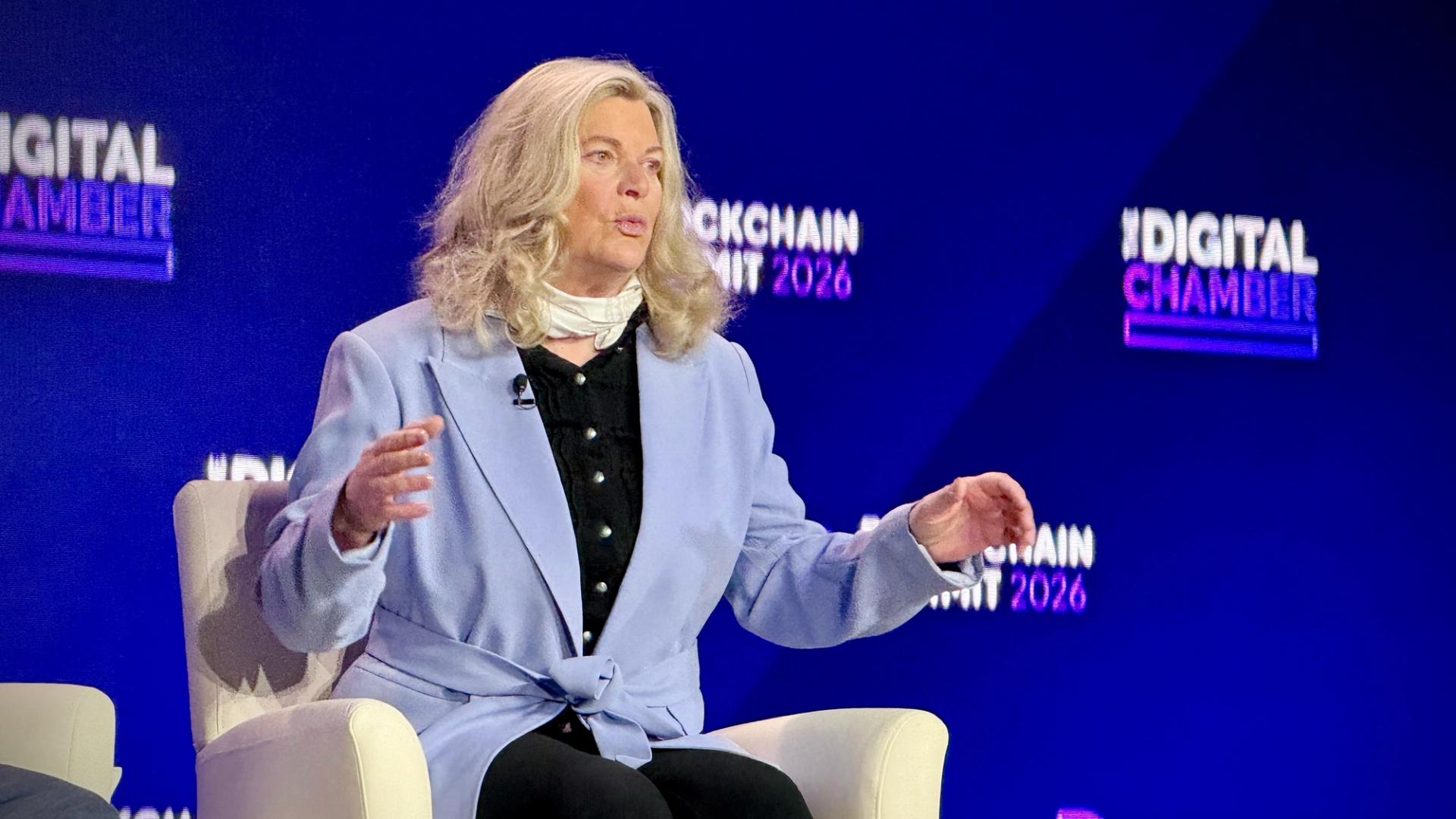
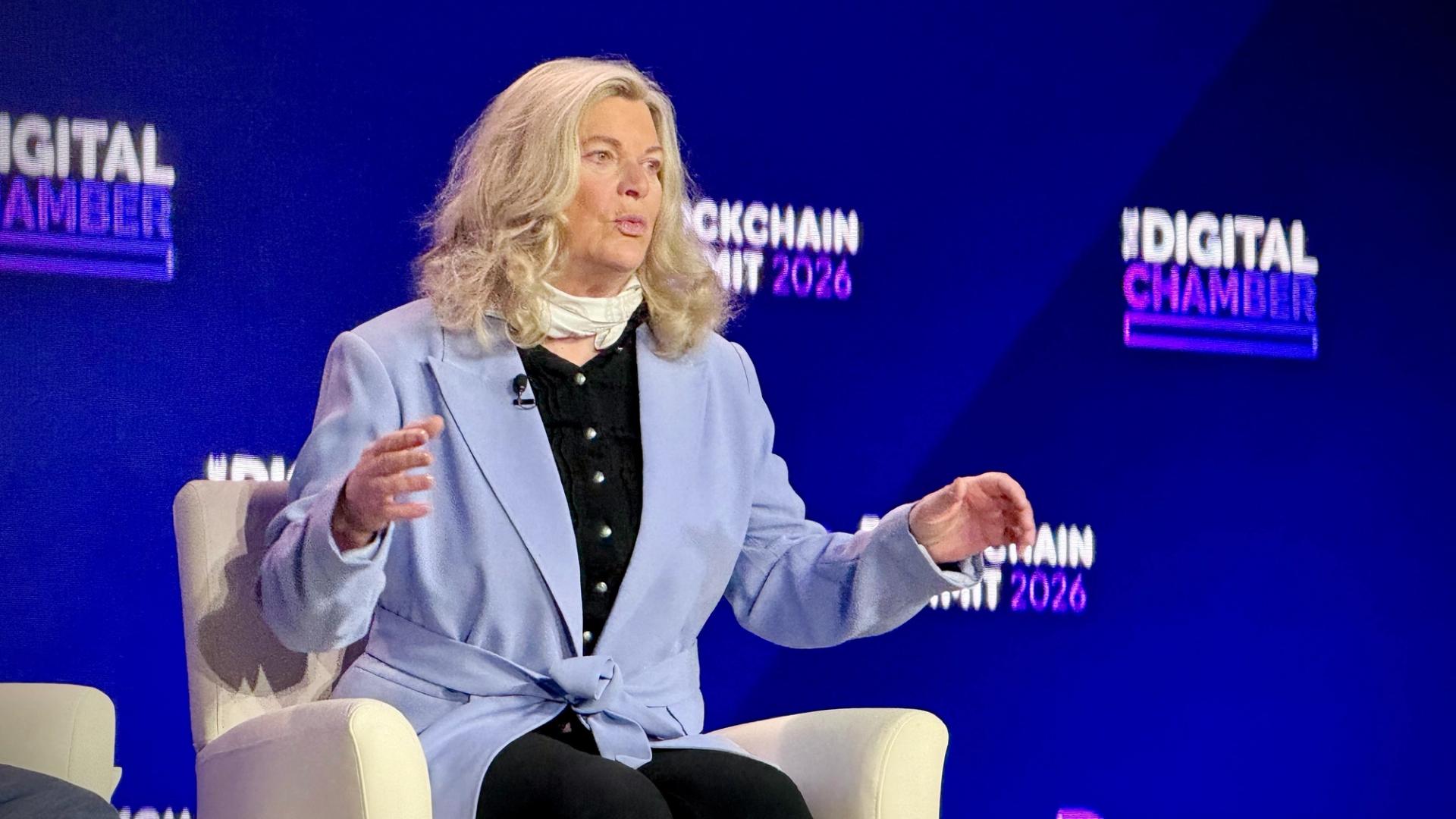
U.S. Senator Cynthia Lummis, a lawmaker at the center of talks on the crypto industry’s top policy goal to pass a market structure bill, said the talks have probably reached the necessary compromises to move the legislation forward.
“We think we’ve got it,” Lummis, the chairwoman of the Senate Banking Committee’s digital assets subcommittee, said at the Digital Chamber’s DC Blockchain Summit on Wednesday. “We really are going to get it out of the banking committee in April.”
Lummis has been deeply involved in months of talks over the Digital Asset Market Clarity Act language. After the process was derailed by bank lobbyists who’d argued that stablecoin yield would threaten their industry’s deposit accounts, much of the debate centered on stablecoin rewards programs that the crypto industry believed were still allowed under last year’s Guiding and Establishing National Innovation for U.S. Stablecoins (GENIUS) Act.
The Wyoming Republican said she believes the final compromise will disallow crypto platforms from offering rewards that use any language that equates them with deposit yield or ties the rewards to the amount of assets a user holds.
Advertisement
“Anything that sounds like banking product terminology will not appear,” she said. She added that she hasn’t seen the most recent language, but she said that Coinbase CEO Brian Armstrong has been “really pretty good about being willing to give on this issue.”
Armstrong and his U.S. exchange, which has leaned heavily into stablecoin rewards programs, had opposed an earlier compromise effort, which had initially helped derail the legislative process on this bill.
Senator Bernie Moreno, another Republican on the committee, said in a video statement at the same event that two of his colleagues on the panel, Democrat Angela Alsobrooks and Republican Thom Tillis are in the final stage of the stablecoin talks, which also involves the White House. Once they all sign off, it’s “go time” for the bill.
Previous disagreements over language governing the security of decentralized finance (DeFi) has also been worked out, Lummis said.
Advertisement
Lummis suggested the legislation will get a hearing after the Senate’s Easter break, pointing to late April. If it does clear such a hearing, known as a markup, that will mark the second necessary committee approval (after the Senate Agriculture Committee had already passed a version earlier this year). Then it gets reworked into a combined version that could eventually face a vote by the overall Senate.
The Senate’s schedule, however, is very much in flux. Both parties are threatening unrelated legislative tussles over other legislation and the war in Iran, which could occupy valuable floor time in the coming weeks. And the Senate’s 2026 session will also be shortened by the midterm congressional elections later in the year.
“We’re going to have this thing done, come hell or high water, before the end of the year,” Lummis said.
UPDATE (March 18, 2026, 15:18 UTC): Adds comments from Senator Bernie Moreno.




























 Fashion5 days ago
 Tech3 days ago
 Sports7 days ago
 NewsBeat7 days ago
 Business3 days ago
 Business4 days ago

 Business4 days ago
 Business2 days ago
 Crypto World2 days ago
 Sports5 days ago
 Politics7 hours ago
 Crypto World7 days ago
 Business6 days ago
 Crypto World6 days ago
 Fashion2 days ago
 NewsBeat6 days ago

You must be logged in to post a comment Login