
CryptoCurrency
Generative AI in Metaverse Game Development Guide

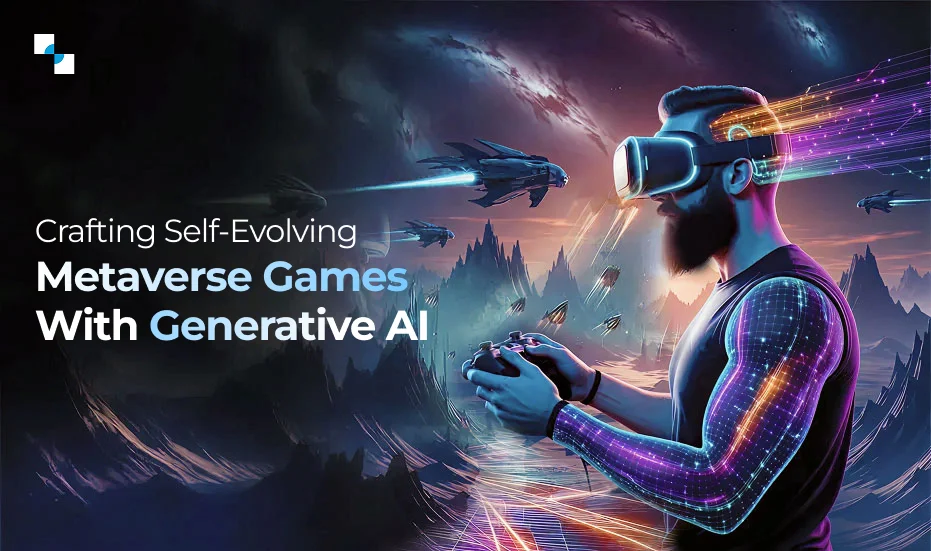
The expectations surrounding immersive digital ecosystems have surged in recent years, placing unprecedented pressure on studios, enterprises, and product teams. As virtual worlds become more complex, players want worlds that are more complex, intelligent, and ever-changing. Most platforms, however, are still reliant upon scheduled manual updating which inhibits their capacity to innovate.
For organizations fully engaged in metaverse game development, the gap between expectation and reality is exacerbated as users expect even greater responsiveness and personalization. As a result, it is paramount that they have systems which can operate with increasing autonomy and adaptability, simply to support long-term competitive differentiation.
Limitations of Traditional Metaverse Architectures
The traditional metaverse infrastructure was never designed for continued evolution and dynamic adaptation. Its structural rigidity comes from immutable logic, fixed interactions and content pipelines that are contextually dependent on the involvement of the developer. Thus, as user’s behavior suddenly changes or virtual ecosystems grow, there is no means for these systems to automatically adjust, creating a predictable and stagnant experience.
This staleness undermines engagement, while, at the same time, burdens development teams with yet another content update cycle. Modern-day metaverse game development platforms that rely upon traditional infrastructure for developing experiences are fundamentally challenged on scalability, flexibility, and capacity to deliver high-value engagement.
Hidden Costs Impacting Scalability and Player Retention
The practical and financial consequences of static environments extend far beyond the obvious maintenance cycles. As player expectations grow, studios frequently race to deliver new content, player interactions, and keep the world consistent—all manually.
This leads to increased content budgets, heavier engineering loads, and ultimately leads to long-term operational inefficiencies that threaten the sustainability of the platform. Inevitably, over time, there will be a degradation of engagement due to slow evolution, making healthy user retention rates and ROI difficult to maintain. Any enterprise focused on Metaverse Game Development will not want to overlook such hidden layers of costs.
Key cost drivers:
- Repetitive production of content: The development team is obliged to consistently design new quests, new environments, and new interaction models, which leads to increased production cycles and costs that are not guaranteed to yield an equal benefit to the user.
- Frequent patch and fix cycles: Every fix to gameplay, or even adjustments to rendering environments necessitate engineering hours, delaying innovation and leading to technical debt that accumulates quickly at scale.
- Increasing infrastructure and rendering costs: As virtual environments grow in size and scope, server requirements will increase as well, leading to growth in operational expenses that is still unable to meet the inertia for responsive and adaptable experiences.
The Need for Adaptive Intelligence
While there have been many advances in immersive development, the current metaverse platforms are missing an important component: adaptive intelligence. Environments do not learn from user behaviors, do not self-reconfigure based on user engagement patterns, and do not evolve in impactful ways.
Users are left in predictable behavior loops that diminish their interest and reduce the long-term value of the platform. Thus, the absence of intelligence-driven adaptation is, by far, the biggest missing piece in the metaverse game development platform space today. Addressing this lack is an essential step for any virtual world that hopes to provide high-retention, long-life, digital experiences.
Build Your AI-Driven Metaverse Experience With Our Experts
Static Environments Do Not Borrow from User Behaviors:
Without continuous learning and real-time learning capability, virtual worlds cannot provide personalized experiences, which for many user groups decreases engagement.
1. Manual Action Prevents Evolution:
Any shift in the environment from its starting state requires human action to drive change and impede the scale of the platform as the number of users and narratives grow.
2. No Dynamic, Intelligent Systems = No Longevity of Platform
Without intelligent adaptation, metaverse ecosystems become predictable and induce user fatigue as the experiences are not sustainable and engaging over long time periods.
3. Self-Evolving Metaverse Environments
Self-evolving metaverse worlds signify a progressive leap forward in designing virtual ecosystems. These environments leverage systems that are designed to autonomously change their landscapes, change quests, change NPC behaviors, and adapt to behavioral cues in real-time.
Self-evolving worlds use dynamic activity as a simulation of living ecosystems rather than being restricted by traditional environments that are locked in cycles of static content updates. This reduces the need for constant manual upgrades and allows teams to focus their effort on strategic development and not patched manually. For businesses and studios developing in metaverse game development, self-evolving ecosystems provide a pathway to sustainability with higher engagement and less development stress.
How Generative AI Enables Autonomous Growth and Real-Time Adaptation
Generative AI is the lifeblood for this new adaptive paradigm. Through advanced models that can procedural generate, dynamically simulate, and map behaviors, AI allows metaverse environments to develop authentically. These systems recognize user behaviors, automatically generate new content, and can incorporate variations necessary to provide new experiences that always feel fresh or unexpected.
Generative AI allows platforms to reduce their operational burden while enhancing immersion, personalization, and automating key participant behaviors. In any scalable metaverse game development platform, generative AI is the fuel for continual innovation and architectural resiliency.
Key Generative AI Capabilities
1. Autonomous world evolution:
AI generates terrain, modifies environmental triggers, and builds new game routes, letting environments evolve without developer protocols.
2. Adaptive NPC intelligence:
Non-Player Characters adjust their interactions depending on player and user behaviors which leads to believable virtual societies and reduces repeating behavioral loops.
3. Dynamic personalized experiences:
AI modifies quests, difficulty, and narrative pathways automatically so every user enjoys a unique experience and becomes engaged for longer play sessions.
Preparing for an Era of Intelligent, Self-Sustaining Virtual Worlds
The metaverse is entering a new age where intelligent, self-evolving environments will differentiate leading platforms from static, traditional platforms. Organizations that adopt architectures capable of adaptive evolution will gain significant new benefits in engagement, operational stability, and long-term scalability. Integrating generative AI into metaverse game development workflows will not only future-proof digital ecosystems, it will also open a whole new realm of experiential value.
Antier gives organizations the ability to build next generation metaverse worlds with AI-driven adaptability, strong digital economies, and enterprise grade scalability. Our metaverse game development platform enables brands, developers, and innovators to build autonomous, intelligent, and self-evolving virtual experiences.
Ready to build your own AI-powered metaverse ecosystem? Contact Antier today and unlock the future of self-evolving virtual worlds.



