
Crypto World
Heads Up! Bitcoin Enters Capitulation Mode, Trades In a ‘Phase That Rewards Discipline Over Prediction’

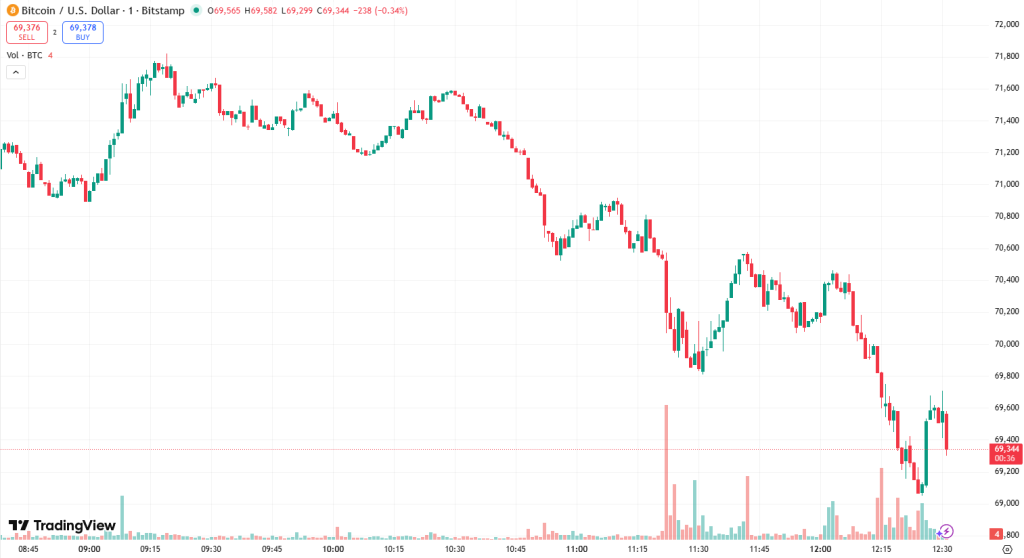
Bitcoin (BTC) has entered a key capitulation phase, analysts argue. However, positioning, discipline, and risk management now matter much more than price predictions.
Additionally, BTC is now moving through a sustained reset rather than a brief correction. This may last for months to come, analysts note.
That said, amid macro uncertainty, institutional outflows, declining liquidity, compressed volatility, and dampened risk appetite, Bitcoin as a barometer for broader capital sentiment is on the rise.
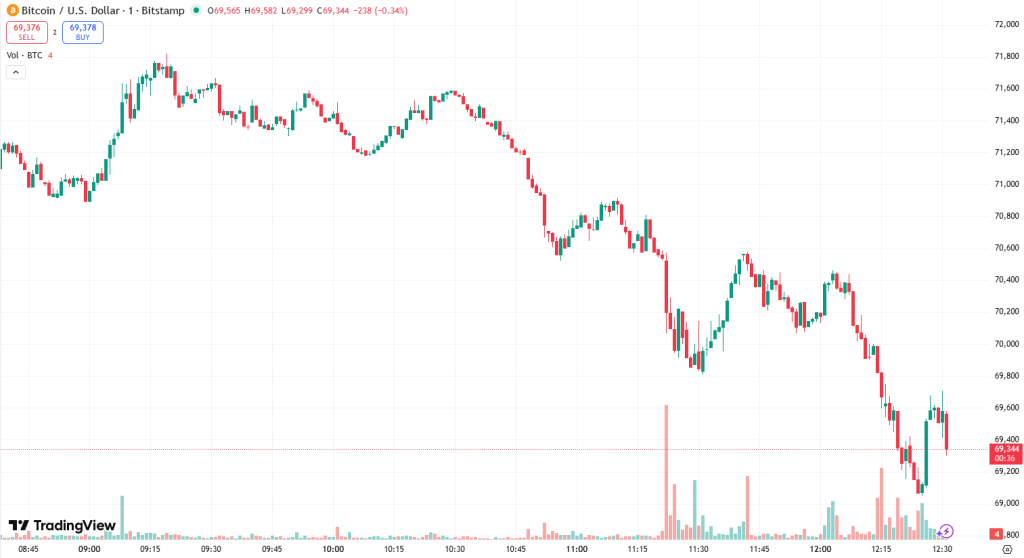
At the time of writing (Thursday, 14:00 UTC), BTC was trading at $69,313, having dropped 7.9% in a day.
‘Bitcoin Capitulation’
Nic Puckrin, investment analyst and co-founder of Coin Bureau, commented on BTC’s recent and major pullback, particularly its fall to the $70,000 level.
“As Bitcoin continues its slide toward the psychological barrier of $70,000, it’s clear the crypto market is now in full capitulation mode,” he said.
Per Puckrin, based on data provided by previous cycles, the current situation is “no longer a short-term correction, but rather a transition from distribution to reset.” These typically take months, not weeks, he warns.
The analyst now expects BTC to fight to defend the $70,000 threshold. If it breaks below, it could proceed lower towards its bear market low around the $55,700-$58,200 territory.
Meanwhile, Puckrin also noted that the market is slipping as Bitcoin whales are going for large-scale selling. At the same time, institutional outflows are increasing.
Yet, while Bitcoin exchange-traded funds (ETFs) are seeing negative flows, the majority of ETF holders are sitting on paper losses. It is Bitcoin OGs who are doing most of the selling, Puckrin says, citing Bloomberg data.
“This is Bitcoin’s institutionalisation in action,” the analyst concludes.
‘Discipline Over Prediction’
Nic Roberts-Huntley, CEO and co-founder of Blueprint Finance, argues that Bitcoin’s latest drop doesn’t suggest a fundamental breakdown in demand. Instead, it reflects a broader risk-off sentiment across markets.
The number one coin has struggled to hold key technical levels. Liquidity dried up and forced liquidations intensified, the CEO said.
Additionally, macro uncertainty and risk sentiment are currently driving flows, as evidenced by the demand for precious metals and other traditional hedges.
“That said, if macro clarity returns, liquidity improves, and key support holds, Bitcoin could stabilise and set the stage for a recovery rally later in the cycle,” Roberts-Huntley wrote.
“In the near term, traders and investors should be watching whether BTC can defend the mid-$70,000s and reclaim the $78,000–$80,000 zone.” These are key levels to monitor.
Meanwhile, Tony Severino, market analyst at YouHodler, wrote that the common theme across markets this week “is not direction, but compression.”
Bitcoin is “locked in one of the tightest volatility regimes in its history.” At the same time, currency volatility is rising even as the dollar softens, and metals are holding extreme levels without breaking.
“These conditions tend to frustrate short-term participants, but they also signal that markets are working off time rather than trend,” Severino wrote.
“For crypto investors, this is a phase that rewards discipline over prediction.”
He argued that macro forces are shifting, while technical structures across assets suggest that resolution is nearing. Timing, though, is still unclear.
“When volatility expands from these conditions, history suggests the move is unlikely to be subtle. Until then, patience, positioning, and risk management remain the real edge,” the analyst concluded.
‘Bitcoin Serves as a Barometer’
Bitunix analysts identified renewed tensions in the Middle East, as well as the AI-sector-fuelled “repricing-driven selloff” in technology stocks, as major factors affecting markets.
When it comes to BTC specifically, it retraced 45% from last year’s high of $126,080. The overall market pullback suggests that “the excess risk premium accumulated earlier has been systematically squeezed out.” Subsequently, this has led to market sensitivity to liquidity conditions, as well as elevated uncertainty.
Additionally, “Bitcoin is increasingly viewed as a result indicator of whether markets are willing to reabsorb risk,” the analysts say. In other words, BTC “serves as a barometer of whether capital is willing to re-engage with higher-risk assets.”
If the cryptocurrency manages to reclaim $75,000 and remain structurally stable there amid mounting macro uncertainty, it would imply that the market’s pricing of systemic liquidity risk remains restrained.
However, a sustained break below $75,000 would indicate that risk appetite has yet to recover.
— Cryptonews.com (@cryptonews) February 5, 2026
 #Bitcoin now trades ~20% below its estimated $87K production cost as miner profitability hits a 14-month low. #Crypto $BTC #Mininghttps://t.co/kBh1sj8NDD
That said, “as long as global capital remains defensively positioned and structural deleveraging is incomplete, the crypto market is unlikely to decouple from macro-driven risk pricing,” the analysts argue.
Market participants should continue to monitor geopolitical tensions and assess the risk of escalation into conflict. Another factor is that the technology sector repricing could potentially trigger a broader balance-sheet contraction across asset classes.
The post Heads Up! Bitcoin Enters Capitulation Mode, Trades In a ‘Phase That Rewards Discipline Over Prediction’ appeared first on Cryptonews.



Oil volatility triggered by the Iran conflict is pushing traders onto decentralized exchanges (DEXs) like Hyperliquid, where markets never close, Wall Street investment bank JPMorgan said in a Wednesday report.
The bank flagged a surge in activity from non-crypto investors using perpetual futures, derivatives with no expiry, to gain round-the-clock oil exposure. Unlike traditional venues, these contracts trade 24/7 and use funding rates to track spot prices.
“In particular, oil trading exploded on the Hyperliquid exchange early this month when the Iran war erupted as CME traders were unable to react when Iranian infrastructure strikes broke over the weekend,” wrote analysts led by Nikolaos Panigirtzoglou.
Market volatility spiked following the outbreak of war in the Middle East, with oil prices leading sharp moves as traders reacted to supply risks and geopolitical uncertainty. The initial shock was amplified by thin liquidity outside traditional trading hours, driving wider price swings and pushing investors toward venues offering continuous, 24/7 market access.
A decentralized exchange (DEX) is a peer-to-peer marketplace where users trade crypto directly without intermediaries. Unlike centralized exchanges, DEXs are non-custodial, meaning users retain control over their private keys and funds.
Rather than relying on a central operator, DEXs use smart contracts to automatically execute trades and settle them onchain. These trustless systems are a fast-growing part of the crypto market and are driving new types of financial products.
With CME markets shut over the weekend, traders turned to Hyperliquid’s CL-USDC perpetual, which stayed open for price discovery. The contract, margined in USDC with up to 20x leverage, hit $1.7 billion in peak daily volume and is now the platform’s third-most traded product, the bank said. Open interest has climbed to about $300 million.
More broadly, the analysts said demand for 24/7 access to traditional assets is accelerating interest in DEXs. Platforms like Hyperliquid use onchain order books rather than automated market makers, offering tighter spreads and more precise execution closer to traditional markets.
Features such as sub-second finality and portfolio margining are further attracting institutional traders by enabling faster execution and more capital-efficient strategies.
As a result, DEXs are taking share from mid-tier centralized exchanges in crypto derivatives, driven by speed, liquidity, self-custody and continuous market access, according to the analysts.
The trend is likely to expand beyond commodities as DEXs capitalize on a key gap in traditional finance: markets that don’t close, the report added.
Hyperliquid’s HYPE token is up roughly 25% year-to-date, outperforming much of the broader crypto market.
Read more: Iranian crypto outflows jump 700% minutes after U.S.-Israeli airstrikes, Elliptic says


Coinbase (COIN) said it began offering perpetual stock futures to eligible non-U.S. retail and institutional traders, extending its derivatives product line into U.S. equities.
The contracts let traders take leveraged positions on a group of large-cap U.S. stocks, colloquially known as the Magnificent 7: Apple, Microsoft, Alphabet, Amazon, Nvidia, Meta and Tesla. Perpetual futures tied to the SPY and QQQ exchange-traded funds, which track the S&P 500 and Nasdaq 100 indices, are also available in some jurisdictions, the exchange said in a Friday blog post.
Unlike standard futures contracts, perpetual futures have no expiry date. Coinbase’s contracts are cash-settled in USDC, a dollar-pegged stablecoin issued by Circle Internet (CRCL).
Coinbase said traders can use up to 10-times leverage on single-stock contracts and up to 20-times on ETF products. Demand for round-the-clock equity exposure, it added, has been growing rapidly, and most of the offerings have been concentrated on decentralized platforms.
The largest such decentralized platform is Hyperliquid, which earlier this week introduced S&P 500 perpetual futures contracts. The platform has become a hotbed for contracts tied to traditional financial instruments, including oil-linked contracts that are trading round-the-clock as war erupts in the Middle East.
Coinbase also said the product uses the same risk engine that supports its crypto derivatives markets, with cross-margining across perpetual futures and spot positions.
The move comes as the exchange expands the range of assets available on its platform as part of a bid to become the “Everything Exchange.”
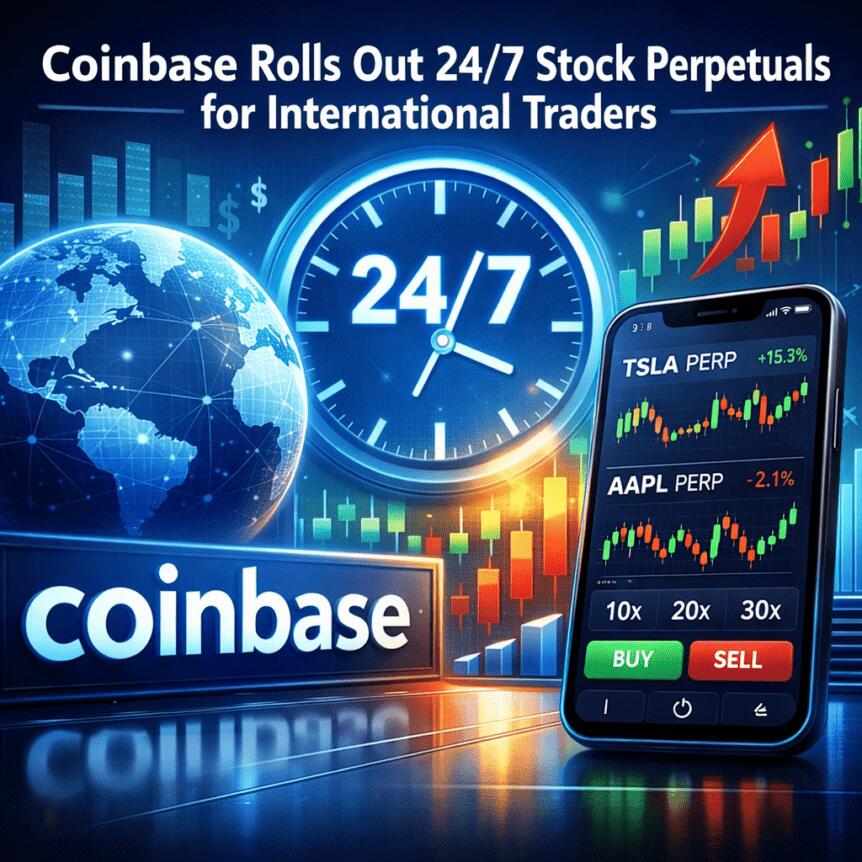
Coinbase has expanded its stock perpetual futures offering to eligible non-U.S. traders, delivering leveraged, cash-settled exposure to major U.S. equities and indices on its non-U.S. trading rails. The rollout, disclosed in a Friday blog post, underscores Coinbase’s ongoing effort to provide a unified platform where crypto, stocks, and event-based contracts can be accessed in a single account.
The product is not available to U.S. residents at this time, with Coinbase indicating it is working to extend the offering to additional regions in the future. Access is currently limited to retail users on Coinbase Advanced and to institutions on Coinbase International Exchange, featuring perpetual contracts tied to notable stocks such as Apple and Nvidia.
Key takeaways
- Stock perpetual futures deliver leveraged, cash-settled exposure to major U.S. equities (including Apple and Nvidia) via Coinbase Advanced for retail clients and Coinbase International Exchange for institutions, aimed at crypto-style trading familiarity.
- The launch aligns with Coinbase’s broader 2026 roadmap, which centers on a multi-asset, “everything exchange” built around stablecoins, its Base layer-2 network, and a brokerage model spanning crypto and traditional assets.
- Europe already saw a related move earlier in March, when Coinbase rolled out perpetual futures for Coinbase Advanced users across 26 MiFID-regulated countries, signaling a broader international push beyond the U.S. footprint.
- In the wider market, several platforms offer tokenized or perpetual equity exposure to non-U.S. traders, including Binance and Kraken, highlighting an active, competitive space for synthetic stock products and on-chain real-world assets.
Non-U.S. expansion shapes Coinbase’s multi-asset strategy
Coinbase framed stock perpetual futures as a core element of its non-U.S. trading expansion, presenting a format familiar to crypto traders while delivering exposure to traditional equities. The company notes that the product is not yet available to U.S. persons, but it plans to broaden coverage to additional regions over time. By offering leveraged, cash-settled exposure on both its retail-focused Coinbase Advanced platform and its institutional Coinbase International Exchange, Coinbase aims to provide a seamless cross-asset experience without requiring users to toggle between separate apps or brokers.
Coinbase’s move dovetails with its stated ambition to evolve into an “everything exchange.” In January, CEO Brian Armstrong highlighted a priority to grow global access to crypto, equities, prediction markets, and commodities within a single ecosystem, emphasizing a strategy that places stablecoins, the Base network, and multi-asset brokerage at the heart of its 2026 outlook.
European rollout complements a broader regulatory push
Europe’s earlier March iteration of the stock perpetual futures program rolled out under Coinbase’s MiFID-compliant entity, covering 26 countries. The European effort demonstrates how Coinbase is threading regulatory compliance with product expansion, enabling non-U.S. users to trade synthetic stock products in a framework designed to align with regional oversight.
The Europe-focused expansion also mirrors a broader trajectory in which crypto-native platforms seek to bridge traditional capital markets with digital trading mechanics. As part of its multi-asset ambition, Coinbase is positioning itself to offer a spectrum of instruments—from tokens and tokens-to-equities to event-driven contracts—that can operate alongside cash equities, futures, and options in a single interface.
Rivals, regulation, and the evolving landscape for equity perps
The stock perpetual sector remains fragmented but increasingly crowded. Coinbase is entering a field where other non-U.S. platforms have ventured into equity exposure, including Binance’s equity perpetual contracts and Kraken’s tokenized-equity perpetual futures for global traders. A cluster of offshore platforms also list single-stock and index perpetuals with varying degrees of regulatory oversight. In March, the tokenization of stocks reached a notable milestone, surpassing $1 billion in on-chain value, underscoring the rapid growth of real-world assets tied to blockchain networks and the demand for cross-market access among traders.
As regulators weigh appropriate guardrails for synthetic equities and tokenized assets, Coinbase’s Europe launch under a MiFID framework and its ongoing U.S. non-availability stance for this product reflect a cautious approach: expand functionality where oversight exists, while continuing to navigate the evolving rules that govern cross-border crypto and traditional markets.
Strategic significance for Coinbase’s broader platform
Stock perpetual futures reinforce Coinbase’s vision of a single, multi-asset marketplace. By integrating stock-like exposure with the familiar crypto trading flow, the company signals a path toward deeper liquidity and more versatile product design—an attractive proposition for traders seeking diversified exposure without managing multiple counterparties or platforms. The European rollout, paired with the ongoing push in non-U.S. regions, suggests Coinbase views global expansion as a critical lever for user acquisition and retention across its ecosystem.
What remains uncertain is the pace and geography of the U.S. configuration for stock perpetuals, and how upcoming regulatory developments might shape access, risk controls, and product scope. Investors and users should watch for further regional expansions, updates on leverage and settlement specifics, and any changes to eligibility criteria as Coinbase continues to push toward a broader, all-in-one trading experience.
Readers should keep an eye on the next steps in Coinbase’s international roadmap and any official communications detailing new regions, asset coverage, and pruning of regulatory friction, which could redefine how traditional equities are accessed within crypto-native trading environments.
Source references: Coinbase’s official blog post on stock perpetual futures and related corporate statements; prior European MiFID rollout announcements; ongoing market reports on tokenized stocks and cross-asset platforms.


The World Gold Council has proposed plans to develop a platform that will change how the metal operates in digital financial systems.
Summary
- World Gold Council has proposed a “Gold as a Service” platform aimed at standardizing and scaling tokenized gold products across digital financial systems.
- The model seeks to link physical gold custody with digital issuance frameworks while streamlining processes such as compliance, reconciliation, and redemption.
In a white paper released on March 18, the World Gold Council outlined plans for a proposed “Gold as a Service” platform that would “support the issuance and operation of scalable, interoperable digital gold products.”
The platform would link the physical custody of gold with digital systems used to issue and manage tokenized gold products. It would standardize essential market processes such as custody coordination, reconciliation, compliance, and redemption to “reduce operational complexity, improve access, and enable greater consistency across digital gold products,” the World Gold Council said.
Among some of the key features, the new service would include standardizing tokenized gold issuance and management, improving digital gold’s fungibility, embedding audits and assurance, enabling interoperability with existing financial rails, and improving liquidity in lending and borrowing markets.
According to CEO David Tait, gold must evolve to maintain its role in the global financial system.
“Shared infrastructure can help gold become more accessible, more easily traded and fully integrated into modern financial systems, ensuring it remains as relevant tomorrow as it has been for millennia,” he added.
It must be noted that similar products already exist, such as Tether Gold or Pax Gold, which have built their own custody, compliance, and redemption frameworks. However, the Council’s position in the space could offer its platform an edge among institutional participants.
As previously reported by crypto.news, in September last year, Tait said the group was working on a framework that would allow participants to “pass gold digitally around the gold ecosystem, as collateral, for the first time.”
He said gold is often seen as a static unyielding asset, and by digitalizing it, the metal could be used for margins and collateral, generating profit for investors through a structure referred to as “pooled gold interest” or PGI.
A pilot for the initiative was planned for the first quarter of 2026.
The British pound continues to weaken against major peers following a brief recovery earlier this week. After notable losses at the end of last week, sterling attempted a corrective rebound at the start of the current week, but pressure resumed following the Federal Reserve’s meeting.
While the decision to keep interest rates unchanged was widely expected, comments from Chair Jerome Powell were interpreted as moderately hawkish. The central bank signalled that it is in no rush to begin easing policy, as inflation risks remain elevated. Against this backdrop, US Treasury yields moved higher, supporting the dollar and weighing on most currencies, including the pound.
An additional source of caution is the upcoming Bank of England meeting. Investors are closely monitoring the vote split within the Monetary Policy Committee, the accompanying statement, and policymakers’ remarks, as any signals pointing towards potential policy easing could put further pressure on sterling.
GBP/USD
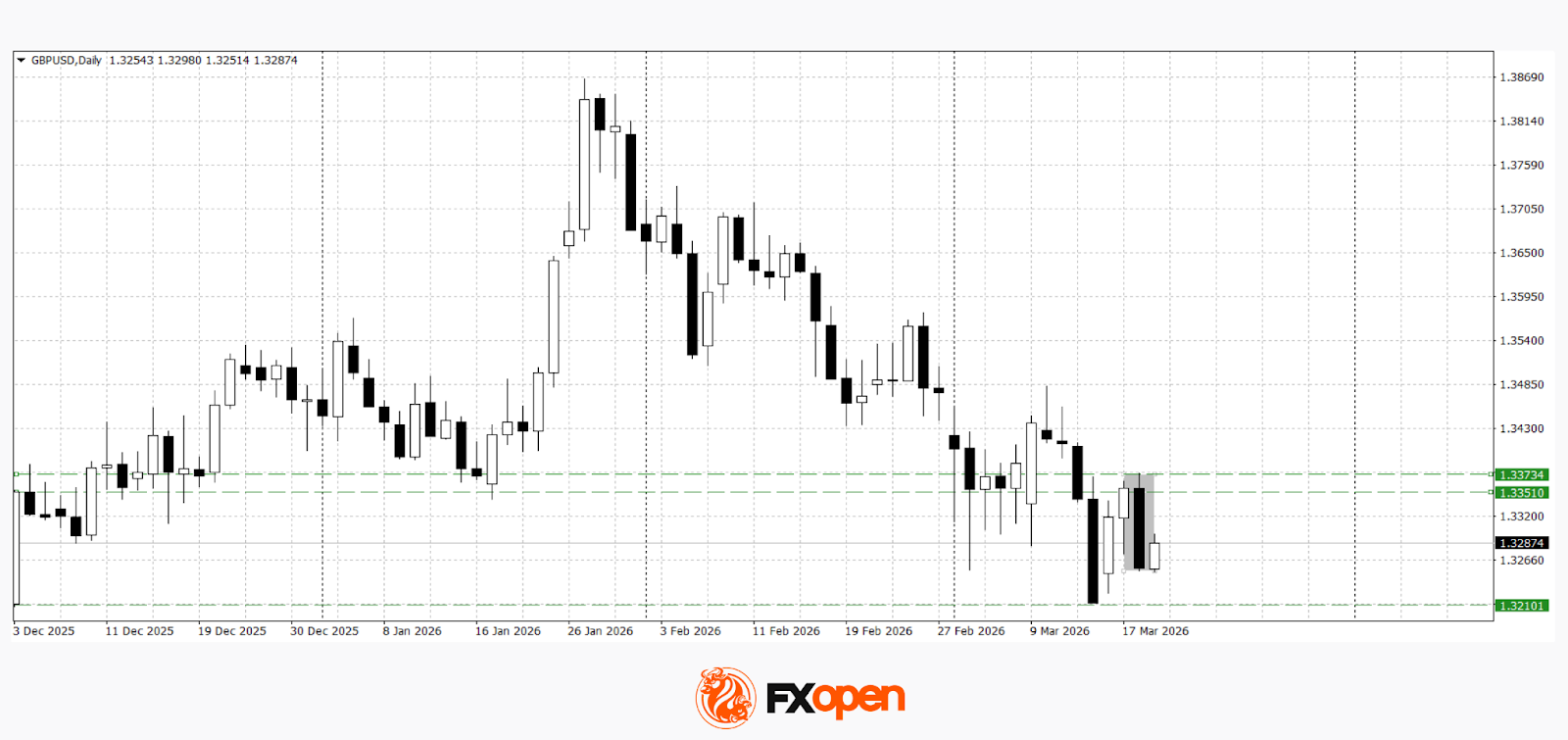
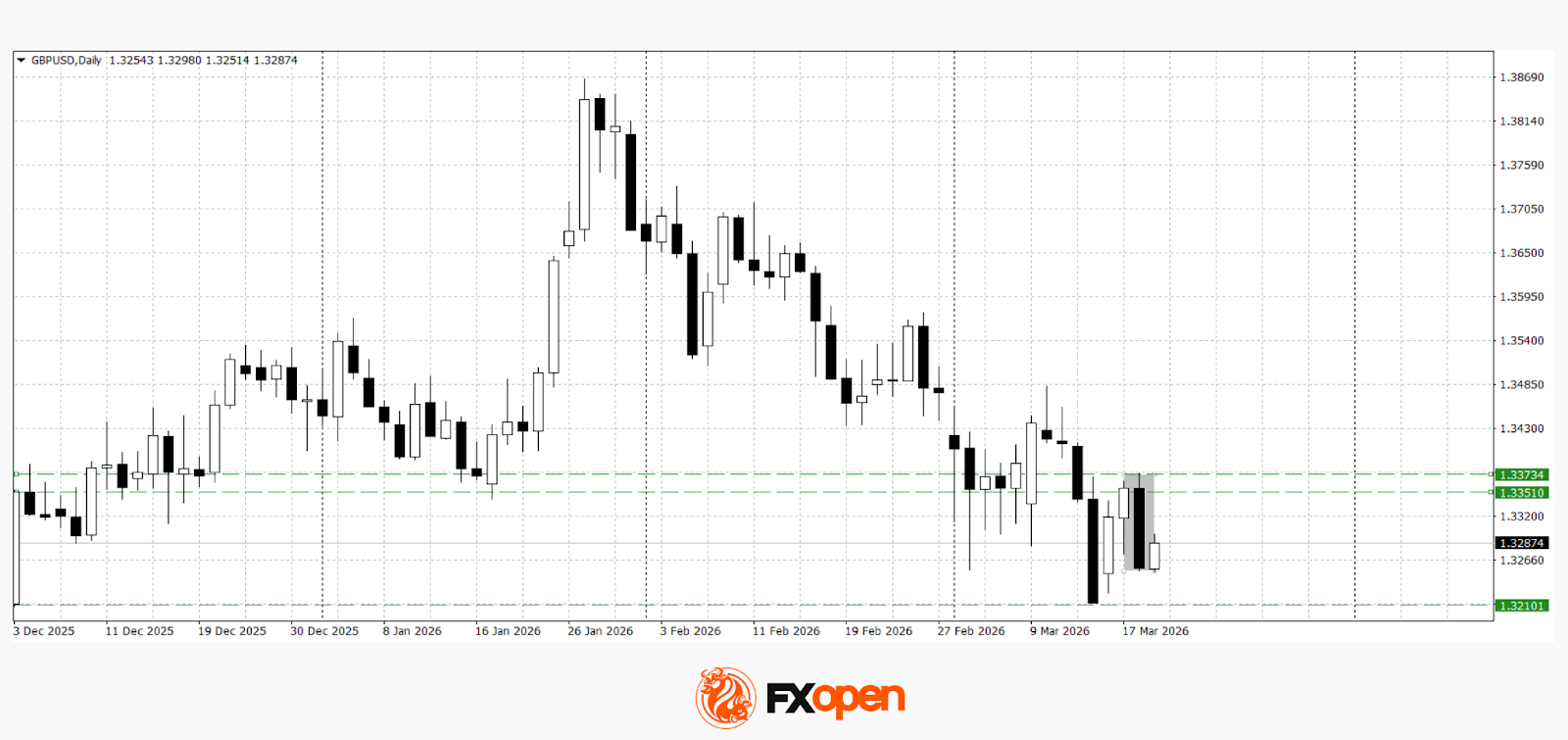
The upward correction in GBP/USD seen earlier this week stalled near the key resistance level of 1.3370. Technical analysis suggests a potential retest of the recent low around 1.3210, as a bearish engulfing pattern has formed on the daily timeframe.
Should today’s decision by the Bank of England provide support to sterling buyers, another attempt to test the 1.3370 level cannot be ruled out.
Key events for GBP/USD:
- today at 09:00 (GMT+2): UK claimant count change;
- today at 09:00 (GMT+2): Bank of England Monetary Policy Committee minutes;
- today at 14:30 (GMT+2): Philadelphia Fed Manufacturing Index (US).
GBP/JPY
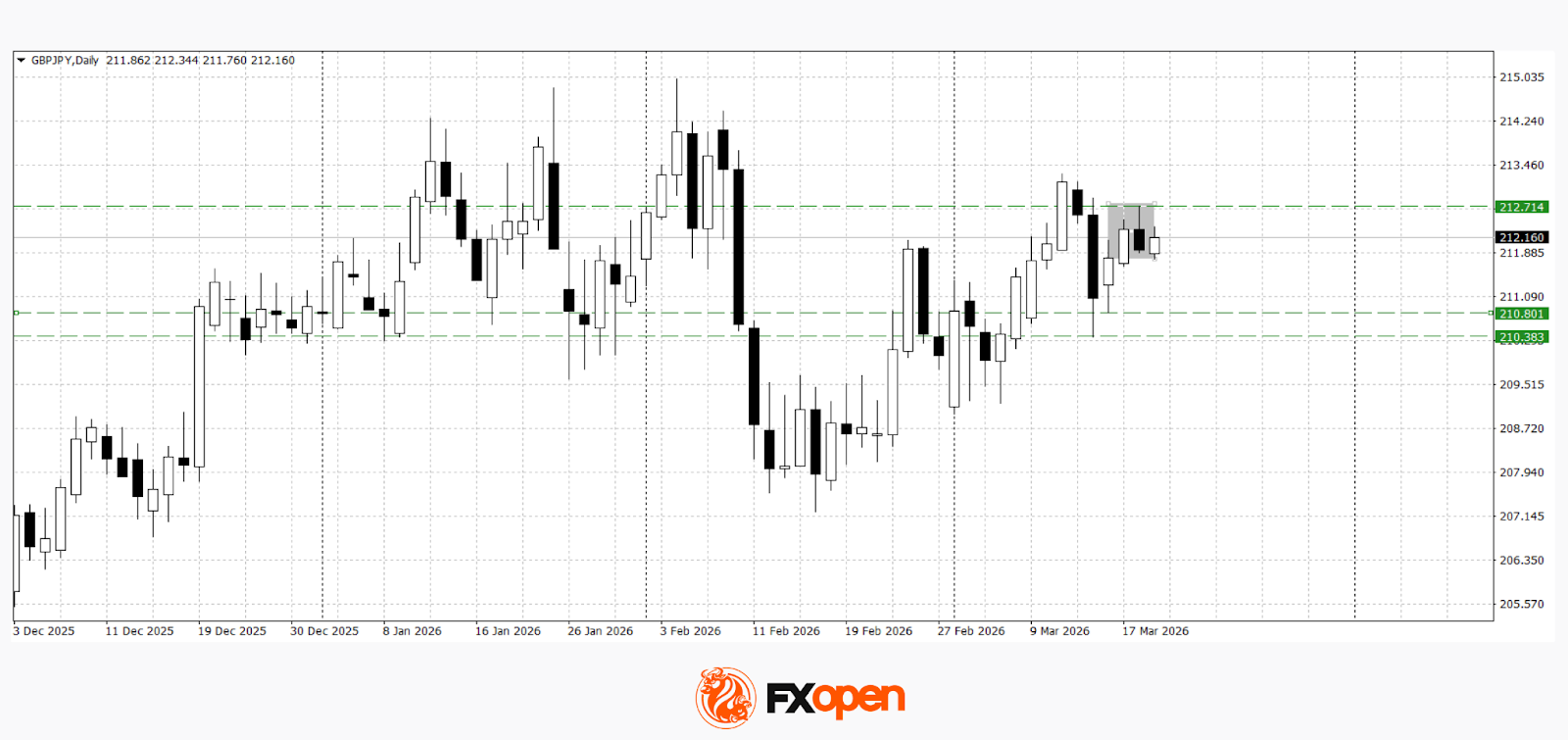
The GBP/JPY pair rose to 212.70 yesterday but sharply reversed following the Federal Reserve meeting, closing the session below 212.00. A “dark cloud cover” candlestick pattern has formed on the daily chart, signalling the potential for a move lower towards last week’s lows in the 210.40–210.80 range.
Key events for GBP/JPY:
- today at 14:00 (GMT+2): Bank of England interest rate decision;
- today at 14:00 (GMT+2): Bank of England Monetary Policy Committee minutes;
- tomorrow at 09:00 (GMT+2): UK public sector net cash requirement.
Trade over 50 forex markets 24 hours a day with FXOpen. Take advantage of low commissions, deep liquidity, and spreads from 0.0 pips (additional fees may apply). Open your FXOpen account now or learn more about trading forex with FXOpen.
This article represents the opinion of the Companies operating under the FXOpen brand only. It is not to be construed as an offer, solicitation, or recommendation with respect to products and services provided by the Companies operating under the FXOpen brand, nor is it to be considered financial advice.


South Korea’s National Tax Service is seeking to select a private custody provider to handle seized crypto assets after a security lapse resulted in private keys being exposed and assets being transferred by unauthorized entities.
Summary
- South Korea’s National Tax Service is reviewing a plan to appoint a private custodian for seized crypto assets after a wallet recovery phrase leak led to $4.8 million in unauthorized transfers.
- The agency will evaluate custody providers based on security standards, company size, and insurance coverage under the Virtual Asset User Protection Act.
The National Tax Service has begun reviewing a plan to outsource custody of confiscated crypto assets, according to a report from ZDNet Korea.
The latest action follows a security mishap on Feb. 26, when a wallet recovery phrase was exposed in an official press release. Images of a Ledger cold wallet and a sheet of paper showing the mnemonic phrase were published. Subsequently, unauthorized transfers of crypto tokens worth about $4.8 million took place.
As such, the agency will now evaluate candidates based on several factors, including security requirements, company size, and whether the firm holds insurance under South Korea’s Virtual Asset User Protection Act, the report said.
A newly formed task force focused on digital asset management systems will lead the process. The task force is already working on several initiatives, including improving operational manuals covering the full lifecycle of seized assets, from seizure to storage and liquidation. It will also conduct internal assessments and personnel training.
Meanwhile, the task force will also work toward establishing a dedicated division to oversee crypto-related work.
An NTS official cited in the report said responsibilities are split across departments, but added that preparations are underway to create a centralized unit.
The NTS incident is one of the many that have surfaced across South Korea over the past months. At least two other similar incidents were recorded involving law enforcement and other agencies, where seized crypto assets were lost or compromised.
As previously reported by crypto.news, South Korea’s National Police Agency has introduced new guidelines for handling seized cryptocurrencies. Law enforcement agencies would now have to follow standardized procedures when handling wallet addresses, private keys, and storage systems.

Key Highlights
-
National Tax Service transitions to external custodians following $4.8M breach.
-
Public exposure of seed phrase triggers comprehensive custody reform.
-
Custodian selection prioritizes insurance coverage and proven track records.
-
Dedicated oversight team will centralize confiscated asset management.
-
Reform initiative matches international best practices for digital custody.
Following a significant security incident, South Korea’s National Tax Service has announced plans to engage private custody solutions for managing confiscated digital currencies. The agency inadvertently revealed a wallet’s recovery phrase in publicly released documentation on February 26, enabling unauthorized withdrawals totaling $4.8 million. Officials are implementing comprehensive safeguards to eliminate similar vulnerabilities and enhance asset protection protocols.
The security lapse centered on an insufficiently redacted photograph displaying a Ledger hardware wallet alongside its complete mnemonic recovery sequence. This episode exposed critical gaps in South Korea’s current framework for managing government-controlled digital holdings. The tax authority intends to transfer custody responsibilities to specialized providers equipped with robust security infrastructure and comprehensive insurance policies.
This strategic pivot occurs as regulatory expectations intensify for appropriate virtual asset stewardship. The National Tax Service has established a target completion date within 2026’s first two quarters for finalizing custodian partnerships. The initiative represents South Korea’s commitment to professionalizing its approach to handling seized cryptocurrency holdings.
Evaluation Framework and Administrative Safeguards
The tax agency is constructing comprehensive benchmarks for assessing prospective custody partners. Security qualifications encompass cutting-edge cybersecurity protocols, multi-party authorization systems, and hardened storage infrastructure. Candidates must carry insurance mandated by South Korea’s Virtual Asset User Protection Act, providing safeguards against system breakdowns and operational mishaps.
Company scale and fiscal soundness represent critical evaluation components in South Korea’s vetting framework. Prospective custodians must showcase expertise managing substantial digital currency portfolios for governmental or institutional clientele. Operational clarity, comprehensive audit mechanisms, and robust contingency planning will serve as fundamental prerequisites during the selection phase.
South Korea’s NTS is assembling a dedicated supervisory unit to manage the custodian selection initiative. This team will develop standardized operating procedures, employee education programs, and comprehensive management strategies for confiscated digital holdings. The centralization effort seeks to consolidate functions presently distributed among various administrative units.
Historical Context and Legal Framework
South Korea’s recent custody failure adds to previous incidents, including municipal law enforcement’s loss of 22 Bitcoin. Responding to these setbacks, government authorities initiated a multi-department investigation examining asset management practices and identifying preventive measures. This coordinated response demonstrates a systematic commitment to protecting South Korea’s expanding inventory of confiscated cryptocurrencies.
The Virtual Asset User Protection Act establishes the regulatory foundation supporting South Korea’s custody transformation. This legislation requires insurance coverage, regulatory compliance, and reserve holdings for all authorized service operators. South Korea’s policy direction aligns with worldwide patterns where governmental bodies increasingly depend on specialist custodians for blockchain-based assets.
The forthcoming custody infrastructure will create uniform processes governing seizure activities, secure storage, and eventual liquidation of digital currencies. South Korea plans to strengthen technical capabilities, encompassing wallet administration, cryptographic key management, and distributed ledger surveillance. This framework additionally prepares South Korea to extend professional custody services throughout various governmental departments.
South Korea’s National Tax Service anticipates that engaging private custodians will substantially diminish security vulnerabilities and procedural breakdowns. This strategic shift demonstrates enhanced institutional capacity for cryptocurrency-related enforcement activities. The implementation of specialized custody partnerships underscores South Korea’s dedication to secure, compliant administration of seized virtual assets.

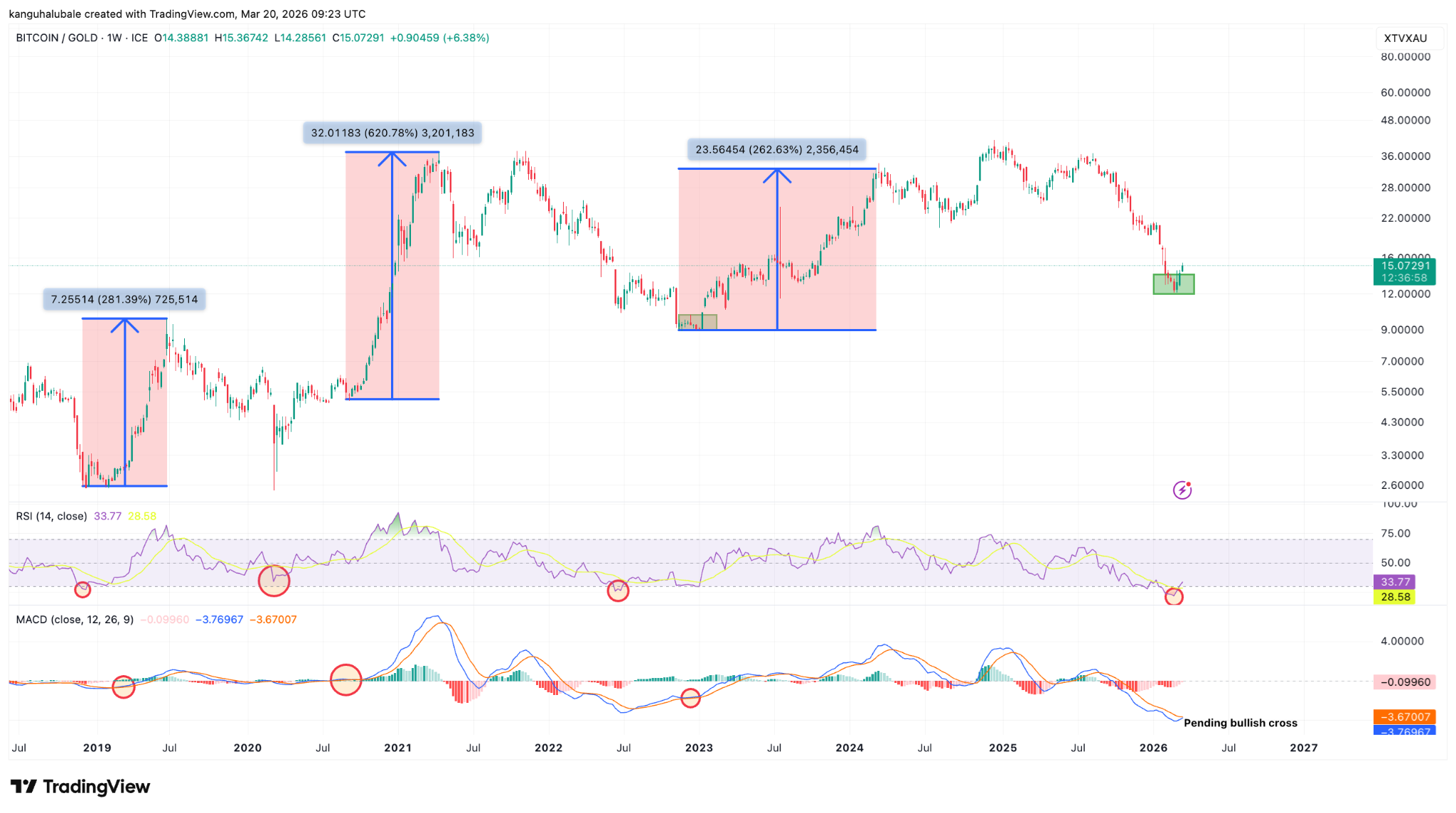
Bitcoin (BTC) has endured a 14-month bear market against gold, with the BTC/gold ratio and momentum indicators at historic lows that previously marked cycle bottoms.
Key takeaways:
-
The BTC/GOLD ratio is at historic lows as multiple indicators hint at a cycle bottom.
-
Bitcoin price must hold $70,000 to avoid a deeper drop over the coming weeks.
BTC/GOLD RSI, MACD print classic reversal signal
Data from TradingView reveals that the relative strength index (RSI) of the BTC/GOLD ratio has begun climbing.
The weekly RSI reached its most oversold level of 21 in mid-February, signaling fading bearish momentum.
Related: Bitcoin tests old 2021 top as gold falls to six-week lows under $4.7K
Similarly, the moving average convergence divergence (MACD) indicator has dropped to its lowest level ever and is about to produce a bullish cross.
Note that previous bullish crosses, particularly coming after the RSI has recovered from oversold conditions, have marked macro bottoms for the ratio.
This ultimately led to 280%-620% Bitcoin price breakout against gold, as seen in 2019, 2021, and 2023.

The RSI has now recovered to 33 from 21 in mid-February. When combined with a buy signal on the MACD, the picture begins to resemble previous cycles.
“Bottom is in for $BTC vs Gold,” technical analyst James Easto said in an X post on Friday, adding that the “stage is set” for Bitcoin’s recovery.
The last time Bitcoin bottomed against gold was in November 2022. It marked the beginning of a 700% BTC price rally to its current all-time high of $126,000.
Analysts at GeoMetric said the past 3 BTC/GOLD bear markets have taken between 12-14 months, with the drawdowns ranging from 75% to 84%.
About 13 months have elapsed in the current cycle, which has “so far gone down 81%, surpassing the 2021 bear market,” the analysts said, adding:
“I think there is a solid case for a potential bottom here.”

Investor and analyst Crypto Fergani echoed both scenarios discussed above saying:
“For over 13 years, we’ve seen the same pattern: Bitcoin enters a bear market against gold that lasts roughly 400 days. During that time, the RSI falls into deeply oversold territory. Historically, these phases have always marked the bottom.”
Bitcoin price must hold above $70,000
Meanwhile, BTC/USD remains cautiously bullish as long as it holds the $68,000-$70,000 support zone. This is where the 200-week exponential moving average (EMA) and 50-day simple moving average sit.
The 200-week EMA forms a key support band for BTC price during bear markets, and analysts warn that its reliability could be tested on Sunday’s weekly close.
Bitcoin analyst AlphaBTC said he had faith that Bitcoin will recover to $80,000 before dropping toward $50,000, as long as the price stayed above the weekly low at $68,800.
“I don’t want to see this week’s low lost, otherwise it’s going to break back down to range lows or lower!”

As Cointelegraph reported, holding $70,000 would align with a previous fractal recovery path, opening a move toward $76,000-$80,000.
This article does not contain investment advice or recommendations. Every investment and trading move involves risk, and readers should conduct their own research when making a decision. While we strive to provide accurate and timely information, Cointelegraph does not guarantee the accuracy, completeness, or reliability of any information in this article. This article may contain forward-looking statements that are subject to risks and uncertainties. Cointelegraph will not be liable for any loss or damage arising from your reliance on this information.
Crypto World
Bitcoin (BTC) price holds steady, with one analyst seeing the upside emerging: Crypto Daybook Americas
By Francisco Rodrigues (All times ET unless indicated otherwise)
Bitcoin has stabilized above $70,000. Its relative strength is noteworthy given the selloff over the week, which saw it drop from over $75,000.
Most assets saw sharp downturns over the period as the conflict in Iran escalated, damaging vital energy infrastructure. A hotter-than-expected February U.S. PPI print compounded the effect.
Traditional havens, including gold and silver, also tumbled while Brent crude surged above $110 a barrel owing to supply disruptions caused by the closure of the Strait of Hormuz.
The Fed didn’t help. While the U.S. central bank held interest rates steady on Wednesday, as expected, its tone turned hawkish. The conflict’s effects have damped rate-cut expectations, and, in fact, the perceived odds of rate increases surge from 8% to top 24% on prediction markets.
André Dragosch, head of research for Europe at Bitwise, told CoinDesk the bitcoin sits at the intersection of two powerful and opposing forces, and that the balance may already be tipping in the token’s favour.
On one side, rising inflation expectations are supportive, Dragosch said. Bitcoin bull runs have historically aligned with expansions in the ISM Manufacturing Index, which rose sharply this year, and rising inflation expectations.
“This combination of rising economic activity and inflation expectations is probably one of the key reasons why bitcoin recently managed to outperform other traditional assets like gold and US equities,” he said. “Bitcoin is also generally less interest rate-sensitive than gold, which is why it wasn’t so much affected by the rise in bond yields. “
On the other hand, tighter financial conditions are a headwind. Bitcoin, however, may have been acting as the canary in what Dragosch called the “macro coal mine.”
“Bitcoin appears to have already priced in much of this tightening, exhibiting a record “macro discount” and front-running the recent deterioration in forward-looking indicators,” Dragosch said.
Looking ahead, a key catalyst will remain improving financial conditions. That means the conflict in the Middle East ending and the Strait of Hormuz reopening, even as developments in the crypto space show growing adoption. Stay alert!
Read more: For analysis of today’s activity in altcoins and derivatives, see Crypto Markets Today
What to Watch
For a more comprehensive list of events this week, see CoinDesk’s “Crypto Week Ahead“.
- Crypto
- Macro
- March 20, 8:30 a.m.: Canada PPI YoY (Prev. 5.4%); MoM (Prev. 2.7%)
- Earnings (Estimates based on FactSet data)
- March 20: BitFuFu (FUFU), pre-market, $0.01
Token Events
For a more comprehensive list of events this week, see CoinDesk’s “Crypto Week Ahead“.
- Governance votes & calls
- Lightchain AI DAO is voting on a temporary 90-day team authority proposal, which grants the core team short-term operational authority to make day-to-day and strategic decisions. Voting ends March 22.
- Unlocks
- March 20: LayerZero (ZRO) to unlock 5.64% of its circulating supply worth $52.45 million.
- Token Launches
Conferences
For a more comprehensive list of events this week, see CoinDesk’s “Crypto Week Ahead“.
Market Movements
- BTC is up 0.29% from 4 p.m. ET Thursday at $70,608.19 (24hrs: +0.69%)
- ETH is down 0.55% at $2,148.07 (24hrs: -1.14%)
- CoinDesk 20 is up 0.34% at 2,044.85 (24hrs: unchanged)
- Ether CESR Composite Staking Rate is up 2 bps at 2.76%
- BTC funding rate is at -0.0020% (-2.1703% annualized) on Binance

- DXY is down 0.38% at 99.70
- Gold futures are up 1.58% at $4,673.60
- Silver futures are up 1.75% at $72.14
- Nikkei 225 closed down 3.38% at 53,372.53
- Hang Seng closed down 0.88% at 25,277.32
- FTSE 100 is down 2.16% at 10,082.61
- Euro Stoxx 50 is down 1.71% at 5,638.54
- DJIA closed on Thursday down 0.44% at 46,021.43
- S&P 500 closed down 0.27% at 6,606.49
- Nasdaq Composite closed down 0.28% at 22,090.69
- S&P/TSX Composite closed down 1.42% at 31,854.98
- S&P 40 Latin America closed up 0.22% at 3,466.80
- U.S. 10-Year Treasury rate is up 2 bps at 4.28%
- E-mini S&P 500 futures are down 0.52% at 6,625.50
- E-mini Nasdaq-100 futures are down 0.68% at 24,412.50
- E-mini Dow Jones Industrial Average Index are down 0.43% at 46,140.00
Bitcoin Stats
- BTC Dominance: 58.90% (0.18%)
- Ether-bitcoin ratio: 0.03043 (-0.49%)
- Hashrate (seven-day moving average): 925 EH/s
- Hashprice (spot): $30.68
- Total fees: 2.95 BTC / $206,875
- CME Futures Open Interest: 117,190 BTC
- BTC priced in gold: 15.2 oz.
- BTC vs gold market cap: 4.72%
Technical Analysis

- BTC/SPX may be showing signs of bottoming out – with RSI bouncing off from oversold levels and the line maintaining its trend.
- The ratio is currently below the 50-week exponential moving average, which implies more range-bound performance until we see a breakout above the average.
Crypto Equities
- Coinbase Global (COIN): closed on Thursday at $202.91 (+0.31%), -0.45% at $201.99 in pre-market
- Circle Internet Group (CRCL): closed at $128.33 (-3.40%), -2.20% at $125.51
- Galaxy Digital (GLXY): closed at $21.05 (-2.46%), -0.71% at $20.90
- MARA Holdings (MARA): closed at $9.22 (+3.36%), -0.33% at $9.19
- Riot Platforms (RIOT): closed at $14.14 (+0.28%), +0.28% at $14.18
- Core Scientific (CORZ): closed at $16.48 (+0.80%)
- CleanSpark (CLSK): closed at $9.83 (-0.51%), -0.31% at $9.80
- Exodus Movement (EXOD): closed at $7.73 (-4.57%)
- CoinShares Bitcoin Mining ETF (WGMI): closed at $39.10 (+0.00%)
- Bullish (BLSH): closed at $39.60 (+3.45%), -0.98% at $39.21
Crypto Treasury Companies
- Strategy (MSTR): closed at $138.24 (-1.65%), +0.54% at $138.99
- Strive Asset Management (ASST): closed at $10.26 (+2.24%), +0.49% at $10.31
- SharpLink (SBET): closed at $7.68 (-2.41%), +1.04% at $7.76
- Upexi (UPXI): closed at $1.07 (+0.00%), +1.87% at $1.09
- Lite Strategy (LITS): closed at $1.17 (-0.85%)
ETF Flows
Spot BTC ETFs
- Daily net flows: -$90.2 million
- Cumulative net flows: $56.26 billion
- Total BTC holdings ~1.29 million
Spot ETH ETFs
- Daily net flows: -$136.4 million
- Cumulative net flows: $11.8 billion
- Total ETH holdings ~5.76 million
Source: Farside Investors
While You Were Sleeping


South Korea’s National Tax Service (NTS) is moving to select a private custody provider for seized crypto assets after a February press release exposed a wallet recovery phrase and triggered the unauthorized transfer of confiscated tokens.
On Feb. 26, the NTS accidentally exposed a crypto wallet seed phrase in an official press release, resulting in the unauthorized transfer of crypto tokens valued at about $4.8 million. The release included an image of a Ledger cold wallet and a sheet of paper showing the mnemonic phrase without being blurred.
Citing people familiar with the matter, ZDNet Korea reported that the agency is reviewing a plan to outsource custody of confiscated crypto and is drafting selection criteria for providers. The NTS is reportedly aiming to select a provider within the first half of 2026.
The agency plans to evaluate candidates based on several factors, including security requirements, company size, and whether the firm holds insurance under South Korea’s Virtual Asset User Protection Act, ZDNet Korea reported.
The move shows South Korean authorities are trying to formalize custody of seized crypto after a series of handling failures exposed weaknesses in how confiscated digital assets are stored and managed.
New task force to oversee custody provider selection process
The custody selection will reportedly be led by a newly-formed task force focused on advancing digital asset management systems.
The task force is reportedly working on several initiatives, including improving operational manuals covering the full life cycle of seized assets, from seizure to storage and liquidation. It would also conduct assessments and personnel training.
Related: South Korea opposition party pushes to scrap planned 22% crypto tax
The group is also preparing to establish a dedicated division to oversee crypto-related work.
An NTS official said that since crypto is relatively new, responsibilities are split across departments. However, preparations are underway to create a centralized unit, ZDNet Korea reported.
NTS wallet seed leak prompts inter-agency probe
The NTS’s wallet leak and a separate custody failure in which Seoul’s Gangnam police allegedly lost 22 BTC seized prompted authorities to conduct an inter-agency review of seized crypto assets.
On March 1, South Korea’s Deputy Prime Minister and Minister of Economy and Finance, Koo Yun-cheol, announced a cross-agency probe on how the government handles seized digital assets.
Magazine: Metaplanet’s Japan Bitcoin bet, Bithumb ordered suspension: Asia Express

Lyon crash out of Europa League – Sports

2026 Xiaomi SU7 Brings 902 km Range with a 15-Minute 670 km Fast Charge

BARNEY QUIERE DETONAR A LUCIANEKA | CHAPA TU MONEY


-
Crypto World6 days ago
HYPE Token Enters Net Deflation as HyperCore Buybacks Outpace Staking Rewards
-

 Tech5 days ago
Your Legally Registered ‘Motorcycle’ Might Not Count Under Proposed US Law
-

 Fashion7 days ago
Weekend Open Thread: Addict Lip Glow
-
 Tech3 days ago
Are Split Spacebars the Next Big Gaming Keyboard Trend?
-
Sports6 days ago
Why Duke and Michigan Are Dead Even Entering Selection Sunday
-

 Business5 days ago
Search for Savannah Guthrie’s Mother Enters Seventh Week with No Arrests
-

 Business6 days ago
US Airports Launch Donation Drives for Unpaid TSA Workers as Partial Government Shutdown Enters Fifth Week
-
Crypto World6 days ago
Coinbase and Bybit in Investment Talks: Could Bybit Finally Enter the US Crypto Market?
-

 Business4 days ago
Australian shares drop as Iran war enters third week
-

 Business6 days ago
Country star Brantley Gilbert enters growing non-alcoholic beer market
-

 Crypto World4 days ago
Crypto Lender BlockFills Enters Chapter 11 with Up to $500M in Liabilities
-

 Sports7 days ago
College Basketball Best Bets: Conference Tournament Semifinal Picks
-

 Politics2 days ago
The House | The new register to protect children from their abusers shows Parliament at its best
-

 News Videos2 days ago
RBA board divided on rate cut, unusually buoyant share market | Finance Report | ABC NEWS
-

 Fashion4 days ago
25 Celebrities with Curly Hair That Are Naturally Beautiful
-

 Tech8 hours ago
inKONBINI Lets You Spend Summer Days Behind the Register
-

 Crypto World2 days ago
Canada’s FINTRAC revokes registrations of 23 crypto MSBs in AML crackdown
-
 Politics3 days ago
Real-time pollution monitoring calls after boy nearly dies
-

 Crypto World6 days ago
Crypto Losses Drop 87% in February, But Hackers Are Now Targeting People, Not Code
-
 NewsBeat2 days ago
Residents in North Lanarkshire reminded to register to vote in Scottish Parliament Election


You must be logged in to post a comment Login