
Crypto World
How Compliant Tokenization Bridges Traditional Finance & Blockchain


Why did BlackRock’s tokenized treasury fund exceed $1.8 billion in 2024 and $2 billion in 2025, while countless other blockchain projects failed to attract even modest institutional capital? What changed?
The answer surprises most people. It’s not better technology. Blockchain infrastructure capable of tokenizing real-world assets existed five years ago. What was missing was regulatory clarity.
Real-world asset (RWA) tokenization has experienced exponential growth, with the market for tokenized assets (including stablecoins) reaching approximately $331 billion by late 2025, a massive increase from ~$4 billion in 2019. Driven by institutional adoption in fixed income, private credit, and U.S. Treasuries, the market is projected to skyrocket to over $9 trillion by 2030.This explosion came only after compliance frameworks emerged that institutions could actually work with.
Goldman Sachs, Franklin Templeton, and BNY Mellon aren’t suddenly blockchain believers. They’re entering because regulated real-world asset tokenization now provides legally defensible pathways that satisfy their compliance departments.
Understanding how compliance impacts RWA tokenization reveals we’re witnessing a regulatory evolution, not just a tech upgrade. The blockchain platforms that are winning institutional investment are compliance-first blockchain platforms that adhere to traditional finance standards rather than seeking to disrupt them.
Designing Token Frameworks That Meet Regulatory, Custody, and Settlement Requirements
Building compliant tokenization isn’t about adding KYC to a smart contract. The institutional needs for tokenization platforms are more fundamental, from a legal, technical, and operational perspective. When Switzerland introduced the Blockchain Act or the EU finalized the MiCA regulations, it challenged the industry to respond to tough questions about digital ownership.
- Legal Structure Comes First
Token design starts with a fundamental question: Does this represent direct ownership or a contractual claim? The distinction determines everything: which regulations apply, which jurisdictions have authority, and whether holders have real rights. Most tokenized treasuries don’t give direct bond ownership. They’re shares in a fund holding those bonds. That legal architecture completely changes regulatory treatment. This is how compliance impacts RWA tokenization at the foundation.
- Token Classification Drives Technical Architecture
MiCA classified crypto-assets into Asset-Referenced Tokens (ARTs), E-Money Tokens (EMTs), and utility tokens. These have varying levels of reserves, governance, and disclosure. Smart contracts are required to implement these differences programmatically. You can’t just write better documentation. The code itself needs regulatory logic built in. Institutional requirements for tokenization platforms now demand classification enforcement at the protocol level.
- Custody Standards Must Satisfy Two Masters
Regulated digital assets need custody models meeting both blockchain security standards and traditional finance requirements. This includes SOC 2 compliance, ISO 27001, separate accounts, and bankruptcy remoteness. Custody providers must prove that tokenized assets survive platform failure, custodian failure, or both simultaneously. This is non-negotiable for institutions.
- Settlement Needs Legal Finality, Not Just Technical Finality
Transactions might confirm on-chain in seconds, but what if they violate securities law? Compliant tokenization frameworks include circuit breakers and rollback mechanisms that can pause or reverse problematic transactions. The SEC cares whether your system can freeze assets under a court order. Compliance-first blockchain platforms build these controls into core architecture from day one.
- Programmable Compliance Wins Institutional Adoption
Platforms winning institutional money aren’t the most decentralized; they’re the ones programmatically enforcing compliance rules that vary by jurisdiction, asset type, and investor classification. Smart contracts automatically check investor accreditation, enforce holding periods, restrict transfers to approved parties, and maintain ownership caps. This demonstrates how compliance impacts RWA tokenization practically, forcing innovation in areas that traditional finance handled manually with compliance officers.
Explore Compliance-Driven Tokenization Solutions
How Compliant Rails Enable Secure Issuance, Trading, and Settlement of RWAs
The difference between pilot projects and production systems? It’s the infrastructure. Compliance-first blockchain platforms need rails connecting tokenization to existing financial systems while maintaining regulatory compliance at every step. This demonstrates how compliance impacts RWA tokenization operationally.
- Issuance Protocols Balance Blockchain and Securities Law
Franklin Templeton’s BENJI tokenized money market fund on Stellar shows this balance. The issuance meets SEC registration requirements, ensures appropriate disclosure, enforces transfer restrictions, and takes advantage of 24/7 blockchain settlement. Each token contains compliance information, which includes investor type, purchase date, restrictions, and jurisdiction. This is compliant tokenization in practice.
- Trading Happens on Permissioned Infrastructure
Regulated digital assets don’t trade on open DeFi protocols. They trade on platforms with strict access controls. MiCA obliges CASPs to conduct ongoing KYC/AML screening, submit suspicious transactions, and implement the Travel Rule (transmitting/receiving party data for transactions above €1,000). Over 50 companies secured CASP licenses by November 2025. This represents the evolution of regulated real-world asset tokenization infrastructure that institutional investors require.
- Settlement Bridges Real-Time Blockchain with Regulatory Reporting
Are you aware of the fact that on-chain settlement happens instantly, but parallel off-chain systems capture regulatory data for authorities? Buy a tokenized treasury at 2 AM Sunday? It settles on-chain immediately. But the system also generates tax documentation, AML checks, and compliance records. This dual-layer approach defines compliant tokenization.
- Cross-Border Operations Demand Multi-Jurisdictional Coordination
A German investor seeking to buy tokenized U.S. Treasuries on a Swiss platform would need a solution that fulfills the conditions of German investor protection law, U.S. securities laws, and Swiss financial services laws simultaneously. The infrastructure would involve jurisdictional routing, cross-border automatic tax withholding, and real-time screening against sanctions lists. Such functionality is what differentiates regulated digital assets from unregulated tokens.
What It Takes to Bring Real-World Financial Assets On-Chain Legally
It’s easy to discuss, but execution separates real projects from vaporware. Companies successfully tokenizing trillions in assets understand how compliance impacts RWA tokenization across legal, technical, and operational dimensions. Regulated real-world asset tokenization requires this multi-disciplinary coordination.
- Start with Legal Structure, Not Code
Successful tokenization projects begin with lawyers, not developers. Legal structure determines asset custody, investor rights, bankruptcy treatment, and tax implications. BlackRock’s BUIDL fund reached $1.8 billion because they structured it correctly first. Tokens represent shares in a registered fund owning the underlying treasuries. This legal-first approach defines regulated real-world asset tokenization.
- Custody Must Meet Institutional Standards
Real estate titles, bond certificates, and commodity reserves can’t actually live on-chain at an institutional scale. They sit in traditional custody systems trusted for decades. Tokenization creates a digital layer on top. The compliance challenge? Ensuring the link between on-chain tokens and off-chain assets is legally enforceable, independently verified, and survives platform failure. These custody standards are fundamental institutional requirements for tokenization platforms and separate credible projects from speculative ventures.
- Engage Regulators from Day One
Failed projects build first and ask permission later. Smart platforms engage regulators proactively in applying for licenses before launch, participating in regulatory sandboxes, and designing adaptable systems. The companies with CASP licenses under MiCA didn’t get lucky. They invested in regulatory relationships. Regulated digital assets require this engagement level, making it a core component of institutional requirements for tokenization platforms.
- Match Traditional Finance Investor Protections
Platforms targeting institutional capital can’t offer less protection than traditional markets. That means comprehensive whitepapers meeting prospectus standards, regular financial reporting, independent audits, clear risk disclosure, and investor recourse mechanisms. MiCA’s Article 6 whitepaper requirements often exceed traditional fund documents. Compliance-first blockchain platforms embed these protections into operations, making investor safety a feature rather than an afterthought.
- Maintain Continuous Compliance Operations
Getting approved to issue tokens is step one. Keeping that authorization demands ongoing work: daily reserve attestations for stablecoins, monthly asset value reporting for ARTs, real-time AML monitoring, and immediate regulatory responses. The operational cost is so high that smaller projects cannot maintain it. This is what defines compliant tokenization and what causes market consolidation around platforms that have the resources to maintain it.
Wrapping Up
The gap between blockchain hype and institutional adoption wasn’t about technology; it was about trust. What finally bridged traditional finance and on-chain markets? Regulatory environments that institutions could actually operate within.
The Real-World Asset (RWA) tokenization market has grown at an explosive rate over the past three years, with a 380% to 400% increase from under $5 billion in 2022 to over $23-$30 billion in mid-2025. The institutional adoption of this market, including companies such as BlackRock and JPMorgan, has grown by 260% in the first half of 2025.
Understanding how compliance impacts RWA tokenization reveals why some platforms attract institutional capital while others remain on the sidelines.
Regulated real-world asset tokenization isn’t about choosing between innovation and regulation; it’s about recognizing they’re inseparable at an institutional scale. The winners have built compliance-first blockchain platforms from the ground up. They started with legal structures, not just code. They met institutional requirements for tokenization platforms before seeking institutional money. They understood that regulated digital assets demand continuous compliance, not just launch-day checkboxes.
For institutions entering this space have two options. They can either build on a compliant tokenization infrastructure designed for regulatory certainty, or risk discovering too late that compliance can’t be retrofitted. Success in regulated real-world asset tokenization requires compliance as the foundation.
Ready to build tokenization infrastructure that meets institutional standards?
Antier develops RWA platforms that bridge traditional finance and on-chain markets without compromise. Connect with us to build compliant tokenization solutions that institutions trust. Let’s do it together.

Crypto World
Smartest Ripple (XRP) Alternative? Smart Money Move To Taurux (TAUX) as Presale Surpasses $300K Raised
Sixty percent of XRP’s circulating supply is currently held at a cost basis above market price. That is 36.8 billion tokens sitting on a combined $50.8 billion in unrealized losses.
XRP trades at $1.51, down from its $3.65 all-time high reached in July 2025. Whales are buying into the pain: large wallets added 1.3 billion XRP in just 48 hours this month, and $738 million worth of tokens moved to cold storage in a single day. The smart money is accumulating while 60% of holders bleed. That dynamic tells you who controls the next move and who is along for the ride.
Passive holders hoping the whales will push the price past their cost basis are dependent on a group whose interests may not align with theirs. Taurox (TAUX) is a decentralized hedge fund where AI agents will trade pooled capital across DEXs and CEXs once the presale ends. Stakers keep 80% of net profits from strategies that generate returns regardless of any single token’s cost basis distribution.

What the High-Water Mark Means for Protecting Staker Gains
The high-water mark prevents agents from earning fees on recovery. If an agent generates $10,000 in profit, then loses $3,000, the creator earns nothing on the next $3,000 of gains. Performance fees only apply to net new highs above the previous peak. Recovery is free for stakers. This eliminates the classic fund problem where managers collect fresh fees while clawing back to breakeven.
Agents that consistently fail to reach new highs lose capital allocation through Sharpe-weighted rebalancing. Capital flows away gradually as performance declines. No forced liquidation. Stakers keep 80% of net gains at the standard tier. The protocol takes 5% on profits only, with 30% burned permanently and 70% flowing to the DAO treasury. Sixty percent of XRP holders are underwater with no mechanism preventing further decline.
Taurox stakers benefit from a high-water mark that ensures they never pay for an agent’s mistakes twice. One position has a $50.8 billion loss overhang with no structural protection against further decline. The other has protocol-level safeguards that ensure stakers never subsidize an agent’s recovery from losses. That difference is architectural, not speculative.
Phase 2 Fills While 60% of XRP Holders Wait to Break Even
Phase 1 of the TAUX presale sold out in under 24 hours at $0.01. Phase 1 buyers are already up 20% at Phase 2’s price of $0.012, without staking or seeing an agent trade pool capital. The presale has raised $314.7K, and Phase 2 is 23.9% filled. Nineteen phases run from $0.01 to $0.07, each closing permanently once its allocation sells out. The price steps up and the previous entry vanishes forever. Staking activates at the end of the presale, and agents begin trading once the pool goes live.
XRP holders sitting on $50.8 billion in unrealized losses need the price to more than double just to break even. The TAUX presale is pricing in forward value before the pool even activates. The buyers entering Phase 2 right now are not waiting to recover from losses.
They are positioning before agents begin trading. Every token sold at $0.012 brings Phase 2 closer to closing permanently. The window is narrowing in real time, and the cost of hesitation is a permanently higher price tier. Waiting costs real money when phases close and the entry steps up with no exceptions.

Phase 2 Entry and Upside Math
Phase 2 is live at $0.012. Listing at $0.08 is a 6.67x return before the pool produces any profit. A $1 post-listing target is x83 from the current price. At a $1 billion pool with 30% gross returns, implied price reaches $1.85, or x154 from today’s entry. The protocol charges 5% on gross profits only. No management fees at any tier. Thirty percent of collected fees are burned permanently. Supply is locked at 2 billion tokens, non-mintable.
XRP has $50.8 billion in underwater positions. The TAUX presale has $314.7K from buyers who entered at the ground floor. Every profitable trade by agents will compress supply further through the burn mechanism. Phase 2 will not survive the same demand that emptied Phase 1 in a single day.
Learn More
Buy TAUX: https://taurox.io/
Whitepaper: https://docs.taurox.io/
Official Telegram: https://t.me/tauroxlabs
The post Smartest Ripple (XRP) Alternative? Smart Money Move To Taurux (TAUX) as Presale Surpasses $300K Raised appeared first on Blockonomi.
XRP has legal clarity and sits in a post‑parabolic range; models see slow upside toward 2026–2030, with any real breakout hinging on Ripple turning hype into payment volume.
Summary
- XRP trades in the mid‑$1.40s and is negative year‑to‑date after a huge 2024–2025 run, behaving like a large‑cap alt digesting gains rather than a meme coin about to explode.
- The 2025 SEC settlement treated XRP as a non‑security for exchange trading, imposed manageable penalties on Ripple, and lifted the lawsuit overhang, but shifted the story from court drama to execution risk.
- Base‑case models cluster around a gradual climb (roughly $1.7–$1.9 by 2030), with higher $3–$6—and in extreme cases above $10—only if Ripple captures meaningful real‑world payment flows and liquidity.
XRP (XRP) is trading around the mid‑$1.40s in March 2026, still capped below its post‑SEC‑settlement spike highs but comfortably above the dead‑money zone it occupied for most of the lawsuit era. With legal overhang largely gone and macro liquidity improving, the next leg depends on one thing: whether Ripple can convert regulatory clarity into real payment volume instead of just social media nostalgia.
Where XRP Stands Now
Spot XRP has been oscillating roughly between $1.40 and $1.70 year‑to‑date, with March prints clustered near $1.40–$1.50. On a longer window, 2026 YTD performance is negative double digits after a monster 2024–2025 run, a typical post‑parabolic digestion phase. Derivatives markets are also sober: XRP March 2026 futures reflect only modest premium over spot, implying that professionals are not pricing in an imminent vertical move. In other words, this is not a meme mania – it’s a large‑cap alt consolidating after finally getting regulatory answers.
What The SEC Settlement Changed
The multi‑year SEC fight effectively ended in 2025 with a settlement that left XRP legally treated as a non‑security for exchange trading, while penalizing Ripple’s past institutional sales. Ripple absorbed around $125 million in penalties, a rounding error relative to prior fears of multi‑billion‑dollar damages, and walked away with a workable compliance roadmap. Post‑settlement, several analyses note that XRP’s valuation stabilized in a higher band, roughly in the low‑to‑mid single dollars at peak before retracing, as legal clarity pulled sidelined capital back in. The lawsuit is no longer the story; execution is.
XRP Price Predictions: 2026–2030
Model‑driven forecasts are boring on the surface but important for framing expectations. Binance’s aggregated prediction data puts current spot near $1.45, with year‑ahead projections moving gradually higher into the $1.70–$1.80 zone by late 2026 and around $1.75–$1.90 by 2030 – essentially a slow grind scenario. Other quant models, like CoinCodex, see XRP at about $1.78 by the end of 2026 and around $5.90 by 2030, implying roughly 20% upside in the near term and a 3x over four years if adoption tracks their curve. Centralized‑exchange research desks such as Kraken float similar near‑term bands around $1.50 for 2026, reinforcing the idea that base‑case pricing is incremental, not explosive. More aggressive boutiques push optimistic 2030 targets between $5 and $7.50 – and in one extreme scenario even above $10–$20 – but explicitly condition those paths on Ripple capturing a meaningful slice of SWIFT‑scale flows.
Trading The Narrative, Not The Myth
The rational way to treat XRP now is as a large‑cap, event‑driven payments token with asymmetric but conditional upside. A conservative band for 2026 sits roughly between $1.20 and $2.00, with the lower edge funded by macro risk‑off and the upper edge needing sustained inflows from banks, fintechs, and on‑chain liquidity venues. If Ripple manages to convert regulatory clarity plus infrastructure deals into real settlement volume, the 2030 path into $3–$6 is plausible; if not, XRP risks remaining a high‑beta index of past cycles rather than a leader of the next one. Position sizing should respect that profile: think of XRP as closer to a volatile financial infrastructure equity than a lottery ticket – meaningful upside, but paid out over adoption cycles, not overnight.


Polymarket has acquired DeFi infrastructure startup Brahma, folding its smart-account execution layer into a prediction market now eyeing a $20B valuation and an AI‑driven, onchain future.
Summary
- Polymarket bought Brahma, a DeFi infrastructure startup for programmable smart accounts and automated execution, in its third acquisition in under a year as it eyes a $20 billion valuation.
- Brahma will wind down outside partnerships and focus on Polymarket’s stack, streamlining wallets, deposits, asset routing and result-token redemptions while helping bring deeper liquidity into niche contracts.
- The deal follows earlier QCEX and Dome buys and comes as algorithmic traders and AI bots dominate Polymarket performance tables, making robust, low-friction onchain plumbing a competitive necessity.
Polymarket, the blockchain-based prediction market platform currently eyeing a valuation of approximately $20 billion, has acquired Brahma — a DeFi infrastructure startup focused on programmable smart accounts and onchain execution automation — for an undisclosed sum, Fortune reported on Wednesday. The deal marks Polymarket’s third known acquisition in under a year and signals a deliberate strategic shift: the company is not merely growing its user base, it is acquiring the technical substrate to build a more sophisticated onchain financial product.
Brahma was co-founded in 2021 by Alessandro Tenconi, Akanshu Jain, and Bapi Reddy Karri, and operates as a full-stack execution layer for DeFi. Rather than functioning as a conventional crypto wallet, Brahma provides a unified smart account infrastructure that allows users — and autonomous agents — to batch complex DeFi transactions, including swaps, lending, bridging, and collateral posting, into a single programmable flow. The platform has processed over $1 billion in transaction volume across more than 13,000 accounts and secured upwards of $100 million in user assets, all without a single publicly disclosed security incident. Its investor roster includes Framework Ventures, Lightspeed Venture Partners, Maven 11 Capital, and Safe (formerly Gnosis Safe).
According to the ChainCatcher report citing Fortune, Brahma will terminate its existing projects with other partners following the acquisition. Its team will integrate into Polymarket with a specific mandate: optimising user experience across wallet creation, asset deposits and conversions, and result token exchanges, while leveraging Brahma’s DeFi expertise to bring greater liquidity to Polymarket’s niche contract markets.
Polymarket CEO Shayne Coplan — who became the world’s youngest self-made billionaire at age 27 following a $2 billion strategic investment from Intercontinental Exchange (ICE) in October 2025, which valued Polymarket at $9 billion — stated that the Brahma team has the capability “to design, operate, and scale complex products”. Polymarket is now reportedly seeking a fresh funding round that could push its valuation to $20 billion, up from the $9 billion set at the ICE investment.
The acquisition is Polymarket’s most infrastructure-oriented move to date. Its previous deals included QCEX, a U.S.-licensed derivatives exchange that enabled the platform’s re-entry into the American market following earlier regulatory difficulties, and Dome, a Y Combinator-backed startup that built a unified API layer for prediction markets, acquired in February 2026. Each acquisition has addressed a different layer of the stack: regulatory access, developer infrastructure, and now onchain execution.
Crucially, Polymarket has always operated on a blockchain architecture rather than the fiat-based systems used by its main competitor Kalshi. The acquisition of Brahma deepens that native onchain advantage, particularly as prediction markets increasingly attract algorithmic traders and AI-driven bots — a dynamic recently documented by Phemex, which found that bots dominate the top-performing accounts on Polymarket, underscoring the growing importance of programmable, low-friction execution infrastructure.
The deal arrives at a moment of intense scrutiny for prediction markets broadly. Polymarket has faced questions about insider trading — most visibly when a single account made $553,000 betting on events related to Iran just before its supreme leader was killed in February. Coplan has acknowledged the platform faces growing backlash as it scales. Acquiring Brahma’s robust, agent-native infrastructure suggests the company is preparing for a future in which its markets serve not just human forecasters, but a much denser ecosystem of automated participants.
Is ETH heading toward new local peaks or will the bears regain control?
The second-largest cryptocurrency has performed quite well over the past seven days, increasing its valuation by double digits despite its Wednesday correction.
According to numerous analysts, the uptrend could continue in the short term, with some envisioning an astonishing increase toward a new all-time high.
The Rally Goes on?
Earlier this week, ETH soared to almost $2,400, or its highest point since the start of February. Currently, it trades at around $2,200, up 8% on a weekly basis.
The renewed upswing caught the eye of many industry participants who believe the valuation has yet to reach fresh local tops. X user Galaxy set $2,400 and $2,600 as the next potential targets, while Trader Tardigrade envisioned a pump to as high as $2,670.
Ted, who often discusses ETH’s performance, chipped in as well. He thinks the price could hit the $2,400 resistance zone, but that might be a “fakeout” and be followed by a substantial decline.
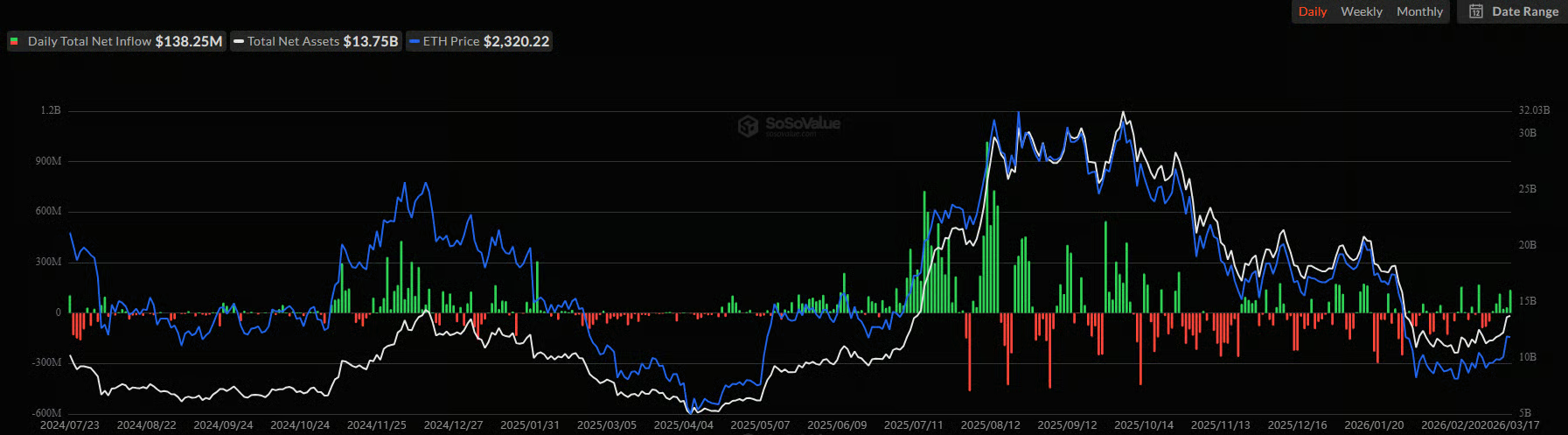
Meanwhile, several on-chain factors support the bullish scenario. The US spot ETH ETFs have been flashing green over the past six days, meaning inflows have dominated outflows. This reflects rising interest among institutional investors in gaining exposure to the asset and could positively impact future price performance.

Next on the list is the amount of ETH sitting on crypto exchanges. Earlier this week, the figure fell to a nearly 10-year low of around 15.85 million coins. This trend signals that investors continue to shift their holdings toward self-custody methods, thus lowering the immediate selling pressure.
You may also like:

Ethereum’s Relative Strength Index (RSI) should also be mentioned. The technical analysis tool, which measures the speed and magnitude of recent price changes, tumbled to 22. This means the asset has entered oversold territory and could be gearing up for a rally.

The Moon Scenarios
According to other analysts, ETH might be on the verge of a much more substantial increase that can take it to uncharted territory. X user ray claimed that $10,000 is “not a dream, just a milestone.”
A few days ago, the renowned investor and one who successfully predicted the 2008 financial collapse, Robert Kiyosaki, sounded the alarm that major banks and institutions are in trouble, hinting that another crash could be on the way.
Later on, he forecasted that “the biggest bubble” is about to burst, foreseeing that once the meltdown is over, BTC, ETH, gold, and silver will emerge as the major winners. As for the second-largest cryptocurrency, he envisioned its price skyrocketing to a (for now) almost unbelievable $95,000 within a year after the catastrophe.
Binance Free $600 (CryptoPotato Exclusive): Use this link to register a new account and receive $600 exclusive welcome offer on Binance (full details).
LIMITED OFFER for CryptoPotato readers at Bybit: Use this link to register and open a $500 FREE position on any coin!


Sen. Cynthia Lummis says the Digital Asset Market CLARITY Act “must be completed by the end of the year,” with Republicans planning a late‑April Banking Committee markup after months of delay.
Summary
- Lummis told colleagues the CLARITY Act “must be completed by the end of the year,” and said Republican members of Senate Banking aim to start markup in late April after Easter.
- The bill would split oversight of “digital commodities” and securities between the CFTC and SEC, set rules for exchanges and issuers, and plug gaps left by the 2025 GENIUS Act stablecoin law.
- A dispute over banning passive stablecoin yield had stalled progress and even cost Coinbase’s support, but Lummis now says compromises on yield and DeFi language are “largely reached,” putting pressure on Washington to finish the job in a crowded 2026 calendar.
Senator Cynthia Lummis (R-WY) delivered her clearest deadline yet for the Digital Asset Market Clarity Act on Wednesday, declaring during discussions reported by crypto journalist Eleanor Terrett that the landmark cryptocurrency market structure bill “must be completed by the end of the year” — regardless of the obstacles that have repeatedly delayed its progress. Lummis also revealed that the Republican side of the Senate Banking Committee is planning to initiate the bill’s markup process in late April, after the Easter holiday recess.
The remarks represent a significant hardening of Lummis’s posture on the CLARITY Act — formally the Digital Asset Market Clarity Act — which has been the most consequential piece of pending crypto legislation in Congress since the passage of the GENIUS Act stablecoin law in July 2025. Lummis, who chairs the Senate Subcommittee on Digital Assets, has been the bill’s most prominent champion, framing it as essential to U.S. leadership in digital finance and arguing that it would establish regulatory protections that future administrations could not easily reverse.
The CLARITY Act seeks to resolve the long-running jurisdictional dispute between the Securities and Exchange Commission and the Commodity Futures Trading Commission over digital assets, assigning the CFTC primary oversight authority over digital commodities while preserving SEC authority over tokens classified as securities. It also sets registration and disclosure requirements for crypto trading platforms and token issuers. The House passed its version of the bill in 2025, but the Senate has advanced a narrower iteration that imposes stricter customer-protection requirements and limits regulatory discretion — setting up a “high-stakes negotiation” between the two chambers over the final text.
The thorniest unresolved issue has been stablecoin yield. An earlier draft of the Senate’s CLARITY Act included language prohibiting stablecoin issuers from paying interest or yield solely for holding a stablecoin balance — a provision designed to prevent payment stablecoins from competing directly with insured bank deposits. The clause would permit activity-based rewards tied to real usage — such as payments, liquidity provision, staking, or network governance participation — but bar passive yield simply for custody. Coinbase cited these provisions as grounds for withdrawing its support for the bill, while banking groups backed the restrictions.
Wednesday’s statement from Lummis offered the most encouraging signal yet that this impasse is breaking. She said a solution on the stablecoin yield question “has been largely reached,” and added that disputes over DeFi-related provisions have also “been properly addressed”. Sources familiar with the negotiations had previously described talks between legislators and industry as moving “in the right direction,” with Digital Chamber CEO Cody Carbone expressing optimism about securing an affirmative vote.
The late-April markup timeline is more concrete than any previously announced. Earlier in the year, the Banking Committee had scheduled a markup for January only to pull it the day before, after Lummis acknowledged that the bill needed further agreement — particularly around the concerns of banks and credit unions worried about stablecoin-driven deposit outflows. The delay prompted open frustration from Lummis, who had urged Democratic colleagues not to retreat from months of bipartisan progress.
With the GENIUS Act already signed into law and its implementing regulations now under OCC review, the CLARITY Act represents the remaining pillar of what the industry has long called a comprehensive U.S. digital asset regulatory framework. Lummis has set a year-end deadline. Whether Washington can hold to it — in a legislative calendar already crowded by geopolitical crises and a contentious Fed cycle — will determine whether 2026 becomes the year crypto finally gets its rules.
Pi has morphed from a hyped IOU into a battered $0.18 L1; 2026’s open mainnet will decide whether it earns real usage or just fuels another round of unlocked sell pressure.
Summary
- Pi now trades near $0.18 with a roughly $1.7–1.8 billion market cap after an 80–90% rally toward $0.30 faded, as unlocks and miner distribution keep it pinned near cycle lows.
- The 2026 “open mainnet” pivot — stricter KYC, biometric checks and migrating 2.5 million users into a compliant, transferable environment — is the only real catalyst beyond more supply hitting order books.
- External forecasts mostly cluster around range‑bound outcomes, with 2026 levels near $0.20 and best‑case 2030 targets in the low single digits if, and only if, Pi proves real usage, listings and on‑chain activity.
Pi Network (PI) has moved from a hyped IOU narrative to a battered, liquid L1 asset trading around the mid‑$0.17–$0.18 range, with its next leg entirely dependent on whether the 2026 open mainnet phase actually delivers real usage instead of just unlocked sell pressure. Treat it like any other high‑beta alt: structurally cheap on optics, structurally dangerous on tokenomics and execution risk.
Where Pi Trades Now
Pi sits near $0.18 with a market cap around $1.7–1.8 billion, down sharply from its speculative IOU blow‑off in 2022 when prices briefly printed triple‑digit wicks on thin order books. Recent price action tells you everything: the token rallied roughly 80–90% into late February–mid March 2026 toward $0.30, then faded back toward $0.20 as momentum stalled and RSI divergences flashed. Unlocks are biting – the token has logged several sessions near its all‑time low area as supply from long‑time “miners” meets underwhelming demand on centralized venues. Liquidity is decent but not deep enough to absorb aggressive distribution from a 10‑figure fully diluted supply without persistent slippage.
What Actually Changes In 2026
The core fundamental catalyst is the move toward an “open mainnet” with real transactions, dApps and stricter KYC/security, after years of closed‑ecosystem promises. The team is rolling out enhanced verification (KYC, palm‑print, AI checks) and has cleared roughly 2.5 million users for migration, crucial to get coins off the grey zone and into a compliant, transferable state. A broader 2026 roadmap ties this to supporting real‑world finance integrations and payments, but so far the market has treated each technical milestone (like the Pi Launchpad testnet) as a sell‑the‑news event rather than a re‑rating trigger.
Price Scenarios: 2026–2030
External models cluster Pi’s fair‑value band for the next few years somewhere between “modest grind” and “permanent underperformance.” Gate.io’s internal work sees an average near $0.20 for 2026, with a rough range between about $0.16 and $0.27 – effectively where it is already trading. Other forecasters project that, if the ecosystem scales and listings proliferate, Pi could grind into the low single digits by 2030, with some estimates around $2.50–$3.50 under constructive conditions. Those paths assume three things that are not yet proven: successful open mainnet, sustained user activity beyond mining, and a crypto macro environment that rewards L1 risk instead of choking it.
Verdict: Trade The Range, Don’t Worship The Narrative
For now, Pi looks like a liquid, range‑bound beta play rather than a structural compounder. Bulls get a clear technical invalidation: hold above the mid‑$0.17 pivot and reclaim the $0.23–$0.25 resistance band, and the market can start repricing toward the psychological $0.30–$0.40 area on any mainnet or listing surprise. Bears lean on the opposite logic: continued unlocks plus weak on‑chain usage send Pi into a slow bleed, with each rally sold by early miners finally getting exit liquidity. In this tape, smart money treats Pi as an event‑driven trade around roadmap milestones and macro risk cycles, not as a religion – position small, respect liquidity, and assume volatility is the rule, not the exception.
Crypto World
Special DeepSnitch AI Bonus Code: Limited Time Left To Reserve 300% Extra Tokens Ahead of Launch, Bears Lose Grip On ZEC and DOGE
Bitcoin just hit a six-week high, which somewhat restored the sentiment in the market. Yet, exchange inflows spiked to 6.1K BTC in a single hour. This could indicate that the rally is real, but selling pressure may be reaching a boiling point.
As fears of an extra wave of volatility become real, the special DeepSnitch AI bonus code presents the easiest way for traders to boost their chances of massive returns.
With launch slated for March 31, DeepSnitch AI’s crypto presale bonus offer provides as many as 300% extra tokens for large allocations. Since these codes expire at launch, the level of FOMO in the community is getting borderline ridiculous as traders keep adding to their allocations.

Is BTC selling pressure building?
According to Julio Moreno of CryptoQuant, hourly Bitcoin inflows into centralized exchanges exploded to 6.1K BTC on March 16. This is the highest reading since February 20, with large inflows accounting to 63% of the total figure.
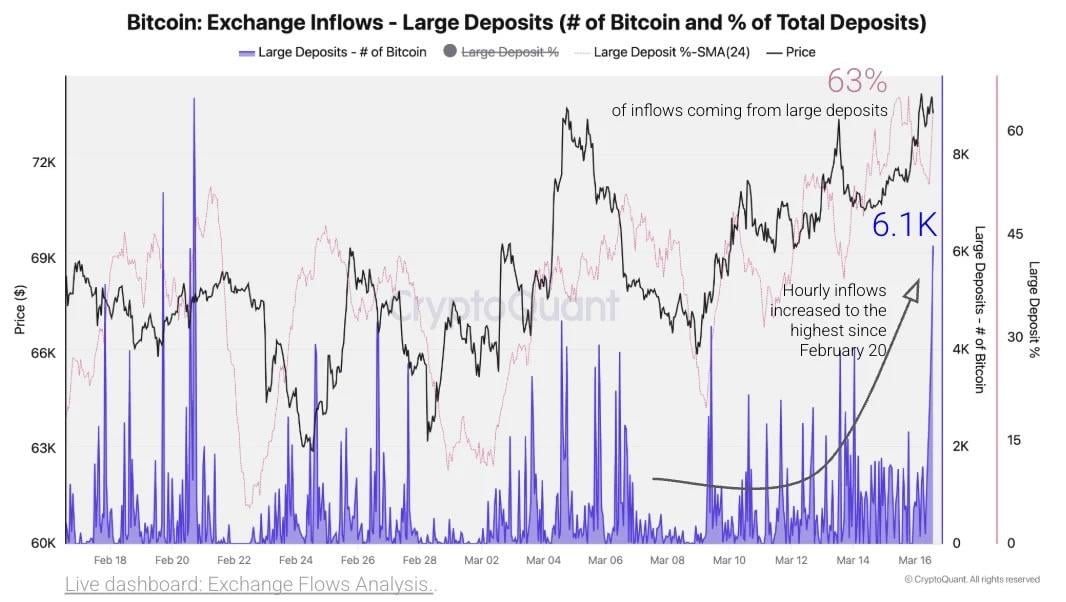
The driving force behind the inflows was Bitcoin’s 12% gradual rally in March.
Traders generally send BTC to exchanges before they sell or convert it into stablecoins, with Moreno noting that such spikes often preceded an uptick in selling pressure.
Thus, traders fear that smart money may be using the rally as an opportunity to profit. This uncertainty only contributed to traders doubling down on the special DeepSnitch AI bonus code, intending to scoop up extra tokens ahead of the March 31 launch.
Best March opportunities in crypto
1. DeepSnitch AI: How much are early investor bonus tokens worth?
Blink, and you’ll miss it. DeepSnitch AI is a project rapidly closing in on its March 31 launch. While this is enough to push FOMO to the max, the special DeepSnitch AI bonus code basically led to the project getting in on many trending lists.
So far, DeepSnitch AI has raised $2.2M at $0.04487. The main offering is an analytics platform consisting of five autonomous AI agents that can do everything from discovering rugs and honeypots, DYOR, token analysis, to real-time sentiment and FUD tracking.
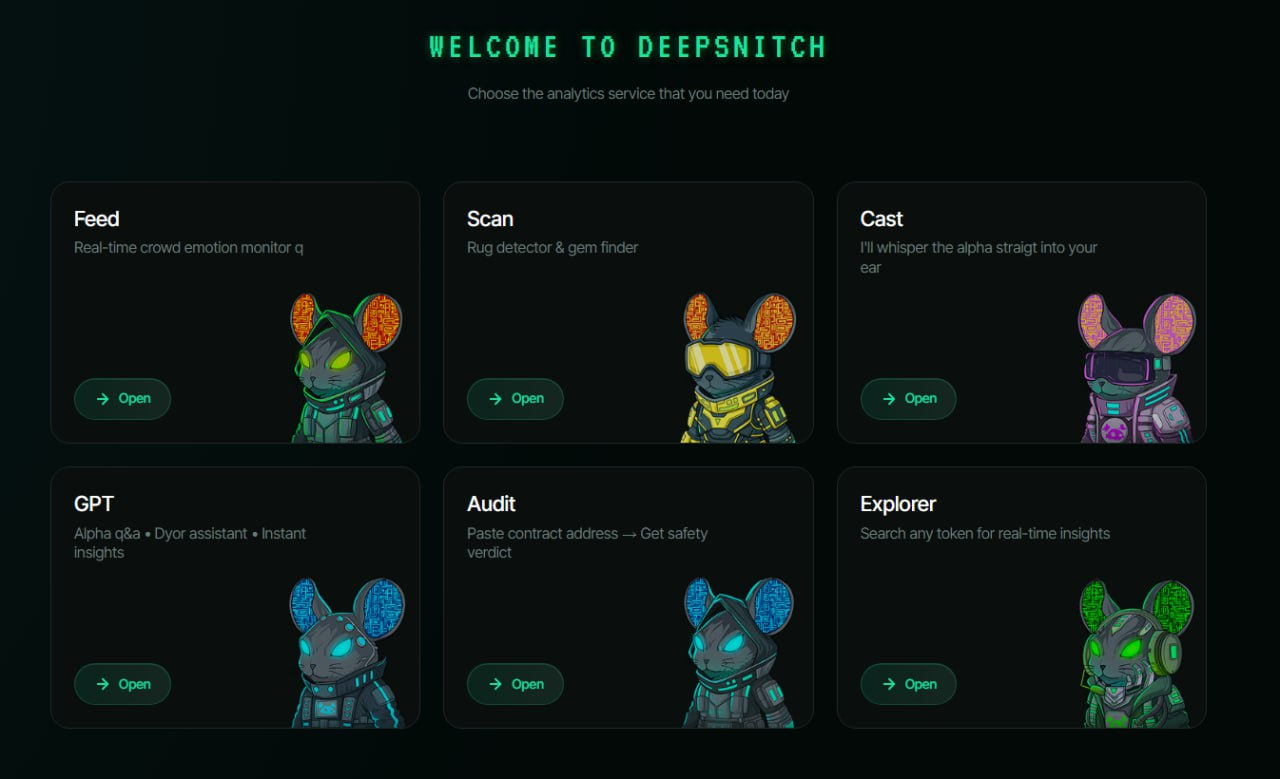
The latest bonuses only enhanced these fundamentals. You can apply any presale discount code at checkout if you meet the right allocation amount. Fortunately, there are multiple tiers, meaning that there’s a special DeepSnitch AI bonus code for everyone.
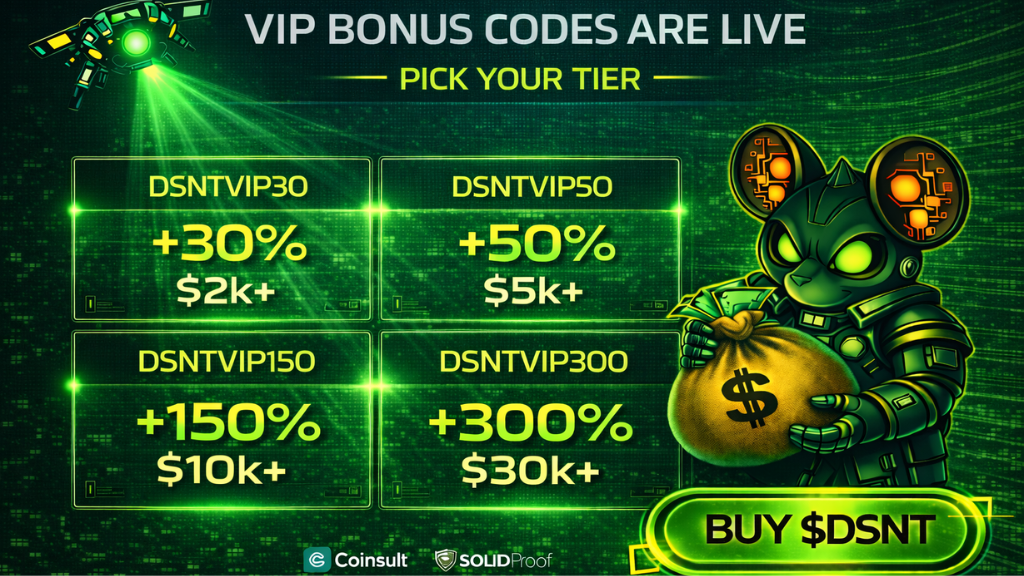
The lowest one, DSNTVIP30, gets you 30% extra tokens on $2K and above. DSNTVIP50 bumps that to 50% on $5K or more, and DSNTVIP150 adds 150% to your bag for $10K and up. And the biggest presale discount code, DSNTVIP300, unlocks 300% extra on allocations of $30K and above, which works out to roughly $90K.
DeepSnitch AI is running hot. With 41.7 million DSNT already staked, community projections of 100x to 300x make it one of the largest opportunities in recent times.
All codes expire on March 31.
2. Dogecoin: DOGE breaking out?
According to CoinMarketCap, DOGE traded at $0.099 on March 18.
As the community went crazy over the special DeepSnitch AI bonus code, bears surrendered control over DOGE’s price action.
In the short-term, Dogecoin must close above $0.10 (50-day SMA) to open the test of the $0.12 breakdown level, where sellers are expected to start dumping.
A sharp rejection here sets up a range between $0.09 and $0.12 for the near term. While the chances of DOGE hovering in this range are likely, if the OG meme coin closes above $0.12, the entire script will flip, and Dogecoin could end up surging to $0.16.
3. Zcash: Will the ZEC rally continue?
ZEC pushed to $276 on March 18, sparking hopes of the privacy coin’s grand re-entry, according to CoinMarketCap.
In the short term, the $278 level is the key battleground. Holding above it keeps the short-term structure intact, allowing buyers to kickstart another attempt at $286, but a clean break below $278 shifts the advantage back to sellers and opens the path to $272 first.
If ZEC continues sliding down, it could go as low as $265 or $258.
Final words: Boost your bags
Selling pressure could return in an instant, and that’s exactly why DeepSnitch AI has been making rounds lately.
With a launch set at exactly the right time, affordable pricing, powerful utility, and the special DeepSnitch AI bonus adding as much as 300% extra DSNT to your bag, the rewards could be massive if you lock in at exactly the right time.
Don’t let the market erase your gain. Reserve your tokens in the DeepSnitch AI presale now and join X or Telegram for the latest project updates.
FAQs
1. What is the DeepSnitch AI bonus code, and how does it work?
DeepSnitch AI offers four bonus codes tiered by allocation size. DSNTVIP30 gives 30% extra tokens, DSNTVIP50 gives 50% on $5K or more, DSNTVIP150 unlocks 150% for larger positions, and DSNTVIP300 gives 300% extra on allocations of $30K and above. All codes expire at the March 31 launch.
2. Why did Bitcoin exchange inflows spike, and what does it mean for the market?
Hourly Bitcoin inflows hit 6.1K BTC on March 16, the highest since February 20, with large deposits accounting for 63% of total inflows. CryptoQuant’s head of research flagged that historically, these spikes precede increased selling pressure.
3. When is the DeepSnitch AI TGE, and what happens after?
DeepSnitch AI lists on Uniswap on March 31. The seven-day claim window opens at TGE, with DEX and CEX listings expected to follow.
The post Special DeepSnitch AI Bonus Code: Limited Time Left To Reserve 300% Extra Tokens Ahead of Launch, Bears Lose Grip On ZEC and DOGE appeared first on Blockonomi.


Large XRP holders added 200 million tokens over two weeks, quietly building their stack even as the price failed to hold $1.50.
XRP has pulled back under $1.50 after briefly surpassing $1.60 yesterday, with a popular analyst saying the token now sits at a critical decision point and that a single piece of legislation could determine whether it breaks higher.
According to EGRAG CRYPTO, the CLARITY Act is the primary catalyst standing between XRP’s current price and a potential run past the $1.65 to $1.70 resistance band they dubbed “Zone 1.”
An Ascending Triangle With One Condition Attached
In their analysis, posted on X on March 18, EGRAG pointed out that XRP was forming an ascending triangle just below the $1.65-$1.70 range.
This is a pattern that usually leads to upward breakouts, and, according to the analyst, it shows rising lows, which would suggest that buyers were stepping in. The chart also showed that resistance has so far been flat, meaning that liquidity is concentrated above the current level.
EGRAG estimated that there is a 65% chance the XRP price will break above Zone 1, mainly due to structure and building compressions. However, the other 35% points to a rejection or fakeout, which they believe could happen if the CLARITY Act is postponed.
The Ripple token has gone up about 6.5% in the last seven days, with a range stretching from $1.37 to $1.60. That breakout happened around the same time as a buildup in derivatives positioning, as revealed by CryptoQuant contributor Amr Taha. According to him, XRP’s open interest delta rose by $16 million on March 13 and another $18 million on March 16, with the second wave coming just before the cryptocurrency’s jump above $1.50.
Whale activity followed suit, with chartist Ali Martinez reporting that large addresses had added 200 million XRP in the last two weeks, bringing their total from 10.88 billion to 11.08 billion.
You may also like:
But despite all this, XRP was rejected at $1.60, and was trading near $1.45 at the time of writing, a price that another market watcher, Tara, stated they were closely monitoring, referring to it as the macro 0.618 Fibonacci support level.
What Zone 1 Doesn’t Unlock
EGRAG’s analysis made it clear what the $1.65 to $1.70 zone can trigger, as well as what it cannot deliver on its own. According to them, while breaking above that range would be a meaningful technical event, getting to the next level at $2.60 and beyond requires additional conditions.
These include institutional flows or ETF-style exposures, stable BTC prices, or a drop in the number one cryptocurrency’s dominance, as well as weekly XRP closes above the $1.85-$2.00 band.
The CLARITY Act itself is moving, with negotiations possibly concluding as early as next week, according to investor Paul Barron. U.S. President Donald Trump had publicly blamed banks for holding the bill back in order to protect their deposit base.
Binance Free $600 (CryptoPotato Exclusive): Use this link to register a new account and receive $600 exclusive welcome offer on Binance (full details).
LIMITED OFFER for CryptoPotato readers at Bybit: Use this link to register and open a $500 FREE position on any coin!
Key takeaways:
-
Spot market demand through US-listed ETFs and Strategy buying BTC supports Bitcoin’s bullish momentum.
-
Low leverage among Bitcoin bulls reduces the risk of cascading liquidations even if prices drop another 5%.
-
Rising inflation concerns negatively impact fixed-income returns, paving the way for an eventual rotation from gold into Bitcoin.
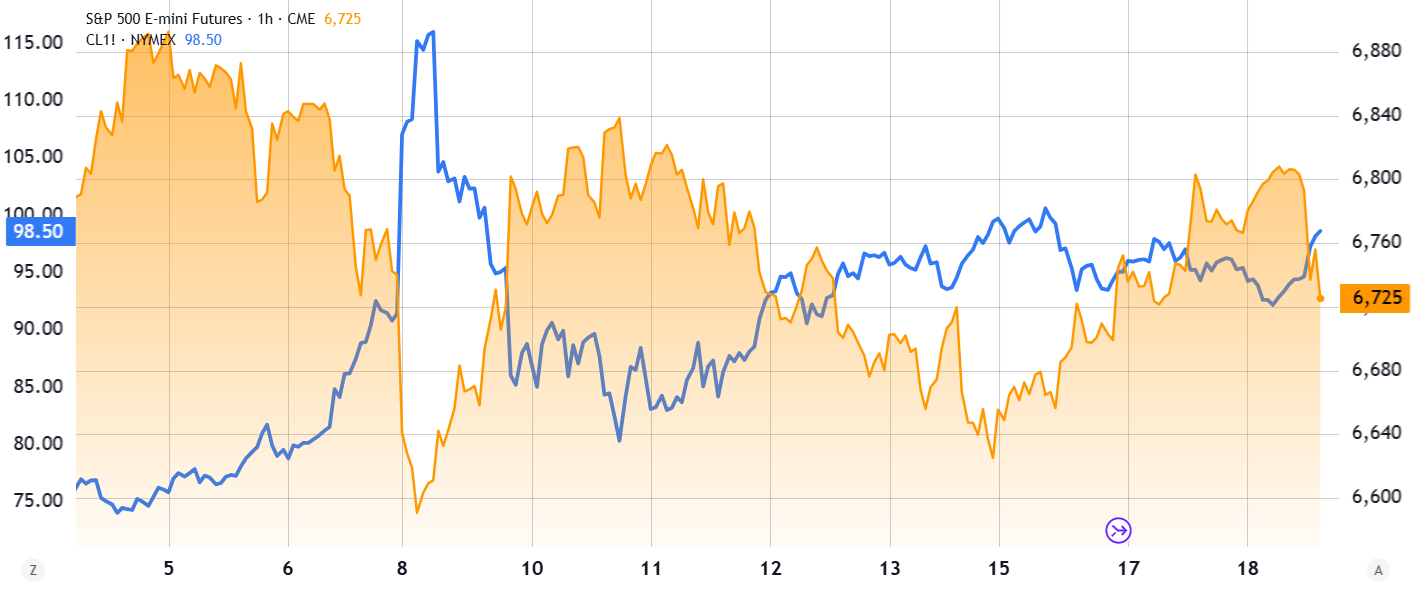
Bitcoin (BTC) faced a 7% correction after flirting with the $76,000 level on Tuesday. The downturn followed a decline in the US stock market after oil prices surged due to Israel attacking Iran’s largest gas processing facility and the US producer price index rising above expectations.
Despite the recent losses, there is no indication that Bitcoin’s bullish momentum has faded, given how the S&P 500 and US Treasuries have behaved amid worsening macroeconomic conditions. Additionally, Bitcoin bulls have avoided excessive leverage, reducing the risks of cascading liquidations.

The S&P 500 index traded merely 4% below its all-time high on Wednesday despite recent weak US job market data and continued pressure from the ongoing war in Iran. The US reported continued jobless claims relatively steady at 1.85 million in the week ending March 7. On Wednesday, the US announced that wholesale prices gained 3.4% in February versus the prior year, the largest gain in 12 months.
As oil prices jumped above $98, investors became more convinced that the US Federal Reserve will not be able to ease monetary policy throughout 2026. CME FedWatch Tool showed that odds for a steady interest rate by September plummeted to 42% on Wednesday, from 89% one month prior, according to implied odds on futures markets.
Bitcoin under pressure as prolonged war risks heighten investors’ risk aversion
Sticky inflation and the prospect of a prolonged war reduced the odds of economic stimulus focused on expansion, causing investors to avoid risk. However, there is no reason to believe that traders anticipate an imminent crash, at least judging by how interest rates are priced relative to inflation expectations.

The 2-year Treasury yield traded at 3.71% on Wednesday, while the Cleveland FED 2-year inflation expectation stood at 2.27%, resulting in a 1.44% adjusted return. During periods of extreme fear, higher demand for government bonds tends to result in near zero or negative returns. Conversely, a lack of confidence in US monetary policy can push the indicator to 2.5% or above.
Even if Bitcoin drops another 5% in the upcoming weeks, there is no indication of excessive leverage demand from bulls, meaning low risk of cascading liquidations. Recent bullish momentum has been supported by the spot market, especially through US-listed spot Bitcoin ETF accumulation and Strategy’s (MSTR) aggressive buying activity.

CoinGlass estimates that $450 million worth of leveraged long Bitcoin futures would be forcefully terminated down to $68,000, representing less than 1% of the current $49 billion aggregate open interest. The Bitcoin perpetual futures funding rate confirms that bears are becoming overconfident as demand for leverage on short positions has increased.
Related: 74% of institutions expect crypto prices to rise in 12 months–Survey

A negative funding rate means shorts are the ones paying to keep their positions open. More importantly, the indicator stood below the neutral 6% to 12% range even as Bitcoin price surged above $76,000, reinforcing the thesis of spot demand sustaining momentum rather than speculation using derivatives markets.
Gold prices dropped to $4,900 on Wednesday, showing signs of exhaustion after holding levels above $4,800 for four weeks. An eventual rotation out of gold could be the trigger for a sustained Bitcoin rally, especially as inflation concerns negatively impact expected returns for fixed-income assets. Overall, there is little indication that Bitcoin’s current bullish momentum has faded.
This article does not contain investment advice or recommendations. Every investment and trading move involves risk, and readers should conduct their own research when making a decision. While we strive to provide accurate and timely information, Cointelegraph does not guarantee the accuracy, completeness, or reliability of any information in this article. This article may contain forward-looking statements that are subject to risks and uncertainties. Cointelegraph will not be liable for any loss or damage arising from your reliance on this information.
At the same time, one important indicator suggests that the price may also plummet dramatically in the foreseeable future.
The leading cryptocurrency experienced a significant upswing over the past several days, with its price briefly rising to as high as $76,000.
Although it was stopped there and pushed south by $5,000, some key factors, including recent whale activity, suggest it may post further gains in the near future.
BTC Isn’t Done Yet?
Despite losing some steam in the past hours, Bitcoin remains well in the green on a weekly scale and currently trades at around $71,400 (per CoinGecko’s data). As a result, many analysts have flipped toward the optimists’ corner and expect an additional price increase.
The renowned market observer Ali Martinez, for instance, claimed that a daily close above the $73,344 resistance and later turning that level into a structural floor could open the door to a pump to $79,234 and $85,555.
In a subsequent post on X, the same analyst revealed that whales have acquired 40,000 BTC over the past seven days. The USD equivalent of the stash is almost $2.9 billion (at current rates), and now this cohort of investors controls roughly 5.17 million units, or roughly 25% of the asset’s circulating supply.
Such accumulations are generally viewed as bullish because they reduce the amount of BTC available on the open market, which, combined with non-declining demand, should lead to a price surge. They may also energize smaller players to step in and further support the upward momentum.
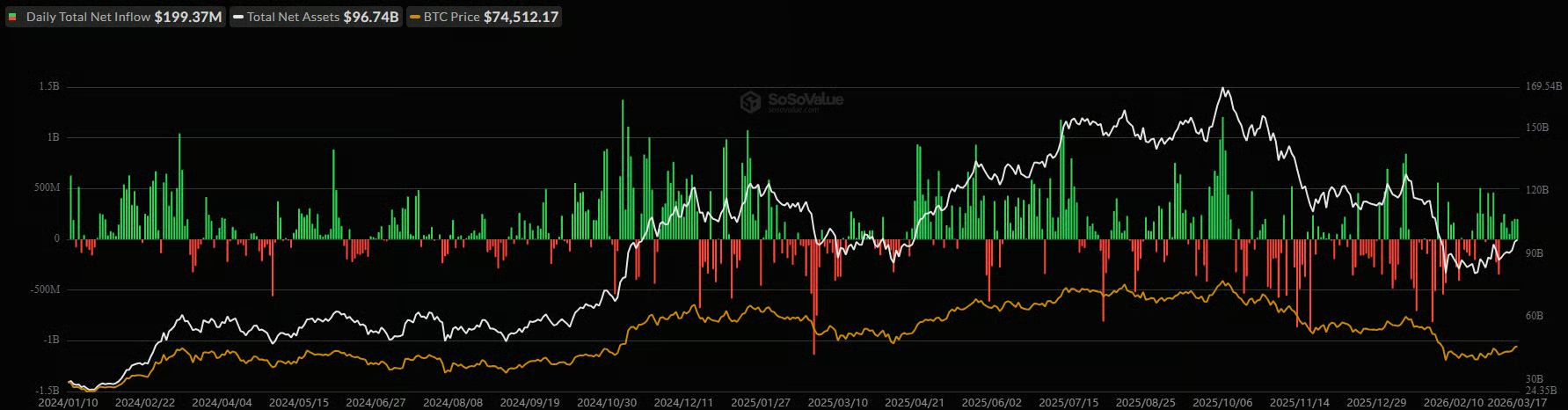
Next on the list is the solid interest in spot BTC ETFs lately. Over the past seven days, inflows into such investment vehicles have surpassed outflows, which is the longest such streak since October last year. When institutional investors such as pension and hedge funds increase their exposure to the asset through regulated financial vehicles, they require the issuers to purchase BTC to back their shares. Put simply, consistent ETF demand makes the remaining supply scarcer, which tends to push the price north.
You may also like:
Despite the renewed appetite for such financial vehicles, many ETF investors remain underwater. Earlier this week, Axel Adler Jr. estimated that the $79,962 level represents the average cost basis of every BTC currently held inside these exchange-traded funds. If the asset trades below this mark, the cohort is sitting at unrealized losses, while breaking above would lead to paper profits.
Last but not least, we will touch upon the shrinking supply of BTC held on crypto exchanges. Today (March 18), the figure dropped to a new six-year low of approximately 2.72 million units. This suggests that investors continue to abandon centralized platforms in favor of self-custody methods, thereby reducing the immediate selling pressure.

Major Volatility Ahead?
Another industry participant who analyzed BTC’s recent performance is the X user Cantonese Cat. They claimed that the Bollinger Bands on a monthly scale have squeezed to levels never seen before.
The technical indicator shows how far the price deviates from its average, helping traders gauge volatility. When the bands tighten, it reflects a prolonged period with little turbulence: a setup that often precedes a large breakout. It is important to note that the huge move could be in any direction, or, as Cantonese Cat said:
“This will lead to a very powerful move when it expands. All that volatility that you saw over the last few months is nothing compared to what will come.”
Binance Free $600 (CryptoPotato Exclusive): Use this link to register a new account and receive $600 exclusive welcome offer on Binance (full details).
LIMITED OFFER for CryptoPotato readers at Bybit: Use this link to register and open a $500 FREE position on any coin!
Smartest Ripple (XRP) Alternative? Smart Money Move To Taurux (TAUX) as Presale Surpasses $300K Raised

The First Spider-Man: Brand New Day Trailer Is Here To Save The MCU

How Mohamed Salah and a tactical tweak breathed life back into Liverpool’s campaign in Champions League win over Galatasaray


-
 Crypto World5 days ago
HYPE Token Enters Net Deflation as HyperCore Buybacks Outpace Staking Rewards
-

 Tech3 days ago
Your Legally Registered ‘Motorcycle’ Might Not Count Under Proposed US Law
-

 Fashion5 days ago
Weekend Open Thread: Addict Lip Glow
-
Sports4 days ago
Why Duke and Michigan Are Dead Even Entering Selection Sunday
-
 Tech1 day ago
Are Split Spacebars the Next Big Gaming Keyboard Trend?
-

 Business3 days ago
Search for Savannah Guthrie’s Mother Enters Seventh Week with No Arrests
-

 Business4 days ago
US Airports Launch Donation Drives for Unpaid TSA Workers as Partial Government Shutdown Enters Fifth Week
-
Crypto World4 days ago
Coinbase and Bybit in Investment Talks: Could Bybit Finally Enter the US Crypto Market?
-

 Business3 days ago
Australian shares drop as Iran war enters third week
-

 Business5 days ago
Country star Brantley Gilbert enters growing non-alcoholic beer market
-

 Crypto World3 days ago
Crypto Lender BlockFills Enters Chapter 11 with Up to $500M in Liabilities
-

 Sports5 days ago
College Basketball Best Bets: Conference Tournament Semifinal Picks
-

 Politics15 hours ago
The House | The new register to protect children from their abusers shows Parliament at its best
-
 Crypto World7 days ago
Three Binance Charts May Be Hinting at Bitcoin’s Next Move
-
 Business6 days ago
Trump demands Powell cut rates as Iran conflict raises energy prices
-

 Crypto World6 days ago
Senate Votes to Include CBDC Ban in Bipartisan Housing Bill
-

 Fashion3 days ago
25 Celebrities with Curly Hair That Are Naturally Beautiful
-

 News Videos7 hours ago
RBA board divided on rate cut, unusually buoyant share market | Finance Report | ABC NEWS
-

 NewsBeat6 days ago
Deane Road crash near Bolton colleges and university
-

 News Videos6 days ago
Tom Lee: The 100x Opportunity EVEN Bigger Than Bitcoin (New Ethereum Prediction 2026)


You must be logged in to post a comment Login