
CryptoCurrency
How Concept Art Game Design Shapes Web3 Visual Worlds

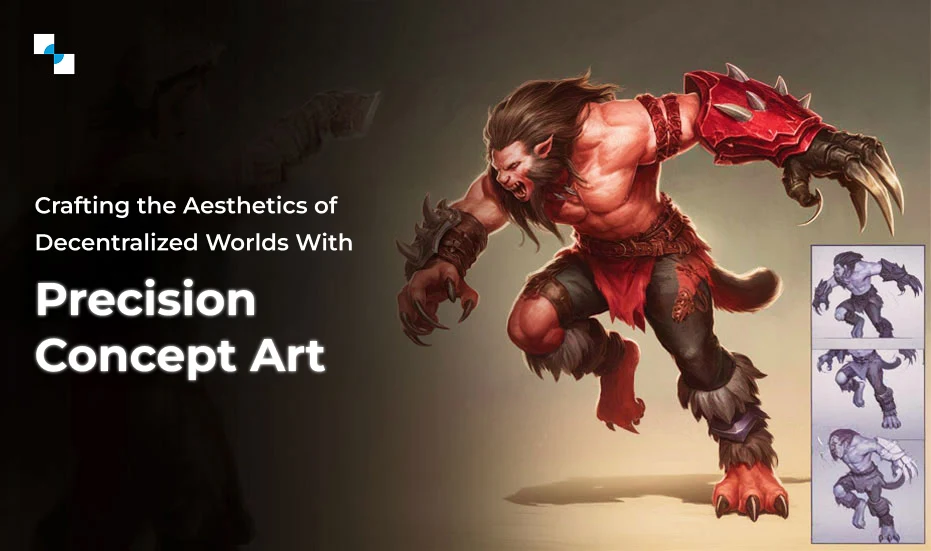
The gaming industry has entered an era where ecosystems evolve faster than traditional documentation can keep pace. As studios design multi-layered economy loops, cross-platform progression systems, live-ops events, and interoperable digital asset frameworks, the need for clear, future-proof documentation becomes non-negotiable. Many teams now rely on concept art services early in production to visually align these evolving systems.
A robust game design document or game development document no longer functions as a static reference. Instead, it serves as a living operational blueprint that aligns creators, developers, system designers, and external partners—especially in blockchain-forward environments where asset ownership, marketplace integrations, and player-driven value systems shape the core experience. These environments often require early concept art game design alignment to maintain visual and functional consistency throughout game development.
Why Complex Game Economies Need Smarter Documentation
Today’s games have become much more than just entertainment products; rather, they operate as dynamic digital economies. Because of the complexity of monetization mechanics, reward mechanisms, behaviors within marketplaces, and evolving progression structures, it is critical to accurately map out the complete game design document to eliminate uncertainty surrounding reward cycles, inflationary pressures, and exploitation of the economy by specific players.
Studios with Consumables, Crafting Layers, Rarity Levels, Inter-Game Utility and many other types of use cases (for example) will need more than one ‘Static Documentation’ form of documentation. They will need to document the actually changing game ecosystems (i.e). For example, if the studio makes changes to their game economy/with economy tuning or they have ‘live’ documents (i.e); therefore, an adaptableDocumentation is needed. Visual clarity through concept art services also helps ensure that evolving assets and mechanics remain faithful to the original design intent during game development.
What Happens When Creative Vision and System Logic Don’t Speak the Same Language?
As Web3 game development processes are becoming more modular, the potential for confusion and mismatching is increasing. Game Designers may have one opinion on how interactions should play out, while Game Developers have another; in addition to that, Game Economists may assume scarcity and Game Live-Ops may create an abundance of supply due to rapid production of in-game currency due to Events.
Even a small amount of misunderstanding can disrupt the balance of experience progression and ruin monetization through the misalignment of Game Designer’s and Game Developer’s development approaches.
By developing a richer understanding of the rationales for Game Mechanics, how Game Mechanics impact and how those mechanics will fit within the long-term vision for your game, the development team will be less likely to make conflicting or disconnected decisions. Early-stage concept art game design often serves as a visual reference that reduces these conflicts.
Utilizing excellent documentation allows developers to translate the creative vision of the game into executable logic throughout all phases of development, maintaining the connection between the development phases of Game Mechanics, Game Economic Architecture, Game Pacing and User Experience.
Start Your Web3 Game Visual Blueprint With the Experts
What Keeps Post-Launch Features From Colliding With Existing Systems?
As a game continues to evolve post-launch due to patches, seasonal drops, economy resets, and other content releases; Live-Ops teams are faced with the ongoing challenge of introducing new features while not causing disruption to existing systems. Many times Live-Ops updates include the introduction of new systems, currencies, or progression paths which by coincidence can clash with player behavior, upset balance, or tear down foundational loops. Throughout development, it is essential to provide continual updates on design documentation that serve as guardrails to ensure that all new features align with pre-existing rules, technical constraints and economic structures. This ongoing alignment often relies on both structured documentation and early concept art services for visually complex updates.
Key Elements Preventing Post-Launch Collisions
- Centralised Feature Documentation
An all-encompassing document containing all systems like combat, crafting, currencies, rewards and sinks that will help deter any shared logic when adding or changing systems with future updates. - Dependency Mapping
This document shows how each feature works/interacts with others, which helps decrease the chance of an unintentional breakage when making changes to it. - Impact Assessment Frameworks
Prior to implementing new features, the team considers how they will affect progression, rewards, token flow and any components of the Metagame. - Version-Controlled Change Logs
These logs contain all updates and provide the reason behind them, their anticipated results, and references to rollbacks on those updates; therefore, providing clear communications between teams regarding any updates they’ve made. - Cross-Team Alignment
The Live-Ops, economy designers, engineers, and graphics artists all use the same document to ensure they are all working toward the same end goal that was expressed in the Game Design Document. Early visual updates supported by concept art game design help maintain alignment during new feature integrations.
What Documentation Do Blockchain-Integrated Economies Require?
Blockchain games introduce asset ownership, tradable NFTs, tokenized reward systems, and on-chain logic that must remain transparent, predictable, and fully aligned with gameplay. This means that within a blockchain economy, as opposed to a traditional game economy, all assets move freely between multiple wallets, external marketplaces and partner ecosystems. Creating a precise repository for both game and chain mechanics is crucial for ensuring there are no discrepancies, exploits or tokenomic drift. Many studios enhance these ecosystems with concept art services to maintain clarity in the visual representation of tokenized assets.
Notable documentation required for blockchain-integrated economies includes:
- Tokenomics Architecture Documentation – this provides a definition of the use, utility, sinks, earning mechanisms, inflation control and governance rule for a token.
- Smart Contract Specification – specifies on-chain functions, all state changes, asset metadata structures and how to upgrade as necessary.
- NFT Asset Framework – provides information about the Rarity, Attributes, Logic around Supply, Crafting, and Cross Platform Mobility.
- On-Chain and Off-Chain Sync Map – contains documentation that specifies the relationship between in-game transactions and blockchain transactions and vice versa.
- Security, Risk, Compliance Guidelines – provides the literal processes for being audit ready, testing out wallet interactions, preventing any possible exploits and recovery policies for lost assets.
How to Maintain Balance When Players Control the Economy?
Players all around the world are crafting, trading, staking, and speculating, impacting the supply and demand curves which shape the value of goods and services. A clear and concise written procedure for how a player-controlled economy will react to a player’s actions are critical for keeping the economy in balance. If there are no clear and concise procedures in place for how a player’s actions affect the economy, there is a risk of inflation or monopolies forming due to the player’s ability to engage in behaviors that create economic exploits. Therefore, having clear and consistent procedures in place will allow group leaders to easily predict, track, and adjust their systems while remaining fair and stable.
Documentation Needed to Maintain Balance in Player-Controlled Economies:
- Value Loop Definitions
Written definitions that outline and display, through visual diagramming, the actions a player must take in order to properly complete a value loop. - Player Influence Models
Written documents outlining how crafting, trading, progress and Governance activities affect the Ecosystem as a whole. - Economic Limits and Safeguards
Establishment of inflation controls, resources drop limits, price variance restrictions, and hoarding behaviours to avoid destabilising the economy. - Real-Time Balancing Protocols
Written guidelines for tracking KPIs, spotting anomalies and making necessary corrections on the fly. - Scenario Testing Documents
Written documents that illustrate how players would react to specific edge cases or stress tests. Written documents that contain models and scenarios provide predictions of how players will respond to changes in the economy.
Building Future-Ready Ecosystems
The sustainable game economy relies upon the documentation that continues to evolve with the same intelligence as the systems it governs. With many studios now building on-chain assets, creating interoperable digital goods, using marketplace-driven mechanics, and utilising longer term live-ops frameworks, clear and concise documentation can be considered an absolute necessity for predictable innovation. In many cases, the visual foundations for these systems are established through concept art game design during early game development.
A well-structured game design document, or a game development document, enables teams to provide players with rich experiences at a scalable rate, maintain meaningful engagement with their players, and ensure economic stability throughout the lifecycle of a game. For many blockchain-native or hybrid gaming ecosystems, documentation is not only an artefact of development; it is the strategic foundation of the system that protects the value created by the system, ensures consistent operation, and enables long-term commercial success. As these systems evolve, concept art services continue to support visual clarity and alignment across the entire development pipeline.



