
CryptoCurrency
How Digital Twins Power the Future of Metaverse Development

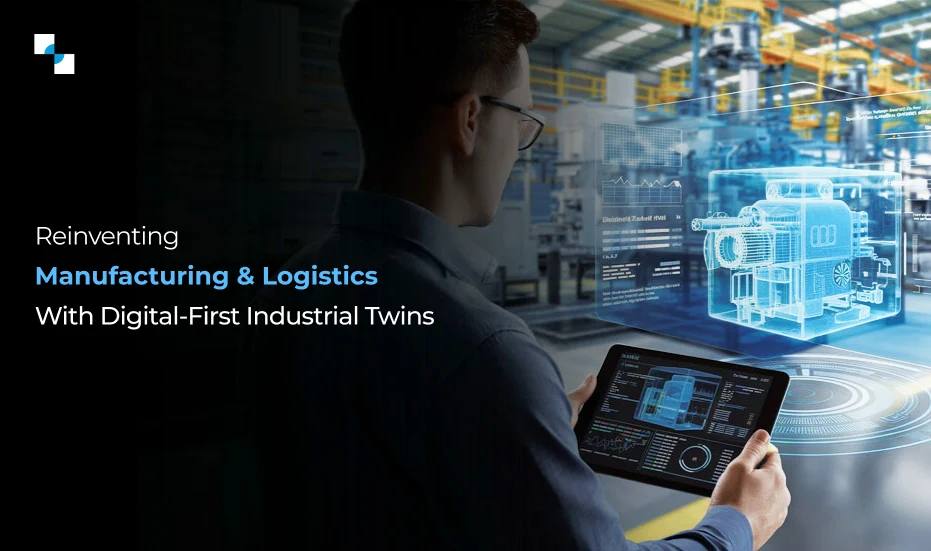
As industrial businesses shift toward digitally rich, interconnected systems, the industrial ecosystem is shifting from more traditional forms of automation, which generally include factories and other manufacturing facilities, to the use of digital twin technology to encompass not only manufacturing operations but all aspects of industrial enterprise. The rapid uptake of digital twin technology has provided the means to continuously develop and adapt virtual representations of the physical elements of supply chains, warehousing, production, and logistics. Digital twins are now viewed as the primary means of providing the data necessary to improve design, optimize performance, enhance operational efficiencies, and support real-world operations such that an organization can produce consistently and efficiently in the modern industrial metaverse.
The Shift Toward Intelligent Industrial Ecosystems
As an increasing number of organisations are seeking to operate in an environment of real-time predictability, transparency, and automation, the industrial sector has begun to redefine its digital infrastructure. Static dashboards and isolated monitoring systems are no longer capable of managing the immense volume, variability, and speed of industrial data that exist today. Digital twins are providing a simulated environment that is dynamic and allows testing, monitoring and optimising operations within a near real-time environment.
As industrial systems are becoming immersed within the Metaverse environment, and as such provide an opportunity for the blending of digital and physical environments to operate harmoniously as one, collaboration with professional metaverse developers offers the enterprise with the opportunity of seamlessly transitioning to be able to scale within multiple regions and functions while maximising both efficiency and accuracy.
What Makes Digital Twins Foundational in Industrial Metaverse Platforms
Digital twins form the structural backbone of industrial metaverse platforms by replicating every operational variable with remarkable accuracy. They act as the analytical and simulation engine behind interconnected industrial ecosystems, transforming data into actionable insights.
Key Foundation Elements
- Real-Time Mirroring Across Operational Layers
Digital twins use sensor data from machines, production lines, and the environment to provide a continuously evolving virtual copy of an actual physical asset. The digital twin allows for informed, real-time decisions to be made regarding how best to operate a machine, while also providing an opportunity to respond proactively to incidents or anomalies that occur within the production process. The digital twin is a tool that supports the development of digital twins and Metaverse Development strategies for sophisticated interdependence across industrial networks. - Multi-Source Data Integration for Better Visibility
Organizations can utilize IoT sensor data, ERP systems, cloud platforms, and other applications to create a single integrated digital replica of their physical assets. By using multiple data sources, organizations can achieve a comprehensive view of their industrial operations. To ensure that all the pieces fit together cohesively and efficiently, businesses must work with experts in Metaverse Development to establish the best interconnected environment possible. - Simulation Engines for Process Optimization
Digital twins have the capability of conducting digital simulations to create and test multiple potential scenarios for process optimization. These simulations allow an organization to assess the impact of each scenario before implementing any significant physical change to its operations. The availability of reliable, virtual representations provides organizations with a faster, safer way to test new ideas, processes, products, etc., and allows them to improve their current products through accelerated innovation cycles. - Automated Optimization Loops
Digital twins are capable of utilizing artificial intelligence (AI) and predictive analytics to create triggered automated optimization recommendations and/or responses when appropriate. Over time, the digital twin will be able to develop and refine its capabilities to become a self-learning artificial intelligence, resulting in increased accuracy and longer-term operational stability.
Start Your Digital Twin Strategy With Antier
Core Components of Digital Twins in Industrial Environments
Industrial digital twins require a precise blend of modeling, data orchestration, simulation engines, and verification layers. These components enable comprehensive monitoring and multi-level decision intelligence.
Core Components Explained
- Asset and Process Modeling
Every machine, robotic arm, conveyor belt, or logistics unit is replicated as a 3D, data-rich digital object. This modeling allows teams to visualize asset performance from any angle, monitor real-time behaviors, and correlate deviations with underlying causes. As industrial organizations expand their digital infrastructures, integrating these models with metaverse development platforms enhances operational collaboration and oversight. - High-Frequency Sensor Data Integration
Continuous data ingestion from IoT sensors ensures that every motion, vibration, temperature change, or process shift is captured and interpreted. This helps predict failures and maintain operational continuity. - Advanced Simulation & Analytics Engines
Simulation engines run stress tests and efficiency checks, predicting how assets perform under various conditions. Forecasting production bottlenecks or energy consumption becomes significantly easier with these capabilities. - Secure Data Verification Layers
Blockchain-powered verification helps validate the integrity of operational data across distributed environments. This is particularly important for supply chains and multi-site industrial operations. - Cyber-Physical Coordination Layers
This layer ensures synchronized interaction between digital twins and their physical counterparts. It acts as the real-time bridge that keeps both worlds aligned, enabling instant corrections and optimized execution.
Transforming Manufacturing Through Immersive Digital Replicas
Digital Twins are a powerful tool for production facilities that offer superior visibility and faster problem resolution for a safer and more efficient production process.
Manufacturers can use digital twin technologies in a variety of ways to improve their operations, as outlined below:
1. Predictive Maintenance to Reduce Downtime
Manufacturers can avoid unexpected downtime by using digital twins to detect slight operational deterioration and to recommend preventative maintenance before significant problems arise. This will increase equipment life expectancy and maximize return on investment (ROI) for the asset. In an immersive environment created by the Metaverse Development framework, the maintenance team can even identify breakdown exposure visually.
2. Optimizing the Production Process
Through digital twins, manufacturers can simulate hundreds of different configurations to determine which one will perform best before any physical modifications are made. The benefits of using digital twin technology for production optimization include higher quantities of output, less waste, and an improved production floor layout.
3. Quality Assurance via Digital Twin Automation
Maintaining quality control is a requirement of today’s manufacturing facilities. By continuously analysing product output against historical patterns of variability, digital twins can provide immediate feedback to isolate quality problems, allowing for superior products to be delivered to customers, as well as to ensure that the production and packaging cycles remain consistent.
4. Reducing Safety Risks
The ability to model dangerous processes digitally helps manufacturers create a safer working environment for their employees. Teams can test variations in production processes, determine the potential for chemical exposure, and devise appropriate emergency response procedures, all without exposing team members to unsafe conditions.
Logistics & Supply Chain Use Cases in the Metaverse
Logistics and supply chains are becoming more complex as companies need to make decisions regarding routing, storing, and fulfilling their products in real time. A digital twin will coordinate and optimize logistics from start to end.
1. Warehousing Automation and Planning
Digital Twins will create a simulation of the layout of your warehouse, how you will store your products, and how your employees will move through your warehouse. By knowing where to place your employees, you can ensure the best possible picking speed, efficient rotation of inventory, and reduce the risk of human error.
2. Autonomous Fleet and Route Optimization
Digital Twins will analyze multiple routing scenarios to find the most efficient route based on live traffic conditions, weather conditions, and delivery constraints. Customers will have reduced fuel usage and elevated delivery performance due to optimized routes.
3. Predictive Inventory Forecasting
Digital Twins will analyze historical consumption data and forecasted supply to keep ideal inventory levels. Eliminating overstock will eliminate running out of stock.
4. Real-time Coordination over the Network
Your company will now have a complete view of its cross-border logistics operations. With experienced metaverse developers, such capabilities can be integrated into immersive command centers where you can make decisions in real-time and create increased scalability for your entire logistics system.
The Industrial Metaverse Needs Intelligent Twins to Scale
Digital twins have transitioned from being a potential technology for Industry 4.0 to a foundational element of the Industrial Metaverse. They provide enhanced visibility, automation, and predictive analytics for operational ecosystems, from production nodes to global distribution networks. In addition to these benefits, digital twins will also become the strategic foundation for Industrial Simulation(s), Collaborative Immersion, Real-Time Decision Making, and Multi-Site Optimization, as companies develop strategies to digitally transform themselves.
Start building your digital twin strategy with Antier and accelerate your industrial metaverse development transformation today.



