
CryptoCurrency
How Tokenized Deposits Work for Banks, Investors & Platforms

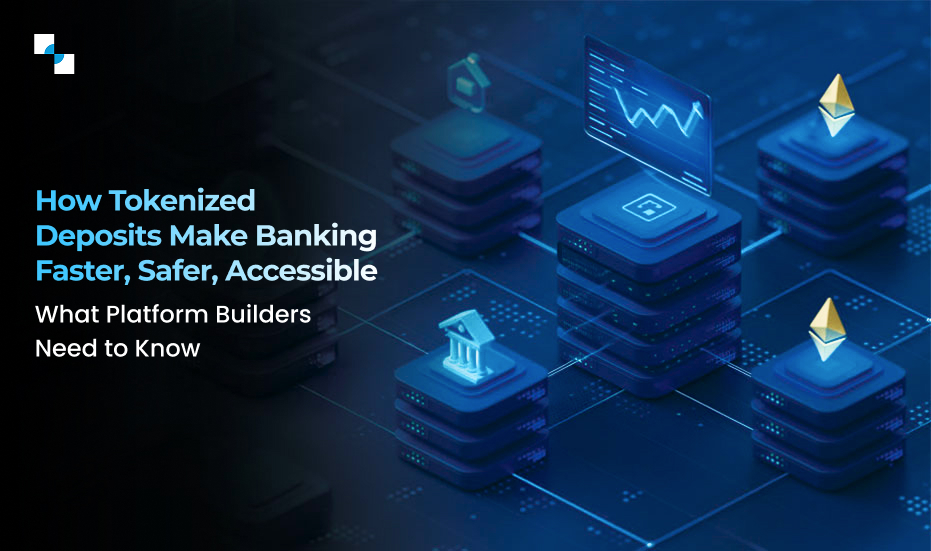
Tokenized deposits are quickly becoming one of the most important breakthroughs in digital finance. They merge the stability and trust of bank deposits with the real-time speed, transparency, and efficiency of blockchain. As major banks and fintech companies explore digital settlement rails, they’re looking for partners who can build secure, compliant, and scalable tokenized deposit systems. For any Asset Tokenization Platform Development Company, the demand for enterprise-grade digital infrastructure is growing at a rapid pace. Institutions want solutions that support instant settlement, automated workflows, and compliant onboarding for both retail and corporate users. This guide breaks down how tokenized deposit services work, the benefits for retail and institutional customers, and how platform builders can capitalize on the shift toward blockchain-powered deposits.
What Are Tokenized Deposits?
Tokenized deposits are digital representations of deposits held at regulated banks. Each token is backed 1:1 by money sitting in a traditional banking account. Unlike stablecoins, which are often issued by private companies, tokenized deposits remain fully within the regulated banking perimeter. This makes them more secure, more compliant, and more suitable for large-scale financial operations.
For platform developers delivering Asset Tokenization Platform Development Services, tokenized deposits require robust infrastructure, smart contracts, identity verification modules, reconciliation engines, and compliance systems. As banks explore real-time digital settlement, platform companies play a key role in helping institutions issue, manage, and transfer tokenized deposits safely.
Turn your Banking Vision into a Real, Compliant Asset Tokenization Platform
Why Banks and Fintech’s Are Turning to Tokenized Deposits
1. Financial Systems Need Real-Time Rails
Traditional payment networks rely on batch processing and delayed settlement. Tokenized deposits solve this by enabling immediate value transfer on blockchain. Banks can offer faster, more predictable payment experiences, significantly improving retail and corporate service models without changing their core deposit structure.
2. Safe, Regulated, and Trusted
Because tokenized deposits are issued by regulated institutions and backed by real bank balances, they are inherently safer than unregulated digital assets. This gives both retail users and institutions confidence that their digital money remains protected by existing banking laws and deposit guarantees.
3. Programmability Unlocks New Financial Products
Banks can embed rules into tokenized deposits, automating payments, escrow, compliance checks, or fund movements. This programmability opens opportunities for new digital products, real-time treasury systems, and smart settlement functions that simply aren’t possible with legacy infrastructure.
4. Better Compatibility with Web3 Ecosystems
Tokenized deposits give banks a regulated way to participate in digital asset markets. They can integrate with tokenized securities, on-chain lending, settlement networks, and digital marketplaces. This positions banks for the future without exposing them to the risks associated with unregulated crypto assets.
What Tokenized Deposit Platforms Work: A Clear End-to-End Flow for Banks, Developers, and Investors
A tokenized deposit platform doesn’t replace the bank, it extends the bank’s existing core systems with a blockchain layer that makes money programmable, faster, and easier to move globally. Below is the real working model, step by step, so developers and institutions can see exactly how the system functions and where value is created.
1. Deposit → Digital Token Conversion
A customer, retail or institutional, deposits funds into a regulated bank account. The platform’s tokenization engine, owned by the bank, then creates (mints) digital tokens that represent this deposit 1:1 on blockchain.
What’s happening technically:
- Bank core ledger receives fiat
- Platform triggers a minting event
- Smart contract issues tokens equal to the fiat amount
- Tokens appear in the user’s digital wallet
Every token is backed by real money in the bank.
2. On-Chain Movement
Once tokens exist, users can transfer them instantly on blockchain. This movement is processed through the platform’s settlement layer.
Process:
- Transaction request → validated
- Compliance module checks identity, AML rules, and permissions
- Smart contract executes the transfer
- Tokens move wallet-to-wallet in seconds
No intermediaries. No batch processing. No business-hour restrictions. This is where banks save time and processing costs, a direct ROI driver.
3. Off-Chain Reconciliation
For banks to trust the system, on-chain balances must always match what’s in their core ledger. The reconciliation layer handles this continuously.
It checks:
- Total tokens minted.
- Tokens burned
- Active wallet balances
- Pending transactions
- Fiat equivalent in the bank account
If anything doesn’t match (e.g., an interrupted transaction), the system flags it instantly. This is what makes tokenized deposits compliant and auditor friendly.
4. Redemption → Conversion Back to Fiat
When a user wants to withdraw, the reverse process happens.
Steps:
- User requests redemption
- Smart contract burns the tokens
- Bank releases the matching fiat amount from the account
This ensures strict 1:1 backing at all times.
Where ROI Comes From: Insights for Banks and Fintech Companies
1. Banks reduce operational costs
- Fewer intermediaries
- Fewer manual reconciliation hours
- Faster settlement means less liquidity locked in transit
This alone produces measurable ROI.
2. Banks generate new revenue streams
- Real-time cross-border payment fees
- Corporate treasury automation subscriptions
- API-based microservices for fintech partners
- White-label digital wallets backed by tokenized deposits
3. Developers earn continuous revenue
The platform provider offering Asset Tokenization Platform Development Services earns through:
- Licensing fees
- Integration fees
- Maintenance contracts
- Custom modules (AML, analytics, treasury automation)
Tokenized deposit platforms become long-term revenue engines, not one-time deployments.
Tokenized Deposits vs Stablecoins vs CBDCs
Tokenized deposits occupy a unique middle ground between private stablecoins and state-issued CBDCs. They offer stability and regulatory oversight while delivering blockchain-level efficiency. Compared to stablecoins, they carry less issuer risk; compared to CBDCs, they preserve the existing commercial banking model. This equilibrium makes tokenized deposits attractive to both regulators and institutions seeking innovation without systemic disruption.
Top Use Cases of Tokenized Deposit Services in Modern Finance
1. Real-Time Cross-Border Payments
Tokenized deposits eliminate the delays and high fees associated with international transfers. Instead of days, settlements occur in seconds. Businesses benefit from predictable cash flow, transparent processing, and reduced dependency on correspondent banking networks.
2. Corporate Treasury Automation
Smart contracts automate treasury tasks such as payroll, vendor payouts, and liquidity sweeps. These automated workflows reduce administrative workload and ensure accurate, timely transfers. Companies gain more reliable treasury operations with lower operational risks.
3. On-Chain Settlement for Tokenized Assets
Platforms built by an Asset Tokenization Platform Development Company can pair tokenized assets with tokenized deposits for seamless settlement. This removes friction between fiat and digital asset markets, supporting reliable, regulated settlement flows for issuers and investors.
4. Retail Payment Infrastructure
Banks can launch payment wallets powered by tokenized deposits, enabling instant retail payments without relying on slow card networks. Consumers enjoy faster transactions, and merchants benefit from quicker settlement and reduced processing costs.
5. Digital Lending & Structured Finance
Tokenized deposits act as collateral in automated lending systems. Smart contracts control interest, repayment schedules, and collateral conditions, making lending more transparent and reducing the risk of dispute or default.
6. Deposit-Backed Digital Instruments
Banks can issue interest-bearing digital products backed by deposit balances. These instruments combine the stability of cash with the programmability of blockchain, giving investors modern savings and investment tools.
7. Government Disbursements
Governments can use tokenized deposits to distribute benefits instantly and transparently. Funds reach recipients without intermediaries, reducing fraud and guaranteeing that public money is delivered accurately and efficiently.
Upgrade your Banking Infrastructure to Real-time, on-chain Rails
Takeaway
Antier is a leading Asset Tokenization Platform Development Company, helping banks and fintech enterprises build secure, compliant, and scalable tokenization ecosystems. Our experts specialize in architecting tokenized deposit systems, smart-contract-driven settlement layers, reconciliation modules, and enterprise-grade compliance engines. Whether it’s retail investor tokenized deposits, institutional-grade treasury automation, or cross-border tokenized payment rails, we deliver infrastructure that’s ready for real-world adoption.
Partner with our experts to turn innovation into operational reality!
Frequently Asked Questions
01. What are tokenized deposits?
Tokenized deposits are digital representations of deposits held at regulated banks, backed 1:1 by money in traditional banking accounts, offering security and compliance for large-scale financial operations.
02. Why are banks and fintech companies adopting tokenized deposits?
Banks and fintechs are adopting tokenized deposits for real-time value transfer, improved payment experiences, and the inherent safety and trust provided by regulated institutions.
03. What infrastructure is needed for tokenized deposit services?
Tokenized deposit services require robust infrastructure, including smart contracts, identity verification modules, reconciliation engines, and compliance systems to ensure secure management and transfer.



