
CryptoCurrency
Is Japan Ready for a White Label Crypto Wallet With Stablecoins For Everyday Payments?

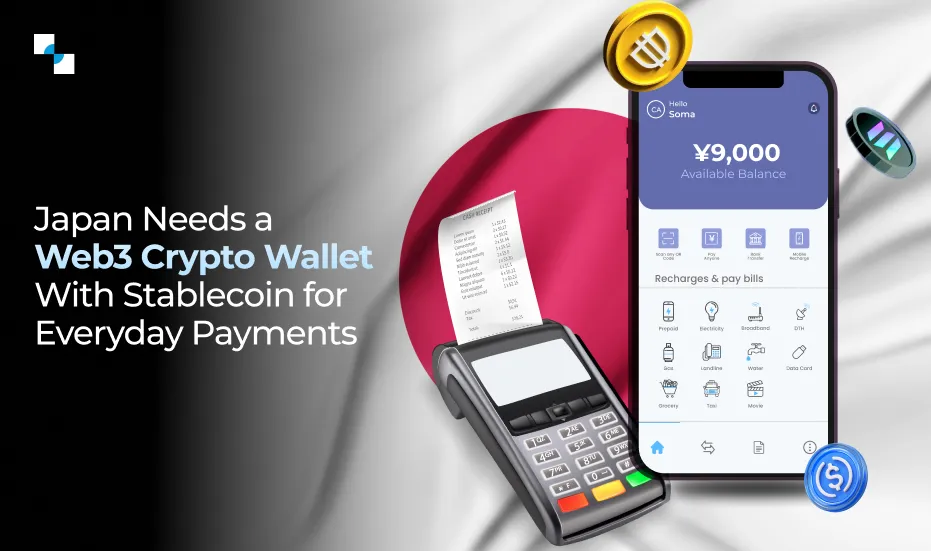
Japan is at a rare inflection point where cultural preference for trust, a fast-paced transition to cashless commerce, and serious institutional interest in digital money converge. Consumers already favor mobile payments, merchants are upgrading to contactless and QR systems, and regulators are actively clarifying rules for digital assets. This combination creates a powerful opening for a purpose-built, customized Web3 crypto wallet that integrates a yen-pegged stablecoin or multicurrency features for routine purchases, peer payments, and merchant settlement.
Such a wallet must be engineered to Japanese expectations: enterprise-grade security, seamless fiat on and off ramps, privacy tailored to local norms, and crystal-clear regulatory compliance. For investors and enterprise buyers, the opportunity is not speculative. It is a payments modernization play that reduces friction, cuts settlement times, and supports innovative merchant financing and cross-border use cases while fitting into Japan’s roadmap for a digital yen and regulated stablecoins. Let us scroll through the blog to see why this country actually needs a white label cryptocurrency wallet app and how it will benefit them in the long term.
Market Trends of Japan in Web3 & Wallet demand
Japan’s payments landscape has been accelerating toward digital-first experiences. After years of relatively high cash usage, the adoption of digital payments has risen sharply through mobile wallets, QR codes, and card networks. The government’s cashless push and private sector programs have catalyzed merchant acceptance and consumer familiarity with non-cash rails. At the same time, Japanese financial institutions and fintech startups are openly experimenting with tokenized assets, private stablecoin pilots, and corporate stablecoin projects. The Bank of Japan continues its methodical experiments with CBDCs, while the Financial Services Agency and the Payment Services Act reforms create clearer frameworks for stablecoins and regulated digital asset services. Together these forces drive demand for secure and compliant cryptocurrency wallet development solutions that can operate across retail, microcommerce, commuting, and cross-border remittance scenarios. For enterprises this means a market primed for customized wallet solutions that respect local trust, regulatory and integration requirements.
Why Japan Is The Right Market For White Label Crypto Wallet Development in 2026?
Japan combines three investor-friendly attributes. First, customer readiness. Smartphone penetration and rising cashless adoption create a broad user base for wallets. Second, institutional momentum. Major banks and large corporates are exploring stablecoin issuance and tokenized rails, which open partnership and liquidity pathways. Third, regulatory clarity is improving. Recent and ongoing amendments to the Payment Services Act and active FSA engagement provide a path to compliance for custodial and non-custodial services, anti-money laundering controls, and stablecoin reserve rules. For enterprises and investors looking to scale, a white label blockchain wallet product can be deployed rapidly with integrations to local payment processors, POS vendors, and banking partners while satisfying Japanese regulatory expectations. This environment makes 2026 a strategically strong year to build and launch.
Key Security Features For a Japan-Focused White-Label Crypto Wallet
Before we look at the checklist, remember: security determines whether a customized mobile crypto wallet is trusted by banks, accepted by merchants, and cleared by regulators in Japan. These priorities shape real commercial outcomes, adoption, partnership opportunities, and long-term viability, so they deserve executive attention from day one.
| Security feature | Why it matters in Japan | How it solves real-world problems |
|---|---|---|
| Threshold cryptography / MPC | Japanese enterprises demand zero single-point-of-failure | Prevents total fund loss from one compromised key, enabling banks and enterprises to trust hot wallets |
| HSM & secure enclave | Institutional partners require hardware-backed trust | Makes custody acceptable to banks, insurers, and large merchants by proving keys cannot be extracted |
| Proof of reserves | Stablecoin trust is critical for everyday payments | Reassures merchants and regulators that funds are fully backed and redeemable at all times |
| Progressive KYC & local data control | Strict AML rules and strong privacy culture | Reduces onboarding friction for users while satisfying regulators and data-protection expectations |
| Travel Rule compliance | Japan is a major cross-border payment hub | Prevents transaction blocks and bank rejections in international payment corridors |
| Passkeys, biometrics & MFA | Mobile-first users expect security without complexity | Stops account takeovers while keeping daily payments fast and familiar |
| Secure QR & POS payment flows | QR payments dominate Japanese retail | Prevents merchant spoofing, fake QR codes, and settlement fraud |
| Immutable audit logs | Regulators require clear transaction traceability | Enables fast audits, dispute resolution, and regulator reviews without operational chaos |
| High availability & disaster recovery | Natural disasters demand uninterrupted services | Ensures wallet and payment continuity during outages or regional failures |
| Continuous audits & security assurance | Trust is built on ongoing proof, not promises | Maintains long-term confidence from regulators, investors, and enterprise clients |
Choosing the right partner matters: a seasoned cryptocurrency wallet development company will bake these security priorities into the product roadmap, not add them as an afterthought. That approach shortens regulator reviews, increases merchant conversion, and gives investors clear, auditable evidence of operational readiness. In Japan’s market, security isn’t optional; it’s the core business case.
Benefits of Launching A White-Label Crypto Wallet Platform In Japan for Enterprises
- Faster enterprise go-to-market : A white label approach reduces product development time and provides customizable UI, compliance templates, and merchant integrations.
- Localized trust and regulatory alignment : Built-in compliance modules and audit trails reduce legal friction and accelerate enterprise partnerships.
- Multiple revenue streams : Transaction fees, merchant settlement fees, float income on stablecoin reserves, value-added services such as credit and loyalty tokenization, and cross-border settlement services.
- Merchant retention through superior settlement economics : Stablecoin settlement reduces FX friction and shortens funding cycles for merchants compared to traditional clearing.
- Interoperability for loyalty and finance : A cryptocurrency wallet app designed for token standards and APIs can be extended into loyalty programs, corporate payroll, and treasury services.
These business benefits translate directly into measurable KPIs for investors, including transaction volume growth, merchant acquisition cost, gross payment margin, and reserve yield capture.
Launch Your Own Stablecoin-Based Web3 Wallet In Japan!
Investor Due Diligence White Label Crypto Wallet Development Checklist
Present this checklist to prospective investors to speed negotiations:
- Architecture and deployment diagrams.
- Third-party audit reports for smart contracts and infrastructure.
- Compliance documents and any registration or application status with the FSA.
- Proof of reserves and attestation schedules.
- Partnership agreements with banks, PSPs, and major merchants.
- KPIs and growth forecasts.
- Insurance and incident response plans.
A fully documented dossier reduces legal and operational friction during funding rounds.
Conclusion
Japan’s payment market is transitioning rapidly, and the technical, regulatory, and market conditions favor a professional, enterprise-grade Web3 crypto wallet built around a regulated stablecoin. Investors and enterprises seeking to lead this change need a partner who understands cryptography, payment rails, legal nuance, and enterprise integration. If you are a visionary investor who is willing to launch a successful solution in the market, then choose Antier because we combine hands-on blockchain engineering with deep payments and regulatory experience. Our multidisciplinary team includes blockchain architects, AI engineers, payments integration specialists, and legal advisors who design compliant reserve models, implement threshold key management, and deliver enterprise-grade merchant SDKs. We guide clients from product definition through regulatory engagement, integration, audits, and live operations, enabling faster time to market with lower compliance friction. Partnering with our blockchain wallet development team means a pragmatic path to scale in Japan that respects technology, law, and the expectations of Japanese consumers and corporates.
Frequently Asked Questions
01. What factors are driving the demand for cryptocurrency wallets in Japan?
The demand for cryptocurrency wallets in Japan is driven by a cultural preference for trust, a rapid transition to cashless commerce, and increasing institutional interest in digital money, alongside government initiatives promoting digital payments.
02. What features should a cryptocurrency wallet have to meet Japanese expectations?
A cryptocurrency wallet for Japan should include enterprise-grade security, seamless fiat on and off ramps, privacy tailored to local norms, and clear regulatory compliance to align with consumer and merchant needs.
03. How is the Japanese market positioned for customized cryptocurrency wallet solutions?
The Japanese market is primed for customized cryptocurrency wallet solutions due to rising digital payment adoption, ongoing experiments with digital assets by financial institutions, and regulatory frameworks that support stablecoins and digital asset services.



