
CryptoCurrency
Jane Street’s 10 a.m. Bitcoin Dump: Manipulation or Overblown?


Claims that Wall Street trading firm Jane Street triggers a daily 10 a.m. Bitcoin “dump” resurfaced on December 12, after BTC saw a sharp intraday drop.
Social media speculation once again pointed to institutional traders and ETF market makers. A closer look at the data, however, tells a more nuanced story.
Sponsored
Sponsored
What is the “Jane Street 10 a.m.” Narrative?
The theory suggests Bitcoin often sells off around 9:30–10:00 a.m. ET, when US equity markets open. Jane Street is frequently named because it is a major market maker and an authorized participant for US spot Bitcoin ETFs.
The allegation claims these firms push prices lower to trigger liquidations, then buy back cheaper. However, no regulator, exchange, or data source has ever confirmed such coordinated activity.
Bitcoin Futures Data Doesn’t Show Aggressive Dumping
Bitcoin traded sideways today through the US market open, holding a tight range near $92,000–$93,000. There was no sudden or abnormal sell-off exactly at 10:00 a.m. ET.
The sharp drop came later in the session, closer to mid-day US hours. BTC briefly fell below $90,000 before stabilizing, suggesting delayed pressure rather than an open-driven move.
Bitcoin futures open interest across major exchanges remained broadly stable. Total open interest was nearly flat on the day, indicating no large buildup of new short positions.
Sponsored
Sponsored
On CME, the most relevant venue for institutional trading, open interest declined modestly. That pattern typically reflects risk reduction or hedging, not aggressive directional selling.
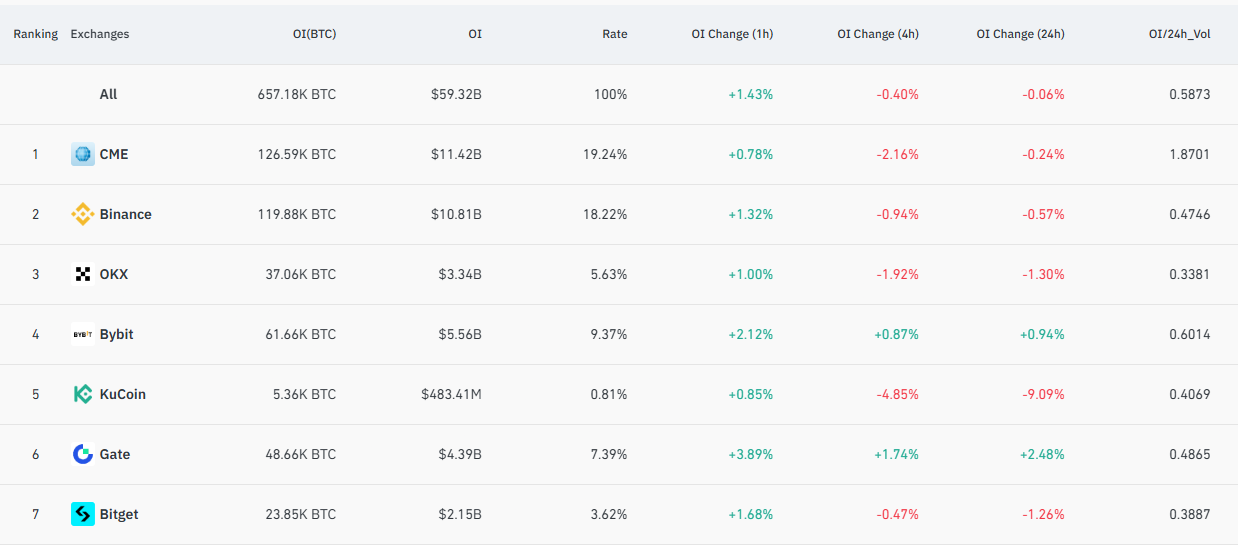
If a major proprietary firm were driving a coordinated dump, a sharp spike or collapse in open interest would normally appear. It did not.
Liquidations Explain the Move
Liquidation data provides a clearer explanation. Over the past 24 hours, total crypto liquidations exceeded $430 million, with long positions accounting for the majority.
Bitcoin alone saw more than $68 million in liquidations, while Ethereum liquidations were even higher. This indicates a leverage flush across the market, not a Bitcoin-specific event.
Sponsored
Sponsored
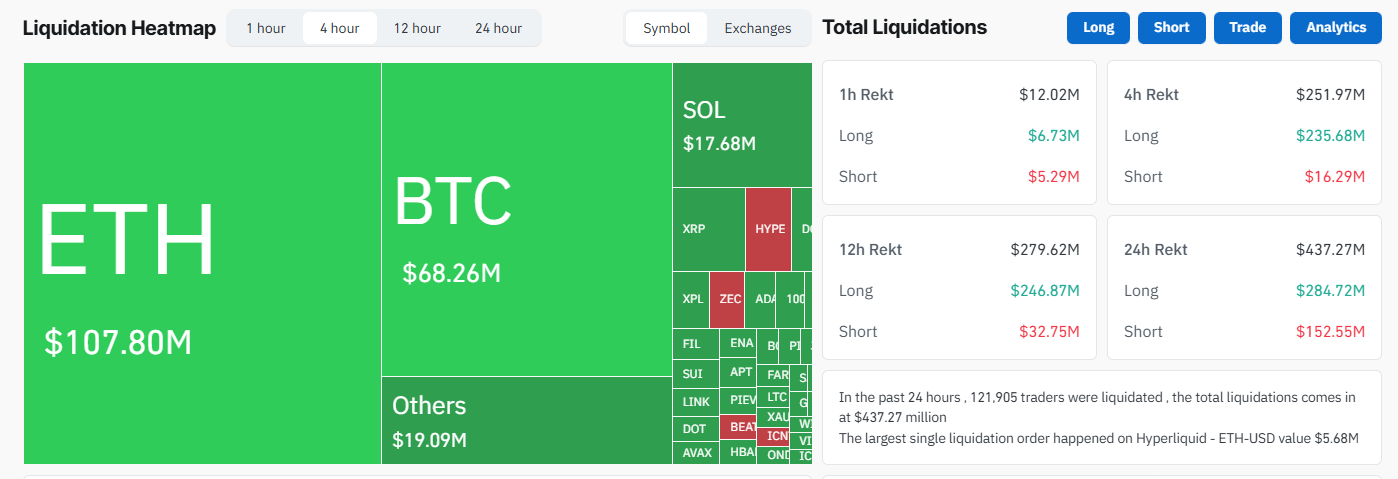
When prices slip below key levels, forced liquidations can accelerate declines. This often creates sharp drops without requiring a single dominant seller.
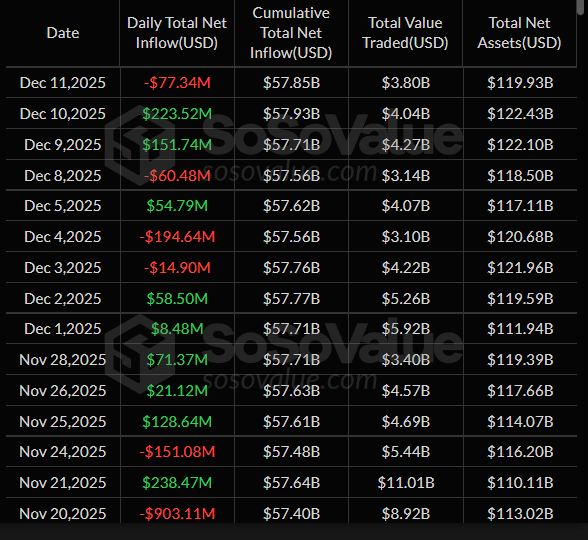
Most notably, US spot Bitcoin ETFs recorded $77 million outflow on December 11, after two days of steady inflow. Today’s brief price shock was largely reflected in this move.
Sponsored
Sponsored
No Single Venue Led the Sell-Off
The move was distributed across exchanges, including Binance, CME, OKX, and Bybit. There was no evidence of selling pressure concentrated on one venue or one instrument.
That matters because coordinated manipulation typically leaves a footprint. This event showed broad, cross-market participation consistent with automated risk unwinds.
Why the Jane Street Narrative Keeps Returning
Bitcoin volatility often clusters around US market hours due to ETF trading, macro data releases, and institutional portfolio adjustments. These structural factors can make price moves appear patterned.
Jane Street’s visibility in ETF market making makes it an easy target for speculation. But market making involves hedging and inventory management, not directional price attacks.
Today’s move fits a familiar pattern in crypto markets. Leverage builds, price slips, liquidations cascade, and narratives follow.



