
Crypto World
KuCoin’s New European Chapter Begins: KuCoin EU Secures MiCAR Compliance, Celebrates With a Ball in Vienna


After years of speculation about whether major crypto exchange KuCoin would be available to EU users, the wait is finally over.
KuCoin is officially MiCAR-compliant. It celebrated this significant achievement with a VIP gala at the iconic Spanish Riding School in Vienna, Austria, on Wednesday night.
Cryptonews has been on the ground in Vienna this week, speaking directly with company leadership to uncover what lies ahead for their new European Union expansion.
‘Only The Starting Point’
The fully MiCAR-regulated crypto trading platform has opened its doors to a massive number of users now that it is available in 29 European Economic Area markets.
The team explained that KuCoin EU users will have access to EUR deposits and withdrawals, spot trading, and local customer support, among other services.
They plan to offer campaigns and features exclusive to the region.
Europe, a new chapter begins — KuCoin VIP & Institutional (@KuCoinInst) January 30, 2026

With KuCoin’s EU station officially launched, we’re proud to support a vision for digital asset access in Europe that’s built on trust, compliance, and user-first infrastructure.
The future is taking shape — and we’re building it together.… pic.twitter.com/mv4rhU6wP7
This is a notable advance, both for the company and for its users.
With this move, KuCoin EU has met the union’s regulatory standards. More precisely, it is licensed as a Crypto-Asset Service Provider (CASP) under the Markets in Crypto-Assets Regulation (MiCAR) and is supervised by Austria’s Financial Market Authority (FMA).
“Over the past months, our teams have worked meticulously to design a platform that meets Europe’s regulatory expectations in full, while still delivering the performance, reliability, and user experience that modern crypto users expect,” said Managing Director Christian Niedermueller.
However, he adds that this is just “the starting point.”
Now that the platform has established a solid regulatory foundation, Niedermueller said, KuCoin will move into “a long-term role in shaping a trusted digital asset ecosystem across Europe.”
This, he suggests, they can accomplish by adapting to regional needs and paying attention to what local users have to say.
Also, KuCoin CEO BC Wong added that the team chose Austria as KuCoin EU’s base. This is due to “its clear and forward-looking regulatory framework, which provides a strong foundation for operating responsibly and sustainably across Europe.”

KuCoin EU’s Managing Directors Christian Niedermueller, Sabina Liu, and Audrey Lim launched the platform live onstage in Austria’s capital. They said that a phased roll-out of its services has begun.
More offers are arriving on the list in the coming months.
Expanding the Team, Establishing a Payment Layer
KuCoin revealed that the EU platform has a 30-person regional team across Spain, Germany, Italy, France, Portugal, and the Netherlands.
Moreover, they will move forward with the Visa KuCard for Europe, providing a payment service for millions of people. The card comes with zero annual fees, instant conversion, and up to 8.5% cashback.
Another big announcement came in the form of Sabina Liu taking the new role as Managing Director.
Liu boasts a deep understanding of KuCoin’s core principles and seems an obvious choice for this role.
She previously ran KuCoin exchange’s institutional business, and before that spent 14 years at London Stock Exchange Group (LSEG).

In Liu’s words, “Europe represents one of the most sophisticated financial markets globally, and KuCoin EU has been built to meet that standard from day one. This launch reflects a clear business decision to invest long-term in Europe, by establishing local leadership, aligning with regulatory expectations, and delivering a platform designed around specific regional needs.”
Notably, with the foundation now in place, the team’s “focus is on responsible growth, strong partnerships, and building a sustainable business that can scale across the region,” the new Managing Director said.
A New Partnership Based On ‘Shared Values’
The event continued with announcements. They revealed a strategic partnership with world-class cyclist Tadej Pogačar.
The four-time Tour de France champion and the current UCI Road World Champion is now KuCoin EU’s global brand partner.
Both parties have stated that the partnership is not of a transactional kind – instead, it focuses on shared values. “Trust is not declared, but earned through long-term performance, professionalism, and discipline,” the team said.
Additionally, this latest news follows the exchange’s collaborations with Australian golf player Adam Scott and global music festival Tomorrowland.
Meanwhile, KuCoin was founded in 2017. It says it has 40 million users across more than 200 countries and regions.
Moreover, it offers access to 1,000+ listed tokens, spot and futures trading, institutional wealth management, and a Web3 wallet.
At the end of last year, it reported 55% year-on-year growth in spot trading volume. This was in addition to the 30% rise in futures volume.
In December 2025, KuCoin announced a $2 billion Trust Project, aiming to strengthen institutional confidence and platform security.
Now, with the latest move, the firm says it has opened its brand new chapter.
The post KuCoin’s New European Chapter Begins: KuCoin EU Secures MiCAR Compliance, Celebrates With a Ball in Vienna appeared first on Cryptonews.

Bitcoin jumped 3% to $69,120 on Monday as traders returned from the Easter weekend to a burst of optimism around a potential Iran ceasefire, pushing the largest cryptocurrency to its highest level in over a week and squeezing $196 million in short positions over the past 24 hours.
Ether led a bump among major tokens with a 3.7% gain to $2,130, its strongest daily move in the past week. SOL rose 2% to $82, XRP added 2.2% to $1.34, and dogecoin climbed 1.7% to $0.093. The broad rally pushed the total crypto market cap back above $2.5 trillion.
The catalyst was an Axios report that the U.S., Iran, and a group of regional mediators are discussing terms for a potential 45-day ceasefire that could lead to a permanent end to the six-week-old conflict.

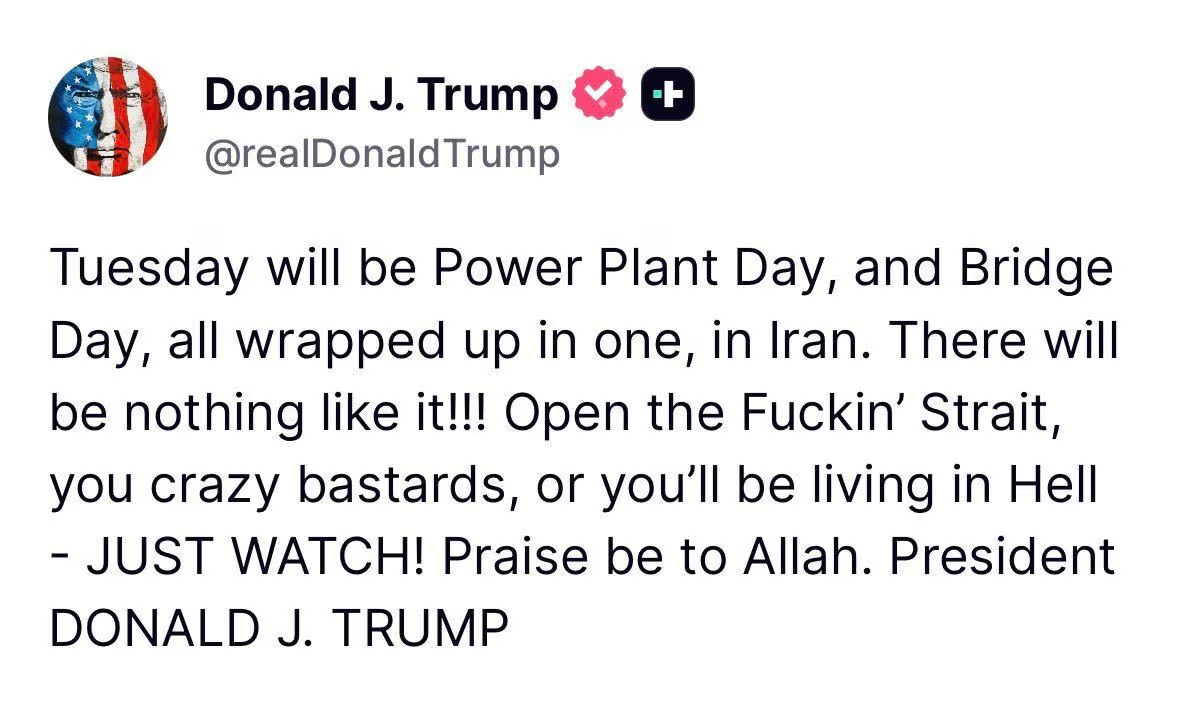
Reports that more ships had passed through the Strait of Hormuz added to the relief, even as Trump issued increasingly aggressive threats to destroy Iran’s power plants starting Tuesday.
The liquidation data tells the story of how the market was positioned heading into the weekend.
Of the $273.8 million in total 24-hour liquidations across 81,819 traders, shorts accounted for $196.7 million versus $77.1 million in longs, a ratio of nearly 3-to-1 that indicates traders were heavily positioned for further downside after last week’s sentiment collapse. The largest single liquidation was a $10.17 million ETH-USDT short on Binance.
Bitcoin’s 24-hour range stretched from $66,634 to $69,350, a $2,700 swing that caught the worst of the short positioning.
The move came after Santiment data over the weekend showed social media sentiment had hit its most bearish skew since the war began, with five negative posts for every four positive ones. As is often the case in crypto, the most bearish sentiment reading of the cycle produced the sharpest bounce.
The move reclaims the top of bitcoin’s five-week war range but does not break it. The $65,000 to $73,000 channel that has contained every rally and selloff since the conflict began remains intact.
Resistance levels at $71,500 and $81,200, corresponding to the Lower Band and Trader On-chain Realized Price indicators as tracked in a CoinDesk report, sit overhead as the next meaningful tests if the ceasefire momentum holds.
Whether this rally has more substance than the last three depends entirely on whether the 45-day ceasefire materializes or becomes another headline that gets walked back within 48 hours.
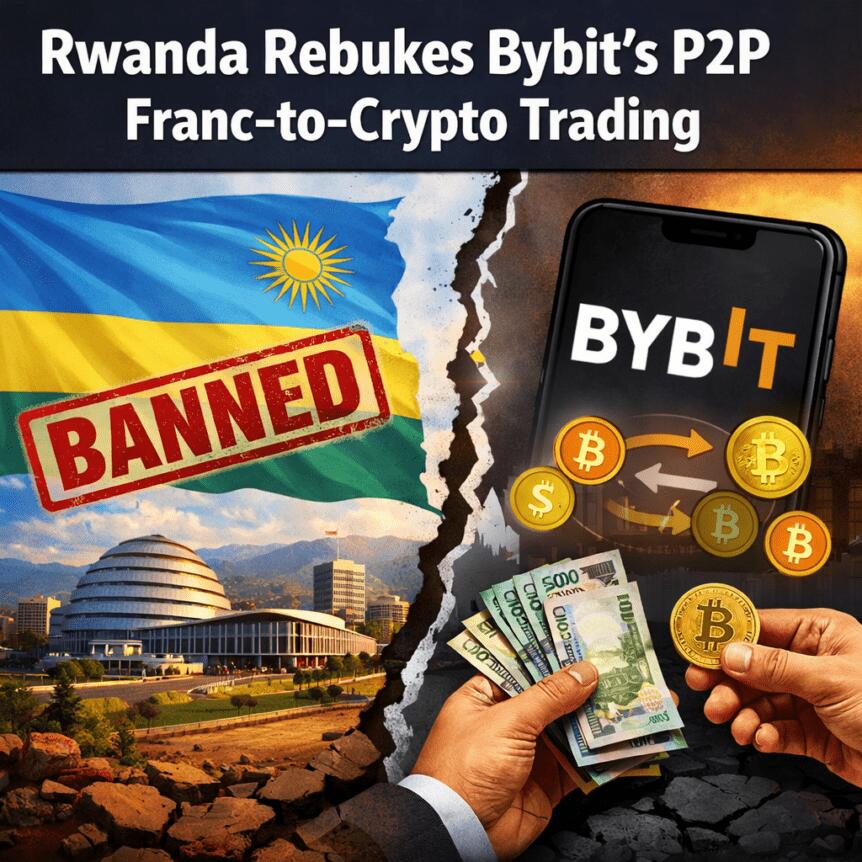
Rwanda’s central bank has doubled down on its crypto stance, warning that payments and trading using the local currency remain illegal even as Bybit rolls out support for the Rwandan franc on its peer-to-peer (P2P) platform. The National Bank of Rwanda (NBR) said crypto-assets are not authorized for FRW payments, FRW conversions, or FRW-based P2P trading, flagging “serious financial risks and no recourse in case of loss.”
The warning followed Bybit’s Friday post announcing that the Rwandan franc could be used to buy and sell crypto via its P2P service. In a separate note, the NBR underscored that FRW is the sole legal tender in the country and that NBR-licensed financial institutions are prohibited from converting FRW into crypto assets or vice versa. Critics say the move reflects Rwanda’s broader policy of keeping monetary sovereignty tightly controlled while still pursuing digital-era infrastructure through non-cash instruments.
Bybit did not immediately respond to requests for comment, and the exchange’s announcement appears to sit at odds with the central bank’s reiterated position. The clash illustrates the tension between global crypto offerings and national regulators that have pressed to limit on- and off-ramp activity in local currencies.
Rwanda has been quietly advancing a digital-money agenda alongside its fiat framework. The country has an ongoing effort centered on a central bank digital currency (CBDC) known as the e-franc rwandais, which remains in a proof-of-concept stage with potential to move into a pilot phase. The e-franc is part of a broader push in parts of Africa to explore digital currencies while enforcing strict controls on the use of private crypto assets.
Rwanda is not alone in this approach. Across the continent, policymakers have sought to preserve monetary sovereignty and regulate crypto services more narrowly, a stance that has intensified as the sector grows. In Rwanda’s case, authorities emphasize that while they are open to regulated innovation, crypto should not replace the FRW in everyday transactions.
Key takeaways
- NBR warning on FRW-based crypto activity: Crypto payments, FRW conversion, and FRW FRW-based P2P trading remain outside the legal framework, with officials flagging financial risk and lack of recourse.
Bybit has enabled FRW for P2P crypto trading, but the central bank maintains that such activity is not authorized under current law. The e-franc rwandais is in a proof-of-concept stage and could progress to a pilot, signaling a measured move toward digital-state money. A draft law from the Capital Market Authority aims to regulate virtual asset service providers, with licensing and supervision, and specific prohibitions on mining, mixers, and FRW-pegged tokens. Chainalysis data place Rwanda low in Sub-Saharan crypto adoption for 2024–2025, highlighting a contrast with higher-adoption peers in the region and suggesting regulatory clarity will be pivotal for future growth.
NBR’s stance and the Bybit friction
The central bank’s message was issued via its official communications channel, reaffirming that FRW remains the only legal tender and stressing that licensed institutions are barred from converting FRW into crypto assets or the reverse. This stance aligns with a cautious regulatory environment that has accompanied Rwanda’s broader efforts to regulate and supervise crypto-related activities through licensing regimes rather than embracing open, unrestricted crypto use. The stated risk is not merely financial but also anchored in a lack of formal recourse for losses arising from crypto trades executed in FRW terms.
Bybit’s involvement underscores a growing appetite among global exchanges to experiment with fiat-backed P2P rails in markets with strict crypto rules. The exchange’s Friday post indicated that users could leverage FRW to engage in crypto trades on its platform, effectively creating a channel for on-and-off ramps that regulators have not approved. The net effect is a policy ambiguity that can complicate decision-making for local users and financial institutions alike.
Regulatory momentum: licensing, supervision, and the path forward
In March, Rwanda’s Capital Market Authority released a draft framework aimed at regulating virtual asset service providers. The document frames a licensing and supervision scheme intended to foster “responsible innovation” while limiting potential risk to financial stability. The bill would prohibit crypto assets as legal tender, ban crypto mining, disallow mixing services, and bar tokens pegged to the FRW. It also outlines a pathway for crypto service providers to operate under a formal license, signaling a more formalized approach to crypto activity in the country.
These developments come as Rwanda seeks to balance digital modernization with prudent oversight. The CMA’s draft suggests a future in which regulated entities can offer crypto-related services without eroding the authority of the FRW-based financial system. In practical terms, this means licensed exchanges and wallet providers could operate within a defined legal framework, while unregulated activity remains off-limits or subject to penalties.
Adoption landscape and regional context
Chainalysis data illustrate a nuanced picture of crypto adoption in Sub-Saharan Africa, placing Rwanda toward the lower end of the spectrum for 2024–2025. The analysis shows that residents in Rwanda captured only a fraction of the crypto value observed in higher-adoption countries such as Nigeria and South Africa. Policymakers in Rwanda have repeatedly cited financial sovereignty and consumer protection as reasons for tightening crypto access, even as the country explores digital central bank money and modern payment rails.
Observers note that Rwanda’s cautious approach could shape how quickly crypto services gain traction in the country. A clearer licensing regime and defined boundaries between FRW and crypto usage could reduce regulatory risk for compliant providers, but the absence of a clear green light from the central bank can also dampen consumer and merchant enthusiasm for crypto as a payments instrument.
As Kigali advances its digital-money strategy, market participants will be watching for the CMA’s final version of the virtual assets bill, any official guidance on P2P FRW activity, and how the e-franc PoC evolves toward a broader rollout. The balance between enabling innovation and maintaining monetary control will likely define Rwanda’s crypto trajectory in the near term.
Readers should stay tuned for updates on regulatory progress, the evolution of the e-franc project, and any practical clarifications from the NBR and CMA that could affect the viability of FRW-linked crypto services in the country.
Ethereum (ETH) derivatives activity has surged to levels that dwarf the spot market. On Binance, futures volumes are now running roughly seven times higher than the actual buying and selling of the asset.
The imbalance signals that speculative positioning, not organic demand, is the primary force behind recent ETH price movements.
Binance Dominates a Leverage-Heavy ETH Market
According to analyst Darkfost, ETH open interest across exchanges is approximately 6.4 million ETH. That figure approaches the all-time high of 7.8 million ETH set in July 2025, following a gradual recovery from a low of around 5 million ETH in October 2025.
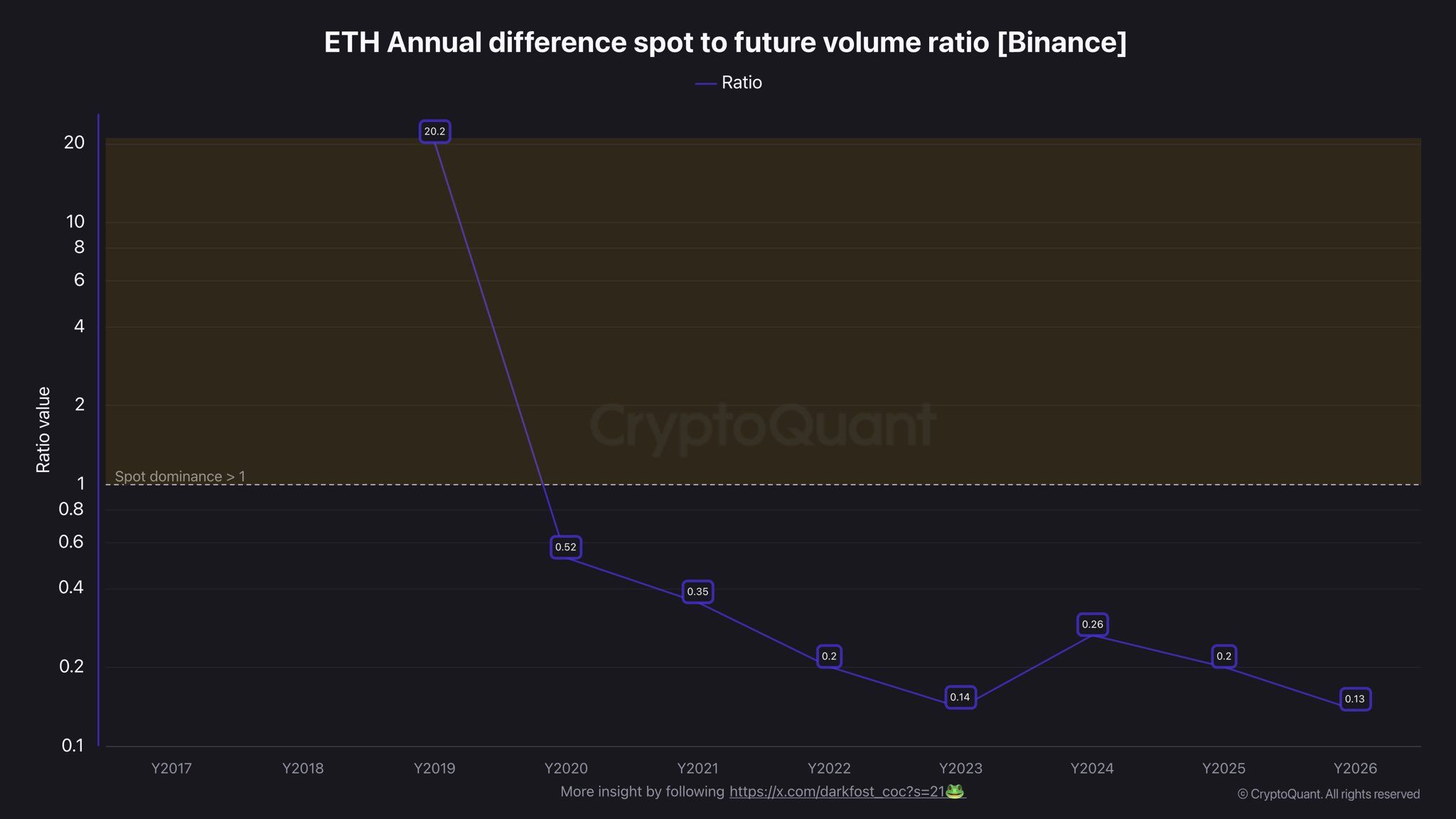
Binance alone accounts for roughly 2.3 million ETH in open interest, or about 36% of the global total. Moreover, the spot-to-futures trading volume ratio on the exchange has fallen to 0.13, marking the lowest annual reading ever recorded for Ethereum.
“In practical terms, this means that futures volumes are now about seven times larger than spot volumes. In other words, for every $1 traded on the spot market, roughly $7 flows through futures contracts,” the analyst said.
Follow us on X to get the latest news as it happens
The analyst warns that leverage-heavy positioning leaves ETH exposed to sharp swings, as forced liquidations or position unwinds could trigger outsized price moves.
“This dynamic suggests that speculation is currently driving price movements on Ethereum. The extensive use of leverage does not provide a strong structural foundation and can amplify volatility through position adjustments or liquidation events,” Darkfost wrote.
Geopolitical Stress Fuels the Divide
The derivatives-heavy structure has taken shape against a volatile macro backdrop. The ongoing US-Israeli military conflict with Iran and disruptions near the Strait of Hormuz have pushed oil prices sharply higher throughout 2026.
Rising energy costs have fed inflation expectations and dampened risk appetite across traditional and digital asset markets. Darkfost said that this environment has pushed more cautious investors to the sidelines.
However, speculative participants remain active in the derivatives market, widening the gap between leveraged and spot-based activity.
Heavy reliance on leverage without a strong spot demand foundation makes the market vulnerable to sudden dislocations. When large leveraged positions begin to unwind, cascading liquidations can follow, amplifying price swings in both directions.
Whether spot demand returns to stabilize the structure may depend on how quickly geopolitical and macroeconomic conditions improve.
Subscribe to our YouTube channel to watch leaders and journalists provide expert insights
The post Ethereum Derivatives Flash Warning as Leverage Outpaces Spot Demand appeared first on BeInCrypto.
The US labor market appears increasingly reliant on a single driver. Labor Department data shows that healthcare and social assistance have accounted for nearly all net private-sector job growth since December 2024, while the rest of the economy has shed jobs.
A breakdown of the numbers reveals a sharp divide between one booming sector and widespread weakness across virtually every other industry.
Healthcare Props Up US Labor Market as Rest of Private Sector Contracts
The Global Markets Investor noted that the US economy has added an average of just 21,000 jobs each month since the beginning of 2025. This represents an annual pace of roughly 0.2%.
The post stated that the job creation has “never been this weak” outside of a formal recession. To put this in perspective, annual employment growth averaged about 2.2% between 1948 and 1979, slowed to 1.5% from 1980 to 2007, and dropped further to roughly 0.8% during both 2008–2019 and 2020–2024.
At present, job growth is running at a pace nearly four times weaker than during the post-financial crisis period and more than ten times weaker than during the post-war expansion.
Meanwhile, healthcare and social assistance have added approximately 57,000 jobs per month since December 2024. That means the rest of the private sector has been losing an estimated 21,500 jobs per month over the same stretch.
Follow us on X to get the latest news as it happens
“Since December 2024, healthcare and social assistance has added ~855,000 jobs, while the rest of the private sector has lost -322,000. That means a single sector is masking a broad-based CONTRACTION across the rest of the world’s largest economy,” Global Markets Investor wrote. “Healthcare and social assistance now represents NEARLY ALL net private-sector job creation since the end of 2024.”
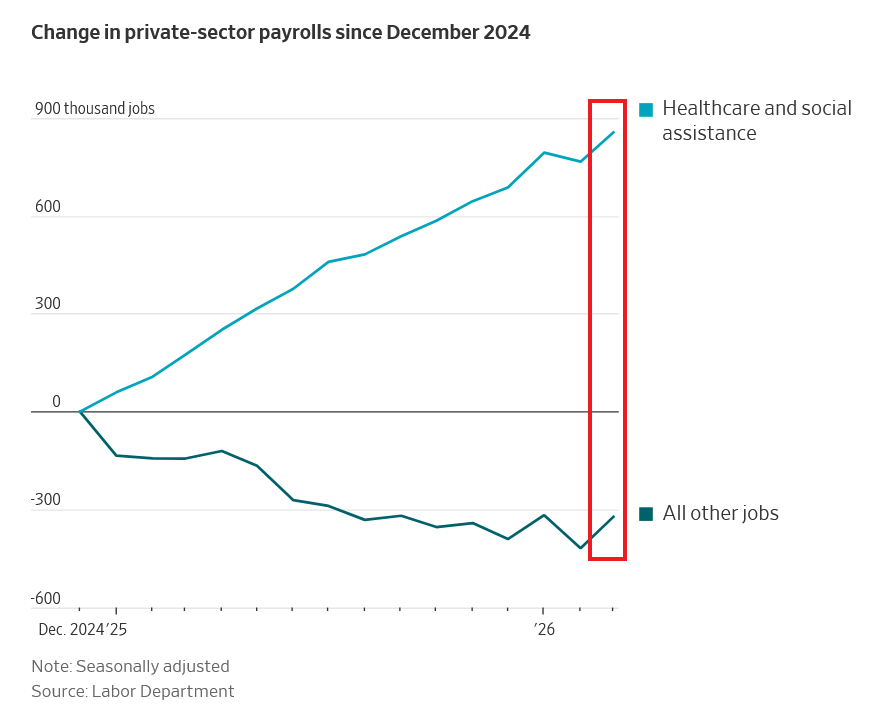
The March 2026 jobs report reinforced the pattern. The economy added 178,000 nonfarm payrolls, but healthcare alone accounted for 76,000 of those positions.
“Remove one sector and the labor market is already in a RECESSION,” the post added.
This concentration raises a key concern: without one sector propping up employment, the broader labor market may already resemble recessionary conditions, even as headline figures suggest continued growth.
Subscribe to our YouTube channel to watch leaders and journalists provide expert insights
The post US Labor Market Shows Recession-Level Weakness Outside One Sector appeared first on BeInCrypto.
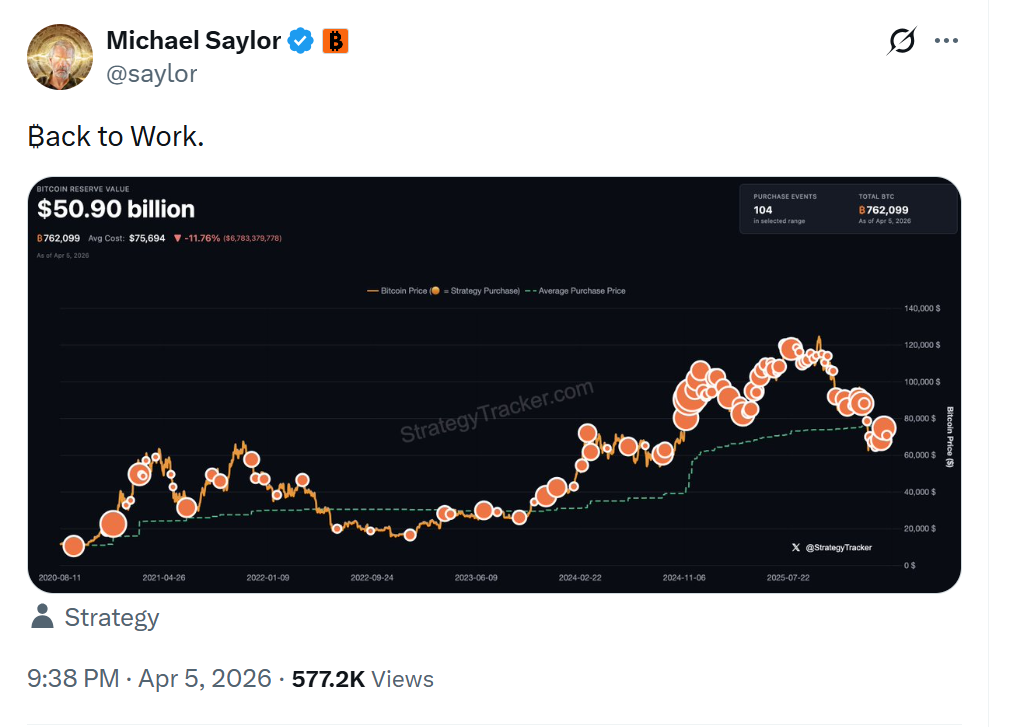
Michael Saylor has hinted his Bitcoin treasury firm is back on track with its weekly Bitcoin purchases after taking a rare week off at the end of March.
In an X post on Sunday, Saylor shared a screenshot from StrategyTracker with the caption “Back to Work.” He often posts the chart ahead of purchase announcements.
The firm took a week off from buying BTC at the end of March, breaking its weekly buying streak for the first time this year. The firm’s last purchase was reported on March 23, buying about $77 million worth of BTC at $74,326 per coin.

One of the main avenues Strategy uses to fund Bitcoin purchases is via the sale of its perpetual preferred stock, Stretch (STRC). The stock is designed to generally trade around its par value of $100, which is aided by a monthly dividend adjustment mechanism.
Related: Bitcoin and the US dollar have a ‘symbiotic’ relationship: BPI exec
Strategy issues new shares of STRC and then allocates the proceeds generated from the market into Bitcoin buys.
According to estimates from STRC.LIVE, Strategy could be set for a purchase of at least 1,821 BTC based on funds raised for the week ending April 3.

Despite the week off, the firm is showing no signs of slowing down. In late March, Strategy announced plans to raise $44.1 billion to fund BTC purchases primarily via the selling of its common MSTR shares and STRC.
According to Strategy’s website, the firm has acquired a total of 762,099 BTC for an average cost of $75,694 per coin. At current prices of about $69,100, Strategy’s holdings are in the red overall.
However, Bitcoin is in the green over the last month, increasing by 1.2% over the past 30 days, according to data from CoinGecko. The price is still down 20.9% year-to-date amid geopolitical tensions and a challenging macro climate.

Bitchat, a decentralized peer-to-peer messaging app developed by Block CEO Jack Dorsey, has been removed from Apple’s App Store in China for allegedly violating its internet service regulations.
In an X post on Sunday, Dorsey shared a screenshot from Apple’s app review team informing him that Bitchat had been removed from the App Store in February and that the TestFlight beta version would no longer be available in China at the request of the Cyberspace Administration of China (CAC).
“Bitchat pulled from the China App Store,” he said.
Bitchat has seen its popularity rise during protests in Madagascar, Uganda, Nepal, Indonesia and Iran in recent months, as governments attempted to shut down regular communication channels and internet access to curb dissent.
The peer-to-peer encrypted messaging service runs entirely over Bluetooth and mesh networks and operates without an internet connection, which could put it at odds with China’s internet-censorship-prone regime.

Bitchat violated internet regulator’s provision
The CAC argued Bitchat violated Article 3 of its regulations governing online services with public opinion or social mobilization capabilities, which came into force in 2018.
Under the provisions, any online services that could influence public opinion or enable social mobilization are required to conduct a security assessment before launch and “be responsible for the assessment results,” according to a Google Translate version of the regulations.
The app review team also said all apps on its store must comply with local requirements in the countries where they are available.
Related: Dorsey shares AI-integrated workplace vision weeks after Block’s 40% staff cut
“We know this stuff is complicated, but it is your responsibility to understand and make sure your app conforms with all local laws, not just the guidelines below. And of course, apps that solicit, promote or encourage criminal or reckless behavior will be rejected,” they added.
Still available in other countries
Despite being pulled in China, Bitchat remains available in other countries, according to Apple’s app review team.
Chrome download stats show the app has been downloaded more than three million times, with more than 92,000 in the past week. The Google Play Store has recorded more than one million registered downloads.
However, neither specifies which regions were responsible for the bulk of downloads.
By comparison, WeChat, developed and operated by Tencent, one of China’s largest tech companies, has an estimated 810 million users in China, out of a national population of more than 1.4 billion.
Magazine: Bitcoin may take 7 years to upgrade to post-quantum — BIP-360 co-author

Xandeum, a scalable, smart contract-native storage layer for Solana, has officially launched STOINC (Storage Income) on mainnet.
With STOINC now live, Xandeum introduces a usage-driven, on-chain storage economy, enabling applications, node operators, and the broader network to participate in value creation tied to actual storage demand.
Unlike traditional reward mechanisms that rely on token emissions, STOINC is powered by actual storage usage. Every interaction with the Xandeum storage layer generates fees that are collected and distributed across the network.
At the end of each cycle, storage fees are distributed across the Xandeum network economy, rewarding pNode participation, supporting staking incentives as they come online, and funding continued ecosystem growth.
“Storage must become a first-class citizen in Web3,” said Bernie Blume, Founder of Xandeum. With mainnet live and community pNodes already online, STOINC marks the beginning of a usage-based storage economy designed to support the next generation of storage-enabled dApps on Solana. “With STOINC, we’re moving beyond theory into real usage, where storage activity directly translates into economic value.”
The launch addresses a key limitation in blockchain infrastructure: scalable, native storage for smart contracts. By enabling this, Xandeum supports a new category of applications known as storage-enabled dApps (sedApps).
Upcoming developments include XAND staking to pNodes, deployment of native applications, and expansion into enterprise use cases.
As Web3 evolves toward real-world utility, scalable storage becomes critical infrastructure. STOINC positions Xandeum as a key player in this transition, where usage drives value creation.
About Xandeum
Xandeum is building a scalable, smart contract-native storage layer for Solana, enabling decentralized applications to access large-scale storage with seamless integration.
The post Xandeum Launches STOINC on Mainnet, Introducing Usage-Based Storage Income for Web3 appeared first on BeInCrypto.


A familiar voice is back with a familiar, and controversial, call on bitcoin .
Mike McGlone, senior commodity strategist for Bloomberg Intelligence, is reiterating that bitcoin could crash to $10,000.
But this time, he’s framed it with a very clear line in the sand: $75,000.
If bitcoin decisively reclaims and holds that level, the bearish thesis breaks. If it can’t, McGlone’s view is that the path of least resistance is sharply lower, with prices falling all the way to $10,000, the level last seen in early 2020.
The $10,000 magnet
McGlone’s uber bearish forecast of a crash to $10,000 isn’t new. It’s been circling for weeks, and it is based more on market structure than short-term catalysts.
The cryptocurrency spent a long stretch hovering around $10,000 before the massive wave of fiat liquidity hit the markets following the coronavirus-induced 2020 crash. That era of zero rates, stimulus checks and aggressive liquidity easing by central banks torched unprecedented risk-taking across all corners of the financial markets. It played a major role in lifting BTC permanently above $10,000.
“Before the biggest money pump in history in 2020-21, Bitcoin hovered around $10,000, and it may be reverting. Roughly $10,000 is also the first-born crypto’s most traded price since 2017, when futures were launched,” McGlone noted on LinkedIn.
With that era of abundant liquidity now behind us, McGlone suggests that bitcoin may revert to what he considers its equilibrium price — around $10,000.
According to him, $10,000 has been the most heavily traded price zone since 2017, when the CME futures began trading. In other words, $10,000 isn’t just a round number — it’s where a huge amount of historical volume sits.
McGlone also points to the crypto market’s explosive growth as a potential drag on bitcoin. In 2017, bitcoin largely defined the space, but today, millions of tokens compete for attention and drain capital away from the industry leader. In his view, that surge in supply has become a structural headwind rather than a tailwind.
“Unlimited crypto supply and use-case rivals are Bitcoin headwinds,” McGlone said on LinkedIn, adding that stablecoins represent “the most enduring trend” in crypto. He expects ether to become bigger than ether and eventually bitcoin.
“I expect the ‘flippening’ to continue, with Tether’s AUM topping Ethereum in 2026 and eventually Bitcoin,” he said.
The $75K invalidation level
McGlone’s bearish forecast hinges on prices staying below $75,000. This level has been a major turning point for market trends over the past 12 months. The March-April 2025 slide ran out of steam at around $75,000, while the early 2024 rally stalled there. Furthermore, $75,000 corresponds to key Fibonacci retracement levels.
Think of it as a market verdict threshold. A sustained move above it would suggest that bitcoin has re-established strong structural demand, ending the downtrend that began at October highs above $126,000. It would imply that institutional flows, macro conditions, or both are strong enough to override his reversion thesis.
Fail to get there — or get rejected again — and the argument flips: bitcoin may still be trapped in a longer-term decline to $10,000.

Franklin Templeton is setting up a standalone cryptocurrency division by acquiring 250 Digital, a firm spun off from venture capital outfit CoinFund earlier this year.
The $1.7 trillion asset manager is making its boldest digital-asset move yet, targeting pension and sovereign wealth funds.
What Franklin Templeton Is Building
The unit will operate under the name Franklin Crypto. Christopher Perkins and Seth Ginns, both former CoinFund executives, will run day-to-day operations. Sandy Kaul, who leads innovation at Franklin, will oversee the group.
Franklin has been in crypto since 2018 and currently employs more than 50 digital asset specialists. The firm already offers a bitcoin ETF and runs a tokenized money-market fund on Binance. This acquisition shifts its strategy from passive products toward actively managed institutional offerings.
Timing matters here. Bitcoin has shed roughly 45% since crossing $126,000 last fall. About $2 trillion has evaporated from total crypto market capitalization. Franklin’s leadership appears to view the downturn as a window to consolidate talent and build infrastructure cheaply.
Paying With Tokens
Perhaps the most unusual aspect is the payment structure. Franklin will use BENJI tokens, backed by its blockchain-based government money fund, to cover part of the purchase price. That makes this one of the first corporate acquisitions partially settled on-chain.
The deal should close by mid-2026. No financial terms were released.
The post Franklin Templeton Launches Crypto Unit Amid Market Slump appeared first on BeInCrypto.
Crypto World
New Crypto: Pepeto Hits $8.68M Racing Past Shiba Inu Numbers While Ethereum Price Prediction Eyes $10,000
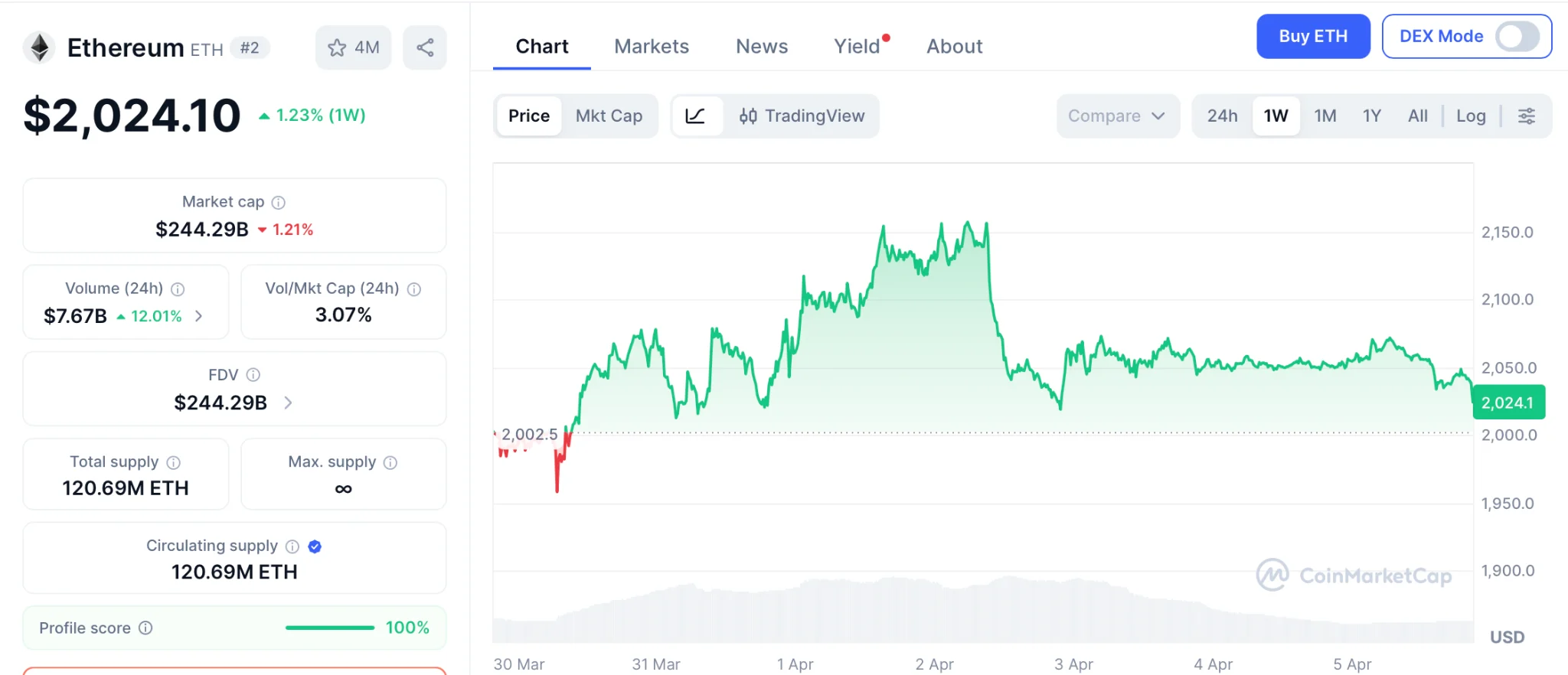
The ethereum price prediction keeps drawing attention as ETH sits at $2,024, down 58% from its $4,953 high. Standard Chartered holds a $7,500 year-end target, and Arthur Hayes projects $10,000 to $20,000 before this cycle ends. Over 30% of ETH supply now sits in staking, the Foundation completed its 70,000 ETH target this month, and institutional infrastructure keeps growing.
The best way to understand the opportunity is to examine the ethereum price prediction, look at the path to $10,000, and see why wallets are rushing into Pepeto before the listing closes the window. Pepeto is built on Ethereum with the goal of solving the problems that still limit the network, and the presale just crossed $8.68 million at a pace that mirrors what Shiba Inu did before its breakout.
Ethereum trades at $2,024 on April 5 after snapping a six-month losing streak in March, per CoinMarketCap. The Foundation locked $143 million in ETH into staking instead of selling, cutting one of the biggest sources of sell pressure in the market, per CoinDesk.
The ethereum price prediction sits on the $2,000 level. Holding it opens $2,500 and then $3,000. Standard Chartered holds $7,500 for year end, and Hayes calls for $10,000 to $20,000 before the cycle peaks.
At $10,000, ETH’s market cap would reach roughly $1.2 trillion, a level that needs strong post-halving dynamics and broad macro recovery but sits within reach if institutional adoption continues at this pace. With 30% of supply staked and the Foundation no longer selling, the structural case for higher prices keeps improving.
That long-term direction benefits Pepeto directly. On-chain data shows that several of the biggest presale buys trace back to ETH whale wallets, addresses that know this blockchain inside out.
New Crypto Pepeto Fixes Ethereum Pain Points With Exchange Tools Built by Experts
Pepeto targets the problems draining Ethereum wallets every day. Ethereum gas fees eat into small trades before they even fill. Pepeto built an exchange layer that processes trades inside the protocol so traders pay zero fees.
PepetoSwap handles every swap at zero cost using the way Binance powers its ecosystem with BNB, where the token drives the engine.
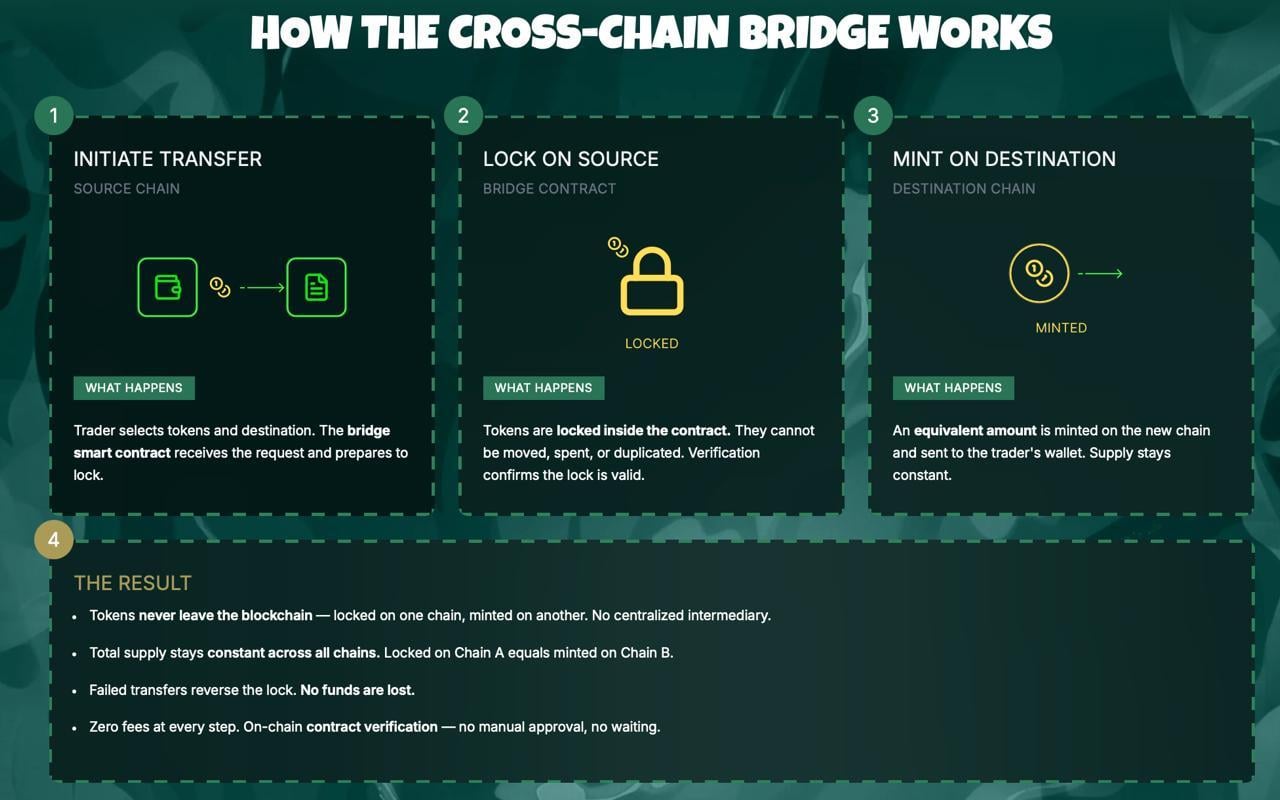
The cross-chain bridge moves assets between Ethereum, BNB, and Solana at zero cost, so holders across chains combine positions without losing capital. The contract scanner checks every token before capital commits, catching traps that cost users $1.3 billion in 2025.
SolidProof verified the full codebase, a former Binance executive shaped the platform, and the founder who took the original Pepe token to $11 billion on a 420 trillion supply designed the entire exchange. Staking at 188% APY compounds positions while the listing gets closer.
Why Crypto Presales Have Always Produced the Biggest Returns and Where Pepeto Fits
For context, the best example is Ethereum itself. ETH went to market at $0.31 in its presale and climbed to $4,953, converting every $1,000 position into more than $15 million. The wallets that got in at that stage made the returns most investors spend whole careers trying to match, and the only thing behind Ethereum at that point was a whitepaper and a handful of developers.
Pepeto runs a stronger presale setup: $8.68 million in committed capital, the founder of the original Pepe coin and a former Binance executive running the build, with live tools generating real demand for the token from day one. The crypto market today is ten times bigger than the one Ethereum entered in 2015, and reaching just a small fraction of Ethereum’s $233 billion market cap would deliver 100x or beyond from the current entry of $0.0000001862.
The biggest presale winners in crypto history all shared one moment: the crowd was frozen in fear while they quietly loaded, and Pepeto at $0.0000001862 with a Binance listing weeks away is that moment playing out right now.
Conclusion
The ethereum price prediction points to new highs long term, and when ETH rallies, the projects running on its network have historically beaten it every single time. That is exactly where Pepeto sits right now. The presale crossed $8.68 million with the Binance listing close enough that stages sell in days, and investors who saw Shiba Inu turn small wallets into millions in 2021 are looking at Pepeto and seeing the same signals.
Presales have always ranked as the highest-return entries in crypto. With ETH proving presale potential at $0.31 to $4,953 and Shiba Inu proving meme coins can deliver massive returns, the data behind Pepeto points to a setup where small entries could produce outsized gains for those who move before listing.
Click To Visit Pepeto Website To Enter The Presale

FAQs
Can Ethereum reach $10,000 based on the ethereum price prediction?
Possible if post-halving momentum and institutional adoption accelerate. $10,000 means $1.2 trillion market cap, realistic by 2027-2028.
Which is the best new crypto presale to buy now?
Pepeto leads with $8.68 million raised, SolidProof audit, Pepe founder, and Binance listing at Pepeto official website.
Where is the ethereum price prediction heading in 2026?
Standard Chartered targets $7,500, Hayes projects $10,000 to $20,000. ETH must hold $2,000 for recovery to begin.
Disclaimer: This is a Press Release provided by a third party who is responsible for the content. Please conduct your own research before taking any action based on the content.


Therapists Explain Why Protecting Kids From Anxiety Is Bad

Fire TV Stick users left confused by ‘random app’ on device
Iran executes man over attack on military site during January protests, Mizan reports


-

 NewsBeat3 days ago
Steven Gerrard disagrees with Gary Neville over ‘shock’ Chelsea and Arsenal claim | Football
-

 Business3 days ago
No Jackpot Winner and $194 Million Prize Rolls Over
-

 Fashion2 days ago
Weekend Open Thread: Spanx – Corporette.com
-
Entertainment7 days ago
Fans slam 'heartbreaking' Barbie Dream Fest convention debacle with 'cardboard cutout' experience
-

 Crypto World4 days ago
Gold Price Prediction: Worst Month in 17 Years fo Save Haven Rock
-

 Business5 hours ago
Three Gulf funds agree to back Paramount’s $81 billion takeover of Warner, WSJ reports
-
Crypto World6 days ago
Dems press CFTC, ethics board on prediction-market insider trades
-

 Sports1 day ago
India men’s 4x400m and mixed 4x100m relay teams register big progress | Other Sports News
-

 Business4 days ago
Login and Checkout Issues Spark Merchant Frustration
-

 Tech6 days ago
EE TV is using AI to help you find something to watch
-

 Tech7 days ago
Apple will hide your email address from apps and websites, but not cops
-

 Sports6 days ago
Tallest college basketball player ever, standing at 7-foot-9, entering transfer portal
-

 Politics6 days ago
Should Trump Be Scared Strait?
-

 Tech6 days ago
Flipsnack and the shift toward motion-first business content with living visuals
-

 Fashion7 days ago
The Best Spring Trends of 2026
-
Tech6 days ago
Daily Deal: StackSkills Premium Annual Pass
-

 Crypto World6 days ago
U.S. rule change may open trillions in 401(k) funds to crypto
-

 Sports6 days ago
Women’s hockey camp eyes fitness boost, tactics ahead of WC 2026 campaign | Other Sports News
-

 Tech6 days ago
How to back up your iPhone & iPad to your Mac before something goes wrong
-

 Politics7 days ago
BBC slammed for ignoring author of The Fraud
You must be logged in to post a comment Login