
CryptoCurrency
Metaverse Development Company for Enterprise-Ready Platforms

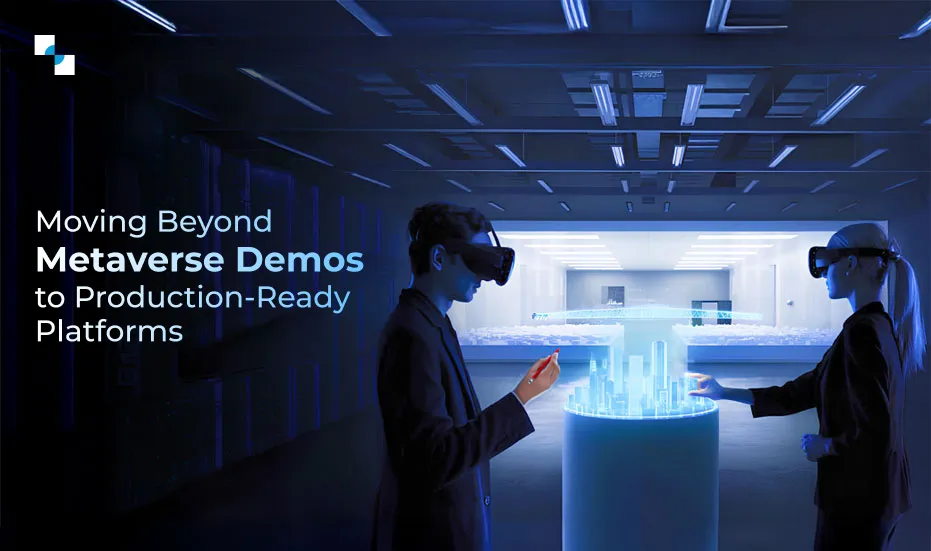
The metaverse is no longer an experimental frontier, it is entering a phase of enterprise accountability.
Budgets are scrutinized. Outcomes are measured. Moreover, every technology investment must justify its place within broader digital transformation initiatives. This reality has reshaped how businesses approach metaverse platform development.
The question is no longer “What can the metaverse do?”
It is “What business outcome will this platform deliver?”
Enterprises are no longer impressed by immersive demos, virtual avatars, or futuristic visuals. Those conversations belonged to an earlier phase, when experimentation was acceptable and outcomes were optional. Today, decision-makers are far more pragmatic. They are asking a tougher, more commercially grounded question:
Can the metaverse solve real business problems at scale?
The answer depends entirely on the metaverse development company they choose and whether that company builds platforms or merely experiences.
Why Metaverse Platform Development Is Being Re-Evaluated
Early metaverse projects often struggled because they were treated as innovation showcases rather than business systems.
Common enterprise concerns included:
- High development cost with unclear ROI
- Limited adoption beyond initial novelty
- Difficulty integrating with enterprise workflows
- Platforms that could not scale reliably
As a result, enterprises are now far more selective. Metaverse investments must align with operational, training, or engagement outcomes.
The Enterprise Reality: Metaverse Curiosity Has Turned into Metaverse Skepticism
Most large organizations exploring metaverse initiatives have already gone through at least one of these phases:
- A visually impressive proof of concept
- A pilot that worked in isolation but failed in production
- A virtual environment that could not integrate with enterprise systems
The result is a growing skepticism. Enterprises are not rejecting the metaverse, they are rejecting poor execution. This is why the selection criteria for a metaverse development company have changed dramatically. Today, enterprises are not looking for innovation partners. They are looking for delivery partners.
What Enterprises Actually Expect
1. Platforms Built Around Business Use Cases
Enterprises do not invest in the metaverse for novelty. They invest for outcomes such as:
- Workforce training and simulations
- Remote collaboration and knowledge sharing
- Digital twins for planning and visualization
- Controlled customer or partner engagement environments
A serious metaverse development company begins with use cases, workflows, and KPIs, not environments or art styles. If the platform does not clearly support a business function, it will never move beyond pilot approval.
2. Enterprise-Grade Architecture, Not Experimental Builds
Scalability is non-negotiable.
Enterprise metaverse platforms must:
- Support concurrent users without performance degradation
- Handle real-time interactions reliably
- Remain stable across updates and expansions
Many early metaverse projects failed because they were built like experiences, not systems. Enterprises now expect platform architecture, not one-off builds.
3. Integration with Existing Enterprise Ecosystems
No enterprise operates in isolation, and neither can its metaverse platform.
Real adoption depends on integration with:
- Identity and access management systems
- Learning management systems
- Analytics and reporting tools
- Enterprise data sources
A metaverse platform that cannot integrate into existing infrastructure becomes a silo. Enterprises are actively avoiding that mistake now.
4. Security, Identity, and Governance by Design
Security concerns are one of the biggest blockers to enterprise metaverse adoption.
Decision-makers expect:
- Role-based access control
- Secure authentication and identity handling
- Data protection and auditability
A metaverse development company that treats security as an afterthought is immediately disqualified at the enterprise level.
5. Long-Term Operability and Ownership
Enterprises do not want projects they cannot operate or evolve.
They expect:
- Administrative control over environments and users
- The ability to expand use cases over time
- Clear post-launch support and optimization pathways
The question enterprises ask internally is simple: “Can we run this platform as part of our business?”
Want to Build a Production Ready Metaverse Platform
What “Real Business Outcomes” Mean for Enterprises
For enterprise leaders, outcomes are tangible and measurable.
They include:
- Reduced training costs through immersive simulations
- Faster onboarding and skill development
- Improved collaboration across distributed teams
- Better planning through digital twins and visualization
- Increased engagement in controlled virtual environments
Metaverse platforms are expected to perform like enterprise-grade systems, not experimental products.
Core Pillars of Outcome-Driven Metaverse Platform Development
1. Purpose-Built Platforms, Not Generic Worlds
Enterprises no longer accept generic virtual environments.
Effective metaverse platform development begins with:
- Clear definition of the business problem
- Platform features aligned to specific workflows
- Measurable success criteria
A training platform is built differently from a collaboration platform. A digital twin has entirely different architectural requirements.
Outcome-driven development demands precision, not generalization.
2. Scalability That Matches Enterprise Growth
Enterprise adoption is unpredictable. Platforms must be ready to scale.
This requires:
- Robust backend infrastructure
- Optimized real-time performance
- Load-tested environments
A platform that fails under increased usage loses credibility instantly. Enterprises prioritize partners who design for scale from the beginning.
3. Integration as a Value Multiplier
Real business value emerges when metaverse platforms integrate seamlessly with:
- Enterprise data systems
- Identity and access frameworks
- Analytics and reporting tools
Integration enables enterprises to track usage, measure impact, and justify continued investment.
Without integration, platforms remain isolated experiences.
4. Governance, Security, and Compliance
Enterprise adoption depends on trust.
Metaverse platforms must support:
- Secure authentication and role-based access
- Data protection and compliance readiness
- Administrative oversight and auditability
Governance is not optional. It is a prerequisite for enterprise-scale deployment.
5. Continuous Optimization Beyond Launch
Business outcomes are not achieved at launch, they evolve over time. Successful metaverse platform development includes:
- Ongoing performance monitoring
- Content and feature updates
- Optimization based on real usage data
Enterprises expect platforms to grow with their needs, not stagnate after deployment.
Why Many Metaverse Projects Fail to Deliver Outcomes
The most common reason is misalignment between vision and execution. Platforms tend to fail when:
- Development focuses on visuals over functionality
- Architecture is not designed for scale
- Integration is treated as an afterthought
- Post-launch operations are ignored
Enterprises are now acutely aware of these risks and choose partners accordingly.
Why Vision Alone Is No Longer Enough
Many metaverse vendors still lead with vision:
- “The future of work”
- “Immersive collaboration”
- “Next-generation digital experiences”
However, enterprises now lead with execution questions:
- How long will this take to deploy?
- Who maintains it post-launch?
- How do we measure ROI?
- What happens when usage grows?
This is where the gap between concept vendors and enterprise-grade metaverse development companies becomes obvious.
Execution Discipline Determines Adoption
The metaverse initiatives that survive enterprise scrutiny share one thing in common. They are built with the same rigor as enterprise software which means:
- Clear scope and milestones
- Realistic timelines
- Transparent communication
- Predictable delivery
Without this discipline, even the most innovative platforms fail to gain internal buy-in.
What Enterprises Look for in a Metaverse Development Company
Enterprises are increasingly choosing metaverse development partners that demonstrate:
- Proven experience with enterprise-grade delivery
- Strong platform engineering capabilities
- Understanding of integration, security, and scale
- Clear communication and milestone ownership
- A production-first mindset
They want partners who understand that metaverse platforms are long-term systems, not short-term experiments.They are not looking forward to buying promises. They are buying confidence in delivery.
Final Thoughts
Metaverse platform development has entered a results-driven era. The enterprise metaverse is no longer about imagination, it is about implementation. Enterprises today need a metaverse development company that understands:
- Business objectives
- Platform scalability
- System integration
- Security and governance
- Long-term operability
Anything less results in stalled pilots and sunk costs.The metaverse will not replace enterprise systems, it will extend them. The platforms built with this mindset will only deliver real business outcomes.
As a global metaverse development company, Antier builds production-ready metaverse platforms designed for real enterprise use across training, simulations, collaboration, & digital twin initiatives, delivering systems that scale and integrate seamlessly into business ecosystems to deliver measurable, long-term value.
Frequently Asked Questions
01. What has changed in how enterprises approach metaverse platform development?
Enterprises are now focused on business outcomes rather than just immersive experiences, requiring metaverse investments to justify their role in broader digital transformation initiatives.
02. Why are enterprises skeptical about metaverse initiatives?
Enterprises have experienced poor execution in past projects, such as isolated pilots that failed in production, leading to skepticism about the effectiveness of metaverse solutions.
03. What do enterprises expect from metaverse development companies today?
Enterprises expect platforms that are built around specific business use cases, such as workforce training, remote collaboration, and digital twins, rather than novelty-driven innovations.



