
Crypto World
MicroStrategy Stock Hinges on Bitcoin Correlation For a 20% Move

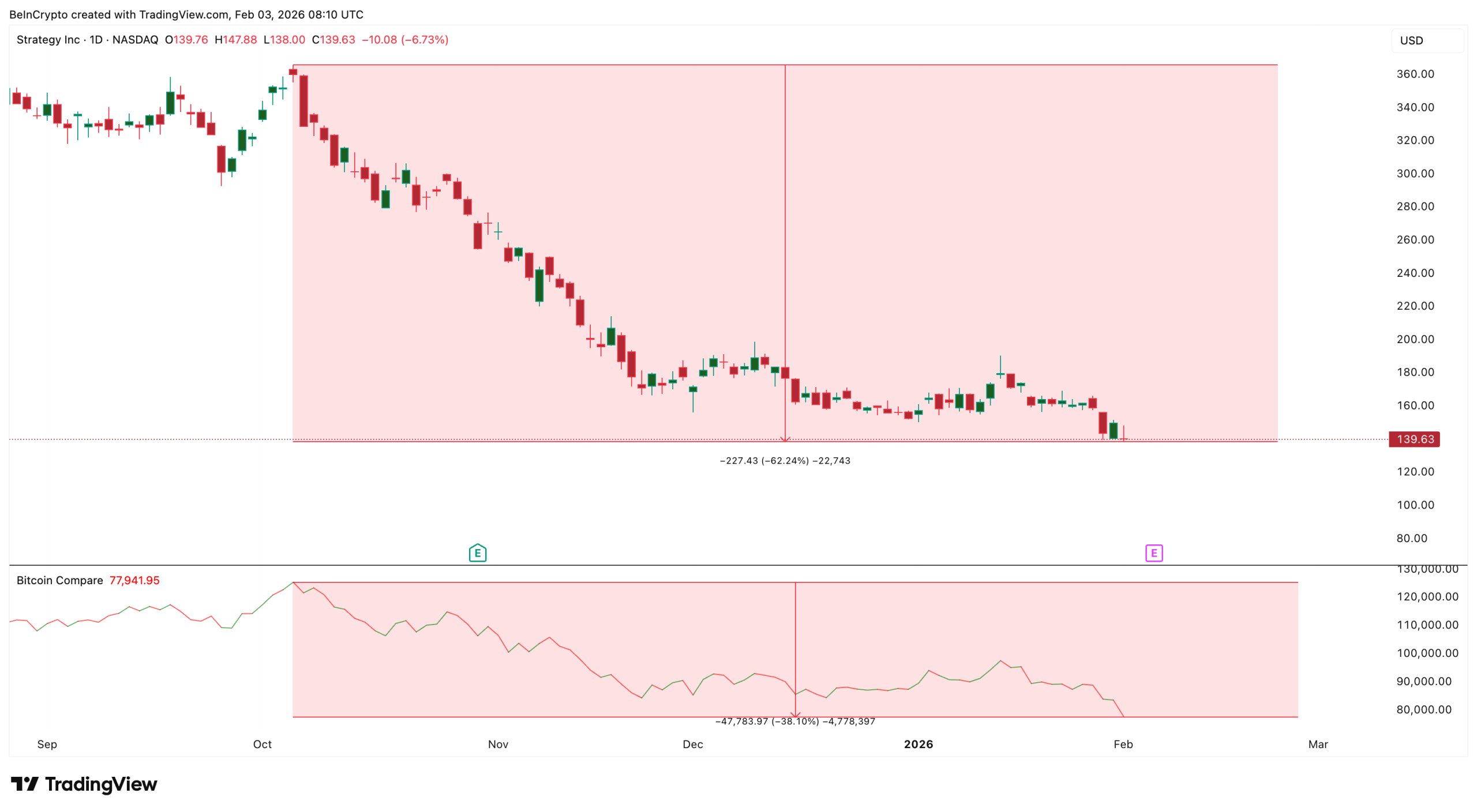
After weeks of heavy pressure, down over 12%, MicroStrategy stock is trying to stabilize. Bitcoin’s rebound near $79,000 at press time helped ease fears around the company’s average cost basis, which briefly dominated market sentiment in late January.
For a while, investors worried that a deeper Bitcoin price drop could push MSTR into unrealized losses. Now that the immediate risk has faded, attention is shifting to whether a price recovery can surface. Correlation data, capital flows, and price structure suggest the stock has entered a high-risk zone, where the next major BTC move could shape its direction for weeks.
Sponsored
Sponsored
Bitcoin Correlation Explains Why MicroStrategy Fell Faster
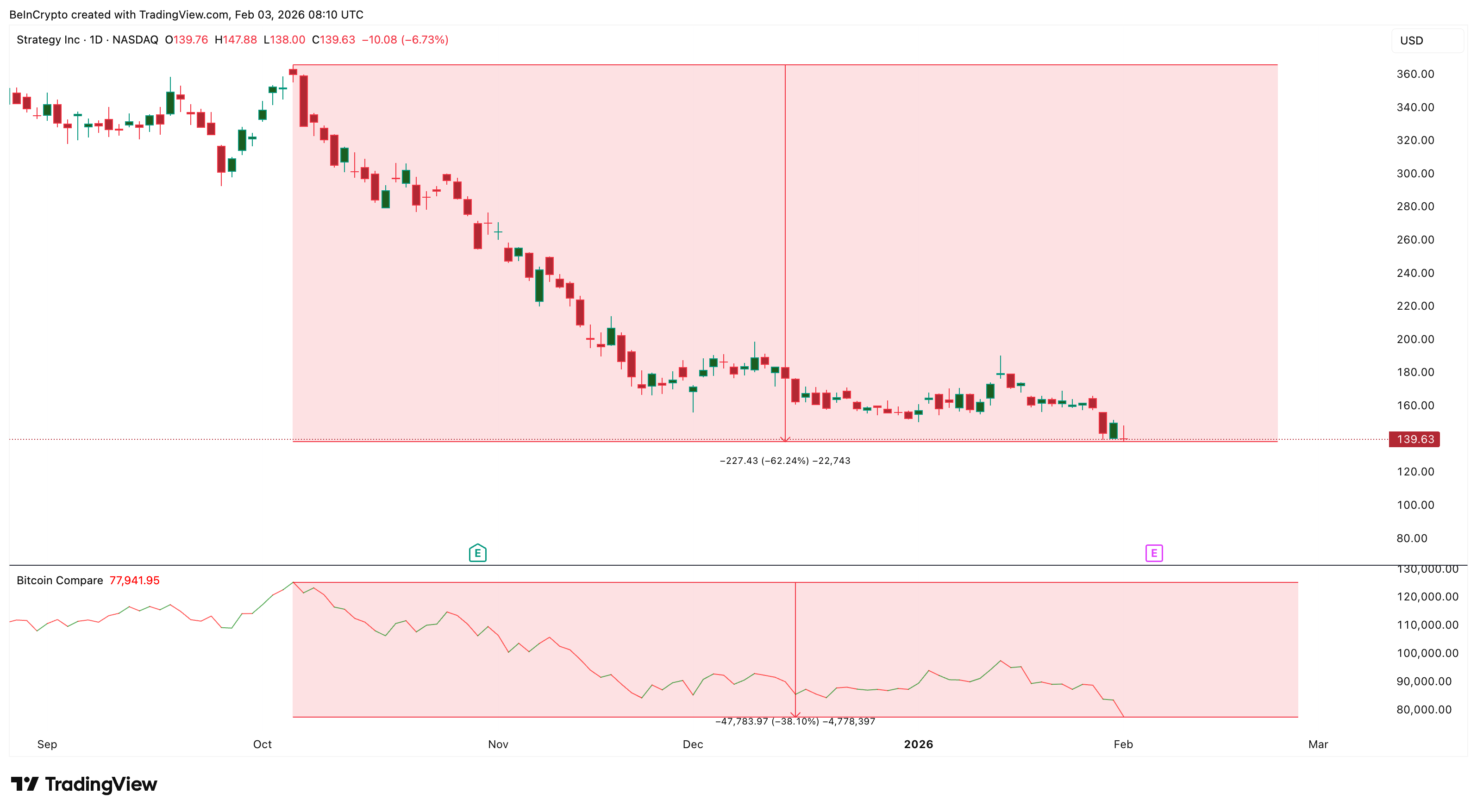
Since early October, MicroStrategy has fallen by roughly 62%, while Bitcoin has declined about 38% over the same period. This gap highlights how MSTR behaves like a leveraged version of Bitcoin. When Bitcoin weakens, MicroStrategy usually falls harder because investors also factor in balance-sheet exposure, debt, and sentiment risk.
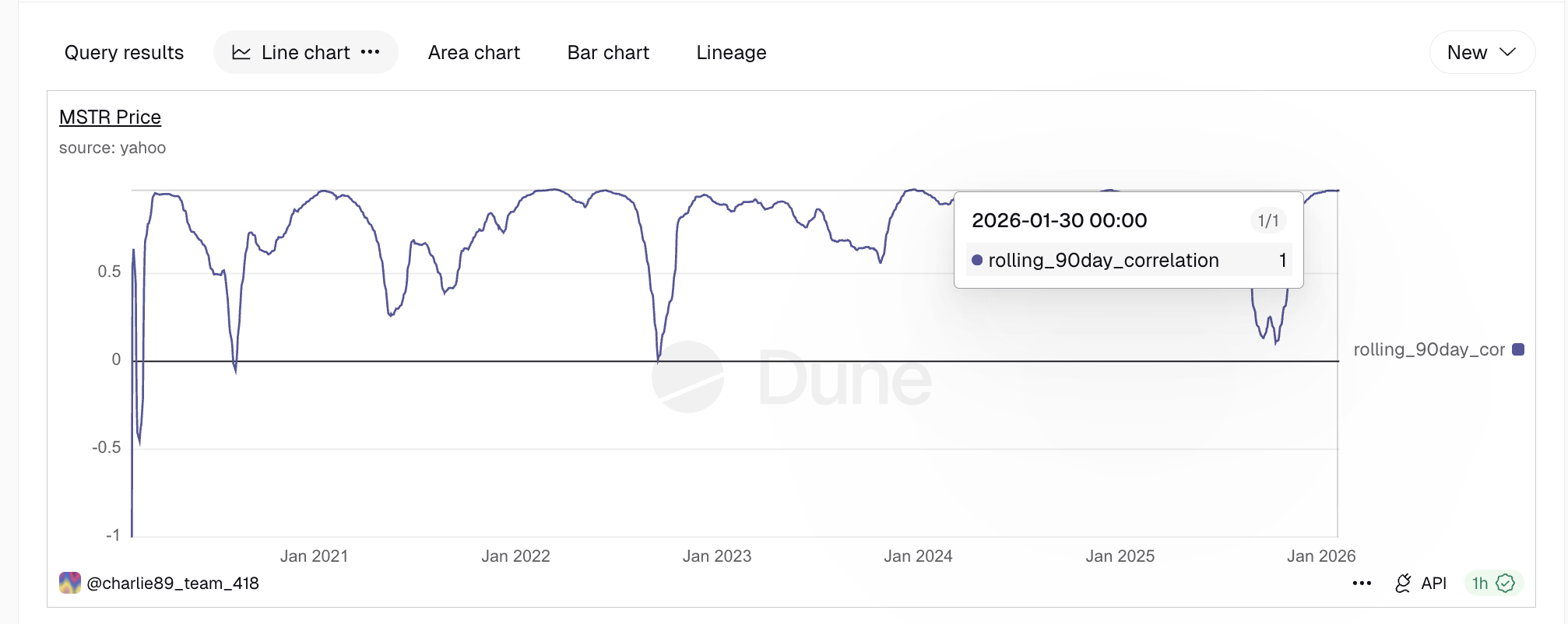
Dune data support this relationship. The 90-day rolling correlation between MSTR and Bitcoin is close to 0.97 (close to 1), which means the two assets have been moving in the same direction almost every day.
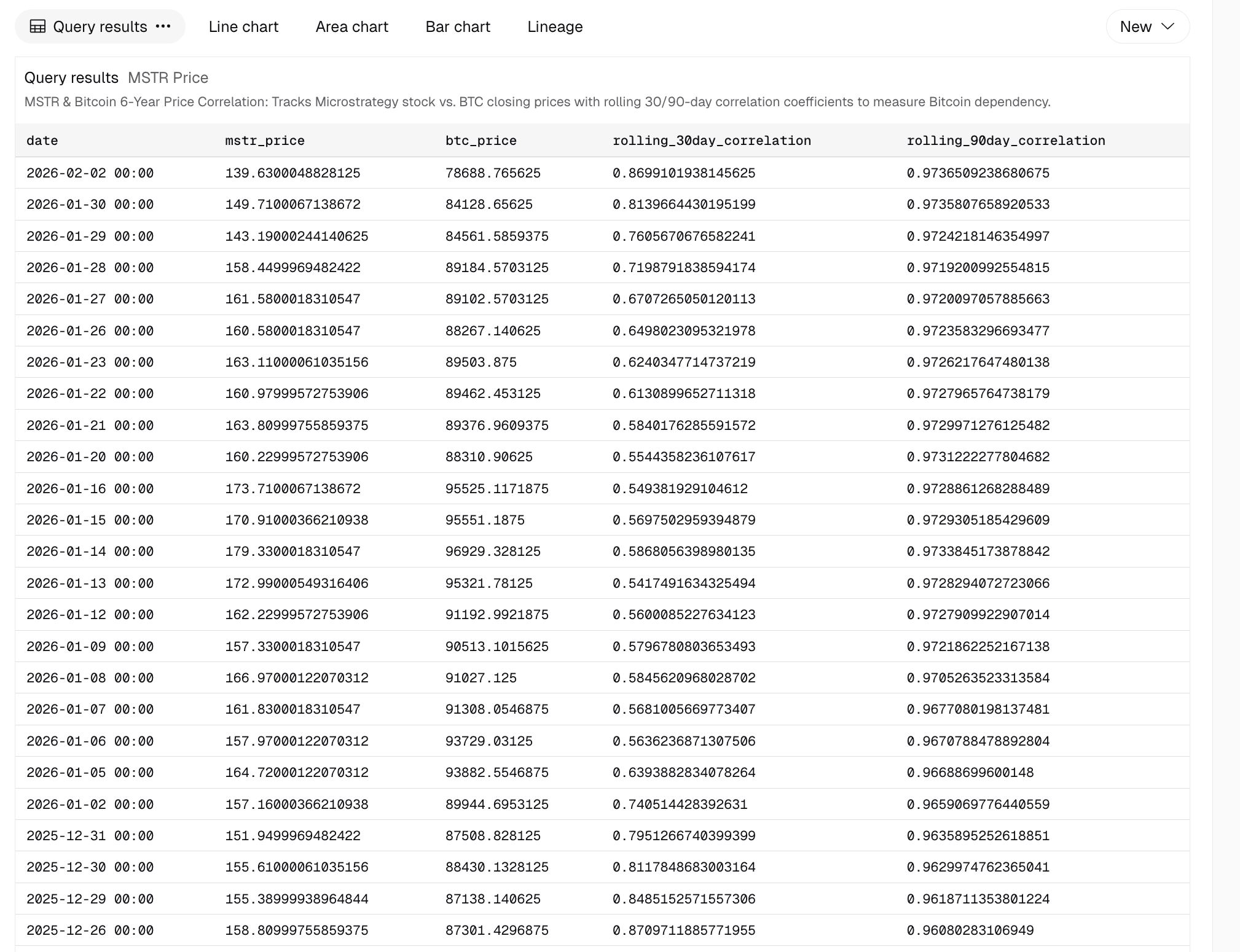
However, this does not contradict the larger drawdown. Correlation measures direction, not size. It shows that MSTR follows Bitcoin’s trend, but leverage and structural risks amplify the moves.
This dynamic became clear in late January, when Bitcoin briefly dipped under MicroStrategy’s average purchase price of around $76,000. That moment triggered fears of unrealized losses and added pressure on the stock. Bitcoin’s rebound above $78,000 reduced that threat and helped calm sentiment.

Sponsored
Sponsored
Still, the correlation remains extremely high. If Bitcoin weakens again, the MSTR stock price is likely to follow, which keeps downside risk elevated.
Money Flow And Volume Send Mixed Signals
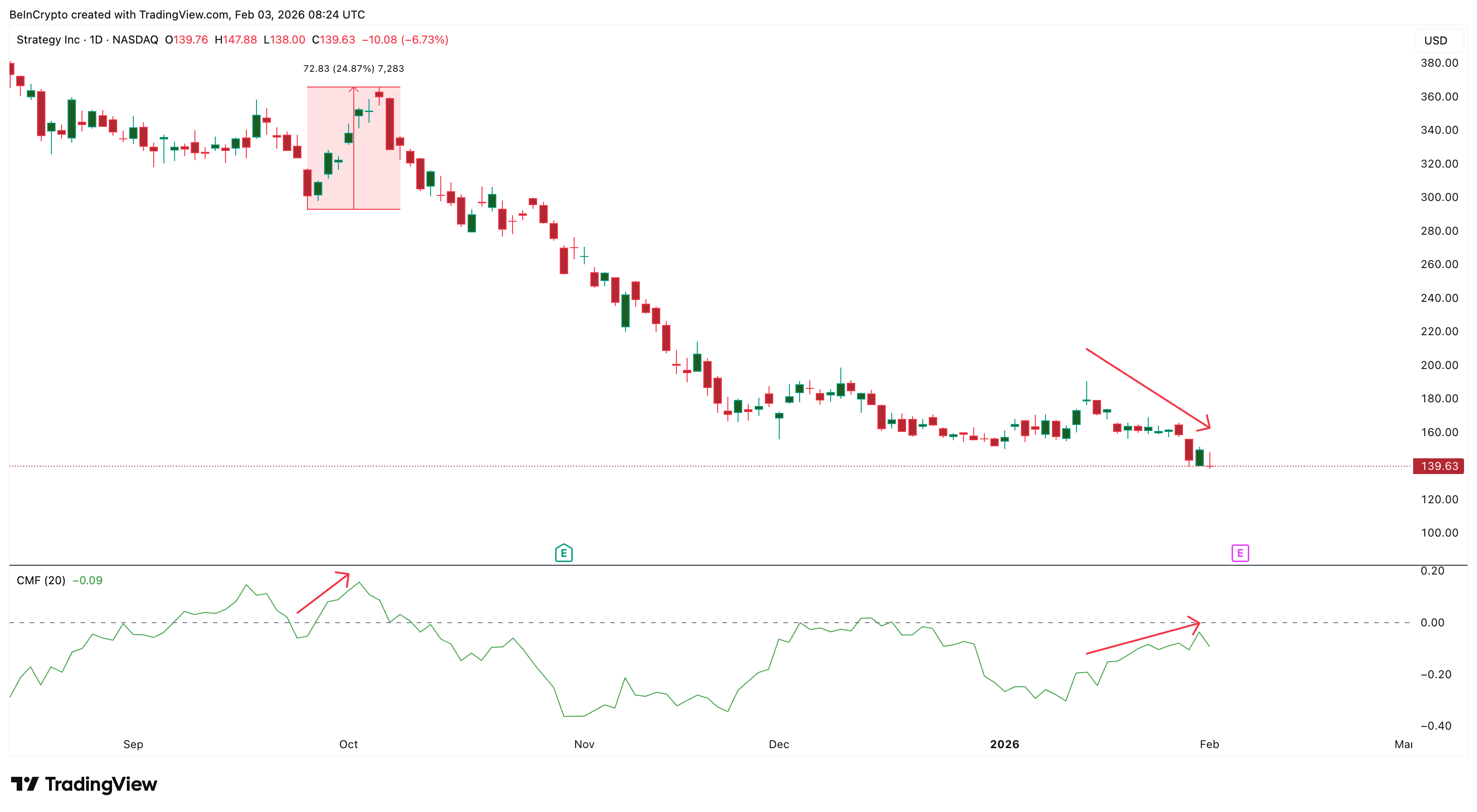
Capital flow data presents a more complex picture. The Chaikin Money Flow (CMF), which measures whether money is entering or leaving an asset using price and volume, has been trending higher since mid-January. Between January 14 and February 2, MSTR stock prices moved lower, yet CMF continued rising. This bullish divergence suggests that large investors were quietly accumulating during weakness.
Want more token insights like this? Sign up for Editor Harsh Notariya’s Daily Crypto Newsletter here.
Sponsored
Sponsored
CMF is now approaching the zero line, which separates net inflows from net outflows. A sustained move above zero would confirm that buying pressure is outweighing selling. The last clean break above this level came in early September, after which the stock rallied nearly 25%. This makes CMF a key trigger for any recovery attempt.
However, the MicroStrategy stock volume tells a different story. On-Balance Volume (OBV), which tracks whether trading volume supports price trends, has been trending lower. During the recent decline, OBV fell alongside price and broke below its rising trendline. This signals weakening participation and fading retail interest.
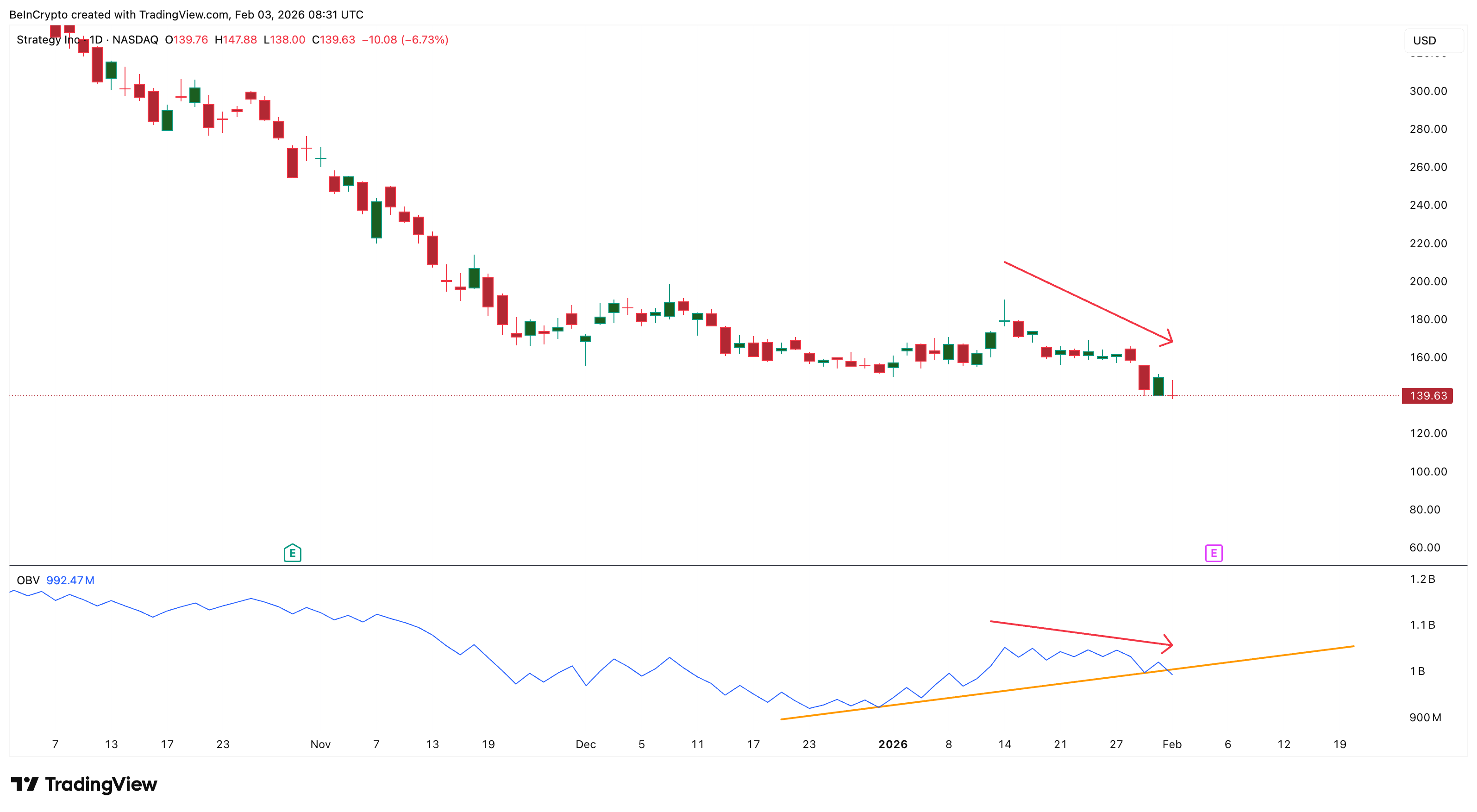
Together, these indicators send mixed signals. CMF points to selective accumulation by larger players, while OBV shows that broader market engagement remains weak, probably due to the recent cost-basis hit.
When these metrics diverge, rallies often struggle to gain momentum. Without strong participation, upside moves tend to fade quickly. As a result, even if institutions are positioning early, sustained gains will likely require stronger Bitcoin performance.
Sponsored
Sponsored
Key MicroStrategy Stock Price Levels Show a 20% Decision Zone Ahead
With indicators sending conflicting messages, the MSTR price levels now matter more than ever. The most important support sits near $139. This level has held multiple tests and aligns with Fibonacci support from the October decline, making it the market’s main decision point.
If $139 fails on a daily close, downside risk would increase sharply. In that scenario, prices could slide toward $107, implying roughly 20% further downside. Such a move would likely coincide with renewed weakness in Bitcoin. A deeper breakdown would likely coincide with renewed Bitcoin weakness.
On the upside, the first major resistance is near $170, also at around 20% from current levels. This level has capped several rebound attempts and remains a key barrier. A sustained break above $170 would improve the technical structure and signal returning confidence. Above that, the next hurdle sits near $190.
Clearing this zone would shift the trend decisively bullish and confirm that capital inflows are translating into price strength.
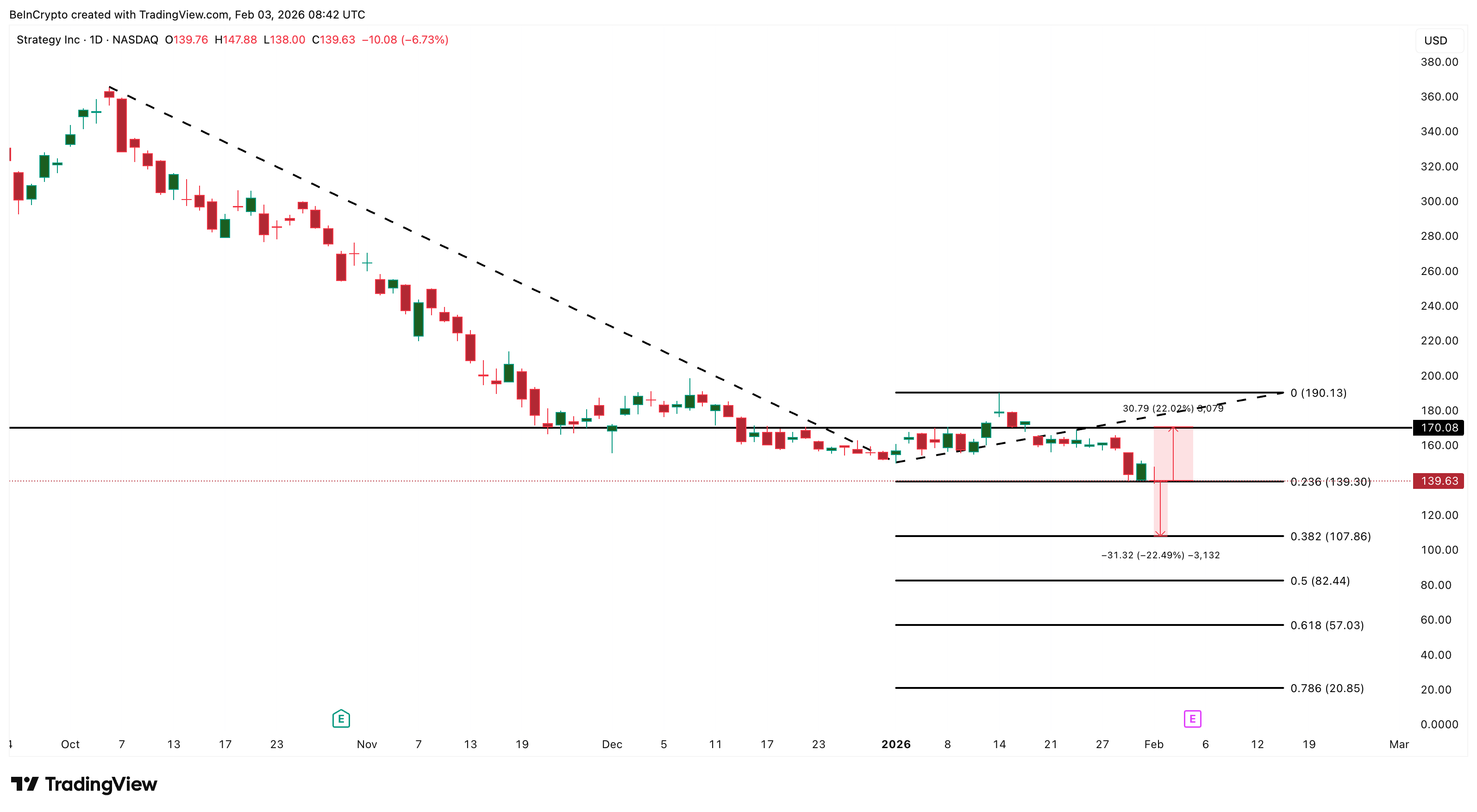
At present, MicroStrategy is centered near $139, with risk toward $107 and resistance near $170. This wide range represents nearly 20% in either direction, forming a two-sided decision zone. Bitcoin’s behavior will likely determine which side breaks first. A move above $80,000 could help MSTR challenge $170, while continued choppiness may prolong consolidation. If Bitcoin turns lower, support near $139 becomes vulnerable.
Until a clear breakout occurs, volatility is likely to remain high, and every rally risks reversal.

Five Vietnamese companies are reportedly competing to launch the country’s first licensed crypto exchanges as authorities move to bring trading onshore and ban overseas platforms.
Five companies have passed an initial qualification round, Reuters reported on Tuesday, citing a March 12 finance ministry document. The group reportedly includes affiliates of private banks Techcombank, VPBank and LPBank, alongside stockbroker VIX Securities and conglomerate Sun Group. VPBank and Sun Group reportedly confirmed their licence applications to Reuters.
Vietnam opened applications for licenses to operate crypto exchanges in January. The move came after new procedures issued by the finance ministry and a law that, for the first time, defines crypto assets as property while still banning their use as legal tender or for payments.
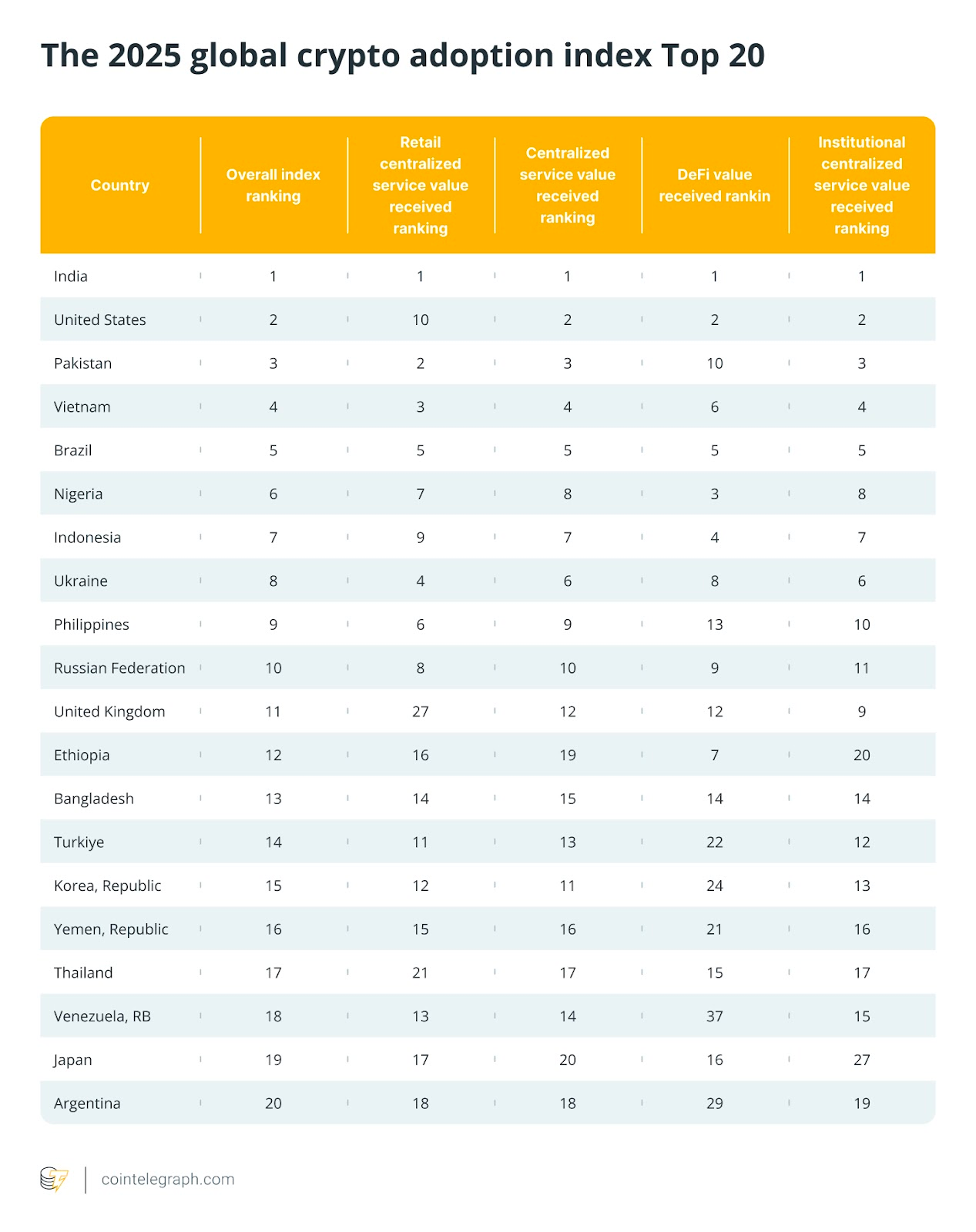
Vietnam has emerged as a major hub for crypto trading, ranking fourth globally in Chainalysis’ latest Global Crypto Adoption Index with $200 billion in estimated transactions over the 12 months to June. However, despite the significant activity, most traders still rely on offshore exchanges such as Binance, OKX and Bybit to access the market.
Related: Crypto’s real boom is happening in Argentina, Nigeria, and the Philippines
Vietnam to ban overseas crypto platforms
Authorities are also reportedly drafting rules that could prohibit Vietnamese nationals from using overseas platforms. According to Reuters, officials have raised concerns about the growing use of crypto and stablecoins, particularly in relation to capital moving out of the country.
In September 2025, Vietnam launched a five-year crypto pilot with strict rules requiring all transactions to be conducted in Vietnamese dong and limiting issuance to locally registered companies. The framework also bans fiat-backed assets like stablecoins, allowing only crypto backed by real, non-financial assets.

As a result of the strict entry conditions, including high capital requirements of around $379 million, the country’s Ministry of Finance said no companies had applied for its digital asset trading pilot by October.
Cointelegraph reached out to Techcombank, VPBank and LPBank, VIX Securities and Sun Group for comment, but had not received a response by publication.
Related: Vietnam central bank expects credit growth amid rapid crypto adoption
Vietnam to tax crypto similar to stocks
In February, Vietnam drafted a tax framework for crypto transactions that would treat digital assets similarly to securities trading. Under the proposal, individuals would pay a 0.1% tax on each crypto transaction processed through licensed providers, while such transfers would remain exempt from value-added tax.
For companies, the rules would differ, with institutional investors facing a 20% corporate income tax on profits from crypto trading after costs and expenses.
Magazine: Bitcoin may take 7 years to upgrade to post-quantum — BIP-360 co-author

Decentralized autonomous organizations (DAOs) were built on an ideological premise that is now running up against the realities of running a business, where decentralization collides with the need for legal ownership and control.
On March 11, DAO Across Protocol made a controversial proposal to transition to a private company through a token-to-equity exchange buyout. Risk Labs, the team behind Across (ACX), said that the token and DAO structure “materially” impacted its ability to close deals with enterprises and institutions.
The industry reaction has been split. Decentralized finance (DeFi) researcher Ignas called it a “huge failure of crypto.”
“It feels like a betrayal of the crypto spirit: investment access for everyone, anywhere, globally,” Ignas said on X. “I hope other DAOs don’t follow them.”

The DAO structure is holding back Across’ stablecoin business
Crosschain Bridge Across Protocol currently operates under a token and DAO structure, with Risk Labs overseeing development through a foundation model.
Risk Labs’ proposal outlines a transition to a newly formed US C-corporation that would take over protocol development and commercialization. ACX holders could exchange their tokens for equity in the new entity or opt into a buyout.
“[DAOs] were supposed to replace the archaic organizational infrastructure that is marked by greed and a lack of trust,” Matthew Pinnock, founder of DeFi project Altura, told Cointelegraph.
“However, as the industry increasingly moves toward real-world assets and institutional capital, protocols are running into structural limitations. Institutions typically need a clear legal counterparty that can sign contracts and undergo due diligence, something a decentralized collective cannot easily provide,” Pinnock added.
Related: Perp DEXs become the latest battleground for blockchains
Across co-founder Hart Lambur said that in Across’ case, having a token “generally hurts more than it helps.”
“We launched the Across token very early, at a very low valuation, and with a very broad airdrop. We picked this strategy so that we could build value in public with our community,” Lambur said on X. “Today, the macro environment has changed. Tokens are undervalued and underappreciated.”

Across is positioned around stablecoin infrastructure, which partly explains its transition. The goal is to enable fund movements across stablecoins at parity, with fees absorbed by issuers or partners rather than end users. Lambur said that securing related agreements requires contracts and offchain payment arrangements that are not well suited to DAO structures.
ShapeShift dissolved its corporate entity to become a DAO
As protocols rethink DAO structures, ShapeShift offers a counterpoint. The crypto trading platform transitioned into a DAO in 2021, dissolving its corporate entity in favor of tokenholder governance.
Tim Black, product lead at ShapeShift DAO, said many teams adopted DAO structures during the last cycle as part of a broader narrative, without fully accounting for the operational complexity involved.
Related: Banks will run RWAs on two blockchain rails, says RedStone co-founder
“What Across is proposing is essentially admitting that. They’re saying the DAO experiment helped bootstrap the network, but a company structure is better suited to the next phase,” Black told Cointelegraph.
“Many teams quietly operate like companies already,” he added. “Shapeshift was innovative in using workstreams, mirroring departments, but they still create more friction than collaboration over time.”

Social media debates shifted toward tokenized equity as the way to go over the traditional corporate structure, with Ignas claiming that it would be progress for the industry. But Black thinks that says more about token designs than the concept, as many governance tokens already function as pseudo equity.
“The original idea behind governance tokens was coordination, not ownership… If they just become equity substitutes, then the experiment has basically collapsed back into the corporate model it was supposed to challenge,” he said.
Across’ corporate structure isn’t finalized
If transitions like Across’ become more common, the outcome may not be a single direction for DeFi, but a split in how protocols are structured and operated.
“One side becomes corporate crypto, protocols run like fintech companies with tokens functioning more like shares. The other side stays genuinely decentralized and accepts the operational friction that comes with that,” said Black.
That shift is already being shaped by the influx of institutional capital and RWAs, which impose requirements that DAO structures often struggle to meet.
“That is why we are seeing DAOs taking the regulatory black pill and dropping the D that made them decentralized autonomous organisations,” Pinnock said.
As protocols adapt, some are moving toward clearer legal frameworks and centralized execution layers, while others continue to prioritize open participation and community governance.
Though Across is eyeing a corporate structure, it still operates as a DAO today. It framed its proposal as a “temperature check” to signal that no final decision has been made. It still needs to pass a governance vote and get the blessing of its token holders.

Magazine: Metaplanet’s Japan Bitcoin bet, Bithumb ordered suspension: Asia Express
Key takeaways
-
Bitcoin’s price reflects short-term marginal buying and selling, while adoption reflects long-term structural shifts. Ownership expansion, institutional integration and merchant growth can accelerate even when the market price remains flat or declines.
-
In 2025, Bitcoin expanded significantly across institutions, banks, corporations, merchants and sovereign entities. These shifts represent deeper entrenchment within global financial systems, even as headline price performance appeared underwhelming.
-
Institutions accumulated substantial amounts of Bitcoin, but much of this demand was offset by distribution from long-term holders. As supply changes hands between cohorts, price may consolidate instead of surge.
-
Merchant adoption and Lightning Network expansion improve Bitcoin’s real-world functionality. However, widespread instant conversion to fiat limits sustained net buying pressure unless merchants retain the Bitcoin they receive.
The contrast between Bitcoin’s (BTC) market price and its network adoption has never been more stark. While the price chart has spent much of the past year well below its peak, the underlying data reveals a different reality. In 2025, Bitcoin witnessed a massive, quiet expansion across banks, corporations and sovereign states.
This paradox exists because short-term marginal price formation is often driven by speculative noise, whereas structural adoption is driven by long-term institutional entrenchment. Bitcoin’s fundamentals are compounding at record speed even when the ticker remains stagnant.
This article explores why Bitcoin’s structural adoption across institutions, advisors, corporations and merchants has accelerated even as price action underperforms. It explains how ownership transfer, small allocation sizes and macro liquidity can delay adoption’s impact on short-term price movements.
Bitcoin adoption and price track fundamentally distinct phenomena
When people refer to Bitcoin adoption, they are typically describing gradual, long-term structural shifts:
-
Who is accumulating and holding Bitcoin?
-
Which companies or platforms are launching Bitcoin-related products and services?
-
Who is beginning to accept it as payment?
-
Which institutions, corporations or even governments are incorporating it into their balance sheets or reserves?
These underlying changes evolve slowly, building incrementally over many months or years.
Price, by contrast, is determined at the margin in real time. It responds primarily to:
-
Immediate buyers and sellers in the market
-
Current liquidity dynamics
-
Leverage, futures and derivatives positioning
-
Broader macroeconomic sentiment and risk appetite
-
Supply being released or withheld by long-term holders
Strong adoption can steadily broaden the ownership base without necessarily driving prices higher. It can even coincide with flat or declining prices if distribution from seasoned holders matches incoming demand from newcomers. Ownership can shift between cohorts without triggering sharp repricing.
Did you know? As of March 15, 2026, more than 20 million Bitcoin had been mined out of a maximum total supply of 21 million, representing more than 95% of all BTC that will ever exist. The final Bitcoin is not expected to be mined until around 2140.
How expansion dynamics seem to be unfolding
While Bitcoin’s price action had been relatively weak as of March 2, 2026, adoption trends continued to show strength:
Institutions are accumulating at scale
In 2025, institutions reportedly accumulated roughly 829,000 Bitcoin across businesses, governments, funds and exchange-traded funds (ETFs). This was not a marginal change but a meaningful shift in ownership structure.
Importantly, institutional exposure represents millions of underlying individuals gaining access through brokerage accounts, retirement plans, sovereign wealth funds and corporate balance sheets.
Much of this demand was absorbed by distribution from long-term holders and early adopters. When early whales sell into deeper liquidity, the price does not necessarily surge. Instead, supply shifts from one cohort to another.
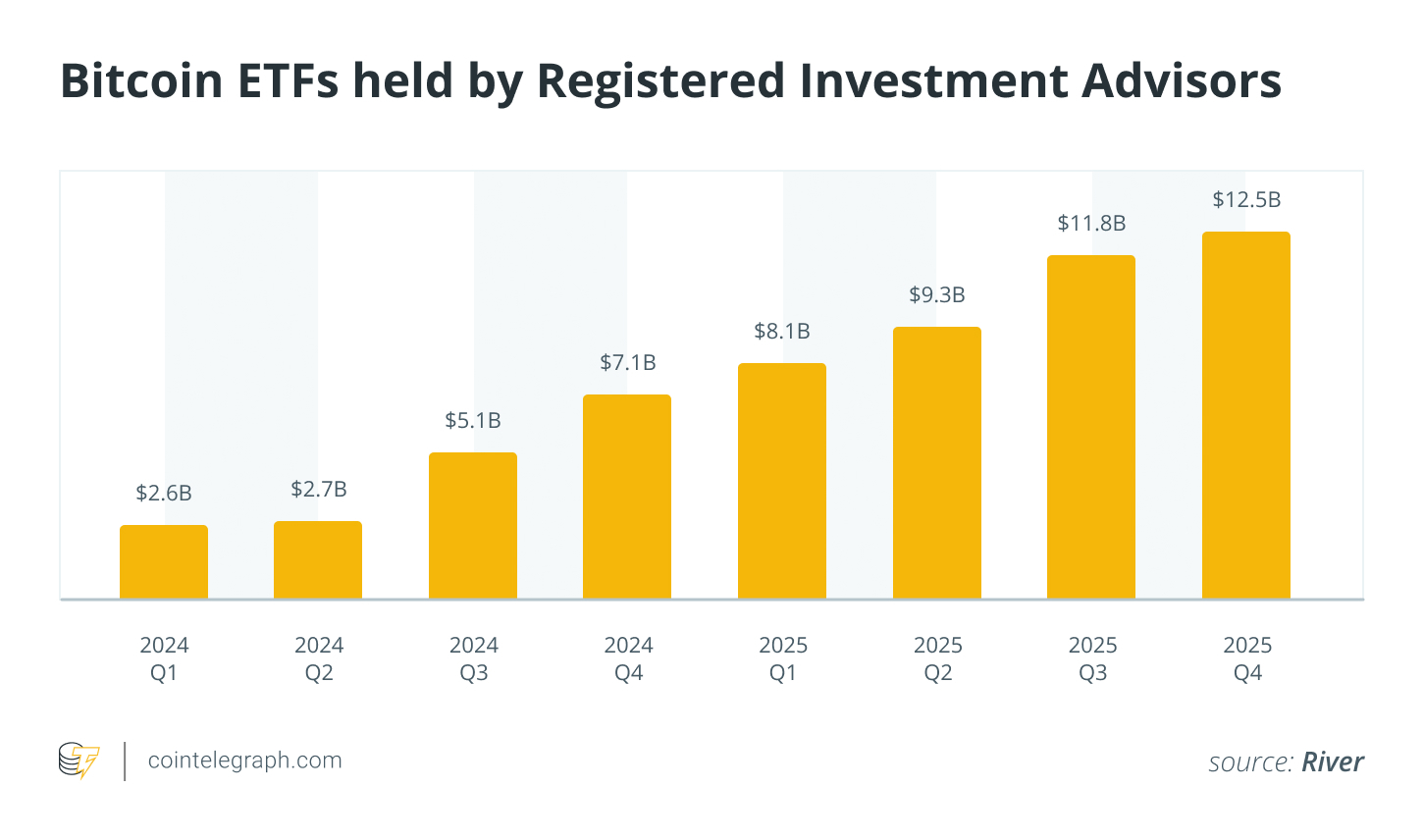
Investment advisors have been net buyers for eight consecutive quarters
Registered investment advisors (RIAs) oversee roughly $146 trillion in client assets globally. Since Bitcoin ETFs launched, RIAs have steadily allocated capital, reportedly around $1.5 billion per quarter, without a single net-selling quarter.
That consistency matters.
However, average allocations remain extremely small. Many advisors hold Bitcoin at just basis-point levels in diversified portfolios. Until allocations move from fractions of a percent toward 1% to 2% model weights, the price impact may remain gradual.
In other words, the pipeline is open, but the flow rate is still increasing.

Banks are once again developing Bitcoin-related products
A growing share of major US banks are actively developing Bitcoin custody, trading, advisory and related services. Improved regulatory clarity compared with previous years has reduced institutional reluctance and opened the door to broader participation.
This growing involvement from traditional banks marks a key step toward normalization. Bitcoin is evolving from a speculative, peripheral asset into one that is increasingly embedded within mainstream financial systems and infrastructure.
That said, building products is not the same as achieving widespread availability. Initial launches often target ultra-high-net-worth individuals, institutional clients or remain in limited pilot phases. Rolling out full retail access requires significant time, compliance and operational scaling.
Ultimately, this infrastructure serves as a foundational enabler of future adoption rather than an immediate trigger for rapid market shifts.
Corporate Bitcoin adoption and the weight it brings
Corporate accumulation of Bitcoin can influence the market in several ways:
-
It steadily removes Bitcoin from liquid, circulating supply.
-
It demonstrates high-conviction, treasury-level endorsement from established businesses.
-
It fosters peer benchmarking, encouraging more companies to follow suit.
However, a large portion of these purchases occurs over-the-counter (OTC) or through carefully structured, gradual accumulation programs designed to avoid disrupting spot markets. This measured approach means corporate buying often reshapes long-term ownership patterns far more than it drives short-term explosive price action.
In short, corporate buying may influence long-term ownership patterns more than short-term price action.
Did you know? Bitcoin mining now consumes less energy than many traditional industries, including gold mining and the global banking system, according to several comparative energy studies.
Surge in merchant adoption of Bitcoin
Merchant acceptance of Bitcoin expanded rapidly in 2025. In November 2025, the Bitcoin Lightning Network reached a record $1.17 billion in volume. This suggests that the network is no longer used only for experimental “coffee” payments, but has also become a layer for high-value institutional settlements.
For merchants, Bitcoin offers clear operational advantages, including:
-
Drastically lower processing fees compared with traditional card networks
-
Elimination or near-elimination of chargeback risk
-
Smoother, cheaper cross-border settlements
A large majority of merchants still opt for instant conversion of received Bitcoin payments into fiat currency through payment processors. As a result, incoming transaction volume does not reliably translate into sustained net buying pressure on Bitcoin itself.
Payments adoption meaningfully enhances Bitcoin’s real-world utility. However, utility alone does not generate lasting scarcity or upward price pressure unless merchants choose to hold the BTC they receive.
Bitcoin adoption by countries continues to grow
Throughout 2025, Bitcoin’s role as a strategic reserve asset expanded significantly as five more countries added it to their reserves. This wave of adoption spanned diverse regions and financial structures, including sovereign wealth funds in Saudi Arabia and Luxembourg, the Czech Republic’s central bank and direct acquisitions by Taiwan and Brazil.
Government involvement in Bitcoin adoption carries significance for several reasons. Countries operate on multidecade time horizons rather than quarterly earnings cycles. They typically adopt strategic, long-term holding policies rather than short-term trading. Adoption by sovereign entities confers powerful legitimacy on any asset class, signaling to markets, institutions and the public that Bitcoin is becoming part of mainstream financial frameworks.
Did you know? Lost Bitcoin is estimated to total several million coins, permanently reducing the effective circulating supply and increasing long-term scarcity.
Bitcoin’s volatility continues to decline
One of the most underappreciated indicators of maturing adoption is Bitcoin’s steadily declining volatility. Over the past decade, Bitcoin’s annualized volatility has fallen. Successive market cycles have produced progressively narrower percentage drawdowns and rallies compared with the extreme swings seen in earlier bull and bear phases.
This structural decline in volatility reflects several reinforcing developments:
-
Markedly deeper and more resilient market liquidity
-
More diversified distribution of ownership across holder cohorts
-
Growing institutional and professional participation
-
More sophisticated, liquid derivatives markets (futures, options and perpetuals) that help absorb shocks
Bitcoin’s volatility profile now increasingly resembles that of established asset classes such as stocks, commodities and foreign exchange. This aligns with the preferences of conservative capital allocators, including pension funds, endowments and risk-averse institutions.

Why hasn’t Bitcoin price reacted more aggressively?
While institutional and sovereign adoption increased in 2025, the market’s immediate price action remained muted. This quiet accumulation phase suggests that the true impact of large capital inflows was masked by macroeconomic headwinds.
-
Ownership transfer absorbs demand: When long-term Bitcoin holders distribute into institutional demand, the market can absorb large volumes without sharp upward price moves. Supply simply changes hands as adoption grows and price consolidates.
-
Adoption widens the base, not the margin: Marginal buyers and sellers play a key role in setting the price of cryptocurrencies. Structural adoption broadens the ownership base but does not always shift the aggressive marginal bid right away. Until fresh demand exceeds available supply, price can remain range-bound.
-
Allocation sizes remain small: Many institutions and advisors now allocate to Bitcoin, but at very modest weights. If that changes, marginal demand could increase.
-
Macro liquidity matters: Bitcoin exists within a broader macro environment. Factors shaping capital flows include liquidity conditions, interest rate expectations and global risk appetite. Greater Bitcoin adoption does not mean it is insulated from macro cycles.
Cointelegraph maintains full editorial independence. The selection, commissioning and publication of Features and Magazine content are not influenced by advertisers, partners or commercial relationships.
Bitcoin mining firm Cango Inc. reported a net loss of $285 million in the fourth quarter of 2025, as impairment charges, fair-value losses and higher mining costs outweighed revenue from its expanding Bitcoin mining business.
In its earnings report published Monday, Cango said fourth-quarter revenue reached $179.5 million, including $172.4 million from Bitcoin mining, while total operating costs and expenses rose to $456.0 million.
The losses were driven in part by an $81.4 million impairment on mining machines and a $171.4 million loss tied to changes in the fair value of Bitcoin (BTC)-collateralized receivables. The company also reported higher production costs, with all-in mining expenses rising to $106,251 per BTC in the quarter.
The results show how revenue growth from mining was offset by impairment charges, mark-to-market adjustments and higher production costs as the company scaled the business.

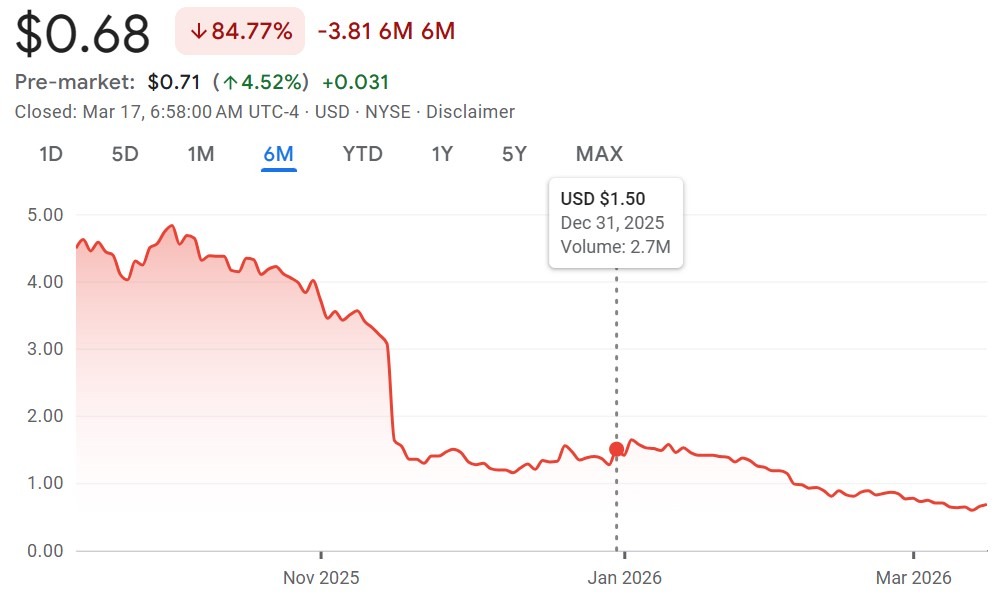
Google Finance data shows that Cango’s shares fell from around $4.50 on Oct. 1 to about $1.50 by Dec. 31. At the time of writing, it trades at $0.68, marking a decline of more than 84% over the past six months.
Cango posted a net loss of $452.8 million for full-year 2025
For the full year, Cango reported total revenue of $688.1 million, including $675.5 million from Bitcoin mining. The company mined 6,594.6 Bitcoin in 2025, or about 18.07 Bitcoin per day, in its first full year operating at scale in the sector.
Cango reported total operating costs and expenses of $1.1 billion for 2025, including $338.3 million in impairment losses on mining machines and $96.5 million in fair-value losses on Bitcoin-collateralized receivables, highlighting the cost pressures associated with scaling its mining operations.
Related: Bitcoin miners saw the AI power crunch coming — and the nuclear revival
In total, Cango posted a net loss of $452.8 million for the year. Chief financial officer Michael Zhang said the loss was driven largely by non-recurring transformation costs and market-driven fair-value adjustments.
Cango’s Bitcoin mining pivot
Cango’s results come amid a broader strategic shift that has reshaped the company’s business over the past year.
In April 2025, Cango agreed to sell its legacy China auto financing operations for $352 million to Ursalpha Digital Limited, an entity linked to Bitmain.
The deal also included the transfer of 32 exahashes per second (EH/s) of mining capacity to the company, effectively repositioning Cango as a publicly traded Bitcoin mining firm.
In February, Cango raised $75.5 million in equity financing after selling 4,451 Bitcoin for about $305 million to reduce leverage.
The company said this supports its pivot toward artificial intelligence infrastructure, with plans to repurpose its mining operations into distributed compute capacity for AI workloads.
Magazine: All 21 million Bitcoin is at risk from quantum computers

Author of The Bitcoin Standard, Saifedean Ammous, believes that fiat is the central problem plaguing society. “The 20th century is just an enormous amount of wealth being taken away from people who produced it and being sent to the meat grinder of war. And this is what fiat does,” he told Cointelegraph.
“If you take that away, we get a lot less murder and death, and then we get a lot more prosperity, productivity and a lot more wealth.”
In his latest book, The Gold Standard, he explores this very concept. What if the civil, political and social upheavals of World War One never happened? What if a new, decentralized form of money took hold, soon after the war began in 1915?
In our timeline, the four-year war destroyed Europe, exacting a death toll that exceeded 40 million across 30 participant countries. The war sparked revolutions across Europe. By the time the dust settled, the imperial houses of Habsburg, Romanov and Hohenzollern ruled no more. The Ottoman Empire descended into a civil war.
The English class system was challenged, and women in the UK gained the vote. New, independent nations like Finland, Poland, Georgia, Lithuania, Latvia and Estonia emerged. Novel political movements like communism and fascism gained popularity amid the catastrophic economic fallout.

The central thesis of The Gold Standard is that these outcomes of the war were ultimately a result of the fiat banking system. Ammous imagined a world in 1915, just after the Great War broke out, where a decentralized, immutable system of value transfer with gold was invented.
How could it change the course of human history for the better?
Gold, planes and central banking
The Gold Standard begins by setting the political chessboard at the end of the Belle Epoque, the extended period of prosperous but armed peace in Europe from 1871 to 1915.
Ammous describes the political boundaries within Europe and the rise of central banks. Chiefly, he describes how the solidity of the traditional gold standard “had a major problem that prevented it from functioning optimally in its ideal form: the incessant extension of bank credit without corresponding savings.”
In Ammous’ account, a combination of imperial ambitions, poor decision making from politicians, and irresponsible monetary policies allowed the powers of Europe to sleepwalk into the First World War.
In 1915, the alternate history starts with a real-life hero: French aviator Louis Blériot. In The Gold Standard, Blériot realizes the pernicious power that central banks pose to the world, and partners with the American Wright brothers to found the Blériot Transport Corporation (BTC).
They create a fleet of ingenious planes that, piloted by early aviation pioneers of the time, deliver gold from point to point.
“The automobile and aviation industries traded with one another across international borders without having to resort to central banks. As the war raged on and more restrictions were imposed on withdrawing gold, demand steadily increased. Old money became anxious about the banking system. They increasingly demanded that gold be kept on hand and wished to rely on BTC for trade. Most important, perhaps, was that BTC had freed people from having to turn in all their gold to the banks in response to their governments’ pleas.”
This eventually leads to a capital flight which, combined with other circumstances, emptied the belligerent countries’ central bank vaults of all their gold reserves. With countries increasingly unable to finance the war, generals begin to pull back their troops. By early 1915, the guns are silent, the trenches are empty, and peace breaks out in Europe.

The end of the war is codified in the “Treaty of Geneva” and the establishment of the International Committee for Self-Determination (ICSD).
The enduring peace, enabled by a worldwide, immutable gold standard, then leads to unprecedented prosperity in the 20th century. This leads to a massive appreciation in gold value, or “hypergoldenization.”
The form of a governance-for-hire corporate government emerges:
“The tribal considerations of nationality, ethnicity, and religion became increasingly separated from government, and people pragmatically chose to live under the governments that provided them security and services at the lowest cost.”
Without central banks to finance them, and with a conflict resolution framework in the form of the ICSD, wars are far more difficult and expensive to wage.
The prosperity of the gold standard has also eliminated some historical events, economic and natural phenomena that we take for granted, including the rise of socialism, World War II, depressions, climate change, “fiat food” and unemployment.
The book concludes with an accounting of an average day in the life of the Smith family in London in this brave new world.
“Comfort is taken for granted, and prosperity is ordinary. Technology shortens chores, meat is plentiful and affordable, travel is fast, and energy is so abundant that they barely think about it.”
From gold bug to Bitcoin to the trenches
Ammous first became immersed in Austrian economics in 2007, “and by 2008 I would have pretty much called myself an Austrian,” he told Cointelegraph.
Initially, he was a gold bug. “I already had a good grasp of the problems of inflation, the problems of fiat. And I was hanging out on the parts of the internet where Austrian economics nerds discuss these things. At that point, it was a lot smaller than what it is now.”
It was here that he first came across Bitcoin in the context of “sound money” or “hard money.” He wasn’t sold on the concept until 2014, after reading about Bitcoin mining. Soon after, he wrote the best-selling book The Bitcoin Standard.
The Gold Standard, his latest, departs from his usual format by depicting a twist on modern history’s most pivotal event.

“I’ve always been so fascinated by World War I. It’s always been the most fascinating historical thing for me,” Saifedean Ammous said. “If you think about World War One, you’ll see World War Two is essentially just the continuation of the same war. But really, the turning point was World War One.”
The central thesis of the book is that the evils of the war, along with the concomitant social and political changes, were ultimately a result of the fiat banking system. Once rendered ineffective by “BTC,” the course of human history changes.
But creating a credible alternative history isn’t really easy. Ammous said he wanted to make it “so that it isn’t just a pink unicorn” where “world peace breaks out.” He wanted it to be “tenable, believable, credible” that allows the reader to “think in an accurate way about the implications […] in a useful way and a more robust way.”
Creating this new form of monetary transfers was necessary because “the world isn’t going to really change much. Not if there was no war. Then we’re going to continue in the same way.”
Alternative histories are tricky
Despite the clear depth of research that went into the book, some of the historical turns strain credulity.
In the book, Blériot and the Wright brothers’ 1911 airplane prototype, the Lightning, was capable of reaching speeds of 280 km/h with a range of 1,400. This is an over threefold increase in airspeed from Blériot’s record-breaking crossing of the English Channel just two years prior, where he averaged around 80 km/h.
The speed and range of the planes that comprise “BTC’s” fleet far outstrip anything that would be made until the mid-to-late 1930s, making them something of a Deus Ex Machina for the new monetary system.

In chapter 10, as the “BTC”-induced capital flight drains resources from governments to pay their armies, the trenches simply empty as soldiers peacefully desert and go home. History before WWI is riddled with examples of armies going without pay, but they are frequently accompanied by mutiny, looting, pillaging, and, in the more dramatic cases, the sacking of entire cities.
As the generals empty the trenches, Ammous removes some of the belligerent leaders of the war from office. In the cases of Tsar Nicholas II and Kaiser Wilhelm II, this happens through murder. Nicholas II is shot by his cousin Grand Duke Nicholas Nikolaevich and replaced by his brother Grand Duke Michael Alexandrovich. The Kaiser is stabbed in the back by his son, the Crown Prince Wilhelm.
Both of these resolve without so much as a word of protest. World history is absolutely littered with wars of succession after the murder or death of a monarch. It is difficult to imagine the lack of one here, on a continent just recently at war, with a mass of soldiers missing their pay.
Furthermore, the extrapolations into the future are necessarily uncertain, as no one has a crystal ball. Still, some of them, like the idea that climate change would not happen, or that we would all eat more beef, seem fairly heterodox.
Ultimately, the book is “a different way of imparting the fundamental lessons of my three other books,” per Ammous. He said that some people prefer to think in terms of “fiction, in terms of thought experiments, in terms of hypotheticals,” which was a different approach than his first two books.
WWI also provided a unique example, “because we need to know how the world went off the rails” and envision what could have been.
“If that money is kept, then people will save it, they will accumulate capital. Then the world becomes more capital abundant. We have more capital. Capital becomes cheaper. People are able to invest more. They’re able to save more. They’re able to grow more. And so you put all of these things together and then you have an amazing world and it’s just a very different world,” Ammous told Cointelegraph.
Magazine: All 21 million Bitcoin is at risk from quantum computers
Payments giant PayPal is expanding access to its US-dollar stablecoin, PayPal USD, adding 68 more markets globally in its latest stablecoin push.
PayPal USD (PYUSD) will be made available to customers in 70 countries worldwide in March, allowing them to receive, hold and send the stablecoin, the company announced Tuesday.
With the expansion, PYUSD is now available to users with PayPal accounts across multiple regions, including the Asia-Pacific, Europe, Latin America and North America. Previously, only customers in the United States and the United Kingdom could hold the stablecoin.
“Enabling PYUSD in users’ accounts across 70 markets gives people faster access to their funds, lower-cost ways to send money across borders, and a more direct path to participating in the global economy,” PayPal head of crypto May Zabaneh said.
Expansion unlocks “balance-type concept” with rewards
Alongside enabling PYUSD transactions, users in newly supported markets can earn rewards on their stablecoin holdings. The expansion supports transactions to third-party digital wallets, the announcement states.
Currently, PayPal users in select countries such as Peru can only withdraw money from their accounts in their country’s native currency, which carries cross-border fees. After the update, users will be able to send, receive and keep funds in US dollars and reduce transfer fees, Zabaneh told Fortune in an interview.
Related: US ban on stablecoin yield could see others fill the void: Ledger exec
Some countries, such as Malawi, don’t allow users to keep transfers in their PayPal wallets, essentially forcing all funds to be immediately sent to the recipient’s bank account. With PYUSD access, users will be able to keep that money in their PayPal wallets.
“It unlocks a balance-type concept in these accounts and an earnings concept,” Zabaneh said.
PYUSD is issued by Paxos, PayPal distributes
The expansion comes nearly three years after PayPal launched its PYUSD stablecoin in collaboration with the issuer Paxos Trust in August 2023.
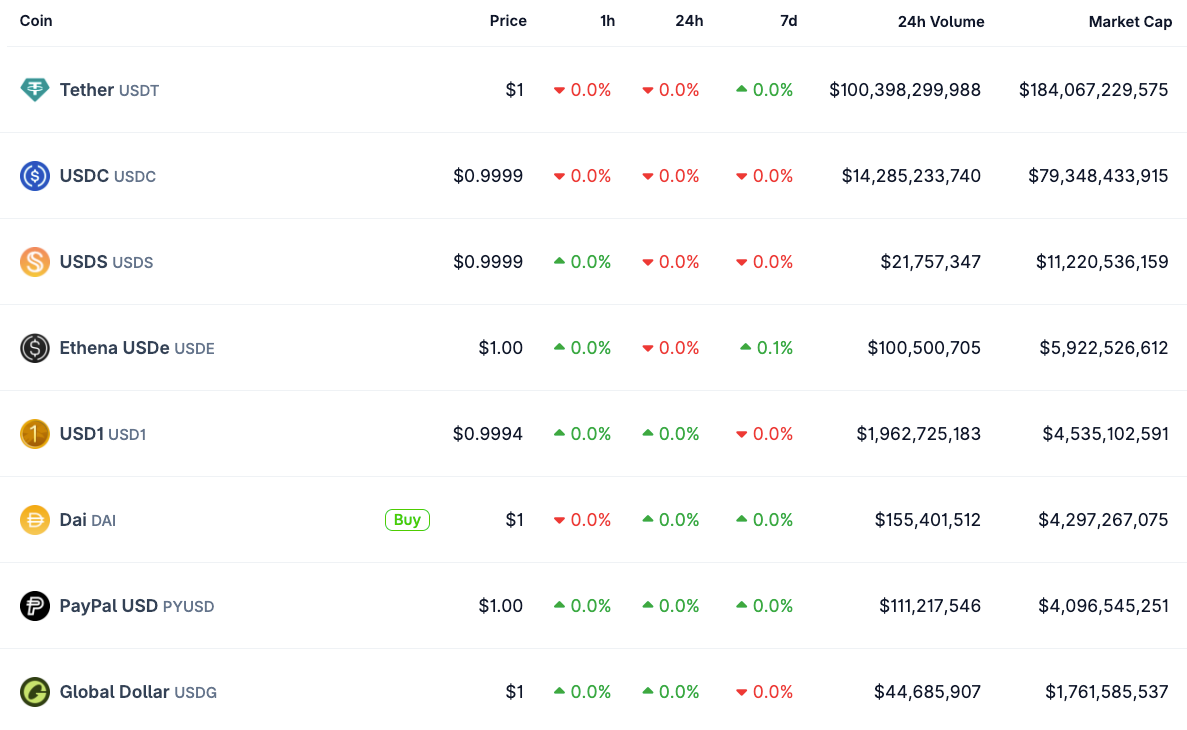
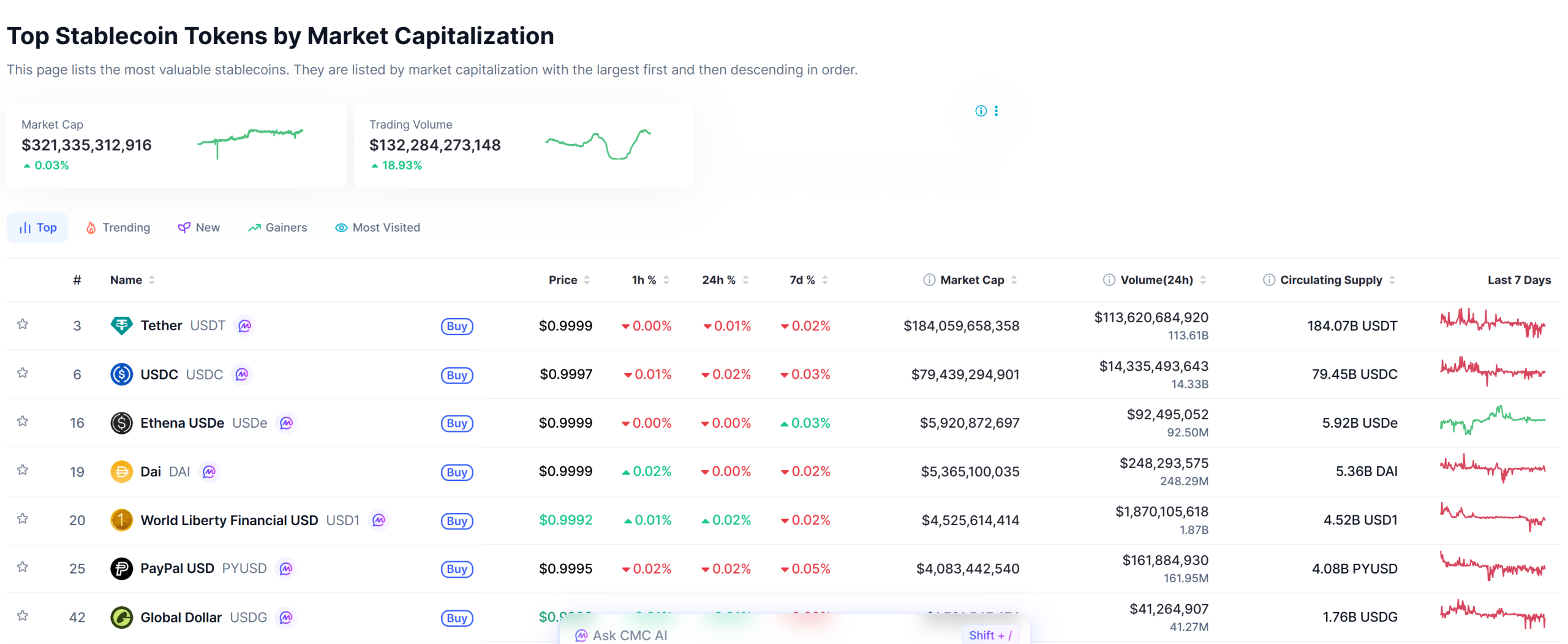
The stablecoin has emerged as one of the largest USD-pegged stablecoins worldwide, ranking as the seventh-largest with a market capitalization of around $4.1 billion, according to CoinGecko.

PYUSD saw significant growth in 2025, with its market cap rising 600% from around $500 million in early 2025 to $3.6 billion by the end of the year.
Cointelegraph contacted PayPal for comment about the expansion, but had not received a response by publication.
Magazine: CLARITY Act risks repeat of Europe’s mistakes, crypto lawyer warns


US Securities and Exchange Commission chair Paul Atkins says the agency should consider a “safe harbor proposal” to give crypto companies and some tokens a regulatory carveout.
Atkins said in remarks at a crypto lobby event in Washington, DC, on Tuesday that his safe harbor proposal was made up of a “startup exemption,” a “fundraising exemption,” and an “investment contract safe harbor.”
“It is past time for us to stop diagnosing the problem and start delivering the solution,” he said. “Such a safe harbor would provide crypto innovators bespoke pathways to raise capital in the US, while providing appropriate investor protections.”
The SEC, along with the Commodity Futures Trading Commission, on Tuesday also issued an interpretation that clarified what types of cryptocurrencies are securities and how “non-security crypto assets” could fall under securities laws.
Our interpretation on crypto assets—grounded in existing law and informed by extensive public input—acknowledges what the former administration refused to recognize…
Most crypto assets are not themselves securities.pic.twitter.com/fbHan0vmmb
— Paul Atkins (@SECPaulSAtkins) March 17, 2026
Atkins outlines idea for crypto exemptions
In his remarks, Atkins said the SEC should consider a “startup exemption” to allow crypto companies to raise a defined amount of money or operate for a few years with enough “regulatory runway” to make it to maturity.
He also floated a “fundraising exemption” to allow investment contracts involving crypto to raise up to a particular amount in any 12-month period while being exempted from registering under securities laws.
Atkins said his idea for an “investment contract safe harbor” would give crypto asset issuers and buyers certainty about when assets are subject to securities laws.
The safe harbor could apply once an issuer has “permanently ceased all essential managerial efforts” that it promised for the asset, Atkins said.
Related: DeFi lobby drops airdrop lawsuit against SEC, citing crypto shift
Atkins added that he expects the SEC to release proposed rules for the exemptions for public comment in the coming weeks.
He added, however, that “only Congress can ensure that regulation in this area is future-proofed through comprehensive market structure legislation.”
A bill to outline the SEC’s crypto remit is currently stalled in the Senate as negotiations over its provisions are ongoing.
Magazine: How crypto laws changed in 2025 — and how they’ll change in 2026


Illinois Lieutenant Governor Juliana Stratton is poised to become the next Senator from the state after winning the Democratic primary Tuesday night, defeating Representative Raja Krishnamoorthi.
Krishnamoorthi had received north of $8 million in backing from crypto super-political action committee (PAC) Fairshake, among other entities, while Stratton was backed by Illinois Governor JB Pritzker. Illinois’ senate seat is rated a “Solid Democratic” seat by Cook Political Report, meaning the winner of Tuesday’s primary will most likely win the general election this November and represent the Prairie State in the Senate in 2027.
Fairshake’s ads largely attacked Stratton, rather than supporting Krishnamoorthi directly, a strategy it also employed in the 2024 election. The PAC typically supports candidates in primaries for races they’re likely to win, letting it boast that the vast majority of its backed candidates won elections in 2024.
Stand With Crypto, a Coinbase-backed group that assigns rates to lawmakers based on how crypto-friendly they are, gave Stratton an “F” ranking based on a single statement she made about her primary opponent receiving backing from “MAGA-backed crypto bros.” The rating notes that she has not voted on any crypto bills or otherwise made statements about crypto generally.
Krishnamoorthi received an “A” rating based on his voting record and his responses to a questionnaire sent out by the group.
Another candidate Fairshake opposed, La Shawn Ford, won his primary race as well, according to the Associated Press. Fairshake spent nearly $2 million opposing Ford’s race for the House of Representatives. Ford’s team sent the PAC a cease-and-desist alleging Fairshake’s ads were “defamatory,” according to the Forest Park Review.
A spokesperson for Fairshake did not immediately return a request for comment on either race, or on Ford’s allegations.

Bitcoin infrastructure provider Maestro has launched a Bitcoin-denominated credit market backed by mining economics, aiming to give institutions a new way to earn yield on idle Bitcoin while expanding financing options for miners.
Maestro said Mezzamine went live with its first program in partnership with mining-as-a-service provider Sazmining. According to a Tuesday announcement shared with Cointelegraph, the program is designed to let institutional Bitcoin (BTC) holders deploy BTC into mining-backed credit facilities targeting an annual yield of 8% to 9%.
The offering is designed to connect miners seeking capital with institutional Bitcoin holders seeking BTC-denominated yield, creating an onchain credit market tied to mining expansion rather than protocol staking rewards.
“New Bitcoins are mined every 10 minutes, and with Mezzamine BTC holders can earn and share block rewards with miners,” Marvin Bertin, Maestro’s co-founder and CEO, said in the announcement.
Related: Top Bitcoin mining stocks rise as US winter storms cut hashrate
Bitcoin-native credit market seeks to fix miner financing gap
Bitcoin mining firms often face limited financing options, typically relying on dollar-denominated debt against Bitcoin collateral or, if publicly listed, equity issuance.
Because many miners’ liabilities are denominated in dollars while revenue is earned in Bitcoin, that structure can leave operations more exposed during sharp market downturns.
Maestro said the credit facility includes bear-market protection features, including hedging tied to Bitcoin prices and mining-fleet economics, to help stabilize performance during downturns.
The company said miners may face higher financing costs in stronger markets in exchange for a structure designed to offer greater stability during downturns.

The offering is aimed at institutional investors, corporate treasuries, asset managers, family offices and registered investment advisers. Suresh Rajan, Mezzamine’s managing director, told Cointelegraph the minimum allocation is $100,000 worth of Bitcoin.
Mezzamine said the yield is derived directly from mining production. Miners borrowing through the platform use capital to buy additional ASIC hardware and expand hashrate, with part of the resulting block rewards used to service the credit facility and the remainder flowing to the miner.
According to Maestro, institutions receive yield funded entirely by the mining output, without additional token incentives or leveraged strategies.
Related: Solo Bitcoin miner bags over $200K block reward using rented hashrate
Bitcoin-denominated loans reduce miner liquidation risks
Bitcoin miners seeking traditional financing are often required to overcollateralize two-fold, increasing liquidation risks during Bitcoin price drops.
The new credit facility reduces that risk by denominating loans in Bitcoin and removing dollar-denominated call risks, Mezzamine’s managing director, Rajan, told Cointelegraph:
“A decline in Bitcoin’s price against the dollar does not trigger a margin call, and with Mezzamine’s hedged vehicle, the hedge actually returns profits in bear markets that can supplement mining revenue and further capitalize the program.”
“The loan performs according to mining economics, not currency markets,” he added.
Maestro told Cointelegraph it has seen more than 1,500 BTC in borrowing demand from qualified mining operators exploring alternative financing channels, including public miners and mid-sized operators.
Sazmining describes itself as a Bitcoin mining-as-a-service provider whose operations rely on hydropower and other carbon-free energy sources.
Magazine: 6 weirdest devices people have used to mine Bitcoin and crypto
Mastercard has agreed to acquire stablecoin infrastructure company BVNK in a deal valued at up to $1.8 billion, further expanding into blockchain-based payments.
The deal includes up to $300 million in contingent payments and is intended to strengthen Mastercard’s ability to connect fiat payment rails with onchain transactions, the company said on Tuesday.
“We expect that most financial institutions and fintechs will in time provide digital currency services, be it with stablecoins or tokenized deposits,” Jorn Lambert, chief product officer at Mastercard, said.
BVNK, founded in 2021, provides infrastructure that allows businesses to send and receive payments across major blockchain networks in more than 130 countries. Its platform is designed to bridge fiat currencies and stablecoins, enabling use cases such as cross-border payments, payouts and business transactions.
Related: Cari picks ZKsync’s Prividium as US regional banks join stablecoin race
Coinbase walks away from BVNK deal
In November 2025, Coinbase and BVNK announced they had mutually walked away from a proposed $2 billion acquisition that had reached the due diligence stage. No reason was disclosed for the cancellation of the deal.

BVNK has received investment from a number of major traditional payment firms. In May 2025, Visa made a strategic investment in the company through its Visa Ventures arm, which came after the stablecoin infrastructure company closed a $50 million Series B funding round led by Haun Ventures.
In October 2025, Citigroup’s venture arm, Citi Ventures, also invested in BVNK. While the investment size was not disclosed, BVNK said at the time that its valuation had surpassed $750 million.
Related: Stablecoins to replace old FX rails, but off-ramps remain a chokepoint
Stablecoins could power global payments within 15 years
Last week, billionaire investor Stanley Druckenmiller said stablecoins and blockchain technology could reshape global payments within the next decade, citing their speed, efficiency and lower costs compared to traditional systems. He argued that stablecoins could eventually replace existing payment rails, even as he remains skeptical about crypto’s role as a long-term store of value.
His comments come as traditional financial firms increasingly explore stablecoin-based systems following regulatory progress, including the GENIUS Act in the US.
Magazine: Bitcoin may take 7 years to upgrade to post-quantum — BIP-360 co-author

City of York Council hosts in-person parking charge meetings

Barry Urban’s alleged killer Jerry Aniseto Masipau pleads not guilty

Vietnam Crypto Licences Draw Five Firms as Overseas Platform Ban Looms


-
 Tech7 days ago
A 1,300-Pound NASA Spacecraft To Re-Enter Earth’s Atmosphere
-
 Crypto World4 days ago
HYPE Token Enters Net Deflation as HyperCore Buybacks Outpace Staking Rewards
-

 Fashion4 days ago
Weekend Open Thread: Addict Lip Glow
-

 Tech2 days ago
Your Legally Registered ‘Motorcycle’ Might Not Count Under Proposed US Law
-
Sports4 days ago
Why Duke and Michigan Are Dead Even Entering Selection Sunday
-

 NewsBeat6 days ago
Residents reaction as Shildon murder probe enters second day
-

 Business2 days ago
Search for Savannah Guthrie’s Mother Enters Seventh Week with No Arrests
-

 Business7 days ago
Search Enters Sixth Week With New Leads in Tucson Abduction Case
-

 Sports6 days ago
PWHL, Senators discussing plan to keep Charge in Ottawa
-

 Business4 days ago
US Airports Launch Donation Drives for Unpaid TSA Workers as Partial Government Shutdown Enters Fifth Week
-
 Tech11 hours ago
Are Split Spacebars the Next Big Gaming Keyboard Trend?
-
Crypto World3 days ago
Coinbase and Bybit in Investment Talks: Could Bybit Finally Enter the US Crypto Market?
-

 NewsBeat7 days ago
I Entered The Manosphere. Nothing Could Prepare Me For What I Found.
-

 Business4 days ago
Country star Brantley Gilbert enters growing non-alcoholic beer market
-

 Business2 days ago
Australian shares drop as Iran war enters third week
-

 Crypto World2 days ago
Crypto Lender BlockFills Enters Chapter 11 with Up to $500M in Liabilities
-

 Sports4 days ago
College Basketball Best Bets: Conference Tournament Semifinal Picks
-

 Politics7 days ago
Trump Says Middle East Is ‘Very Lucky’ That He’s President
-
 Crypto World6 days ago
Three Binance Charts May Be Hinting at Bitcoin’s Next Move
-
 Business5 days ago
Trump demands Powell cut rates as Iran conflict raises energy prices


You must be logged in to post a comment Login