
CryptoCurrency
Multi-Chain Interoperability in RWA Tokenization

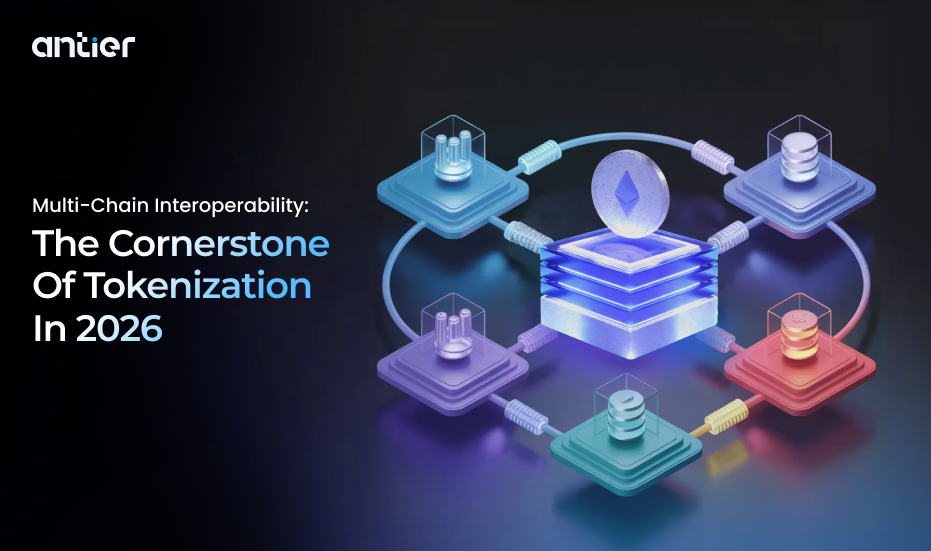
As blockchain continues to develop and grow at a rapid pace into the mainstream conversation regarding real-world asset tokenization, financial institutions, businesses, and digital asset innovators have begun to discuss tokenized real estate, commodities, private credit, and financial instruments as the next wave of investment vehicles.
Nevertheless, as more businesses adopt tokenized assets, it has become increasingly clear that a major limitation associated with tokenization is the fact that most tokenized assets exist as isolated blockchain environments that do not interact with each other.
Inevitably, the fragmentation of tokenized asset markets causes liquidity problems, limits access to the markets for all participants and adds to the challenge of complying with regulatory requirements when moving and exchanging these assets. As enterprise customers move beyond proof-of-concept deployments, an important trend in the industry is the realization that multi-chain interoperability will be paramount to support global scaling of Real Estate Tokenization and other asset tokenization solutions. Moving forward, it will not be single chain platforms that lead the next phase of tokenization, but rather the most robust interconnection between many blockchains through Interoperable Infrastructure, along with Assets, Liquidity and Participants on Multiple Blockchains.
What Is Multi-Chain Interoperability in RWA Tokenization—and Why Does It Matter Now?
Multi-chain interoperability in RWA tokenization refers to the capability of tokenized real-world assets to operate, transfer, and interact across multiple blockchain networks without friction or loss of asset integrity. Rather than locking RWAs into one specific ecosystem, interoperability allows for the free flow of assets between chains, while still maintaining ownership rights, regulatory compliance, and consistency of transactions.
Interoperability has become necessary as businesses demand more options for flexibility, scalability, and adaptation to regulation. Different Blockchains present various strengths; for example, some Blockchains may focus on providing strong compliance with institutional requirements, while others may outperform on transactions per second or ease of adoption by an ecosystem. Interoperability allows businesses to capitalize on the strengths of multiple Blockchains without sacrificing architectural barriers among those Chains.
As Tokenized Marketplaces continue to grow and evolve, the basis for all cross-border collaboration, institutional liquidity, and long-term sustainability of an ecosystem will be founded upon the ability to provide a holistic interoperable solution to tokenized RWAs.
Build a Multi-Chain RWA Platform with Us
Why Are Single-Chain Architectures Failing Enterprise-Scale Real World Asset Tokenization?
Single-chain tokenization platforms were sufficient during early proof-of-concept phases, but they increasingly fall short when applied to enterprise-scale real-world asset tokenization. As asset issuers expand into global markets, the limitations of isolated blockchain environments become operational and strategic bottlenecks.
By utilizing a single-chain tokenization approach, the ability to create liquidity is constrained; therefore, the tokenization platform is exposed to the risks of a specific network. In addition, the use of a single-chain tokenization method means that the system will not easily work with existing or standard financial services. As a consequence, the reliance on a single-chain tokenization method limits the ability for enterprises to create scalable and resilient platforms that can operate across multiple jurisdictions.
Key Limitations of Single-Chain RWA Models
1. Liquidity Fragmentation
Assets confined to a single blockchain can only access liquidity available within that ecosystem, limiting investor reach and capital efficiency.
2. Operational Rigidity
Platform upgrades, compliance changes, or scalability improvements become complex and costly when tied to one network.
3. Regulatory Constraints
Different jurisdictions favor different blockchain infrastructures, making single-chain deployments difficult to scale globally.
4. Ecosystem Dependency Risk
Performance issues, governance changes, or security vulnerabilities in one chain can directly impact the entire tokenization platform.
These challenges are driving enterprises toward multi-chain RWA tokenization, where assets are no longer restricted by the limitations of a single network.
What Are the Core Building Blocks of a Scalable Multi-Chain RWA Infrastructure?
A robust multi-chain RWA infrastructure is not a single technology layer—it is a coordinated framework designed to support secure, compliant, and scalable cross-chain asset operations. Building such infrastructure requires a combination of interoperability protocols, orchestration layers, and governance mechanisms.
At its core, this infrastructure ensures that asset state, ownership records, and compliance rules remain consistent as assets move across blockchains.
Essential Components of Multi-Chain RWA Infrastructure
- Cross-Chain Communication Protocols
Enable secure messaging and value transfer between blockchains while preserving transactional integrity. - Interoperability Abstraction Layers
Mask the complexity of underlying blockchains, allowing applications to interact with multiple networks through a unified interface. - Asset Orchestration Engines
Dynamically route assets based on liquidity availability, transaction costs, performance metrics, or regulatory requirements. - Unified Data and State Management
Ensure that ownership, metadata, and compliance attributes remain synchronized across chains.
Together, these components form the backbone of scalable multi-chain interoperability, enabling enterprises to deploy tokenized assets without being constrained by network silos.
How Does Smart Contract Portability Enable True Multi-Chain RWA Tokenization?
Smart contract describes the business rules that dictate how tokenized assets can be created, owned, and transferred across multiple blockchain networks, as well as other business needs. As such, they must work consistently across different blockchain networks in a multi-chain environment.
Smart contract portability is a critical enabler of multi-chain RWA tokenization, allowing enterprises to deploy standardized asset logic across multiple chains without rewriting or redeploying entire contract systems.
Benefits of Smart Contract Portability in Multi-Chain Environments:
- Consistency Across Networks
Ensures that asset behavior remains uniform regardless of the blockchain used for execution. - Faster Market Expansion
Enables enterprises to enter new blockchain ecosystems without duplicating development efforts. - Simplified Governance and Upgrades
Allows centralized updates to asset logic while maintaining decentralized execution. - Improved Compliance Control
Ensures regulatory rules are enforced consistently across all supported chains.
By enabling reusable and adaptable contract frameworks, portability transforms interoperability from a technical feature into a strategic growth enabler.
How Can Liquidity and Asset Mobility Be Seamlessly Managed Across Multiple Blockchains?
Tokenized markets rely heavily on liquidity; however, liquidity is not uniform across blockchain networks. Without the ability for these tokens or assets to work together across different blockchain types, Price Discovery and the opportunity of Global Participation will suffer.
RWA Tokenization provides a Multi-Chain Interoperable solution that allows for the ability to transfer an RWA’s tokenized asset values and participation from one chain to another. This allows for greater access to the liquidity pools that each ecosystem has to offer as well as to more favorable conditions relative to transaction fees, swap fees, and exchanges that are jurisdictionally compliant.
The Mobility of the Asset within a Decentralized Finance Service Provider or DeFi Ecosystem and the ability for a Tokenized Asset to be actively traded on Multiple Institutional Trading Platforms and to participate in complying with secondary markets creates an opportunity for previously illiquid assets to become liquid.
What Security, Compliance, and Governance Challenges Emerge in Multi-Chain RWA Systems?
A rise in multi-chain interoperability has increased the complexity associated with managing the risks associated with real world asset tokenization. For enterprises looking to scale, managing the risk associated with multiple blockchains is significantly more challenging due to the number of technical, operational, and regulatory challenges that arise as a result of working with many different blockchains (interoperability).
To maintain Trust, Compliance, and Resilience of a Multi-Chain RWA system, Organizations must be able to systematically manage and mitigate the risk inherent in multi-chain RWA systems.
1. Increased Cross-Chain Attack Surface
Interoperability protocols, Bridges and messaging layers create additional attack surface areas for malicious actors to target. A vulnerability in a Relay Mechanism or any other Chain that connects chains will negatively impact the integrity of tokenized assets across the entire Multi-Chain Ecosystem.
2. Differences in Security Models between Blockchains
Different Blockchains use different models for creating consensus, creating finality, and establishing threat profiles. Thus, the creation of a unified multi-chain RWA infrastructure will require advanced risk modelling and monitoring in order to accommodate the diversity among the blockchains.
3. Regulatory Fragmentation across Jurisdictions
Through the movement of tokenized assets across chains, the tokenized assets may also cross into different Regulatory Jurisdictions. Therefore, it has become increasingly complicated for enterprises to comply with the different regulatory requirements in an Interoperable Environment between chains (i.e. restrictions on Transfers, Investor Eligibility, reporting, etc.).
4. Identity and Access Control Across a Chain
Maintaining identical KYC, AML, and Permissioning standards across Multi Chain is difficult, particularly when the chains operate on different Identity frameworks or Privacy models.
5. Auditability and Transaction Traceability
Attributes including the asset’s location, who caused the asset’s movements, historical ownership of the asset(s), and even how the chain responded to compliance requirements (for example, verification of ID before the asset may be transacted) require a complete end-to-end audit tool.
6. Dispute Resolution and Asset Recovery Mechanisms
Due to the increased number of interactions between multiple chains, smart contract defaults, regulatory actions, and incidents with security/cyber security, it is critical for every enterprise to have clearly defined dispute resolution and asset recovery processes across all chains.
7. Dependency on Third-Party Interoperability Layers
Many multi-chain solutions require the support of third parties (i.e., external bridges and middleware). This introduces additional operational and reputational risk to enterprises that must be addressed through comprehensive evaluation and contingency planning for vendors supporting the multi-chain strategy.
Addressing these challenges is essential for enterprises seeking to scale multi-chain RWA tokenization securely and compliantly. Advanced RWA tokenization services integrate security-by-design principles, regulatory automation, and governance frameworks to ensure that interoperability enhances scalability without compromising trust or control.
Why Is a Specialized RWA Tokenization Company Critical for Multi-Chain Execution?
Developing and implementing an Interoperable Tokenization Platform (ITP) requires a multidisciplinary approach that combines knowledge across the areas of Blockchain Engineering, Compliance with Regulations for Financial Services, Enterprise System structure. A dedicated RWA tokenization company integrates all these areas of expertise into one unified execution platform.
Through these types of partners, enterprises can access full-service RWA tokenization services which include the design of asset models, smart contract development & implementation, integration of technology for Interoperability, Compliance Technology, and long-term technical & business support for the ITP. Furthermore, a dedicated RWA Tokenization Company understands how to design IT systems to be scalable to meet business objectives and comply with the necessary regulations.
Through a partnership with an experienced RWA tokenization company, enterprises can mitigate overall project execution risk while expediting their entry to market.
Why Multi-Chain Interoperability Will Be the Cornerstone of Tokenization in 2026
As the tokenized market continues its evolution, the interconnectedness of multiple ecosystems will now play a more important role than ever in defining who ultimately benefits from tokenization. While the notion of multi-chain interoperability has traditionally been thought of as an enhancement and accessory feature to tokenization, it will soon become a core element and requirement for all next-generation tokenized asset platforms.
Companies that invest in multi-chain RWA infrastructure and embrace interoperable design principles today can position themselves to take advantage of increased demand and utilization of tokenization in 2026 and beyond. Companies that adopt multi-chain RWA tokenization early will be well-positioned as leaders in the next wave of digital asset innovation.
Consult Our RWA Interoperability Experts
How Antier Enables Enterprise-Grade Multi-Chain RWA Tokenization
Antier brings significant domain expertise in blockchain engineering, financial regulation, and enterprise-level system architecture. As a specialized RWA tokenization company, Antier creates and deploys innovative, interoperable tokenization platforms that include secure issuance of assets, the ability for those assets to seamlessly be moved between chains, and a structured governance model that is regulatory compliant.
With its comprehensive RWA tokenization services, Antier enables organizations to establish a scalable, future-ready RWA tokenization ecosystem. Not only does Antier help companies build an interoperable RWA tokenization platform, but Antier also provides companies with innovative solutions for asset modeling, smart contract interoperability, cross-chain deployment, compliance automation, and the evolution of RWA tokenization platforms as the tokenized economy matures.
Through a strong focus on multi-chain interoperability in RWA tokenization efforts, Antier enables organizations to break away from the constraints of siloed RWA tokenization deployments, allowing them access to global liquidity, institutional participation, and sustainable growth potential in the tokenized economy.



