
CryptoCurrency
Norway decides not to pursue digital currency for now

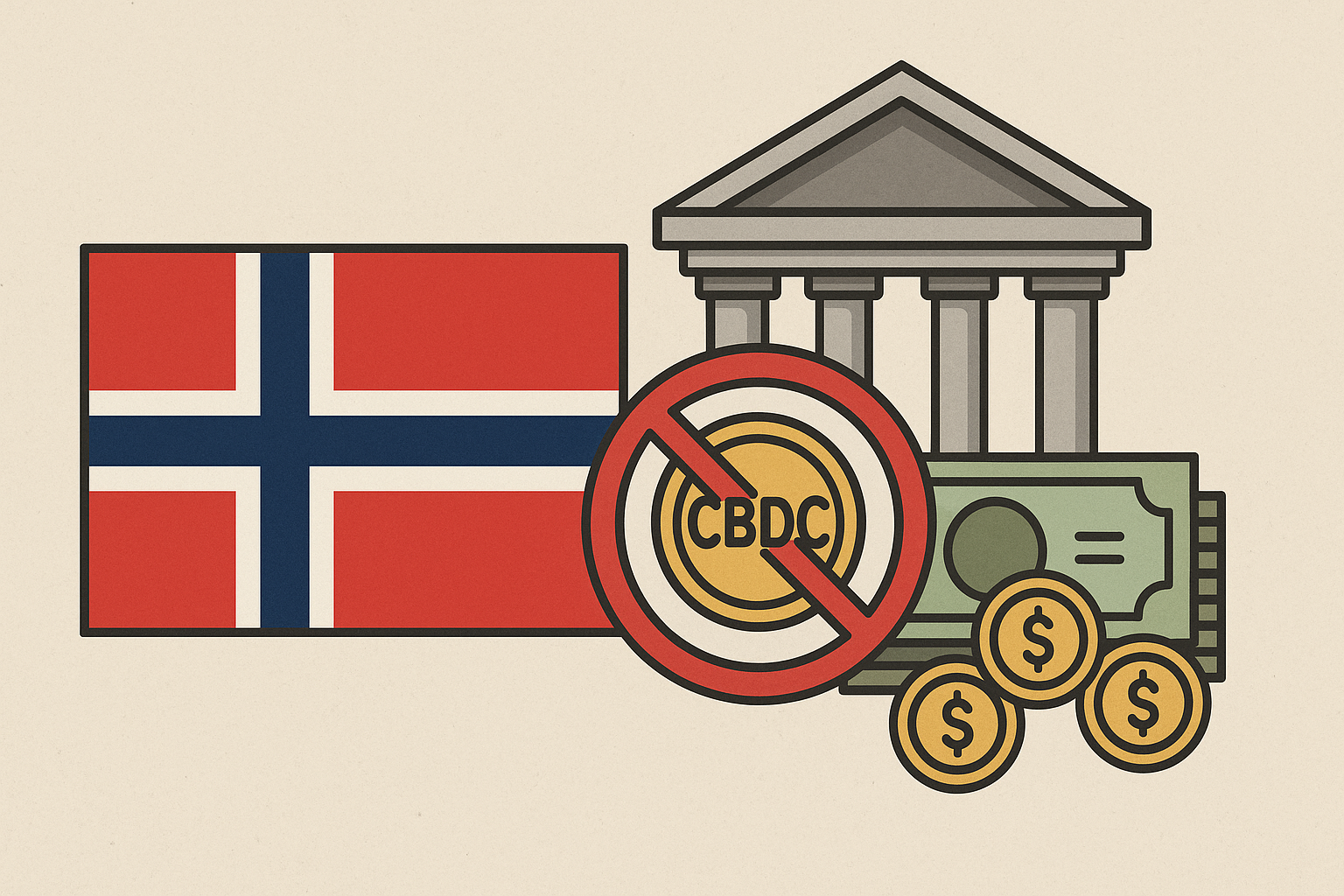

- Norway pauses CBDC plans, saying its current payment system remains secure and efficient.
- Central bank will keep studying retail and wholesale CBDCs as payment habits evolve.
- Norges Bank shifts focus to tokenisation tests while monitoring global digital-currency moves.
Norway has decided that its payment system works well enough without introducing a central bank digital currency right now, even after several years of research into the idea.
The decision reflects how stable and efficient the country’s existing infrastructure has remained, despite Norway being one of the world’s most cash-light economies.
It also shows that the priority for the central bank is making sure payments keep functioning securely rather than rushing to release a digital krone before it is needed.
Norges Bank announced on Wednesday that a CBDC is not necessary at this stage, following a broad assessment of how a digital version of the krone might support payment security and efficiency.
Cash use in Norway has continued to fall to some of the lowest levels globally, which had intensified discussions about whether the country required a digital option to keep the national currency attractive for consumers, banks and merchants.
The central bank said the current system offers stable operations, fast settlement, low economic costs, and strong contingency arrangements.
It also noted that several projects are already in place to strengthen these backup systems further.
Decision timing
The central bank made clear that its decision is not permanent and that the question could return as payment habits evolve.
Norges Bank said it wants to be ready to introduce a digital krone if it becomes necessary to maintain a secure and efficient system.
The bank continues to distinguish between two main CBDC models.
A retail CBDC would act as a widely accessible means of payment, similar to physical cash or bank deposits.
A wholesale CBDC would be designed only for financial institutions and would allow interbank transactions through tokenised units recorded in a digital ledger based on blockchain technology.
CBDC types
This distinction has shaped much of Norway’s work so far.
A retail model would give everyday users direct access to central bank money in digital form, while a wholesale model would mirror existing deposits at the central bank using tokenised units.
Both versions remain under study as part of Norway’s broader assessment of future payment needs.
The country’s low reliance on cash had previously added urgency to these evaluations.
Yet Norges Bank concluded that keeping the existing system strong and reliable is the immediate priority, with a CBDC being considered only if payment risks or gaps emerge down the road.
Tokenisation tests
Although Norway is pausing on a digital krone, it is increasing its focus on tokenisation.
The bank said token-based systems can improve efficiency, enable innovation and reduce settlement risk.
It also warned that uncertainty remains about how widely tokenisation will be used and what kinds of risks may appear as the technology grows.
Norges Bank plans to continue practical experiments in collaboration with industry players to understand how tokenised solutions function in real transactions.
These tests are part of a broader strategy to prepare for future developments in digital finance, even without committing to a CBDC at this stage.
The central bank will publish a detailed report on its CBDC research in the first quarter of next year.
This will outline the work completed so far, its next steps, and how it plans to monitor progress in other regions.
Norway is watching international projects closely, including the Eurosystem’s work on a possible digital euro and emerging global standards that may support shared CBDC systems in the future.



