
Crypto World
Presale Ends March 31st, Is a 1000x Still Possible Post-Launch?


Ripple’s CEO calls the $33 trillion stablecoin boom crypto’s “ChatGPT moment,” the point where corporations stop watching and start deploying. With $56.6 trillion in volume projected by 2030, the infrastructure race is officially on.
But while stablecoin rails move money, DeepSnitch AI (DSNT) helps you make it. This massive volume will generate unprecedented project noise and sophisticated scams.
Traders who thrive will be those with the best tools. With five live AI agents and a 210% presale rally, DSNT delivers that institutional edge. The March 31st launch is two days away. Secure your $0.04669 entry before the open market reprices this utility.
Stablecoins will be crypto’s ChatGPT moment
Ripple CEO Brad Garlinghouse argues that stablecoins are crypto’s true inflection point, shifting from speculative assets to essential business infrastructure. With stablecoin transaction volume hitting a record $33 trillion in 2025 and Bloomberg projecting $56.6 trillion by 2030, the scale is undeniable.
Garlinghouse likens this to a “ChatGPT moment” for CFOs. Just as AI became a corporate imperative overnight, stablecoin adoption is now a board-level strategy for Fortune 500 companies seeking ROI.
This utility-driven demand doesn’t rely on Bitcoin cycles; it builds a permanent payments ecosystem. As capital floods in, the need for real-time intelligence scales with it. DeepSnitch AI (DSNT) is the tool built for this era.
Top 3 cryptocurrencies to buy in 2026
DeepSnitch AI
Ripple’s Brad Garlinghouse envisions a future where stablecoin volumes double and corporate treasuries adopt blockchain rails like SWIFT.
This shift will trigger unprecedented on-chain complexity, more frequent project launches, and increasingly sophisticated scams. Success in this environment won’t belong to those who read the most news, but to those who verify data and identify traps first.
DeepSnitch AI (DSNT) is built for this exact evolution. Its five AI agents, providing real-time threat scanning, contract auditing, and trend tracking, offer the daily utility that most presales lack. This is why DSNT has secured a 210% presale rally even without a broader bull market.
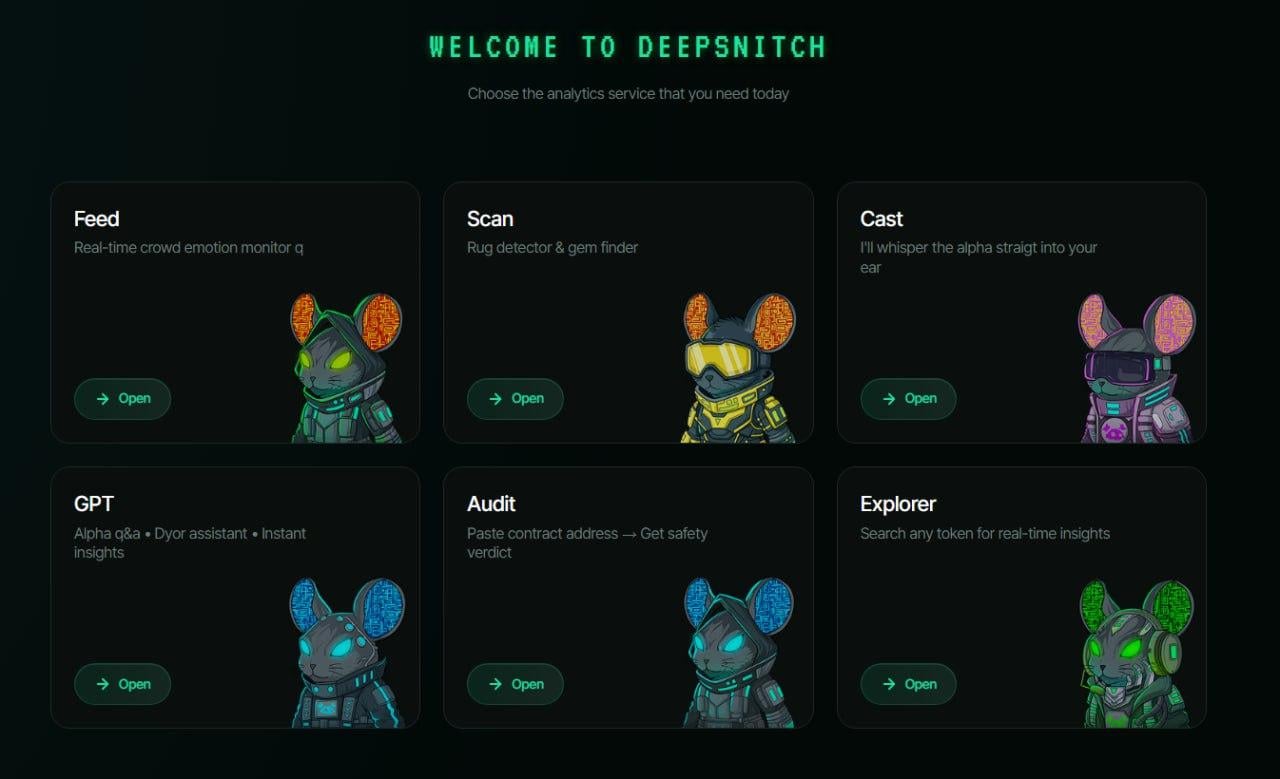
While assets like Cardano (ADA) and Zcash (ZEC) reward long-term patience, DSNT rewards timing. The March 31st Uniswap listing is the definitive catalyst for price discovery.
With $2.6 million already raised, the current $0.04669 entry price is a relic of the past once the open market takes over. The traders who secure life-changing returns are those who move before the listing, not those watching the breakout from the sidelines. The DeepSnitch AI opportunity shuts in two days.
Cardano
Cardano was testing its critical $0.25–$0.27 on March 27 support zone, a level that previously ignited rallies of 85% and 300%.
With MVRV at a deep -43% and funding rates at their most negative since 2023, ADA is flashing a massive “short squeeze” signal. While analysts project a gradual recovery toward $0.42, this setup requires extreme patience and the hope that macro conditions hold.
In contrast, DeepSnitch AI (DSNT) offers immediate action. With $2.6 million raised and 210% gains already banked, DSNT is heading straight for its March 31st Uniswap listing.
While ADA waits for a reversal, DSNT is preparing for pure price discovery. Secure your $0.04669 entry before the window shuts in two days.
Zcash
Zcash was trading at $222 on March 27, balanced between a technically fragile head-and-shoulders pattern and a massive fundamental tailwind: nearly 30% of its supply is now locked in shielded pools.
While Foundry Digital’s upcoming institutional mining pool signals long-term demand, the immediate chart is a battleground. ZEC must defend the $215 neckline; a break below risks a drop to $170. Conversely, reclaiming $230 opens the path to $300.
While ZEC traders wait for confirmation, DeepSnitch AI (DSNT) is moving now. With $2.6 million raised and the March 31st Uniswap listing just two days away, DSNT offers a high-conviction entry that doesn’t wait for a technical reclaim.
The bottom line
Brad Garlinghouse is right: $33 trillion in annual stablecoin volume is a global infrastructure shift. As corporate treasuries adopt blockchain rails, the entire payments ecosystem is being repriced, making high-level intelligence tools essential for every trader.
While Cardano (ADA) and Zcash (ZEC) offer promising technical setups for patient investors, they require waiting for macro confirmation. DeepSnitch AI (DSNT) offers immediate, explosive momentum.
Already boasting a 210% presale rally and $2.6 million raised, DSNT’s five live AI agents are the tools traders need to navigate this new, complex landscape. The March 31st Uniswap listing is the definitive cutoff. Secure your $0.04669 entry before the open market reprices this utility permanently.
Visit the official website for more information, and join X and Telegram for community updates.
FAQs
Could the DeepSnitch AI price reset after its March 31st launch?
Yes, the listing could reset presale pricing, but the platform’s genuine daily utility and 220% presale rally point to strong long-term moonshot potential that extends well beyond the initial listing day.
What makes DeepSnitch AI more than a typical presale project?
Unlike most presales, DeepSnitch AI has five AI agents already running daily, covering threat scanning, smart contract auditing, and real-time trend tracking inside one unified dashboard that traders actively use.
Why are stablecoins being called crypto’s ChatGPT moment?
Ripple’s CEO argues stablecoins are transforming from speculative assets into essential business infrastructure, with trading volume exceeding $33 trillion in 2025 and projections pointing toward nearly doubling that figure by 2030.
Disclaimer: This is a Press Release provided by a third party who is responsible for the content. Please conduct your own research before taking any action based on the content.


Crypto World
Visa Joins Canton Network as Super Validator to Power Private Blockchain Payments for Banks

TLDR:
- Visa joins Canton Network as the first major payments company to serve as a Super Validator among 40 nodes.
- Canton’s configurable privacy model lets banks adopt blockchain without exposing salaries, positions, or sensitive data.
- Visa’s stablecoin settlement has hit a $4.6B annualized run rate across 130-plus programs in over 50 countries.
- JPMorgan, Franklin Templeton, and the DTCC have all expanded onto Canton, signaling strong institutional blockchain adoption.
Visa has officially joined Canton Network as the first major global payments company to serve as a Super Validator.
The move places Visa among 40 validators responsible for running the layer-1 blockchain. Banks and financial institutions can now access privacy-preserving infrastructure for on-chain payments.
The decision builds on Visa’s growing digital asset portfolio, which already spans stablecoin settlement and card programs across more than 50 countries globally.
Visa Brings Institutional-Grade Trust to Canton Network
Canton Network was built to solve a specific problem that has kept banks away from public blockchains. Many institutions have long cited privacy as a major barrier to moving financial activity on-chain.
The network uses a configurable privacy model that keeps transaction details confidential between parties. This design allows banks to participate in blockchain infrastructure without exposing sensitive data to the broader network.
As a Super Validator, Visa will carry voting powers that shape key decisions on the Canton Network. The company has committed to applying the same operational standards it uses in its global payment systems.
Rubail Birwadker, Visa’s global head of growth products and strategic partnerships, spoke directly to the issue. He stated that “many banks see the lack of privacy as a dealbreaker for moving meaningful activity on-chain.”
Birwadker further added that Visa is “bringing Visa-grade trust, governance and operational rigor” to privacy-preserving blockchain infrastructure.
He noted that regulated institutions can now bring payments on-chain without rethinking their existing risk and compliance frameworks.
The statement reflects how seriously Visa views its governance role on the network. It also signals a long-term commitment to institutional blockchain infrastructure beyond just payments processing.
Visa’s stablecoin settlement activity has already reached an annualized run rate of $4.6 billion globally. The company also operates stablecoin-linked card programs spanning more than 130 programs in over 50 countries.
This existing foundation made Canton a practical next step in its digital asset strategy. The Super Validator role extends that work into blockchain governance and infrastructure management.
Major Financial Institutions Are Expanding on Canton Network
Visa is not alone in bringing institutional credibility to the Canton Network. JPMorgan’s Kinexys unit announced plans to launch its JPM Coin on Canton the same day Visa made its move.
JPM Coin is a USD-denominated deposit token that enables institutional clients to make payments digitally. The token was initially launched on Base, Coinbase’s Ethereum layer-2 network, before expanding to Canton.
Franklin Templeton has also expanded its tokenized fund platform, Benji, to the Canton Network. In December, the Depository Trust & Clearing Company said it would issue tokenized securities on Canton as well.
The DTCC processes quadrillions of dollars in transactions annually, making its participation particularly noteworthy. Each of these moves adds further weight to Canton’s position in institutional blockchain infrastructure.
Canton’s native CC token has responded positively to the wave of institutional announcements. The token is up more than 3% over the past day, trading at a recent price of $0.145.
Its market capitalization now stands above $5.5 billion, placing it 21st among all cryptocurrencies by that metric. Data from CoinGecko confirmed the ranking, reflecting growing market confidence in the network.
The concentration of major financial players on Canton reflects a broader shift in how institutions approach blockchain. Banks are moving from observation to active participation, with privacy as the primary enabler.
Visa’s Super Validator role adds another layer of operational credibility to the network. Canton appears to be emerging as the preferred infrastructure layer for regulated, on-chain financial activity.

OnePay, the Walmart-backed fintech initiative, has broadened its nascent crypto platform with more than a dozen new tokens. The expansion follows a rapid early-year rollout that introduced BTC and ETH and signals the company’s push to offer a curated, utility-focused crypto experience to its broad US customer base.
In its latest move, OnePay added SUI, POL and ARB to the platform’s growing roster just days after listing ten other tokens, including Solana (SOL), Cardano (ADA), Bitcoin Cash (BCH) and PAX Gold (PAXG). Ron Rojany, OnePay’s general manager for Core App & Crypto, told Cointelegraph that the additions meet a “high bar” set by the platform’s customers and by the broader fintech mission OnePay is pursuing.
Since its January debut, the platform has aimed to blend everyday financial services with crypto access, positioning OnePay as a US analogue to a “superapp” in the mold of China’s WeChat. Beyond the crypto marketplace, OnePay already provides high-yield savings, cards, loans and even a digital wallet that can be used at Walmart stores or on the retailer’s online storefront. The integration with Walmart’s ecosystem reinforces the platform’s emphasis on convenience, trust and ease of use for customers who are new to digital assets.
Walmart’s footprint looms large in the background: the retailer reported net sales of $462.4 billion in its fiscal 2025 annual report, underscoring the scale available to a highly integrated fintech offering that can cross-sell traditional financial services with digital asset access. “We’re still early and our focus is on building our crypto platform the right way: creating a trusted, safe and intuitive experience for everyday customers,” Rojany said in describing the approach to asset selection and platform expansion.
Key takeaways
- OnePay has expanded its token list to include SUI, POL and ARB shortly after listing ten other assets, highlighting a rapid, programmatic rollout rather than a single–shot launch.
- The platform emphasizes a curated set of assets—chosen for demand, liquidity, regulatory clarity and long-term utility—over chasing the hottest new token.
- The expansion aligns with OnePay’s broader “superapp” strategy, positioning it as a financial services hub that blends traditional banking features with crypto access within Walmart’s ecosystem.
- Industry context shows parallel efforts toward crypto superapps, with Coinbase detailing a broader, card- and rewards-enabled vision and regulators signaling a pathway for multi-service platforms under a unified framework.
OnePay’s token expansion: a curated path to retail crypto adoption
The latest wave of token onboarding continues a deliberate strategy. Since its beta launch earlier this year, OnePay has prioritized assets that offer real utility and practical use cases for its customers. The newly added SUI, POL and ARB join a line-up that already included established names such as BTC and ETH, marking a notable broadening of the platform’s capabilities in a relatively short period.
Rojany described the expansion as part of a thoughtful, demand-driven approach. “We plan on continuing to expand thoughtfully, prioritizing assets that meet a high bar: demand, liquidity, regulatory clarity and long-term utility,” he said in an email to Cointelegraph. He stressed that OnePay’s goal isn’t to chase every new token but to offer a curated set that aligns with how customers actually think about and use their money.
While OnePay has not disclosed precise user adoption metrics, Rojany highlighted robust engagement among those who are newer to crypto and looking for an integrated, easy-entry path. The fintech’s emphasis on an intuitive experience—paired with the trusted Walmart brand—aims to reduce friction that often accompanies crypto onboarding for mainstream users.
Superapps in the spotlight: policy, partnerships and the path forward
The push toward “superapps” — platforms that combine banking, payments, lending, investing and even on-chain services under one roof — is a broader fintech trend that OnePay is helping to crystallize in the US. In parallel developments, Coinbase CEO Brian Armstrong outlined plans to build a crypto-centric superapp that bundles cards, payments and Bitcoin rewards with traditional banking services, signaling a competitive market for integrated fintech offerings.
Regulatory momentum around the concept gained attention when U.S. regulators signaled a more permissive stance toward multi-service platforms. In September, Securities and Exchange Commission Chairman Paul Atkins articulated support for platforms capable of delivering diverse financial services within a single regulatory framework, framing it as a way to modernize financial infrastructure while maintaining safeguards. “I have directed the Commission staff to develop further guidance and proposals ultimately to make this ‘super-app’ vision a reality,” Atkins said in a speech that underscored the agency’s interest in enabling such platforms under clear rules.
The regulatory backdrop also includes cross-border examples and corporate partnerships that illustrate how superapps could operate in practice. For instance, Japan’s Startale Group unveiled a $50 million Series A to advance its own superapp ambitions — integrating payments, asset management and on-chain services within a single interface. These moves reflect a broader shift toward unified financial experiences that blend fiat and digital assets under one operational framework.
OnePay’s strategy sits within this larger ecosystem. By leveraging Walmart’s scale and customer base, the platform has a stronger potential to drive mainstream crypto adoption through a familiar retail channel. The company’s approach also reflects a growing consensus among executives and policymakers that multi-service platforms can deliver practical benefits if they adhere to clear regulatory guardrails and prioritize user protection.
What this means for users, investors and the evolving crypto interface
For everyday users, OnePay’s expansion could lower barriers to entry for those curious about crypto but wary of complexity. The curated asset list, combined with a trusted shopping and payment experience at Walmart, offers a tangible pathway from fiat to digital assets—without requiring users to navigate a sea of exchanges, wallets and unfamiliar security practices. The inclusion of well-known tokens alongside newer ecosystems suggests a balanced strategy that favors liquidity and real-world use cases over novelty alone.
From an investment and market perspective, the move illustrates how large consumer-facing platforms are positioning crypto as a natural extension of everyday financial tooling. It also raises questions about how such platforms will manage regulatory compliance across asset types, especially as more tokens with varying usage models enter retail channels. The emphasis on demand, liquidity and regulatory clarity suggests OnePay is betting on a stable, auditable expansion rather than rapid, opaque growth. Stakeholders will be watching closely to see how the platform handles risk controls, custody, and customer education as token offerings continue to scale.
For the wider market, the OnePay example underscores a broader shift toward mainstreaming crypto within traditional financial ecosystems. If the “superapp” model proves viable at scale, it could reshape how consumers access, manage and interact with digital assets, weaving crypto into daily spending, savings and payments. Yet uncertainties remain, including how such platforms will be regulated in practice, how they will ensure consumer protection across a broader asset universe, and how retail adoption metrics will evolve over the next several quarters.
As OnePay navigates these questions, readers should monitor the cadence of token additions, regulatory guidance on multi-service platforms and the degree to which Walmart’s network amplifies crypto engagement. The convergence of retail power, user-friendly crypto access and clarified regulatory expectations could set a new baseline for what a crypto-enabled fintech looks like in the United States.
Further reading and context around similar superapp explorations include coverage of BNP Paribas’s recent crypto ETN launches for retail clients in France and ongoing discussions about how platforms can broaden access to digital assets within a regulated framework. The sector’s trajectory depends on the balance between expanding utility and maintaining strong safeguards as more mainstream audiences become part of the crypto narrative.
Strategy (MicroStrategy) may have skipped its weekly Bitcoin (BTC) purchase for the first time since late December, potentially ending a 13-week accumulation streak.
Executive Chair Michael Saylor did not post his customary Sunday “Orange Dot” tracker on X (Twitter). He instead pivoted to promoting Stretch (STRC), the company’s perpetual preferred stock. A Monday 8-K filing will confirm whether the firm actually paused or quietly added to its holdings.
What Happened to MicroStrategy’s Orange Dots
For roughly 13 consecutive weeks, Saylor would post a Bitcoin accumulation chart on Sundays with orange markers signaling upcoming purchases.
A detailed 8-K filing would then follow on Monday mornings, with the ritual becoming a reliable signal for traders tracking the firm’s weekly buys.
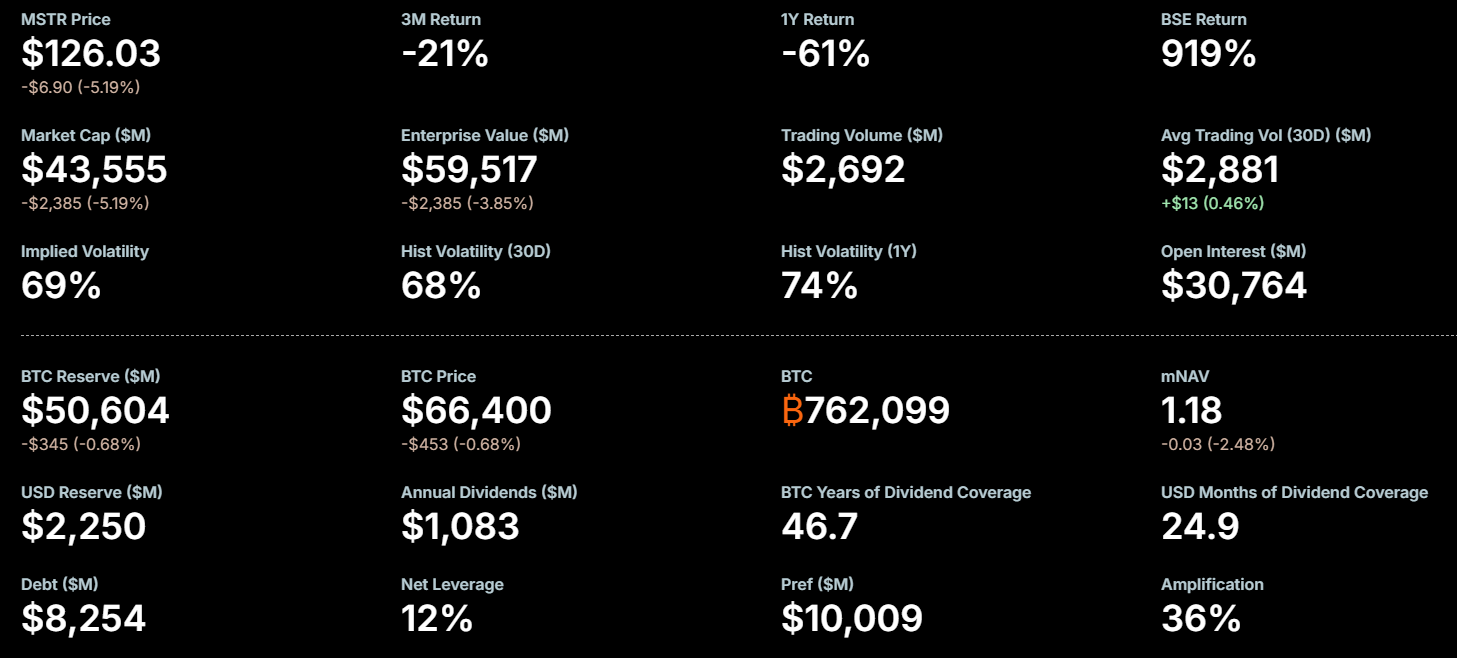
During the streak that began in late December, Strategy acquired approximately 90,831 BTC. The company now holds 762,099 Bitcoin at an average acquisition price of $75,694 per token, according to its corporate dashboard.
This Sunday, however, Saylor shifted focus entirely. His posts highlighted STRC’s performance.
“Over the past 30 days, $STRC has been less volatile than every company in the S&P 500—and every major asset class—while delivering an 11.5% dividend yield,” he wrote.
STRC Takes Center Stage
The timing of the pivot is not random. Strategy filed a $42 billion at-the-market equity program on March 23, split evenly between $21 billion in MSTR common stock and $21 billion in STRC preferred shares.
A separate $2.1 billion ATM facility for its STRK preferred series was also announced.
STRC pays a variable annualized dividend, currently set at 11.5% for March 2026. The rate has risen for seven consecutive months since the instrument began trading in July 2025.
Its dividend resets monthly and is designed to keep shares trading near the $100 par value while reducing volatility.
Saylor argued in a follow-up post that the breakeven Bitcoin annual return needed to sustain the STRC dividend indefinitely sits at roughly 2.13%, a figure far below BTC’s historical performance.
CEO Phong Le previously stated in February that Strategy is pivoting away from common stock issuance toward preferred shares as the primary vehicle for funding future BTC purchases.
What the Silence Could Mean
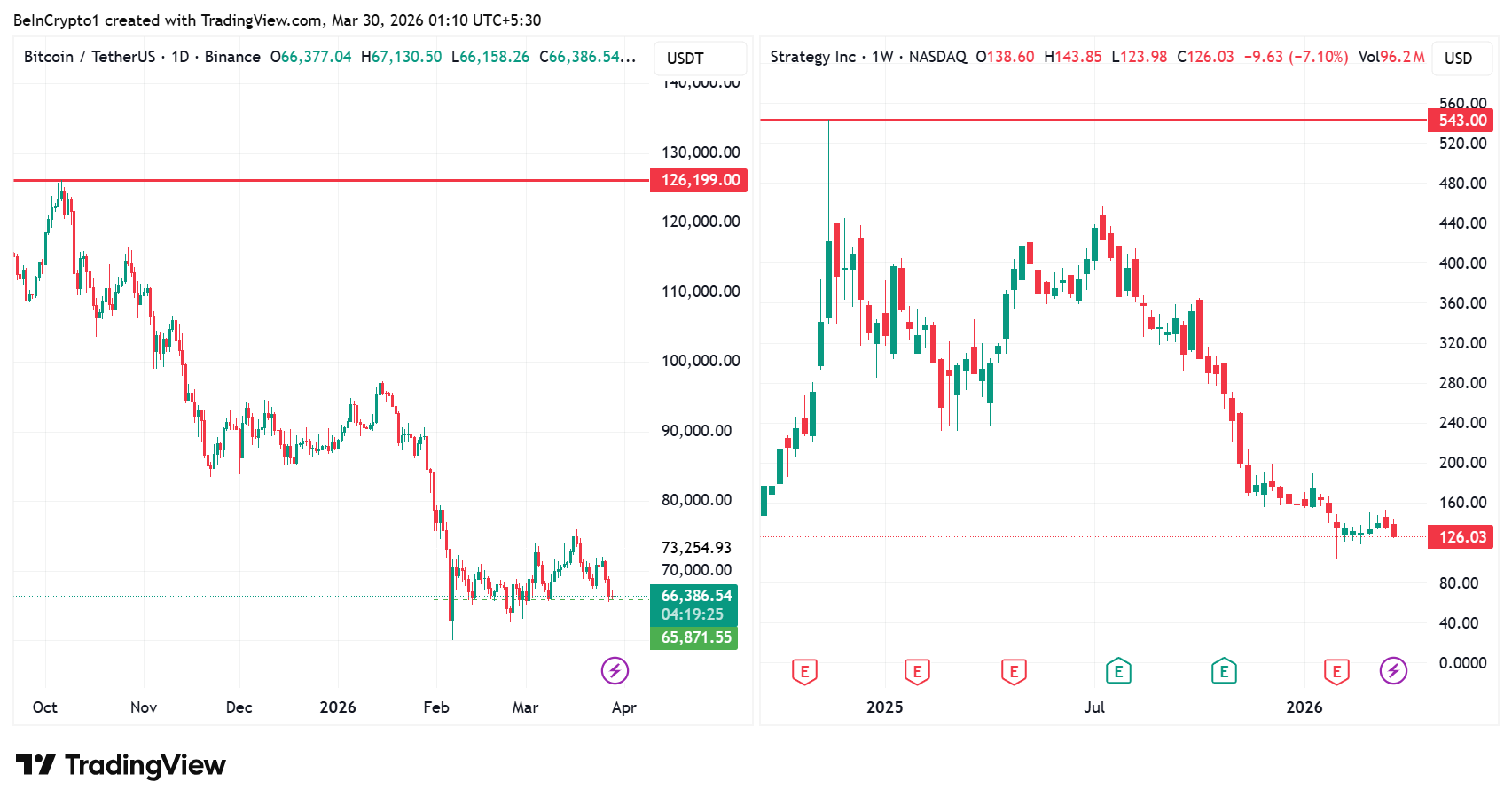
The missing signal arrives as Bitcoin trades at $66,389, down roughly 47% from its October 2025 all-time high above $126,000. Meanwhile, MSTR shares have also fallen about 76% from their November 2024 peak.
However, a missing Sunday post does not guarantee a buying pause. Strategy could still announce a purchase in Monday’s 8-K filing. The firm has occasionally varied its signaling pattern before.
Strategy has also formally paused buying in the past. The firm briefly halted acquisitions in early July 2025 and again in early October 2025. Both turned out to be temporary.
If Monday’s filing confirms no new BTC was added, it would mark the first break in a streak that added 90,831 Bitcoin since late December.
If a buy is announced, the silence may simply reflect Saylor’s tactical shift toward spotlighting STRC at a critical moment for the product’s growth.
The post MicroStrategy Chair Michael Saylor Breaks 13-Week Bitcoin Buying Ritual appeared first on BeInCrypto.

ICE’s $600 million investment in Polymarket, despite lawsuits from 11 US states, is a massive declaration.
The NYSE parent is accelerating into regulatory headwinds, confirming that Polygon-based prediction markets are institutional-grade infrastructure. When this level of capital moves against the tide, the signal is undeniable: the future is on-chain.
While institutions use massive research teams, retail traders need a technical edge. DeepSnitch AI (DSNT) is that edge. With five live AI agents, $2.6 million raised, and a 210% presale rally already banked, DSNT is the intelligence layer for this cycle.
The March 31st DeepSnitch AI presale launch date is the final deadline for ground-floor pricing. Secure your entry before the projected 100x run begins. The opportunity closes in exactly two days.
ICE invests $600M in Polymarket
Intercontinental Exchange (ICE) just completed a $600 million investment in Polymarket, fulfilling part of a $2 billion commitment. The NYSE parent is also acquiring $40 million in secondary shares, doubling down despite regulatory pressure from 11 US states.
While Nevada and Arizona pursue legal action against competitors like Kalshi, ICE is validating Polymarket’s Polygon-based infrastructure as institutional-grade technology rather than a speculative experiment.
As prediction markets merge with traditional finance, Polygon’s role as the settlement layer gains massive strategic weight. But while institutions build the rails, DeepSnitch AI (DSNT) delivers the intelligence to navigate them.
With its March 31st Uniswap listing just two days away, DSNT provides the essential security and discovery tools for this new era. Secure your $0.04669 entry before the open market reprices this utility permanently.
Top 3 cryptocurrencies to buy in 2026
DeepSnitch AI
ICE’s $600 million move into Polymarket infrastructure signals a massive institutional shift. While giants build the rails, retail traders need the engine. DeepSnitch AI (DSNT) is that engine, currently priced at $0.04669 – an entry point that vanishes permanently on March 31st.
While institutions rely on massive research teams, DSNT provides five 24/7 AI agents that audit contracts and surface alpha. It identifies honeypots and risky permissions in plain English, closing the information gap that usually leaves retail behind.
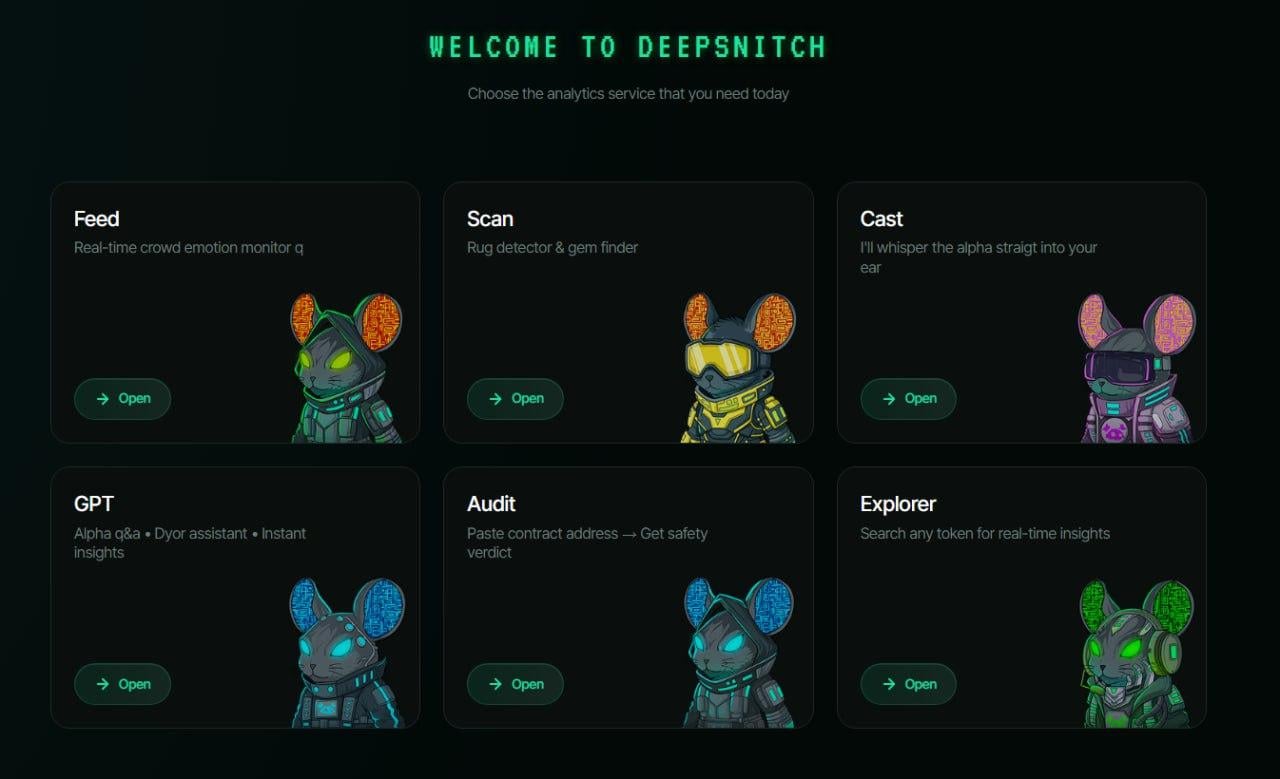
Here’s the bullish math:
- Position: A $42,000 stake secures roughly 900,000 tokens.
- Projection: A 100x move transforms that initial stake into $4.2 million.
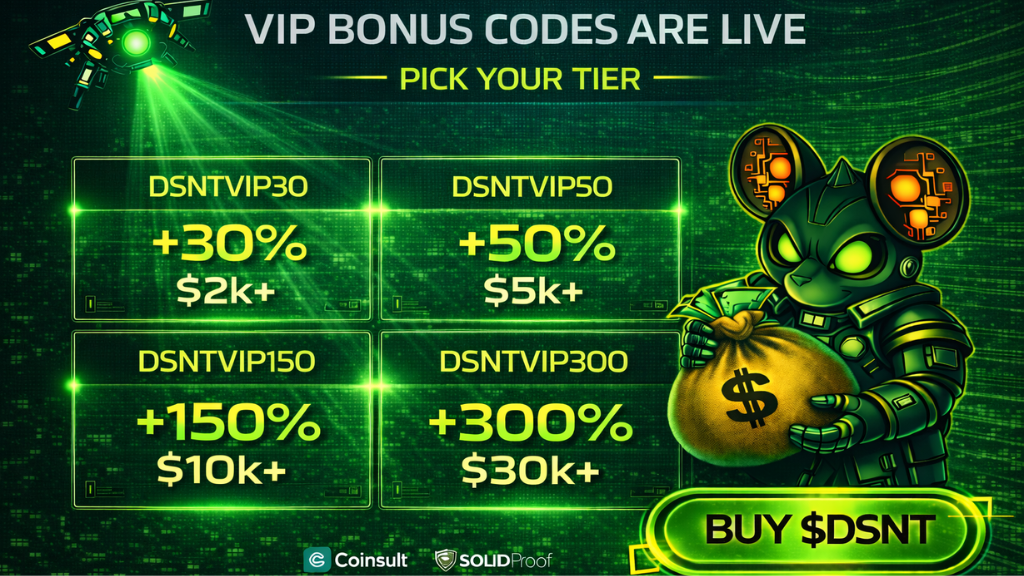
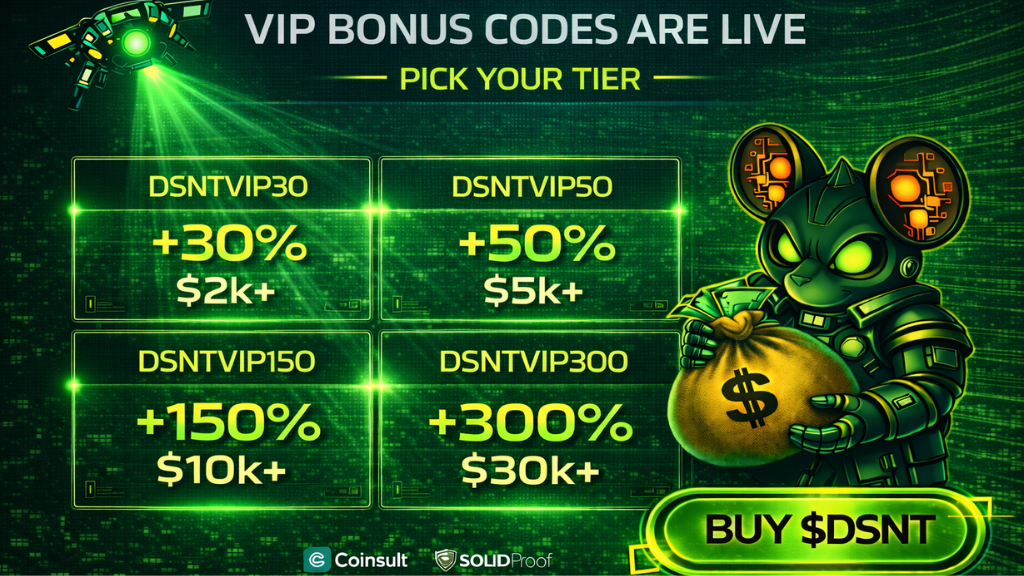
- Bonus: Active codes boost your allocation further before the window shuts.
Other market setups carry heavy baggage. SIREN faces distribution risks despite its recent 60% surge, and ONDO must clear its 200-day EMA at $0.46 just to confirm momentum.
DSNT doesn’t wait for a catalyst; the DeepSnitch AI presale launch date on March 31st is the catalyst. With $2.6 million already raised and a 210% presale rally banked, the ground-floor opportunity is in its final hours. ICE needs $600 million to play; you just need to move before the deadline.
Siren
SIREN exploded 60% on March 27, soaring from $0.72 to $1.60 despite a weakening market. Backed by massive volume, this counter-trend surge signals aggressive demand. With a history of 250% rallies, SIREN’s RSI breakout suggests a move toward $3.00 and $4.00, setting the stage for new all-time highs.
While SIREN eyes a breakout, DeepSnitch AI (DSNT) offers immediate certainty. With $2.6 million raised and the March 31st Uniswap listing just two days away, DSNT is the ultimate protection tool for volatile markets. Secure your $0.04669 entry before the opportunity shuts and the open market takes over.
Ondo
ONDO was coiling in the $0.20–$0.30 demand zone on March 27, the same range that launched a massive rally to $2.00.
With Franklin Templeton validating an RWA market that has grown 360% since 2025, smart money is accumulating while MVRV ratios stay deeply negative. ODO is primed, yet it requires significant patience to overcome stagnation.
DeepSnitch AI (DSNT) provides the immediate catalyst. With $2.6 million raised and five live AI agents already protecting users, DSNT is heading straight for its March 31st Uniswap listing. Secure your $0.04669 entry before the window shuts in two days.
The bottom line
ICE’s $600 million injection into Polymarket, despite pressure from 11 US states, is a massive declaration: on-chain prediction markets are the future of institutional exchange infrastructure.
While SIREN shows a 60% counter-trend surge and ONDO builds in an institutional demand zone, both still face technical risks and require patience. They are waiting for catalysts; DeepSnitch AI (DSNT) is the catalyst.
With $2.6 million raised and five live AI agents already protecting users from the very scams multiplying in this volatile market, DSNT offers immediate, battle-tested utility. The March 31st DeepSnitch AI presale launch date is just two days away.
This is your final opportunity to secure the $0.04669 entry price and active bonus codes before the open market reprices this intelligence layer forever. ICE is building for institutions; DSNT is building for you.
Visit the official website for more information, and join X and Telegram for community updates.
FAQs
When is the DeepSnitch AI launch date, and what returns are early investors projecting post-listing?
The DeepSnitch AI presale launch date is March 31st on Uniswap, with community projections pointing to 100x returns, meaning a $42,000 entry could potentially grow to $4.2 million post-launch.
Why does the DeepSnitch AI listing date matter more than waiting for ICE’s $600M Polymarket bet to pay off?
The DeepSnitch AI presale launch date offers retail investors immediate price discovery at $0.04669 with bonus codes still active, requiring no $600 million and no institutional access to participate before the March 31st opportunity closes.
What should investors know before the DeepSnitch AI release date closes the final presale window?
Investors should enter at $0.04669 with active bonus codes still available, noting that $2.6M raised, a 210% presale rally, and five live AI agents already running daily make this the last opportunity for ground-floor pricing before the Uniswap listing takes over.
Disclaimer: This is a Press Release provided by a third party who is responsible for the content. Please conduct your own research before taking any action based on the content.
YoungHoon Kim, a South Korean figure who claims to hold the world’s highest IQ at 276, posted five bold crypto predictions on X (Twitter), with XRP (XRP) at the center.
Kim has built a large social media following and regularly posts about Bitcoin (BTC), XRP, and broader market trends.
Kim Declares Himself the “Son of XRP”
In a rapid-fire string of posts on X, Kim called himself the “Son of XRP,” claiming he was “born to send XRP to $100” and that “no one can stop” him. He also declared that “crypto is about to explode.”
These posts follow a pattern of increasingly aggressive XRP advocacy from Kim. He previously predicted XRP price could hit $100 within five years and has argued that Ripple token is superior to BTC.
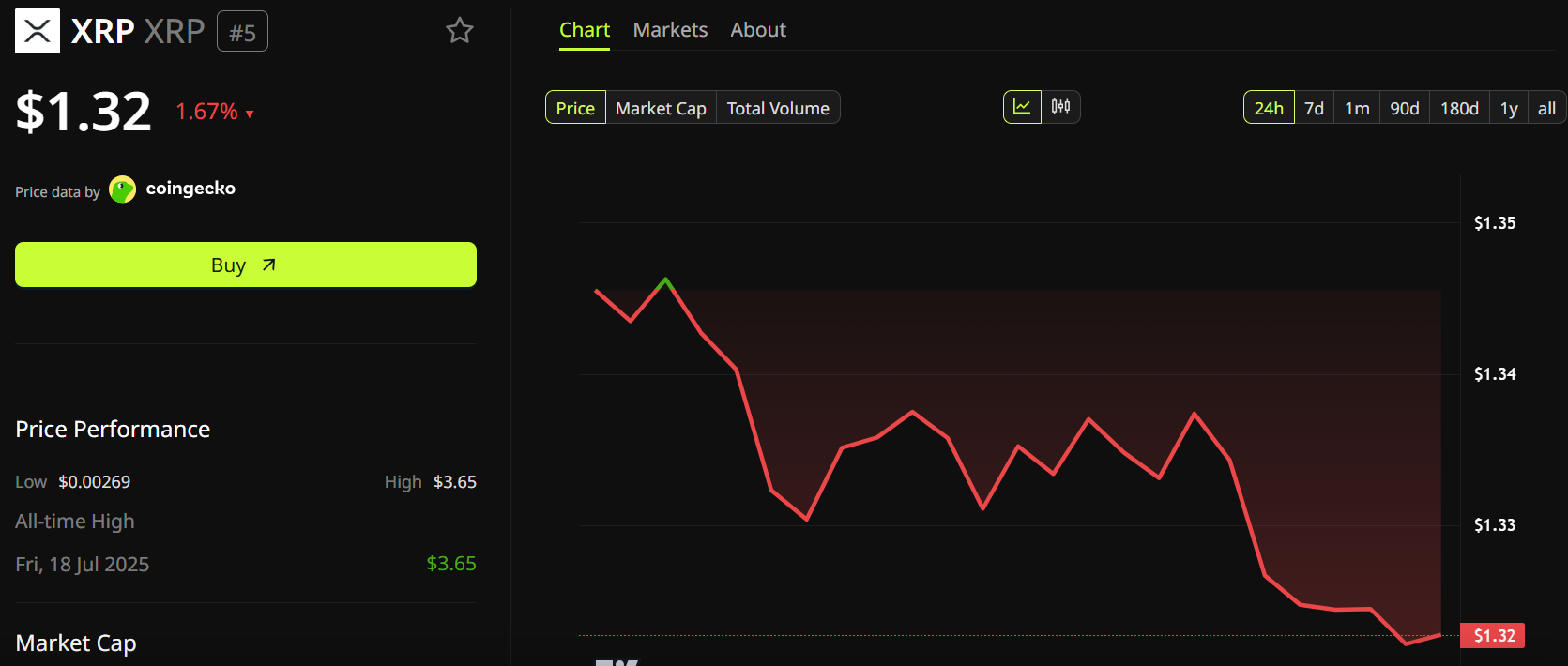
As of this writing, the XRP price was $1.32, down by 1.67% in the last 24 hours. Notably, a move to $100 for the XRP price would constitute a 7,475% increase above current levels.
Kim did not stop at XRP. He stated that altseason had arrived “100%,” predicted meme coins would pump first, and called BTC “basically a meme coin.”
Bold Claims Meet Skepticism
Kim’s crypto predictions draw amplified attention because of his claimed IQ of 276, which he uses to brand himself as the world’s smartest person. However, that claim has faced sustained pushback.
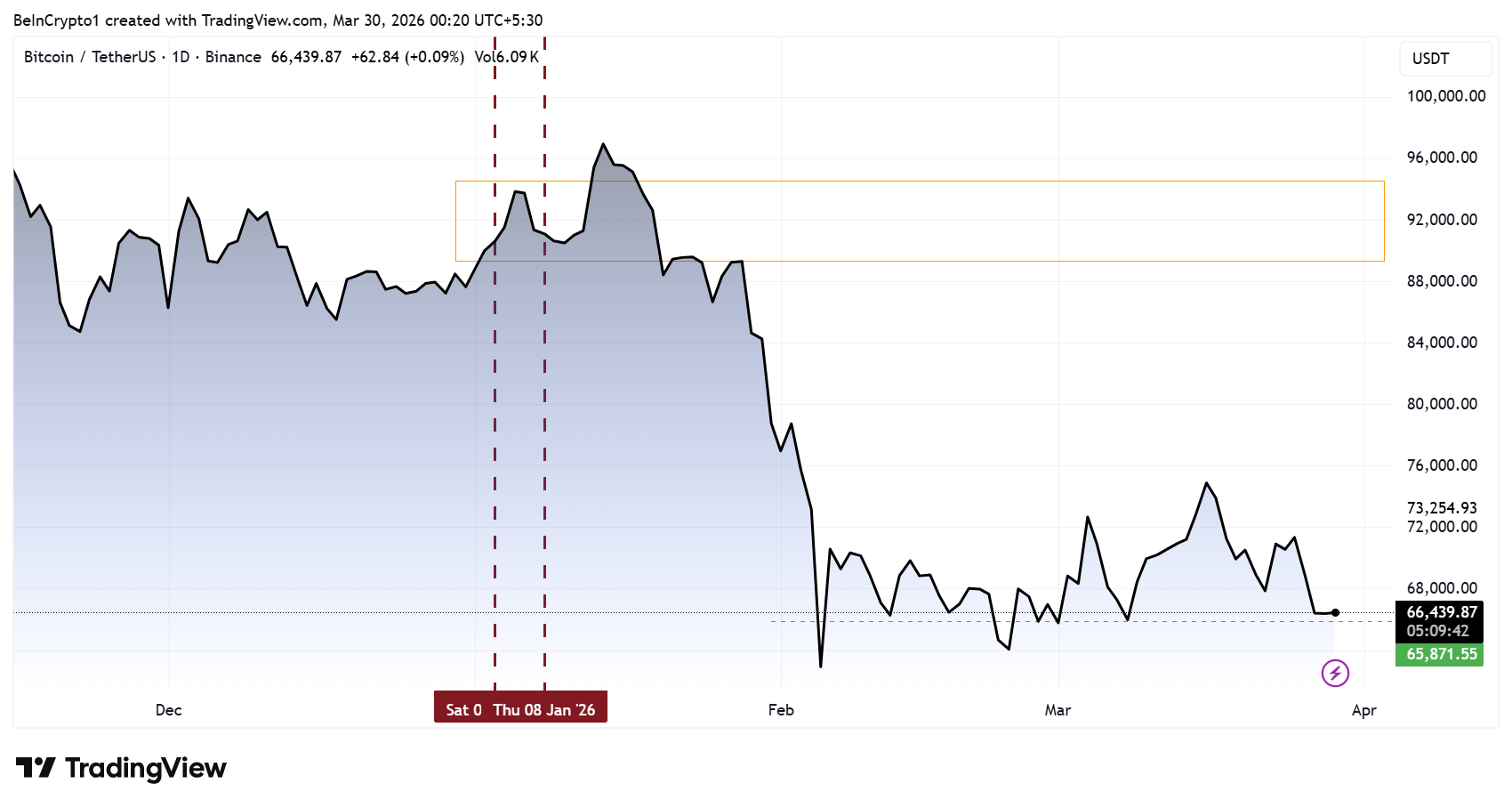
For starters, his January 6 prediction, forecasting a $100,000 target for the Bitcoin price within 48 hours or by January 8, fell falt as BTC dropped from $93,747 to close at $91,099.
His prior crypto forecasts have also missed targets. Kim predicted XRP would reach a new all-time high by late 2025. That did not happen. He also projected BTC would hit $300,000 in early 2026, a level it has not approached.
Similarly, a VICE investigation published in July 2025 reported that high-IQ experts could not reproduce his claimed score from his test data.
Chris Leek of Mensa called attempts to extrapolate 276 “a nonsense.” Australian psychometrician Jason Betts estimated Kim’s actual score did not exceed 175.
Kim’s supporters, including the GIGA Society Professional, have countered that the 276 figure uses a standard deviation of 24, equivalent to 210 on the more common SD15 scale. A supporting pre-print released in August 2025 was later withdrawn.
The post “Smartest Man Alive” Drops 5 Crypto Predictions With Key Highlight on XRP appeared first on BeInCrypto.
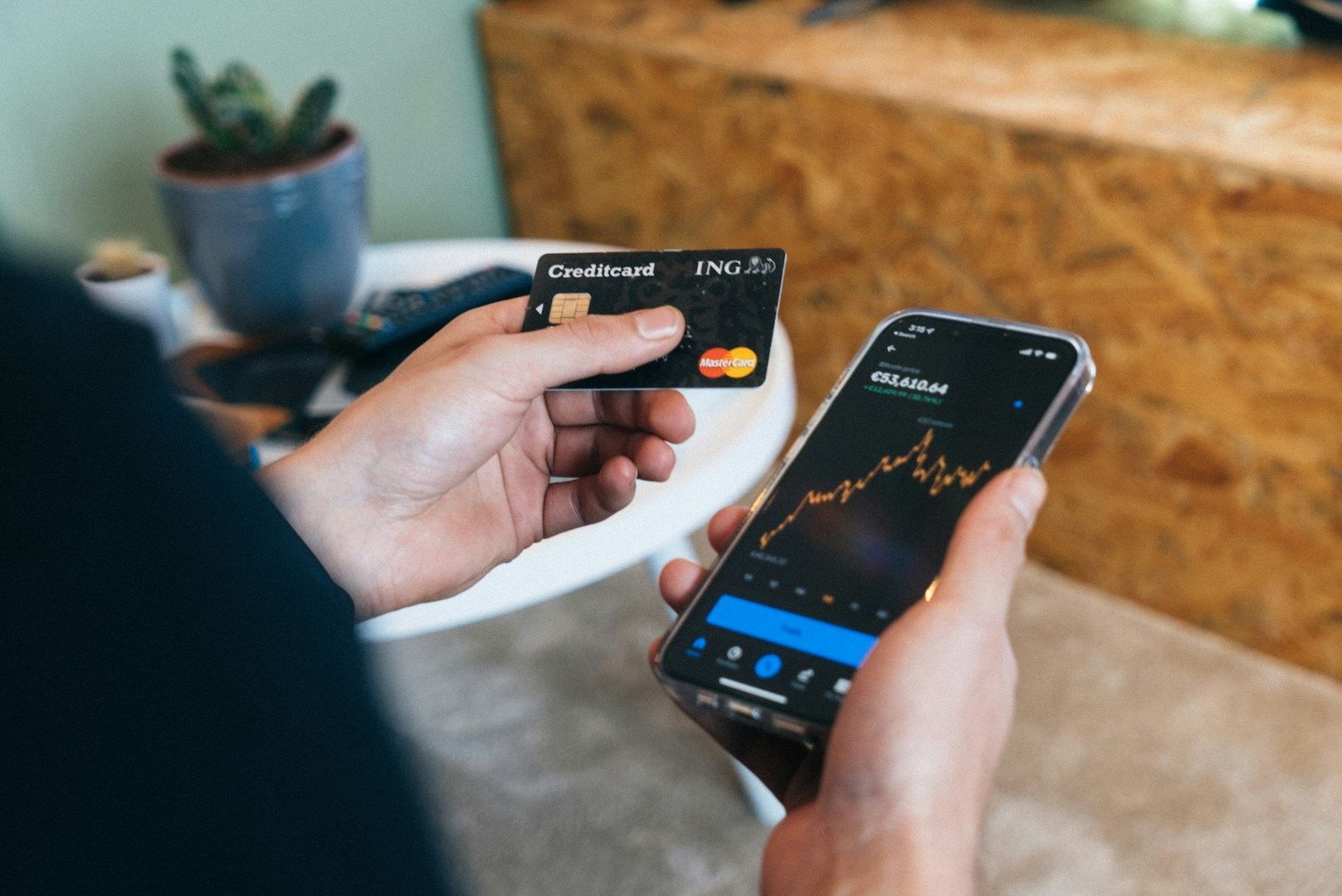
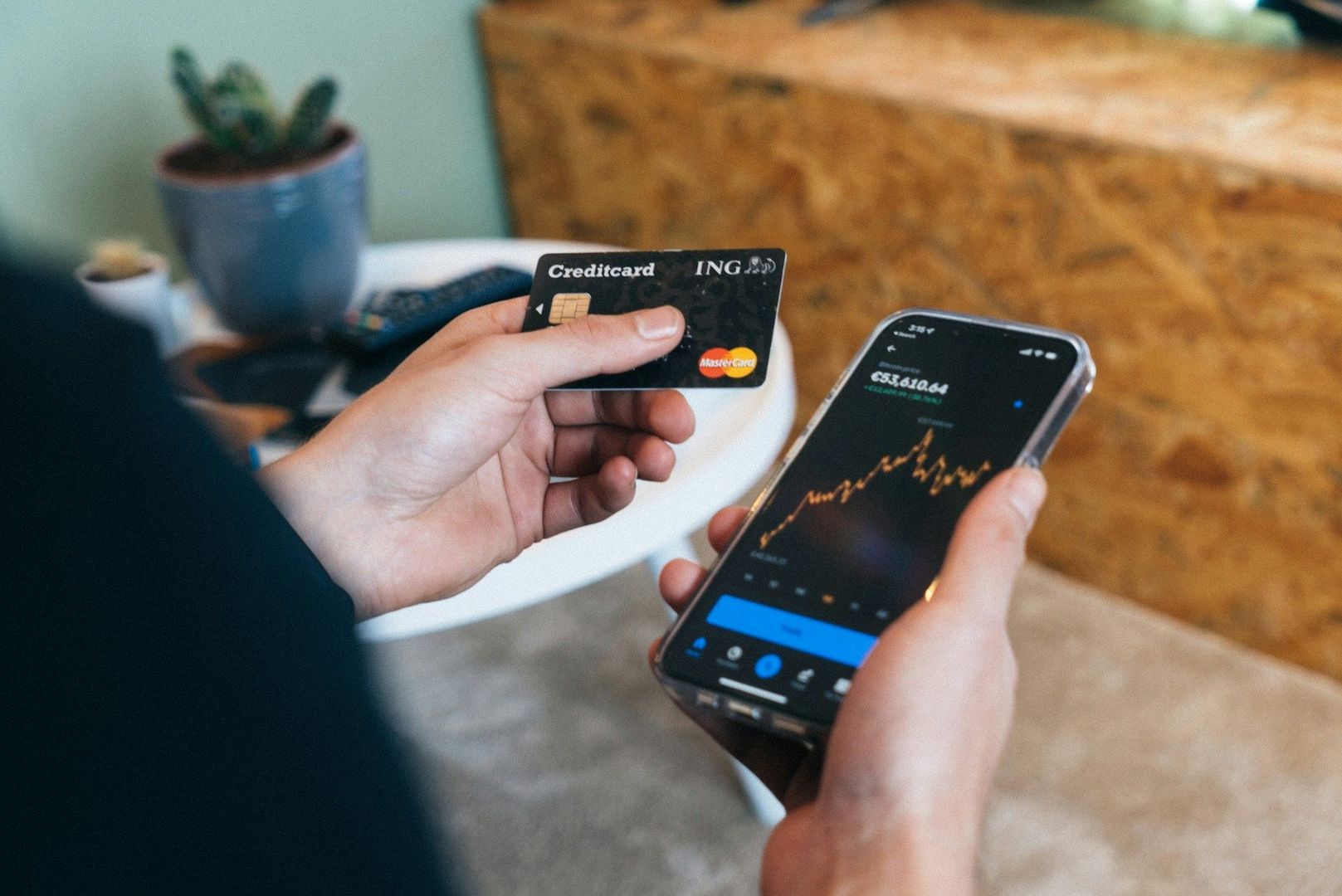
When a tourist from Bangkok taps to pay in Singapore using their Thai e-wallet, few stop to consider what powers that transaction.
But for Singapore-based StraitsX, the company behind the stablecoin infrastructure running in the background, that seamless experience is exactly the point.
Between the fourth quarter of 2024 and the same period in 2025, StraitsX saw its card transaction volume surge by 40 times, the company’s co-founder and CEO Tianwei Liu told CoinDesk.
The number of cards issued grew even faster, increasing 83-fold. That data points to one of the fastest-growing stablecoin card programs in Southeast Asia.
Those multiples, while striking, come with context. One of StratisX’s major crypto card partnerships, with RedotPay, only soft-launched in late 2024, suggesting Q4 of that year represents relatively low baseline volumes.
Across the broader crypto card industry, Artemis Analytics estimates global monthly volumes grew from roughly $100 million in early 2023 to over $1.5 billion by late 2025, a 106% compound annual growth rate, suggesting StraitsX is riding a rising tide rather than just outperforming a static market.
Dune Analytics data shows total crypto card spending tracked onchain grew 420% in 2025, from roughly $23 million in January to $120 million by December, with Visa capturing over 90% of onchain card volume. Visa’s stablecoin-linked card spend alone reached a $3.5 billion annualized run rate by Q4 2025, a 460% year-over-year increase.
Notably, RedotPay, one of StraitsX’s BIN sponsorship partners, processed over $2.95 billion in card volume in 2025, more than four times the combined volume of its 13 closest competitors, according to available data. That positions StraitsX’s infrastructure at the centre of the category’s dominant player.
The question is whether these early-stage growth rates hold as the card base matures and the novelty of stablecoin-backed spending gives way to competition on features, rewards, and cost.
The company’s core offering sits in the background. Rather than building a consumer-facing app, StraitsX provides the infrastructure for others to build on. It acts as a Visa BIN sponsor, enabling partners like RedotPay and UPay to issue cards.
When customers tap or scan to pay with these, stablecoins settle the transaction in real time, with local currency arriving instantly on the other side.
“No user cares about whether a payment runs on stablecoins or fiat; they only care if the payment goes through,” Liu said.
That attitude frames the company’s strategy: make the stablecoin layer invisible. StraitsX processes nearly $30 billion in cumulative stablecoin transactions, but its ambition goes beyond raw volume. Liu wants stablecoins to act like fiber-optic cables: present everywhere but unnoticed.
By the end of March, StraitsX expects to launch its two stablecoins, XSGD and XUSD, on the Solana blockchain. That deployment, in partnership with the Solana Foundation, marks the first time both tokens will live natively on a high-speed blockchain.
The tokens will support the x402 standard, which allows for machine-to-machine micropayments.
“When fees drop close to zero, you can suddenly move very small amounts of money, very frequently,” Liu said. “Payments start to look more like internet data flows, continuous, low cost, and embedded directly into applications.”
XSGD already leads the non-USD stablecoin market in Southeast Asia, with more than 70% share. It maintains a 1:1 peg with the Singapore dollar, backed by monthly audits. That peg gained further relevance early in the year, when the Singapore dollar hit an 11-year high against the U.S. dollar.
Looking beyond Singapore
Now, StraitsX is looking beyond Singapore. A cross-border corridor with Thailand is set to go live under Project BLOOM, a regulatory initiative from Singapore’s central bank.
The system will allow Thai travelers to scan QR codes in Singapore using KBank’s Q Wallet and pay merchants in their local currency. The transaction will convert between Thailand’s Q-money and StraitsX’s XSGD in the background, another stablecoin-powered payment hiding in plain sight.
Liu said the model follows a familiar playbook. GrabPay and Alipay+ integrations, for instance, required no user retraining. Still, the firm has seen a 400% increase in merchant transaction volume and a sixfold jump in the number of unique users transacting with those merchants month-over-month.
Similar rollouts are planned in Japan, Taiwan and Hong Kong.
Like driving an electric car
Visa, one of StraitsX’s major partners, sees the shift as a natural evolution in payments. Adeline Kim, Visa’s Singapore and Brunei country manager, told CoinDesk stablecoin-backed cards don’t change the customer experience.
The cards work the same as traditional ones, complete with chargeback protections and fiat settlements.
“It’s like driving an electric car versus a car that runs on fuel on the same highway,” Kim said. “The vehicle is different, but the road signs, toll booths, and rules don’t change.”
The growth fits a pattern visible across the industry. Full-stack crypto card issuers like Rain and Reap, which hold direct Visa principal membership and manage their own settlement, have scaled rapidly. Rain to over $3 billion annualized and Reap to over $6 billion.
Remittances are a key use case. The World Bank estimates sending $200 internationally still costs an average of 6.49%. With stablecoins, those fees drop dramatically.
Looking ahead, Kim sees stablecoin cards evolving beyond utility. She expects future offerings to include real-time spending insights, cross-border perks and reward systems tailored to user behavior.
For Liu, success means disappearing. The best stablecoin infrastructure, he said, is one people don’t see. The transaction just works.
Binance is successfully courting institutional trading activities, but a growing wave of data security alarms on its retail front threatens to complicate the firm’s ambitions.
The world’s largest cryptocurrency exchange by market capitalization has started 2026 with explosive momentum in its over-the-counter trading division. In January and February alone, Binance’s OTC platform recorded 25% of its total volume for all of 2025.
Captcha Bypass Exposes 1.5 Million Binance Users in Scraping Attack
This sharp rise reflects a broader market maturation, as large-cap investors and institutional players increasingly seek private execution channels for massive trades.
Binance CEO Richard Teng explained that these entities prioritize deep liquidity to avoid slippage and market disruption. The exchange’s OTC desk allows buyers and sellers to execute block trades directly, shielding their strategies from public order books.
However, beneath this institutional polish, operational red flags are mounting.
On March 28, cybersecurity platform VECERT reported that a threat actor operating under the alias PexRat offered a private database containing the personal information of 1.5 million Binance users for sale.
The leaked data purportedly includes full names, email addresses, phone numbers, and Know Your Customer verification statuses.
More alarmingly, the threat actor claims to possess victims’ last-login IP addresses, device user agents, and two-factor authentication statuses. This includes whether users rely on SMS, email, or dedicated authenticator apps.
Meanwhile, the potential exposure of 2FA logs and KYC data presents a severe operational risk. It leaves compromised users highly vulnerable to targeted SIM-swap attacks and sophisticated phishing campaigns.
Crucially, VECERT’s analysis of the authentication logs and sample data revealed that Binance’s internal servers were not directly breached. Instead, the firm outlined a sophisticated credential stuffing and scraping operation.
“The evidence suggests that the attacker managed to bypass or abuse security mechanisms (such as Captcha) in the login interface or some platform API, allowing a constant flow of unblocked requests,” VECERT explained.
This incident follows a January report by cybersecurity researcher Jeremiah Fowler, who uncovered roughly 420,000 Binance-linked credentials exposed via similar infostealer malware.
Ultimately, these events present a critical stress test for Binance’s cybersecurity practices, as the exchange cannot afford the continued automated scraping of its users’ data.
The post Hackers Reportedly Leak 1.5 Million Binance Account Login Data appeared first on BeInCrypto.
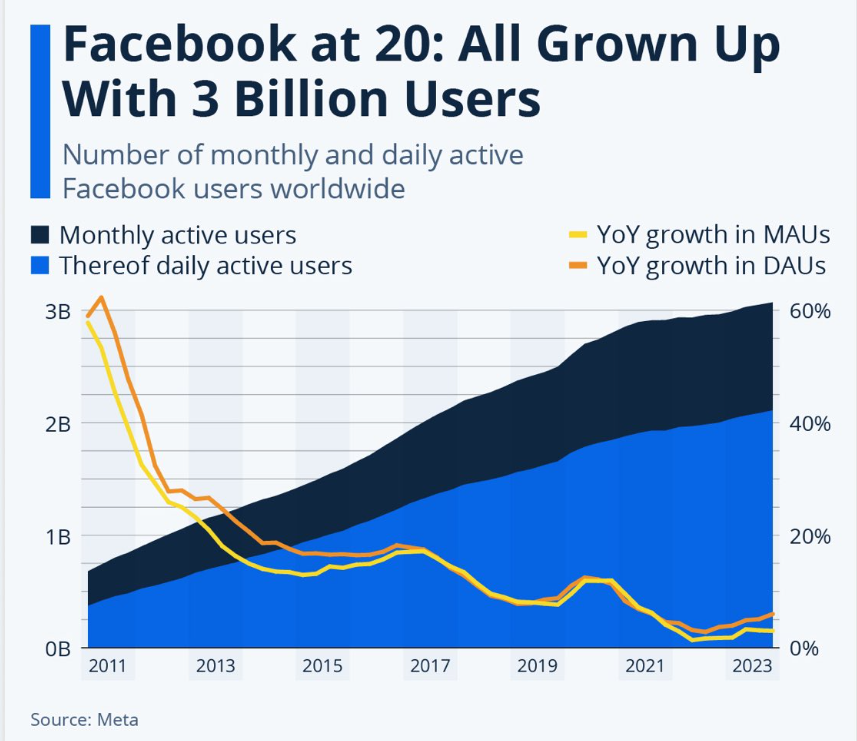
Bloomberg ETF analyst Eric Balchunas argues that Bitcoin (BTC) has entered the same adoption phase that took Facebook from 1 billion to 3 billion users.
The comparison frames BTC’s loss of countercultural appeal as a sign of maturation, not decline, with spot Exchange-Traded Funds (ETFs) acting as the catalyst for mainstream entry.
ETF Expert Likens Bitcoin to Facebook’s “Uncool” Phase, Bullish?
Balchunas, Bloomberg Intelligence’s senior ETF analyst and co-host of the Trillions podcast, compares Bitcoin’s current moment to when older generations flooded Facebook.
“Bitcoin rn feels like when your parents joined Facebook. On one hand, it’s not as ‘cool’ anymore because of the Boomers, but on the other hand, Facebook’s user base grew from like 1 billion to 3 billion people since the coolness factor went away, so..,” wrote Balchunas.
Follow us on X to get the latest news as it happens
Facebook hit 1 billion monthly active users in 2012, according to Meta data. By the end of 2023, that figure reached 3.07 billion.
Year-over-year growth rates collapsed below 10% after 2013, yet the absolute user base nearly tripled during that “boring” stretch.
The Numbers Behind the Analogy
Balchunas also asked for hard data on Bitcoin holder growth over 3, 5, and 10 years. He noted that BlackRock reported roughly 1 million people bought its iShares Bitcoin Trust (IBIT) in the fund’s first year alone.
Current estimates place the number of global Bitcoin holders at approximately 106 million, up from a range of 30 to 50 million in 2021.
IBIT now holds 782,180 BTC, representing about 3.9% of the total supply.
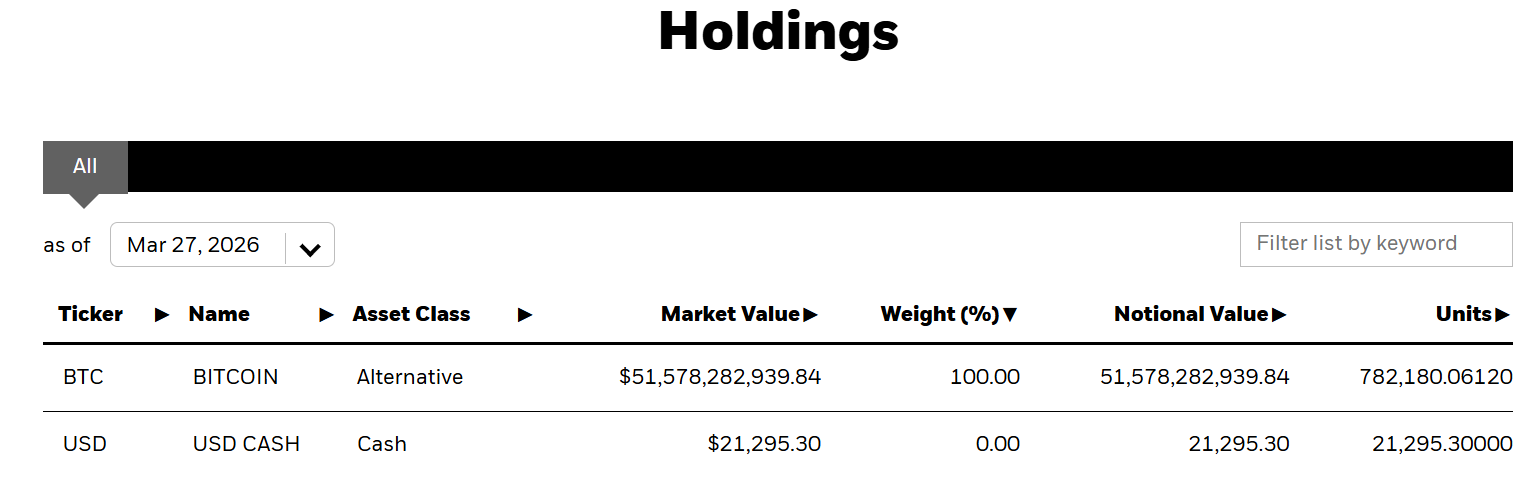
Meanwhile, some macro analysts note that no-coiners keep declaring Bitcoin dead, yet really, it’s just getting started.
When an asset loses its identity-driven appeal and attracts broad, passive capital, that transition often marks the start of its largest growth phase, not the end.
Can Bitcoin’s holder base follow Facebook’s trajectory from 1 billion toward 3 billion? The directional trend since ETF approval points in that direction.
Subscribe to our YouTube channel to watch leaders and journalists provide expert insights
The post Analyst Says Bitcoin Just Hit the Phase That Tripled Facebook’s User Base appeared first on BeInCrypto.


Strategy (MSTR), the largest publicly traded holder of bitcoin, did not seem to have increased its BTC position last week.
Executive Chairman Michael Saylor usually signals upcoming purchases on X each Sunday, followed by a detailed update around 8 a.m. ET on Monday. There was no customary Sunday “Orange Dot” post to signal a purchase. Instead, Michael Saylor posted about the company’s perpetual preferred equity offering, Stretch (STRC) instead.
The apparent pause snaps a streak of roughly thirteen consecutive weekly purchases that began in late December, acquiring 90,831 BTC in the process.
According to the company’s dashboard, the Tysons Corner, Virginia-based firm currently holds 762,099 bitcoin at an average acquisition price of $75,694 per token.
The break in buying activity comes with MSTR still trading about 76% below its all-time high and bitcoin below $67,000.
Crypto World
Bitcoin Slides to $66K as XRP, Ethereum, and Solana Crash: Here Is What Triggered the Drop
TLDR:
- Bitcoin, XRP, Ethereum, and Solana each fell 6–8% this week, wiping over $80 billion from the crypto market.
- A $14.16B Bitcoin options expiry on March 27 liquidated 122,000 traders and triggered $451M in total losses.
- Iran’s threat to block a second oil chokepoint pushed crude above $103, accelerating the crypto selloff sharply.
- Stablecoin supply near a record $316B signals parked capital ready to return once market conditions stabilize.
Crypto markets are facing one of their roughest stretches of 2026. Bitcoin, XRP, Ethereum, and Solana have each dropped between 6% and 8% over the past seven days.
The selloff has erased more than $80 billion in total market value since March 24. A record-breaking options expiry, rising geopolitical tension, and heavy ETF outflows all hit at once. The Fear & Greed Index now sits at 23, deep in extreme fear territory.
Three Reasons Crypto Is Crashing This Week
The single biggest catalyst was the March 27 Bitcoin options expiry on Deribit. It was the largest quarterly expiry of 2026, settling $14.16 billion in contracts.
The max pain level sat at $75,000, far above where Bitcoin was actually trading. That gap triggered forced selling across the board, liquidating over 122,000 traders. Total liquidation losses reached $451 million within 24 hours.
Iran’s threat to block the Bab el-Mandeb Strait made things significantly worse. That strait carries 12% of global seaborne oil and sits alongside the already-closed Strait of Hormuz.
Oil crossed $103 per barrel on the news, pushing investors away from risk assets. The gold-to-crypto rotation that had helped Bitcoin recover in early March reversed sharply. Crypto sold off alongside equities as fear spread through financial markets.
ETF outflows added further weight to an already struggling market. Bitcoin ETFs bled $171 million on March 26, while Ethereum ETFs shed $92.5 million the same day.
That marked Ethereum’s seventh consecutive session of net outflows. It was also the first time in 2026 that Bitcoin, Ethereum, and Solana spot ETFs all posted outflows on the same day. Institutional selling pressure is now visible across all three major ETF categories.
The macro environment was already working against crypto before this week. The Federal Reserve revised its 2026 PCE inflation forecast upward from 2.4% to 2.7% at its March 18 meeting.
That pushed rate cut expectations further out into the year. The 10-year Treasury yield climbed near 4.5%, and the dollar index gained 0.57% in seven days. When yields rise and the dollar strengthens, capital tends to rotate out of crypto and into bonds.
A 15% global tariff overhang has been adding pressure to risk assets since early 2026. That backdrop gave investors little reason to buy the dip when options mechanics and geopolitical risk hit simultaneously.
There was no cushion underneath the market when the selling accelerated. Each external factor compounded the next, making the crash broader and faster than it might have been otherwise.
Where Prices Stand and What a Recovery Requires
Bitcoin dropped from $71,000 at the start of the week to $66,457 as of March 28. That puts it 47% below its October 2025 all-time high of $126,080.
The $66,000 level is now the key support to watch. A daily close below it would be the first time Bitcoin has lost that floor since February’s crash. If that happens, analysts warn a move toward $50,000 could follow.
Ethereum broke below $2,000 for the first time since mid-2024, falling 7.24% on the week. It is now 60% below its August 2025 peak of $4,953. XRP dropped to $1.33, down 7.03%, despite the SEC recently classifying it as a digital commodity.
Solana fell the hardest of the four, losing 7.62% to trade at $83.10. SOL is now 72% below its cycle high, with on-chain activity also declining alongside price.
A ceasefire or de-escalation in the Iran-Israel conflict remains the fastest path to a recovery. When ceasefire reports emerged in early March, Bitcoin gained 16% in just five days.
Oil falling back below $90 would ease inflation pressure and bring risk appetite back to markets. The CLARITY Act is also moving toward a Senate Banking Committee markup in late April. If passed, it would give institutions the legal framework they need to increase crypto exposure.
Stablecoin supply is sitting near a record $316 billion, showing that capital has not fully left the crypto ecosystem. That liquidity could flow back into Bitcoin, Ethereum, XRP, and Solana once conditions improve.
Consecutive days of positive ETF inflows across multiple assets would signal that a recovery is beginning. Until then, the $66,000 Bitcoin level remains the market’s clearest indicator of what comes next.
Every Gaming PC You Can Buy At Costco Ranked By Price

Three Darlington planning decisions you need to know
Visa Joins Canton Network as Super Validator to Power Private Blockchain Payments for Banks

Smart energy pays enters the US market, targeting scalable financial infrastructure

Why Israel is blocking foreign journalists from entering

Bitcoin: We’re Entering The Most Dangerous Phase

Old Mutual report reveals mixed signals in Kenya’s financial well-being

Aaron Judge & Paul Skenes Struggle on Opening Day #mlb #baseball #yankees #pirates #oneilcruz #skit

Nisila & Yashmi | Five Million Money Drop S4 | Episode 19 | Sirasa TV
-
 NewsBeat4 days ago
Manchester United reach agreement with Casemiro over contract clause amid transfer speculation
-

 News Videos4 days ago
Parliament publishes latest register of MPs’ financial interests
-

 Sports6 days ago
Gary Kirsten Accuses Pakistan Cricket Board Of ‘Interference’, Mohsin Naqvi Responds
-

 Sports6 days ago
Remo Stars and Kano Pillars Strengthen Survival Hopes in NPFL
-

 Tech7 days ago
AI enters the chat: New Seattle dating app relies on tech to facilitate meaningful human connections
-

 Business3 days ago
Instagram, YouTube Found Responsible for Teen’s Mental Health Struggle in Historic Ruling
-

 News Videos6 days ago
Ch 9 Financial Management Part 1 | Detailed One Shot | Class 12 Business Studies Boards 2026
-

 NewsBeat2 days ago
The Story hosts event on Durham’s historic registers
-
 NewsBeat4 days ago
Tesco is selling new Cadbury Dairy Milk bar and people can’t wait to try it
-

 Tech6 days ago
Samsung will soon let you control smart home devices from your car’s dashboard
-

 Sports7 days ago
2026 Kentucky Derby horses, odds, futures, preview, date: Expert who hit 12 Derby-Oaks Doubles enters picks
-
 Entertainment23 hours ago
Lana Del Rey Celebrates Her Husband’s 51st Birthday In New Post
-
 Entertainment6 days ago
Cynthia Bailey Dishes on ‘RHOA’ Season 17, Discusses Kandi
-
 NewsBeat6 days ago
Colombian military plane with 110 soldiers onboard crashes following takeoff
-

 Fashion5 days ago
Does It Matter What You Wear When You’re Laid Off and Looking?
-

 Business5 days ago
More women enter wealth management, but few in advisory roles: study
-

 Business5 days ago
Late-paying firms face multimillion-pound fines under new crackdown
-

 Sports5 days ago
Fantasy Baseball Week 1 Preview: Top sleeper hitters for both five- and 12-day period led by Munetaka Murakami
-

 Fashion6 days ago
Fringe Bags for the Season
-

 Politics6 days ago
How Media Platforms Balance Performance and Accessibility in Image Delivery
You must be logged in to post a comment Login