
CryptoCurrency
Rising Wrench Attacks on Crypto Holders Turn More Violent and Dangerous

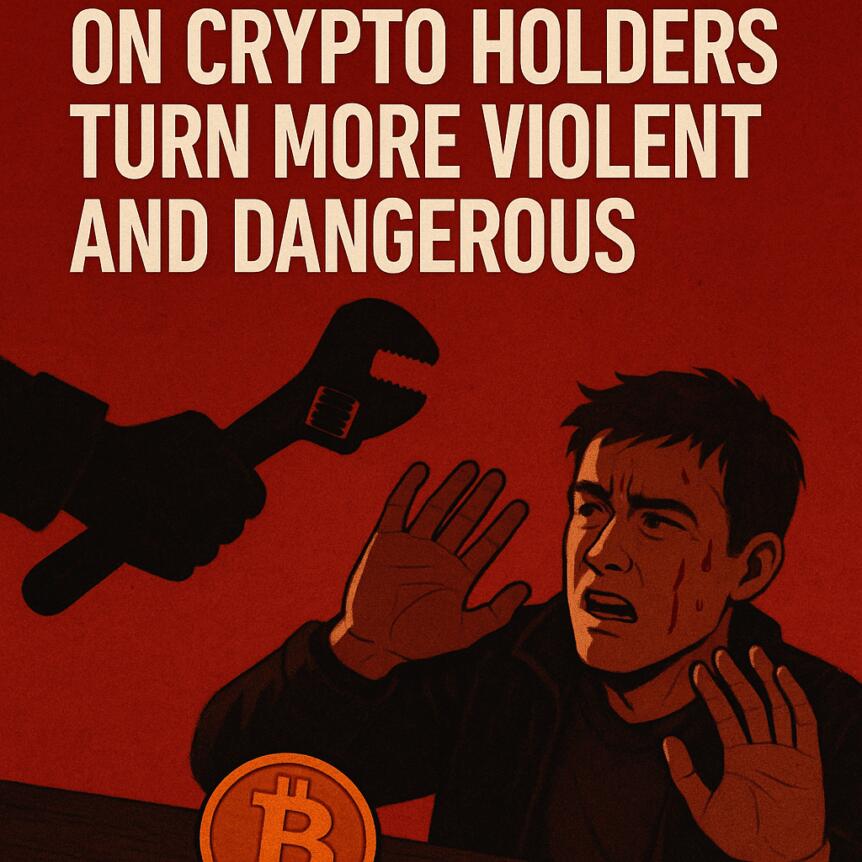
Increase in Physical Attacks on Cryptocurrency Holders Raises Concerns
Recent analyses indicate a troubling rise in violent “wrench attacks” against cryptocurrency owners, with data showing both a surge in reported incidents and escalating severity. Experts warn that these attacks pose a significant risk, especially as they become more violent and frequent across different regions.
Key Takeaways
- Reported wrench attacks have steadily increased, with a marked escalation in their severity.
- Geographical hotspots include Western Europe and Asia-Pacific, while North America experiences a comparatively lower but rising rate of incidents.
- Attack frequency correlates strongly with cryptocurrency market cap, suggesting higher market valuations attract more criminal activity.
- Normalized against user growth, crypto remains less risky now than in earlier years, but individual security remains paramount.
Tickers mentioned: None
Sentiment: Neutral
Price impact: Neutral. Despite rising violence, broader market risk does not appear to have increased proportionally, when normalized for user growth.
Trading idea (Not Financial Advice): Hold. Market fundamentals remain strong, but security considerations should be prioritized.
Market context: The rise in physical attacks aligns with broader trends of increased crypto adoption coinciding with market growth.
Escalating Violence in Physical Security Threats
Physical assaults targeting cryptocurrency holders, particularly through “wrench attacks,” have become more frequent and severe. These attacks involve attackers forcibly gaining access to digital assets, often through violence or intimidation. An influential report on X by security analyst Haseeb Qureshi highlights a steady increase in such incidents over recent years, referencing a dataset maintained by noted Bitcoin security advocate Jameson Lopp.
Based on a categorization system measuring the severity—from minor threats to lethal violence—the data indicate an upward trend in attack brutality. Lopp, an expert tracking these cases for years, points out that the phenomenon is gaining prominence, particularly in regions like Western Europe and parts of the Asia-Pacific, where recent reports show a sharp rise in violent incidents. Although North America remains relatively safer, it too has seen an uptick in reported cases.
Interestingly, the analysis reveals that the frequency of wrench attacks correlates heavily with the overall market capitalization of cryptocurrencies. A regression analysis indicates that nearly 45% of attack variability can be explained by market valuation, implying that rising crypto prices attract more criminal endeavors. Despite this, when adjusting for the dramatic increase in crypto users over the past decade, the data suggest that individual risk per user has actually diminished since 2015 and 2018, highlighting how broader adoption may dilute per-user threat levels.
Qureshi emphasizes that while these figures reveal trends, they should not deter individual security measures. “This is more than just an academic exercise—it’s serious,” he states, urging high-risk investors to invest in personal security practices to mitigate potential threats.
Decline in Wallet Drainer Phishing Attacks
In a related trend, phishing attacks aimed at draining wallets saw a dramatic drop in losses during 2025. According to Scam Sniffer, a Web3 security firm, total losses from phishing related to wallet drainers fell by 83%, totaling $83.85 million compared to nearly $494 million the previous year. The number of victims also decreased by 68%, approximately 106,000 individuals.
Despite the reduction, Scam Sniffer warns that phishing activity remains closely tied to market cycles, with losses surging during periods of heightened on-chain activity. Notably, during Ethereum’s strongest rally in the third quarter, phishing-related losses hit around $31 million, underscoring the ongoing threat such attacks pose during market peaks.



