

Crypto World
SEC Delays Plans for Tokenized Stock Trading on Crypto Platforms

The securities regulator was preparing to release its “innovation exemption” for tokenized stocks as soon as this week, and a draft of the plan had been prepared and reviewed by staff.
However, the timing has since been pushed back as the SEC weighs input from stock-exchange officials and other market participants, reported Bloomberg, citing people familiar with the matter on Saturday.
The exemption would have allowed the trading of tokenized stocks on decentralized exchanges that do not have the backing or consent of the public companies whose shares they track.
Experts Weigh Pros And Cons
However, the SEC noted that allowing the trading of third-party tokens has raised concerns. Several former regulators reportedly said it was unclear how companies could fulfill the same rights criteria as tokens traded on third-party blockchains.
Bloomberg also reported that public companies might face uncertainty over normal practices such as issuing dividends and counting shareholder votes. There was also concern about tokens ending up in the hands of bad actors overseas.
SEC Commissioner Hester Peirce said earlier this week that any exemption would be “limited in scope” by only permitting “digital representations of the same underlying equity security that an investor could purchase in the secondary market today.”
“The SEC deserves a lot of credit for preparing diligently for legislation and for moving ahead expeditiously under its existing authority to provide clarity to markets in adopting tokenization in capital markets,” said Coinbase chief legal officer Paul Grewal on Saturday.
Thank you @HesterPeirce. @Coinbase has long supported the thoughtful SEC staff comments already published on tokenization.
The SEC already has the existing authority it needs to permit innovation in securities markets, particularly for real, onchain tokenized NMS equities that… https://t.co/Mwr5VBrSVQ
— Paul Grewal (@iampaulgrewal) May 23, 2026
Meanwhile, Tiger Research director Ryan Yoon cautioned that allowing third-party trading of tokenized stocks could risk liquidity and revenue fragmentation. The move could create “price discrepancies across platforms,” in addition to increasing slippage on large orders, and ultimately “degrading overall market efficiency,” he said.
He added that financial revenues that should accrue to domestic US exchanges could flow offshore instead. Benefits from the move could include faster settlement, fractional ownership, lower transaction costs, the potential for 24/7 trading, and giving non-US citizens access to popular US stocks.
Crypto Markets Bounce on Trump Deal
Crypto markets have recovered from their Saturday slump today following the latest announcement from US President Donald Trump, who said on Truth Social that an agreement has been “largely negotiated, subject to finalization between the United States of America, the Islamic Republic of Iran, and the various other countries.”
The deal would include reopening the Strait of Hormuz, and “final aspects and details of the deal are currently being discussed and will be announced shortly,” he added.
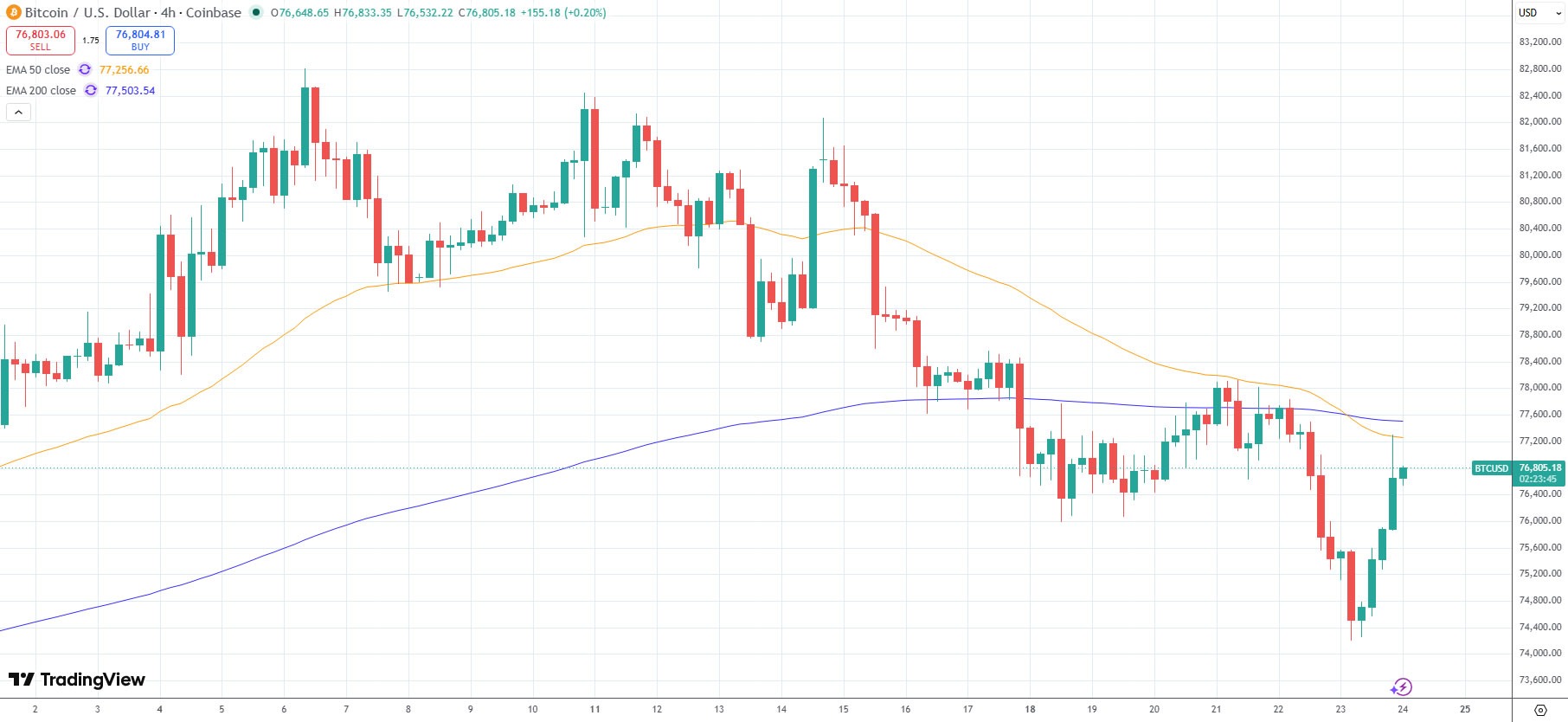
Bitcoin reclaimed $77,000 in early trading on Sunday following its dip to a five-week low of $74,200 on Saturday.
The post SEC Delays Plans for Tokenized Stock Trading on Crypto Platforms appeared first on CryptoPotato.

Cryptocurrency markets have recovered around $75 billion in total capitalization following a progress update on Saturday from US President Donald Trump on a peace agreement with Iran.
Trump said a deal has been “largely negotiated” among the United States, Iran, and several Middle Eastern countries, in a post on Truth Social on Saturday.
The countries included in the negotiations were Saudi Arabia, the United Arab Emirates, Qatar, Pakistan, Turkey, Egypt, Jordan and Bahrain.
“An agreement has been largely negotiated, subject to finalization between the United States of America, the Islamic Republic of Iran, and the various other countries, as listed,” he said. His post said:
“Final aspects and details of the deal are currently being discussed and will be announced shortly. In addition to many other elements of the agreement, the Strait of Hormuz will be opened.”
The deal also includes reopening the Strait of Hormuz. The closure of the key waterway has caused global energy prices to spike and has weighed on the cost of living in many nations. It has also hit investments in high-risk assets such as crypto, which have retreated recently.
Three months of war takes its toll
Trump’s announcement comes amid a fragile ceasefire that began in early April with several failed attempts at reaching an agreement between the US and Iran.
US Secretary of State Marco Rubio reiterated Trump’s demands for a peace deal during a visit to India on Saturday. “Iran can never have a nuclear weapon. The straits need to be open without tolls. They need to turn over their enriched uranium,” he said.
Related: Warsh will cut rates, despite consensus view of rate hikes: Analyst
Crypto markets react positively
Bitcoin prices fell to a five-week low of $74,250 on Saturday, according to TradingView.
The asset recovered to tap the 50-day exponential moving average at $77,000 in early trading on Sunday before falling back to $76,800 at the time of publication.
BTC has resumed its downtrend after failing to break resistance at $82,000 and remains down 39% from its October peak.
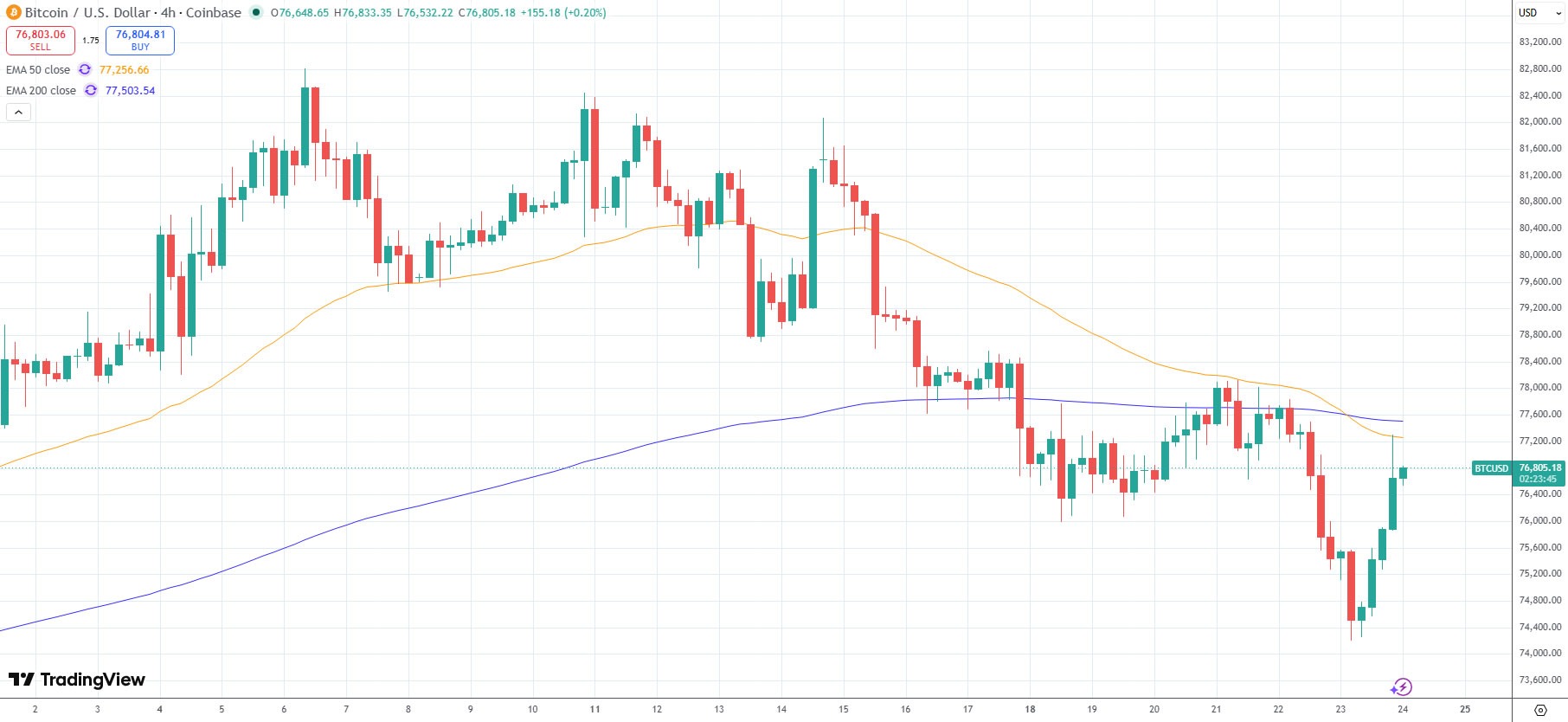
BTC sees minor recovery after Trump’s deal announcement. Source: TradingView
Magazine: Crypto scammers face death, Aussie CGT makes Asian hubs attractive: Asia Express
Ethereum co-founder Vitalik Buterin responded to growing criticisms of the Ethereum Foundation’s role in the Ethereum ecosystem, pushing back against critics who want the organization to take a more active role in supporting token prices and marketing.
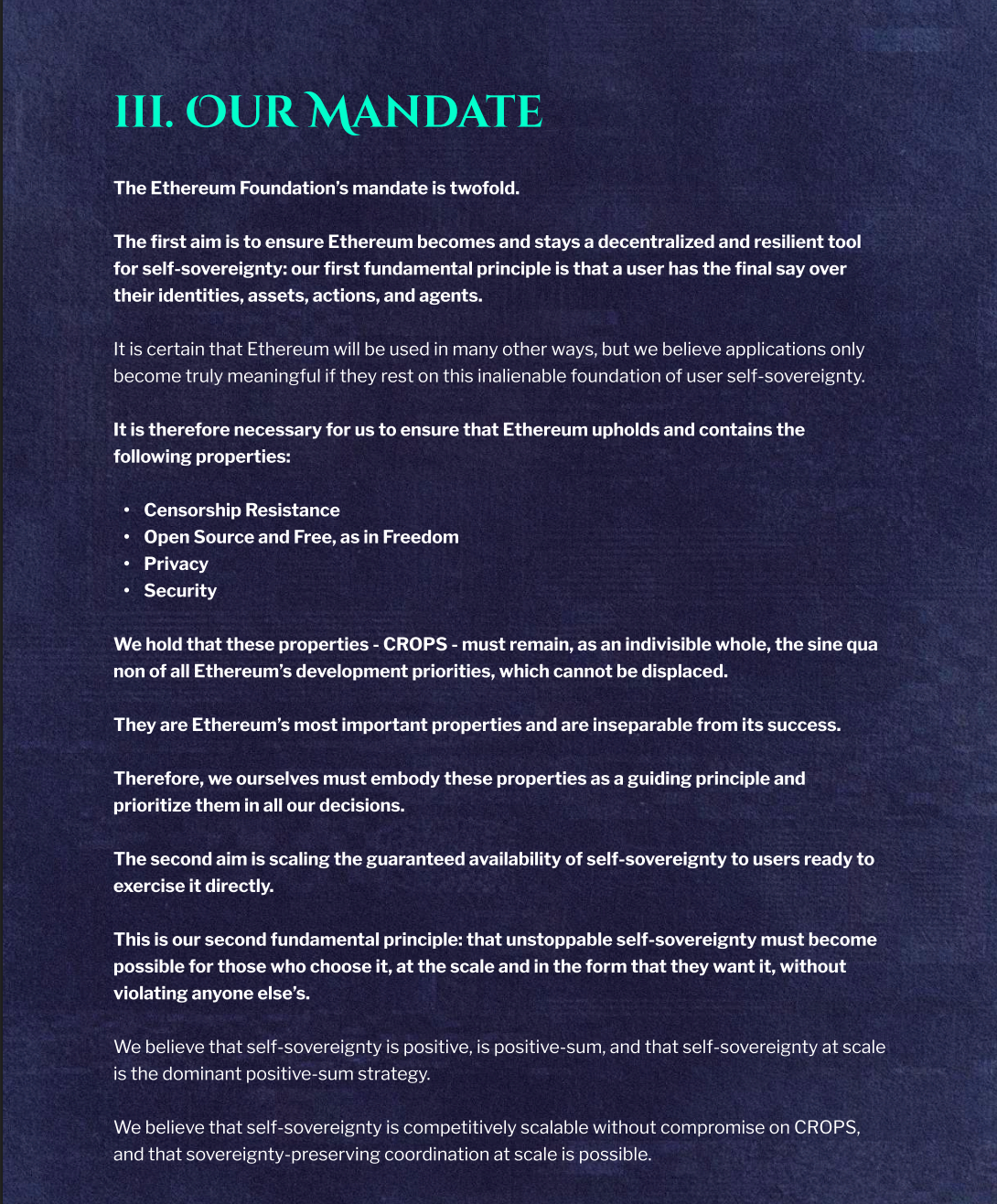
Buterin said the Foundation will continue to focus on promoting censorship-resistance, open source software code, long-range research, cybersecurity, and decentralization of the Ethereum Protocol, as outlined in its mandate. He said:
“EF is not a ‘center of Ethereum’, rather EF is ‘one node, with a defined purpose, alongside other nodes’. We have always said that the EF should be the latter, but many in the Ethereum ecosystem, and even within the EF, wanted us to be the former.
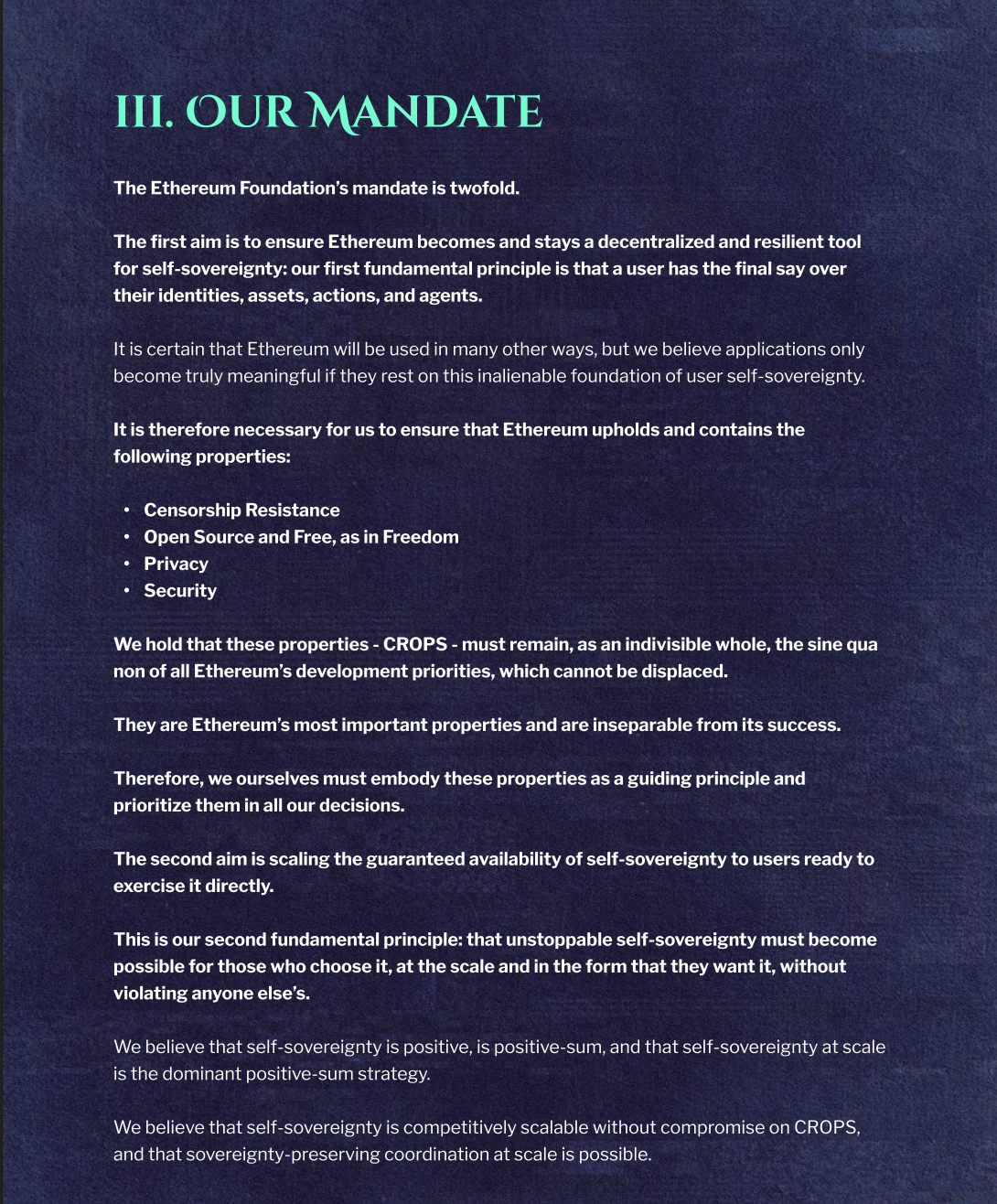
The Ethereum Foundation’s mandate was published in March 2026. Source: Ethereum Foundation
“Now, we are taking action to ensure that we will be the latter,” he continued, adding that the Ethereum Foundation seeks to strengthen Ethereum’s cybersecurity and code base but not necessarily compete with high-throughput chains or scale to 1 million transactions per second.
The comments follow several large ETH holders selling their entire ETH position and high-profile departures from the Ethereum Foundation, as the current price of the cryptocurrency, about $2,094, sits more than 50% below its all-time high of nearly $5,000 reached in August 2025.
“The EF has only about 0.16% of all ETH,” he said, noting that it is common for other foundations to hold 10-50% of their native tokens.
Related: Blockchain researcher defends Ethereum Foundation, says it’s doing ‘exactly’ its job
Under pressure amid falling token price
“I think Ethereum’s original sin was not considering tokenomics with every move it made from Dencun on,” cryptocurrency journalist Laura Shin said.
The Dencun upgrade was a major protocol update released in March 2024, which significantly reduced network fees for layer-2 transactions and led to a subsequent collapse in Ethereum’s base layer revenue.
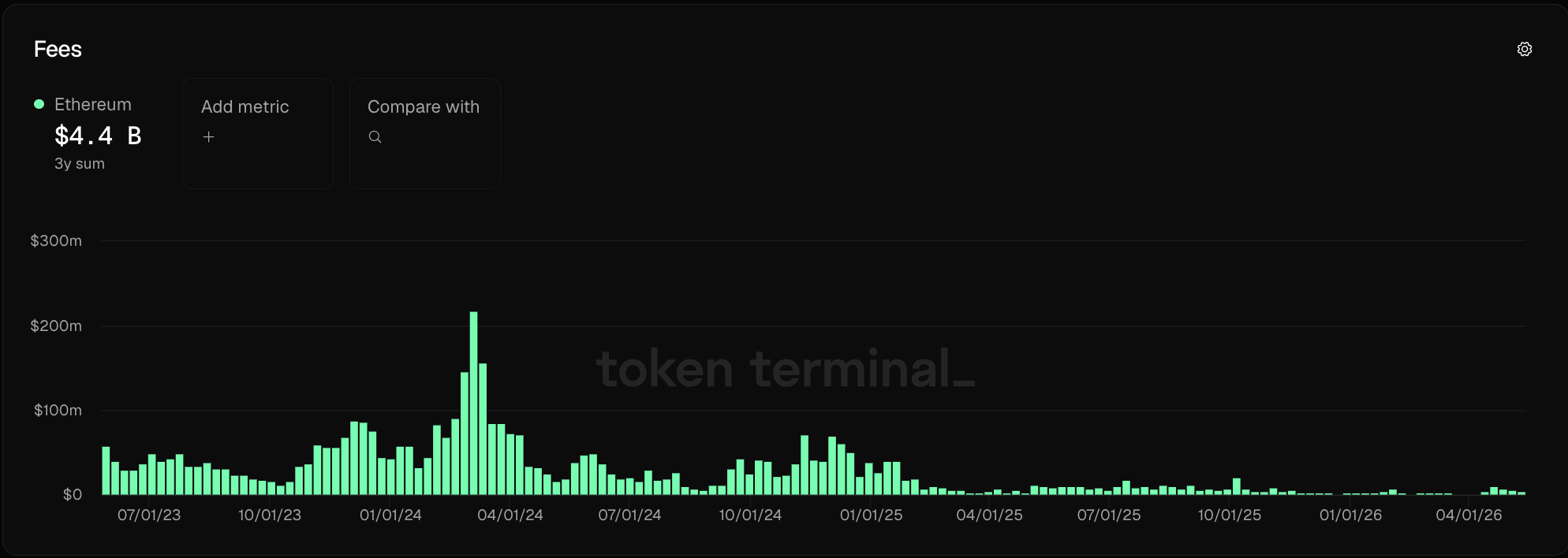
Fees on the Ethereum layer-1 blockchain network fell significantly after the Dencun upgrade in March 2024. Source: Token Terminal
Most investors “don’t want to believe in something that is not also putting up points on the scoreboard,” Shin said about ETH.
Buterin said on Sunday that the Foundation would focus on “longevity” and stretch its funds to finance research, meaning it would sell less ETH in the future.
In May, the Foundation unstaked 21,270 ETH from the Lido liquid staking platform, as part of its treasury strategy.
Unstaking ETH means those holdings will no longer generate yield for the Ethereum Foundation, but it is not a confirmation that the organization will sell those tokens.
Magazine: Why is Ethereum Foundation selling? BTC futures warning signs: Market Moves

TLDR:
- Alphractal linked Bitcoin rallies to improving Fed liquidity trends across multiple market cycles
- Fed RRP declines and Treasury spending continue shaping crypto market liquidity conditions
- VirtualBacon challenged expectations of a delayed Bitcoin bear market capitulation phase
- Bitcoin’s 200-week SMA near $61K remains a closely watched technical market level
Bitcoin liquidity conditions tied to Federal Reserve cash flows are gaining attention across crypto markets. New analysis from Alphractal linked Bitcoin price cycles to changes in Fed liquidity plumbing over the past several years.
The data focused on the Federal Reserve’s Reverse Repo Facility and Treasury General Account activity. The discussion emerged as Bitcoin traded near $76,500 while investors debated whether deeper downside remained ahead.
Bitcoin Liquidity Data Tracks Fed RRP and TGA Trends
Alphractal shared a breakdown showing how Fed liquidity conditions aligned with Bitcoin market cycles since 2020. The firm focused on the interaction between the Reverse Repo Facility, known as RRP, and the Treasury General Account.
According to the thread, rising liquidity often supported Bitcoin rallies across previous cycles. Tightening liquidity conditions frequently appeared before major crypto market corrections.
The report pointed to the 2020 and 2021 market expansion period. During that phase, combined RRP and TGA balances reportedly climbed from roughly $2 trillion to $7 trillion while Bitcoin rose from $10,000 to $69,000.
The same framework showed a reversal during 2022. Alphractal stated that aggressive liquidity tightening preceded Bitcoin’s decline from $69,000 to nearly $15,500 by several weeks.
The report also tracked conditions through 2023 and 2024. During that period, money market funds rotated into Treasury bills while the RRP facility steadily declined.
Alphractal said improving liquidity conditions appeared before Bitcoin rebounded toward $73,000. The post also referenced Bitcoin’s reported October 2025 peak near $126,200, noting liquidity indicators weakened months earlier.
Bitcoin Market Debate Shifts Toward Bear Market Timing
The liquidity discussion gained traction alongside a separate market thread from VirtualBacon focused on Bitcoin bear market bottoms. The post challenged the widely repeated expectation of a final capitulation event later in the cycle.
VirtualBacon compared prior Bitcoin downturns from 2015, 2018, and 2022. According to the thread, only the 2022 cycle ended with a sharp collapse near the final stage of the bear market.
The post argued that earlier cycles bottomed much sooner. In both 2015 and 2019, Bitcoin reportedly reached lows near its first major correction before stabilizing later.
VirtualBacon also highlighted Bitcoin’s 200-week simple moving average as a recurring market support zone. The thread placed the indicator near $61,000 while projecting it could rise toward $63,000 or $64,000 within two months.
Meanwhile, Alphractal noted current liquidity conditions remain mixed. The report cited a Federal Reserve rate range between 3.5% and 3.75%, a 3.8% CPI reading, and a stronger U.S. dollar index.
Despite those conditions, the thread stated Treasury spending and declining RRP balances continue adding liquidity beneath headline tightening measures. The report linked those trends to prior Bitcoin recoveries during fear-driven market periods.


The online gambling industry has long been shaped by a small group of established names. Bet365 and 888casino are two of the biggest. Both have spent decades building loyal user bases, wide game libraries, and strong sportsbook products. They are often the first names that come up when players look for a trusted place to bet online.
But the industry is changing. A new wave of crypto-first casinos is starting to gain ground. One name getting attention is ZunaBet, a platform that launched in 2026 and is already being talked about as a serious challenger. With over 11,000 games, support for more than 20 cryptocurrencies, a $5,000 welcome bonus, and a gamified loyalty program built around a dragon evolution theme, ZunaBet is taking a different approach to what an online casino can be.
This article looks at how Bet365 and 888casino compare, and where ZunaBet fits into the picture as a newer, crypto-focused option built for a different kind of player.
Bet365 and 888casino: The Traditional Giants
Bet365 is one of the most recognised names in online betting. It started as a sportsbook and has grown into a full gambling platform with casino games, poker, bingo, and live dealer options. It is known for its in-play betting, deep sports markets, and a strong mobile app. Bet365 operates under licenses in multiple regulated markets and mostly works with fiat currency. Players deposit using debit cards, bank transfers, and a small number of e-wallets.
888casino has been around even longer. It launched in 1997 and is one of the original online casinos. It has a strong reputation for safe play, a polished casino product, and a steady stream of promotions. Like Bet365, it focuses on fiat payment methods and operates under strict regulatory frameworks in markets like the UK, Spain, and parts of the United States.
Both platforms are solid, well-known, and dependable. But they were built for an earlier era of online gambling, one where credit cards and bank transfers were the main way to play. They have been slow to adopt crypto, slow to build gamified loyalty systems, and slow to expand into newer areas like esports betting at scale.
ZunaBet: The New Challenger
ZunaBet launched in 2026 and is owned by Strathvale Group Ltd. It operates under an Anjouan gaming license and is run by a team with more than 20 years of combined experience in the industry. From day one, it was built as a crypto-first platform, which sets it apart from most of the older brands.
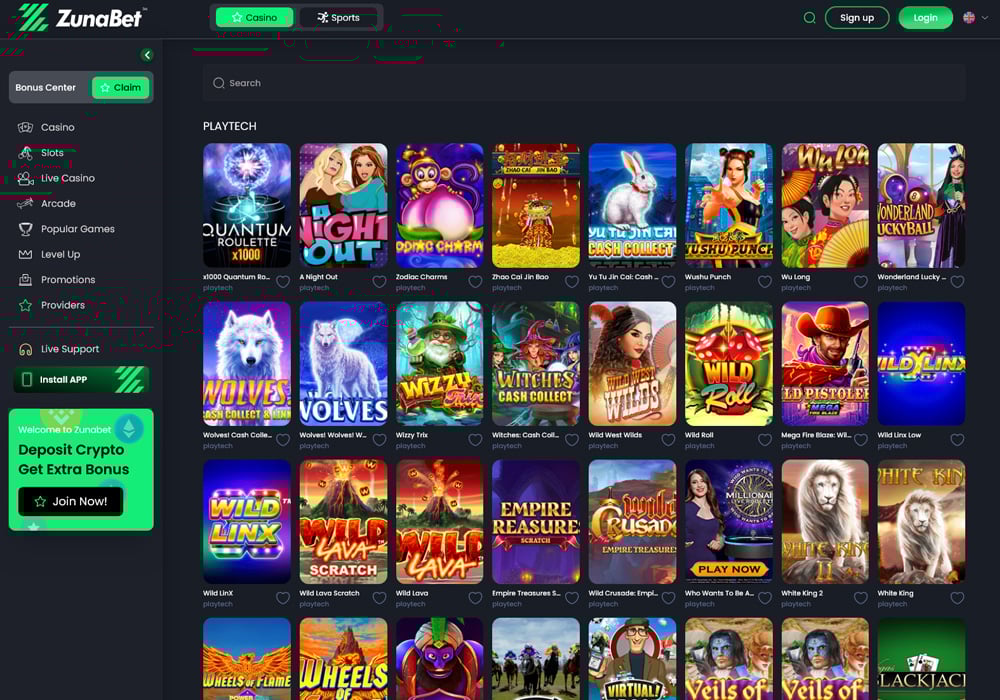
The casino offers 11,294 games from 63 providers, including Pragmatic Play, Hacksaw Gaming, Yggdrasil, BGaming, and Evolution. That puts its library among the largest in the crypto casino space. Players get access to slots, RNG table games, and live dealer games, with the slot library making up the bulk of the offering.
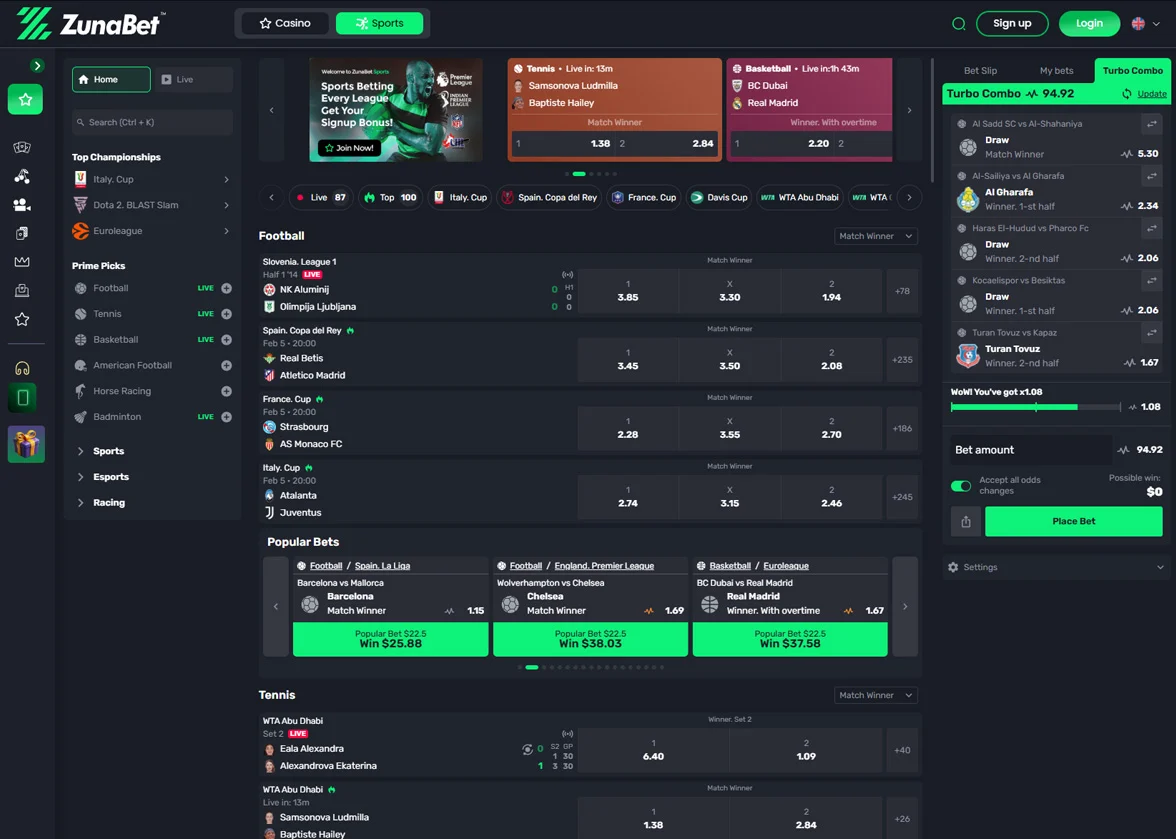
On the sportsbook side, ZunaBet covers all the major global sports, including football, basketball, tennis, and NHL. It also runs a full esports book covering CS2, Dota 2, League of Legends, and Valorant. Virtual sports and combat sports round out the offering. This makes it a true hybrid platform that combines casino and sportsbook in one place.
Crypto-First vs Traditional Payments
The biggest difference between ZunaBet and platforms like Bet365 or 888casino is how players move money in and out.
Bet365 and 888casino mainly work with fiat. That means debit cards, bank transfers, and e-wallets. These methods are familiar, but they come with delays, fees, and limits set by banks and payment processors. Withdrawals can take days. Some markets have restrictions on what cards can be used for gambling.
ZunaBet takes a different path. It supports more than 20 cryptocurrencies, including Bitcoin, Ethereum, USDT across multiple chains, Solana, Dogecoin, Cardano, and XRP. The platform does not charge processing fees, and withdrawals are fast. For players who already hold crypto, this means they can deposit and play in minutes, and withdraw winnings without waiting for bank approval.
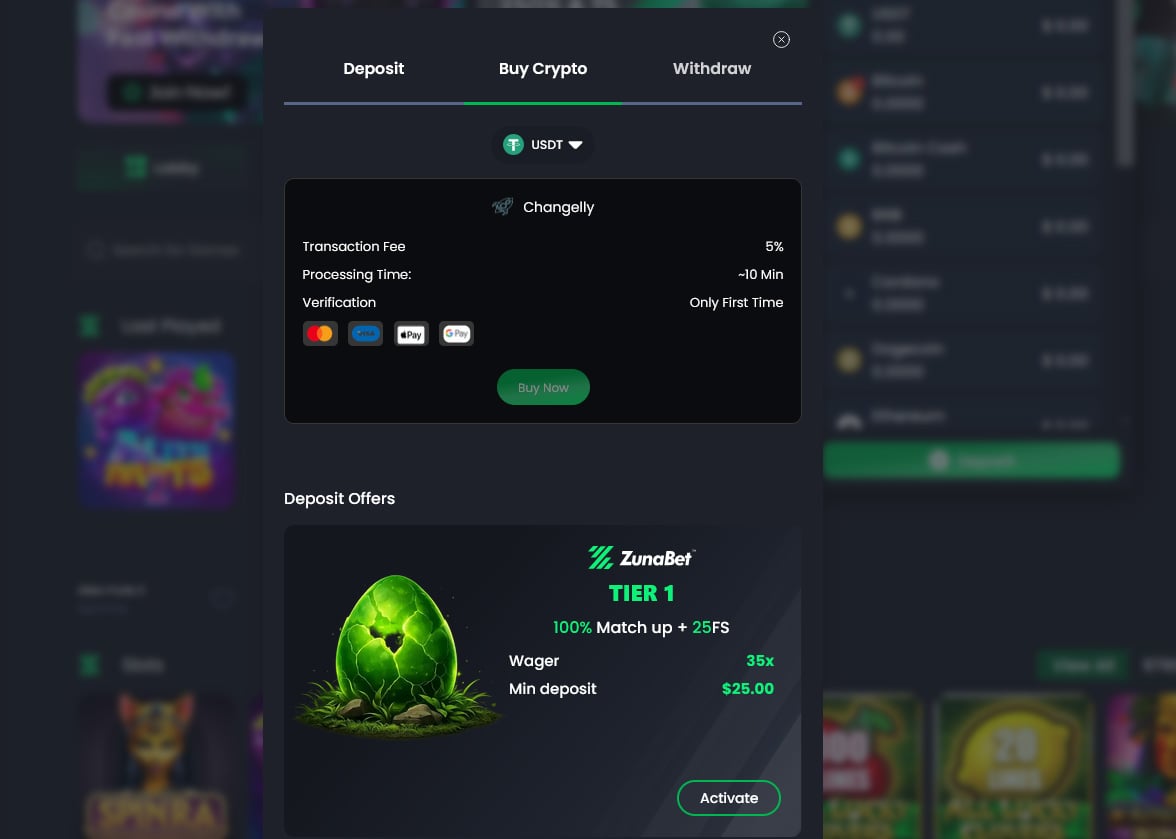
This crypto-first setup also makes ZunaBet more accessible to a global audience. Players in regions where card-based gambling is restricted can still use crypto to play. For a new generation of players who are already comfortable with digital wallets, this is a more natural fit than the traditional banking route.
Loyalty Programs: Standard VIP vs Dragon Evolution
Loyalty programs are another area where the gap shows.
Bet365 and 888casino offer standard VIP and rewards systems. Players earn points or status based on how much they wager, and benefits include cashback, free spins, and access to exclusive promotions. These programs work, but they tend to look the same across most traditional platforms.
ZunaBet has built something different. Its loyalty program is themed around a dragon evolution system with six tiers: Squire, Warden, Champion, Divine, Knight, and Ultimate. Each tier offers more rakeback, starting at 1% and going up to 20% at the top level. Along the way, players unlock tier-based free spins, with up to 1,000 spins available at higher tiers. There is also VIP club access, double wheel spins, and a gamified mascot called Zuno that ties the whole experience together.
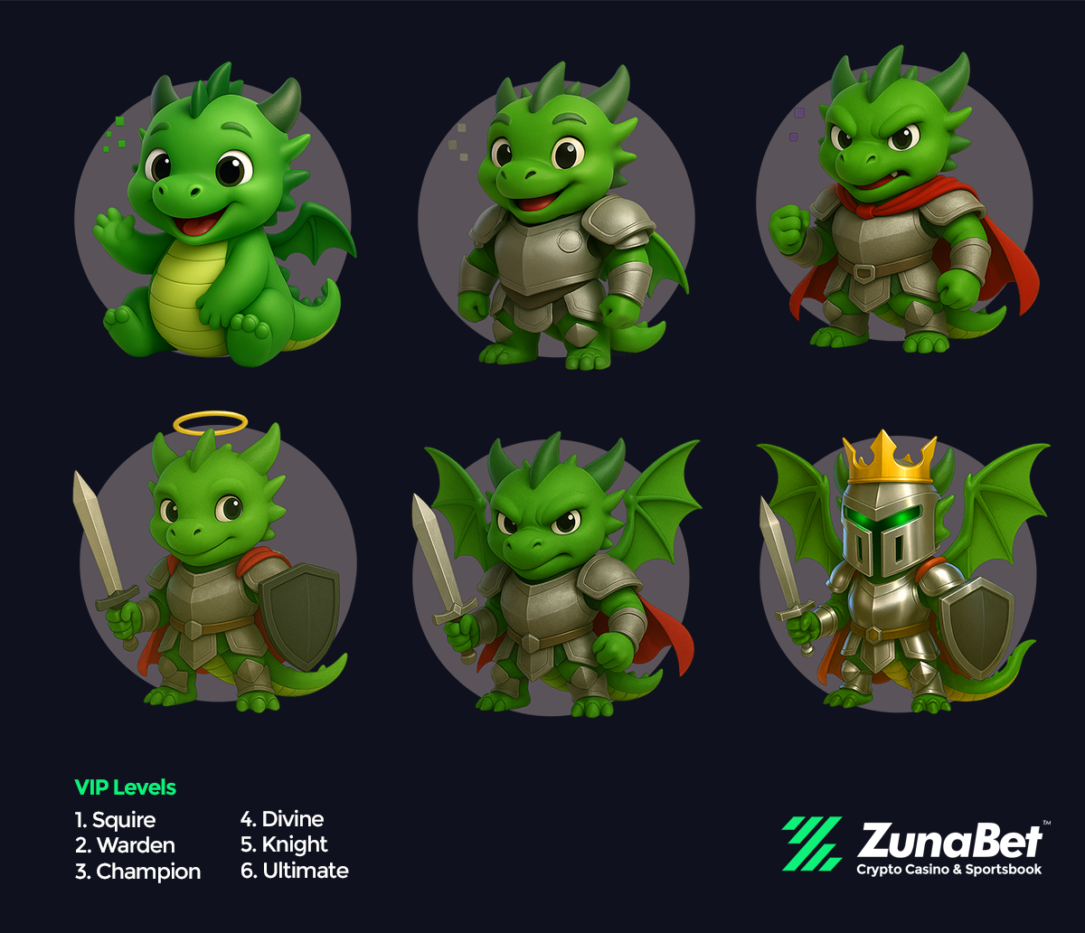
The 20% rakeback at the top tier is high for the industry and gives serious players a real reason to climb. The gamified design also makes the journey feel more engaging than ticking off boxes on a standard VIP ladder.
Welcome Bonus and First Impressions
First-time players also see a clear difference. 888casino and Bet365 offer welcome bonuses, but these are usually tied to a single deposit and come with strict wagering rules.
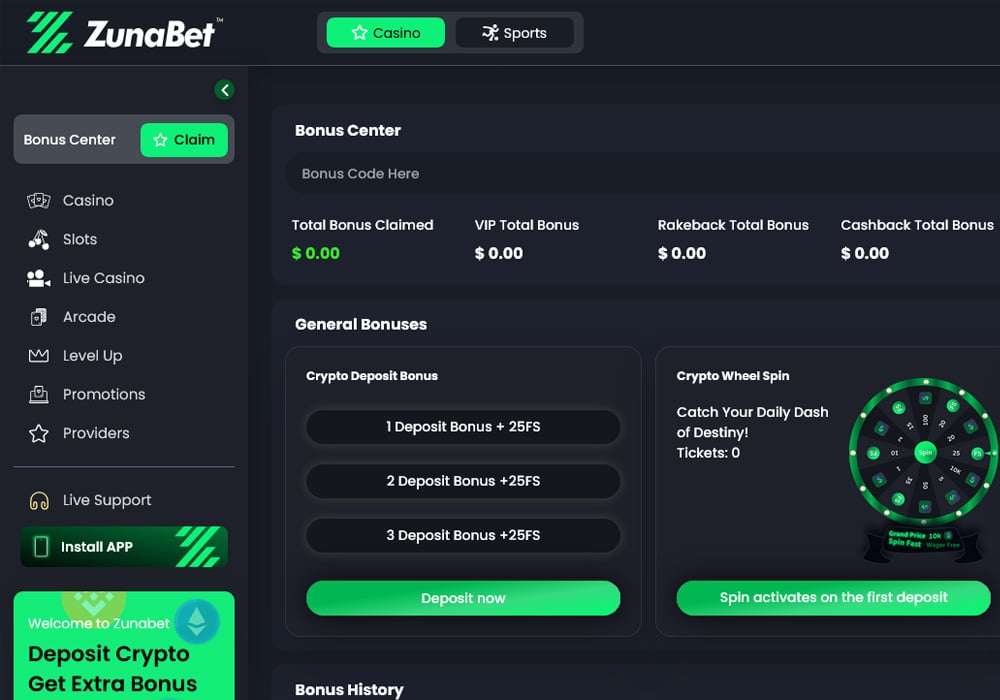
ZunaBet offers a welcome package worth up to $5,000 plus 75 free spins, spread across three deposits. The first deposit gets a 100% match up to $2,000 plus 25 spins. The second gets a 50% match up to $1,500 plus 25 spins. The third gets another 100% match up to $1,500 plus 25 spins. The total works out to a 250% bonus across three deposits, which is more generous than what most traditional casinos offer.
Why ZunaBet Stands Out
ZunaBet is not trying to be the next Bet365 or 888casino. It is going after a different kind of player. Someone who already uses crypto, wants fast payouts, enjoys gamified rewards, and is looking for a platform that offers both casino and sportsbook in one place.
The combination of 11,000+ games, 20+ cryptocurrencies, a sportsbook with deep esports coverage, and a loyalty program that actually feels like a game makes ZunaBet feel built for where the industry is going, not where it has been.
The Future of Online Casinos
Bet365 and 888casino will keep their place in the market. They have strong brands, loyal users, and proven products. But they were built for an older model of online gambling.
ZunaBet represents what the next generation of players are looking for. Crypto payments, huge game libraries, integrated sportsbooks, and loyalty programs that feel like part of the game itself. It is still new, but it is already drawing attention as one of the most exciting platforms to launch in years. For players who want something that fits the way they already use the internet and manage their money, ZunaBet looks like the future of online casinos.
Disclaimer: This is a Press Release provided by a third party who is responsible for the content. Please conduct your own research before taking any action based on the content.
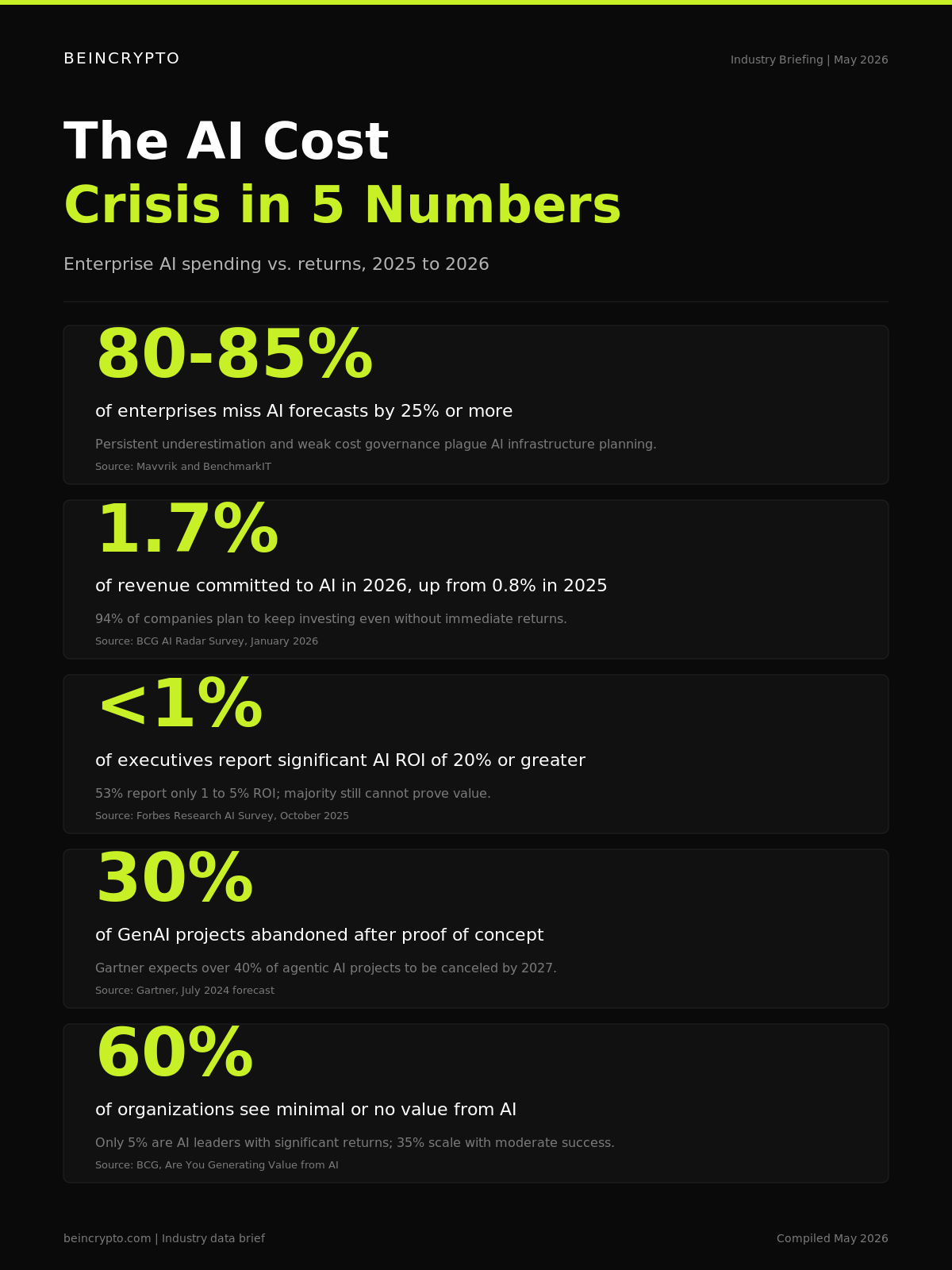
Enterprise AI spending is outrunning corporate forecasts. Microsoft has canceled most internal Claude Code licenses, and Uber has admitted it exhausted its 2026 AI budget within four months.
Token-based pricing on agentic coding tools has produced bills that outpace headcount savings. Companies are now retrofitting financial controls onto rollouts that moved fast in late 2025.
Microsoft and Uber Crystallize the Trend
Verge reporting said Microsoft started winding down most internal Claude Code licenses in mid-May 2026.
Most access in its Experiences and Devices division ends June 30. Engineers had heavily adopted the agentic coding tool.
Token-based billing made consumption unsustainable at deployment scale, Fortune reported. The pullback sits beside Microsoft’s own AI workplace report on 80% productivity gains.
Uber went further. Chief Technology Officer Praveen Neppalli Naga said the ride-hailing firm exhausted its full 2026 AI budget by April.
The company had deployed Claude Code to about 5,000 engineers four months earlier.
Forbes reported per-engineer costs reaching $500 to $2,000 monthly. Roughly 70% of committed code now comes from AI tools, signaling a growing Claude reliance across major engineering teams.
Industry Data Confirms a Wider Squeeze
A 2025 survey from Mavvrik found 85% of companies miss AI cost forecasts by more than 10%. The same study showed 84% report AI spending cutting gross margins by over six percentage points.

“The AI cost crisis has started,” remarked trader and investor Crypto Rover.
Follow us on X to get the latest news as it happens
Big Tech AI capex hit $650 billion in Q1 2026. The number of FinOps teams managing AI spend doubled from 31% to 63% within a year.
Anthropic stands to benefit even as customers complain. The vendor’s $10.9 billion Q2 forecast would deliver its first profitable quarter. The spend story cuts both ways.
Companies are now layering quotas, internal leaderboards, and cheaper model routing onto deployments that ran open in late 2025.
The next quarter will show whether governance can keep consumption flat. Similar pressures could surface inside crypto AI infrastructure builds in coming months.
The post AI Cost Crisis Emerges as Claude Usage and Agentic Coding Bills Spiral appeared first on BeInCrypto.
TLDR:
- Larry Fink renewed calls for SEC approval of tokenized stocks and blockchain-based bond markets.
- BlackRock comments increased focus on tokenized securities and regulated blockchain settlement systems.
- SEC oversight remains the main barrier to broader public trading of tokenized financial assets.
- Crypto discussions intensified after BlackRock linked blockchain systems with traditional financial markets.
BlackRock CEO Larry Fink once again urges U.S. regulators to expedite tokenized stocks and bonds.
His remarks resonated right away in the cryptocurrency and traditional finance spheres, given the fact that BlackRock has over $11 trillion under management.
The comments also highlighted blockchain settlement systems and the regulation of digital securities. Regulatory approval is a key element to wider adoption of tokenized assets, which are still subject to oversight by the SEC.
BlackRock CEO Pushes SEC on Tokenized Stocks and Bonds
Larry Fink said the SEC should move rapidly on tokenized bonds and stocks during recent public remarks. The statement circulated widely after social media post from Crypto Rover amplified the comments.
The BlackRock CEO linked tokenization to the future structure of financial markets. His comments placed blockchain settlement and digital ownership records back into the policy spotlight.
Tokenization converts ownership records into blockchain-based digital assets. Under that structure, stocks and bonds can move through distributed ledger systems instead of traditional databases.
Several large financial firms have already explored tokenized products. BlackRock has also expanded its digital asset presence through crypto exchange-traded funds and tokenized treasury products.
According to the post shared by BankXRP, Fink’s comments drew immediate reactions from crypto traders. Discussions focused on how traditional finance firms may increasingly adopt blockchain infrastructure.
The SEC remains responsible for regulating securities products in the United States. Any approval involving tokenized securities would still require compliance with custody, reporting, and investor protection rules.
SEC Approval Remains Central to Tokenized Asset Expansion
The SEC has not approved large-scale public trading of tokenized stocks and bonds. Current discussions still center on how blockchain systems can operate within existing securities laws.
Traditional financial firms continue testing blockchain settlement tools behind closed networks. However, public market access for tokenized securities still depends on regulatory clarity.
BlackRock’s growing involvement in digital assets has kept the company near the center of crypto market discussions. Its spot crypto ETF products already connected institutional investors with blockchain-related exposure.
The tokenization debate also affects crypto exchanges and custodians. Regulated platforms may eventually support tokenized securities if the SEC establishes clear operating frameworks.
Settlement speed remains one of the main points behind tokenization efforts. Blockchain systems can reduce delays tied to traditional clearing and reconciliation processes.
At the same time, regulators continue reviewing market risks linked to digital securities infrastructure. Oversight standards for reporting, compliance, and asset custody remain under discussion.
Fink’s remarks added pressure to an already active regulatory debate. The discussion now extends beyond crypto-native firms into mainstream financial institutions and asset managers.


Coinbase is not at all concerned with the increasing competition from Wall Street giants or other traditional financial institutions, the crypto exchange’s head of Policy for Europe told CoinDesk on Friday.
“We have always said that a rising tide lifts all ships,” said Katie Harries, adding that Coinbase is “not at all” worried about the increasing involvement of financial institutions in the United States and around the world in crypto.
The company recently posted a loss of $1.49 per share, compared with analyst expectations for a $0.27 profit. Also in the first week of May, Coinbase announced a 14% workforce reduction.
In a brief written interview regarding the Stand With Crypto (SWC) events on Friday, Harries said that the mobilization of people worldwide shows that the established crypto industry has a community behind it that no traditional financial institution can replicate.
“Millions of people around the world chose crypto because they believe in what it represents: open, accessible, peer-to-peer finance,” Harries said. “The people gathered today in London, Paris, New York, Sao Paulo and beyond are not here because a financial institution told them to be. They are here because they believe in this technology and want their governments to support it.”
‘Voters do care about crypto’
Harries also spoke of the American voter. While U.S. citizens do not have crypto top of mind going into the November midterm elections, voters do care about digital assets and have contacted their lawmakers millions of times to let them know, Harries said.
“Voters do care, and the numbers make that clear,” Harries said, refuting recent statements by senators expressing the contrary. “Stand With Crypto has over 3.7 million advocates across six markets. Its members have contacted their lawmakers more than 2.5 million times.”
The Coinbase executive also said that signals “the crypto voter is a permanent fixture in the political landscape, not just in the United States but across the world. Policymakers who have been slow to engage with this community should take note.”
A CoinDesk survey of 1,000 randomly selected U.S. voters across the country showed that just 1% ranked crypto as their top concern. The survey was evenly split between Republican and Democrat respondents (41% of respondents identified with each party to some degree), with a credibility interval of plus or minus 3.53%.
‘Time for sensible regulation is now’
Harries called on regulators worldwide to adopt sensible crypto frameworks, saying the time to do so is now. “The window to shape sensible crypto regulation is open, and the people gathering at the events on Friday are watching.”
SWC is, according to Coinbase, the world’s largest crypto-advocacy organization with over 3.7 million members globally.
Harries’ words come as SWC stages 500 events across four continents and six markets, including the United States, United Kingdom, Canada, Australia, Brazil and the European Union.
The events coincide with Bitcoin Pizza Day, said Coinbase in a statement shared with CoinDesk.
During the global event, a livestream will feature discussions on ecosystem and policy developments worldwide.
Coinbase’s statement notes the event takes place at a critical moment for crypto as market structure legislation advances through the U.S. Congress.
Faryar Shirzad, Chief Policy Officer at Coinbase, a Stand With Crypto partner, said that this Friday, the rally “proves that the crypto voter is a global phenomenon. People around the world want the freedom to exchange value peer-to-peer, and they want their governments to help make that a reality. This hunger for financial progress isn’t confined to any one nation.”
Shirzad also said that “getting crypto regulation right is one of the most critical policy challenges of our generation, and it requires a global effort, not just action in Washington. “
Bitcoin Pizza Day has become a celebrated moment for millions of crypto users, commemorating the first real-world bitcoin transaction. On May 22, 2010, Laszlo Hanyecz paid 10,000 BTC for two pizzas. That bitcoin at current prices is worth roughly over $770 million.
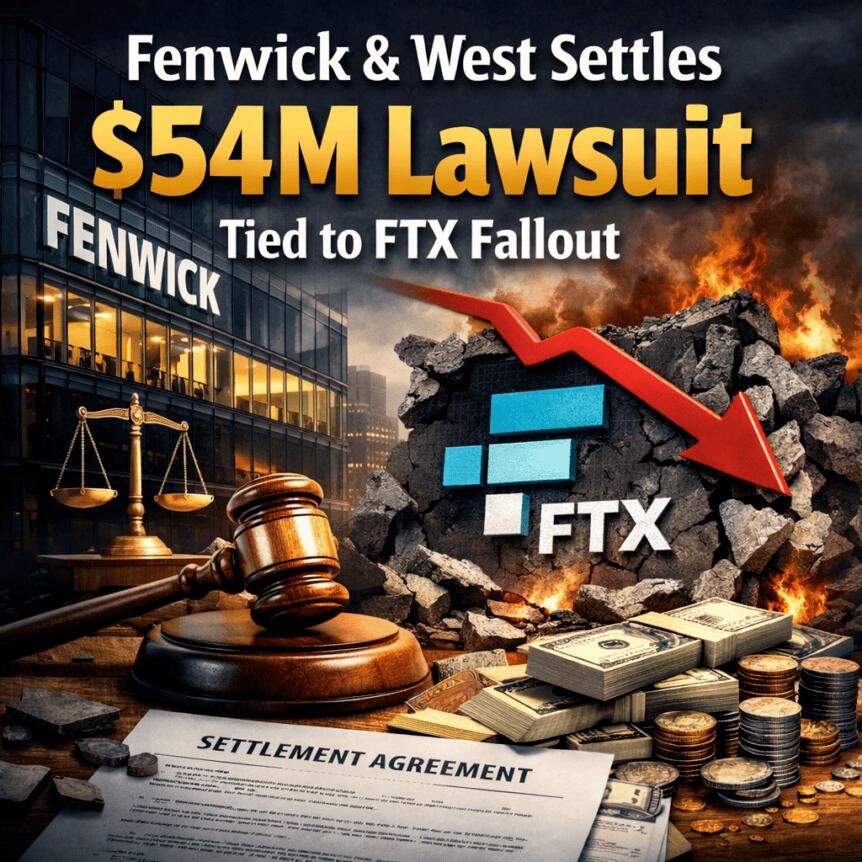
In a development with wide-ranging implications for professional liability and regulatory oversight in the crypto sector, Fenwick & West LLP has agreed to pay $54 million to settle a 2023 class-action filed by former customers of the FTX exchange. The suit alleges that the Silicon Valley law firm played a central role in facilitating the exchange’s alleged misappropriation of customer funds by advising on entities, structures and strategies intended to hide commingling with Alameda Research and to sidestep licensing requirements. The agreement, announced on Friday, remains subject to the approval of a U.S. judge before it becomes final.
According to Cointelegraph, the plaintiffs contended that Fenwick guided FTX on creating legal structures designed to reduce the likelihood of needing money transmitter licenses and to obscure the flow of customer funds. The settlement underscores the continuing legal fallout from FTX’s 2022 collapse and comes amid heightened regulatory scrutiny of governance, risk management, and professional duties within crypto companies and their advisers.
Key takeaways
- Fenwick & West LLP will pay $54 million to settle a 2023 class-action by former FTX customers; finality hinges on court approval.
- The suit alleges Fenwick facilitated the alleged fraud by shaping entities and transactions to hide fund commingling and to evade licensing requirements.
- The Fenwick settlement adds to the post-FTX litigation landscape as regulators intensify scrutiny of professional roles in crypto insolvencies.
- The FTX Recovery Trust distributed $2.2 billion to creditors and customers in March; the next distribution is scheduled for May 29.
- Asset-management questions persist within the Recovery Trust, including criticisms of liquidation practices and the mispricing of certain holdings, such as aCursor stake sale that underscored potential opportunity costs.
Fenwick settlement in the FTX aftermath
The case sits within a broader pattern of litigation that followed FTX’s collapse, including actions against advisers who were involved in shaping the exchange’s corporate and financial structures. Fenwick & West initially sought to have the lawsuit dismissed, but later agreed to a settlement in February before the publicly disclosed $54 million figure. The settlement’s fate now rests with a U.S. judge, who must sign off for the agreement to proceed and for the court to resolve the plaintiffs’ claims against the firm.
Analysts note that the dispute highlights the line between legal counsel’s traditional professional duties and the risks associated with guiding entities through complex, cross-border crypto structures. As regulators increasingly scrutinize how law firms, bankers, and service providers interact with crypto platforms, the Fenwick case may inform ongoing considerations of duty, due diligence, and potential liability in crypto-related governance and enforcement actions.
FTX Recovery Trust distributions and asset-management challenges
The FTX Recovery Trust, which oversees the restitution process for creditors and customers, distributed $2.2 billion to those affected in March. A subsequent tranche is anticipated on May 29, continuing the process of asset realization and distribution. While the Trust seeks to fulfill its mandate, dissatisfaction has grown among some claimants and observers who accuse the Trustee and related administrators of mismanaging asset liquidation or realizing assets at prices that undervalue recovery potential.
One notable illustration of these concerns concerns a 2023 sale of a 5% stake in AI company Cursor for about $200,000. At the time, the Value of that stake was not fully recognized within the recovery plan; by April 2026, Cursor’s value had risen to an estimated $3 billion, highlighting the risk of valuation and timing in bankruptcy- and estate-management contexts. Such disparities underscore the tension between rapid distributions and maximizing recoveries for creditors and customers in crypto collapses.
These dynamics occur amid broader questions about how trusts securing crypto-liquidation proceeds should price and sell recovered assets, how to manage strategic stakes, and how to balance speed of payouts with maximized recoveries. The discussions also intersect with regulatory expectations for how distressed crypto assets are handled, including transparency, valuation methodologies, and fiduciary duties of trustees and advisers.
Regulatory and policy implications for the sector
The Fenwick settlement and the Recovery Trust’s liquidation approach sit at the intersection of legal professional responsibilities and crypto-regulatory policy. In the United States, the episode feeds into inquiries by lawmakers and regulators into the adequacy of compliance, licensing, and anti-money-laundering controls across crypto platforms and their service networks. For institutions, the developments raise practical considerations around vendor risk, professional liability, and the scope of due diligence required when assisting crypto entities through restructuring and wind-downs.
From a policy perspective, the events resonate with ongoing debates around licensing regimes, cross-border supervision, and the treatment of crypto assets under consumer protection, securities, and banking frameworks. In particular, the case touches on enforcement priorities among the U.S. agencies—such as the SEC, CFTC and DOJ—and echoes discussions around broader regulatory alignment with frameworks like MiCA in the European Union, as jurisdictions seek greater clarity on the treatment of exchanges, asset custodians, and recovery processes. For banks and financial counterparties, the evolving regime continues to influence risk management practices, licensing considerations, and the due-diligence standards applied to customers and counterparties engaged in crypto-related activities.
Industry observers emphasize that the outcomes may shape professional-standards expectations for law firms and other service providers involved in crypto insolvencies, with potential implications for standards of care, disclosure, and conflict-management obligations. The developments also illustrate the regulatory and legal risk that can accompany asset-holding and restructuring strategies in distressed crypto businesses, reinforcing the need for robust AML/KYC controls and transparent governance across the ecosystem.
Closing perspective
As courts evaluate the Fenwick settlement and the Recovery Trust continues to unwind and distribute assets, authorities and market participants will be watching how these processes inform regulatory expectations, professional responsibility standards, and the governance of crypto insolvencies moving forward.

Fenwick & West LLP, the law firm that advised the now-defunct FTX exchange, has agreed to pay $54 million to settle a 2023 class-action suit brought by former FTX customers. The settlement, reached as the case moves through U.S. courts, remains subject to judicial approval.
The plaintiffs contend that Fenwick “facilitated FTX’s fraud” by playing a pivotal role in how the alleged scheme operated. They allege the firm helped design and deploy legal structures and other mechanisms that obscured the misuse of customer funds, including transfers between FTX and its trading arm, Alameda Research, and created entities intended to avoid money-transmitter licensing. The claim is that these strategies enabled commingling of funds and aided the concealment of improper fund movements.
The filing indicates Fenwick had resisted the suit’s dismissal but eventually agreed to the settlement in February. A court still must approve the agreement before any payment is issued to plaintiffs. The development adds another layer to the sprawling legal aftermath of FTX’s 2022 collapse, which continues to reverberate through the crypto industry and invite closer scrutiny from regulators and lawmakers.
Key takeaways
- The law firm Fenwick & West will pay $54 million to settle a 2023 class action brought by former FTX customers; settlement approval remains pending.
- Plaintiffs allege Fenwick helped facilitate FTX’s alleged fraud by advising on entities and structures intended to hide customer funds and avoid licensing requirements.
- The case is part of the broader legal fallout from FTX’s 2022 collapse, which has intensified scrutiny of crypto firms and their advisers.
- The FTX Recovery Trust has distributed about $2.2 billion to creditors and customers in March, with another payout scheduled for May 29, underscoring ongoing asset-liquidation processes.
- Critics say the Trust has mismanaged asset liquidation, often selling recovered assets at discounts or below peak values reached after the collapse, highlighting concerns about the pace and pricing of distributions.
FTX estate distributions and questions over asset management
In March, the FTX Recovery Trust, the vehicle handling distributions to creditors and customers affected by the exchange’s failure, announced a distribution of roughly $2.2 billion. The next tranche of reimbursements is scheduled for May 29, but ongoing criticism from affected users centers on how assets have been liquidated. Several observers contend that the Trust has offloaded assets at prices well below potential peak values achieved in the wake of the collapse, potentially shortchanging victims of the exchange’s failure.
Related coverage has noted the ongoing scrutiny of firms connected to FTX’s collapse and the broader implications for the crypto legal landscape, including questions about accountability for law firms and other service providers involved in high-profile crypto failures.
What comes next remains uncertain: the court must sign off on the Fenwick settlement, and the Recovery Trust’s asset-disposition strategy will likely continue to attract attention from creditors, regulators, and market watchers as the FTX saga evolves.
Readers should stay attentive to developments in the court approval process for Fenwick’s settlement, forthcoming distributions from the Recovery Trust, and any new disclosures about how asset sales and legal structuring influenced the handling of customer funds in the FTX era.
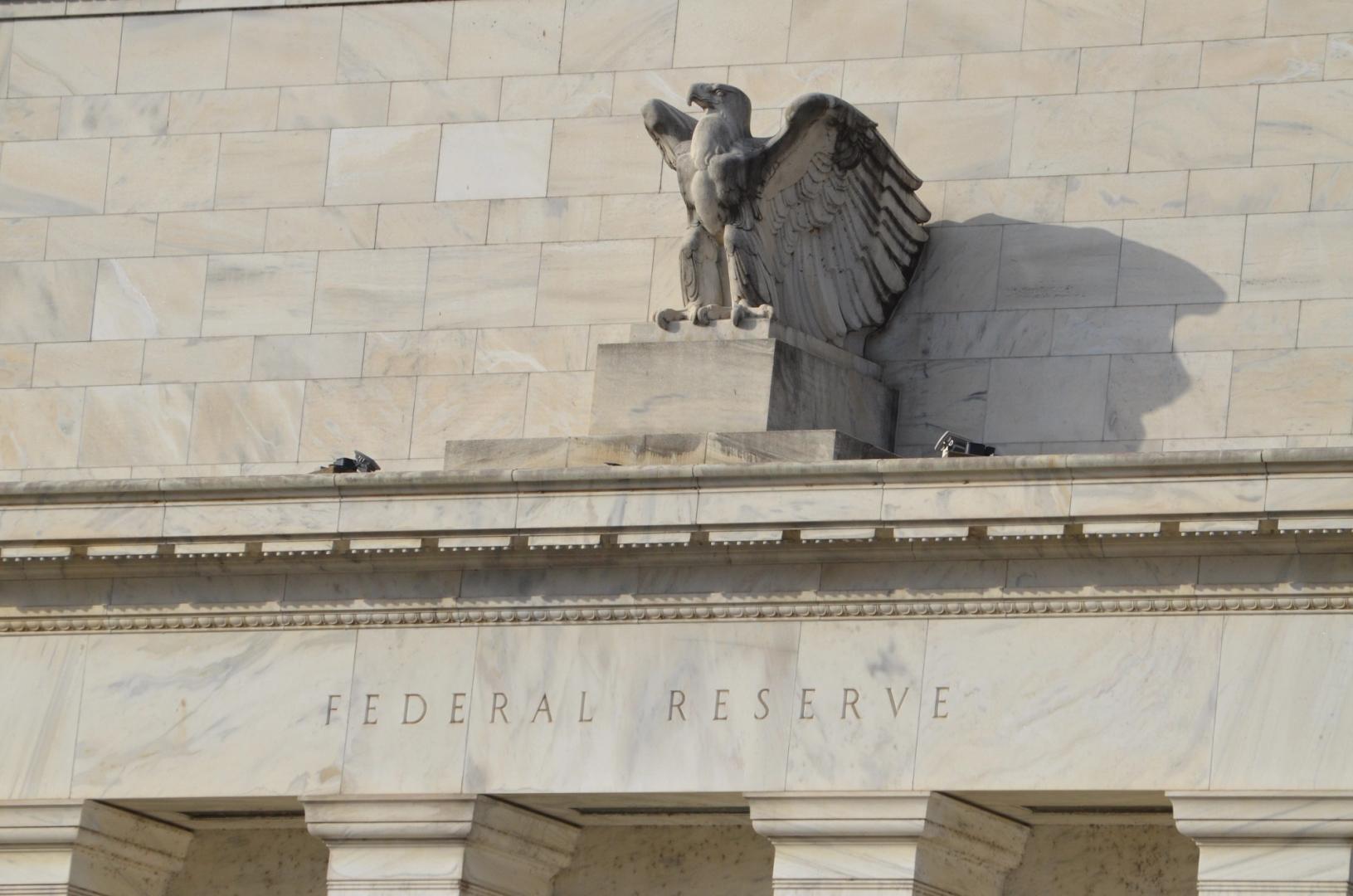
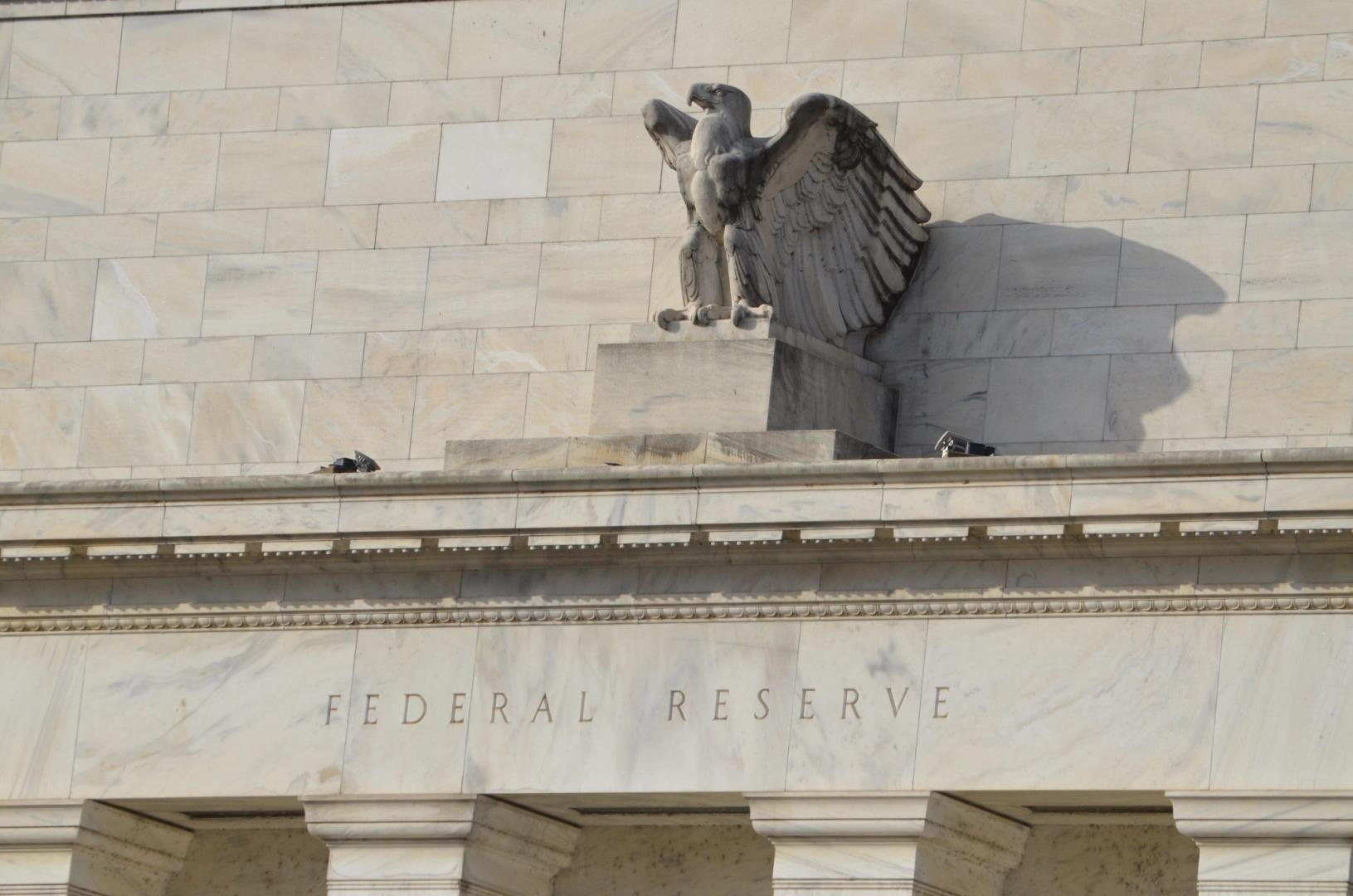
The Federal Reserve published the latest version of its proposal to create a “skinny” master account, updating the proposal first published last December. In the same week, President Donald Trump signed an executive order directing the greater integration of digital assets with existing payment networks.
You’re reading State of Crypto, a CoinDesk newsletter looking at the intersection of cryptocurrency and government. Click here to sign up for future editions.
The narrative
U.S. President Donald Trump signed two executive orders this past Tuesday. One directed the broader government to update existing regulations to better integrate crypto into payment systems, while the other directed the Treasury Department and regulators to strengthen Bank Secrecy Act regulations. The next day, the Federal Reserve Board published its updated proposal for a skinny master account, laying out more detail about its approach to granting crypto firms access to its payment rails.
Why it matters
The crypto industry’s integration with the broader federal payments system is certainly a goal for the industry at large. Last week’s proposals may bring that a step closer.
Breaking it down
The Federal Reserve’s proposal on Wednesday updates its skinny master account request for information first published in December 2025, laying out how the central bank envisions granting fintech and crypto firms access to its payment rails without requiring them to be full fledged, Office of the Comptroller of the Currency-chartered banks.
The fintech-focused order directed federal regulators to review their existing policies to evaluate how they regulate financial institutions and identify rules that might block fintech firms from partnering with regulated entities.
The order also directed the Fed to review how it handles uninsured depository institutions and their access to payment accounts.
Part of that review includes having the Federal Reserve member banks evaluate if they can independently grant payment accounts to entities.
The Fed cannot necessarily do all of this on its own; Congress may need to pass legislation further detailing what types of entities may be qualified for an account.
The BSA-focused order directs the U.S. Treasury Department and regulators to issue guidance to banks and other entities.
“My Administration will not tolerate national security and public safety risks caused by illicit cross-border financial activity, nor will it permit risks to our financial system posed by the extension of credit or financial services to the inadmissible and removable alien population,” Trump’s order said.
This would include an advisory that notes “payroll tax evasion,” shell companies and “the strategic use of unregistered money services businesses, third-party payment processors, or peer-to-peer platforms to facilitate ‘off-the-books’ wage payments intended to bypass Bank Secrecy Act reporting thresholds or tax obligations,” among other types of entities.
While the order did not explicitly mention cryptocurrency or decentralized finance trading platforms, they could get caught up in any ultimate guidance, said Nicholas Anthony, a research fellow at the Cato Institute.
The next question is what might be in the guidance and advisory.
“Right now it’s in the hands of the Treasury, and the Treasury is able to apply it not only however it sees fit, but also to whoever it sees fit, because of the broader power that the Treasury has under the Bank Secrecy Act,” he said.
Senate shenanigans
The Senate Banking Committee voted to advance the Clarity Act just over a week ago.
The expectation was the overall Senate might get to this sometime in the next month, to sort out ethics and other outstanding issues and then vote on whether to send the bill to the House of Representatives. That timeline took a bit of a hit Thursday, when the Senate left town for the Memorial Day recess without voting on a reconciliation bill to fund the Department of Homeland Security, among other things.
The issue is this: There’s really only so much time to get stuff done on the Senate floor. There are 19 working days in June and 15 in July. There’s another five in August and then everyone’s gone for the rest of the summer.
In that time, the Senate has to sort through reconciliation, a renewal of the Foreign Intelligence Surveillance Act (which will expire in mid-June) and possibly a housing bill.
Adding to the tension is the reason why the Senate left town. President Donald Trump’s administration wanted $1 billion for his planned East Wing ballroom and more recently another $1.8 billion for a weaponization fund, which members of both parties have referred to as a “slush fund.” The Senate had already dropped the ballroom funding from the bill, but the other $1.8 billion appeared to be too much to negotiate this week.
Negotiations over these issues — if there isn’t any backroom dealing through the recess — can draw out the negotiation process, further limiting floor time for Clarity. And of course, there’s still the ethics provision itself in the market structure bill. The White House hasn’t yet indicated what exactly it might accept, so that’s another negotiation to watch out for.
This week
- The House and Senate are on recess this week.
If you’ve got thoughts or questions on what I should discuss next week or any other feedback you’d like to share, feel free to email me at nik@coindesk.com or find me on Bluesky @nikhileshde.bsky.social.
You can also join the group conversation on Telegram.
See ya’ll next week!

Trump Iran Deal Lifts Crypto Markets By $75 Billion

Chris Brown & Jada Wallace Pop Out In Vegas For Tyga’s Show

Who is TV star The Yorkshire Shepherdess Amanda Owen?

US brings back mandatory military draft registration

Steven Gerrard disagrees with Gary Neville over ‘shock’ Chelsea and Arsenal claim | Football

Register Renaming | Hackaday

#bitcoin #cryptoupdate #xrp #crypto #xrpholders #llc #web3 #coldwallet #ripple #cryptocurrency #fyp

If I find this, can I achieve financial freedom? #Moonstone #Fluorite #Crystal #RockHunting

Financial Crash Expert: A Once In a Lifetime Recession Is Coming
-

 Crypto World3 days ago
Blockchain.com files with SEC for U.S. IPO
-

 Fashion2 days ago
Holiday Weekend Open Thread – Corporette.com
-

 Crypto World3 days ago
Bitcoin Accumulation Weakens as BTC Realized Losses Hit $600M
-

 Business2 days ago
Dell Technologies DELL Stock Surges 15% on AI Server Momentum and Analyst Upgrades in 2026
-

 Crypto World2 days ago
Space X IPO Is ‘Bad News’ for Tech Stocks: But What About Bitcoin?
-

 Politics2 days ago
Makerfield: a tale of two social-media histories
-

 Crypto World3 days ago
MicroStrategy’s Saylor Says Miners No Longer Set Bitcoin Price, Another Force Has Taken Over
-

 Crypto World1 day ago
Robinhood crypto COO Tanya Denisova exits
-

 Business3 hours ago
NYT Strands Answers May 24 2026 Revealed for Puzzle No. 812 Theme Summer Essentials
-
 Tech2 days ago
A 0.12% parameter add-on gives AI agents the working memory RAG can’t
-

 Crypto World2 days ago
AI infrastructure race heats up as IREN pitches full-stack strategy, WhiteFiber lands $160M deal
-

 Tech3 days ago
WhatsApp ads could make Irish debut after discussions with DPC
-

 Business3 days ago
Trump Invests $1M-$5M in Kura Sushi USA Chain With 27 California Locations
-

 Tech3 days ago
You Can Now Add ChatGPT To PowerPoint
-
Crypto World6 days ago
Revolut Launches Dogecoin Debit Card Across UK and EU
-

 Sports3 days ago
2026 CJ Cup Byron Nelson leaderboard: Brooks Koepka finds putting stroke in Round 1
-

 Crypto World3 days ago
Trump Media’s Bitcoin Stash Shrinks Again as 2,650 BTC Lands on Crypto.com
-
 NewsBeat3 days ago
Charity run by Reform leader Malcolm Offord accused of ‘law breaking’ over Scottish registration
-
Business3 days ago
Goldman Sachs reinstates Ageas stock coverage with neutral rating
-

 Crypto World4 days ago
Exa Labs raises $250 million in funding led by a16z
You must be logged in to post a comment Login