
Crypto World
Securitize Sees 841% Revenue Surge in SPAC Filing

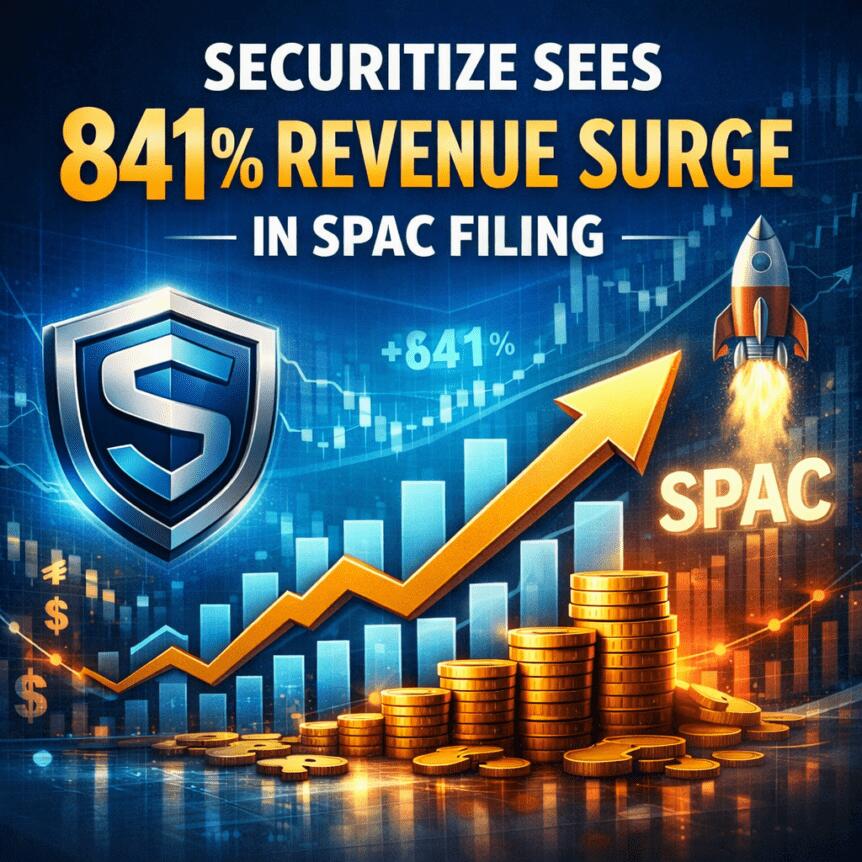
Tokenization platform Securitize Holdings is accelerating its path to a public listing through a merger with a Cantor Fitzgerald-backed SPAC, as the company reports a surge in revenue and lays out ambitious 2026 targets. In a public registration statement filed with the U.S. Securities and Exchange Commission, Securitize said nine months ended September 2025 revenue reached $55.6 million, an 841% jump from the same period in 2024. The company had $18.8 million in revenue for all of 2024, up 129% from 2023’s $8.2 million, underscoring the rapid growth of asset tokenization as traditional finance explores the sector under a crypto-friendly regulatory framework. The merger announcement in October with Cantor Equity Partners II would bring Securitize to the public markets, with the combined entity valued at approximately $1.24 billion on a pre-transaction basis and a $225 million private investment in public equity (PIPE) component to support the deal. Management signaled 2026 revenue around $110 million and EBITDA of $32 million, signaling an intent to scale the platform’s institutional footprint amid ongoing demand for tokenized assets.
Key takeaways
- Securitize reports nine-month 2025 revenues of $55.6 million, an 841% YoY increase versus the same period in 2024.
- Full-year 2024 revenue was $18.8 million, up 129% from 2023’s $8.2 million, reflecting accelerating demand for tokenization services.
- The proposed SPAC merger with Cantor Equity Partners II would value Securitize at about $1.24 billion pre-transaction, including a $225 million PIPE.
- Projected 2026 revenue stands at $110 million with EBITDA of $32 million, signaling a path to profitability aligned with scale economics.
- On-chain tokenized asset value has surged, underscoring broader market momentum behind tokenized real-world assets and crypto-native infrastructure.
Tickers mentioned: $ETH
Sentiment: Bullish
Market context: The wave of tokenization activity is broadening as on-chain value of tokenized assets climbs. Data from RWA.xyz shows on-chain tokenized value reaching an all-time high of $24.2 billion, excluding stablecoins, with roughly 40% in tokenized US Treasuries and 20% in tokenized commodities, illustrating growing diversification across asset classes. Ethereum (CRYPTO: ETH) remains the leading platform for asset tokenization, supporting the bulk of activity when layer-2 networks are counted, which reflects a continued shift toward programmable, on-chain finance despite ongoing regulatory scrutiny.
Why it matters
The Securitize filing and the SPAC pathway illuminate a pivotal shift in how traditional finance views tokenized assets. If completed, the merger would position Securitize as a bridge between regulated securities markets and the burgeoning on-chain asset ecosystem. The company’s growth figures—nine-month 2025 revenue of $55.6 million and a forecast of $110 million for 2026—underscore demand for tokenization infrastructure among institutional clients and asset managers seeking enhanced liquidity, transparency, and settlement efficiency. A successful listing could also catalyze similar integrations, encouraging more traditional institutions to engage with tokenized instruments under a framework that regulators have signaled is becoming more navigable for compliant issuers.
The broader market backdrop emphasizes how tokenization is moving from a niche concept to a scalable, revenue-generating segment within the crypto and financial services sectors. The on-chain value metric, rising 310% over the past year to a record $24.2 billion, reflects both investor appetite and the operational utility of tokenized assets. As ETH-based tokenization platforms mature, the industry has benefited from continued attention from major institutions and the growing feasibility of tokenized real-world assets (RWAs). The alignment with a reputable SPAC sponsor and a PIPE financing package also suggests an effort to balance growth with investor protections and liquidity, key factors as regulators refine oversight of tokenized offerings and custody frameworks.
The narrative around tokenization is not purely technical; it intersects with capital markets structure, regulatory clarity, and investor risk appetite. The SEC’s evolving guidance on tokenized securities—especially distinctions between issuer and third-party tokenized instruments—has provided a pathway for issuers to pursue regulated tokenization without sacrificing compliance. The industry-wide momentum is reinforced by continued discussions around tokenized stocks and ETFs on traditional exchanges, illustrating a broader trend toward hybrid finance that marries blockchain-enabled efficiency with conventional governance and disclosure standards.
What to watch next
- Regulatory clearance: SEC review and approvals for the SPAC merger remain a gating factor before completion in H1 2026.
- Shareholder approvals: Cantor Equity Partners II and Securitize shareholders will need to approve the transaction to finalize the merger.
- PIPE closing: The $225 million PIPE is a critical funding component; timing and alignment with closing milestones will be watched closely.
- Operational milestones: The company’s 2026 targets—revenue of $110 million and EBITDA of $32 million—will serve as performance benchmarks post-merger.
- Regulatory landscape: Ongoing guidance on issuer-versus-third-party tokenized securities may influence the pace of new deals and custody arrangements for tokenized assets.
Sources & verification
- Securitize’s public registration statement filed with the U.S. Securities and Exchange Commission detailing nine-month 2025 revenue, growth metrics, and forward-looking projections.
- The October announcement confirming plans to merge with Cantor Equity Partners II SPAC and related financial terms, including the PIPE financing.
- RWA.xyz data on the on-chain value of tokenized assets and its all-time high level, used to illustrate market momentum behind RWAs.
- Industry references to Ethereum’s role in asset tokenization and its market share when layer-2 networks are considered, reflecting a broader industry consensus on the dominant platform for tokenized assets.
Securitize’s SPAC merge pushes tokenization into the public markets
In pursuing a public listing via a Cantor-led SPAC, Securitize is betting that its platform, coupled with institutional partnerships and a diversified asset-tokenization pipeline, can scale more rapidly within a regulated environment. The nine-month 2025 revenue figure of $55.6 million demonstrates a significant acceleration relative to prior years, reinforcing management’s confidence in a 2026 revenue target of $110 million. The PIPE component of $225 million adds a measure of financing discipline to the deal, potentially easing the transition into public markets and supporting product expansion, productization of tokenized offerings, and expanding custodian capabilities for institutional customers.
Looking forward, the transaction’s completion hinges on standard regulatory clearances and shareholder votes, along with achieving the projected financial outcomes. If approved, Securitize could set a precedent for how tokenization platforms scale within traditional capital markets, leveraging established investor networks and strategic partnerships with blue-chip firms already active in the space. The broader tokenization trend—now reflected in a roughly $24.2 billion on-chain value—helps contextualize why this deal is being watched by participants across crypto and finance, as it signals a potential inflection point where tokenized assets begin to operate with more predictable liquidity, governance, and compliance frameworks than in prior years.



Summary
- Ripple plans to apply for a Virtual Asset Service Provider license from the Central Bank of Brazil, pulling its operations under Brazil’s new crypto framework instead of operating as a grey “technology vendor.”
- Banks and fintechs including Banco Genial, Braza Bank and Nomad already use Ripple infrastructure for same‑day dollar transfers, real‑backed stablecoins and cross‑border fund flows, while partners like CRX and Justoken issue tokenized commodities and other RWAs via Ripple custody tools.
- For Ripple and XRP watchers, Brazil combines deep remittance corridors, a sophisticated banking sector and pragmatic tokenization rules, making it a key test case for whether XRP‑ledger rails can matter beyond litigation headlines and secondary‑market hype.
Ripple (XRP) is stepping up its Latin American strategy, moving to formalize its presence in Brazil’s regulated crypto market while quietly deepening real-world payment and tokenization rails in the country. The company said it plans to apply for a Virtual Asset Service Provider (VASP) license from the Central Bank of Brazil, a move that would pull its local operations directly under the country’s evolving crypto framework.
The push comes as several Brazilian financial institutions are already plugged into Ripple’s infrastructure for cross‑border flows and on‑chain settlement. Investment bank Banco Genial uses Ripple’s network to process same‑day dollar transfers, effectively turning the ledger into back‑end plumbing for faster FX and remittance rails. Braza Bank has gone a step further, issuing a real‑backed stablecoin on the XRP Ledger, using Ripple’s tech stack to tokenize local fiat and streamline domestic and cross‑border settlements.
Fintech firm Nomad is also using Ripple’s network for stablecoin‑based fund flows between Brazil and the U.S., positioning XRP‑ledger rails as an alternative to traditional correspondent banking in a corridor notorious for fees and friction. At the same time, partners including CRX and Justoken are issuing tokenized assets through Ripple’s custody products, covering commodities and other real‑world assets that local investors already understand and regulators can more easily slot into existing frameworks.
If granted, a VASP license would effectively turn Ripple from a quasi‑grey “technology vendor” into a supervised participant in Brazil’s digital asset regime. That matters for institutions that want crypto‑adjacent yield, remittance efficiency, or tokenization upside but remain unwilling to touch unlicensed infrastructure. For Ripple, Brazil offers the right mix: large remittance corridors, a sophisticated banking sector, and regulators that are tough but pragmatic on stablecoins and tokenized assets.
For XRP and broader market watchers, the Brazil pivot is another sign that Ripple’s post‑U.S.‑litigation strategy leans heavily on jurisdictions where payment use cases, not speculative trading, are the headline. If Ripple can secure a VASP license and scale real‑world flows through banks like Genial and Braza, Brazil could become one of the key test beds for whether XRP‑ledger infrastructure can matter beyond courtrooms and secondary‑market narratives.
NFT marketplace shelves March 30 TGE target with no new date, ends rewards campaign, and offers fee refunds.
OpenSea has pushed back the launch of its long-awaited SEA token for the second time, with co-founder and CEO Devin Finzer announcing Monday that the previously planned March 30 token generation event will not go ahead as scheduled.
“A delay is a delay. I’m not going to dress it up, and I know how it lands,” Finzer wrote on X, adding that the OpenSea Foundation opted to hold off rather than force a debut in challenging market conditions. No new date has been set.
The SEA token was first announced in February 2025 as part of OpenSea’s broader strategy to transform the platform beyond NFTs into a multi-chain trading hub.
Alongside the delay, OpenSea is making several changes to its incentive program. The current Treasure rewards wave will be the last, though accumulated rewards will be “meaningfully considered.”
Users who participated in Seasons 3 through 6 will have the option to claim refunds for platform fees paid during those periods, though doing so will require forfeiting any Treasure accumulated from those waves.
Starting March 31, OpenSea will also cut token swap trading fees to 0% for 60 days, a move aimed at driving adoption of its expanded OS2 platform, which now includes cross-chain trading, mobile features, and perpetual futures.
Finzer framed the delay as a strategic decision rather than a setback. “The thing that’s carried us through every cycle was a willingness to make hard calls when it mattered,” he wrote, adding that the foundation would announce a new timeline only once launch conditions are deemed appropriate.
Community Apathy
The response from the community has been predictably sour, though muted; likely a reflection of eroding expectations rather than surprise.
The refund mechanism itself has drawn criticism, with users questioning why participants in earlier waves who traded significantly higher volumes weren’t given the option.
“Like many of you, I’ve been personally looking forward to SEA since before I joined. I’m with you. But I also want to see it set up for long-term success and sustainability,” OpenSea CMO Adam Hollander wrote on X.
The reassurances may not land easily, given the platform’s track record on this front. As The Defiant reported last October, most users’ trust in the legacy NFT platform had already fallen as the company sought to convince users to trade tokens on OpenSea, with data showing that much of the activity at the time was driven solely by SEA farming incentives.
For many participants who have spent months farming Treasure across multiple reward waves, the indefinite delay amounts to the latest in a long series of deferred promises from a platform once synonymous with the NFT boom.
A Long Time Coming
The SEA token has been dangled in front of OpenSea users for the better part of two years.
Speculation began in earnest in late 2024, when the OpenSea Foundation surfaced on X and was found to have been registered in the Cayman Islands.
The formal announcement arrived in February 2025 alongside the public launch of OS2, OpenSea’s revamped trading platform, which integrated token swaps, a pivot driven by a significant decline in NFT trading volume, which had fallen from a peak of $5 billion per month in January 2022 to just $195 million in January 2025.
In September 2025, OpenSea quietly doubled its NFT trading fees from 0.5% to 1%, funneling half of all fees into a pre-token launch rewards pool distributed through a gamified system.
Much of the trading activity that followed was driven by SEA farming incentives rather than genuine product-market fit, with critics pointing to surprise KYC requirements and vague promises regarding how 2021-era traders would be rewarded.
After OpenSea concluded its first chest farming season in October 2025, the platform’s DEX aggregator volumes plummeted from an all-time high of $462 million on October 15 to roughly $5 million per day in the weeks that followed. DeFiLlama data shows that daily volumes have plunged further to just $2 million.
Crypto World
Orlando Bravo pushes back on private markets criticism: ‘Everybody’s extremely comfortable’

Orlando Bravo, managing partner of Thoma Bravo, speaks during “Squawk on the Street” at the World Economic Forum in Davos, Switzerland, on Jan. 21, 2026.
Oscar Molina | CNBC
Orlando Bravo, founder and managing partner of Thoma Bravo, pushed back on mounting criticism of private markets, saying deep sector expertise is separating winners from losers as artificial intelligence creates disruption across the software industry.
“We have been living in the details of the space for a very, very long time, not on a high level, not investing in stocks, [but] investing in companies, customer contracts, knowing the details. So, yes, as a sector specialist in private equity, our companies are very, very different,” Bravo said Tuesday in an interview with CNBC’s Leslie Picker. “We are so comfortable with our private credit book, given the choices we’ve made as a specialist.”
His comments come as investors step up scrutiny of private-market valuations and liquidity after a wave of markdowns and redemption pressure across private credit and equity funds.
Morgan Stanley recently said it expects direct-lending default rates to reach about 8%, nearing Covid-era peaks. Meanwhile, John Zito of Apollo Global Management told UBS clients last month that private equity firms are broadly misstating the value of their software holdings, saying “all the marks are wrong.”
Bravo said Thoma Bravo’s investor base, which includes major U.S. pension funds and global sovereign wealth funds, has remained confident due to the firm’s long track record and transparency.
“They’ve seen our marks, they’ve seen our exits, they’ve seen our progression,” he said. “Everybody’s extremely comfortable.”
Addressing one of the firm’s more visible missteps, Bravo acknowledged overpaying for customer experience software company Medallia. Apollo’s Zito pointed to this $6.4 billion take-private deal in 2021 specifically, saying it will be “worse than people expect,” according to the Wall Street Journal.
“When we bought it, we way overestimated or extrapolated the very high rate of growth of that company into the future. We made a mistake. And that cost us to pay too much. Now, the equity from our standpoint has been impaired for a long time,” Bravo said. “Our investors, this group that holds the capital in the world, has known that for years. So there is no new news.”
Still, he said the broader portfolio is performing strongly.
“The other 77 companies that we have, for the most part — and it’s so relevant for AI — they’re absolutely crushing it,” Bravo said.
Bravo drew a sharp distinction between private equity-owned companies and many publicly traded software firms, saying the latter face accelerating disruption. He noted that recent valuation declines in some names are “very warranted.”
“In the public markets, if you look at it, there are many, many software companies in the public markets that will be disrupted from AI. Those companies were going to be disrupted anyway. AI will create a disruption a lot faster,” Bravo said.
U.S. stocks opened higher on Tuesday, extending a risk‑on regime across the Dow, S&P 500 and Nasdaq even as crypto‑linked names like Coinbase and MicroStrategy once again trade more like volatile Bitcoin proxies than companies being valued on their own fundamentals.
Summary
- Gate data cited by ChainCatcher show the Dow opening up 0.66%, the S&P 500 up 0.42% and the Nasdaq up 0.33%, extending a risk‑on regime where dips in U.S. equities remain shallow and quickly bought.
- Crypto‑linked stocks like Coinbase and MicroStrategy continue to trade less on cash flows and business execution and more as leveraged wrappers on Bitcoin, with sharp pops on strong BTC and ETF inflow days often fading as spot volatility cools.
- With Bitcoin grinding near highs instead of breaking out, COIN and MSTR are stuck between narratives: they offer regulated BTC proxy exposure, but the market is increasingly disciplined about paying a premium for listed vehicles that layer corporate and regulatory risk on top of coin price.
U.S. stocks opened higher on Tuesday, with risk appetite still firmly intact even as traders digest a busy macro and corporate tape. According to Gate market data cited by ChainCatcher, the Dow Jones Industrial Average opened up 0.66%, the S&P 500 rose 0.42%, and the Nasdaq Composite gained 0.33%, extending the bid for long‑duration assets that has defined much of this quarter’s trade.
The tone in crypto‑linked U.S. equities was more hesitant. While Bitcoin continues to trade near record territory, the equity market is increasingly treating names like Coinbase and MicroStrategy as leveraged wrappers on BTC (BTC) rather than as companies to be valued on cash flows and business execution. Recent crypto.news coverage has shown how Coinbase stock can jump sharply on strong Bitcoin days—particularly when ETF inflows spike—only to give back gains once spot volatility cools and volumes normalize. MicroStrategy, which now functions as a quasi‑Bitcoin holding company, exhibits the same dynamic in amplified form: rallies following new BTC purchases or upbeat commentary have repeatedly met a wall whenever Bitcoin consolidates or corrects.
That pattern is again visible in early U.S. trading. Bitcoin is holding near recent highs rather than breaking to new extremes, and crypto equities are reacting with fatigue rather than fresh upside follow‑through. The market’s message is stark: without a clear new leg higher in BTC, investors are less willing to pay a premium for listed proxies that layer corporate and regulatory risk on top of underlying coin exposure. Prior reporting on Coinbase’s sensitivity to ETF flows and MicroStrategy’s balance‑sheet concentration has underlined that point, framing both stocks as effectively high‑beta BTC trades with additional idiosyncratic risk factors attached.
At the index level, however, U.S. equities are still behaving like classic bull‑market tape: dips are shallow, breadth is reasonable, and buyers are quick to step in when macro data come in “good enough.” That backdrop helps explain why crypto stocks are not seeing deeper stress despite the absence of a fresh Bitcoin breakout. For now, COIN and MSTR remain trapped between two narratives—on one side, institutional demand for regulated BTC exposure via ETFs and public equities; on the other, a market increasingly disciplined about paying up for stories that do not deliver differentiated earnings power. As long as Bitcoin grinds rather than trends, crypto‑linked U.S. stocks are likely to keep trading more like volatile derivatives on BTC than like the core components of a new financial sector.

Bill Covers Sensitive Event Contracts
The intended legislation aims to prohibit trading on non-economic events in which the government acts. It also limits markets where participants have prior information or direct control over outcomes. Lawmakers say this kind of contract raises regulatory and ethical issues. Therefore, the bill seeks to establish clearer boundaries for prediction platforms.
The last few years on websites such as Kalshi and Polymarket have drawn increased scrutiny. Markets tied to geopolitical events and leadership performance have attracted attention, as well as issues with voided contracts. Furthermore, platform practices have been complicated by the issues of voided contracts. Such cases have affected the campaign to gain greater control.
Kalshi has faced lawsuits involving controversial event contract payments. Traders have expressed concerns when markets have been stopped or canceled during crucial events. Reports of war actions in relation to geopolitical events have also attracted more attention. These remain among the issues defining the regulatory discussion.
Harassment and Threats of Concern
Authorities and news media have drawn attention to threats related to the activity of predictive markets. There have also been claims that some users pressure journalists to affect coverage related to a live betting market. Polymarket has blamed such tendencies, stating that harassment is contrary to its rules and is not in line with its policies.
The proposed bill faces difficulty in gaining wider backing. Republicans currently control Congress and might not take the bill seriously. Politicians have indicated that prediction markets have attracted political attention, creating a dynamic that makes enacting new regulations harder.
Others have begun to censor some of their contracts. As others continue offering similar contracts, Kalshi minimizes exposure to sensitive geopolitical markets. Geopolitical speculation remains active and attracts users. This tendency keeps the sector under close observation. U.S. legislators have proposed the BETS OFF Act to limit the use of prediction markets for deals involving sensitive events. The proposal would contribute to increased regulatory interest because platforms are subject to legal challenges and regulatory scrutiny.


The oracle network’s new composite index blends institutional and onchain data sources to produce a constantly updated crude oil reference price.
Blockchain oracle network Pyth has unveiled what it calls the first continuously updating crude oil composite index, designed to fill pricing gaps left by traditional commodity markets that operate on fixed trading schedules.
The Pyth 24/7 Oil Index aggregates both onchain and offchain data, pulling from institutional trading desks and exchanges during regular hours and from decentralized derivatives venues during nights, weekends, and holidays. The goal is to eliminate stale reference prices during periods when legacy benchmarks like NYMEX WTI futures stop updating.
The launch comes amid extreme volatility in global energy markets. Joint U.S.-Israeli airstrikes on Iran and subsequent Iranian retaliation triggered immediate surges in oil and gas prices and heightened volatility in financial markets.
The cessation of tanker traffic through the Strait of Hormuz and attacks on the region’s oil infrastructure have significantly impacted global supply chains. Roughly 20% of the world’s oil transits the Strait, making any disruption there a systemic risk for global energy pricing.
Pyth noted that onchain commodity trading has surged alongside the crisis. Hyperliquid alone processed over $1 billion in daily WTI oil perpetual volume during recent volatility spikes — activity that occurred largely outside traditional market windows.
Pyth’s oracle model, in which institutional trading firms and market makers publish first-party pricing data directly to the network, gives it a combined view of liquidity across both traditional and decentralized venues.
The oil index is the first in a planned series of proprietary always-on indices spanning commodity, macro, and cross-asset categories.
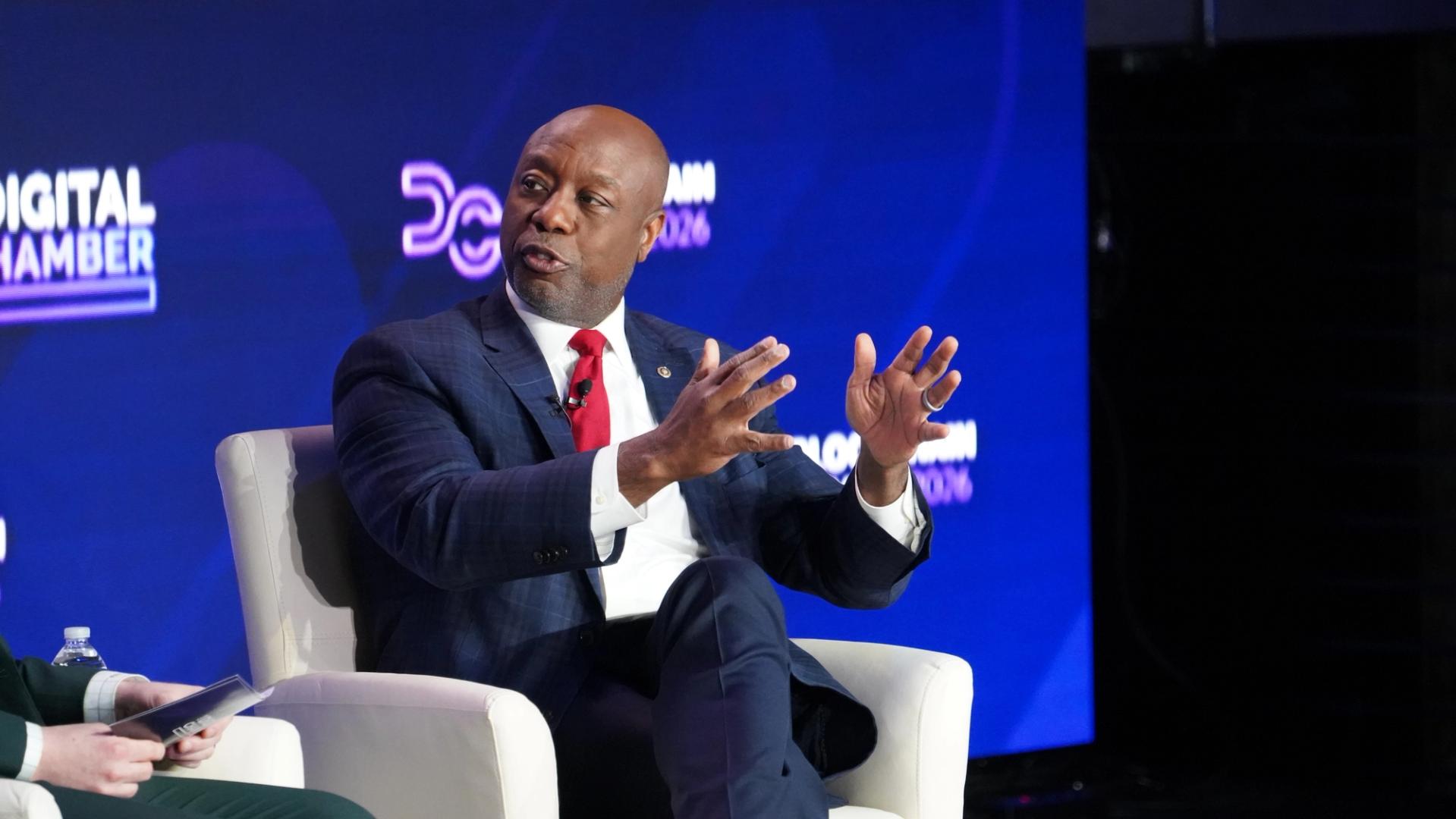
WASHINGTON, D.C. — The Senate’s stalled crypto market structure bill is making progress behind-the-scenes, the chairman of the body’s Banking Committee said Tuesday.
Senator Tim Scott, who heads the banking panel overseeing the market structure bill, said at the Digital Chamber’s DC Blockchain Summit that lawmakers may see a new draft of at least stablecoin language as soon as this week.
Stablecoin yield has been the most publicly debated issue in the market structure bill, but lawmakers have remained engaged, Scott said.
“I believe that this week we will have the first proposal in my hands to take a look at,” he said. “If that actually happened before the end of this week, and I think that it will, we’ll at least know that the sketch looks like the person. If that’s the case, I think we’re gonna be in much better shape.”
He credited Democratic Senator Angela Alsobrooks, Republican Senator Thom Tillis, and the White House’s Patrick Witt for their efforts on yield.
Other outstanding issues have also been negotiated, particularly over the past month, he said, pointing to concerns lawmakers had about U.S. President Donald Trump and his family’s crypto projects, the lack of bipartisan commissioners at the major regulatory agencies and know-your-customer regulations.
“I think we’re very close to landing the plane on the ethics issue, on quorum,” Scott said. “We know that that’s a big issue for our friends on the other side of the aisle, so we’re fixing that as well. I think we’re moving forward with some [nominations], which is great news that we were able to get some out of the other side. I think the issue of DeFi is something that [Senator] Mark Warner’s held on tightly, AML [anti-money laundering] being a very important part. So I think we’re working on that issue.”
[PRESS RELEASE – George Town, British Virgin Islands, March 17th, 2026]
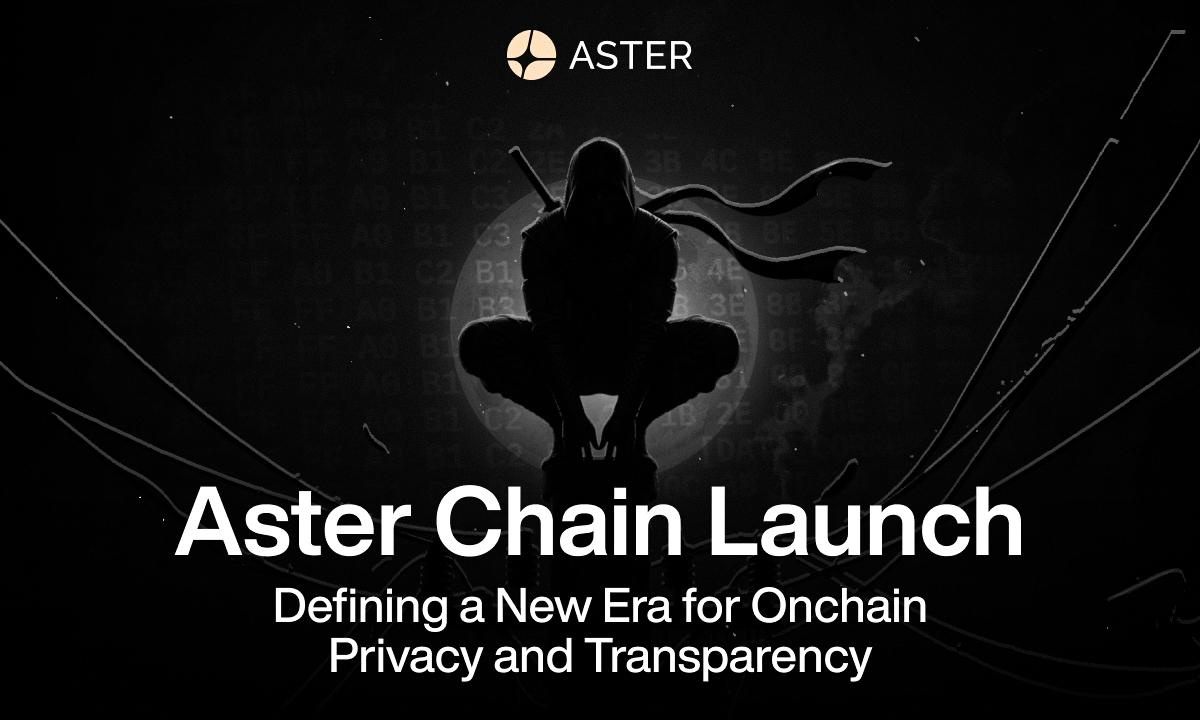
Aster, a privacy-focused trading ecosystem backed by YZi Labs, today announced the official launch of Aster Chain Mainnet. This purpose-built Layer 1 blockchain is designed to dismantle the “transparency trap” of modern DeFi, offering institutional-grade privacy and CEX-level performance to professional and retail traders worldwide.
Ending the Era of Onchain Position Hunting
Transparency is a defining characteristic of decentralized finance, supported by public ledgers, verifiable transactions, and open protocols. However, transparency between protocols and users differs from transparency among market participants. When trading activity, including order placement, position size, and liquidation levels, is fully visible on-chain, such information may be observed and used by other participants in the market.
Position hunting – where traders identify a large position, see its liquidation price, and coordinate to trigger a forced liquidation – has cost traders millions of dollars on fully transparent platforms. Infamously, in March 2025, a trader opened a $375 million BTC 40x short on a fully transparent platform. Traders quickly began openly coordinating on Twitter to pool funds and hunt the position.
Aster’s default privacy removes that attack surface entirely.
The Aster Thesis: Privacy is a Fundamental Right
Unlike existing solutions that treat privacy as an opt-in feature or a third-party wrapper, Aster Chain embeds encryption directly into the execution layer. On Aster, privacy is the default, not a privilege.
The Aster privacy stack utilizes a ZK-verifiable encrypted architecture:
- ZK-Verifiable Encryption + Stealth Address Mechanism: Every order is ZK-verifiable encrypted before it reaches the chain; with Account Privacy enabled, orders are routed through unique stealth addresses, ensuring no link between users’ wallets and their trading activity, and preventing any third party from tracing, correlating, or reconstructing trades.
- Selective Disclosure: While asset transfers remain traceable for compliance, the execution layer shields strategic intent. Users who want their activity visible can choose to make it public. With Account Privacy enabled, users can generate a Viewer Pass to share with selected parties, allowing only those with access to the pass to view their private orders.
- Zero Performance Trade-off: Aster Chain achieves peak throughput of 100,000+ TPS and a median block time of 50ms, all without gas – performance that matches the speed traders expect from a centralized exchange.
“Transparency between a protocol and its users is a fundamental feature, but transparency between a trader and their competitors is a critical vulnerability,” said Leonard, CEO at Aster. “Aster Chain is the only architecture that treats privacy as a fundamental requirement for a fair market, neutralizing predatory attacks at the base layer.”
CEX Speed Meets DEX Principles
Aster Chain delivers the sub-second finality and high-leverage experience of a CEX while upholding the core tenets of decentralization: self-custody, verifiability, and permissionless access. Trading privacy removes the last reason to stay on a centralized exchange. The network is supported by a native bridge to BNB Chain and proprietary oracles to ensure high-fidelity price data.
Fuelling the Next Wave of Innovation
The mainnet launch marks the start of a phased expansion. Beyond the flagship Aster trading UI, the ecosystem is inviting builders to create specialized vaults and collaborative DeFi products through Aster Code.
To coincide with the launch, Aster will initiate a Staking Program within a week to reward early supporters and liquidity providers.
About Aster
Aster is a privacy-first onchain trading platform backed by YZi Labs, with unique features like Hidden Orders to protect user trading activity. It offers perpetual contracts across crypto, stocks and commodities, as well as crypto spot trading, and is powered by Aster Chain, a Layer 1 blockchain built to power the future of decentralized finance.
Users can learn more about Aster on the official website or follow Aster on X.
Binance Free $600 (CryptoPotato Exclusive): Use this link to register a new account and receive $600 exclusive welcome offer on Binance (full details).
LIMITED OFFER for CryptoPotato readers at Bybit: Use this link to register and open a $500 FREE position on any coin!


The SEC has issued an official interpretation clarifying the application of federal securities laws to crypto assets and transactions, marking a significant step in regulatory clarity for the industry.
The U.S. Securities and Exchange Commission and the Commodity Futures Trading Commission have jointly released a sweeping interpretive guidance that formally classifies major crypto assets and activities under federal securities law, a long-awaited move that ends years of regulatory ambiguity that industry participants described as “regulation by enforcement.”
The guidance, Release No. 33-11412, establishes a five-category taxonomy for crypto assets and clarifies the legal status of a range of on-chain activities including staking, mining, airdrops, and token wrapping.
A New Taxonomy
At the heart of the document is a classification system that divides crypto assets into five categories: digital commodities, digital collectibles, digital tools, stablecoins, and digital securities.
The most consequential determination for the market is the SEC’s explicit designation of 16 major tokens as digital commodities — assets that derive their value from the programmatic operation of a functional crypto network rather than from the managerial efforts of a centralized party. The list includes Bitcoin (BTC), Ether (ETH), Solana (SOL), XRP, Cardano (ADA), Avalanche (AVAX), Chainlink (LINK), Dogecoin (DOGE), and eight others. As digital commodities, these assets are not securities and fall outside SEC jurisdiction, though they could be subject to CFTC oversight as commodities under the Commodity Exchange Act.
NFTs, Meme Coins, and Fan Tokens
The guidance also formally addresses NFTs and meme coins, classifying them as digital collectibles — assets with artistic, entertainment, social, or cultural value. Examples cited include CryptoPunks, Chromie Squiggles, and the meme coin WIF. The SEC notes that meme coins are typically acquired for non-investment purposes, their value driven by supply and demand rather than any issuer’s efforts, and are therefore not securities.
However, the agencies drew one notable bright line: fractionalizing a digital collectible — splitting a single NFT into multiple ownership interests — could constitute a securities offering, because it introduces elements of shared investment and reliance on managerial efforts.
Fan tokens received a nuanced treatment, with the SEC noting they have “hybrid characteristics” and could also be classified as digital tools.
Staking and Mining Get a Safe Harbor
One of the most practically significant sections of the guidance covers protocol staking and protocol mining, both of which the SEC determined are not securities transactions. The ruling covers solo staking, third-party custodial staking, and liquid staking arrangements — provided that staking providers do not guarantee fixed returns, do not use deposited assets for speculation or rehypothecation, and function as administrative agents rather than active managers of investor funds.
Liquid staking receipt tokens — the tokenized receipts issued to depositors in liquid staking protocols — are similarly deemed non-securities when they represent non-security underlying assets. This determination is significant for protocols like Lido and Rocket Pool, which issue tokens such as stETH and rETH.
Wrapped Tokens Also in the Clear
The guidance also provides clarity on token wrapping, concluding that redeemable wrapped tokens — one-for-one representations of an underlying crypto asset, such as wrapped Bitcoin (WBTC) — are not securities when the underlying asset is itself a non-security. The SEC specifies that wrapped token providers cannot use deposited assets for any purpose, including lending or trading, for this safe harbor to apply.
From “Regulation by Enforcement” to a Written Framework
The joint release comes after years of industry frustration with SEC enforcement actions against crypto firms, which many characterized as the agency’s primary tool for defining the regulatory perimeter. The guidance explicitly acknowledges those criticisms, noting that the SEC’s previous approach prompted complaints that it was pursuing actions rather than “developing a tailored regulatory framework that accommodates crypto asset innovation.”
The new framework grows out of work by the SEC’s Crypto Task Force, established in January 2025 under then-Acting Chairman Mark T. Uyeda, and was formalized as “Project Crypto” under Chairman Paul S. Atkins following a White House working group report on digital asset markets released in July 2025. On January 29, 2026, Atkins and CFTC Chairman Michael S. Selig announced the initiative would proceed jointly between both agencies.
The SEC emphasized that the guidance does not replace the Howey test — the Supreme Court precedent used to determine what constitutes an investment contract — but rather articulates how the agency interprets its application to crypto assets. Importantly, the guidance supersedes prior SEC staff statements on topics including meme coins, stablecoins, proof-of-work mining, and staking.
What Remains a Security
The document makes clear that assets structured as digital securities — tokenized stocks, bonds, or other traditional financial instruments recorded on a blockchain — remain fully subject to securities law regardless of their on-chain format. It also reaffirms that any non-security crypto asset can become subject to an investment contract if issuers make explicit promises of profit tied to their own managerial efforts — the classic token sale model — and that such investment contracts must be registered or exempt.
The agencies are soliciting public comment on the guidance and indicated the framework may be revised or expanded based on feedback.
This article was written with the assistance of AI workflows. All our stories are curated, edited and fact-checked by a human.
Tether has unveiled a cross-platform AI training framework that the company says can fine-tune large language models on consumer hardware, including smartphones and non-NVIDIA GPUs. The system, part of Tether’s QVAC platform, leans on Microsoft’s BitNet architecture and LoRA techniques to shrink memory and compute demands, potentially lowering the cost and hardware barriers for developers. The announcement positions the framework as compatible with a broad spectrum of chips—from AMD and Intel to Apple Silicon—along with mobile GPUs from Qualcomm and Apple. In internal tests, engineers reportedly fine-tuned models with up to 1 billion parameters on smartphones in under two hours, with smaller models achievable in minutes, and supported models as large as 13 billion parameters on mobile devices.
Key takeaways
- Tether’s QVAC framework leverages a 1-bit model architecture (BitNet) to drastically cut VRAM usage, enabling larger models to run on constrained hardware.
- LoRA-based fine-tuning is extended to non-NVIDIA hardware, broadening compatibility across AMD, Intel, and Apple Silicon platforms, as well as mobile GPUs from Qualcomm and Apple.
- On-device training and federated learning are highlighted as potential use cases, pointing to reduced reliance on centralized cloud compute for model updates.
- Performance gains extend to inference, with mobile GPUs reportedly delivering faster results for BitNet models than traditional CPU workloads.
- The move fits a broader industry trend of crypto firms expanding into AI compute and high-performance computing, touching on AI data center capacity and autonomous software agents.
Tickers mentioned: $BTC, $USDT, $USDC, $COIN, $HIVE
Sentiment: Neutral
Market context: The push to bring AI training and inference closer to edge devices mirrors a broader shift toward on-device AI and distributed learning within crypto and fintech ecosystems, alongside ongoing capital allocation to AI compute by mining operators and data-center firms.
Why it matters
For a market built on trust in programmable money and permissionless ecosystems, the ability to run substantial AI workloads on consumer hardware could recalibrate who can train and fine-tune models. By reducing VRAM requirements by up to 77.8% compared with comparable 16-bit models, according to Tether, the BitNet-based framework tackles one of the most persistent friction points in edge AI: memory constraints. This could enable developers to push more experimentation to devices that sit closer to users, potentially enabling privacy-preserving on-device training and federated learning, where updates are aggregated locally rather than uploaded to centralized servers.
Beyond the novelty of running billion-parameter models on smartphones, the initiative hints at a broader strategy: crypto firms are leaning into AI and HPC to support new products and services, from on-chain analytics to autonomous agents that transact or interact with services. The article notes that major players have already begun integrating AI into core operations or exploring AI-driven infrastructure. As crypto mining and data-center operators seek higher-margin use cases, AI compute becomes a natural extension of the sector’s infrastructure footprint. This aligns with a wider trend of institutional players diversifying into AI workloads, underscoring how blockchain-native firms view AI as a critical component of long-term scalability and product development.
On the technology side, the cross-platform capability signals a shift away from Nvidia-dominated AI stacks toward more hardware-agnostic approaches. The combination of a 1-bit model architecture with LoRA fine-tuning on non-NVIDIA hardware expands the potential hardware pool for AI development, a move that could accelerate experimentation and reduce barriers for smaller teams or individual developers who rely on consumer devices. This development is also likely to influence how AI agents—autonomous programs that interact with services and execute tasks—are trained and updated on-device, potentially strengthening privacy-preserving use cases by minimizing data transfer to cloud endpoints.
The broader industry backdrop includes crypto firms expanding into AI-enabled services and data centers. For example, strategic moves by miners and infrastructure vendors to scale AI compute capacity have been reported in recent quarters, with several large players pursuing AI-centric data-center deployments and partnerships. While the immediate impact of Tether’s framework remains to be demonstrated at scale, the emphasis on cross-platform interoperability and on-device capabilities suggests a future where AI tooling becomes more accessible to a wider range of devices, including those with limited compute budgets.
What to watch next
- Adoption pace: Will other crypto firms and AI developers publicly deploy BitNet-based training on consumer hardware, and what applications emerge first?
- Cross-platform expansion: How quickly will the LoRA-enabled workflow extend to additional non-NVIDIA GPUs and mobile accelerators?
- On-device AI pilots: Will we see real-world federated learning deployments or on-device training pilots that demonstrate data privacy benefits?
- Competitive benchmarks: Independent tests comparing BitNet-based training to traditional GPU-centric workflows across edge devices and data centers.
- Ecosystem partnerships: Any collaborations with wallet providers, AI agents, or on-chain analytics platforms that integrate edge-trained models into user-facing products.
Sources & verification
- Tether’s QVAC launch announcement detailing the cross-platform BitNet/LoRA framework and its aims. Verify at the official Tether news page linked in the announcement.
- The QVAC/BitNet framework’s claimed VRAM and parameter-strength reductions, as described in Tether’s release.
- HIVE Digital Technologies’ reported AI/HPC-driven revenue and performance metrics cited in industry coverage from Cointelegraph.
- World’s AgentKit and related AI agent verification and payment capabilities, as described in World’s official communications and coverage.
- Coinbase’s wallet infrastructure for AI agents and the Alchemy system enabling access to blockchain data via USDC, as reported in coverage cited in the article.
What to watch next
Keep an eye on updates from Tether on QVAC milestones, including any broader platform integrations or additional hardware compatibility announcements. Monitor whether other crypto-native or fintech firms begin publishing performance benchmarks or pilot deployments that validate on-device training claims. Finally, track moves by AI and crypto industry players toward federated learning and privacy-preserving on-device inference, which could reshape how models are trained and updated in distributed networks.
Sources & verification
- Tether QVAC launch: https://tether.io/news/tethers-qvac-launches-worlds-first-cross-platform-bitnet-lora-framework-to-enable-billion-parameter-ai-training-and-inference-on-consumer-gpus-and-smartphones/
- HIVE Digital Technologies revenue context: https://cointelegraph.com/news/hive-digital-focus-crypto-mining-ai-data-centers
- World AgentKit and human-verified AI agents: https://cointelegraph.com/news/world-launches-agentkit-coinbase-integration-enable-human-verified-ai-agents-embargo
- Coinbase wallet infrastructure for AI agents: https://cointelegraph.com/news/coinbase-launches-crypto-wallets-built-ai-agents
- Alchemy AI agents data access using USDC: https://cointelegraph.com/news/alchemy-ai-agents-pay-access-blockchain-data-usdc
Key figures and next steps
With Tether positioning QVAC as a cross-platform compute framework and citing substantial reductions in memory requirements, the company signals a strategic pivot toward enabling AI workloads on widely available hardware. If the framework gains traction, developers could see accelerated experimentation on consumer devices, expanding the reach of AI-assisted on-chain tools and analytics. The coming months will reveal whether these capabilities translate into broader developer adoption, practical on-device AI pilots, and tangible reductions in cloud compute demand for crypto-related AI tasks.
What this could mean for users and builders
For end users, the potential exists for faster, more private AI-powered features embedded in wallets and on-chain services. For builders, the framework lowers the barrier to prototype, test, and refine AI models without the need for high-end data-center GPUs. In a sector where compute cost can be a constraint, this shift toward edge AI adoption aligns with long-term goals of decentralization, privacy, and efficiency. It also underscores the ongoing convergence between crypto infrastructure and advanced AI compute, a development that could influence everything from on-chain data services to the design of autonomous agents and governance tools. As with any new technology, scalability, security considerations, and interoperability standards will shape how quickly such capabilities mature and how widely they are adopted across the ecosystem.

Researchers disclose vulnerabilities in IP KVMs from four manufacturers

Everything you need to know on new tax rules for 27,000 people in Northern Ireland

Stocks Are Gaining. The Market Is Still Following Moves in Oil.

Smart energy pays enters the US market, targeting scalable financial infrastructure

Why Israel is blocking foreign journalists from entering

Bitcoin: We’re Entering The Most Dangerous Phase

Master of Finance: Wang Xiufen’s Multi-Role Journey in Financial Education

XRP IS NEVER GOING TO $0 – PRIVATE PAYMENTS ON XRPL – EXCHANGES COULD SOON FREEZE YOUR CRYPTO!

Silver will set you free #money #platinum #gold #silver #preciousmetals
-
 Tech7 days ago
A 1,300-Pound NASA Spacecraft To Re-Enter Earth’s Atmosphere
-
 Crypto World4 days ago
HYPE Token Enters Net Deflation as HyperCore Buybacks Outpace Staking Rewards
-

 Fashion4 days ago
Weekend Open Thread: Addict Lip Glow
-

 Tech2 days ago
Your Legally Registered ‘Motorcycle’ Might Not Count Under Proposed US Law
-
Sports3 days ago
Why Duke and Michigan Are Dead Even Entering Selection Sunday
-

 NewsBeat6 days ago
Residents reaction as Shildon murder probe enters second day
-

 Business2 days ago
Search for Savannah Guthrie’s Mother Enters Seventh Week with No Arrests
-

 Business7 days ago
Search Enters Sixth Week With New Leads in Tucson Abduction Case
-

 Sports6 days ago
PWHL, Senators discussing plan to keep Charge in Ottawa
-

 Business3 days ago
US Airports Launch Donation Drives for Unpaid TSA Workers as Partial Government Shutdown Enters Fifth Week
-
 Tech5 hours ago
Are Split Spacebars the Next Big Gaming Keyboard Trend?
-
Crypto World3 days ago
Coinbase and Bybit in Investment Talks: Could Bybit Finally Enter the US Crypto Market?
-

 NewsBeat6 days ago
I Entered The Manosphere. Nothing Could Prepare Me For What I Found.
-

 Business3 days ago
Country star Brantley Gilbert enters growing non-alcoholic beer market
-

 Business1 day ago
Australian shares drop as Iran war enters third week
-

 Tech7 days ago
Clarity as strategy
-

 Sports4 days ago
College Basketball Best Bets: Conference Tournament Semifinal Picks
-

 Crypto World1 day ago
Crypto Lender BlockFills Enters Chapter 11 with Up to $500M in Liabilities
-

 Politics7 days ago
Trump Says Middle East Is ‘Very Lucky’ That He’s President
-
 Crypto World6 days ago
Three Binance Charts May Be Hinting at Bitcoin’s Next Move


You must be logged in to post a comment Login