

Crypto World
StablR Breach Drains $2.8M as Euro Stablecoin Breaks Its Peg

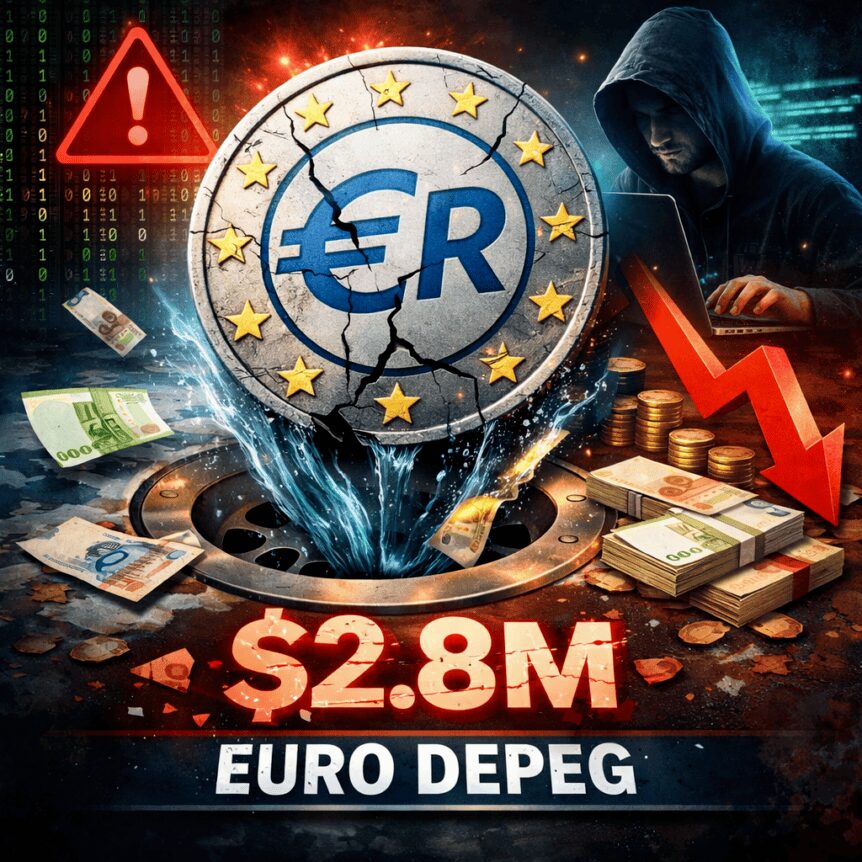
StablR’s euro and US dollar stablecoins have depegged as an ongoing exploit targets the project’s minting multisignature account. Blockchain security firm Blockaid reports that its monitoring detected roughly $2.8 million extracted so far, with the attack traced to a compromised private key in a 1-of-3 minting threshold. The attacker added themselves, replaced the other owners, and minted 8.35 million USDR and 4.5 million EURR, triggering the depegging. The newly minted tokens were swapped on decentralized exchanges for about 1,115 ETH—roughly $2.8 million—due to thin liquidity. Blockaid characterized the incident as a governance and key-management failure rather than a flaw in a smart contract.
The disruption comes amid a troubling month for crypto and DeFi security, with DeFiLlama tallying more than a dozen major exploits so far in May. Notable incidents have included attacks on THORChain, the Verus Bridge, Echo Protocol, and Polymarket, underscoring the breadth of attack vectors facing the sector this year.
Key takeaways
- Attack traced to a compromised private key in StablR’s minting multisignature account, with a weak 1-of-3 threshold enabling the breach.
- EURR depegged to about $0.88 and USDR fell to about $0.70, reflecting the immediate impact of the minting attack on liquidity and confidence.
- Approximately $2.8 million has been extracted so far, with 8.35 million USDR and 4.5 million EURR minted and swapped for ETH due to liquidity constraints.
- Blockaid stresses that the incident is fundamentally a governance and key-management failure, not an obvious smart-contract bug.
- The broader DeFi landscape in May includes numerous high-profile exploits tied to private-key and governance weaknesses, reinforcing a pattern that investors and builders should monitor closely.
How the breach unfolded and what it means for StablR
StablR operates as a regulated, collateralized stablecoin issuer offering euro- and dollar-pegged tokens. The project emphasizes reserves held in segregated accounts at established institutions, along with proof-of-reserves and cross-chain availability on Ethereum and Solana. In December 2024, StablR also drew attention when Tether invested in the project to promote stablecoin adoption in Europe. The current incident, however, highlights a stark contrast between a stated governance framework and the practical realities of key-management in multisignature setups.
According to Blockaid, the perpetrator exploited a weak key-management arrangement within the minting multsig, then assumed control of the three-key setup by replacing the other owners. The attacker minted 8.35 million USDR and 4.5 million EURR, effectively depegging the two tokens from their $1 parity bands. The minted tokens were subsequently liquidated on decentralized exchanges for approximately 1,115 ETH, translating to around $2.8 million in proceeds given current liquidity conditions. Blockaid summarized the situation by stating that this is not a smart contract bug; it is a failure of key management and governance structures that should have prevented such a takeover.
StablR’s euro stablecoin, EURR, has a market capitalization near $14 million, while its US dollar token, USDR, sits around $11 million. In the present episode, CoinGecko-tracking data shows EURR slipping from parity toward the mid-$0.80s range, and USDR hovering around the $0.70 level as the incident unfolds. The depegging has raised questions about liquidity depth, reserve sufficiency, and the speed with which stablecoins can respond to coordinated governance- or key-management failures.
There is no sense that the underlying collateral model or reserve strategy has collapsed; rather, the attack underscores the practical risk of relying on multisignature governance without robust key-management controls, hardware security modules, and regular key-rotation and access reviews. StablR notes that reserves are held in segregated accounts at top-tier institutions and that it aims to maintain transparency via proof-of-reserves and cross-chain availability. The incident has also prompted scrutiny of the project’s governance processes and incident-response posture as it works to restore confidence among users and counterparties.
For investors and users relying on stablecoins, the episode serves as a reminder of the hidden frictions in governance-heavy models. While the project’s backing by a major stablecoin issuer—Tether—adds a layer of credibility, the immediate depeg demonstrates how quickly trust can erode when safeguarding critical private keys and governance rights falter. For participants, the questions are: what changes will StablR implement to harden its multisignature framework, how quickly will reserves be audited and disclosed, and what protections will be offered to users hurt by the depeg?
Broader security landscape: private-key exploits persist in DeFi
The StablR incident sits within a wider tapestry of security breaches this year that center on compromised keys and governance weaknesses. A sequence of recent exploits—Volo Vault, Wasabi Perps, Echo Protocol, and Polymarket—have all involved some manipulation of admin or private keys. Analysts warn that as DeFi ramps up, so do the attack surfaces tied to governance and access management. In parallel, Map Protocol—an Atlantis-style cross-chain map project—was breached when a smart contract vulnerability allowed an attacker to mint a quadrillion MAPO tokens, illustrating a spectrum of technical and governance flaws across ecosystems.
These events collectively highlight a recurring tension in DeFi: rapid innovation and high open access can outpace the development of secure, scalable governance and key-management practices. Industry observers argue that improving multi-party computation, hardware-backed key storage, formalized incident-response playbooks, and enhanced rotation and revocation protocols will be essential as protocols grow larger and more interconnected.
Notable coverage and updates from the security and analytics community, including PeckShield’s alerts and DeFi-focused trackers, continue to document the evolving risk environment. As the market digests ongoing fallout, users will be watching for tangible remedies from projects like StablR—clarified governance changes, enhanced key-management controls, and transparent post-incident disclosures that can help stabilize confidence and liquidity in the face of depeg events.
In this climate, the market remains vigilant for how quickly teams can respond to breaches, how robust their reserve disclosures remain, and what steps are taken to prevent recurrence. With May’s incidents accumulating, the sector could see accelerated adoption of best practices around governance hygiene, key security, and incident preparedness—outcomes that could ultimately contribute to a more resilient stablecoin ecosystem.
There were no updates on the StablR X feed at the time of writing, leaving stakeholders awaiting formal post-incident disclosures and the path forward for recovery. For those tracking the evolving DeFi security landscape, the StablR episode is a concrete reminder that governance design and key-management protocols are no less critical than code quality when it comes to protecting user funds.
As the story develops, readers should watch for StablR’s official incident report, any changes to its multisignature configuration, and forthcoming audits or proofs of reserves that could help restore trust. The broader question remains: will the industry tighten the screws on key management fast enough to prevent similar breaches from repeating across the expanding DeFi frontier?

Key Takeaways
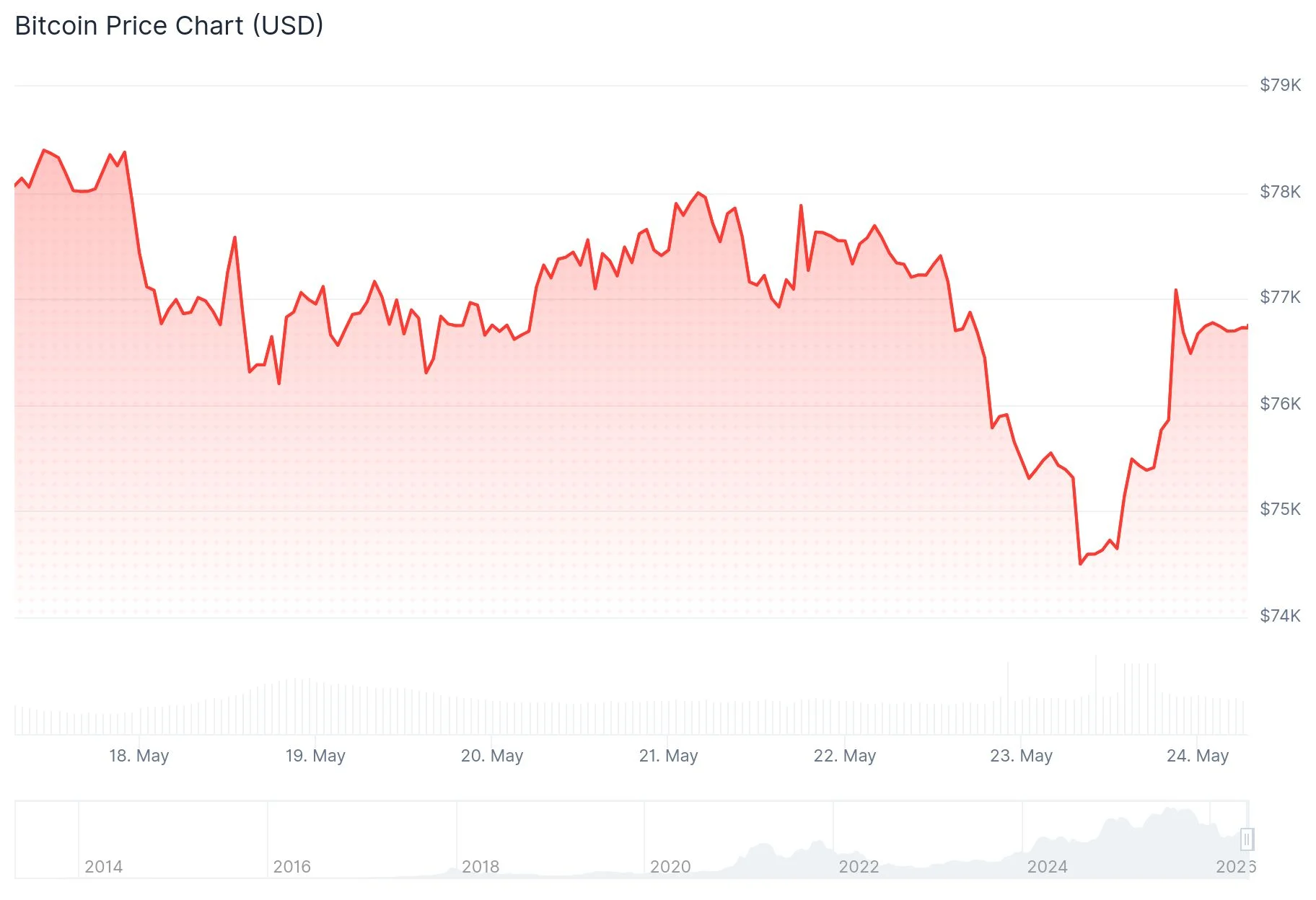
- Bitcoin (BTC) retreated approximately 3% to $75,398 amid over $400 million in position liquidations, yet maintains its position as the leading institutional cryptocurrency
- Ethereum (ETH) continues to underperform relative to Bitcoin, despite maintaining dominance in DeFi infrastructure and smart contract execution
- Solana (SOL) spot ETF products attracted more than $103 million in capital during May, contrasting sharply with outflows from Bitcoin and Ethereum ETFs
- Hyperliquid (HYPE) has emerged as a top-performing crypto asset in 2026, fueled by robust decentralized perpetual futures trading volume
- NEAR Protocol maintains relevance through its connection to the AI-blockchain convergence narrative as interest in artificial intelligence tokens resurges
Bitcoin (BTC)
Bitcoin continues to serve as the primary anchor for investors navigating turbulent market conditions.
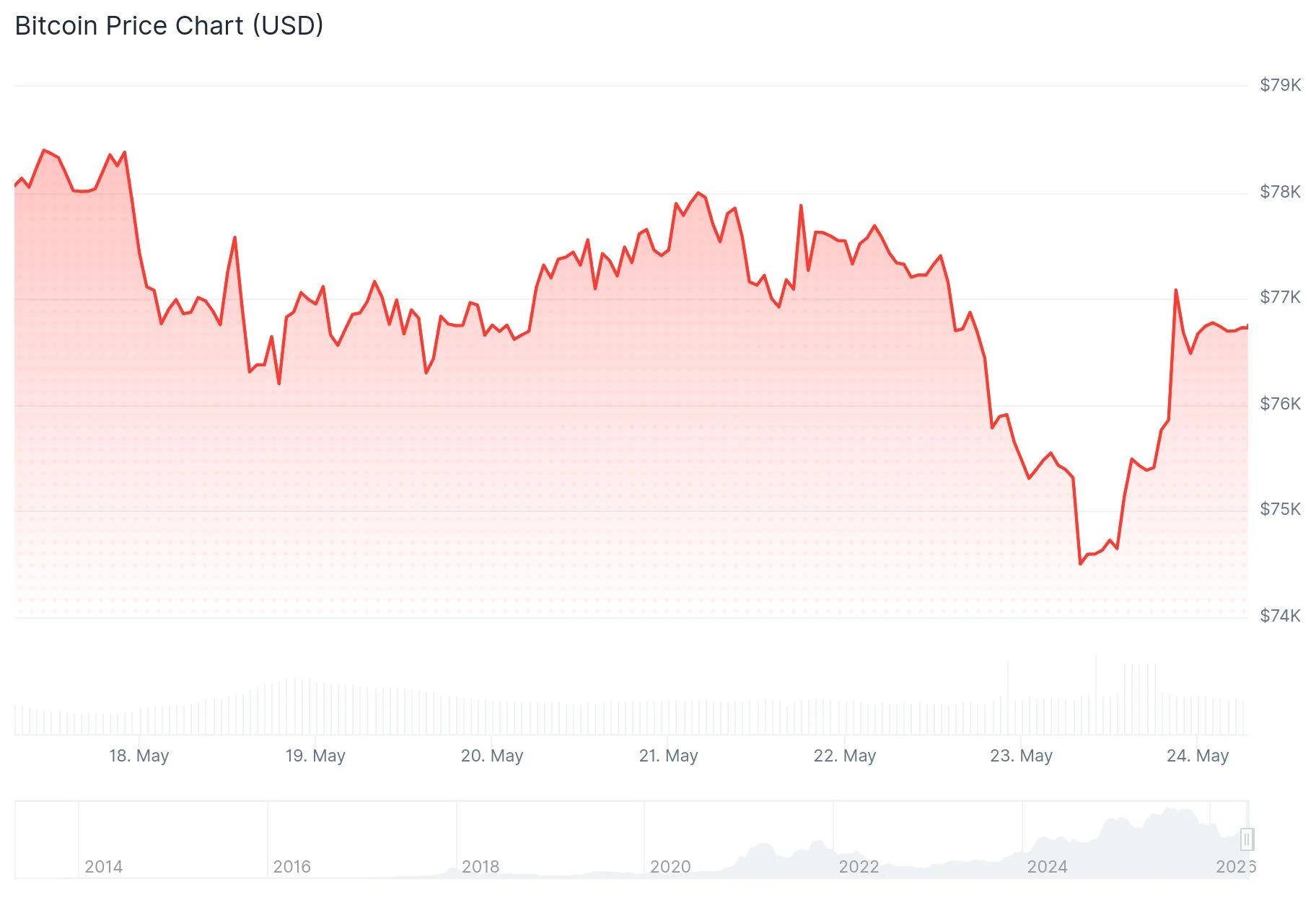
The latest correction proved substantial. Bitcoin declined roughly 3% over a 24-hour period, settling near $75,398, while triggering more than $400 million in liquidations across the cryptocurrency markets. This magnitude of forced selling indicates that market sentiment remains vulnerable and easily shaken.
Exchange-traded fund activity provides additional context. Following a relatively robust April, Bitcoin ETF demand weakened considerably in May, marked by multiple significant outflow events. Spot ETF movements have become among the most reliable indicators of institutional interest, making sustained outflows a meaningful headwind for price appreciation.
Despite these challenges, Bitcoin maintains its position as the most liquid and widely adopted cryptocurrency asset. Its institutional footprint exceeds all competitors, and its store-of-value thesis remains the strongest narrative in digital asset markets.
Ethereum (ETH)
Ethereum has delivered disappointing performance relative to Bitcoin lately, leaving investor sentiment divided.
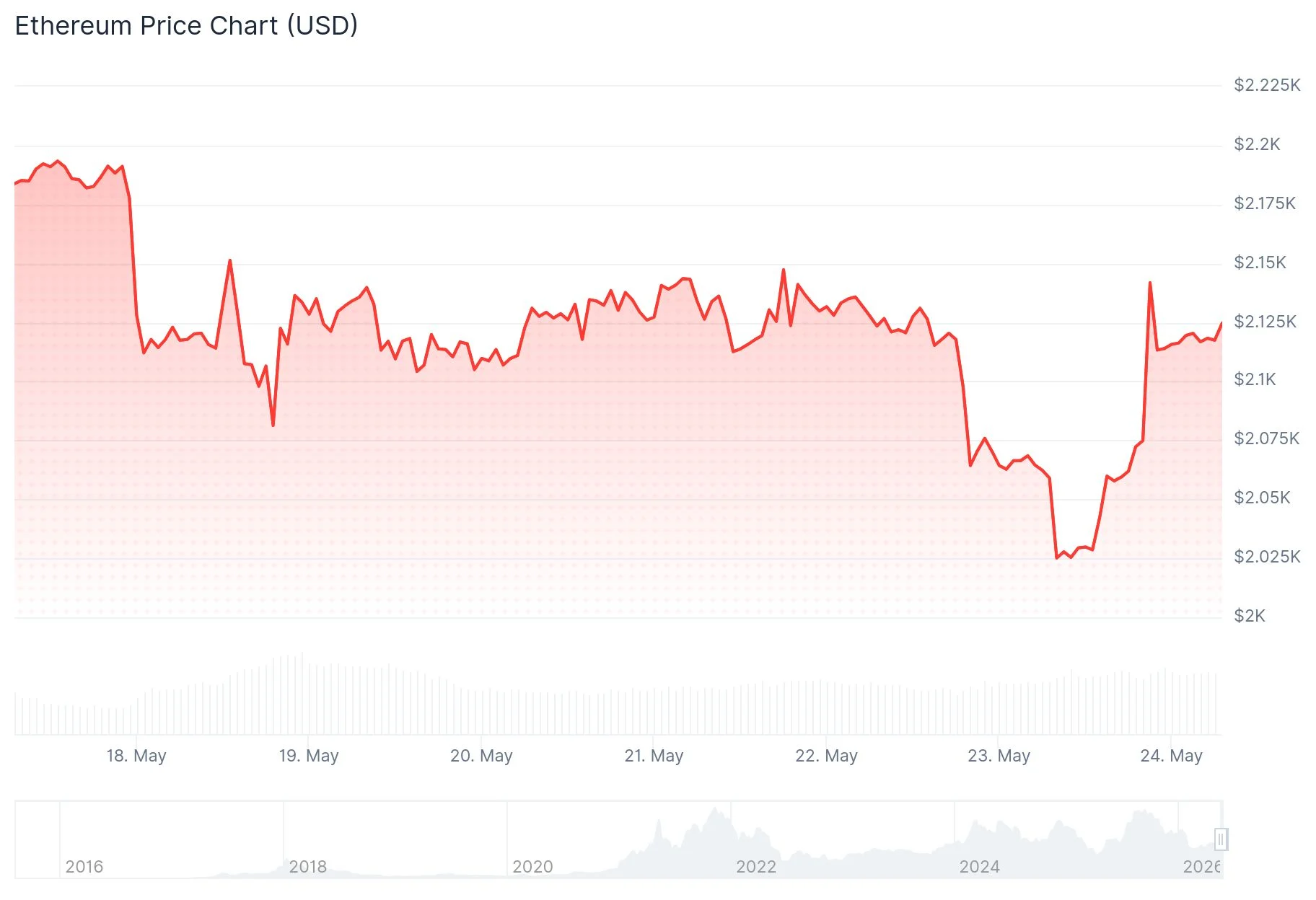
Price momentum has been notably weak. ETH has failed to capitalize even as accumulation theories have gained traction, lacking the upward momentum necessary to restore market confidence.
The fundamental thesis remains intact. Ethereum continues to power the majority of smart contract infrastructure across the cryptocurrency ecosystem — including DeFi protocols, stablecoin systems, tokenized real-world assets, and decentralized lending platforms.
The primary obstacle is intensifying competition. Solana, various Layer-2 scaling solutions, and emerging blockchain platforms are aggressively competing for developer talent and user adoption. Ethereum requires stronger demand signals and improved price performance to reclaim its dominant market position.
Solana (SOL)
Solana has distinguished itself as the exceptional performer among major altcoins in today’s market environment.
Its spot ETF products accumulated over $103 million in inflows through May 19, even as Bitcoin and Ethereum ETF offerings experienced net outflows. This represents tangible evidence that investor appetite for Solana exposure remains resilient.
Solana offers rapid transaction processing, minimal fees, and vibrant retail engagement. The network supports meme token trading, DeFi applications, consumer-focused products, and payment infrastructure experiments — providing one of the most diverse growth stories among large-capitalization cryptocurrencies.
The primary concern is elevated volatility. Solana typically experiences more dramatic price swings than Bitcoin or Ethereum in both upward and downward movements. A broader market downturn could impact SOL disproportionately compared to more established assets.
Hyperliquid (HYPE)
Hyperliquid has become one of the most frequently discussed names in the mid-cap cryptocurrency segment this year.
The platform operates a decentralized perpetual futures exchange. This structure creates a more direct connection between token value and actual platform usage, differentiating it from numerous speculative altcoins where token utility remains questionable.
Hyperliquid has ranked among the strongest-performing larger cryptocurrency assets throughout 2026, underpinned by substantial trading volumes. Analyst Michaël van de Poppe suggested HYPE could potentially reach $100 or higher should overall cryptocurrency market conditions strengthen.
The caveat is that it remains a relatively nascent and volatile asset. Should derivatives trading activity decelerate or if traders rotate capital away from high-beta altcoins, HYPE could experience rapid price declines.
NEAR Protocol
NEAR represents the other mid-cap cryptocurrency currently attracting significant market attention.
It maintains strong associations with the artificial intelligence and blockchain convergence narrative, which has experienced renewed momentum recently. CoinDesk highlighted that AI-focused tokens were prominent in recent altcoin rally discussions, with NEAR featured alongside Hyperliquid as assets traders are actively monitoring.
NEAR possesses a mature ecosystem and a sustained commitment to scalable application development and user experience optimization. This foundation provides considerably more substance than many tokens that merely adopt AI branding without genuine utility.
The challenge is that AI-related cryptocurrencies can quickly become speculation-driven. The sustainable case for NEAR hinges on legitimate AI and consumer applications successfully attracting meaningful user adoption to blockchain infrastructure.
As of mid-May, Solana ETF capital inflows and Hyperliquid’s platform expansion represent two of the more substantive data points in an otherwise inconsistent market landscape.


Key Points
- A Wall Street Journal investigation alleges that $850 million in cryptocurrency transactions connected to networks associated with Iran’s Islamic Revolutionary Guard Corps passed through Binance over a two-year period.
- Babak Zanjani, an Iranian businessman, allegedly operated a payment network via his company Zedcex through one Binance account that continued operating despite receiving more than a dozen compliance warnings.
- Internal compliance teams at Binance reportedly flagged Iranian access and recommended account closures, but the accounts allegedly remained operational for over 15 months.
- According to reports, Iran’s central bank transferred $107 million into Binance accounts in 2025, while a foreign law enforcement entity identified $260 million in transactions directly connected to sanctioned Iranian organizations.
- Richard Teng, Binance’s CEO, has rejected these allegations as “fundamentally inaccurate,” with the exchange pursuing a defamation case against the Journal.
The world’s leading cryptocurrency exchange, Binance, finds itself facing renewed allegations following a Wall Street Journal investigation that claims the platform processed $850 million in transactions connected to a sanctioned Iranian financier across a two-year timeframe.
The investigation pointed to Babak Zanjani, who was re-sanctioned by United States authorities in January, as running a cryptocurrency payment operation through Binance user accounts. The Journal reported that Zanjani’s company, Zedcex, operated alongside accounts registered to his sister, a romantic partner, and a company executive, all accessed via identical devices — a red flag that Binance’s internal compliance team identified as potential sanctions circumvention.
Compliance Warnings Allegedly Went Unheeded
Binance’s internal monitoring systems identified that the Zedcex account was being accessed from Tehran in late 2024. Despite generating over a dozen internal compliance alerts, the account allegedly continued to function for more than 15 months. Internal investigators reportedly pushed for the accounts to be terminated and for authorities to be notified, yet according to the Journal’s reporting, those recommendations were not implemented.
The allegations extend beyond the Zanjani-connected network. The Journal’s investigation claims that Iran’s central bank deposited $107 million in cryptocurrency into Binance accounts during 2025. Additionally, a foreign law enforcement agency reportedly traced approximately $260 million in transactions flowing directly between Binance accounts and Iranian entities throughout 2024 and 2025.
In 2023, Binance admitted guilt to violations of anti-money laundering regulations and sanctions protocols, resulting in a historic $4.3 billion penalty. The exchange committed to comprehensive compliance reforms as part of that settlement. Nevertheless, the Journal maintains that the purported Iranian-linked transactions recommenced soon afterward.
Exchange Leadership Disputes the Claims
Binance CEO Richard Teng has forcefully challenged the allegations through a statement on X, characterizing the Journal’s reporting as “fundamentally inaccurate.” He maintained that Binance has never authorized transactions involving sanctioned parties, and that any suspicious activity identified occurred prior to those individuals being designated under US sanctions.
Teng further stated that Binance had already conducted internal investigations into these matters before the Journal reached out, and that critical facts provided by the exchange were omitted from the published story. “Binance has zero-tolerance for illicit activity,” Teng declared.
The exchange has initiated defamation proceedings against the Wall Street Journal, requesting monetary damages and a jury trial. Binance informed Cointelegraph that it maintains ongoing cooperation with regulatory bodies and law enforcement agencies, while denying awareness of a Department of Justice probe that was reported separately in March.
In February, the Journal had previously claimed that Binance terminated an internal investigation into approximately $1 billion that allegedly reached networks connected to Iranian proxy organizations. Binance disputed those claims as well, asserting that its internal investigation remained active.
The US Department of the Treasury has cautioned financial institutions about potential repercussions for enabling transfers on behalf of Iran, and has seized $344 million in Iranian-controlled cryptocurrency through its “Economic Fury” initiative.
Treasury representatives also convened with Binance leadership in March to address compliance issues related to the 2023 plea agreement, including transactions involving Iranian entities, according to individuals with knowledge of the discussions.
Key Takeaways
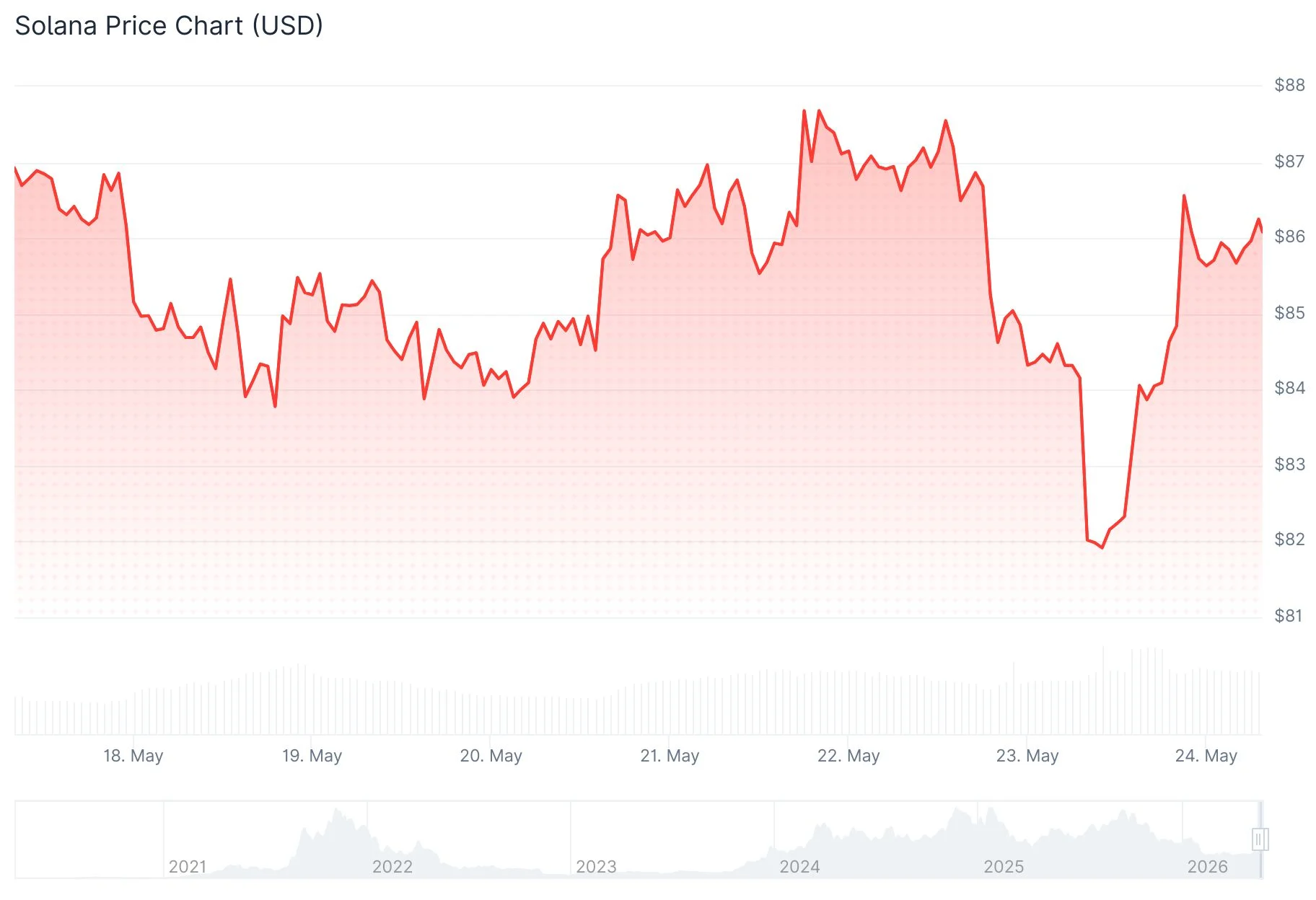
- SOL currently trades around $82, representing approximately a 70% decline from its peak near $295
- Critical near-term resistance level positioned at $95 — closing above this on the weekly chart could trigger relief rally
- Current support zone exists between $78–$83; breaking below may lead to testing the $60 level
- The 50-week EMA positioned near $124 serves as significant overhead resistance for any major recovery attempt
- Trading volume increased 10% to reach $3.89 billion despite downward price movement, indicating substantial selling activity
Solana finds itself in a challenging position at present. The cryptocurrency has been hovering around $82 on daily timeframes and $86 on weekly charts, positioned well beneath the marked support area near $95 that market participants have been monitoring closely.
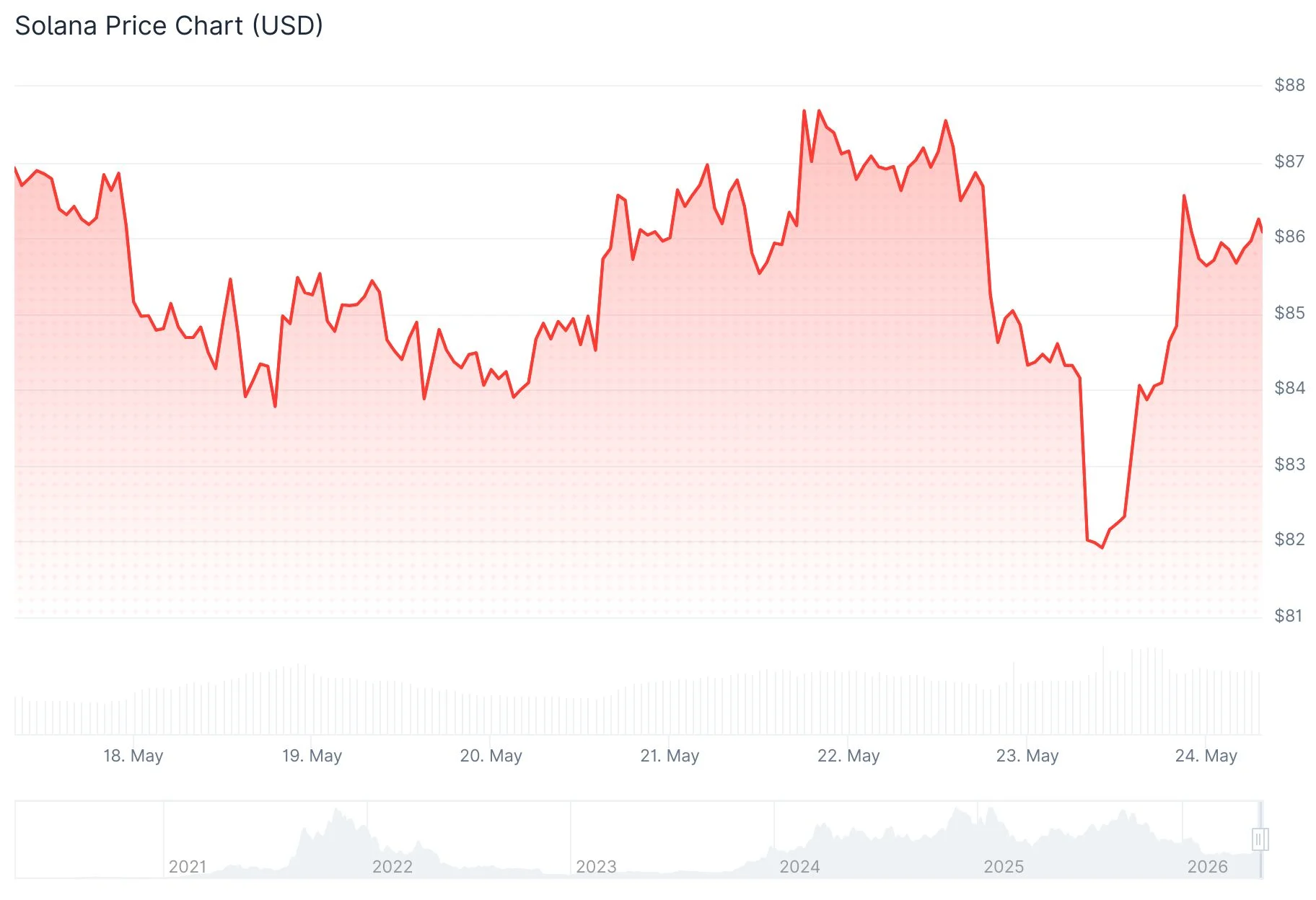
The decline from its previous peak near $295 has been substantial — approximately 70% — and market psychology reflects this downturn. Cryptocurrency analyst Whale Watch expressed it succinctly on social media: “Everyone loved SOL at $295. Nobody wants it at $86.” This observation encapsulates the prevailing sentiment effectively. It highlights diminished demand during a significant correction, a phenomenon commonly observed in deep retracements where retail participation evaporates exactly when valuations are most attractive.
Purchasers have maintained the $78–$83 area for the time being, though momentum remains weak. A weekly candle closing beneath $83 would undermine the existing technical formation.
Technical Indicators and Chart Patterns
Experts at Elliott Wave Academy suggest SOL might be developing a near-term corrective bounce. Their technical assessment identifies a potential advance toward the 50%–61.8% Fibonacci retracement of the recent decline, with possibilities to extend toward the 78.6% level should buying pressure intensify. However, they emphasize that price behavior near those thresholds will be crucial in determining subsequent movements.
Analysts from MCO Global DE characterize recent price action as primarily “noise,” without a definitive breakout in either direction. They identify immediate support at $81.28, alongside a more robust support band spanning $71.92 to $77.96. These zones have absorbed considerable selling pressure throughout recent downward moves. The firm additionally cautions that another near-term decline remains possible before any significant recovery effort materializes.
For any meaningful recovery to take hold, SOL must first overcome $95. Following that breakthrough, focus would transition to the 50-week EMA near $124, which has functioned as solid resistance since SOL fell below it earlier in the year. A sustained close above $124 would create opportunities toward $175 and potentially $200.
Volume Trends Suggest Increased Selling Pressure
CoinMarketCap information reveals SOL trading at $82.21, declining 5.83% over the previous 24-hour period. The market capitalization stands at $47.51 billion. Daily trading volume climbed 10.04% to reach $3.89 billion.
The increase in volume concurrent with price deterioration deserves attention. This pattern generally signals active selling pressure rather than passive consolidation. Resistance exists within the $90–$95 range on near-term charts.
The crucial technical obstacle at $96 remains intact. Until purchasers can reclaim that threshold decisively, the market structure is anticipated to remain neutral.
Analysts further identify $110 as an extended-term resistance area that may determine whether Solana initiates a genuine trend reversal or continues range-bound trading.
SOL currently changes hands near $82.21, with support established at $80 and resistance spanning $90 to $95.

It has been an eventful period for Pi Network and its broader ecosystem, even if one of the key protocol updates that had to be completed nearly ten days ago is still not fully implemented.
The native token crashed lately, but managed to halt the losses and remains at around $0.15.
Delayed New Update
Protocol version 22 came on May 1, which continued a long series of upgrades that began in February with 19.6. At the time, the Core Team behind the project highlighted the next scheduled update, version 23, which was supposed to be deployed by May 15. Once that date passed, the community started to wonder about the progress on the matter, with some claiming that once it goes live, it will be a ‘game-changer.’
The first official interaction from the team regarding v23 came on May 20. They noted that ‘most major Nodes’ had successfully upgraded, but the update remains in the works as it turned out to be “one of the most challenging” to date because it “involved multiple subsystem upgrades and optimizations that required internal data reprocessing.”
In the meantime, though, the Core Team outlined a different ecosystem update that promised to ‘change the equation for creators.’ They said vibe coders and creators can utilize Pi Network’s 60 million user base by ‘easily bringing their external AI-created apps to Pi’s real distribution network and utility ecosystem through Pi App Studio.’
With this new development that allowed even non-technical products to be built using platforms such as Codex and Replit, the team has doubled down on its narrative to close the gap between creating apps and turning them into actually usable and helpful tools.
Security Warning and Problem Solving
In addition, Pi Network’s official X account warned about a growing number of scammers impersonating the project’s co-founders, Nicolas Kokkalis and Dr. Chengdiao Fan. The post referred Pioneers to the verified accounts of the two co-founders, neither of which is very active on X, though.
Separately, the Core Team used Dr. Fan’s speech at the 2026 Consensus conference in Miami to bring more attention to one of the major issues within the crypto industry. They believe most tokens launched by different projects lack utility and substance as they are mostly used to raise capital without actually providing product innovation.
Instead, Pi Network claims it has gone in a different direction by treating its tokens as “tools that can support user acquisition, product engagement, and long-term utility.” Its latest product that enhanced this narrative is the Pi Launchpad, which it described as a tool for “ecosystem tokens and launch mechanisms that aim to help products acquire real users who engage, provide feedback, and use those tokens with actual product experiences.”
PI Price Update
Amid the ongoing developments, and perhaps driven by the delay in the protocol update, the project’s native token slumped hard in the past couple of weeks. It dumped from a local high of $0.175 (on May 13) to under $0.16 and then to a multi-month low of $0.145.
It dropped out of the top 50 alts by market cap and remains there even after it has recovered some ground and currently sits at $0.15. Even the bullish news from OKX about PI becoming available in the US market for the first time ever couldn’t sustain a more impressive rebound, and the token remains down 13% over the past two weeks.
Some popular members of Crypto X have weighed in on the asset’s recent performance, such as Kien Trinh. They explained that PI has split 20 times (in terms of price moves), which could be the “end of a beautiful love story.” Trinh added that Pi Network might have designed the perfect liquidity trap.
The post Pi Network News and PI Price Update: May 24 appeared first on CryptoPotato.
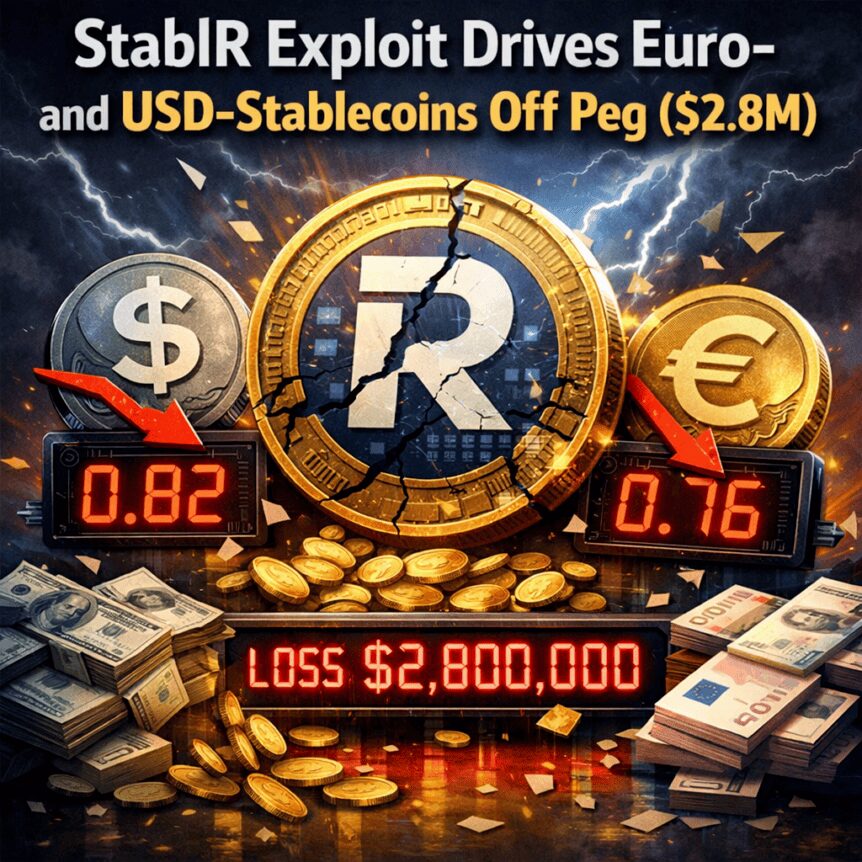
A live exploit targeting StablR’s issuer has driven its Euro and USD-pegged stablecoins away from parity, with roughly $2.8 million extracted so far, according to blockchain security firm Blockaid.
Blockaid said the incident appears to stem from a compromised private key within a 1-of-3 minting multisignature account. The attacker added themselves, replaced the other owners, and minted 8.35 million USDR and 4.5 million EURR, triggering the depeg.
“This is not a smart contract bug — it’s a key management and governance failure,” Blockaid said.
The attacker swapped the minted tokens for around 1,115 ETH (about $2.8 million) on decentralized exchanges, a move constrained by thin liquidity in the market for these assets.
Blockaid’s assessment underscores a governance weakness rather than a flaw in the token contracts themselves.
May has seen a string of crypto and DeFi exploits, with DeFiLlama tallying more than a dozen major incidents this month. Notable cases include THORChain, Verus Bridge, Echo Protocol and Polymarket.
StablR depeg details and price signals
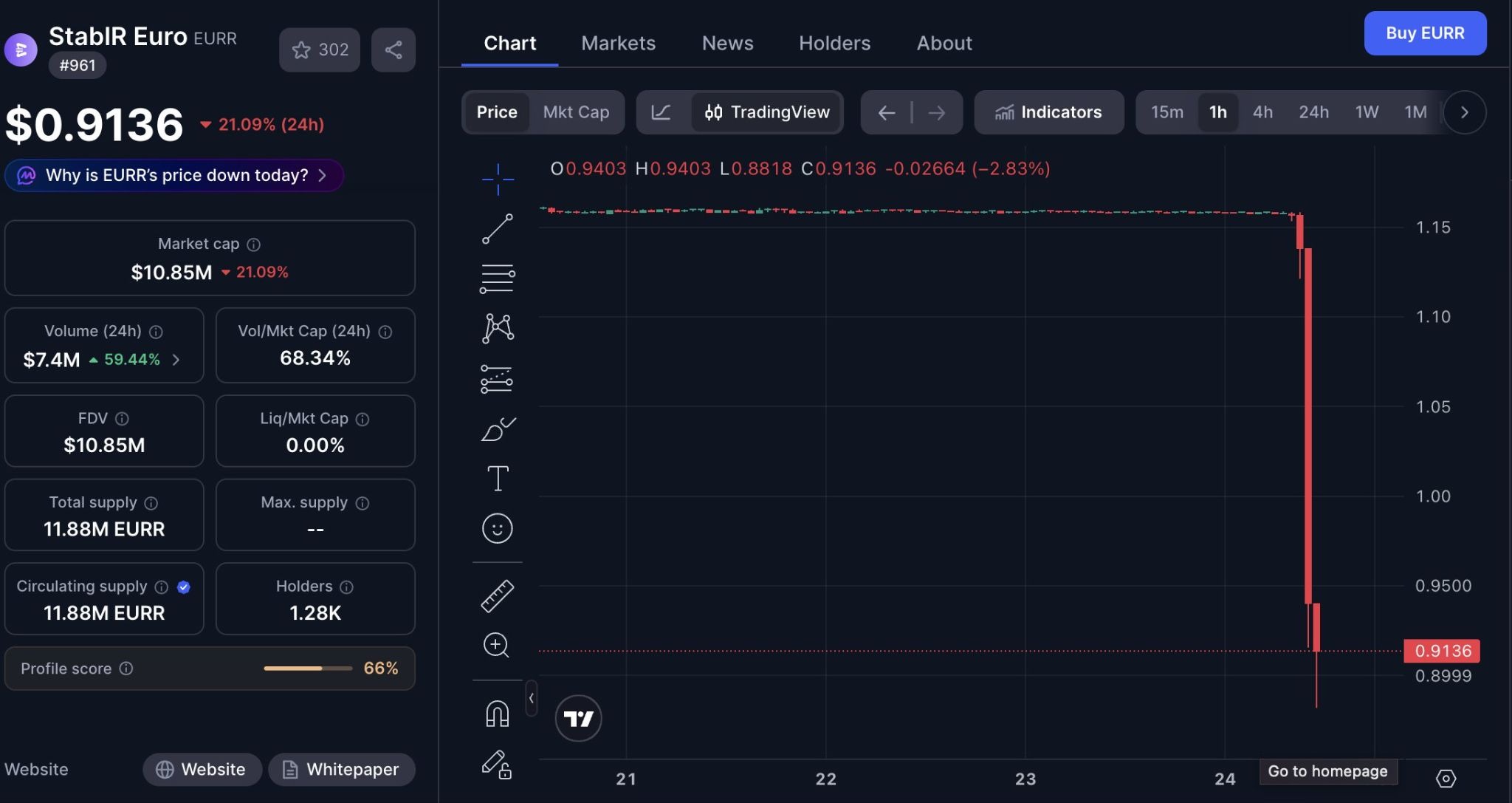
EURR, StablR’s euro-denominated stablecoin with a market capitalization around $14 million, has lost about 23% of its value, trading around $0.88, according to CoinGecko. USDR, a dollar-pegged stablecoin with roughly $11 million in market cap, has slumped about 30% to around $0.70 in the ongoing incident.
StablR emphasizes that its euro and USD stablecoins are regulated, collateralized assets with reserves held in segregated accounts at top-tier institutions, and they are available on Ethereum and Solana. Tether invested in StablR in December 2024, signaling institutional interest in Europe-focused stablecoins. There have been no updates on StablR’s X feed at press time.
PeckShield flagged the EURR depeg in its alerts, underscoring the ongoing price dislocations in these assets.
Broader DeFi risk landscape this May
As this incident unfolds, the wider DeFi space continues to grapple with security challenges tied to private-key and governance weaknesses. In the past two months, Volo Vault, Wasabi Perps, Echo Protocol and Polymarket have all suffered exploits tied to private or admin-key access. Separately, Map Protocol, a cross-chain bridge linked to Bitcoin-anchored assets, experienced a smart-contract bug on May 21 that minted a quadrillion MAPO tokens, highlighting how fast-moving cross-chain projects remain vulnerable to unexpected token minting events.
What this means for investors and builders
For investors and users, the StablR incident serves as a reminder that peg stability in regulated, collateralized stablecoins hinges not just on the token contracts but on governance and key-management practices. A weak multisignature threshold — such as 1-of-3 — can leave an issuer exposed to takeover if even a single owner is compromised. The episode also tests the resilience of reserve-backed models when liquidity is thin, complicating recovery efforts after a depeg.
From a market-structure perspective, the event underscores the importance of clear proof-of-reserves, robust custody for private keys, and rigorous governance reviews, particularly for issuers with institutional backers—such as Tether’s stake in StablR. It also raises questions about the pace and transparency of post-incident recoveries, and how on-chain data will reflect liquidity recovery and peg restoration.
Looking ahead, readers should monitor StablR’s communications and any forthcoming audits or contingency plans, as well as how regulators respond to stablecoin governance incidents and asset-liability disclosures. The next few weeks will be telling for the credibility of regulated collateralized stablecoins amid a broad pattern of DeFi breaches this year.
Readers should watch for StablR’s official updates and any audits or contingency measures, as peg stability and governance resilience remain under close scrutiny in a rapidly evolving DeFi environment.
Ripple’s cross-border token made several breakout attempts to surge past the upper boundary of its consolidation range, but it was stopped at between $1.50 and $1.60 every time.
Now, though, Ali Martinez claimed that XRP’s breakout has been confirmed. However, it’s not what the bulls expect and hope for.
Breakout Confirmed?
After spending months trading sideways mostly between $1.35 and $1.50, the popular altcoin’s latest breakout attempt came last week when it surged above the upper boundary and tapped $1.55. Analysts were once again convinced that its run had begun, but the reality was different. XRP was stopped immediately at that level and driven south to its starting point of $1.40 within hours.
It nosedived once again on Friday and Saturday, alongside the rest of the market, amid rising fears that the ceasefire between the US and Iran might end soon with new attacks. XRP dipped below $1.30 for the first time since early April, marking a multi-week low, while the overall network usage showed a substantial decline.
Ali Martinez’s new post on the token’s price performance came during this crash, saying “XRP is breaking out” as the token had breached the rising trend line of a symmetrical triangle on the daily chart. He predicted a further drop to as low as $1.14.
However, the peace deal progress between the US and Iran pushed the entire market north in the following hours. XRP was no exception, as it jumped to $1.36. Nevertheless, it still trades below the lower boundary of the symmetrical triangle outlined by Martinez.
They Disagree
CRYPTOWZRD posted a different perspective on XRP’s price moves, indicating that it had actually closed bullish on the daily chart. However, they added that it needs to reclaim the $1.40 resistance before there’s a chance for a more profound rally.
Fellow analyst CW brought up a chart demonstrating that the top traders on Binance have started to close their short XRP positions and replace them with longs. They concluded that whales “are ending their XRP bearish bets.”
The long position ratio is increasing as Binance top traders holding shorts on $XRP close their positions.
Whales are ending their $XRP bearish bets. pic.twitter.com/HnlGtzhlYR
— CW (@CW8900) May 23, 2026
The post Ripple Breaking Out or Breaking Down? The Catch Behind XRP’s Latest Technical Shift appeared first on CryptoPotato.
An ongoing exploit is impacting StablR, resulting in the depeg of its Euro and USD stablecoins, while a compromised private key has been blamed, adding to a lengthening list of hacks and exploits this month.
Blockchain security firm Blockaid reported on Sunday that its exploit detection system has identified an ongoing exploit on the StablR issuer, with around $2.8 million extracted so far.
The suspected cause is a private key compromise of one owner in the minting multisignature account, which used a weak 1-of-3 threshold, stated Blockaid.
The attacker added themselves, replaced the other owners, and minted 8.35 million USDR and 4.5 million EURR, causing the stablecoins to depeg.
The attacker then swapped the minted tokens worth around $10.4 million on decentralized exchanges for just 1,115 ETH or around $2.8 million due to thin liquidity.
“This is not a smart contract bug — it’s a key management and governance failure,” said Blockaid.
May has been a bad month for crypto and DeFi exploits with over a dozen major incidents so far, according to DeFiLlama. Some of the larger ones included THORChain, Verus Bridge, Echo Protocol and Polymarket.
StablR euro and dollar stablecoins depeg
StablR’s euro stablecoin, EURR, which has a $14 million market capitalization, lost 23% of its value, which depegged the asset from its $1.15 peg to $0.88 in EUR/USD markets, according to CoinGecko.
Meanwhile, StablR’s USDR dollar stablecoin, with an $11 million market capitalization, tanked 30% to $0.70 in the ongoing incident on Sunday morning.
Related: Map Protocol token plummets 96% after a quadrillion token mint exploit
StablR issues regulated collateralized stablecoins pegged to the Euro and USD, with reserves held in segregated accounts at top-tier institutions. They emphasize regulatory compliance, transparency via proof-of-reserves and availability on Ethereum and Solana.
The world’s largest stablecoin issuer, Tether, invested in StablR in December 2024.
There were no updates on the StablR X feed at the time of writing.
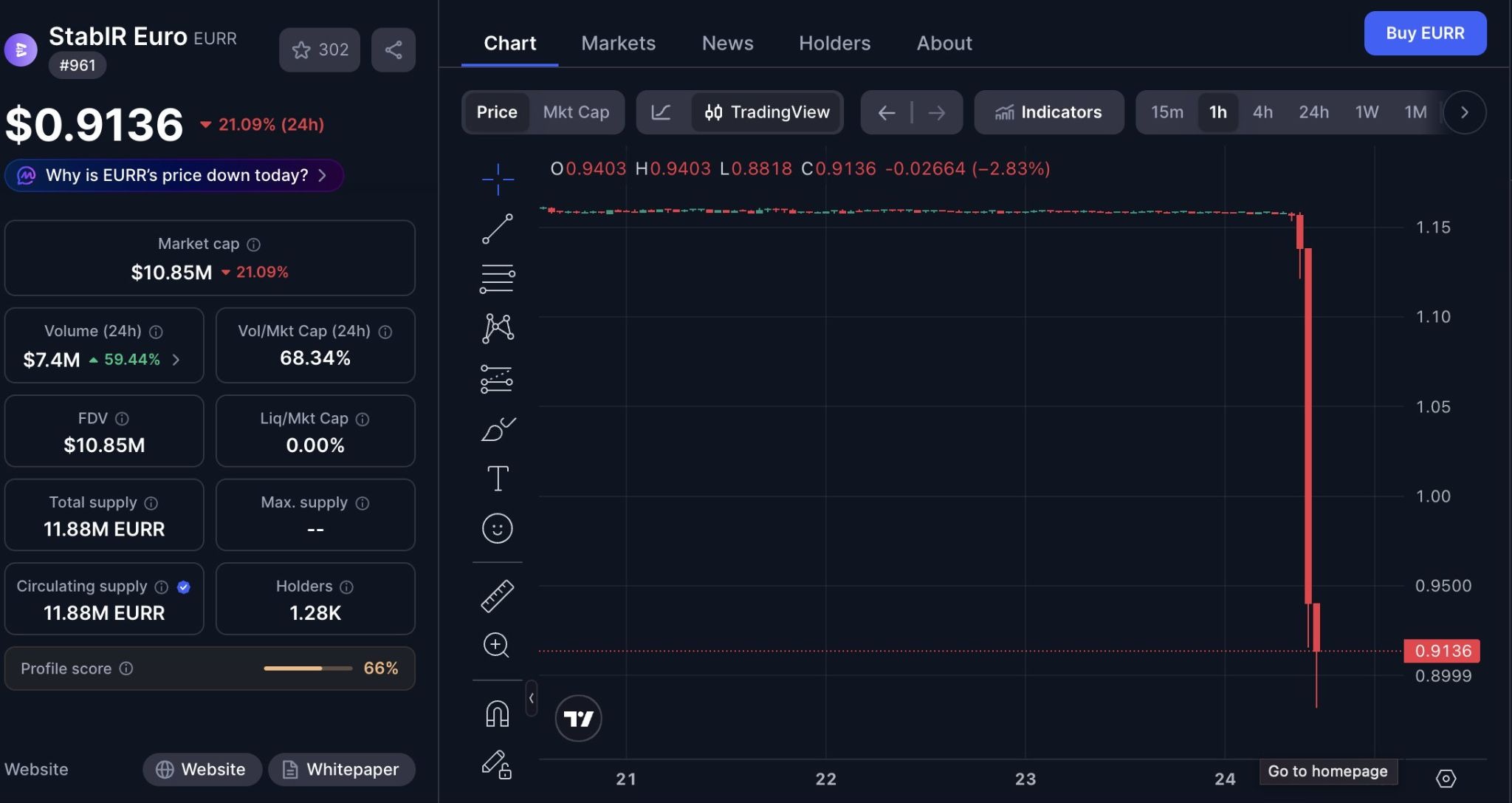
EURR depegs 23%. Source: Peckshield
DeFi exploits continue to mount
Compromised private keys are becoming a common attack vector, with several DeFi protocols being exploited as a result of poor management recently.
Volo Vault, Wasabi Perps, Echo Bridge and Polymarket were all hit with private or admin key exploits over the past two months.
Meanwhile, the Bitcoin cross-chain bridge Map Protocol was exploited by a smart contract bug on Wednesday, May 21, when an attacker minted a quadrillion MAPO tokens.
Magazine: DeFi’s billion-dollar secret: The insiders responsible for hacks
After a few days of highlighting threats that a peace deal might not be reached soon, which increased the selling pressure on the crypto market, US President Donald Trump announced the opposite hours ago.
The effects were immediate as bitcoin erased almost all Friday and Saturday losses, jumping to $77,000.
Peace Deal Coming Soon?
CryptoPotato reported yesterday that the latest reports at the time on the US-Iran war front indicated that the former might be preparing for new attacks. The rumors intensified when the POTUS skipped his son’s wedding to remain in the White House for meetings with top military personnel.
However, follow-up reports coming during the night suggested that the US and Iran might actually be “getting a lot closer” to finalizing a deal. Hours later, Trump posted on his social media platform that his administration had a “very good call” with the leaders of multiple countries in the region, such as Saudi Arabia, the UAE, Qatar, Pakistan, Türkiye, Egypt, Jordan, Bahrain, regarding the Islamic Republic of Iran, and “all things related to a Memorandum of Understanding pertaining to PEACE.”
Moreover, his post indicated that an “agreement has been largely negotiated, subject to finalization” between the two sides and the various countries in the region. He added that he spoke with Israel’s Prime Minister, which went “very well.”
“Final aspects and details of the Deal are currently being discussed, and will be announced shortly. In addition to many other elements of the Agreement, the Strait of Hormuz will be opened.”
More reports coming from Iran and the US continue to contradict, though. For instance, Iran’s Fars News agency claimed that “American officials have acknowledged in multiple messages to Iran that Trump’s posts are primarily for promotional purposes and media consumption within the US, and they have recommended that no attention be paid to these statements.”
The NYT, on the other hand, said Iran had agreed to give up its highly enriched uranium under the new deal.
BTC Price Rebounds
As mentioned above, the primary cryptocurrency plunged from over $77,000 on Friday to a monthly low of $74,200 in response to the threats of escalating tension in the Middle East, among a few other reasons. However, it jumped to just over $77,000 after Trump’s statement before it was stopped and now trades inches below it.
Most altcoins have followed suit, with ETH surging to over $2,100 after it dipped to $2,000 yesterday. NEAR, ONDO, MORPHO, and HYPE have marked even more significant gains today. Over $300 million worth of shorts have been wrecked on the crypto market’s way up, according to CoinGlass data.

The post Bitcoin Price Surged to $77K After Trump Signals Major Iran Peace Breakthrough appeared first on CryptoPotato.

After he was officially backed by US President Donald Trump during his first term, Jerome Powell was sworn in as Chairman of the Federal Reserve on February 5, 2018. He spent the next eight years and 100+ days as head of the financial institution, but experienced a massive fallout with Trump that led to countless public ridicules.
Kevin Maxwell Warsh is Trump’s new pick, who officially stepped in as the Fed Chair on May 22. The 56-year-old financier and attorney is believed to be the first bitcoin supporter to take this role, which prompted many crypto insiders to speculate that the largest digital asset will benefit a lot. But is that what ChatGPT thinks?
Will BTC Rocket?
The popular AI chatbot said Warsh is far from a “newcomer,” as he has already served as Fed governor. He is known for a more “market-sensitive approach, skepticism toward prolonged ultra-loose monetary policy, and for his close ties to Wall Street.”
According to ChatGPT, this matters because bitcoin’s price has “increasingly become tied to liquidity conditions and Fed policy expectations.” It added that the bull case for BTC would be if Warsh signals faster rate cuts, which doesn’t seem likely at the moment, easier financial conditions, and support for market stability.
Bitcoin would thrive under such conditions, as liquidity will increase, real yields are likely to fall, and investors would seek alternative stores of value.
“A more ‘market-friendly’ Fed could quickly revive risk appetite – and bitcoin is often the first to react,” said ChatGPT.
(Not So) Hidden Risks
However, the popular AI chatbot outlined a different scenario, which it described as “not all doves are bullish.” It explained that Warsh has expressed concerns about “inflation persistence,” which has become more than evident after the war against Iran started, and “excessive monetary expansion.”
Consequently, if his strategy continues the path laid out by Jerome Powell, meaning a more hawkish stance, then these higher rates could “pressure risk assets, including bitcoin.”
ChatGPT also cautioned that the market is unlikely to experience significant volatility by the actual appointment alone. It would need clearer signals and outlined some of the key catalysts that can unlock more fluctuations:
- First policy speech
- Dot plot expectations
- Tone on inflation versus growth
The post We Asked ChatGPT if Kevin Warsh Could Spark a Bitcoin Rally: Here’s the Brutal Reality appeared first on CryptoPotato.
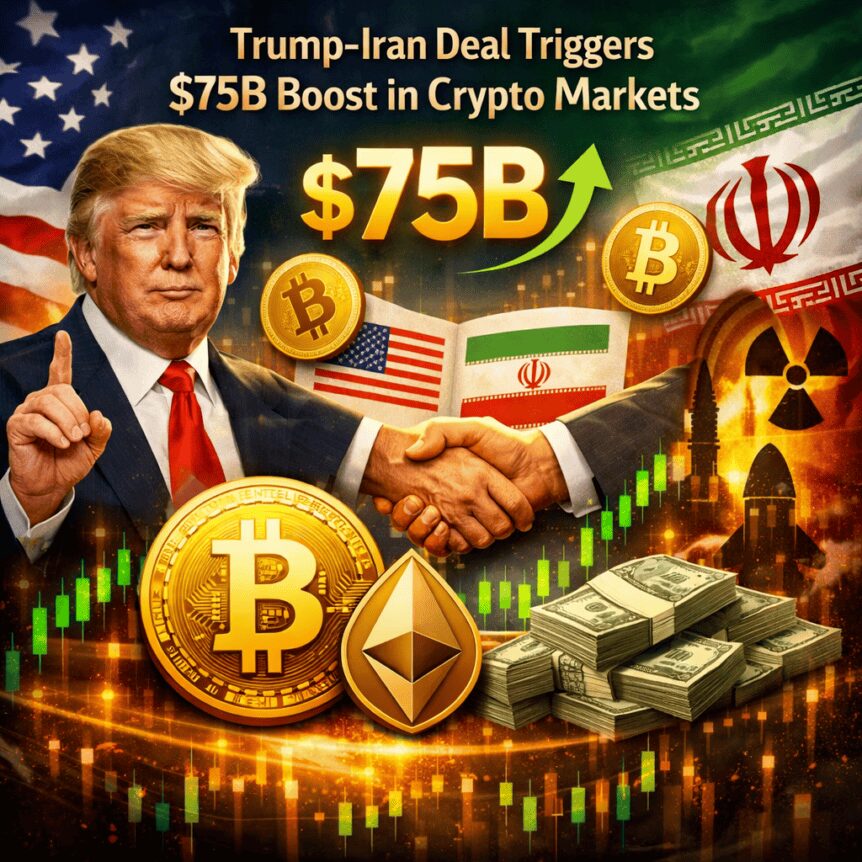
Crypto markets regained momentum after President Donald Trump signaled progress toward a peace agreement with Iran, lifting risk appetite across digital assets. The broader crypto market cap was estimated to rebound by roughly $75 billion as investors priced in the prospect of de-escalation in the region.
Trump announced on Truth Social that a deal is “largely negotiated” among the United States, Iran, and several Middle Eastern partners, listing Saudi Arabia, the United Arab Emirates, Qatar, Pakistan, Turkey, Egypt, Jordan and Bahrain among those involved. He said the agreement remains subject to finalization, and that a crucial element of the plan is the reopening of the Strait of Hormuz. The Strait’s status has historically influenced global energy prices and broader risk sentiment, including appetite for high-risk assets such as crypto.
“Final aspects and details of the deal are currently being discussed and will be announced shortly. In addition to many other elements of the agreement, the Strait of Hormuz will be opened.”
Three months of war takes its toll
The timing comes as a fragile ceasefire that began in early April has struggled to mature into a durable political accord, with several attempts at a broader settlement failing to yield a lasting outcome. The ongoing diplomacy underscores how geopolitics continues to shape markets that are often highly sensitive to headlines around war, sanctions and energy flows.
During a visit to India, U.S. Secretary of State Marco Rubio reiterated the administration’s position: Iran must not acquire a nuclear weapon, the Straits must remain open without tolls, and Iran should turn over its enriched uranium. His remarks highlight how the geopolitical landscape remains a central driver for risk assets, including crypto markets, even as talks show tentative progress.
On the energy front, crude prices moved lower on renewed hopes for de-escalation. West Texas Intermediate traded near $96 per barrel, with Brent around $103. While these levels are down from earlier spikes, they remain markedly elevated versus pre-conflict benchmarks—roughly 55% higher—maintaining a backdrop of continued pressure on the cost of living and investment returns across asset classes.
Crypto markets react positively
Bitcoin’s price action captured the headlines in the immediate aftermath of the announcement. On Coinbase, BTC slipped to a five-week low near $74,250, according to TradingView data. The price subsequently rebounded to test the 50-day exponential moving average around $77,000 in early trading on Sunday before easing to about $76,800 by the time of publication.
Despite the bounce, bitcoin remains well off its October peak, trading roughly 39% lower. Market participants noted that the failure to breach resistance near $82,000 in recent sessions has kept upside momentum in check, reinforcing a broader narrative of a cautious risk environment for crypto as macro headlines continue to drive sentiment.
Looking beyond Bitcoin, analysts stressed that the immediate reaction to geopolitical headlines can be choppy and context-dependent. While the prospect of a durable peace framework could reduce tail risk for risk assets, any ensuing sanctions, policy shifts, or delays in implementation could reintroduce volatility. The current dynamic underscores how crypto markets remain tethered to macro catalysts even as they experiment with new forms of demand—from savings, cross-border payments, or hedges against traditional financial systems.
What’s next for investors?
As the diplomacy progresses, market watchers will be focused on concrete milestones: the publication of final terms, a clear implementation timeline, and any policy actions that might affect energy markets or sanctions posture. The immediate market reaction has been cautiously optimistic, but the longer-term trajectory for crypto will hinge on the durability of the peace framework and its ripple effects on global energy prices and financial conditions.
For traders and builders in the crypto space, the key questions are whether de-escalation translates into lower macro-generated volatility and whether a steadier energy backdrop supports a more favorable risk-on stance. Investors should stay attentive to official statements and to any shifts in regulatory signals that could alter the balance of risk and opportunity across digital assets.
As the week unfolds, readers should watch for the next round of official communiqués on the peace process, the full terms of any agreement, and how those terms interact with ongoing energy-market dynamics. The coming days will be pivotal in determining whether the current relief rally can sustain momentum or give way to renewed volatility should negotiations stall or face setbacks.

The Universe Is Full of ‘Impossible’ Black Holes. Now Scientists Know Why

Man City vs Aston Villa: Prediction, kick-off time, team news, TV, live stream, h2h results, odds today

5 Cryptocurrencies Positioned to Outperform in the Next Bull Run

US brings back mandatory military draft registration

Steven Gerrard disagrees with Gary Neville over ‘shock’ Chelsea and Arsenal claim | Football

Register Renaming | Hackaday

Valid reason?? calebhammercomposer #calebhammer #financialfreedom #financialaudit #money #finance

Money Addiction Mindset | Rich Money Mindset Psychology Explained #shorts #shortsfeed

This video will change your financial status
-

 Crypto World3 days ago
Blockchain.com files with SEC for U.S. IPO
-

 Fashion2 days ago
Holiday Weekend Open Thread – Corporette.com
-
 Crypto World7 days ago
Intesa Sanpaolo’s crypto holdings jump to $235M as XRP enters
-

 Business2 days ago
Dell Technologies DELL Stock Surges 15% on AI Server Momentum and Analyst Upgrades in 2026
-

 Crypto World2 days ago
Space X IPO Is ‘Bad News’ for Tech Stocks: But What About Bitcoin?
-

 Politics2 days ago
Makerfield: a tale of two social-media histories
-

 Crypto World22 hours ago
Robinhood crypto COO Tanya Denisova exits
-

 Crypto World2 days ago
AI infrastructure race heats up as IREN pitches full-stack strategy, WhiteFiber lands $160M deal
-
 Tech2 days ago
A 0.12% parameter add-on gives AI agents the working memory RAG can’t
-

 Tech2 days ago
WhatsApp ads could make Irish debut after discussions with DPC
-

 Crypto World2 days ago
Bitcoin Accumulation Weakens as BTC Realized Losses Hit $600M
-
Crypto World5 days ago
Revolut Launches Dogecoin Debit Card Across UK and EU
-

 Tech2 days ago
You Can Now Add ChatGPT To PowerPoint
-

 Sports2 days ago
2026 CJ Cup Byron Nelson leaderboard: Brooks Koepka finds putting stroke in Round 1
-
 NewsBeat3 days ago
Charity run by Reform leader Malcolm Offord accused of ‘law breaking’ over Scottish registration
-

 Crypto World2 days ago
Trump Media’s Bitcoin Stash Shrinks Again as 2,650 BTC Lands on Crypto.com
-

 Business2 days ago
Trump Invests $1M-$5M in Kura Sushi USA Chain With 27 California Locations
-
Business2 days ago
Goldman Sachs reinstates Ageas stock coverage with neutral rating
-

 Politics7 days ago
SECOND secret Israeli base discovered in Iraqi desert
-

 Crypto World5 days ago
SEC to propose tokenized stock framework as Wall Street efforts deepen: Bloomberg
You must be logged in to post a comment Login