
Crypto World
The Future of Autonomous Code Optimisation and AI Innovation



Introduction: A New Era in Artificial Intelligence
In May 2025, Google DeepMind introduced a ground-breaking innovation poised to transform how artificial intelligence is developed, optimised, and deployed. Known as Alpha Evolve, this evolutionary AI system represents a significant shift from passive machine learning models to autonomous, agentic AI, capable of iteratively improving code without human intervention.
Alpha Evolve doesn’t merely assist with programming—it generates new code, tests variants, evaluates performance, and refines results through a self-directed loop. Built upon the powerful Gemini multimodal model, Alpha Evolve exemplifies the next frontier in AI development: systems that actively evolve and improve their algorithms to achieve greater efficiency and effectiveness.
What Is Alpha Evolve?
Alpha Evolve is an agentic AI system designed to discover, test, and optimise algorithms in a fully autonomous manner. Unlike traditional AI models that passively await user prompts or require human-supervised training, Alpha Evolve takes initiative. It explores vast solution spaces, retains lessons from previous iterations, and continually refines its output in pursuit of performance goals.
At its core, Alpha Evolve performs the following:
Generates code variants via intelligent prompt sampling.
Evaluates performance based on predefined metrics like speed, efficiency, and energy use.
Retains and learns from each attempt using a dynamic program memory.
Iterates autonomously, improving algorithms over time with minimal human oversight.
This feedback loop allows the AI to tackle complex computational challenges, optimise system performance, and even make scientific discoveries, all without relying on step-by-step human guidance.
How Does Alpha Evolve Work?
Alpha Evolve follows a cyclical agentic architecture, similar to an evolutionary algorithm. Here’s how it operates:
Initial Input: The system is given a coding task or optimisation goal (e.g., reduce energy use in a TPU circuit).
- Code Generation: It creates numerous candidate solutions by mutating existing code or generating new implementations from scratch.
- Evaluation: Each version is tested through simulations or real-world benchmarks, receiving a performance score.
- Selection and Retention: The top-performing code is retained and used as a baseline for the next generation.
- Iteration: This process repeats, refining results with each cycle.
- Importantly, Alpha Evolve maintains a programme database of prior attempts, which helps prevent redundancy and accelerates convergence on optimal solutions.
Real-World Results at Google
Alpha Evolve is already making a tangible impact across Google’s infrastructure and AI research pipeline. Here are four significant achievements to date:
1. Optimised Job Scheduling in Google Data Centres
By applying Alpha Evolve to the Borg scheduler—Google’s job allocation system—engineers recovered 0.7% of compute resources. While this may seem modest, across Google’s immense server network, such savings represent millions in cost reductions and substantial energy efficiency gains.
2. Improved TPU Circuit Designs
Alpha Evolve was used to re-engineer circuits in Google’s Tensor Processing Units (TPUs). The AI discovered ways to remove redundant components, resulting in:
This marks a rare example of AI contributing directly to hardware optimisation, not just software efficiency.
3. Faster Gemini Model Training
Training large-scale AI models, such as Gemini, is computationally intensive. Alpha Evolve significantly improved kernel-level tiling heuristics for matrix multiplication—a critical operation in model training.
- Result:
23% faster execution on key kernels
- Impact: 1% total reduction in training time for Gemini
Such improvements compound at scale, saving millions of GPU hours and accelerating development cycles across teams.
4. Broke a 56-Year-Old Matrix Multiplication Record
In a stunning demonstration of scientific discovery, Alpha Evolve found a novel way to multiply 4×4 matrices using fewer operations than the classic Strassen algorithm (1969). This breakthrough has significant implications for:
- Theoretical computer science
- Deep learning computation
This achievement illustrates how AI systems are now capable of making original contributions to mathematics—a task once thought to require human creativity.
The Road to Recursive Self-Improvement
One of the most exciting possibilities introduced by Alpha Evolve is the concept of recursive self-improvement. By integrating its optimisation outputs back into base AI models like Gemini, DeepMind may initiate a loop where AI systems continually enhance themselves, refining not only task performance but their own training and development frameworks.
While still speculative, this pathway could usher in:
- Exponential increases in AI capability
- Accelerated scientific discovery
This feedback mechanism may even lay the groundwork for artificial general intelligence (AGI)—a milestone that could redefine the role of AI in human society.
Automating the Entire Research Pipeline
Looking beyond code optimisation, Google envisions Alpha Evolve and future agents automating nearly all aspects of AI research:
- Literature review:
Reading and summarising vast academic corpora
- Hypothesis generation: Formulating testable ideas
- Experimental design: Structuring trials and simulations
- Analysis and interpretation:
Drawing conclusions and suggesting next steps
This end-to-end automation could compress decades of progress into a few months, allowing AI systems to solve problems that are currently intractable due to time and resource constraints.
According to internal researchers, such capabilities may become a reality before 2030.
Human-AI Collaboration Remains Crucial
Despite Alpha Evolve’s autonomy, human involvement remains vital. Human oversight enhances:
- Exploration boundaries: Guiding the AI toward meaningful solution spaces
- Ethical safeguards: Preventing misuse or unintended outcomes
- Creative integration: Combining machine-discovered insights with human intuition
Far from replacing developers and researchers, Alpha Evolve is best viewed as an amplifier of human ingenuity, allowing professionals to focus on high-level strategy while the AI handles low-level optimisation.
Conclusion: The Future Is Evolutive
Alpha Evolve is not just an AI model—it’s a new class of intelligent agent, one capable of advancing science and technology without constant human prompting. By automating code refinement, accelerating hardware design, and contributing original discoveries, Alpha Evolve sets a precedent for what AI can become.
The implications are profound:
- Businesses can optimise infrastructure at scale.
- Scientists can test theories in days instead of years.
- AI systems can continually learn and improve themselves.
In short, Alpha Evolve evolves AI itself.
As we look toward a future of recursive self-improvement and automated research, one thing is clear: agentic AI is here, and it’s changing everything.
Frequently Asked Questions (FAQs)
🔹
What makes Alpha Evolve different from other AI systems?
Unlike traditional AI models that require human input for every iteration, Alpha Evolve acts independently. It generates, evaluates, and refines code through autonomous feedback loops.
🔹 Is Alpha Evolve available to the public?
Currently, Alpha Evolve is used internally at Google. However, DeepMind has suggested future limited access for academic and trusted researchers.
🔹
Could Alpha Evolve replace human software engineers?
Not entirely. While Alpha Evolve handles routine and complex optimisation tasks, human guidance and creativity remain essential for setting goals, interpreting results, and ensuring the ethical use of AI.


Global trading and investment firm GSR has expanded its tokenized-asset platform by acquiring two advisory shops, Autonomous and Architech, in a $57 million deal. The strategically timed acquisition unites launch support, treasury management, and capital-markets infrastructure under a single umbrella, aiming to streamline how projects structure token economics, raise funds, and secure liquidity across venues. Autonomous brings in a hands-on treasury-and-exchange coordination capability, while Architech adds token-design acumen and liquidity-strategy expertise, positioning GSR to offer end-to-end guidance for tokenized projects within its existing trading, market-making and asset-management businesses.
Key takeaways
- GSR refashions its service stack by merging Autonomous’s treasury operations and Architech’s token-design work into a unified platform for token launches, treasury planning and market access.
- Autonomous will continue operating under its brand, whereas Architech will be folded into a new digital asset advisory unit within GSR.
- Architech has advised on token launches with a peak fully diluted value above $10 billion, underscoring the scale of projects the firm has influenced.
- The deal reflects a broader industry shift from ad hoc token offerings toward integrated, capital-markets-grade services that cover design, fundraising, liquidity, and governance.
- Regulatory-era developments in token offerings—illustrated by late-2023 to 2024 moves toward regulated primary token offerings in the U.S.—are accelerating institutional participation in tokenized markets.
- Recent market developments, including major platform launches for regulated token offerings and continued consolidation of advisory services, signal a maturing ecosystem for tokenized finance.
Tickers mentioned: $COIN
Market context: Tokenized-asset infrastructure has been consolidating as projects seek cohesive support across design, fundraising, liquidity and custody. In November, Coinbase (EXCHANGE: COIN) launched a platform for regulated primary token offerings, enabling US retail investors to participate in compliant token sales with lockups and controlled distribution. This follows a wave of private rounds and coordinated exchange listings that have become more common as the market shifts away from the early, largely retail-driven ICO model toward regulated, institution-friendly structures. The ongoing evolution is shaping how startups approach token launches and how investors assess risk, liquidity and governance around tokenized ecosystems.
Why it matters
The combination of Autonomous and Architech under GSR’s umbrella signals a shift in crypto advisory services from bespoke, one-off engagements to scalable, end-to-end offerings. By unifying treasury operations, market coordination, token economics, and liquidity strategy, the firm aims to reduce the coordination overhead that often slows token programs or introduces misalignment across providers. For developers, this could translate into faster go-to-market timelines with clearer governance and risk frameworks; for investors, it could mean more predictable token dynamics and better access to liquidity planning and treasury management as part of a broader capital markets workflow.
Architech’s track record—in which token launches it advised carried a combined peak fully diluted value topping $10 billion—illustrates the scale of projects that could benefit from a more integrated advisory approach. Autonomous’s specialization in treasury operations and exchange coordination promises to complement that capability with practical liquidity and counterparty-management processes, including interactions with exchanges, custodians and market makers. The resulting platform could provide token issuers with a unified playbook covering design, fundraising, treasury discipline and market access, reducing the friction that has historically characterized multi-vendor arrangements.
The market context is notably influenced by regulatory experiments and institutional interest in tokenized assets. For example, the Push toward regulated primary token offerings in the U.S. has begun reshaping how early-stage projects structure their sales, given the compliance and distribution controls involved. Articles and industry commentary cited in the deal’s background underscore the importance of aligning token economics with broader financial strategies, rather than viewing token launches as isolated events. Initiatives such as Backpack’s planned token distribution tied to milestones and potential IPOs demonstrate a broader experimentation with how token supply can be linked to corporate milestones and governance goals. This ongoing evolution—paired with the Coinbase platform’s entry into regulated primary offerings—points to a more integrated ecosystem where liquidity planning, treasury reserves, and token design are not disjointed steps but a continuous lifecycle managed within a single platform.
For investors and builders, the deal underscores a clearer pathway from concept to liquidity and exchange readiness. By bringing treasury management and liquidity strategy into the same framework as token design and launch support, GSR’s expanded platform could reduce the risk of mispriced tokens or misaligned incentives. The consolidation also mirrors the broader transformation of the crypto advisory space, moving toward repeatable processes that can scale with project complexity and regulatory expectations while maintaining a focus on risk controls and governance.
In sum, GSR’s acquisition of Autonomous and Architech signals the industry’s intent to professionalize token launches and capital markets infrastructure. If the integration proceeds as described, projects may soon navigate from ideation to market access and ongoing liquidity within a single, coordinated ecosystem rather than juggling multiple specialist providers. The market could increasingly reward teams that demonstrate disciplined treasury management, robust liquidity planning, and cohesive token economics, all bundled into a scalable advisory platform backed by a proven trading and asset-management operation.
The move also invites scrutiny of how such integrated platforms will interact with evolving regulatory regimes and with traditional financial partners. As more projects seek to tokenize real-world assets or build complex incentive structures, the ability to coordinate legal, financial and technical dimensions under a unified umbrella could become a competitive differentiator. GSR’s strategy appears designed to capitalize on that opportunity, aligning token issuance with ongoing capital-management activities, and embedding exchange-ready liquidity and risk controls into the lifecycle of token projects.
Ultimately, the acquisition reinforces the idea that the crypto market is maturing toward a more integrated, institution-friendly model. If successful, this approach could accelerate the pace at which tokenized ventures move from concept to market while maintaining the discipline and oversight that institutional participants demand. For now, the industry will watch how autonomously branded and Architech-integrated advisory units perform within GSR’s broader ecosystem, and how quickly this consolidation translates into real-world efficiency and market participation for tokenized assets.
What to watch next
- Integration milestones for Autonomous and Architech within GSR’s platform (quarters following the deal).
- Rollout of the new digital asset advisory unit and the first combined client engagements.
- Regulatory developments affecting primary token offerings and treasury-management practices in major jurisdictions.
- Adoption signals from token projects seeking end-to-end advisory and liquidity services under one platform.
- Continued coverage of regulated token offerings in the U.S., including implications for retail versus accredited investors.
Sources & verification
- GSR’s acquisition coverage and details on Autonomous and Architech via Chainwire’s report on the $57 million deal.
- Architech’s advisory activity and its claimed peak fully diluted value (> $10 billion).
- Autonomous’s treasury operations and coordination with exchanges, custodians, and market makers.
- Coinbase’s November launch of a regulated primary token offerings platform, including the Monad token sale coverage.
- Chicago Journal of International Law commentary on regulation of ICOs and the need for coordinated service-provider engagement.
Integrated platform signals a new era for tokenized finance
GSR’s strategic purchase of Autonomous and Architech for $57 million marks a concerted effort to unify token-launch services, treasury management and capital markets infrastructure. The deal stitches together Autonomous’s treasury operations and exchange coordination with Architech’s token-design and liquidity-strategy capabilities, embedding them into GSR’s trading, market-making and asset-management framework. The objective is to reduce the fragmentation that has historically complicated token programs when multiple vendors handle different pieces of the lifecycle. By offering end-to-end support—from design to liquidity and governance—GSR aims to deliver a more predictable and scalable path for token projects.
Autonomous will continue to operate under its existing brand within GSR, while Architech will be integrated into a newly formed digital asset advisory unit. Architech’s leadership notes that its advisory work on token launches has connected with a peak fully diluted value above $10 billion, underscoring the scale of projects the firm has guided. This combination could help projects achieve faster go-to-market timelines with a more disciplined approach to treasury and liquidity risk management. The synergy between token economics and market access is particularly important as regulatory scrutiny intensifies around token offerings and as institutions seek structured pathways into tokenized markets.
From the ICO-era to today’s regulated, institution-friendly environment, fundraising approaches have evolved. The piece notes that the industry has shifted toward private funding rounds followed by coordinated listings and liquidity provisioning, a path exemplified by high-profile rounds such as Monad’s $225 million funding in 2024 led by Paradigm ahead of a token launch. In the same breath, Coinbase’s platform for regulated primary token offerings introduced in November represents a real shift in retail access to compliant token sales. The Monad token sale, linked in coverage, serves as a benchmark for how regulated, investor-protected launches might operate in practice. For readers exploring how these trends shape the market, this integration offers a blueprint for how a combined treasury and design platform can function in tandem with regulated, primary offerings.
Industry observers have long argued that token issuance needs to be aligned with corporate finance and governance. The new platform proposed by GSR could help align token economics with treasury reserves, risk management and liquidity provisioning. Projects may benefit from a streamlined approach to structuring, fundraising and exchange readiness, particularly when a single provider can offer governance and compliance oversight in parallel with technical design. The potential to shorten timelines and reduce risk could be attractive to teams looking to bring tokens to market with a higher degree of assurance and oversight, especially in markets where regulatory expectations are continually evolving.
In this context, the deal also underscores the ongoing consolidation of advisory services in the crypto space. Rather than engaging disparate specialists for token economics, treasury, and liquidity, a growing number of players are seeking to bundle these capabilities under a unified platform. The influencers in this transformation include not only GSR and its newly integrated units but also the broader ecosystem of regulated platforms and exchanges that are expanding access to compliant token offerings. As the market continues to mature, such integrated platforms may become a standard capability for token projects seeking to navigate the complexities of fundraising, treasury risk, and market access in a single, coordinated workflow.
Crypto World
Crypto.com partners with KG Inicis to enable crypto payments for tourists in South Korea
Crypto.com has partnered with KG Inicis to introduce crypto payment options for foreign tourists visiting South Korea.
Summary
- Crypto.com has partnered with KG Inicis to enable crypto payments for foreign tourists across South Korea through its merchant network.
- International travelers will be able to pay using digital assets, while merchants can choose to settle transactions in fiat or crypto instantly.
The two companies plan to roll out Crypto.com Pay across KG Inicis’ merchant network, according to a March 17 press release.
The integration will allow international travelers to pay for goods and services using digital assets at both physical stores and online platforms. Meanwhile, merchants will have the option to receive payments instantly in fiat or digital assets.
“A payment infrastructure that bridges digital assets with the real economy will become a core competitiveness of the future finance and commerce industries,” a spokesperson for KG Inicis told media.
“We plan to expand an infrastructure where digital assets can be utilised in actual economic activities, all while ensuring a solid legal and regulatory foundation.”
KG Inicis is one of South Korea’s largest payment gateway providers and handles hundreds of millions of transactions annually, according to the release. It also boasts around 190,000 affiliated merchants and commands nearly 40% market share.
Outside of payments, the two companies plan to explore additional areas of cooperation, including joint marketing efforts and new product development. However, these initiatives remain subject to regulatory approval.
The latest partnership fits into Crypto.com’s broader expansion plans. Last month, the company secured conditional approval for a U.S. national trust bank charter, just days after receiving ISO certification for AI systems management. The crypto exchange has also launched a prediction market platform dubbed OG.
Crypto use in tourism on the rise
Meanwhile, cryptocurrency use in tourism has gained traction across Asia as governments test new ways to integrate digital assets into spending ecosystems.
Last year, Thailand introduced plans for an 18-month TouristDigiPay program, allowing visitors to convert crypto into Thai baht for everyday spending.
Similarly, Bhutan has rolled out a crypto payment system for tourism through a partnership with Binance Pay and DK Bank, enabling travelers to pay for hotels, tickets, and services using digital assets.
The second-largest perpetual futures DEX by volume began the rollout of its mainnet, which uses ZK proofs to keep trades private.
Aster, the BNB Chain-native perp DEX backed by YZi Labs, has launched the genesis phase of Aster Chain, its privacy-focused Layer 1 blockchain, the team announced on X.
According to the announcement, Aster Chain is launching in a phased sequence: Chain Genesis is already live, with a partnership reveal slated for tomorrow, public staking for ASTER token holders opening later this week, and an ecosystem expansion and “Aster Code partners program” to follow. A brand and UI upgrade is also in the pipeline, per the announcement.
Aster underlined that the new L1’s primary feature is its privacy architecture, with “Account Privacy” turned on by default. Per Aster Chain’s documentation, every order place in the default privacy mode is verifiable and encrypted via Zero-Knowledge (ZK) cryptography. In addition, every transaction is routed through a one-time stealth address, making it impossible to link a wallet to its trading activity.
For traders who want to selectively disclose their activity — to an auditor, counterparty, or regulator — Aster is introducing a “viewer pass” mechanism: a user-generated key that decrypts their on-chain records for anyone they choose to share it with, while keeping everything else locked.
Aster Chain’s documentation also states that the chain is designed to be high-performance, “optimized for ultra-low latency trading environments.” Per the documentation, the L1 has a block time of 50 milliseconds and processes up to 100,000 Transaction Per Second (TPS). It also boast zero gas fees.
“This performance enables Aster to deliver a trading experience comparable to centralized exchanges while preserving decentralized settlement and verification,” the documentation states.
The launch of a privacy-focused L1 for the DEX builds on past moves. Last June, as the so-called perp DEX wars were just heating up, Aster launched a “hidden orders” feature, allowing traders to conceal order size from the public order book. Aster launched the feature less than three weeks after Binance co-founder CZ publicly floated the idea of “dark pool” perpetuals trading.
Perp DEX Mania
Aster Chain’s mainnet launch comes as the protocol cements its place near the top of a market that barely existed at scale two years ago — on-chain perps trading.
Aster is currently the second-largest perp DEX by trading volumes after Hyperliquid, with $3.36 billion in trades in the past 24 hours and $18.6 billion in the past week, per data from DefiLlama.
As The Defiant has tracked, 2025 became the breakout year for on-chain perpetuals, with a wave of challengers — Aster among them — emerging after Hyperliquid’s token launch in late 2024, and rising popularity following. That momentum only accelerated: September marked the first time perp DEX volume exceeded $1 trillion in a single month, nearly 50% higher than August, with Aster, Hyperliquid, and Lighter locked in an increasingly fierce battle for dominance.
When the DEX’s ASTER token launched in September, the token surged 875% on its opening day, quickly reaching a $1.9 billion market cap — driven in large part by CZ’s vocal promotion on X.
The launch of a proprietary chain now positions Aster squarely against Hyperliquid’s core advantage: a purpose-built L1 as the foundation for its market dominance.
Meanwhile, ASTER is up 7% on today’s news, trading around $0.76, or a $1.88 billion market cap.
This article was written with the assistance of AI workflows. All our stories are curated, edited and fact-checked by a human.

Disclosure: This article does not represent investment advice. The content and materials featured on this page are for educational purposes only.
Aurum Foundation names Nick Patel as its RWA Relationships Advisor as tokenized real-world assets gain momentum.
Summary
- Aurum Foundation appoints Nick Patel as RWA Relationships Advisor to lead its Real-World Asset strategy.
- Nick Patel brings expertise in commodities, finance, and tokenized gold, aiming to expand Aurum’s exposure to metals, emeralds, and other liquid real-world assets.
- Aurum combines tangible assets with decentralized finance, leveraging AI-driven infrastructure and fractional ownership models for broader investor access.
Aurum Foundation has appointed Nick Patel as its RWA Relationships Advisor to spearhead its Real-World Asset strategy. This comes at a time when interest in tokenized real-world assets (RWAs) has been steadily increasing.
According to data from DeFiLlama, the value of RWA on public blockchains reached $23.6 billion in 2026, a 66% increase from $14.1 billion at the start of the year.

Nick has built his career working at the intersection of commodities, finance, and, more recently, digital asset infrastructure. He has spent the past several years in gold trading and has built businesses tied to supply, mining, and tokenized gold initiatives. He brings more than a decade of experience in financial markets, working in stockbroking, equity sales, commodity trading, and cross-border investment.
He has been appointed to expand Aurum’s RWA strategy and strengthen relationships across global commodity markets. The foundation has positioned itself around crypto products, AI-driven financial infrastructure, and new ways to connect decentralised finance with tangible assets such as gold and other commodities.
According to Aurum CEO Bryan Benson, Nick’s appointment is part of the foundation’s broader effort to combine tangible value with the accessibility and yield potential of decentralized systems, as it focuses on widening its investment approach to include fractional exposure to metals, emeralds, and other liquid real-world assets, not just gold.
With more than two decades of experience in financial markets, Nick has worked in different departments, including stockbroking, equity sales, commodity trading, and cross-border investment.
He is also the founder of Bank of Bullion in Dubai, a business focused on the precious metals supply chain, including procurement, refining, storage, and trading. He also leads Clinq DMCC and Clinq.Gold, a venture centred on digitising gold ownership through blockchain infrastructure and fractional access.
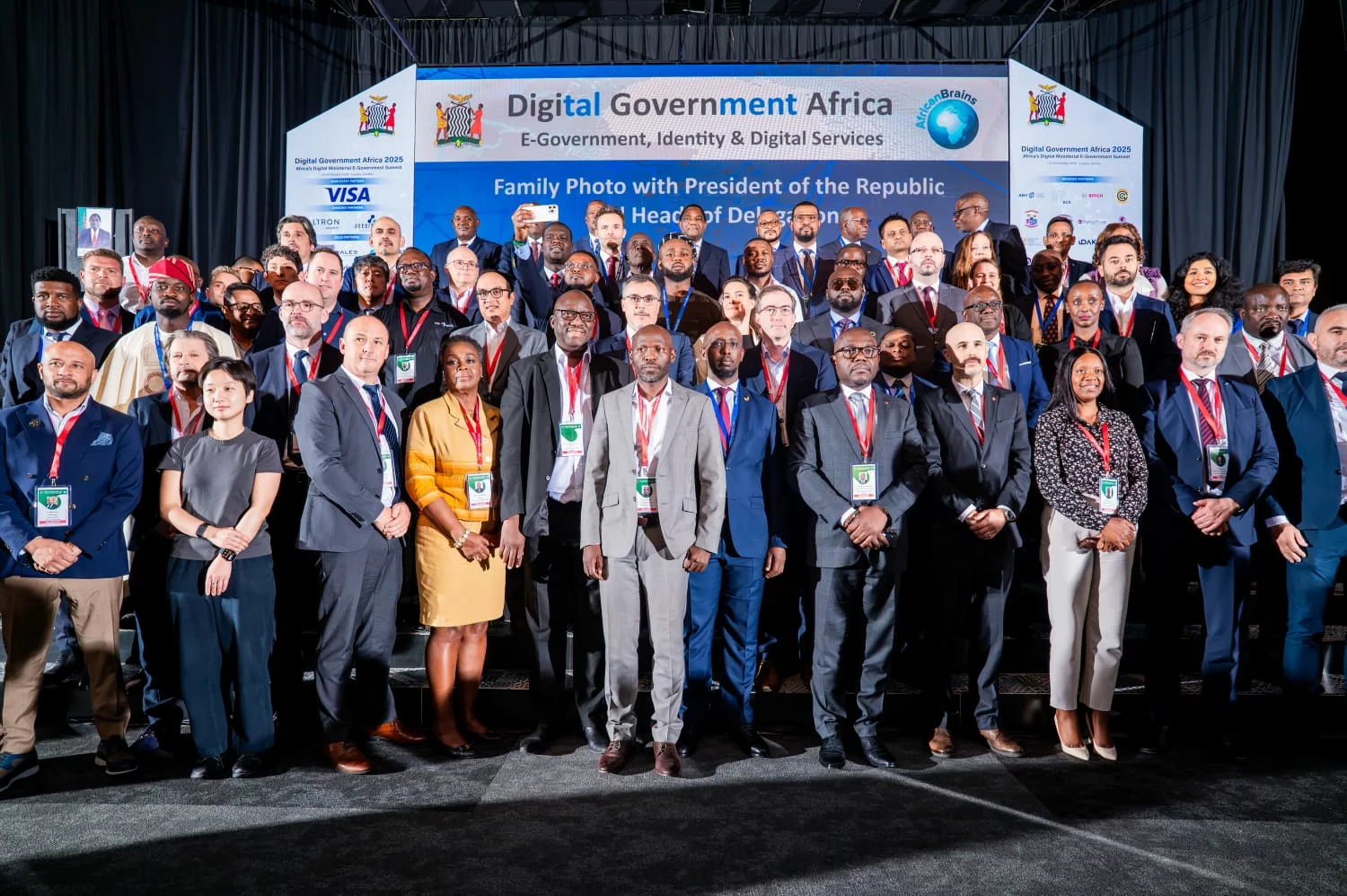
These businesses center on connecting physical gold production and trading with digital financial rails. The ventures have given Nick the expertise needed to navigate a period when blockchain firms are increasingly exploring tokenised commodities, funds, and other off-chain value beyond traditional crypto assets.
Aurum’s long-term goal is to build DeFi earning opportunities around assets that are typically seen as stable stores of value. Gold sits naturally within that narrative. It is familiar, globally recognized, and widely used as a hedge in traditional markets.
Patel said he is looking forward to helping connect traditional assets with new financial opportunities and to building relationships across the sector.
Disclosure: This content is provided by a third party. Neither crypto.news nor the author of this article endorses any product mentioned on this page. Users should conduct their own research before taking any action related to the company.

Key Takeaways
- Circle (CRCL) stock climbs 2.83% following USDC’s launch on Injective
- Native issuance eliminates reliance on vulnerable bridged token solutions
- Cross-Chain Transfer Protocol facilitates frictionless multi-blockchain movement
- Injective’s infrastructure delivers rapid finality and minimal transaction costs
- Integration advances compliant stablecoin adoption in decentralized finance
Shares of Circle Internet Group (CRCL) increased 2.83% to reach $129.39, signaling market enthusiasm for expanded blockchain infrastructure. The stablecoin issuer is deploying USDC across the Injective blockchain platform. This strategic expansion targets improved crosschain connectivity and decentralized financial infrastructure.
Circle Internet Group, CRCL
Through USDC deployment, CRCL delivers a fully compliant stablecoin option for trading activities, yield generation, and treasury operations. Injective’s incorporation benefits institutional participants and application builders requiring reliable dollar-backed digital assets. Additionally, the platform facilitates efficient onchain settlement spanning diverse blockchain environments.
Circle’s initiative improves cross-platform financial compatibility, allowing participants to move USDC without synthetic wrapped alternatives. The Cross-Chain Transfer Protocol (CCTP) destroys tokens on the origin chain while simultaneously creating them on the destination network. This architecture minimizes bridge vulnerability exposure and enhances capital deployment efficiency.
Native USDC Deployment: Foundation for Digital Asset Markets
Injective’s native USDC implementation functions as reliable collateral throughout spot and derivatives trading venues. The stablecoin provides continuous liquidity access for credit markets, yield products, and exchange platforms. It enables automated trading execution and dynamic portfolio management.
The digital dollar facilitates frictionless incorporation into Injective-based applications, supporting rapid settlement cycles and consistent capital movement patterns. Qualified participants access institutional-grade onboarding and redemption services through Circle Mint infrastructure. Market participants obtain a secure, reserve-backed instrument for blockchain-based financial operations.
Native token issuance on Injective removes dependency on external bridge infrastructure and intermediary protocols. Application developers can construct advanced decentralized finance solutions directly within the protocol architecture. This approach increases operational transparency and diminishes complexity throughout decentralized marketplace ecosystems.
Cross-Chain Transfer Protocol: Enhancing Multi-Blockchain Liquidity
CCTP technology allows USDC to transfer directly between Injective and compatible blockchain networks. Market participants can deposit funds, execute trades, and oversee liquidity positions without synthetic token alternatives. This capability reinforces crosschain coordination and elevates aggregate market performance.
The mechanism supports native USDC creation on Injective, simplifying capital distribution across diverse blockchain environments. Through connections with Ethereum, Solana, and Cosmos ecosystems, the infrastructure enhances compatibility for builders and market makers. Liquidity dispersion decreases while capital utilization improves substantially.
Injective’s technical foundation delivers sub-second transaction finality combined with minimal fee structures, accelerating crosschain asset movement while reducing costs. Developers access MultiVM capabilities supporting both EVM and WASM smart contract frameworks. Blockchain applications can expand capacity while preserving speed and dependability.
USDC maintains worldwide expansion momentum, with outstanding tokens nearing the $80 billion threshold. The stablecoin currently represents 64% of volume-adjusted transfer activity, exceeding Tether in transaction metrics. Its integration with Injective may accelerate utilization throughout decentralized exchange and financial protocol environments.
This deployment establishes CRCL as a leader in regulated stablecoin implementation across Layer 1 blockchain platforms. Injective participants obtain protected, efficient, and compatible USDC access. This advancement should strengthen the network’s trading infrastructure and capital market functionality.
The post Circle (CRCL) Stock Surges as USDC Launches on Injective Network appeared first on Blockonomi.


Five major U.S. regional banks just launched a direct assault on the private stablecoin market. The consortium unveiled the Cari Network today, a blockchain-based payment rail built on ZKsync that enables instant settlement of tokenized deposits without funds leaving the insured banking perimeter. This marks the most significant attempt yet by traditional finance to reclaim the settlement layer from dominant non-bank issuers like Tether and Circle.
- The Cari Network leverages ZKsync’s “Prividium” technology to offer private, compliant execution for institutional crypto transactions.
- Unlike USDT or USDC, Cari tokens remain liabilities of the issuing bank, maintaining FDIC insurance eligibility and simplifying compliance with stablecoin regulations.
- Participating lenders, including Huntington and KeyCorp, are targeting a Q3 2026 rollout to prevent deposit flight to faster crypto-native alternatives.
The Regional Bank’s ZKsync Move Explained
The Cari Network is not a standard partnership. It is a fundamental re-architecture of how regional banks handle settlements. The consortium includes Huntington Bancshares, First Horizon, M&T Bank, KeyCorp, and Old National Bancorp. These institutions are building on “Prividium,” a private, permissioned blockchain developed by Matter Labs, the team behind the ZKsync Layer-2 network.
Alex Gluchowski, CEO of Matter Labs, clearly framed the shift. “Financial infrastructure is undergoing the same shift computing went through decades ago, from siloed databases to shared, programmable infrastructure,” he stated in the announcement.
The technical distinction here is critical for traders to understand. Stablecoins are bearer assets usually backed by treasuries in a custodial account. Tokenized deposits on the Cari Network are digital representations of cash that sit directly on the bank’s balance sheet. They move instantly via ZK proofs, but they remain insured and regulated. This allows banks to offer crypto-speed settlement without the regulatory friction of managing a separate stablecoin reserve.
Why Banks Are Moving Now, Not Later
Banks are reacting to an existential threat: the loss of the settlement layer. For years, crypto-native firms have offered 24/7 liquidity, while banks remained bound by banking hours and slow wire transfers. The launch of Cari indicates that traditional finance is no longer willing to cede this ground.
We are seeing a broader trend of incumbents aggressively entering the space. BlackRock just dropped nearly $600 million into Bitcoin, signaling that institutional crypto adoption has moved from exploration to accumulation. Regional banks, however, are focused less on price exposure and more on infrastructure survival.
Regulatory timing is also a major factor. The window to establish compliance with the standard is closing. Industry executives have warned that the CLARITY Act faces slim odds in 2026 without immediate movement in the committee, leaving banks in a precarious position. By launching a network that leverages existing deposit insurance frameworks, the Cari consortium aims to bypass legislative gridlock and deploy a solution that operates within current laws.
The $8Tn Stablecoin Threat
The target of this operation is the $8 trillion payment market currently being encroached upon by Tether (USDT) and Circle (USDC). Non-bank stablecoins have effectively become the world’s digital dollar, processing volume that rivals major card networks. If regional banks lose the ability to settle payments instantly, they risk becoming mere warehouses for liquidity rather than active payment processors.
This competition is heating up across all chains. Solana is eyeing key resistance levels largely driven by institutional ETF demand and its dominance in high-speed stablecoin transfers. The Cari Network is the banking sector’s answer to this speed. Stablecoin regulation has been slow to materialize, so banks are building a “walled garden” alternative that offers the speed of Solana or Ethereum with the safety of a chartered bank.
Cari CEO Gene Ludwig emphasized that banks “should be leading the next phase of digital money, not reacting to it.” The 2026 rollout will test whether institutional clients prefer the permissionless utility of USDT or the regulatory safety of a bank-issued token.
Will the Cari Network Actually Work?
Bull Scenario: The Cari Network successfully aggregates liquidity across mid-sized banks. Corporate clients migrate aggressively to tokenized deposits to reduce counterparty risk, stripping volume away from USDC and USDT. ZKsync establishes itself as the primary backbone for regulated US finance.
Bear Scenario: The private network becomes a silo with poor interoperability. Crypto-native users and global traders continue to prefer the permissionless nature of public stablecoins. The banks build a high-speed intranet that fails to connect with the broader liquidity of the global market.
Right now, the success of this project depends on whether stablecoin regulation validates the non-bank model or forces issuers to become full-reserve banks, effectively leveling the playing field for Cari.
The post Regional Banks Declare War on Stablecoins With ZKsync-Based Cari Network appeared first on Cryptonews.


Economists are penciling in UK inflation hitting 3% to 4% by end of 2026, complicating rate cuts for the foreseeable future.
Central banks in the US, UK, and the European Union are getting ready to announce their interest rate decisions, with markets expecting that there won’t be any changes across the board.
The policy paralysis has led an analyst to suggest that it could make Bitcoin (BTC) more appealing as a neutral store of value, as shown by its recent strength against the euro and US dollar.
Central Banks Could Hold Steady As Inflation Risks Rise
The cluster of rate decisions, scheduled between March 18 and March 21, has put global markets on edge, with Lacie Zhang, a research analyst at Bitget Wallet, telling CryptoPotato that policymakers in the US, UK, and eurozone are likely to keep rates the same, given the recent surge in oil prices caused by the ongoing conflict in the Middle East.
According to her, this environment is already affecting crypto markets.
“With the BoE expected to hold at 3.75% and the ECB at 2%, both central banks are likely to maintain a cautious stance rather than pursue aggressive hikes or cuts,” she said.
The analyst added that this uncertainty has “supported BTC/EUR, with Bitcoin holding strong above €65,000,” which pointed to more institutions treating crypto as a way to protect themselves against fiat instability.
That expectation matches recent reporting from Reuters that the Bank of England is likely to keep its benchmark rate at 3.75% because inflation risks are rising due to higher energy prices caused by the conflict in the Middle East. Per the report, economists are estimating that by the end of 2026, UK inflation will reach 3% to 4%, therefore complicating any rate cuts in the near future.
Europe is also showing similar caution, with a Bloomberg poll done between March 6 and March 11 finding that most economists think the European Central Bank will keep rates the same for an extended period, even though inflation risks are rising.
You may also like:
Expectations are similar in the US, as data shared by journalist Sonali Basak on March 16 showed only one rate cut is priced in for 2026 ahead of this week’s Federal Reserve meeting.
Bitcoin Shows Resilience
The price action of Bitcoin reflects the prevailing macro backdrop. At the time of writing, the asset showed a 5% jump from a week ago to trade at about $74,000, per data from CoinGecko. It briefly hit $76,000 in early trading hours on Coinbase, which was its highest level since early February.
Meanwhile, on-chain data suggested a change in sentiment, with crypto analyst Darkfost saying that buyer activity has started to pick up again after a lot of selling in February, as trading volumes on major exchanges also went back up.
Ultimately, Zhang believes that BTC’s performance during this period supports its positioning as a hedge.
“This ‘higher-for-longer’ stance may temper short-term risk-on sentiment, but it continues to support Bitcoin’s positioning as a non-sovereign store of value,” she explained.
Binance Free $600 (CryptoPotato Exclusive): Use this link to register a new account and receive $600 exclusive welcome offer on Binance (full details).
LIMITED OFFER for CryptoPotato readers at Bybit: Use this link to register and open a $500 FREE position on any coin!
Crypto World
‘Gensler and Biden were just better for crypto,’ says Tally CEO as DAO governance platform shuts down


The CEO of crypto’s largest Decentralized Autonomous Organization (DAO) governance platform says the Biden administration was better for his industry than its successor — and is shutting down his company to prove the point.
Tally, which powered on-chain governance for Arbitrum, Uniswap, ENS, and more than 500 other DAOs, will wind down operations after six years, CEO Dennison Bertram announced today in a blog post.
Crypto protocols are governed not by executives or boards, but by decentralized autonomous organizations, or DAOs, where token holders vote on everything from fee structures to software upgrades.
In practice, participation is often low and decision-making slow, leaving a small group of active voters to steer billion-dollar systems. Tally built the infrastructure that made crypto democracy possible, providing the voting rails, delegation tools, and dashboards used by major DAOs like Uniswap and Arbitrum to run their governance processes.
In an interview with CoinDesk, Bertram said the twin forces that sustained demand for governance tooling — regulatory threat and a growing ecosystem of decentralized applications — have both disappeared.
Across Protocol recently proposed dissolving its DAO entirely and converting into a U.S. C-corp, arguing the token structure was actively impeding institutional partnerships. Its ACX token surged 80% on the news.
Last year, Solana-based exchange Jupiter and NFT conglomerate Yuga Labs both abandoned their DAO structures, with Yuga CEO Greg Solano calling his project’s governance “sluggish, noisy and often unserious governance theater.
“There’s a natural tension between building a collaborative, decentralized system and then founding it upon crypto economics,” Bertram said. “The crypto economics implies we can find some sort of stasis because everyone is going to pursue their own personal best interest, which is kind of a zero-sum, profit-maximizing mentality.
Gensler forced decentralization. His absence is undoing it
Under the SEC’s Gary Gensler-era interpretation of securities law, a token risked being classified as a security if a clearly identifiable group was making managerial decisions that drove its value, one of the key prongs of the Howey Test.
The industry’s response was to push decision-making outward through DAOs, distributing control across thousands of wallets so no single entity could be said to run the network. Governance systems and tools like Tally weren’t just features — they were part of a legal strategy.
Bertram sees this as the end of his company: if teams no longer believe they will be penalized for operating like traditional companies, decentralization stops being a requirement and becomes optional, many teams choose not to pay for it.
“The [Trump] administration is loudly signaling that you’re not in trouble, go forth and do what you wish,” Bertrain said. “That gives an enormous amount of leeway for existing organizations. It’s not actually clear if you need decentralization, or what decentralization looks like.”
The garden isn’t infinite
The regulatory shift alone didn’t kill Tally. The company’s business model was built on a second bet: that the Ethereum ecosystem would produce a vast, infinite garden of protocols and applications, each needing governance infrastructure.
“For Tally and organizations like Tally to exist, it’s not enough to have a Uniswap, an Aave, one or two L2s, and that’s it,” Bertram said. “That’s a very different kind of enterprise consultancy business.”
That infinite garden thesis was central to Tally’s $8 million fundraise last year.
“A big part of our thesis in our last round was, look, there are going to be thousands of L2s, which was an idea that no one pushed back on,” he said. “There are not, in the near term, thousands of L2s. And there may never be.”
Instead, the industry consolidated around a handful of dominant protocols.
Crypto found product-market fit in payments and speculation like prediction markets, Bertram said, but the rich consumer application layer that would have sustained a governance infrastructure business never developed.
“There isn’t a venture-backed business in governance tooling for decentralized protocols,” he wrote in a blog post announcing the shutdown. “At least not yet.”
Retail doesn’t care about crypto
Beyond the governance crisis, Bertram sees a more existential problem for the industry.
“AI has really become the new narrative of the future, and its narrative is actually much larger and much more encompassing than crypto,” he said. “What that does is it sucks away the best and the brightest. The most exciting opportunity is not here, so we don’t get the most exciting founders, we don’t get the most exciting builders.”
Bertram said he still believes in the industry but no longer buys the argument that it is early.
“People always say, it’s still early,” he said. “I’ve been in this since 2011. I don’t know. It doesn’t feel early.”


Vietnam is reportedly looking to tighten restrictions on overseas cryptocurrency trading as authorities move to bring more activity under domestic oversight.
Summary
- Vietnam is preparing rules to restrict overseas crypto trading, with authorities aiming to curb capital outflows and tighten oversight of digital asset activity.
- Five firms, including affiliates of Techcombank, VPBank, and LPBank, have cleared an initial round to participate in the country’s pilot licensing program for domestic crypto exchanges.
According to a Reuters report, Vietnam’s finance ministry is drafting rules that would prevent local residents from trading on foreign crypto platforms, in a bid to curb capital outflows and improve regulatory control.
Vietnam currently maintains strict restrictions on cross-border capital flows, even though it does not explicitly ban owning cryptocurrencies or trading them. However, digital assets are not recognized as money or a legal means of payment under existing laws.
As such, locals are often known to rely on overseas centralized exchanges such as Binance, OKX, and Bybit, the report said.
Vietnam is among the most active crypto markets globally and ranks as the fourth-largest market in the Global Crypto Adoption Index compiled by Chainalysis.
Regulators are concerned that the growing use of cryptocurrencies and stablecoins could lead to uncontrolled capital outflows, particularly in a market where domestic investment channels remain limited.
Local crypto exchanges seek licenses
Last month, crypto.news reported that Vietnam had begun a pilot licensing program for cryptocurrency exchanges, with oversight to be handled by the State Securities Commission.
Authorities plan to establish a regulated framework for locally operated exchanges that will allow approved firms to run compliant trading platforms within the country.
According to a Finance Ministry document dated March 12, cited in the report, five companies have passed an initial qualification round for Vietnam’s pilot licensing program.
Among the companies involved are affiliates of three Vietnamese private banks, Techcombank, VPBank, and LPBank, alongside VIX Securities, which has already moved to develop its own crypto asset exchange infrastructure, and Sun Group, one of the country’s largest private conglomerates.
Industry stakeholders believe the rollout of licensed domestic exchanges could help keep transaction fees within the country while supporting the growth of Vietnam’s digital financial ecosystem.
Robinhood’s (HOOD) newly launched venture fund has added stakes in Stripe and ElevenLabs, marking its first disclosed investments since beginning trading earlier this month.
Robinhood Ventures Fund I (RVI), a closed-end fund designed to give retail investors exposure to private companies, said it purchased roughly $14.6 million in Stripe shares and $20 million in ElevenLabs preferred stock in transactions completed in March.
The fund began trading on the New York Stock Exchange on March 6, part of Robinhood’s broader push to open private markets to everyday investors. Shares of the fund can be bought and sold like a traditional stock, offering access to companies that are typically limited to institutional investors and the wealthy.
Stripe, founded in 2010, provides payments and financial software used by businesses ranging from startups to large enterprises. The investment was made through a secondary transaction, meaning Robinhood bought shares from existing holders rather than directly from the company.
ElevenLabs, a London-based artificial intelligence firm founded in 2022, focuses on voice and audio technology. Its tools allow businesses and developers to generate speech, build conversational agents and create media content across dozens of languages. Robinhood’s investment was part of a primary funding round, meaning the capital goes directly to the company.
The additions expand a portfolio that already includes private companies such as Databricks, Revolut, Ramp and Oura, with more investments expected over time.
Robinhood has positioned the fund as a response to a shift in capital markets. The number of publicly listed companies in the U.S. has declined over the past two decades, while private markets have grown to an estimated $10 trillion, limiting access for retail investors.
“For decades, wealthy people and institutions have invested in private companies while retail investors have been locked out,” CEO Vlad Tenev said previously.
Unlike traditional venture funds, Robinhood’s vehicle does not require investors to be accredited and does not charge performance fees, lowering the barrier to entry.
The strategy follows earlier efforts by the company to offer private market exposure, including tokenized shares in high-profile firms for users in Europe, an initiative that drew scrutiny over how those products were structured.
With the latest investments, Robinhood is signaling that it plans to keep building a portfolio of private companies across fintech and artificial intelligence, two sectors that continue to attract strong investor interest ahead of potential public listings.
Shares of HOOD were up 2% Tuesday trading at $76.78. RVI was lower by 0.4%.

GSR Acquires Autonomous and Architech to Build Crypto Capital Markets

Is the US-Iran war an ethical tipping point?

The Forge Codes (March 2026)


-
 Tech6 days ago
A 1,300-Pound NASA Spacecraft To Re-Enter Earth’s Atmosphere
-
 Crypto World4 days ago
HYPE Token Enters Net Deflation as HyperCore Buybacks Outpace Staking Rewards
-

 Fashion4 days ago
Weekend Open Thread: Addict Lip Glow
-
Sports3 days ago
Why Duke and Michigan Are Dead Even Entering Selection Sunday
-

 NewsBeat6 days ago
Residents reaction as Shildon murder probe enters second day
-

 Business2 days ago
Search for Savannah Guthrie’s Mother Enters Seventh Week with No Arrests
-

 Business6 days ago
Search Enters Sixth Week With New Leads in Tucson Abduction Case
-

 Business3 days ago
US Airports Launch Donation Drives for Unpaid TSA Workers as Partial Government Shutdown Enters Fifth Week
-

 Sports6 days ago
PWHL, Senators discussing plan to keep Charge in Ottawa
-
Crypto World3 days ago
Coinbase and Bybit in Investment Talks: Could Bybit Finally Enter the US Crypto Market?
-

 NewsBeat6 days ago
I Entered The Manosphere. Nothing Could Prepare Me For What I Found.
-

 Business3 days ago
Country star Brantley Gilbert enters growing non-alcoholic beer market
-

 Business1 day ago
Australian shares drop as Iran war enters third week
-

 Sports4 days ago
College Basketball Best Bets: Conference Tournament Semifinal Picks
-

 Crypto World1 day ago
Crypto Lender BlockFills Enters Chapter 11 with Up to $500M in Liabilities
-

 Tech7 days ago
Clarity as strategy
-

 Politics6 days ago
Trump Says Middle East Is ‘Very Lucky’ That He’s President
-
 Crypto World6 days ago
Three Binance Charts May Be Hinting at Bitcoin’s Next Move
-

 Business5 days ago
Trump demands Powell cut rates as Iran conflict raises energy prices
-
 Crypto World7 days ago
Google’s Gemini AI Predicts the Price of XRP, Solana and Cardano by The End of 2026


You must be logged in to post a comment Login