
Crypto World
The Open-Source Framework for Real-Time Audio and Video at Scale



Real-time communication powers the modern digital world, from virtual healthcare and remote education to online gaming and live broadcasting. Today’s users expect seamless, low-latency, high-quality media experiences across devices. For developers building these applications, selecting the right communication infrastructure is critical. That’s where LiveKit comes in.
LiveKit is an
open-source platform that provides the building blocks for
real-time audio and video apps. With support for
WebRTC,
AI integrations, and
flexible deployment options (cloud or self-hosted), LiveKit helps developers build scalable, production-grade communication tools that meet the highest standards for performance and privacy.
What Is LiveKit?
LiveKit is a real-time communication framework designed to simplify the creation of interactive audio and video applications. Built on WebRTC, LiveKit provides:
- A robust media server
- Client SDKs for multiple platforms
- End-to-end media encryption
- AI integration support
- Cloud and self-hosted deployment models
Unlike many closed, vendor-locked platforms, LiveKit’s
open-source model gives developers complete control over infrastructure and customisation, allowing for tailored experiences across industries.
How Does LiveKit Work?
At the core of LiveKit is an SFU (Selective Forwarding Unit), which efficiently routes video and audio streams without decoding or re-encoding them. This keeps latency low and CPU usage minimal, especially during group calls or interactive broadcasts.
LiveKit’s architecture includes:
- Client SDKs: Available for JavaScript, iOS (Swift), Android (Kotlin), Flutter, Unity, React Native, Node.js, Go, and Rust.
- Room and Participant Management: APIs to create, manage, and moderate rooms and users.
- Track-Level Controls: Fine-grained control to mute, pause, or adjust specific streams dynamically.
- Webhooks and Events: For integration with third-party tools like analytics, moderation, or AI services.
- Recording & Streaming: Capture sessions and broadcast them to platforms like YouTube, Twitch, or private servers.
Deployment Options: Cloud or Self-Hosted
LiveKit offers two deployment options to suit different levels of control and scalability:
1. Self-Hosted
Deploy on your own infrastructure using Kubernetes, Docker, or custom configurations. This is ideal for teams with:
- Strict
compliance requirements (HIPAA, GDPR, etc.) - Specific
scaling strategies - Custom
AI workflows - Full control over
data handling
2. LiveKit Cloud
A
fully managed service hosted by LiveKit. It offers:
- Instant setup
- Automatic scaling
- Usage-based pricing
- A generous free tier
Perfect for startups, MVPs, and teams that want fast time-to-market without managing servers.
Scalability and Performance
LiveKit was designed for high performance under demanding workloads:
- End-to-End Encryption (E2EE): Ensures complete privacy, even LiveKit itself can’t access media.
- Global Scalability: Redis + Kubernetes allow for horizontal scaling across regions.
- Bandwidth Optimisation: LiveKit dynamically adjusts media quality based on device and network conditions.
- Adaptive Layers: For video resolution and bitrate to match various screen sizes and connectivity.
- Stability Under Load: Real-time systems need to be reliable. LiveKit supports thousands of concurrent users with minimal latency and consistent quality.
AI-Powered Real-Time Applications
One of LiveKit’s unique strengths is its support for real-time AI use cases. Developers can route media streams directly into AI engines for processing and feedback.
Popular AI integrations include:
- Live transcription using Whisper, Google Cloud Speech, or Deep gram
- Real-time translation and captioning for multilingual audiences
- Voice-based commands and virtual assistants
- AI tutors and agents in educational or enterprise platforms
- Emotion detection and intent classification in support calls
- Call summarisation and analytics for sales or support.
These features allow you to create smarter, more responsive real-time applications.
Use Cases Across Industries
LiveKit is versatile and can be used in nearly any vertical. Common use cases include:
- Education: Virtual classrooms, language learning apps, breakout rooms
- Healthcare: Telehealth consultations, remote diagnostics, patient engagement tools
- Gaming: In-game team chat, spatial audio, live streams
- Enterprise: Internal communication tools, secure video conferencing
- Media & Events: Live webinars, conferences, hybrid events
- Customer Support: AI-assisted video support desks with chat and analytics
Because LiveKit is fully customizable and open-source, developers can adapt it to match specific workflows, branding, or compliance frameworks.
Why Developers Choose LiveKit
Compared to other real-time video platforms, LiveKit offers:
- Open Source Freedom: No lock-in, transparent development
- Extensive SDK Support: Develop once, deploy anywhere
- Customisable Infrastructure: Tailor the experience end-to-end
- Self-Hosting Options: For privacy and control
- Ready for AI: Integrate voice, vision, and NLP models natively
- Active Developer Community: Ongoing improvements, documentation, and support
Whether you’re building an internal collaboration suite or a consumer-facing live streaming platform, LiveKit gives you the tools and flexibility needed to deliver a standout experience.
Pricing and Plans
LiveKit offers a
tiered pricing model to support projects at every stage:
- Free Tier: Up to 100 participants, 5,000 connection minutes, 50 GB bandwidth
- Ship Plan ($50/month): For growing apps with 150,000 minutes and more bandwidth
- Scale Plan ($500/month): Suitable for production apps and large user bases
- Enterprise Plan: Custom support, SLAs, dedicated infrastructure
You can also self-host LiveKit for free, which is ideal for teams that prefer full control.
Frequently Asked Questions (FAQ)
Is LiveKit really free?
Yes. The core LiveKit project is open-source and can be self-hosted at no cost. For managed services, there’s a free tier to get started.
What makes LiveKit different from Twilio or Agora?
LiveKit offers full infrastructure control through open-source code, making it ideal for teams that want to customise everything. Twilio and Agora are fully managed but offer less flexibility.
Can LiveKit be used with AI models?
Absolutely. LiveKit is designed to route audio and video directly into AI services—whether for transcription, translation, summarisation, or emotion analysis.
Is it secure for healthcare or financial apps?
Yes. LiveKit supports end-to-end encryption, fine-grained access control, and can be deployed in compliance-friendly environments.
How many users can LiveKit handle?
Thousands. Its horizontally scalable architecture allows you to grow capacity as your audience expands.
Conclusion: The Future of Real-Time Communication
In a world increasingly driven by real-time interaction and AI-enhanced communication, LiveKit is positioned as a top-tier solution for developers. Its open-source nature, scalable infrastructure, and flexibility make it ideal for any team that wants to build custom, high-performance communication applications.
Whether you’re launching a telehealth app, a virtual classroom, or a next-gen support platform, LiveKit gives you everything you need, from WebRTC handling to AI-ready pipelines, in one powerful framework.

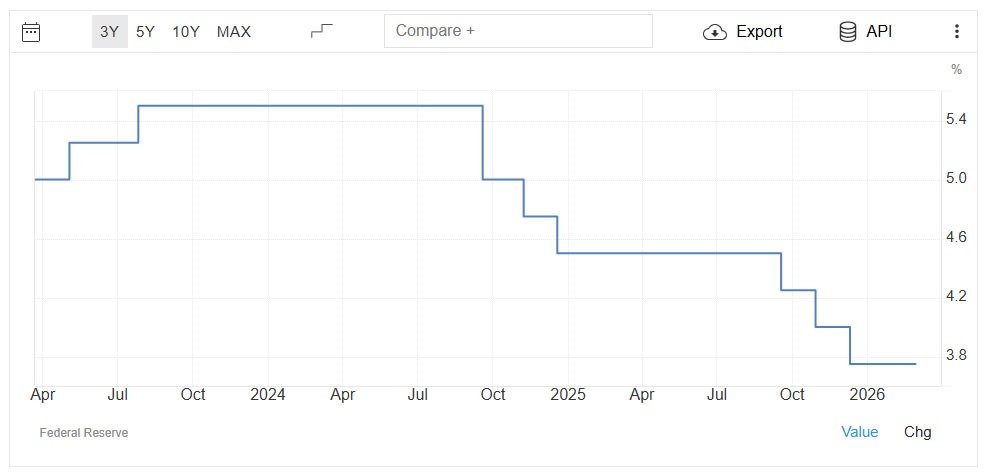
US President Donald Trump has again pressured the Federal Reserve to cut interest rates immediately, saying at a White House meeting that they should have a “special meeting” to reduce rates.
“What’s a better time to cut interest rates than now? A third-grade student would know that,” Trump added, according to videos shared on X.
Trump has reiterated his calls for lower rates after stating on Truth Social on Thursday that the Federal Reserve chair “should be dropping interest rates, IMMEDIATELY.”
The president argued in January that the US should have “substantially lower” rates and “the lowest in the world,” labelling Powell “too late” and claiming he is “hurting our country, and its National Security” by maintaining high interest rate levels.
Trump has advocated for lower rates to reduce the cost of servicing the massive $39 trillion US national debt and stimulate economic growth, housing, and the stock market.
Lower rates can also push investors towards higher-risk assets like stocks and crypto. Cheaper borrowing costs also fuel broader market liquidity, meaning more money flows into speculative assets.
No rate changes likely at Fed’s Wednesday meeting
The US central bank kicks off its two-day March meeting on Tuesday and is slated to announce its rate decision on Wednesday.
However, CME futures markets paint a different picture, currently indicating a 99% probability that rates will remain unchanged in the 3.50% to 3.75% this week.
The outcome for the April 29 meeting is similar with a 97% probability of no change.
Related: Higher CPI print for March already ‘baked in’ to BTC price — Analysts
This is despite the expectation that Trump’s pick for Fed chair replacement, Kevin Warsh, who will take the helm in mid-May when Powell’s term ends, may be more open to cutting rates.
The war with Iran has also caused a surge in oil prices, which means higher fuel costs and is likely to push up food and other goods prices via higher transport costs, leading to higher inflation, potentially prompting the Fed to raise rates.
The current rate of inflation in the US remained steady at 2.4% in February, but it is expected to rise in March, according to Trading Economics.

Fed will play the waiting game
With the US-Iran conflict’s impact on rising oil prices, “traders have already priced in the likelihood of zero cuts this year,” Jeff Mei, chief operations officer at the BTSE exchange, told Cointelegraph.
This should mean that there will be “less downward pressure on crypto asset prices,” because oil’s impact on inflation is “unclear at this point,” and the Fed will likely “continue to wait out the situation.”
Magazine: Metaplanet’s Japan Bitcoin bet, Bithumb ordered suspension: Asia Express

Polymarket has taken action after identifying users who allegedly pressured an Israeli journalist to alter coverage of an Iranian missile strike that became the subject of a high-stakes prediction market. Emanuel Fabian, the military correspondent for The Times of Israel, said he began receiving messages urging him to rewrite his March 10 report about a missile that landed near Beit Shemesh. The market around Iran’s strike had drawn significant attention, with more than $17 million wagered on whether the event would occur on that date. In response to the harassment, Polymarket said it banned the involved accounts and would forward information to authorities as part of its enforcement of the platform’s Terms of Service.
Key takeaways
- Polymarket publicly banned accounts tied to attempts to influence editorial coverage of a war-related event.
- The Beit Shemesh incident sparked discussion about the alignment of journalism, prediction markets, and user incentives, given the roughly $17 million at stake on the March 10 date.
- Journalists reported receiving death threats and coercive messages aimed at changing coverage, leading to police involvement in the investigation.
- Experts and lawmakers have warned that open war and political markets can create incentives for insider manipulation or abuse, adding regulatory scrutiny to the sector.
- Interference allegations surfaced as market participants debated the event’s outcome and how market rules defined a valid strike versus an intercepted one.
Market context: Prediction markets around geopolitical events have surged in activity, attracting capital and attention but also drawing scrutiny from lawmakers who caution that such markets can incentivize manipulation or insider trading. The episode underscores ongoing debates about regulation, accountability, and the safeguards needed to protect both journalists and participants while preserving the informational value of these markets.
Why it matters
The episode sits at the intersection of journalism, technology platforms, and financial markets that attempt to forecast real-world events. It highlights the vulnerabilities reporters face when their work intersects with open, global betting markets. Polymarket’s swift action—banning accounts implicated in intimidation and promising to share data with authorities—signals an(self) effort to deter harassment while maintaining a level of accountability for participants who attempt to shape coverage for personal gain. The incident also raises practical questions for platform design: how to verify events, resolve disputes when official narratives diverge, and deter abusive behavior without stifling legitimate speculation.
From a market-design perspective, the case emphasizes how event definitions and payout rules can become contentious when the public narrative contradicts initial reports. The market in question stipulated that a “Yes” resolution would occur if Iran initiated a drone, missile, or air strike on Israeli soil on the listed date, with exceptions for missiles or drones that were intercepted. Such clauses matter greatly as information evolves and as authorities confirm or dispute particular details. The controversy illustrates the delicate balance between price discovery and the integrity of editorial content, especially in fast-moving conflicts where new information can quickly alter the perceived probability of an outcome.
Regulatory and legislative attention surrounding prediction markets has grown in recent years. Critics argue that a widely followed war-related market can create incentives for insiders to profit from confidential or strategic information, potentially harming the market’s integrity. Lawmakers have proposed or introduced measures aimed at increasing oversight and reducing opportunities for manipulation. In this environment, Polymarket’s actions—such as banning participants and cooperating with authorities—are part of a broader push to establish guardrails while preserving the utility of open, decentralized forecast platforms.
The Israel-Beit Shemesh episode also reinforces how journalism and real-time events can interact with online betting ecosystems. A journalist’s safety can become a concern when gigabytes of data and real-time bets converge with heated debates over national security. In this case, Fabian reported receiving messages in Hebrew from an individual who threatened harm should he alter the article, a reminder that the digital amplification of conflict can translate into tangible risks for reporters. The police investigation underscores that, beyond market mechanics, these threats are taken seriously by authorities and investigated through formal channels.
As the discourse evolves, platforms like Polymarket are likely to face ongoing scrutiny over how they moderate content, enforce terms of service, and guard against attempts to influence public reporting. The balance between encouraging open discourse and protecting participants—and journalists—from coercion is delicate, and the incident adds to a growing discourse on how best to govern and supervise prediction markets without dampening their potential for information discovery.
What to watch next
- Updates from police on the investigation into the threats against Emanuel Fabian and any legal actions taken.
- Polymarket’s next steps regarding moderation policies, account bans, or changes to event-market rules following the incident.
- New information about the Iran–Israel market’s March 10 resolution and how different outlets corroborate the event outcome.
- Regulatory developments or proposed legislation targeting prediction markets and their handling of geopolitical bets.
Sources & verification
- Times of Israel report by Emanuel Fabian detailing threats and pressure to alter coverage of the March 10 incident.
- Polymarket event page for the Iran strikes Israel on market.
- Polymarket statement condemning harassment posted on X.
- Emanuel Fabian’s tweet from March 10, 2026 embedded in the coverage.
- Times of Israel update confirming the missile outside Beit Shemesh was not intercepted, as reported by Fabian.
- Cointelegraph coverage on related Polymarket trades and arrests.
Beit Shemesh episode and the stakes for prediction markets
The Beit Shemesh incident centers on a clash between the ambition of market-based forecasting and the realities of reporting on armed conflict. Polymarket’s market on Iran’s strike attracted substantial capital, illustrating how participants extrapolate geopolitical risk into financial bets. The protracted tension between a journalist’s independence and the expectations of a global betting audience became palpable as individuals on social media and messaging channels urged Fabian to change the narrative to favor a particular market outcome. The prompt action by Polymarket—to ban the involved accounts and cooperate with authorities—highlights a broader effort by platform operators to deter abuse and maintain trust in the reliability of the market data they produce.
Meanwhile, the evolving official narrative around March 10’s events adds another layer of complexity. Early investor sentiment and public commentary can diverge from later assessments of what occurred, such as whether missiles were intercepted or landed as described. The distinction matters for the market’s payout logic, and it also raises questions about how platforms should handle disputed or evolving information. As authorities continue to investigate and as more details become available, the episode will likely inform ongoing debates about the governance of prediction markets and their role in risk pricing during geopolitical crises.
Beyond the mechanics, the episode underscores the need for robust protections for journalists who operate under the glare of online betting communities. It also spotlights the responsibilities of market operators to police conduct and to implement clear, enforceable policies that safeguard editorial integrity while preserving a platform’s openness. The path forward will likely involve refinements to event definitions, stronger identity and abuse prevention measures, and transparent reporting on enforcement actions—elements that can help sustain the usefulness of prediction markets without compromising safety or ethics.
The broader conversation about how to balance free inquiry, market liquidity, and the well-being of reporters is far from settled. As prediction markets mature, observers will watch not only for accurate price signals but also for how platforms handle threats, disputes, and regulatory expectations. The Beit Shemesh incident thus stands as a case study in the intersection of journalism, technology-enabled forecasting, and the high-stakes world of geopolitics.
Crypto World
Spark Protocol votes to reactivate WBTC collateral and expand liquidity layer: Sky Ecosystem


The Spark Foundation has proposed re-enabling WBTC as collateral on SparkLend and adding new rate limits and pools to its liquidity layer following a 1.5-year operational review.
Spark Protocol is moving to reactivate Wrapped Bitcoin (WBTC) collateral support on SparkLend and expand its liquidity layer infrastructure, according to a proposal published Monday. The changes include re-enabling WBTC collateral functionality, adding USDT and USDT transfer asset rate limits to Anchorage, and onboarding a Uniswap v4 USDT/USDS pool. The proposal also covers Spark Treasury grants for Q2 2026.
WBTC collateral support was disabled in late 2024 due to governance and custody concerns in the WBTC ecosystem. The asset has now operated under the updated structure for approximately 1.5 years without incident, prompting the Spark Foundation to reassess its risk profile for re-listing on the protocol.
Sources: Sky Forum – Proposed Changes to Spark | Sky Forum – WBTC Asset Review
This article was generated automatically by The Defiant’s AI news system from publicly available sources.


The U.S. Securities and Exchange Commission has dropped a multi-year case against Nader Al‑Naji, who had been accused of misleading investors and violating federal securities laws tied to the launch of the BitClout platform.
Summary
- SEC has dropped its fraud and securities case against BitClout founder Nader Al-Naji after the agency’s crypto task force reassessed the matter and moved to dismiss the litigation.
- Regulators had accused Al-Naji of raising more than $257 million through BTCLT token sales and using part of the proceeds to fund personal expenses, including a Beverly Hills mansion.
- The case was dismissed with prejudice, while the U.S. Department of Justice also ended a parallel wire fraud case tied to the BitClout project.
A joint stipulation of dismissal filed with the United States District Court for the Southern District of New York on Thursday said the SEC’s crypto task force had reassessed the matter and decided to end the litigation.
However, the filing warned that the decision should not be interpreted as a broader policy shift that would automatically extend to other crypto-related cases.
“The Commission’s decision to exercise its discretion and seek dismissal of this litigation is based on the particular facts and circumstances of this case,” the filing said.
Al-Naji, a former Google engineer and the founder of the DeSo blockchain, was first charged by the SEC in 2024, just years after launching BitClout in March 2021. Subsequently, a cease and desist order was issued against the platform.
In its complaint at the time, the SEC under former chair Gary Gensler accused Al-Naji of raising more than $257 million by selling BitClout’s native BTCLT token without properly disclosing that the proceeds could be used to pay BitClout team members.
The commission also accused Al-Naji of using funds raised from investors to finance a lavish personal lifestyle. According to the SEC, roughly $7 million of the proceeds were used to cover rent for a Beverly Hills mansion and to make cash gifts to family members.
Regulators further alleged that Al-Naji mischaracterized the inner workings of the platform by presenting BitClout as fully decentralized even though he was allegedly controlling the project behind the scenes.
Under the terms of the settlement, the case has now been dismissed with prejudice, and Al-Naji has agreed to waive any claims for reimbursement of legal fees or expenses from the SEC.
Simultaneously, the U.S. Department of Justice has also ended a parallel criminal case against Al-Naji that had accused him of wire fraud.
“After months of searching, using every method and tool at their disposal, including applying pressure to those around me, the government decided to dismiss their charges,” Al-Naji wrote in an X post.
“Perhaps the allegation that hurt the most was the government’s claim that BitClout/DeSo, the blockchain that I’ve been working on for years now, is not fully decentralized […] In the short term, I’ve got big plans for DeSo, Focus, Openfund, and HeroSwap (my team’s core products). Every single one is best in class at what it does and a potential billion dollar business on its own. Now that I’m able to operate at full capacity, free from stifling constraints, and with my reputation and network restored, I’m confident we’ll realize that potential,” he added.
Under President Donald Trump’s administration, the SEC has dropped several enforcement actions against crypto firms. At the same time, the agency’s crypto task force has said it intends to move away from regulation by enforcement and toward a more collaborative framework built around clearer rules for digital asset companies.
Earlier this month, the SEC also dropped its lawsuit against Justin Sun, which had accused the TRON founder of fraud and securities law violations.


Aave is rolling out a new protective feature called ‘Aave Shield’ after a trader lost $50 million swapping USDT for AAVE due to illiquid market conditions.
Aave announced the launch of ‘Aave Shield,’ a new protective measure, following a $50 million loss suffered by a trader during a token swap. In a post-mortem analysis, Aave clarified that the loss was caused not by slippage but by illiquid market conditions that decimated the trade’s execution price when the trader swapped USDT for AAVE tokens.
The incident occurred on March 12, 2026, when a trader attempted to exchange $50.4 million in USDT stablecoins but received only $39,000 worth of AAVE tokens, crystallizing a near-total loss. The launch of Aave Shield signals the protocol’s effort to prevent similar catastrophic trades by adding safeguards around illiquid or thin markets.
Sources: Aave
This article was generated automatically by The Defiant’s AI news system from publicly available sources.
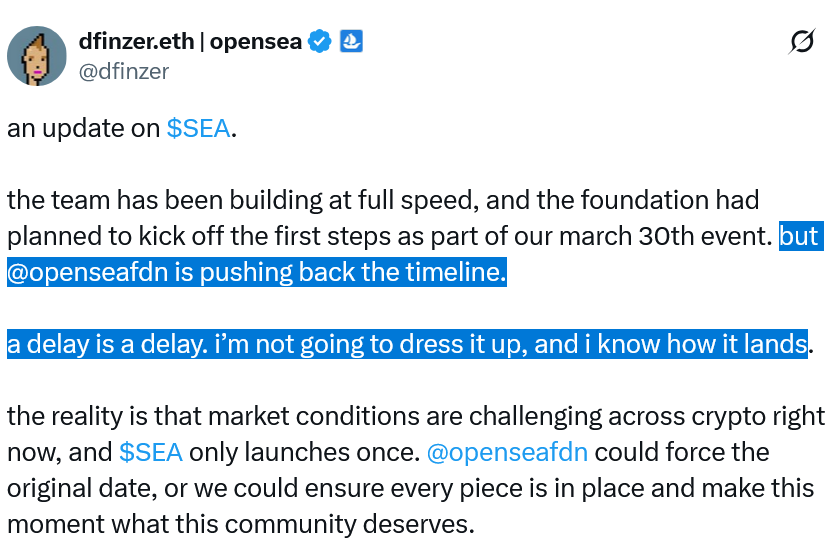
Nonfungible token marketplace OpenSea has postponed the launch of its native token SEA, initially slated for March 30, citing tough market conditions and it not being market-ready.
“The reality is that market conditions are challenging across crypto right now, and $SEA only launches once,” OpenSea CEO Devin Finzer posted to X on Monday.

The OpenSea (SEA) token, announced in October, was touted as part of OpenSea’s plan to transition into a “trade everything” app across multiple chains, which includes perpetual futures.
The SEA token would enable discounted trading fees to users on this platform, in addition to offering creator incentives and community voting. OpenSea users will also be able to stake SEA tied to NFT tokens and collections.
However, Finzer said OpenSea wants to make sure “every piece is in place” before launching the token rather than to “force the original date.” There is no new target date for the SEA launch.
Since October, OpenSea users have participated in the “Waves” reward program to be eligible for SEA token allocation. Finzer said that the campaign will be ending.
He also noted that users who participated in Waves 3, 4, 5 and 6 campaigns can opt to receive refunds for the platform fees OpenSea retained during that period, though anyone taking up the option would also lose any Treasure Chest rewards they have earned. Treasures were point-like rewards that OpenSea users earned to win certain prizes.
The move has prompted some users to question why OpenSea did not make refunds available for Wave 1 and 2 participants.
Dune Analytics shows that OpenSea’s token and NFT volume hit a four-year peak of $3.3 billion in October, which coincided with Wave 1 (which ran Sept. 15 to Oct. 15), and then hit $705 million in November, coinciding with Wave 2 (which ran from Oct. 15 to Nov. 15).
Cointelegraph reached out to OpenSea for comment.
OpenSea’s “trade everything” app
In October, Finzer said OpenSea’s everything app vision would enable users to trade everything from tokens, culture, art and ideas across multiple chains.
“All in one place that feels like a home, not a bank,” he said at the time.
OpenSea is building a new mobile app to drive that strategy, Finzer noted on Monday.
“We’re here for the long game. making all of non-custodial crypto delightful on mobile is just the beginning,” he said. “That means we have to set a very high bar for everything we do, and it’s why I’m so protective of delivering a launch that’s worthy of this community.”
Related: NFT lending protocol Gondi says platform secured after $230K exploit
NFT market continues to slide
The delay comes amid a continued NFT market slump. While it started strong in the first two weeks of 2026, rising to a market capitalization of $3.2 billion by Jan. 15, it has since fallen more than 50% to $1.62 billion.

Change in NFT market cap over the last three months. Source: CoinGecko
Data also shows OpenSea has generated more volume through tokens than NFTs for six successive months, including a record $2.8 billion in October.
OpenSea is now consistently seeing less than $500 million in NFT volume on a monthly basis, a fraction of the levels it saw throughout 2021 and 2022.
In January, NFT marketplaces Rodeo and Nifty Gateway announced that they would wind down operations, adding to the sector’s string of high-profile closures.
Magazine: China’s ‘50x’ blockchain boost, Alibaba-linked AI mines Bitcoin: Asia Express


BlockFills has filed for Chapter 11 bankruptcy in the US after suspending deposits and withdrawals last month amid poor market conditions.
BlockFills, an embattled crypto lender, has filed for Chapter 11 bankruptcy protection in the United States. The filing comes weeks after the platform suspended all deposits and withdrawals, citing difficult crypto market conditions. The bankruptcy marks a major failure in the centralized lending sector.
The collapse follows significant losses at the platform. Last month, BlockFills suspended customer access to funds after sustaining a $75 million loss, which also triggered the departure of CEO Nicholas Hammer. The lender’s troubles underscore ongoing stress in the crypto lending market and risks faced by centralized finance platforms.
Sources: BlockFills
This article was generated automatically by The Defiant’s AI news system from publicly available sources.
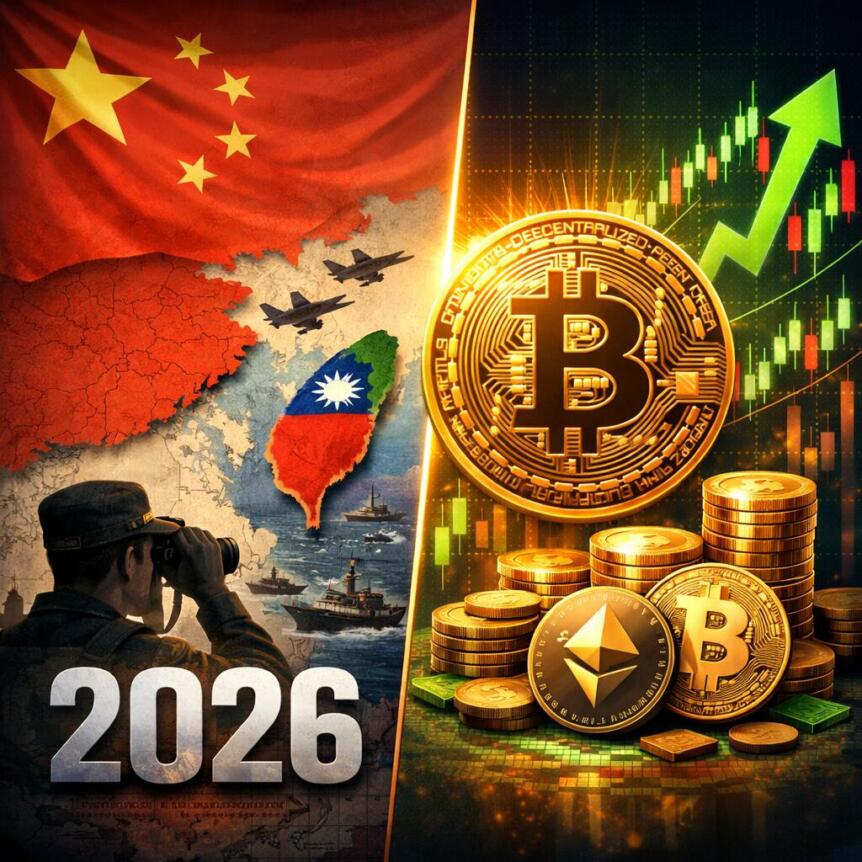
Incidents of military activities near Taiwan are on the rise
The latest news updates indicated that the Chinese army reinforcements augmented activities around Taiwan. The defense authorities of Taiwan have spotted a number of aircraft and naval ships navigating around the island in the recent days.In a case, at least twenty six aircraft of the Chinese military has flown close to the island on Saturday (as per the Taiwan defense ministry). Also, sixteen planes flew into various areas of Taiwanese Air Defense Identification Zone and seven Chinese vessels were also on the water.
The current action is also the part of the continued pressure development by Beijing which is aimed at putting pressure around Taiwan. We have also seen that the Chinese military has been carrying out patrols and exercises in the Taiwan Strait, which enables China to assert its position militarily and at the same time strengthens its self-assertion. There are also more air and naval activities that indicate that Beijing is keen on continuing its presence in the region.
Taiwan has retaliated by enhancing its defensive planning. The National Chung Shan Institute of Science and Technology confirmed fresh initiatives to come up with cost effective air defense ammunition.Lt. Gen. Lee Shih chiang clarified that the systems are meant to counter mass use of low cost weapons. The defense planners of Taiwan are of the view that this will curb the overpowering of the available missile systems.
Political Manoeuvre is a source of tension
Military activity also went along with the heightening of political tensions. Recently Taiwan President Lai Ching-te has highlighted increased defense budget and security of the democratic regime in Taiwan by the country China.Taiwan Affairs office China lamented against such comments and cautioned about any actions that may fuel tensions. Chinese authorities in Beijing mentioned that the leadership in Taiwan must not undertake any measures that enhance confrontation.
In the meantime the cryptocurrency market also began displaying recovery in spite of the geopolitical pressures. Bitcoin rose to almost seventy four thousand dollars and contributed to the general mood in the market since some digital assets appreciated as investors were lured back to risk markets following previous losses. The market players are still monitoring the political situation globally since the situation is still tense.
The geopolitical tensions worked out of Taiwan after China reinforced the timeline of reunification, which was 2026 and the military activity near the island. Taiwan has consolidated defense preparations as the international markets such as cryptocurrencies keep responding to the changing international trends.
Crypto World
OpenAI Targets $10B Private Equity Joint Venture to Accelerate Enterprise AI Deployment

TLDR:
- OpenAI is in advanced talks with TPG, Bain Capital, Brookfield, and Advent International for a $10B joint venture deal.
- Private equity firms will invest $4 billion in exchange for equity stakes and board seats inside OpenAI’s operations.
- OpenAI’s Frontier product lets enterprises deploy AI coworkers, with customers including Uber, Oracle, State Farm, and HP.
- Both OpenAI and Anthropic are racing to lock in enterprise contracts ahead of highly anticipated initial public offerings.
OpenAI is reportedly in advanced discussions with several major private equity firms to form a joint venture. TPG, Bain Capital, Brookfield, and Advent International are named as parties to the proposed deal.
The arrangement carries a pre-money valuation of roughly $10 billion. Private equity firms would collectively invest $4 billion in exchange for equity stakes and board seats.
This development positions OpenAI for rapid, large-scale corporate adoption across PE-managed portfolios worldwide.
Private Equity Opens the Door to Hundreds of Portfolio Companies
The proposed joint venture gives OpenAI access to hundreds of companies managed under private equity. TPG alone manages over $200 billion in assets across diverse industries.
These firms collectively control airlines, hospitals, retail chains, logistics networks, and media outlets. Rather than pursuing individual corporate clients, OpenAI would reach entire portfolios through a single deal structure.
Board seats as part of the arrangement also give PE firms direct influence over OpenAI’s deployment decisions. Their role goes beyond writing checks — it involves shaping how AI tools are rolled out.
As noted by @MilkRoadAI, these firms own companies spanning millions of workers and trillions in combined assets. OpenAI effectively gains a distribution network built over decades of PE operations.
At the center of this deal sits a product called Frontier, launched last month. Frontier allows enterprises to build and manage AI coworkers for real business functions.
Current customers already include Uber, State Farm, Oracle, and HP. The product targets organizations looking to automate core workflows using purpose-built AI agents.
Beyond software, OpenAI introduced Forward Deployed Engineers as a companion enterprise offering. These are full-time OpenAI staff who embed physically inside client companies.
They map existing workflows, integrate AI into systems, and hand back an operational solution. The minimum contract for this service starts at $10 million per engagement.
OpenAI and Anthropic Race to Lock In Enterprise Adoption Before IPO
OpenAI’s enterprise business already generates $10 billion in annualized revenue, reflecting strong corporate traction. That figure positions the company ahead of a possible public offering.
Anthropic is also pursuing enterprise customers through a similar deployment strategy. Both companies are working to secure corporate adoption before going public.
The competition to control enterprise AI infrastructure has grown considerably in recent months. Whoever embeds deepest into corporate systems holds lasting leverage over long-term contracts.
OpenAI’s Forward Deployed Engineers are already active inside global banks, telecoms, and automotive companies. Their presence now covers operations across three continents.
The private equity route sidesteps the traditional enterprise sales cycle entirely. Instead of pitching each company individually, OpenAI moves through PE firm relationships at scale.
MilkRoadAI described this as OpenAI finding “a backdoor” into PE-owned companies. That framing speaks to the speed and reach this deal structure could provide.
The proposed joint venture marks a shift in how AI companies pursue large-scale deployment. Private equity’s operational depth makes it a natural distribution channel for enterprise AI.
OpenAI appears to be constructing both a technology platform and a corporate access machine simultaneously. The outcome of these talks may define how AI reaches major organizations in the years ahead.



Prediction markets platform Polymarket says it has now banned and reported users who pressured an Israeli journalist with death threats to amend a news article about an Iranian missile strike that was the subject of a $17 million prediction market.
The Times of Israel military correspondent Emanuel Fabian wrote in a report on Monday that he began receiving messages to change his report about an Iranian missile that struck outside the Israeli city of Beit Shemesh on March 10.
“As far as I now understand, the emails I received were intended to confirm whether or not a missile had hit Israel on March 10 in order to resolve a prediction on Polymarket,” he wrote.
The market allowed bets on what date Iran would strike Israel, with over $17 million currently wagered on March 10.
The rules state the market “will resolve to ‘Yes’ if Iran initiates a drone, missile, or air strike on Israel’s soil on the listed date,” however, a clause in the rules adds that “missiles or drones that are intercepted” wouldn’t be counted even if they land in Israel.
“My minor report on a missile striking an open area was now in the middle of a betting war, with those who had bet ‘No’ on an Iranian strike on Israel on March 10 demanding I change my article to ensure they would win big,” Fabian wrote.
No injuries are reported in Iran’s latest ballistic missile attack on Israel, the fourth today.
One missile struck an open area just outside Beit Shemesh, first responders say and footage shows.
Sirens had sounded across the Jerusalem area, the West Bank, and parts of southern… pic.twitter.com/j6sovAsDwz
— Emanuel (Mannie) Fabian (@manniefabian) March 10, 2026
Trading volumes on prediction markets, the largest being Polymarket and Kalshi, have surged in the past year, but critics and lawmakers have warned that popular markets tied to war and political events could incentivize insider trading.
Journalist gets death threats over report
Fabian said he received emails, messages and calls to change his report to say the strike was a missile fragment, with one individual also fabricating a message to make it appear that Fabian agreed the missile was intercepted.
Fabian said he received lengthy, threatening messages in Hebrew from someone called “Haim,” who told him to alter the report or there would be “damage you have never imagined you would suffer.”
Fabian said Haim warned he was “at risk,” that they would invest money “to finish you,” that he “made a fatal mistake” and that he had made “enemies who will be willing to pay anything to make your life miserable.”
Haim also gave “specific details” about his parents, family and neighborhood, he added.
Fabian said he went to the police over the threats, who are now investigating.
Polymarket said in a statement posted to X on Monday that it “condemns the harassment & threats directed at Emanuel Fabian — or anyone else for that matter.”
Related: Israel arrests two over Polymarket trades on military operations
“This behavior violates our Terms of Service & has no place on our platform. We’ve banned the accounts for all involved & will pass their info to the relevant authorities,” it added.
Fabian added that, before the threatening messages, a colleague from another media outlet had contacted him, saying an acquaintance was requesting to change the report.
That journalist later confronted their acquaintance over the request, who admitted to placing bets on Polymarket and offering a portion of the winnings if the report was changed.
“The attempt by these gamblers to pressure me to change my reporting so that they would win their bet did not and will not succeed,” Fabian said. “But I do worry that other journalists may not be as ethical if they are promised some of the winnings.”
The results of the market over when Iran would strike Israel on Polymarket were in dispute at the time of writing, with “No” bettors asserting the explosion on March 10 was an intercepted missile.
However, Fabian later reported that the Israeli Defense Forces confirmed the missile that exploded outside of Beit Shemesh was not intercepted.
Magazine: How crypto laws changed in 2025 — and how they’ll change in 2026

US Trade Probe Into China Paves Way for New Trump Tariffs

Trump Urges Fed Rate Cut as Inflation Threat Grows

See the Sexiest and Most Daring Oscars Dresses of All Time

Smart energy pays enters the US market, targeting scalable financial infrastructure

Why Israel is blocking foreign journalists from entering

Bitcoin: We’re Entering The Most Dangerous Phase

Their Infinite Money Glitch Just Got Exposed

The Cryptocurrency Market Has Changed LARGE Anomalous Bitcoin Transfer Signals A MARKET SHIFT

#money #posh #luxury #couple #fashion #british #london #menswear #explore #reels #reelsinstagram #fy
-
 Tech6 days ago
A 1,300-Pound NASA Spacecraft To Re-Enter Earth’s Atmosphere
-
Crypto World3 days ago
HYPE Token Enters Net Deflation as HyperCore Buybacks Outpace Staking Rewards
-

 Business6 days ago
ExxonMobil seeks to move corporate registration from New Jersey to Texas
-

 Fashion3 days ago
Weekend Open Thread: Addict Lip Glow
-

 Tech6 days ago
ChatGPT will now generate interactive visuals to help you with math and science concepts
-
Sports3 days ago
Why Duke and Michigan Are Dead Even Entering Selection Sunday
-

 NewsBeat5 days ago
Residents reaction as Shildon murder probe enters second day
-

 Business1 day ago
Search for Savannah Guthrie’s Mother Enters Seventh Week with No Arrests
-

 Business6 days ago
Search Enters Sixth Week With New Leads in Tucson Abduction Case
-

 Business3 days ago
US Airports Launch Donation Drives for Unpaid TSA Workers as Partial Government Shutdown Enters Fifth Week
-
Crypto World2 days ago
Coinbase and Bybit in Investment Talks: Could Bybit Finally Enter the US Crypto Market?
-

 NewsBeat6 days ago
I Entered The Manosphere. Nothing Could Prepare Me For What I Found.
-

 Sports5 days ago
PWHL, Senators discussing plan to keep Charge in Ottawa
-

 Business18 hours ago
Australian shares drop as Iran war enters third week
-

 Business3 days ago
Country star Brantley Gilbert enters growing non-alcoholic beer market
-

 Crypto World18 hours ago
Crypto Lender BlockFills Enters Chapter 11 with Up to $500M in Liabilities
-
 Crypto World7 days ago
Will Chainlink price reclaim $10 amid volatility squeeze?
-

 Sports3 days ago
College Basketball Best Bets: Conference Tournament Semifinal Picks
-

 Politics6 days ago
Trump Says Middle East Is ‘Very Lucky’ That He’s President
-

 Crypto World5 days ago
Three Binance Charts May Be Hinting at Bitcoin’s Next Move


You must be logged in to post a comment Login