
CryptoCurrency
The Rise of Agentic AI in Telecom Ecosystems

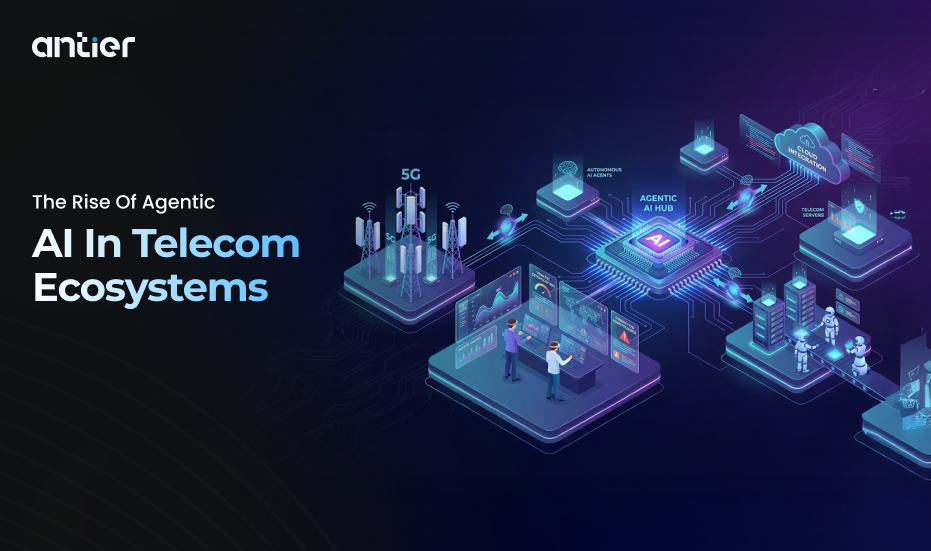
Telecom networks are no longer static systems that respond to predefined rules. With 5G, private networks, IoT, and edge computing in play, operators are managing environments that shift in real time across infrastructure, customers, and revenue systems. Traditional automation and narrow AI models can detect issues, but they fall short when decisions must be made across multiple network layers at once.
This gap is pushing the telecom sector towards Agentic AI adoption. Unlike conventional AI automation in telecom networks, agentic AI systems observe conditions, set goals, and act independently. They enable autonomous decision-making AI that can reroute traffic, resolve service issues, and balance resources without waiting for human intervention.
For telecom operators, this marks a move from task-based automation to self-directed intelligence. Autonomous AI in telecom is becoming critical as enterprise customers demand stricter SLAs and networks grow more complex. This blog sheds light on how agentic AI solutions for telecom are redefining network operations, customer experience, and enterprise-scale telecom AI automation, while outlining what to expect when working with an agentic AI development company to build these systems at scale.
Market Forces Driving Agentic AI Adoption in Telecom Sector
- 5G, 6G, and Network Slicing Complexity
The shift to 5G and the early groundwork for 6G have introduced network slicing at scale. Each slice serves a distinct use case with its own performance, latency, and security requirements. Managing thousands of slices through static policies is no longer practical. Agentic AI in telecom enables autonomous coordination across slices, allowing networks to adjust resources and priorities in real time based on demand and service commitments.
- Edge Computing and Decentralized Network Intelligence
Edge computing has pushed intelligence closer to users, devices, and enterprise workloads. Decision-making can no longer sit in a centralized control plane alone. Agentic AI solutions for telecom distribute intelligence across the network, allowing autonomous agents to act locally while staying aligned with global objectives. This model supports faster responses, reduced latency, and more resilient operations in decentralized environments.
- Rising OPEX and Margin Compression
Operational costs continue to rise as networks expand and services diversify, while pricing pressure limits revenue growth. Manual interventions, fragmented tools, and reactive workflows add to the burden. Autonomous AI in telecom addresses this by reducing human dependency in daily operations, enabling continuous self-management across networks, security, and billing systems. This shift is driving interest in agentic AI development services that focus on long-term cost control.
- Customer Experience as a Differentiator
Coverage and speed are no longer enough to retain customers. Enterprises and consumers expect consistent performance, rapid issue resolution, and personalized services. Telecom AI automation is moving beyond analytics to real-time action. Agentic AI solutions for telecom can anticipate service issues, resolve them before customers are affected, and adapt offerings based on usage patterns, making experience a competitive lever.
- Regulatory and Compliance Automation Needs
Telecom operators operate under strict regulatory oversight, with obligations around data privacy, service availability, and reporting. Compliance processes are often manual and slow to adapt to policy changes. Agentic AI telecom ecosystems can embed regulatory logic into autonomous agents, enabling continuous monitoring, automated reporting, and policy-aware decision-making without constant human oversight.
Get a Customized Agentic AI Roadmap for your Telecom Ecosystems
Challenges in Implementing Agentic AI in the Telecom Sector
- Data Silos and Legacy Infrastructure
Most telecom operators still run on fragmented OSS and BSS systems built over decades. Data is scattered across network layers, vendors, and regions, limiting real-time visibility. Agentic AI in telecom depends on continuous data flow to make autonomous decisions. When data remains locked in silos or tied to outdated infrastructure, AI agents struggle to act with full context, increasing the risk of suboptimal actions.
- Model Governance and Explainability
Autonomous decision-making AI raises critical questions around accountability. Telecom operators must understand why an AI agent took a specific action, especially when it affects service quality or revenue. Black-box models can create trust gaps with internal teams, regulators, and enterprise clients. Agentic AI development services in telecom must address governance, auditability, and explainability from the start, not as an afterthought.
- Security of Autonomous Agents
As AI agents gain authority over network operations, security becomes a primary concern. Compromised agents could disrupt services, expose sensitive data, or manipulate billing and routing decisions. Autonomous AI in telecom must be protected through strong access controls, continuous monitoring, and isolation mechanisms. This adds complexity to deploying agentic AI solutions for telecom at scale.
- Regulatory and Ethical Concerns
Telecom is one of the most regulated industries globally. Autonomous systems must operate within strict rules around data privacy, lawful interception, and service fairness. When AI agents act independently, ensuring compliance becomes more complex. Agentic AI telecom ecosystems need built-in policy enforcement to align autonomous actions with legal and ethical expectations.
- Change Management and Talent Gap
The shift toward autonomous systems changes how telecom teams operate. Network engineers and operations staff must adapt to supervising AI agents rather than managing tasks directly. At the same time, there is a shortage of professionals skilled in autonomous systems, AI governance, and enterprise-scale deployment. Successful adoption depends on structured change management and collaboration with an experienced agentic AI development company that understands both AI and telecom realities.
How Telecom Enterprises Should Approach Agentic AI Adoption
- Agentic AI Readiness Assessment
Before deploying autonomous systems, telecom enterprises must assess their operational and data maturity. This includes evaluating data availability across OSS and BSS platforms, the reliability of real-time network telemetry, and existing automation workflows. A readiness assessment helps identify where agentic AI solutions for telecom can deliver immediate value and where foundational gaps need to be addressed first.
- Build vs Buy Decision Framework
Telecom operators face a strategic choice between building in-house agentic systems or working with an external agentic AI development company. Internal builds offer control but demand long development cycles and specialized talent. Buying or co-developing agentic AI development services accelerates deployment while reducing risk, especially when solutions must integrate across complex telecom environments.
- Pilot Use Cases with Measurable ROI
Agentic AI adoption should begin with focused pilots rather than broad rollouts. Use cases such as autonomous fault resolution, predictive customer issue management, or energy usage control allow teams to measure impact quickly. Clear metrics around cost reduction, service uptime, and response times help justify the expansion of autonomous AI in telecom operations.
- Scaling Across Network Domains
Once pilots prove value, agentic AI must scale across radio access, core networks, edge environments, and customer experience platforms. This requires consistent orchestration and governance across domains. Telecom AI automation at scale depends on agents that can coordinate decisions across systems while respecting business and regulatory constraints.
Partnering with Specialized AI and Web3 Firms
As agentic AI telecom ecosystems evolve, partnerships become critical. Specialized AI and Web3 firms bring experience in autonomous systems, decentralized intelligence, and secure agent coordination. Working with partners that understand enterprise AI for telecom enables operators to deploy resilient, compliant, and future-ready agentic AI solutions without overstretching internal teams.
Key Agentic AI Use Cases Across the Telecom Value Chain
1. Autonomous Network Operations
Autonomous Network Operations sit at the core of Agentic AI in telecom. Instead of relying on static thresholds and manual escalation, AI agents continuously monitor network behavior and act in real time.
- Self-healing networks: Agentic AI agents detect anomalies, isolate affected components, and restore services without waiting for human intervention.
- Predictive fault mitigation: Autonomous AI in telecom anticipates failures by analyzing traffic patterns, hardware signals, and historical incidents, resolving issues before service degradation occurs.
- Dynamic capacity allocation: AI agents adjust bandwidth and compute resources across regions and network slices based on live demand and SLA commitments.
2. Intelligent Customer Experience Management
Customer experience has become a primary battleground for telecom operators. Agentic AI solutions for telecom move beyond insights to direct action.
- Autonomous ticket resolution: AI agents resolve common service issues end-to-end, reducing resolution times and operational load on support teams.
- Hyper-personalized plans: Agentic AI analyzes usage behavior and adapts plans in real time to match customer needs without manual intervention.
- Churn prediction with autonomous actions: When churn risk is detected, AI agents trigger retention actions such as targeted offers or service adjustments.
3. Agentic AI for Network Security
As networks expand, security threats grow in volume and sophistication. Manual responses often arrive too late.
- Autonomous threat detection: Agentic AI monitors traffic, signaling, and access patterns to identify threats as they emerge.
- Real-time response without human lag: Autonomous decision-making AI isolates compromised segments and applies countermeasures instantly.
- Fraud prevention in billing and roaming: AI agents detect abnormal usage and billing patterns, blocking fraud before financial impact escalates.
4. Energy Optimization and Green Telecom
Energy costs and sustainability targets are now board-level priorities.
- AI agents optimizing power usage: Autonomous agents manage base stations and data centers based on traffic demand and environmental conditions.
- Carbon footprint reduction: Agentic AI in telecom ecosystems supports data-driven decisions that lower emissions across network operations.
- Sustainable network planning: Long-term infrastructure planning benefits from AI agents that balance growth, cost, and environmental impact.
5. Revenue Assurance and Monetization
Revenue management remains complex in multi-service telecom environments.
- Autonomous pricing strategies: Agentic AI adjusts pricing models based on demand, competition, and customer behavior.
- AI-driven upsell and cross-sell agents: Autonomous agents identify opportunities and trigger personalized offers at the right moment.
- Leakage prevention: AI automation in telecom networks detects and corrects revenue leakage across billing, roaming, and partner settlements.
Why Partnering with the Right Agentic AI Development Company Matters
Deploying agentic AI in telecom is not a plug-and-play exercise. It requires a deep understanding of telecom operations, data flows, regulatory constraints, and real-time network behavior. This is where the choice of an agentic AI development company becomes critical.
- Domain expertise in telecom and AI
Telecom environments operate at a scale and complexity that generic AI vendors often struggle to address. A partner with hands-on experience in telecom networks, OSS and BSS systems, and enterprise AI for telecom can design agentic systems that align with operational realities rather than theoretical models.
Every telecom operator has a unique network architecture, service mix, and business strategy. Off-the-shelf tools rarely fit these requirements. Agentic AI development services focused on custom agent design enable autonomous decision-making AI that reflects specific network policies, service priorities, and customer expectations.
- Secure and compliant architectures
Autonomous AI in telecom must operate within strict security and regulatory boundaries. The right partner builds security, access controls, and policy enforcement directly into the agent framework. This approach helps ensure agentic AI solutions for telecoms act responsibly across sensitive network and customer data.
- Scalable deployment models
Agentic AI adoption typically starts with pilots but must scale across regions, network domains, and services. An experienced partner provides deployment models that support gradual expansion while maintaining consistency and governance across the telecom AI automation stack.
What the Future Holds
Telecom is moving toward ecosystems where networks operate with minimal human intervention. As agentic AI in telecom matures, networks will increasingly govern themselves, making decisions continuously across performance, security, energy use, and customer experience.
Future telecom networks will monitor their own health, correct faults, and adjust configurations without waiting for manual commands. Autonomous AI in telecom will manage radio access, core, and edge environments as a unified system, guided by business objectives rather than static rules.
- AI agents negotiating SLAs autonomously
Agentic AI telecom ecosystems will allow AI agents to negotiate, adjust, and enforce service level agreements in real time. These agents will balance enterprise requirements, network capacity, and cost constraints, ensuring service commitments are met without constant human oversight.
Network Operations Centers will shift from round-the-clock manual monitoring to strategic oversight roles. Autonomous decision-making AI will handle detection, diagnosis, and resolution of incidents, leaving human teams to focus on governance, planning, and exception handling.
- Telecom as an intelligent platform economy
As autonomy increases, telecom operators will evolve from connectivity providers into intelligent platforms. Agentic AI solutions for telecom will enable operators to offer on-demand network capabilities, enterprise services, and ecosystem partnerships powered by autonomous agents that coordinate value creation across industries.
Partner with Antier to Build Agentic AI Solutions for Enterprise Telecom
Conclusion
From autonomous network operations to intelligent customer engagement and energy-aware infrastructure, agentic AI solutions are laying the foundation for scalable, enterprise-grade telecom AI automation. For telecom enterprises, success depends not only on adopting the technology but on choosing the right partner to design, deploy, and scale these systems responsibly.
Antier brings deep experience across AI, Web3, and enterprise telecom environments, helping operators build custom agentic AI solutions aligned with real-world network demands. With a focus on secure architectures, autonomous intelligence, and long-term scalability, Antier supports telecom leaders in building future-ready agentic AI telecom ecosystems that move from automation to true autonomy.
Frequently Asked Questions
01. What is agentic AI and how does it differ from traditional AI in telecom networks?
Agentic AI is a type of autonomous decision-making AI that observes conditions, sets goals, and acts independently, unlike traditional AI which relies on predefined rules and task-based automation. This allows agentic AI to manage complex network environments in real time without human intervention.
02. How does agentic AI improve network management in the context of 5G and network slicing?
Agentic AI enables autonomous coordination across multiple network slices, allowing telecom operators to adjust resources and priorities in real time based on demand and service commitments, which is essential for managing the complexity introduced by 5G and 6G technologies.
03. Why is the adoption of agentic AI becoming critical for telecom operators?
The adoption of agentic AI is critical for telecom operators due to rising operational costs, margin compression, and the increasing complexity of networks, as enterprise customers demand stricter service level agreements (SLAs) that require more efficient and responsive network management.



