

Crypto World
THORChain sets 11-step restart plan after $10.7M hack



THORChain has moved into the next phase of its recovery from the May 15 vault exploit.
Summary
- Validators must approve v3.19.0 before THORChain begins its staged restart and fully restores network services.
- The upgrade adds compromised-vault quarantine and temporary keyshare checks before signing resumes across the network.
- ADR-028 applies the recovery plan without minting new RUNE or diluting existing token holders further.
Validators are now reviewing version 3.19.0, which combines security patches with the ADR-028 loss-recovery plan.
The release also introduces a mechanism that can quarantine a compromised vault. THORChain said this would stop an affected vault from processing transactions while keeping its activity visible to the network.
Validators review THORChain v3.19.0
“The next major step in the recovery process is now underway,” THORChain said in its sixth incident update. Validators must vote to approve v3.19.0 before the network can begin the staged upgrade.
The release contains patches for the threshold signature system used to control THORChain vaults. It also implements ADR-028, the governance plan approved after the exploit. The protocol said the upgrade would move the network closer to restoring normal operations.
Version 3.19.0 includes a new Compromised Vault Mimir setting. Once enabled, the setting will isolate the drained vault from transaction processing without removing it from network monitoring.
Keyshare checks come before signing resumes
THORChain plans to validate the ADR-028 data migration after validators complete the upgrade. Every node must then verify the integrity of its keyshares through a temporary protocol called keyverify.
Keyshares allow validators to sign vault transactions together without one operator holding the full private key. The added check aims to confirm that the remaining shares are intact before signing restarts.
After those checks, validators will unhalt signing and start a churn. Churning replaces the active validator set and transfers assets into newly generated vaults. The network will wait for that process to finish before restoring other services.
Secured and Trade assets will return first. Liquidity-provider actions will follow, while trading will resume at the end of the 11-step process. Each stage depends on the previous checks completing successfully.
ADR-028 covers losses without new RUNE
As previously reported by crypto.news, THORChain validators approved ADR-028 in May. The plan uses protocol-owned liquidity to absorb losses before allocating any remaining shortfall across synthetic asset holders.
The framework does not mint or sell new RUNE. It also avoids direct dilution for existing holders. Future system income will help rebuild protocol-owned liquidity after the restart.
THORChain also activated a bounty window for the attacker and approved the full slashing of the linked node. The protocol said innocent nodes that shared the affected vault would remain protected.
Full restart still depends on validators
The May 15 exploit drained about $10.7 million from one of THORChain’s five vaults. THORChain’s report said a newly added node exploited a weakness in the GG20 threshold signature implementation. Four other vaults remained unaffected.
Automatic solvency checks detected the imbalance and halted signing within minutes. Node operators later paused trading, chain observation and churning while developers investigated the attack.
Validator approval of v3.19.0 would begin the final technical sequence, but it would not restore every service at once. THORChain will reopen signing, asset functions, liquidity actions and trading in stages after completing the vault, migration, keyshare and churn checks.

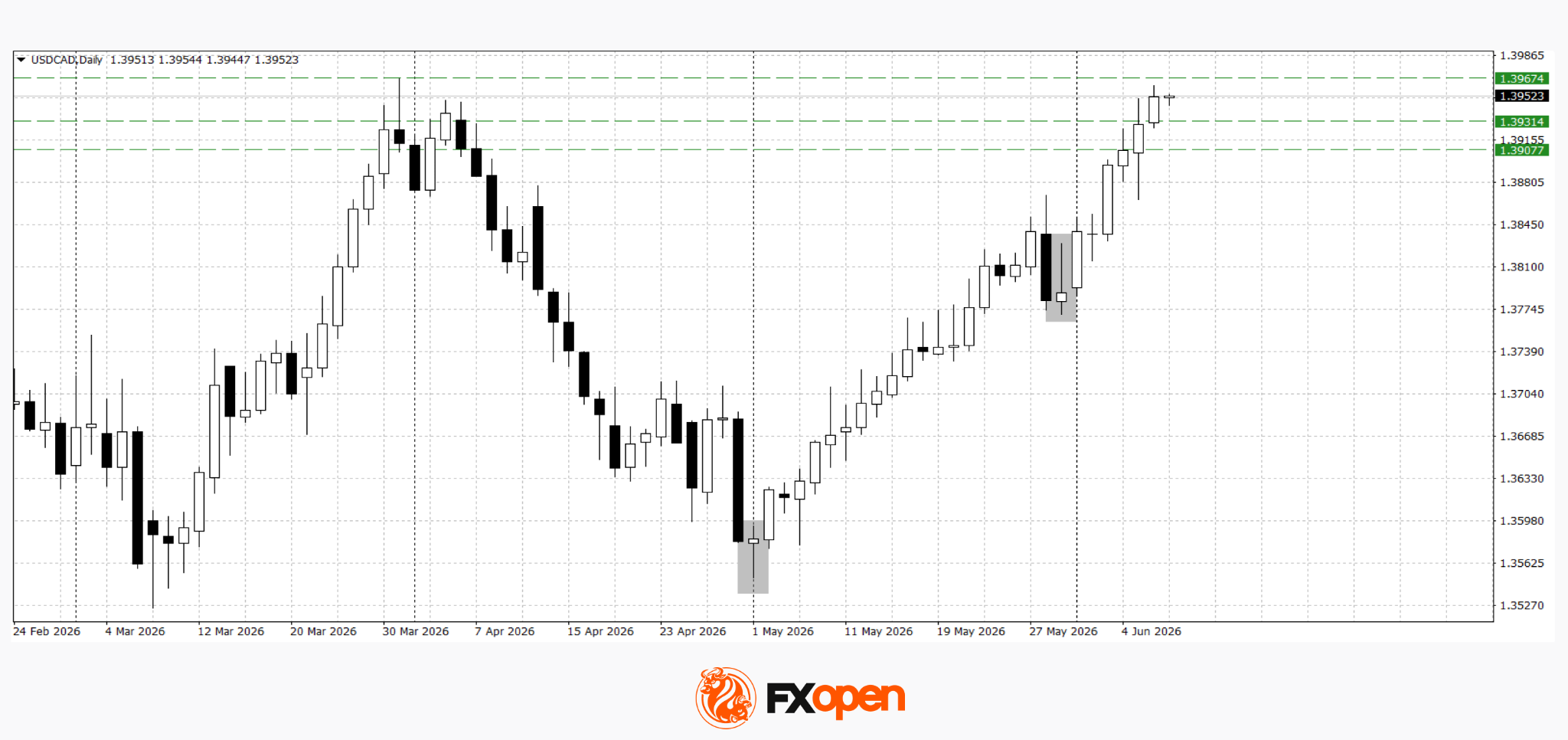
The US dollar strengthened against its major counterparts after the release of a robust US labour market report. Non-farm payrolls increased by 172K in May, well above the forecast of 85K, confirming the resilience of the US economy and reducing expectations of an imminent easing of monetary policy by the Federal Reserve. Additional support for the greenback comes from rising geopolitical tensions in the Middle East, which continue to boost demand for safe-haven assets.
Investors remain focused on developments in the conflict between Israel and Iran. Over the weekend, both sides exchanged large-scale strikes, leading to a further escalation of tensions in the region. The increase in geopolitical risks is contributing to persistent uncertainty across global financial markets and strengthening demand for the US dollar as a safe-haven currency. Against this backdrop, market attention is gradually shifting towards upcoming US economic releases, which are expected to either confirm or challenge the sustainability of the current bullish momentum in the dollar.
USD/CAD
Previously identified reversal patterns in USD/CAD played out successfully, allowing buyers to test a key resistance level on the daily timeframe near 1.3960.
From a technical perspective, USD/CAD has approached a resistance zone formed at the end of March. Following the sharp rally, the market may enter a profit-taking phase, particularly if upcoming macroeconomic data fail to support further dollar strength. However, as long as the pair remains above nearby support levels, the upward momentum is likely to remain intact. A decisive break and close above 1.3960 could pave the way for further gains towards the 1.4000–1.4050 area.
Key events for USD/CAD:
- Today at 15:15 (GMT+3): US ADP Employment Change;
- Today at 15:30 (GMT+3): Canadian Trade Balance;
- Today at 17:00 (GMT+3): US Existing Home Sales.
USD/CHF
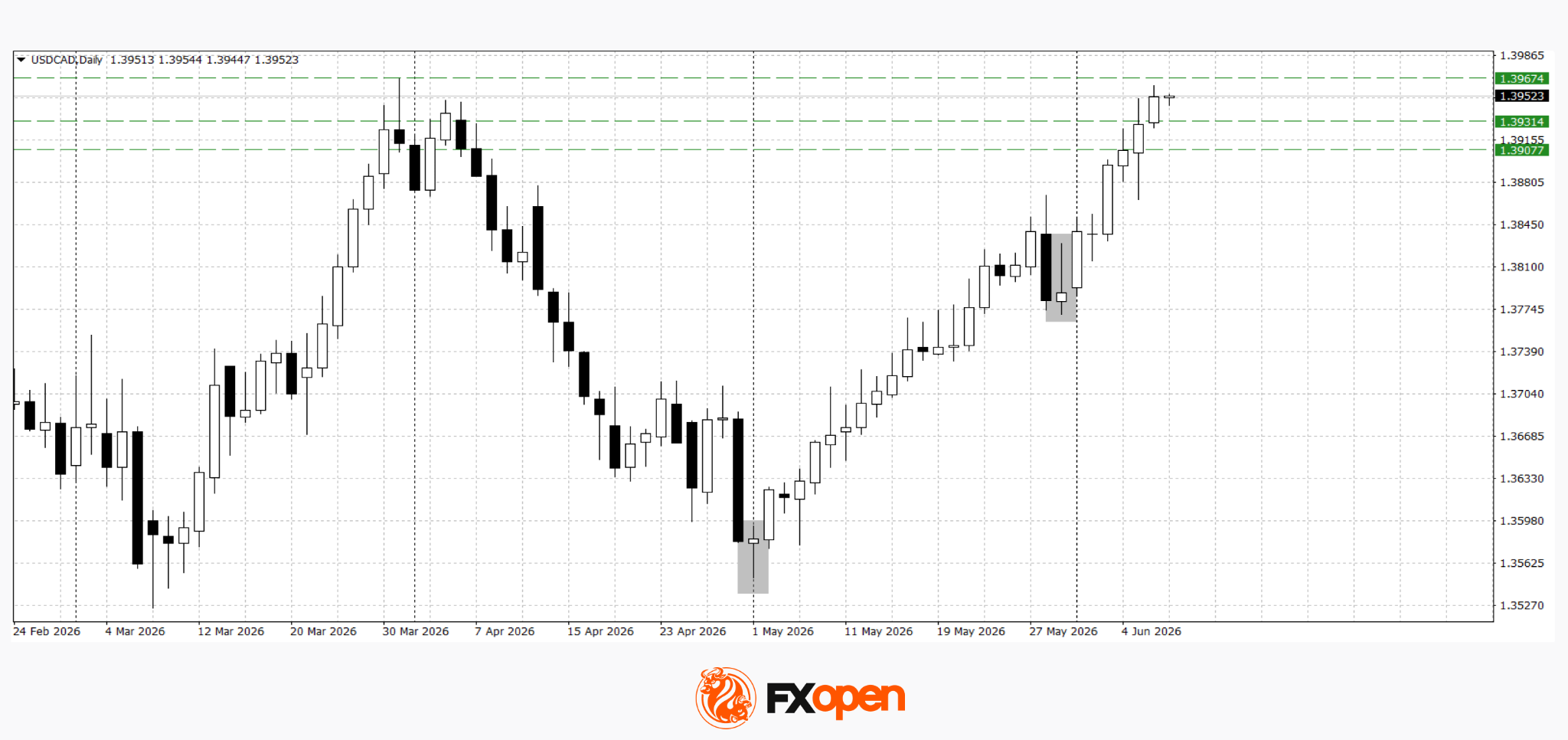
USD/CHF also received support from the strong NFP report and continues to advance towards this year’s March highs in the 0.8020–0.8040 region.
Technical analysis of USD/CHF points to the possibility of a test of the nearest resistance levels at 0.8020–0.8040. Should a corrective decline begin, the pair may retreat towards the 0.7910–0.7940 area.
Key events for USD/CHF:
- Today at 18:30 (GMT+3): Atlanta Fed GDPNow estimate;
- Today at 19:00 (GMT+3): EIA Short-Term Energy Outlook;
- Tomorrow at 15:30 (GMT+3): US Consumer Price Index (CPI).
In summary, the strong employment report has reinforced the dollar’s position and reduced expectations of near-term Federal Reserve policy easing. Geopolitical risks in the Middle East remain an additional supportive factor. At the same time, both USD/CAD and USD/CHF have already approached significant resistance levels, meaning that future price action will depend both on buyers’ ability to establish a foothold above key thresholds and on the next round of US macroeconomic data.
Trade over 50 forex markets 24 hours a day with FXOpen. Take advantage of low commissions, deep liquidity, and spreads from 0.0 pips (additional fees may apply). Open your FXOpen account now or learn more about trading forex with FXOpen.
This article represents the opinion of the Companies operating under the FXOpen brand only. It is not to be construed as an offer, solicitation, or recommendation with respect to products and services provided by the Companies operating under the FXOpen brand, nor is it to be considered financial advice.
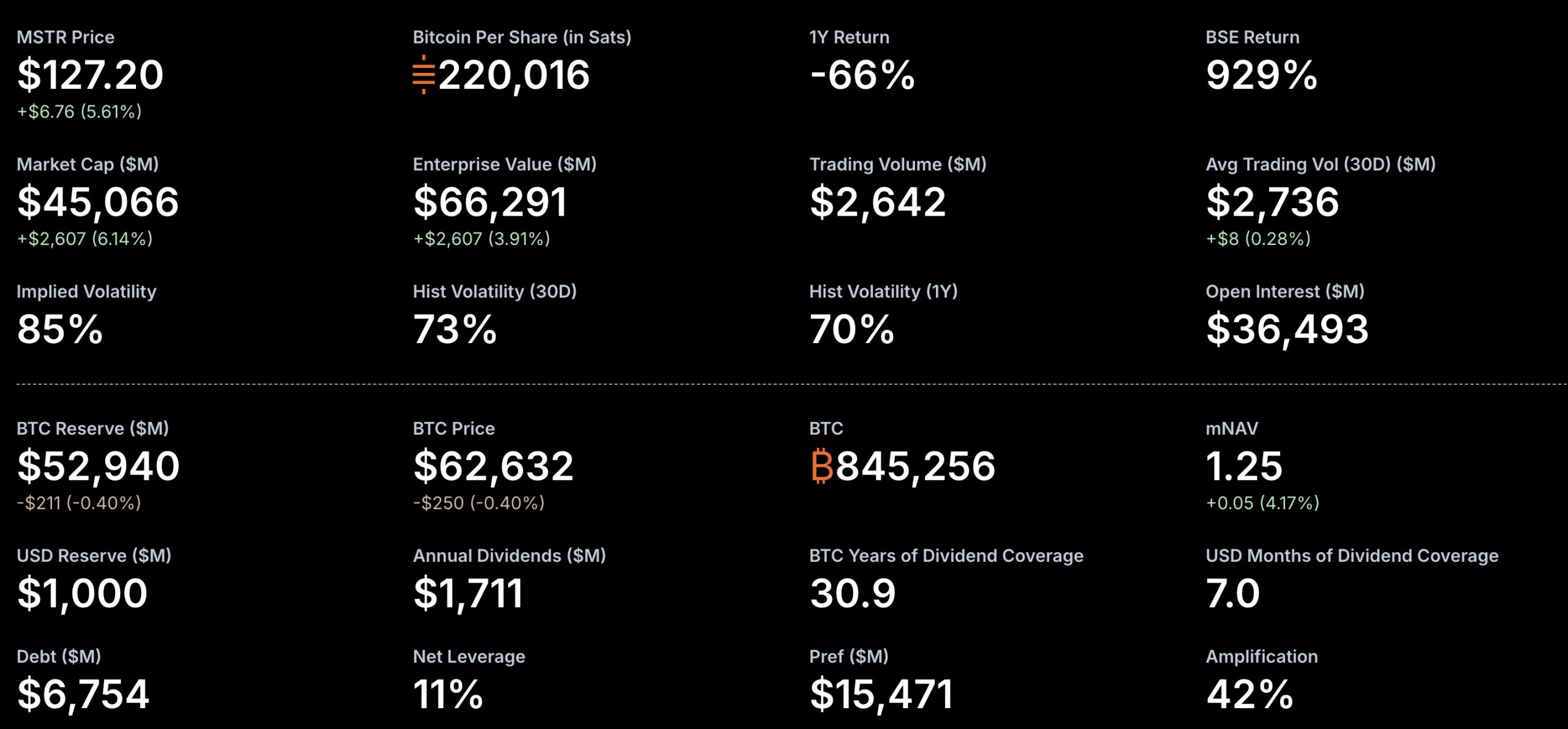
Bitcoin price is trading above $62,700, recovering from its 10% weekly loss in a bearish prediction environment. Beneath the surface, a structural problem at Michael Saylor’s Strategy is building pressure that most traders haven’t priced in.
The math is quietly brutal. Strategy holds 844,000 BTC worth $51.1 billion at current levels, yet carries $21.8 billion in combined debt and preferred stock obligations. This figure has mushroomed more than threefold since early 2025, driven almost entirely by $15 billion in new preferred stock issuances.
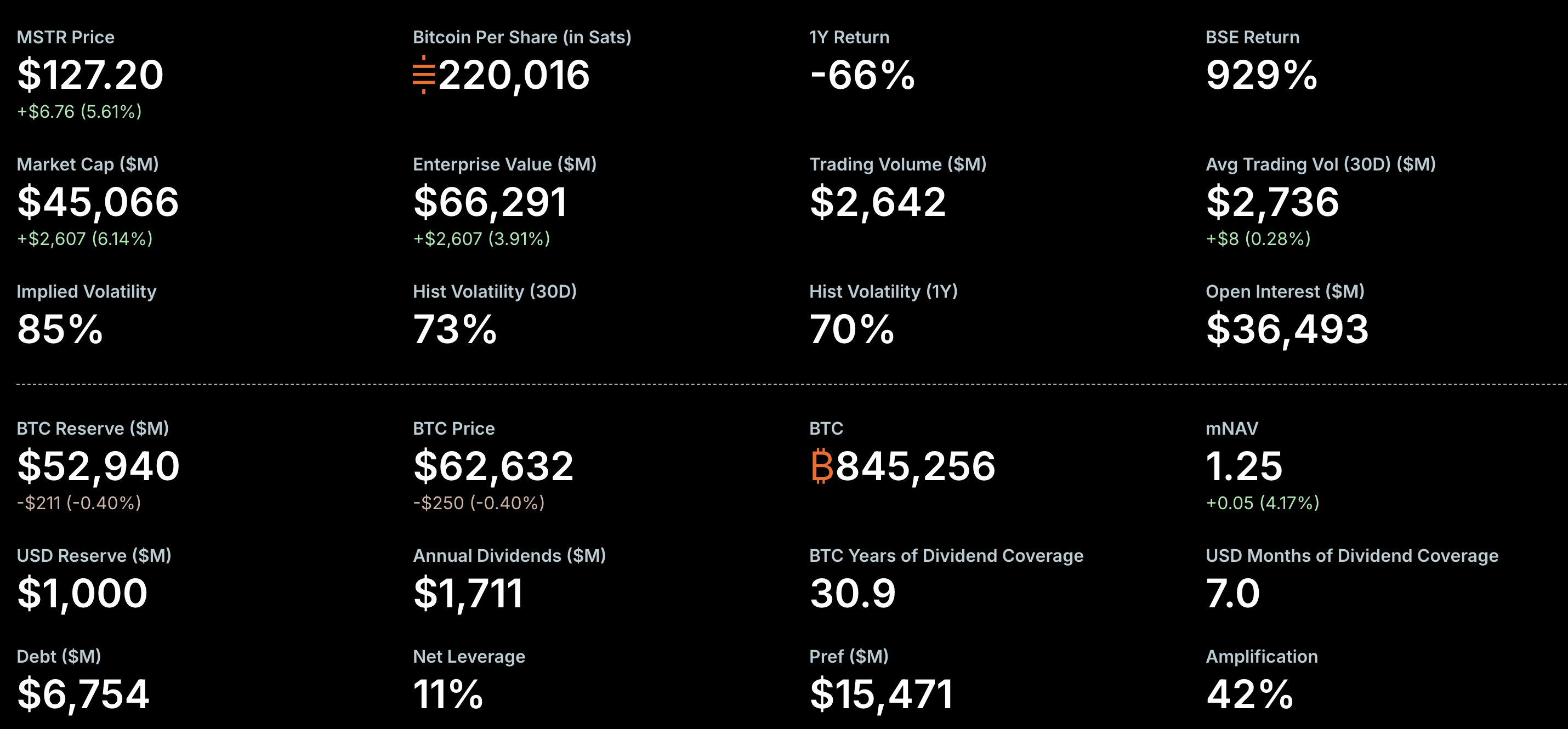
Meanwhile, Strategy’s market cap is $41.6 billion, a 31% premium over its net asset value of $31.8 billion. That premium has no obvious floor if sentiment flips.
Discover: The Best Crypto to Diversify Your Portfolio
Bitcoin Price Prediction: $66K or $59K Retest?
Our short-term model places immediate support at $61,500, barely 1% below spot, with a deeper structural floor near $59,000. The $59k–$60k band is the zone where a genuine drawdown scenario opens up, and that happens to align uncomfortably with Strategy’s average BTC acquisition cost of over $100,000 per coin last year. This means Saylor’s book is already deeply underwater on recent purchases.
Resistance stacks up at $65,000, then $66,000, and eventually $68,000 for any sustained bull reclaim. The pivot levels add intermediate resistance at $64,000 and $64,500, making even a modest bounce a technical obstacle course.

If BTC holds the $62,000 level with resuming ETF inflows, the price could grind back toward $66,000. But it currently looks range-bound, chop between $61k and $66k could become persistent through the week as macro data provides no clear catalyst.
However, a close below $59,000 accelerates forced selling, particularly relevant given the strategy’s leveraged structure. If BTC drops to $50k, Strategy’s fundamental net asset value collapses to roughly $23 billion, far below its current market cap.
Discover: The Best Token Presales
Bitcoin Hyper Targets Early Mover Upside as Strategy Premium Risk Pressures BTC Sentiment
Here’s the uncomfortable question for BTC longs. If the Saylor Magic Premium evaporates, and the math above suggests it has no fundamental support, who absorbs that selling pressure?
Strategy’s share count has already ballooned from 98 million to 353 million, a 250% increase, eight times the dilution rate of the next largest large-cap diluter. That’s a structural overhead that doesn’t go away with a good macro print.
For traders who want Bitcoin ecosystem exposure without the leverage-and-dilution baggage, the calculus looks different at the infrastructure layer.
Bitcoin Hyper ($HYPER) is positioning itself precisely in that gap. It is the first Bitcoin Layer 2 with SVM integration, with sub-second finality and smart contract functionality that brings Solana-grade speed to Bitcoin’s security layer.
The presale has raised more than $32 million at a current price of $0.0136, with staking rewards already live for early participants. Key infrastructure includes a Decentralized Canonical Bridge for BTC transfers and low-latency transaction execution. The project has been gaining momentum alongside Bitcoin’s consolidation above $60k support.
The post Bitcoin Price Prediction: Saylor’s Strategy Deathspiral Looming in the Background appeared first on Cryptonews.
Humanity Protocol has disclosed that more than $36 million worth of H tokens have been stolen after attackers compromised multiple administrative keys and seized control of bridge infrastructure across Ethereum and BNB Smart Chain.
Summary
- Humanity Protocol said more than $36 million was stolen after attackers compromised administrative keys linked to its Ethereum and BNB Smart Chain bridge infrastructure.
- The project said the breach began with a compromised employee laptop, allowing attackers to seize bridge controls and mint 200 million H tokens on BNB Smart Chain.
- Deposits and withdrawals on affected bridges have been suspended as Humanity Protocol works with exchanges and law enforcement on recovery efforts.
According to Humanity Protocol’s June 9 incident update, the attack originated after an employee’s laptop was compromised, allowing the attacker to gain access to key holders tied to the project’s bridge administration systems.
The disclosure expands on an earlier statement from Humanity founder and CEO Terence Kwok, who had confirmed that private keys belonging to a Humanity Foundation member were compromised.
At the time, the project warned users to avoid the Humanity bridge and related liquidity pools while an investigation was underway.
Compromised bridge controls enabled token theft and minting
Details released by Humanity Protocol show that three of six Gnosis Safe owner keys controlling the Hyperlane bridge ProxyAdmin on Ethereum were compromised. Using those credentials, the attacker transferred ownership of the ProxyAdmin contract to a wallet under their control, upgraded the bridge contract to a malicious implementation, and moved about 141.2 million H tokens in a single transaction.
On BNB Smart Chain, the attacker compromised three of five Safe owner keys and carried out a similar takeover of the bridge’s ProxyAdmin contract. Humanity Protocol said the attacker then deployed a malicious contract containing an unlimited mint function and created 200,000,005 H tokens in two separate transactions.
Earlier on June 9, on-chain analyst Specter reported that more than 17 wallets connected to or interacting with Humanity Protocol had been drained. Initial estimates placed losses near $19 million before later blockchain trackers raised the figure above $30 million.
Blockchain monitoring data cited by Specter showed that the attacker sold a portion of the stolen tokens and converted part of the proceeds into Ethereum. According to the analyst’s Telegram update, roughly $23.7 million had been swapped into ETH, while about $7.9 million remained in H tokens.
Separate monitoring from Blockaid had suggested the attacker obtained proxy administrator rights on BNB Smart Chain and minted 100 million H tokens. Humanity Protocol had not confirmed that claim at the time, though the latest incident report now confirms that the attacker gained administrative control and minted additional H on the network.
Team working with exchanges and law enforcement
In its latest statement, Humanity Protocol said deposits and withdrawals through the affected bridges have been halted while response efforts continue.
The project said it is coordinating with exchanges and other parties to reduce further damage. Alongside an internal investigation, Humanity Protocol said it is also working with police authorities in an effort to investigate the breach and recover some of the stolen funds.
“We know words can’t fix this, but we’re going to show up, keep you in the loop, and do the work to earn back the trust you placed in us. We’re not going anywhere and are still continuing to build.”
Before the latest technical breakdown was published, Kwok said the team was working with security specialists and exchange partners. No reimbursement plan or recovery framework had been announced at that stage.
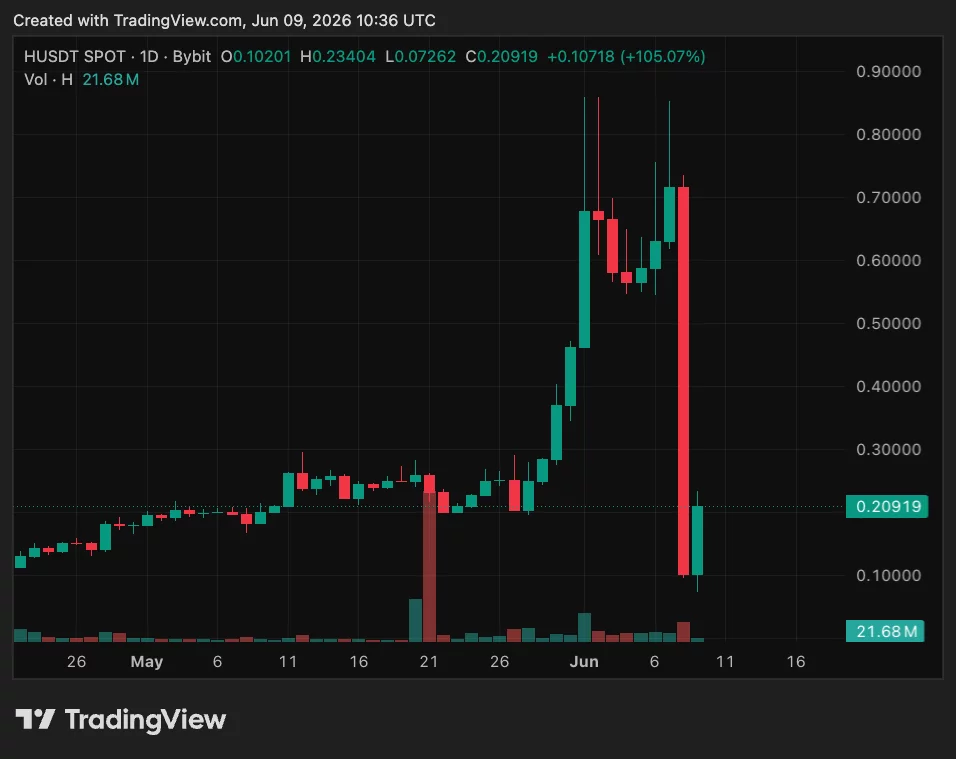
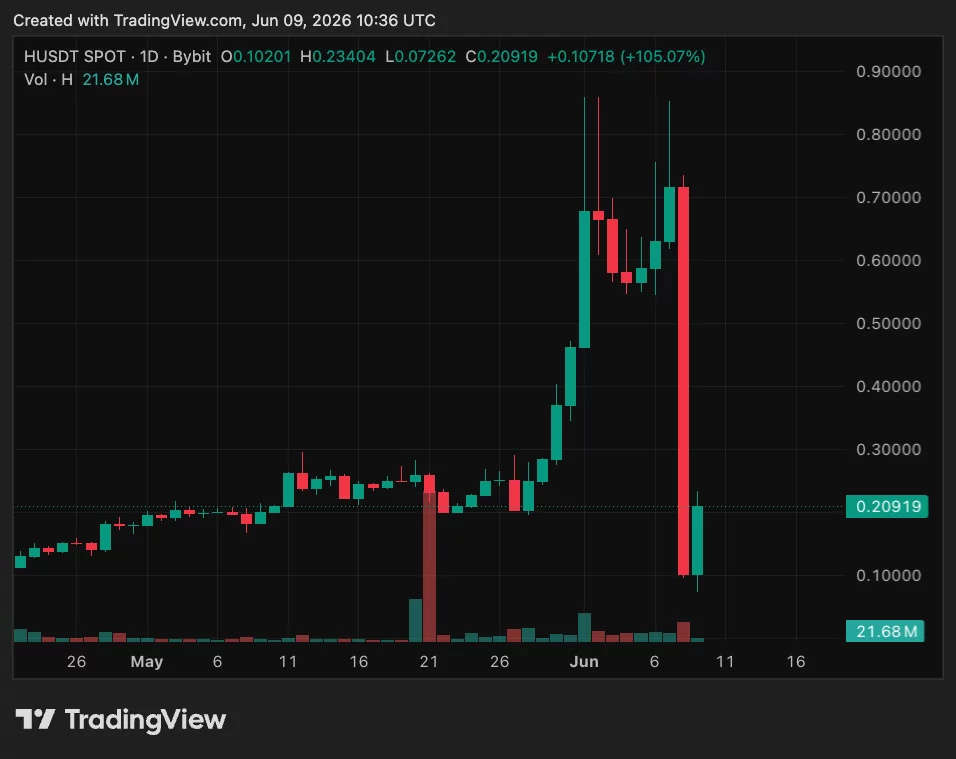
Market reaction to the exploit was severe, with the protocol’s native token plummeting over 90% in the aftermath.
Source: crypto.news
Humanity Protocol operates a zkEVM-based identity network that uses zero-knowledge proofs and palm biometrics to verify users without storing their personal information in centralized identity databases.
The team said a full post-mortem report will be released once the investigation progresses further.
NVIDIA’s revenue for the first quarter of fiscal year 2027 surged by 85% to $81.62 billion, marking another record quarter for the company. Adjusted earnings per share came in at $1.87, exceeding the Wall Street consensus forecast of $1.76. The primary driver of growth remains the data centre segment based on the Blackwell architecture, which accounts for approximately 92% of the company’s total revenue.
At the same time, uncertainty surrounding the Chinese market persists. Although small batches of H200 chips intended for Chinese customers received approval from US regulators, the company has yet to recognise any revenue from these shipments. Regulatory considerations therefore remain a key source of caution in investor assessments.
Technical Outlook
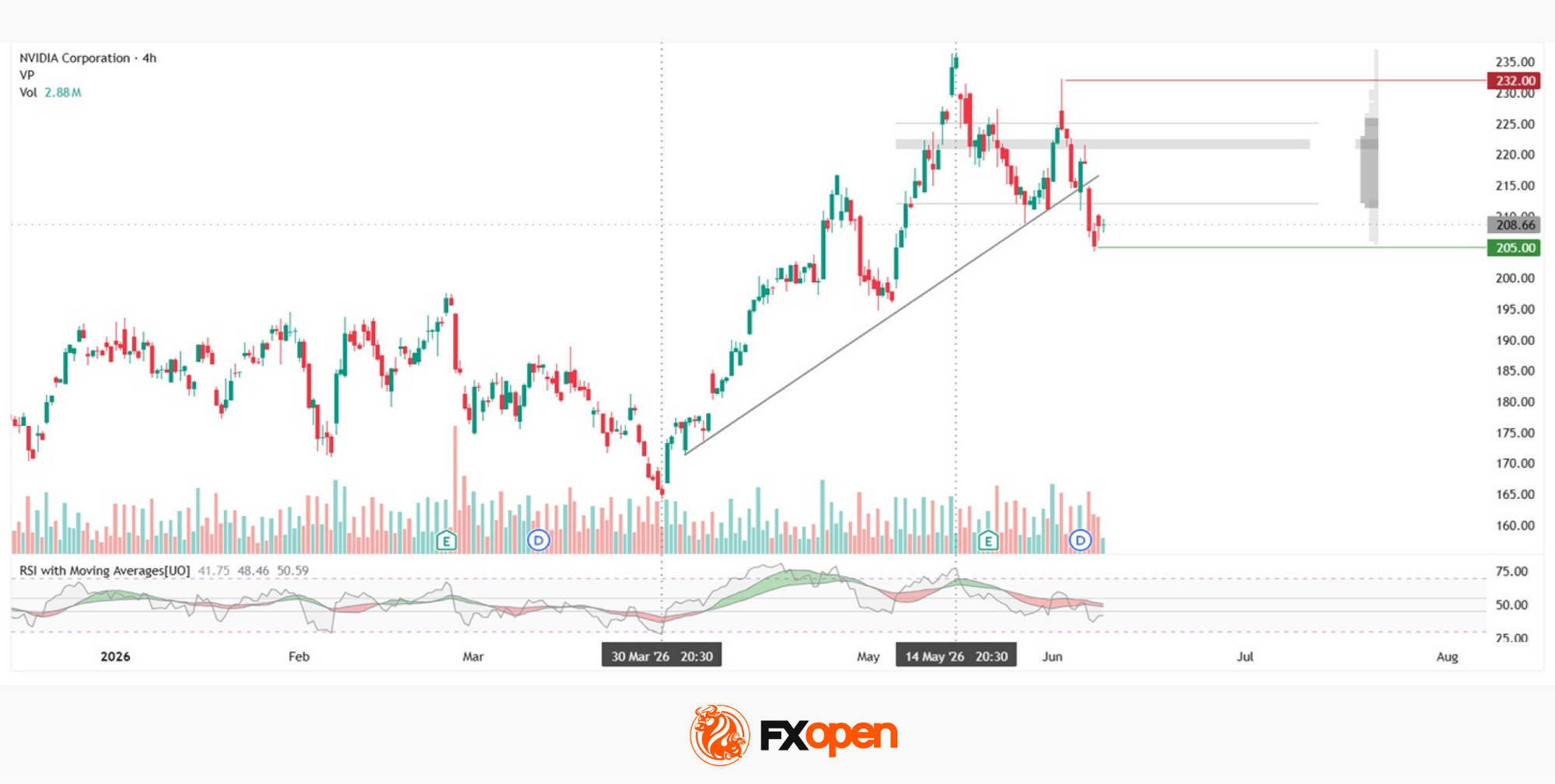
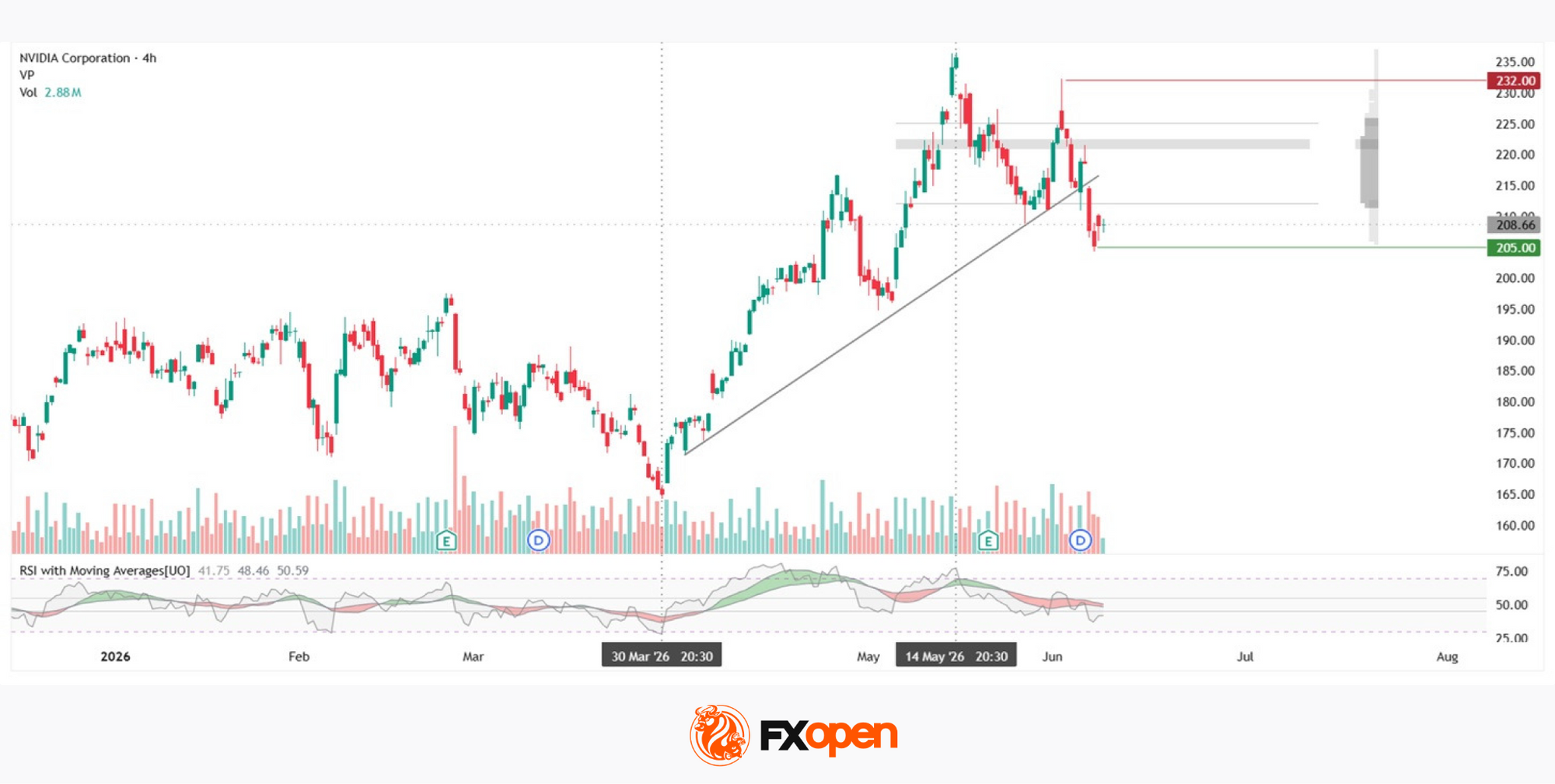
On the four-hour chart, an upward structure has been evident since April. The share price advanced from lows around 165 to May highs near 236, forming a series of higher lows. The ascending trendline drawn through the key support points of this move is currently being tested, with the price attempting to break below it.
The red resistance level around 232 and the green support level near 205 represent the nearest reference points within the current trading range. The Point of Control (POC) zone at 221–222 and the upper boundary of the volume profile around 225 could serve as intermediate targets should a recovery develop.
The price is currently trading below the lower boundary of the volume profile, which may act as the nearest stabilisation area if retested. The RSI indicator and moving averages are showing readings of 41, 48 and 50 respectively. The oscillator remains below the neutral zone, although the indicator’s average lines do not yet confirm the emergence of a clear directional trend.
Key Takeaways
The record earnings report was not enough to prevent a correction in NVIDIA shares, suggesting that the market had been anticipating even stronger results. Meanwhile, regulatory uncertainty regarding shipments to China remains in place. Future price performance will largely depend on how resilient demand from hyperscalers proves to be in the absence of meaningful revenue contributions from the Chinese market.
Buy and sell stocks of the world’s biggest publicly-listed companies with CFDs on FXOpen’s trading platform. Open your FXOpen account now or learn more about trading share CFDs with FXOpen.
This article represents the opinion of the Companies operating under the FXOpen brand only. It is not to be construed as an offer, solicitation, or recommendation with respect to products and services provided by the Companies operating under the FXOpen brand, nor is it to be considered financial advice.


SBI Shinsei Bank has introduced a campaign that has linked deposit interest payments to cryptocurrency exchange vouchers worth 20% of the interest earned.
Summary
- SBI Shinsei Bank will offer crypto exchange vouchers worth 20% of deposit interest, redeemable for Bitcoin, Ether, or XRP.
- Customers must open an SBI VC Trade account to convert the vouchers into cryptocurrency during the campaign period.
- The new deposit rewards program adds to SBI Group’s growing lineup of crypto services, including lending, investment products, and crypto rewards cards.
According to a report by Nikkei, the Japanese bank will begin a three-month promotional program on Wednesday that covers both ordinary deposits and time deposits with maturities ranging from three months to five years.
Under the offer, customers will receive their regular interest in yen along with vouchers that can later be exchanged for Bitcoin, Ether, or XRP.
To redeem the rewards, customers must open an account with SBI VC Trade, the cryptocurrency exchange operated by SBI Group. Nikkei reported that the vouchers can be converted into digital assets during a designated redemption period.
By attaching crypto rewards to traditional deposit products, the bank is introducing another route for customers to gain exposure to digital assets without purchasing them directly through an exchange.
SBI adds another crypto entry point for retail customers
The latest initiative arrives as SBI Group continues to expand cryptocurrency services across multiple parts of its financial business.
Earlier this year, SBI Group partnered with Visa and Aplus on a crypto rewards credit card that allows users to earn Bitcoin, Ethereum, and XRP through everyday spending. The card connects reward points with SBI VC Trade and gives customers access to digital assets through card usage rather than direct market purchases.
Elsewhere in the group’s crypto business, SBI VC Trade launched a retail USDC lending service on March 18. Under the product, users lend stablecoins to the exchange for a fixed period in return for yield. SBI VC Trade said the arrangement is structured as a loan to the platform rather than a bank deposit, leaving customers exposed to counterparty risk.
Expansion efforts have also extended to the exchange sector. On May 1, SBI Group disclosed that it was considering acquiring shares in crypto exchange Bitbank and potentially turning the company into a consolidated subsidiary. The discussions followed SBI VC Trade’s absorption of Bitpoint Japan in April.
Investment products tied to digital assets are also under development. According to reports, SBI Securities plans to offer funds created by SBI Global Asset Management, including investment trusts and exchange-traded funds focused on cryptocurrencies such as Bitcoin and Ether.
The Bank of Japan (BoJ) is expected to raise its key short-term policy rate from 0.75% to 1.0% on June 15-16, the highest level in nearly three decades and a potential new headwind for Bitcoin.
What history shows, and how global liquidity could weigh on Bitcoin and crypto markets in the coming weeks?
Why the Bank of Japan Rate Hike Matters
A Bank of Japan rate hike is the central bank’s move to raise the cost of borrowing yen, tightening monetary policy. The June meeting could deliver the first increase in 11 months and the steepest level in nearly thirty years.
According to Nikkei, the decision arrives as Japan continues its cautious withdrawal from ultra-loose monetary policy. The country is also battling persistent inflationary pressures driven by Middle East tensions and rising energy prices worldwide.
The Bank of Japan has revised down its growth forecasts, yet it lifted its core inflation outlook for fiscal 2026. That shift strengthens the case for further policy normalization across the coming quarters, even as the wider economy slows.
For global markets, the implications are significant. Japan’s long period of ultra-low or negative rates fueled a massive yen carry trade, where investors borrowed cheaply in yen to fund higher-yielding investments worldwide, including cryptocurrencies and growth equities.
A rate hike and any resulting yen strengthening could trigger an unwind of those positions. That dynamic typically drains global liquidity and puts pressure on risk assets, with Bitcoin often near the top of the affected list.
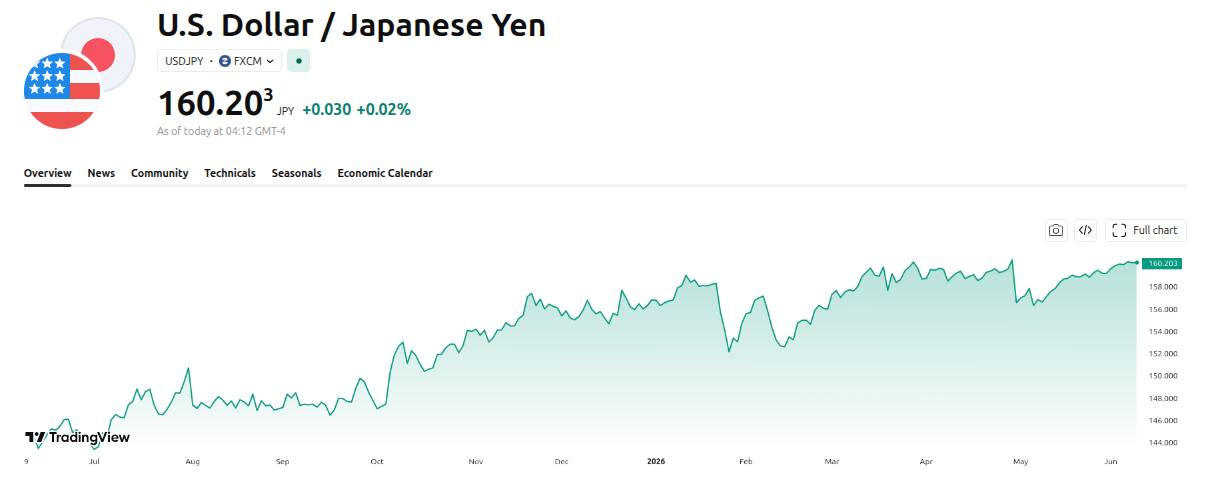
The USD/JPY reached the psychologically important 160 level. That threshold has previously prompted intervention or tighter policy from Japanese authorities, suggesting the central bank may act even more decisively if pressure persists.
“USD/JPY is again near the 160 zone, which markets treat as Japan’s unofficial intervention line. Japan already intervened after USD/JPY hit around 160.7, pushing it back toward 155, but the yen later weakened again. that tells you intervention is losing durability unless it is backed by real BOJ tightening,” one analyst exposed.

What History Says About Bitcoin and BoJ Hikes
Crypto analysts and traders have flagged a clear historical pattern. Previous Bank of Japan rate hikes since 2024 have consistently been followed by sharp Bitcoin corrections within the weeks after the announcement.
“Everyone watches the Fed. Smart money watches the BOJ. Every major BOJ hike has drained global liquidity and Bitcoin has reacted violently after each one. The pattern is no longer coincidence the real question is whether markets already front-ran the pain this time”, one user noted in X.
The numbers are striking. Past declines ranged from roughly 23% to over 30% in the weeks following each hike, making the upcoming meeting a key moment for short-term Bitcoin investors to track closely.
Many observers worry the June hike could repeat the cycle. The combination of reduced global liquidity and forced unwinding of leveraged positions could weigh heavily on Bitcoin, which behaves as a high-beta asset across global cycles.
“The BOJ has its next rate decision on June 15-16, and markets are pricing around a 97% chance of a 25 bps rate hike. This matters because every major BOJ hike since 2024 has been followed by a brutal Bitcoin correction. March 2024 hike: Bitcoin dropped around 23%. July 2024 hike: Bitcoin dropped around 25–30%. January 2025 hike: Bitcoin dropped around 31%. December 2025 hike: Bitcoin dropped over 25%,” Crypto Rover warned.

Some traders argue the potential hike is already partially priced in. Others caution that any unexpectedly hawkish signal or surprise from the central bank could amplify volatility across both crypto and traditional financial markets.
Japan’s gradual tightening aims to anchor inflation expectations around the 2% target without derailing economic recovery. Yet for cryptocurrency investors, the so-called Japan effect remains a key macro variable to watch in 2026.
Attention will focus not just on the rate decision itself. Comments on future hikes, bond purchases, and the trajectory of the yen could be equally important in setting the tone for risk assets through the second half of 2026.
The post Bank of Japan’s 1% Rate Hike Could be Critical for Bitcoin appeared first on BeInCrypto.
Crypto World
Circle (CRCL) debuts cirBTC on Ethereum to challenge Coinbase (COIN) in the wrapped bitcoin market


Circle Internet’s (CRCL) wrapped version of bitcoin , cirBTC, is live on Ethereum as the company best known for its dollar-pegged stablecoin takes on Coinbase (COIN) for dominance of the synthetic BTC market.
The New York-based firm said it developed cirBTC, a token backed 1:1 by the world’s largest cryptocurrency, to allow traders to access their bitcoin wealth in decentralized finance (DeFi) protocols, including lending, decentralized exchange (DEXs), tokenized assets and stablecoins.
Synthetic, or wrapped, bitcoin tokens exist to address the historical lack of provision for DeFi activities on the Bitcoin network. Many cryptocurrency users prefer to hold only bitcoin because it is worth more than every other crypto combined. But using it for DeFi is challenging because that Bitcoin lacks the native programmability of networks like Ethereum.
The first token to cross the divide, wrapped bitcoin (wBTC), was introduced in 2019 and remains the largest, with a market cap of around $7.3 billion. Coinbase’s (COIN) cbBTC, which appeared in 2024, sits at just under $5.4 billion.
Circle is pitching cirBTC to institutions that may focus their crypto allocation on BTC and are familiar with the company and trust its infrastructure due to its visibility in the stablecoin market. Circle’s USDC is the second-largest stablecoin on the market with a cap of over $75 billion.
The introduction of cirBTC could see Circle going head to head with Coinbase and wBTC’s primary custodian, BitGo Holdings (BTGO), for dominance of the institutional synthetic BTC market.
The market cap of all synthetic bitcoin tokens combined hovers between $12.5 billion and $13.5 billion, representing about 1% of bitcoin’s total value of around $1.25 trillion.

During the recent market sell-off, several major crypto assets fell into historic “buy zones,” as indicated by their 30-day MVRV metric, which flashed signals seen in other cycles, according to on-chain analytics firm Santiment.
The firm added that early signs of a relief rally were already appearing across many of the flagged assets.
What the MVRV Data Is Showing
Santiment’s MVRV measures the average profit or loss of traders who opened positions in the last month. The idea is simple: when the average is deeply negative, it means that most recent buyers are sitting on losses, and the selling pressure that usually follows such periods tends to eventually exhaust itself.
According to the firm, that exhaustion point is the moment when “weak hands capitulate, and long-term investors begin accumulating.”
During the freefall between mid-May and early June, five major assets all hit negative MVRV readings at the same time, with Bitcoin (BTC) at -10%, Ethereum (ETH) at -12%, and XRP at -8%. All these, per Santiment’s assessment, fell into what it described as a “fair buy” zone.
Others with a negative 30-day MVRV were Chainlink (LINK) and Cardano (ADA), whose -18% put it in the “strong buy” zone. The analytics platform noted that its chart showed that many of these assets had already started rebounding after entering these zones, thus “reinforcing a pattern that has repeated throughout multiple market cycles.”
It was, however, careful not to overstate the signal, writing that “no indicator guarantees immediate gains” but saying that the recent bounce suggested that the pain of average traders had “reached levels severe enough to create favorable risk-reward conditions across much of the crypto market.”
Where Crypto Markets Stand
The broader picture is a bit messy, with BTC trading around $63,000 at the time of writing, an improvement of just 1% in 24 hours. Additionally, per CoinGecko data, the OG crypto was down nearly 11% over the past week, after plunging to $59,000 last Friday for the first time since November 2024.
One analyst, Merlijn The Trader, predicted the bounce from $59,000, but warned that it may not be the full story. He drew a parallel to the 2022 bear market where a similar rebound came right before the actual capitulation low. According to him, BTC could push toward $65,000 to $70,000 before a final leg down into a DCA zone between $48,000 and $59,000.
On its part, ETH was changing hands at just under $1,700, up by roughly 2% on the day but still down nearly 16% on the week. Like Bitcoin, the weekend was also poor for the world’s second-largest cryptocurrency after it slumped to a 14-month low near $1,500.
Most other large-cap assets, including the rest on Santiment’s list, also posted similarly modest daily recoveries while remaining deeply negative across seven-day and monthly windows.
The post BTC, ETH, and XRP Flash Buy Signals After Market Sell-Off: Santiment appeared first on CryptoPotato.
Bitcoin’s price recovery attempts drove the asset to just over $64,000 yesterday, but it was stopped there and now trades about a grand lower.
Most larger-cap alts are slightly in the green today, with ETH inching closer to $1,700 and BNB reclaiming the $600 level. XRP is up by 2%, the most from the top 10 alts.
BTC Back to $63K
The primary cryptocurrency went through a dark week at the start of June. It entered the new month at $73,000 but quickly collapsed below $70,000 and kept plunging to multi-year lows. This became possible after several consecutive major support levels gave in, including $65,000 and eventually $60,000.
The latter was breached on Friday after a whole week of intense selling pressure. BTC dipped below it for the first time since late 2024, and bottomed at $59,100. However, the bulls were quick to intervene and help the asset reclaim the $60,000 zone immediately.
It jumped to $61,000 and $63,000 over the weekend. Monday began with a quick spike to $64,200 after some promises from Trump about a permanent peace deal with Iran, but it was halted there. Its subsequent attempts to overcome that level failed during the day, and bitcoin now trades at around $63,000.
Its market capitalization has stabilized at $1.265 trillion on CG, while its dominance has slipped slightly to 56.1%.

XRP Keeps Recovery In Check
Ethereum continues to trade close to $1,700 after another minor daily increase. Binance Coin has reclaimed the $600 level after a 1.25% jump. XRP is well above $0.17 after a 2% increase, and analysts remain confident that its big rally is ahead, with some major price targets of up to $27.
ZEC has added the most value daily from this cohort of assets, surging by 7.5% to $470. WLD is the top gainer out of the largest 100 alts, soaring by 9.5% to over $0.50. ADA experienced a painful crash during the market-wide massacre last week and Hoskinson’s decision to take a break, but it’s up by over 4% now to $0.17.
The cumulative market capitalization of all cryptocurrency assets has remained sideways at just under $2.560 trillion on CG.

The post XRP Recovery Continues With Fresh Gains, BTC Stopped at $64K: Market Watch appeared first on CryptoPotato.
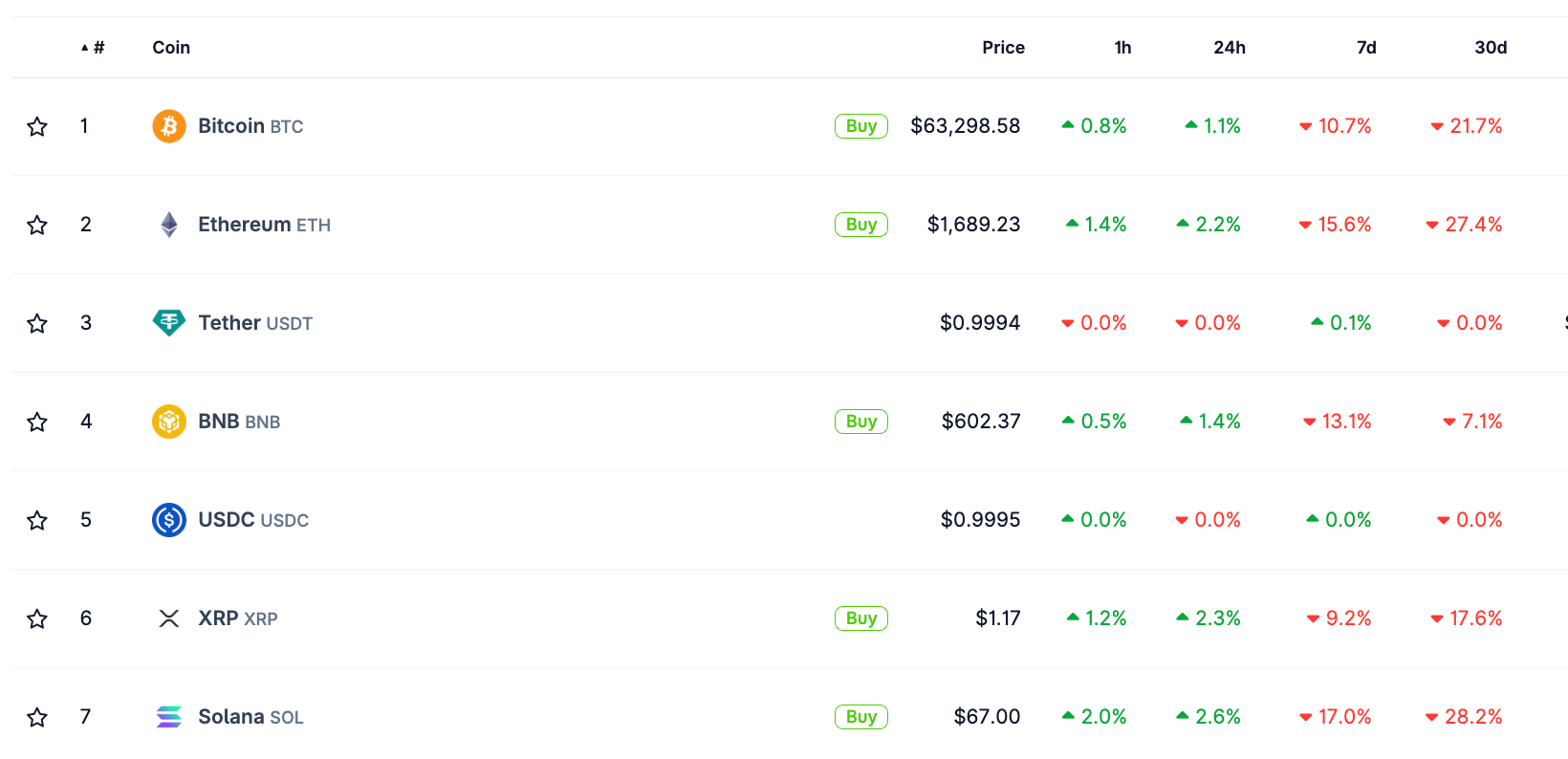
XRP price is down about 9% on the week, yet it fell less than every other major large-cap token over the same stretch. The altcoin trades near $1.16 after a rough month.
That relative strength is not luck. Multiple signals across flows, positioning, and accumulation explain how XRP outlasted its peers, and what needs to happen for the move to extend.
XRP Price Fell, but Less Than Everything Around It
Start with the scoreboard. XRP dropped roughly 9% over the past seven days, and that number only means something next to its peers.
Want more token insights like this? Sign up for Editor Harsh Notariya’s Daily Crypto Newsletter here.
Bitcoin (BTC) fell about 11% in the same window. Ethereum (ETH) lost around 16%, and Solana (SOL) slid close to 17%. XRP was the least-damaged major large cap.

Even BNB is weaker than XRP on the weekly timeframe.
The whole market leaned risk-off. Bitcoin and Ethereum spot ETFs posted record outflows into early June, and capital drained from higher-risk tokens.
XRP sat in that same selling pressure yet bent less. This is relative strength, where one asset declines slower than the group, and it often marks where buyers return first. The first clue to why XRP held its ground sits in the smart money data.
First Reason: Smart Money Kept Buying the Slide
Here is the first piece of the answer. The Smart Money Index, which tracks whether informed traders buy or sell at key points in the session, moved in the opposite direction from the price.
Between February 6 and early June, the XRP price trended lower. Over that exact stretch, the Smart Money Index trended higher.
Price fell while the gauge that proxies informed positioning climbed. It is now curling back toward its signal line, a sign that pressure may be turning.

That informed buying softened each leg down. It explains part of why XRP gave back less than BTC, ETH, or SOL. The second reason shows up in where the coins actually went.
Second Reason: Coins Left Exchanges as Price Dropped
Accumulation leaves a footprint, and XRP points in the same direction as the smart money read.
The XRP exchange flows deepened sharply. Net exchange position change, which tracks coins moving in and out of exchanges, fell from roughly negative 8 million XRP on June 3 to about negative 92 million by June 8. That’s a 1,050% rise in net outflows.
Coins leaving exchanges while the price drops suggest holders moved to cold storage rather than selling. That behavior tightens the available supply.

This signal stacks neatly on top of the smart money climb.
Together, those two forces explain the past. The third reason points to what could happen next.
Shorts are Stacked for an XRP Price Squeeze
The setup that cushioned the fall could also power the rebound. On Bybit’s XRP perpetual market, 30-day short liquidation leverage sits near $134 million against roughly $80 million in longs.
That imbalance means an upside move could force shorts to cover, triggering a short squeeze where forced buying speeds up a rally.

The XRP price chart frames the trigger. Using the swing from the March 17 high to the April 5 low and the May 14 peak, XRP price found a floor near $1.04, just above the 1.618 extension at $1.01.
The previous swing held. Now, the first bull-case hurdle is $1.22, then $1.29. A reclaim of $1.34, the level lost in late May, would confirm real strength. Yet, crossing $1.22 alone could trigger the short squeeze setup, per the liquidation map shared earlier.

The caveat is the buy pressure. If demand fades before $1.22 breaks, the squeeze loses fuel, and the price can retest $1.04. That’s the bear case. The $1.22 level separates a smart-money-fueled short squeeze from another slide toward the $1.04 floor.
The post How XRP Price Beat Bitcoin, Ethereum, and Solana in a Falling Market appeared first on BeInCrypto.

Govt gets show cause notices on prisons

Dollar Gains Fresh Momentum: Market Assesses the Impact of the NFP Report

53% of left-wing ex-Labour voters ditched party over genocide



-

 Fashion4 days ago
Weekend Open Thread: Evereve – Corporette.com
-
 Crypto World4 days ago
Jensen Huang Approves Samsung, SK Hynix, and Micron for NVIDIA (NVDA) HBM4 Memory Supply
-

 Sports7 days ago
French Open 2026 results: Alexander Zverev beats Rafael Jodar and will play Jakub Mensik in semi-finals
-

 Tech7 days ago
CryZENx Releases Fresh Playable Content Deep Inside Jabu-Jabu for His Ocarina of Time Remake
-

 Business6 days ago
Trump Taps Housing Chief Bill Pulte as Acting Intelligence Director After Gabbard Exit
-
 NewsBeat7 days ago
Republicans balk at Trump’s attempt to appoint a MAGA enforcer to lead National Intelligence
-
 Crypto World3 days ago
Senator Cynthia Lummis Calls CLARITY Act the Most Consequential Financial Legislation of This Generation
-
 Business2 days ago
The Pain Points Taking a Fragile Tech Rally Down a Notch
-
 Entertainment2 days ago
The Best Mystery Series of All Time Is Surging on Streaming 30 Years After It Ended
-
Crypto World4 days ago
LBank Surpasses 25 Million Users Worldwide as AFA Partnership Continues to Drive Global Growth
-

 Tech4 days ago
Microsoft launches MXC, an OS-level sandbox for AI agents, with OpenAI and Nvidia already on board
-

 Tech2 days ago
Microsoft unveils seven homegrown AI models in new bid for ‘long term self-sufficiency’
-

 Tech3 days ago
Suspicious Polyfill login prompts pop up on Toshiba, Muji websites
-

 NewsBeat1 day ago
Alexander Zverev wins the French Open to finally earn a 1st Grand Slam title
-

 Crypto World2 days ago
Trump’s AI Ownership Plan Could Benefit Anthropic at OpenAI’s Expense
-

 Business4 days ago
(VIDEO) Justin Bieber Delivers Surprise Happy Birthday Serenade to Diners at Los Angeles Mexican Restaurant
-

 Crypto World1 day ago
Anatomy of the June crypto crash: Fed, Iran, Saylor
-

 Business6 days ago
PagerDuty, Inc. (PD) Presents at Bank of America 2026 Global Technology Conference Transcript
-

 Tech4 days ago
RCS Messages Between iPhone and Android Get End-to-End Encryption With iOS 26.5
-

 Tech4 days ago
Meta steals a tactic from Tesla and builds data centers in tents
You must be logged in to post a comment Login