
CryptoCurrency
Tokenized Money Market Funds | Antier

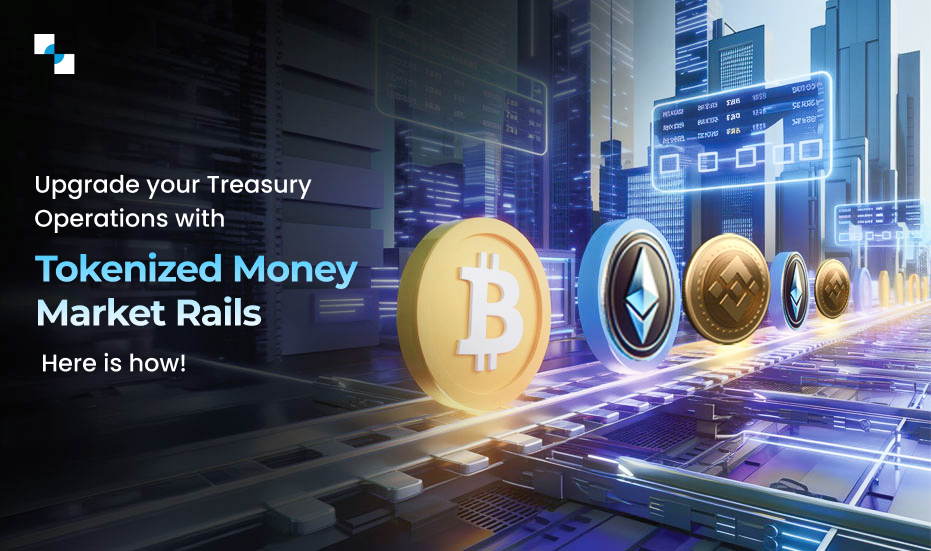
Tokenized money market funds have quietly moved from niche experiments to some of the most strategically important instruments in modern finance. Their growth has been driven not by hype but by the escalating need across institutions for yield, liquidity mobility, operational efficiency, and standardized digital infrastructure.
To a business, tokenized MMFs are modernized representations of an asset class institutions already trust, packaged in a way that removes decades of friction embedded into the global financial system. When viewed through this lens, tokenized MMFs stop being a technical abstraction and instead become a strategic operational tool, one that can reshape a bank’s liquidity management, a fintech’s product stack, or an asset manager’s distribution model.
Let’s break down the real mechanics, value, and platform-level considerations in detail.
What Tokenized Money Market Funds Actually Represent (Beyond the Simplified Definitions)
A traditional money market fund holds short-term, high-quality instruments such as treasury bills, repurchase agreements, and commercial paper. Institutions trust these because the risk is minimal, liquidity is high, and the underlying markets are extremely deep.
Tokenization does not alter any of this. The fund’s underlying investment mandate remains identical. What changes is how ownership is recorded, transferred, audited, and managed.
In a traditional structure, a money market fund’s shares are recorded in ledger systems operated by transfer agents, custodians, and fund administrators. Every movement, subscription, and redemption flows through layers of intermediaries, each with its own systems, reconciliation cycles, regulatory reporting pipelines, and operational rules. All of this works, but it’s slow, expensive, and prone to operational bottlenecks.
Tokenization replaces this legacy infrastructure with a shared, real-time ledger. The basic fund remains the same. The administrative and operational machinery around it becomes vastly more efficient.
For institutions, the significance is not the token itself. It’s the infrastructure transformation the token enables.
Upgrade your Treasury Operations with the Asset Tokenization Platform
Why Institutions Are Paying Serious Attention Now- The Deeper Forces Behind Adoption
Institutional interest is not driven by curiosity. It’s driven by macroeconomic and operational pressures C-level executives have better than dealing with for years. Let’s break down the factors in a detailed:
1. Higher Interest Rates for Priced Treasuries Back into Focus
For nearly a decade, treasury yields were so low that most institutions treated them as “parking spots” instead of yield generators. But with yields consistently above 4% in the last 2–3 years, institutions rediscovered the importance of treasury-backed instruments for cash optimization. Tokenized MMFs give them real-time access to these yields without being trapped in legacy settlement cycles. For a corporate treasurer managing billions, shaving even one day off a settlement cycle translates to material financial gains.
2. Global Institutions Are Under Pressure to Modernize Operational Infrastructure
Every major financial authority, from MAS to the FCA to the EU, is promoting digital assets, infrastructure integration, not from a speculative angle but because legacy systems are becoming a bottleneck.
Institutions face:
- Increasing operational overhead
- Inefficient reconciliation pipelines
- Slow cross-border liquidity movement
- Growing demand for transparent reporting
- Pressure to streamline internal liquidity management
Tokenized MMFs directly address these issues because they transform the administrative structure of a fund without altering the regulated investment framework. Executives see this as modernization without risking regulatory exposure.
3. On-Chain Settlement Has Become Impossible to Ignore
Institutions are realizing that blockchain settlement is not a gimmick. It is functionally superior in multiple measurable ways:
- Near-instant settlement
- Programmable compliance
- Real-time auditability
- 24/7 global transferability
- Fewer intermediaries
Executives responsible for treasury operations quickly understand that the value is in the operating efficiency gained by removing decades of settlement latency.
4. Institutional Infrastructure Finally Exists
Five years ago, no major custodian supported on-chain instruments. Today, leading custodians manage billions in tokenized assets.
The enabling conditions are finally present:
- Bank-level custody solutions
- Regulated on-chain funds from major asset managers
- Auditor-friendly transparency
- Interoperability standards
- Institutional wallets with granular control
Institutions will not move into markets without reliable custody and compliance rails. Tokenized MMFs now have both, which is why adoption is accelerating.
What Tokenized MMFs Deliver That Traditional MMFs Cannot- A Detailed Executive Breakdown
From an executive perspective, the tokenization of MMFs creates structural advantages that affect an institution’s liquidity strategy, operating model, and global product delivery.
Let’s break each benefit down with clarity and depth.
1. Liquidity Mobility
Traditional MMFs settle late in the day or on the next business day. Tokenized MMFs settle in seconds. For a bank or fintech managing corporate clients, this enables:
- Same-hour treasury consolidation.
- Dynamic intraday liquidity adjustments
- More efficient collateral deployment
- Improved cash management across business units
- Faster movement between subsidiaries and jurisdictions
Liquidity is one of the most expensive operational resources. Tokenized MMFs give executives more control over it.
2. Transparent, Real-Time theme porting
Legacy fund reporting works, but it is inherently lagged. Tokenized units allow:
- Real-time view of issuance
- Real-time redemption tracking
- Live NAV-based calculations
- Instant access for external auditors
- Tamper-proof historical data
This level of transparency supports both internal governance and external regulatory audits, improving organizational resilience.
3. Global Product Distribution Without Intermediary Strain
Traditional MMF distribution is tied to region-specific transfer agents and custodial systems.
Tokenized funds bypass this restriction. For asset managers, this means:
- Global onboarding without establishing local infrastructure
- Reduced friction in corporate client distribution
- Automated compliance checks embedded into transfer logic
This doesn’t eliminate regulation; it enhances its enforceability.
4. Programmable Compliance
One of the most overlooked strategic advantages is rule-based enforcement at the token level. Institutions can automate:
- Jurisdiction restrictions
- Investor eligibility rules
- Transaction limits
- Reporting workflows
- Access rights
- Entity-level whitelisting
This transforms compliance from a manual task into an embedded protocol—a significant operational upgrade for regulated entities.
What Platform Providers Must Build: Deep Technical and Operational Requirements
Investors evaluating your RWA platform will judge it on these specific capabilities. Here’s what they expect -explained in detail, not bullet shortcuts.
1. Compliance Architecture Built for Institutions
Investors care about one thing more than features: compliance safety. A tokenized MMF platform must not simply “check a box” that KYC exists. It must integrate identity verification into the entire life cycle of the token- issuance, transfer, redemption, reporting.
This includes:
- and Granular role-based permissions
- Investor-specific access rules
- Jurisdiction-level participation controls
- Automated activity logging
- Transaction-level compliance validation
- Ongoing monitoring for abnormal behavior
Institutions will not onboard unless compliance feels native, automatic, and enforceable.
2. Smart Contracts That Reflect Fund Logic Accurately
The smart contract layer is the operational spine of a tokenized MMF. It must replicate the operational and administrative rules fund managers follow:
- How units are minted
- How units are redeemed
- How NAV changes propagate
- How yield is reflected
- How emergency fund actions occur (suspension, freeze, stopping subscriptions)
- Hoor w compliance gates operate
Executives don’t want a smart contract that “issues tokens.” They want a contract that mirrors the logic of a regulated fund with precision.
3. Integration With Top-Tier Custody Providers
Institutions do not use MetaMask, self-custody, or consumer wallets. Your platform must integrate with enterprise-grade custodians. Investors will ask directly:
- Which custodians do you support?
- Do you offer MPC wallet integrations?
- How do you manage key rotation and access segmentation?
- Can our internal treasury team control approval workflows?
If your answer is weak, the deal is dead.
4. Real-Time NAV and Reporting Infrastructure
This is where most tokenization projects fail. A true tokenized MMF platform needs to automate the entire NAV cycle:
- Ingest off-chain pricing feeds
- Validate fund performance data
- Recalculate NAV
- Update token price
- Publish updates on-chain
- Generate audit-ready statements
Fund managers won’t touch a platform that cannot guarantee accuracy, consistency, and regulatory-grade recordkeeping.
5. Scalability and Security That Matches Banking Standards
Matchers expect:
- High throughput
- Chain-agnostic deployment
- Resilience against downtime
- Disaster recovery plans
- Enterprise-grade encryption
- Formal security audits
Platform builders that treat this casually will never win institutional clients.
How Tokenized MMFs Fit into the Broader RWA Strategy of an Institution
Tokenized MMFs are not the endpoint. They are the entry point institutions that use to familiarize themselves with digital asset infrastructure.
Once they succeed here, institutions typically scale into:
- Tokenized corporate credit
- Tokenized fixed-income baskets
- Tokenized commercial real estate
- Tokenized private market instruments
- Tokenized cross-border settlement assets
Tokenized MMFs are the product that opens the gates because they offer yield, safety, familiarity, and operational improvement without forcing institutions into speculative territory.
Transform your Liquidity Strategy with Tokenized MMF Platform
Takeaway
Tokenized money market funds represent a structural improvement to financial infrastructure. They deliver faster liquidity, operational efficiency, transparent reporting, global distribution, and programmable compliance, all while preserving the underlying investment structure institutions trust.
For businesses, building a Tokenization Market Fund Platform is upgrading the financial rating system without changing the risk profile. It is a baseline requirement in the emerging RWA landscape.
Partner With Antier to Build Tokenized Money Market Fund Infrastructure
For tokenized MMFs infrastructure, a business infrastructure that understands regulated finance, liquidity mechanics, and enterprise-grade blockchain engineering. Antier delivers all three. As a leading Real-World Asset Tokenization Platform Development Company, Antier builds bank-level infrastructure that supports tokenized MMFs with automated compliance, institutional custody, NAV engines, audit-ready reporting, and multi-chain deployment. Our RWA tokenization services help enterprises launch secure, scalable, and regulatory-aligned tokenized MMF ecosystems that attract institutional investors and unlock new revenue channels.
Deploy a custom Tokenized Money Market platform faster and stronger with Antier. Get in touch with our experts.



