
Crypto World
Trump Media Eyes Spinning Out Truth Social Amid Crypto Push


Trump Media & Technology Group is weighing a structural pivot that could redefine its crypto playbook: spinning Truth Social into a publicly traded entity as part of ongoing talks with energy-fusion developer TAE Technologies and Texas Ventures Acquisition III, a SPAC that would take the platform public. If the merger advances, Truth Social would become a stand-alone company named SpinCo, which would subsequently merge with Texas Ventures III, with SpinCo shares distributed to Trump Media shareholders. The arrangement follows a December merger agreement valued at more than $6 billion and aligns with the company’s broader strategy to monetize its platform through fintech and crypto ventures while pursuing energy-tech ambitions. The moves come against a backdrop of Trump Media’s forays into crypto and digital assets, including a Bitcoin treasury that has been built up over time and a slate of crypto product filings that signal a broader push into tokenized finance.
Key takeaways
- The Truth Social spin-out would be paired with a merger between TAE Technologies and Trump Media, with SpinCo expected to merge into Texas Ventures Acquisition III and distribute SpinCo shares to Trump Media shareholders once closed.
- Truth Media’s crypto arm, launched as Truth.Fi in 2025, now anchors a broader crypto strategy that includes a Bitcoin treasury and a portfolio of crypto ETFs filed in the US, including those tracking Bitcoin (BTC), Ether (ETH), and Cronos (CRO) with staking options.
- The SPAC-backed deal and spin-out are tied to a merger with TAE Technologies, a project that could accelerate Trump Media’s interests in energy fusion and related data-center deployments driven by AI workloads.
- Financial disclosures from 2025 show a significant unrealized drag from crypto prices, with a stated loss of about $712.3 million for the year and end-2025 assets around $2.5 billion, illustrating the volatility and risk in crypto-focused corporate ventures.
- Regulatory and market developments in the near term—SEC filings, merger approvals, and ETF approvals—will shape whether SpinCo can launch as planned and how quickly Truth Social’s crypto ambitions scale.
Tickers mentioned: $BTC, $ETH, $CRO
Sentiment: Neutral
Market context: The unfolding discussions reflect a broader wave of corporate actors pursuing crypto and blockchain-related products within SPAC-structured deals and strategic partnerships, even as macro liquidity and regulatory scrutiny shape the pace of such initiatives.
Why it matters
The potential spin-out of Truth Social into a separately listed company marks a notable shift in how Trump Media plans to monetize its user base and brand footprint. By isolating Truth Social within a public vehicle—SpinCo—the group could unlock capital markets’ interest in a platform with significant reach, while kaleidoscopically aligning with a diversification strategy that extends into fintech, crypto, and energy tech. The arrangement would place SpinCo in a position to pursue crypto product innovations and tokenized offerings without immediate interference from the parent’s other lines of business, potentially attracting investors drawn to crypto-enabled social platforms and revenue streams tied to digital assets.
Truth Media’s crypto arm, launched under the Truth.Fi umbrella, has evolved into a broader fintech initiative that includes a Bitcoin treasury and an appetite for crypto exchange-traded products. The company has filed for Truth Social-branded crypto ETFs in the United States, including ones focused on Bitcoin (BTC) and Ether (ETH) as well as Cronos (CRO), with staking features linked to its ecosystem and a backend partnership framework with Crypto.com. This suite of filings signals an intent to create regulated, investable crypto products that could broaden the company’s investor base and provide diversified exposure to digital assets beyond the social media platform. The plan incorporates the Crypto.com partnership as a crucial enabler for the CRO-related ETF strategy and treasury mechanics.
On the energy front, the merger with TAE Technologies is pitched as a synergy play: a fusion-focused technology developer that could support the power needs of expanding AI data centers and other high-demand workloads. The tie-up would integrate Trump Media’s media and fintech ventures with a long-horizon energy project, aligning with a broader industry trend where crypto mining and blockchain infrastructure searches intersect with energy procurement and efficiency initiatives. The combination could create a framework for deploying fusion-powered energy solutions in data centers, potentially reducing energy costs and capacity constraints for crypto and fintech operations that require robust compute resources.
Financial disclosures from 2025 illustrate the risk profile of such ambitious ventures. Trump Media reported a loss of about $712.3 million for the year, driven largely by unrealized losses tied to crypto prices and related securities. At year’s end, the company noted roughly $2.5 billion in assets, a figure that dwarfs the $776.8 million cash and short-term investments reported for 2024. These numbers underscore the sensitivity of crypto ventures to price cycles and market sentiment, while also highlighting the capital intensity of pursuing a combined media, fintech, and energy-tech agenda. The public-private nature of the SpinCo proposition means investors will be scrutinizing how the tech stack—from Truth.Fi-powered products to fusion-energy capabilities—can scale and become financially material over time.
The storyline also hints at a broader narrative around governance, valuation, and timing. The proposed path—Truth Social’s spin-out followed by a merger with a SPAC—depends on closing conditions, regulatory clearances, and market reception. If the merger with TAE Technologies proceeds, SpinCo would be positioned as a listed vehicle that retains exposure to the crypto product suite while benefiting from the potential upside of energy-tech partnerships. The discussions reflect a strategic attempt to combine a high-visibility social platform with a diversified set of growth engines, including digital assets and energy innovation, in a bid to create value across multiple cycles and market conditions.
From a market-structure perspective, the plan underscores how corporate entities pursue crypto-adjacent strategies by leveraging SPAC frameworks and multi-industry combinations. It also raises questions about risk management, liquidity, and concentration risk in a portfolio that spans social media, fintech, and energy tech. As the parties move through due diligence, investors will be looking for clarity on how SpinCo’s governance, earnings potential, and asset allocation will be balanced against the volatility inherent in crypto markets and the evolving regulatory landscape surrounding crypto ETFs and digital assets.
For now, Trump Media’s narrative remains a blend of strategic ambition and regulatory navigation. The company has not announced a closing date for the merger or SpinCo listing, and the outcome will hinge on regulatory approvals, investor sentiment, and the successful execution of the merger with TAE Technologies. Stakeholders will be watching the timeline for SpinCo’s listing, any subsequent stock distributions to Trump Media holders, and updates on the Truth.Fi roadmap, including ETF approvals and the performance of the Bitcoin treasury and CRO treasury-backed initiatives.
What to watch next
- Clearance and timing of the SpinCo formation and its merger with Texas Ventures Acquisition III; any regulatory milestones or approvals with a timeline.
- Status updates on the TAE Technologies merger, including closing conditions and any amendments to the original >$6B valuation.
- Progress of Truth Social-branded crypto ETFs, with updates on SEC approvals, product launches, and staking features.
- Development and deployment schedules for Truth.Fi products and the performance of the Bitcoin and Cronos treasuries under Crypto.com and Yorkville Acquisition partnerships.
- Regulatory or market developments affecting SPAC activity and crypto-centric offerings that could influence investor appetite for SpinCo and related assets.
Sources & verification
- Trump Media & Technology Group discusses spinning Truth Social into SpinCo as part of a potential deal with TAE Technologies and a SPAC vehicle (the merger agreement listing and SPAC structure).
- The merger agreement with TAE Technologies for a deal valued at more than $6 billion.
- Truth.Fi crypto initiative and a Bitcoin treasury reported by Trump Media, including holdings exceeding 11,500 BTC as of late September.
- Truth Social-branded crypto ETFs filed in the US for BTC, ETH, and CRO, including staking arrangements, tied to partnerships with Crypto.com.
- Partnerships and related disclosures connecting CRO ETFs to the CRO treasury and Yorkville Acquisition.
Trump Media’s potential spin-out ties Truth Social to broader crypto and fusion-energy ambitions
Trump Media & Technology Group is exploring a path that could redefine how a presidential brand expands into crypto, while layering in energy-tech ambitions. The core idea is to spin Truth Social, the company’s flagship social platform, into its own publicly traded entity—SpinCo—then merge that vehicle with Texas Ventures Acquisition III, a blank-check company. The hailed trigger is the ongoing merger with TAE Technologies, the energy-fusion startup that has been positioned as a strategic partner in the broader plan. The deal landscape suggests a multi-layered strategy: a public listing for Truth Social within SpinCo, followed by a merger with SPAC sponsor Texas Ventures III, and a distribution of SpinCo shares to Trump Media shareholders, all contingent on the closing of the merger with TAE Technologies, which itself has a reported value exceeding $6 billion.
Within this framework, Truth Media has emphasized crypto as a growth vector. In 2025, the company expanded its fintech footprint under the Truth.Fi banner, laying the groundwork for crypto products and services that could sit alongside a social platform with a global footprint. A key element of this expansion has been a Bitcoin treasury reported to be in excess of 11,500 BTC as of late September, underscoring a deliberate accumulation of digital assets that could support future product launches or collateral arrangements. The crypto strategy is further reflected in the filing of Truth Social-branded crypto ETFs in the United States—facilities that would allow investors to gain exposure to BTC, ETH, and the Cronos ecosystem while embedding staking features. The ETFs are linked to ongoing partnerships that include Crypto.com, a connection that appears central to the CRO ETF and related treasury operations.
Beyond the crypto dimension, the merger with TAE Technologies signals a parallel emphasis on energy innovation. TAE’s fusion technology is portrayed as a mechanism to address the growing power demands of AI data centers and other data-intensive infrastructure. If realized, the combination would tether a social-media-centric fintech venture to a fusion-energy roadmap, marrying user engagement with a long-horizon energy supply strategy. The ambition is not merely to diversify revenue streams but to create an integrated platform where crypto products, fintech services, and energy tech coalesce under a single corporate umbrella. The public listing—which SpinCo would pursue through the SPAC route—could also broaden access to capital, enabling more ambitious product development and potential partnerships in the crypto and high-performance computing ecosystems.
Of course, the path forward remains contingent on a series of milestones. The 2025 financials already reveal a challenging year, with a reported loss of about $712.3 million largely tied to unrealized crypto losses and related securities, alongside end-of-year assets around $2.5 billion. The figures illustrate the risk profile inherent in crypto-centered corporate bets, where price swings and regulatory shifts can swiftly impact balance sheets. Investors will be evaluating whether SpinCo’s governance, capital structure, and cash flow prospects demonstrate a credible route to profitability, or whether the proposals remain predominantly strategic, with upside tied to future crypto adoption and energy-tech commercialization. As always, the timing of regulatory approvals, due diligence, and market conditions will ultimately shape whether SpinCo’s vision becomes a measurable segment of Trump Media’s portfolio or remains an aspirational blueprint for a broader ecosystem that blends social media, crypto, and fusion energy.

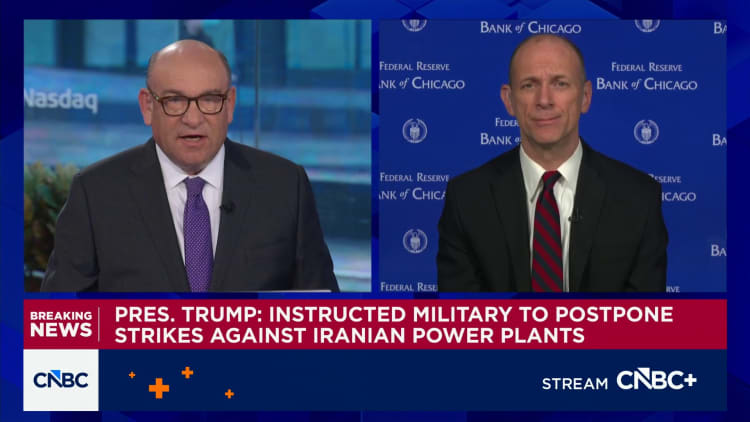

Chicago Federal Reserve President Austan Goolsbee said Monday that he’s more worried about inflation now than he is unemployment, even with apparent progress made on the war with Iran.
In a CNBC interview, the central banker said policymaking is difficult in the current environment. He spoke shortly after President Donald Trump announced that progress had been made in negotiations with Iran and that further attacks on energy infrastructure would be halted for five days as talks continue.
“The most important thing is to figure out the through line of what is happening,” Goolsbee said in a “Squawk Box” interview. “What makes this a fraught but intense moment is nobody can tell us what is going to happen on the ground in the conflict in the Middle East, and how long that lasts.”
Goolsbee had dissented on a rate cut in December and said he agreed with the majority to hold short-term rates steady at the January and March meetings of the Federal Open Market Committee. He is not an FOMC voter this year but will vote again next year.
Following Monday’s war news, traders, in volatile market action, upped bets of a rate hike by the end of the year but still expect a cut in 2027. Stocks spiked higher and oil prices plunged.
FOMC officials last week indicated a majority still expect a cut this year and another the next. However, Goolsbee said that his inclination will depend on the progress of inflation, and he cautioned against “a repeat of the team-transitory mistake” where the Fed underestimated the severity of inflation in 2021.
“I remain fairly optimistic that by the end of ’26 rates could go down, but I wanted to see proof that we’re back on an inflation headed to 2%. This [war] definitely throws a wrench into the plans. We do need to see progress,” he said.


Michael Saylor’s Strategy (MSTR) continued to add to bitcoin holdings last week, but at a vastly reduced pace from recent previous acquisitions.
The leading bitcoin treasury company last week added 1,031 bitcoin for a total cost of $76.6 million, or $74,326 per coin.
Strategy’s total holdings now stand at 762,099 BTC, acquired for approximately $57.69 billion, or an average price of $75,694 each.
The new buys were entirely funded via the sales of common stock, according to a Monday filing.
This latest acquisition was at a vastly reduced scale compared to the previous two weeks, when the company purchased more than $1 billion of bitcoin, taking advantage of the issuance of its STRC preferred shares.
Bitcoin is currently trading around $70,000. MSTR shares are higher by 1.7% in premarket trading.


H100 Group (H100), a Stockholm-based publicly listed bitcoin treasury company focused on providing institutional exposure to bitcoin, said it signed a letter of intent to acquire Norwegian peers Moonshot AS and Never Say Die AS to increase its holdings of the largest cryptocurrency.
If completed, the deal would roughly triple H100’s bitcoin stash to around 3,500 BTC, positioning it among Europe’s largest listed bitcoin treasury firms. Beyond that, H100 said it aims to strengthen its institutional profile, improve liquidity and expand its relevance in capital markets.
The announcement follows the company’s January announcement that it plans to combine with Future Holdings AG, a Zurich-based bitcoin treasury company. Both are backed by Adam Back, a British cryptographer and co-founder of Blockstream.
The transaction is structured as a bitcoin-for-bitcoin exchange, meaning ownership in the combined entity will be determined solely by the amount of bitcoin contributed. This approach preserves bitcoin exposure per share for existing investors, avoiding dilution while significantly scaling the company’s balance sheet.
The acquisition will be executed as an all-share transaction with no cash consideration.
The target companies collectively hold about 2,450 BTC.
Definitive agreements are expected by April 22, with completion anticipated shortly after the company’s annual general meeting in May, subject to final approvals.
The announcement sent H100 shares up 2% on the day.
Crypto World
BlackRock is betting billions that tokenized funds will do for Wall Street what the internet did to mail
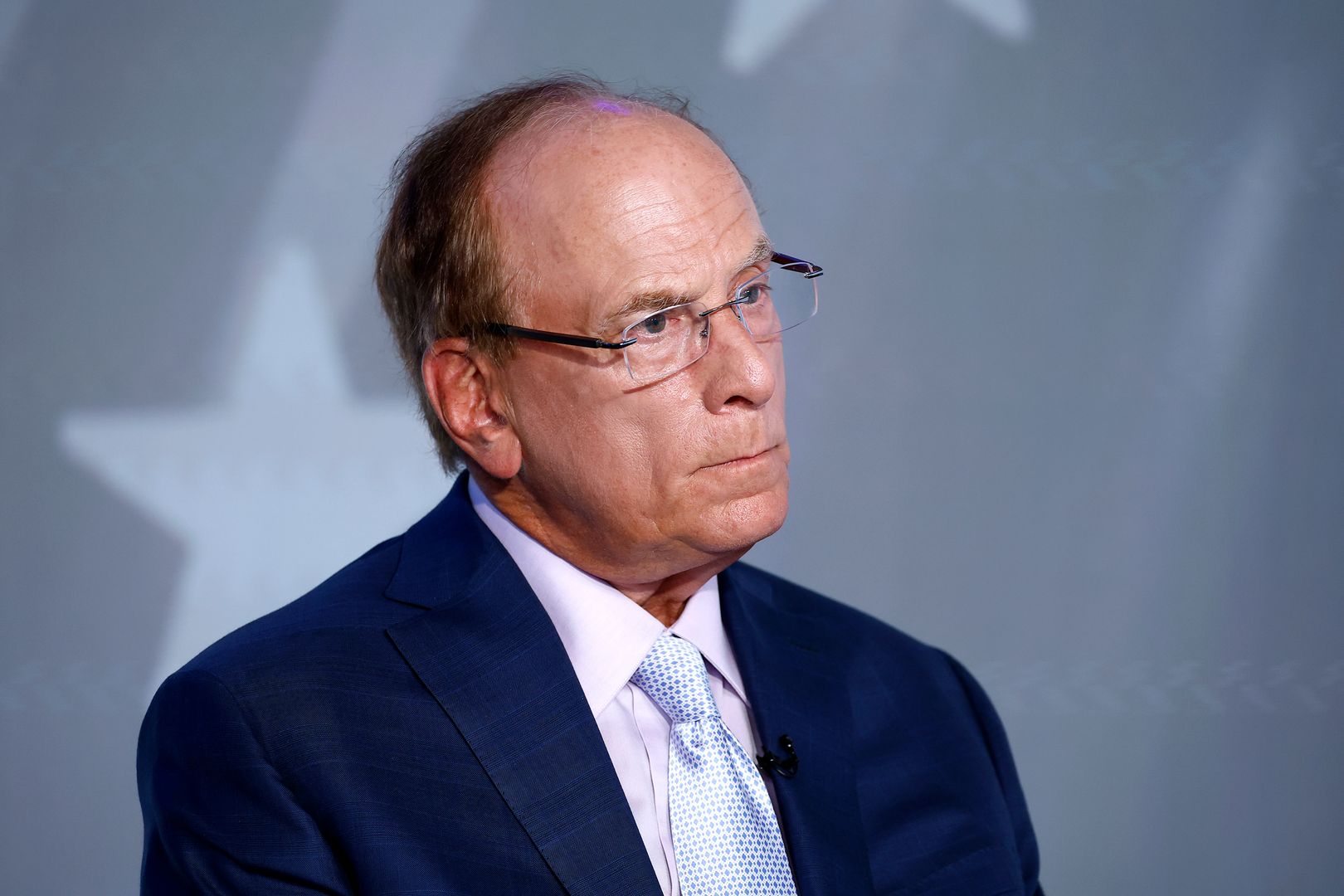
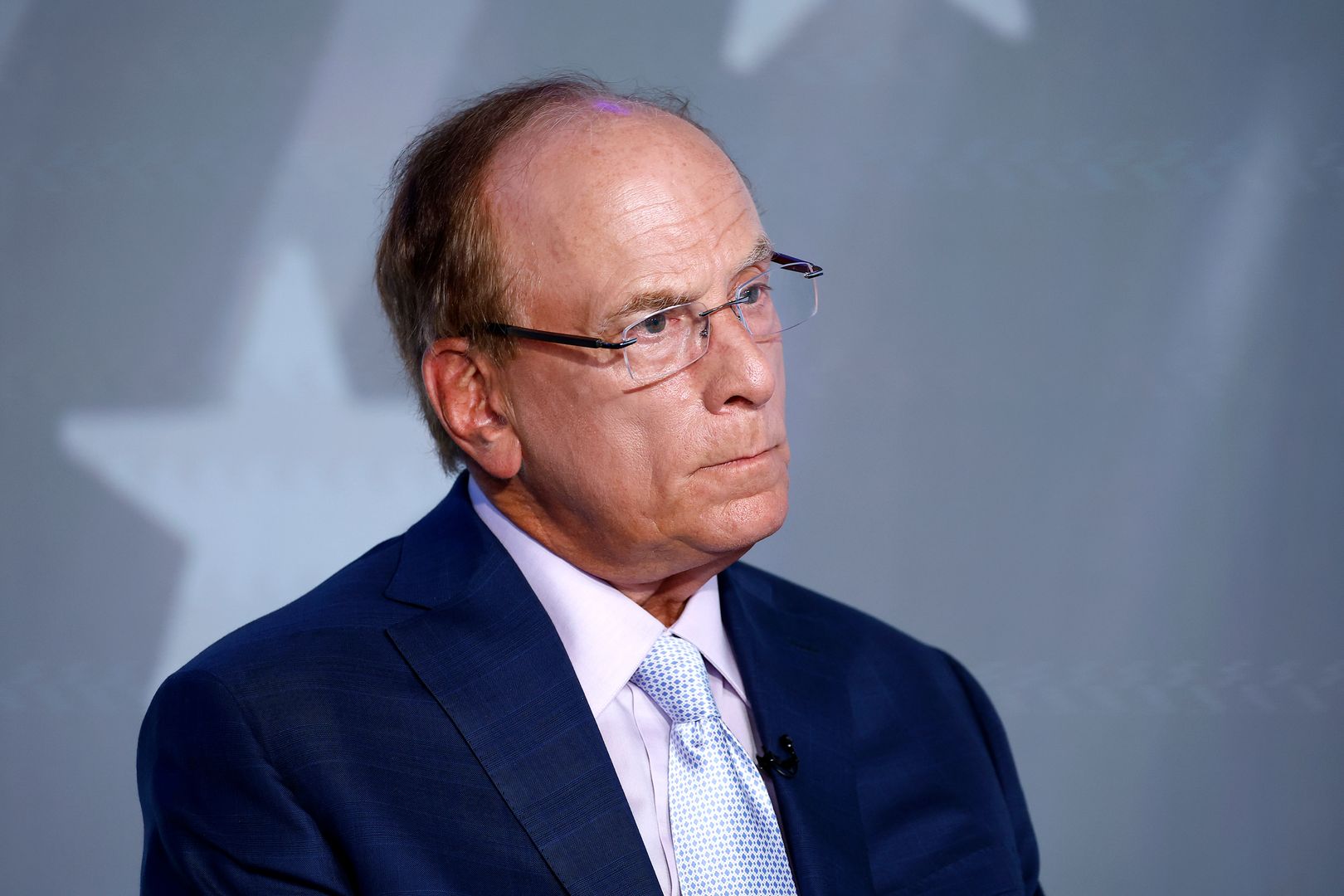
BlackRock Chairman and CEO Larry Fink used his annual letter to shareholders to argue that digital assets and tokenization could help update the financial system, even as he warned that the U.S. economic model is leaving too many people behind.
In the letter, Fink said the current system has delivered most of its gains to people who already own assets, while many workers have been shut out of market growth. He tied that imbalance to a wider problem in the U.S., where rising inequality, high government debt and weak participation in capital markets are putting pressure on the old model of finance.
“Capitalism is working—just not for enough people,” Fink wrote.
His proposed fix centered on tokenization and digital distribution as tools to expand access to investing and make markets run better.
Tokenization, Fink said, could “update the plumbing of the financial system” by making investments easier to issue, trade and access.
The idea is simple: If ownership of assets is recorded on digital ledgers, moving a fund share, bond or other security could become faster and cheaper. In practice, that would allow a regulated digital wallet to hold not just payments, but also tokenized bonds, ETFs and fractional interests in assets such as infrastructure or private credit.
“Half the world’s population carries a digital wallet on their phone,” Fink wrote. “Imagine if that same digital wallet could also let you invest in a broad mix of companies for the long term—as easily as sending a payment.”
Fink compared tokenization today to the internet in 1996, arguing that it will not replace traditional finance overnight, but could gradually connect old and new systems. He said policymakers should focus on building that bridge “as quickly and safely as possible” and called for clear buyer protections, counterparty-risk standards and digital identity checks to reduce illicit finance risks.
The comments add to BlackRock’s broader push into digital assets. In the same letter, Fink said the firm had built “early leadership” in the space, citing nearly $150 billion in assets connected to digital markets.
BlackRock’s USD Institutional Digital Liquidity Fund (BUIDL) is the largest tokenized fund in the world, and the firm also manages $65 billion in stablecoin reserves and nearly $80 billion in digital asset exchange-traded products.
Still, much of the letter focused on deeper stresses in the U.S. financial system. Fink warned that banks, corporations and governments can no longer fund large economic shifts on their own, especially as the country tries to rebuild manufacturing capacity, expand energy supply and compete in artificial intelligence.
He also argued that Social Security remains a critical safety net but may need structural reform, including some exposure to long-term market returns, to remain sustainable.
For Fink, tokenization sits inside that bigger picture. It is not a bet on hype, but a bet that better rails could help more people become investors rather than bystanders.
His broader message was that finance needs an upgrade, and that digital assets may become part of that overhaul.


Polymarket is tightening insider‑trading and manipulation bans across its DeFi app and CFTC‑regulated U.S. exchange, adding surveillance, NFA oversight and formal whistleblower channels.
Summary
- Polymarket rolls out enhanced market integrity rules for both its DeFi platform and CFTC-regulated U.S. exchange.
- New policies sharpen bans on insider trading, manipulation, and abusive tactics, backed by multi-layered surveillance and public reporting channels.
- Move comes as regulated prediction markets scale rapidly under U.S. CFTC oversight and institutional interest in crypto-linked event trading surges.
Polymarket has published upgraded market integrity rules spanning its DeFi platform and its CFTC‑regulated U.S. exchange, tightening prohibitions on insider trading, fraud, and market manipulation while formalizing reporting channels for suspicious activity. “Markets thrive on clarity,” said Neal Kumar, Chief Legal Officer of Polymarket.
“These rule enhancements make our expectations abundantly clear for every participant across both platforms and highlight the compliance infrastructure we have already built.”
The updated framework centers on three explicit categories of banned insider conduct: trading on stolen confidential information, trading on illegal tips, and trading by people who can influence the underlying event’s outcome. Participants are barred from using confidential information obtained in breach of a duty of trust, from acting on tips they know or should know are tainted, and from taking positions when they hold “a position of authority or influence sufficient to affect the outcome of the underlying event.” Beyond insider rules, Polymarket now highlights a blanket ban on spoofing, wash trading, fictitious transactions, front‑running, self‑dealing, information misuse, attempted manipulation, and other disruptive practices that undermine orderly markets.
On the U.S. exchange, enforcement rests on a multi‑layered surveillance stack: partnerships with “world‑class trade surveillance and technology specialists,” a control desk running real‑time monitoring, and a Regulatory Services Agreement with the National Futures Association to investigate and sanction rulebreakers. Sanctions for violators can include suspension, termination, monetary penalties, or referral to regulators and law enforcement. On the DeFi side, users can report suspected abuse via Polymarket’s Discord or by emailing [email protected], while U.S. exchange participants can file confidential complaints to [email protected].
The integrity revamp lands amid a broader regulatory turn in the U.S., where the CFTC has asserted exclusive jurisdiction over prediction‑market derivatives and is actively defining how event contracts fit under the Commodity Exchange Act. Polymarket already secured an amended CFTC order in late 2025, allowing intermediated access via futures commission merchants and binding the platform to full Designated Contract Market‑style surveillance, reporting, and self‑regulatory obligations. As one recent analysis put it, regulated platforms like Polymarket now “bet on transparency and on‑chain credibility” while competing against DeFi‑only venues that emphasize cost and self‑custody.
That regulatory clarity is arriving just as prediction markets post record activity. In February 2026, combined monthly volume on major platforms Kalshi and Polymarket hit roughly $18.6 billion, a new all‑time high, with more than $8 billion traded in just the first half of March. Industry observers argue that as event markets turn into an institutional‑grade information source for media, sports leagues, and financial firms, exchanges that can demonstrate credible surveillance and clear integrity rules will capture the most sensitive flow. “Our goal has always been to give fans new ways to engage with the sports they love while ensuring those markets can grow responsibly on a global scale,” Polymarket founder Shayne Coplan said in an earlier statement on the company’s broader integrity push.

A massive $1.5 trillion in market capitalization has vanished from the bullion market as the spot gold price collapses below critical support levels. Trading at $4,435 USD, the precious metal is down 1.3% in the last 24 hours, extending a brutal monthly decline of over 13%.
This sell-off signals a sharp reversal in safe-haven demand, or perhaps forced liquidation, catching commodities traders off guard as volatility spikes across asset classes.
The sudden correction effectively wiped out months of gains in roughly three hours, erasing approximately $1.5 trillion in value. While the macro environment remains fraught with geopolitical tension, the liquidity drain from gold suggests a structural reallocation of assets is underway.
If stabilization at these lower levels fails, the market risks a deeper flush, potentially dragging correlated risk assets down with it.
MASSIVE CRASH IN METALS.
Gold has crashed -25% from its record high and dropped below $4200, hitting a 100-day low of $4,163.
Silver has crashed nearly -50% from its all-time high and hit a 3-month low of $61.
Together they have wiped out $13.5 trillion in the past 53 days,… pic.twitter.com/JBclFuGVLW— Bull Theory (@BullTheoryio) March 23, 2026
Can Gold Hold $4,375 Price Support Amid Liquidity Drain?
The technical damage is severe right now. After peaking at $5,600 in January 2026, gold has entered a steep correction channel, currently hovering dangerously close to the $4,350 breakdown zone.
Prediction markets on Robinhood suggest traders remain deeply divided, with contracts pricing a 49¢ probability of settlement above $4,400 by tomorrow, signaling that this psychological level has flipped from support to formidable resistance.
This downside momentum is not isolated, with correlated digital assets flashing warning signs; tokenized gold assets like PAX Gold (-1.35%) and Tether Gold (-1.3%) are mirroring the slide, while Bitcoin just pumps to above $70,000.

The daily chart reveals a “falling knife” scenario where the RSI is oversold, but momentum remains fiercely bearish. If buyers fail to reclaim the $4,500 zone immediately, the path of least resistance points toward $4,300.
Conversely, a bounce here requires a massive volume influx to invalidate the bearish structure, a scenario currently unsupported by the thin order books. See further technical analysis on gold price levels here.
Infrastructure Focus: Bitcoin Hyper Targets $32M Raise
While commodities bleeding capital triggers fear for traditional investors, it creates a unique opportunity for rotation into high-growth digital infrastructure. The massive outflow of funds—driven by profit-taking and overheating—needs a new home. Smart money appears to be bypassing the stagnation of traditional safe havens for early-stage utility plays that solve fundamental blockchain scalability issues. This capital shift helps explain why Bitcoin Hyper ($HYPER) has defied the broader market slump.
As the first-ever Bitcoin Layer 2 to integrate the Solana Virtual Machine (SVM), the project is directly addressing Bitcoin’s core limitations: high fees and slow transaction speeds.
The presale data confirms this demand, having raised more than $32 million from early backers. Currently priced at $0.013, $HYPER offers a high-speed execution layer with 26% APY bonus for early stakers.
While gold investors worry about negative funding rates and sideways movement, infrastructure investors are locking in positions before the protocol launches its Decentralized Canonical Bridge. However, presale assets carry their own volatility risks; potential buyers should weigh the technology’s promise against early-market dynamics.
Research the Bitcoin Hyper Presale Here
The post Gold Price Free-Falling: The Golden Standard is Being Tested appeared first on Cryptonews.

KEY HIGHLIGHTS
- Bitcoin jumps above $70K as U.S.-Iran talks signal easing tensions
- BTC rallies after Trump pauses strikes, but Iran denies any talks
- Crypto spikes as ceasefire hopes rise amid mixed global signals
- Bitcoin crosses $71K before pullback on conflicting Iran reports
- Markets swing as peace prospects clash with geopolitical uncertainty
Bitcoin Reacts to Shifting U.S.-Iran Signals
Bitcoin surged above $70,000 after reports suggested progress in U.S.-Iran talks. The price climbed past $71,000 before easing slightly amid conflicting updates. The move reflects how geopolitical developments continue to shape crypto market direction.
🚨BREAKING🚨
TRUMP ORDERS 5-DAY PAUSE ON STRIKES TARGETING IRAN’S ENERGY INFRASTRUCTURE
BITCOIN IS PUMPING LIKE CRAZY!!!🔥 pic.twitter.com/2cVh7P33hB
— Max Crypto (@MaxCrypto) March 23, 2026
The asset gained over four percent from an intraday low near $67,000. This rebound followed statements indicating reduced military pressure in the Middle East. Momentum built quickly as traders responded to signs of possible de-escalation.
However, price action turned volatile as fresh reports questioned the talks. Iranian officials rejected claims of negotiations with the United States. This contradiction introduced uncertainty and triggered a modest pullback in Bitcoin’s price.
Bitcoin Gains Strength on Policy Pause
Bitcoin traded around $70,659 during the surge, reflecting renewed market confidence. The price jump followed a decision to delay military action for five days. This pause reduced immediate geopolitical risk and supported risk assets.
The U.S. administration signaled progress toward resolving ongoing hostilities. Officials indicated continued engagement could lead to a broader agreement. This outlook helped drive demand across digital assets and lifted overall sentiment.
At the same time, the market reacted to expectations of a near-term resolution. Prediction platforms showed rising probability of a ceasefire within weeks. This outlook added momentum, although uncertainty remained due to conflicting narratives.
Ethereum Tracks Bitcoin’s Upward Momentum
Ethereum climbed alongside Bitcoin and traded near $2,142 during the rally. The asset posted gains close to three percent as market sentiment improved. Its movement reflected broader strength across major cryptocurrencies.
The price increase followed Bitcoin’s breakout above key resistance levels. As a result, Ethereum benefited from increased trading activity and capital inflows. The correlation between both assets remained strong during the surge.
However, Ethereum also faced pressure after Iran denied any discussions. This development triggered caution across the crypto market. Consequently, Ethereum retraced slightly but maintained most of its earlier gains.
Conflicting Reports Drive Market Volatility
Market volatility increased as opposing narratives emerged from both sides. U.S. officials described ongoing talks as productive and constructive. In contrast, Iranian sources dismissed any form of engagement.
Regional players reportedly supported indirect communication channels. Countries such as Turkey, Egypt, and Pakistan played intermediary roles. These efforts aimed to reduce tensions and open pathways for dialogue.
Despite these efforts, uncertainty persists across financial markets. Traders reacted quickly to each new update, causing sharp price swings. This dynamic highlights the sensitivity of crypto assets to geopolitical developments.
Background and Broader Market Context
The current situation follows several weeks of heightened tensions in the Middle East. Earlier threats targeting energy infrastructure triggered market declines. Bitcoin fell sharply before recovering on renewed diplomatic signals.
The Strait of Hormuz dispute also played a key role in recent volatility. Strategic concerns over energy supply influenced global markets. Crypto assets responded in tandem with traditional risk indicators.
Recent activity suggests that geopolitical developments will remain a key driver. Market participants continue to adjust positions based on evolving headlines. As a result, Bitcoin and Ethereum may experience continued price fluctuations in the near term.
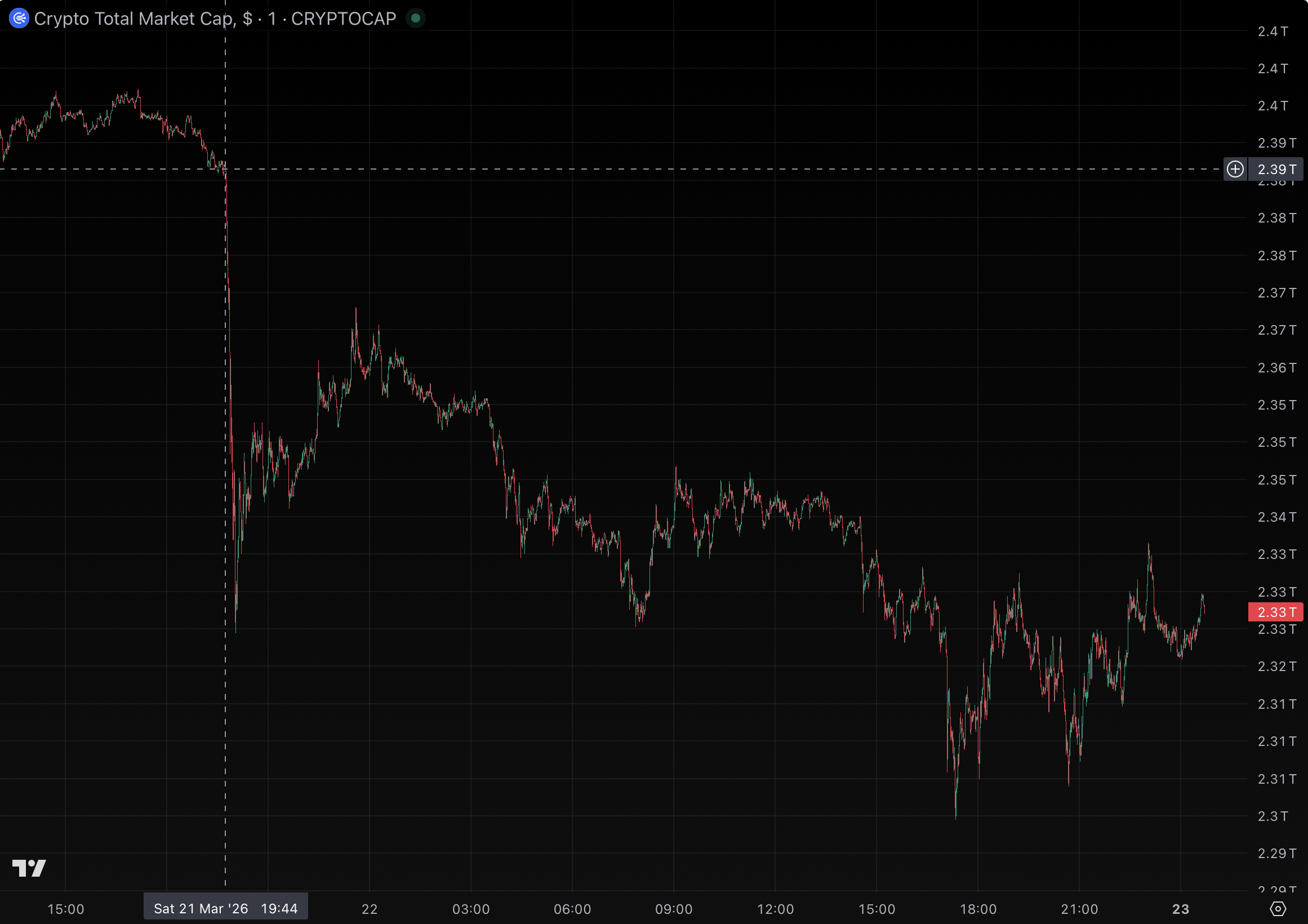
Bitcoin (BTC) has this morning bounced back to over $71,000 after it lost $60 billion in total market capitalization over the weekend following US President Donald Trump’s threat to “obliterate” Iran’s power plants if the country’s military refused to reopen the Strait of Hormuz.
In the 15 minutes following Trump’s threat on Saturday, BTC dropped from $70,100 to $68,200, a $37 billion wipeout for the world’s largest digital asset. Over $240 million in leveraged crypto trades were liquidated within the hour.
By Sunday evening, total liquidations crossed $1 billion, with long positions accounting for 85% of the damage.
BTC failed to bounce, remaining near $68,200. Total crypto market cap sustained its losses.
Trump says war ending ‘very soon,’ then obliterates crypto markets
Less than 24 hours before threatening to blow up power plants, Trump had said the US was “considering winding down” the war.
Indeed, as Trump told ABC News on Saturday that he was planning peace talks with an end to the war “very soon,” BTC made a brief push toward $71,000 on the optimistic rhetoric.
Then, at 7:44pm New York time, Trump published his bearish post. Crypto traders who had positioned themselves with leveraged long positions suffered liquidations within minutes.
Read more: Bitcoin up, Dubai real estate down since Iran war began
Coinglass’ Crypto Fear and Greed Index fell to nine out of 100, deep into “Extreme Fear” territory.
Crypto, one of the only large and relatively liquid markets open during the announcement besides foreign exchange, bore the brunt of the initial losses. Stock exchanges, bond markets, and commodity futures were all closed at the time.
Analysts have already estimated that Bitcoin’s hashrate has dropped roughly 100 EH/s since late February, mostly due to operational disruptions in Iran.
Luxor Technology’s Hashrate Index estimated that Gulf states, including Iran, represent 8-10% of global hashrate. Striking Iran’s power plants would physically knock the country’s remaining BTC miners offline, not to mention accelerating risk-off capital flight away from crypto investments.
As of Sunday evening, BTC was trading at a 23% year-to-date loss. Altcoins like Ethereum and XRP have lost 31% and 26% over the same time period, respectively.
Trump’s-48 hour deadline for a Strait of Hormuz deal expires today, Monday evening at 7:44pm New York time.
Got a tip? Send us an email securely via Protos Leaks. For more informed news, follow us on X, Bluesky, and Google News, or subscribe to our YouTube channel.
Silver price (XAG/USD) has faced sharp liquidation pressure over the last 48 hours, capitulating to a hawkish Federal Reserve outlook that has strengthened the dollar, which resulted in Silver’s prediction to further falls.
Spot prices have retraced significantly from yesterday, currently trading around $68 after running above $95 just 2 weeks ago. This decline extends a volatile period where the metal fell from a weekly high of $74.58, marking a painful rejection for bulls hoping for a sustained rally above the psychological $70 mark.
— Bull Theory (@BullTheoryio) March 23, 2026
MASSIVE CRASH IN METALS.
Gold has crashed -25% from its record high and dropped below $4200, hitting a 100-day low of $4,163.
Silver has crashed nearly -50% from its all-time high and hit a 3-month low of $61.
Together they have wiped out $13.5 trillion in the past 53 days,… pic.twitter.com/JBclFuGVLW
The technical deterioration has been swift. According to recent data, XAG/USD has logged a near 10% decline over the last seven days, dropping from an open of of $72.86 on March 20.
Market participants are reacting to a combination of rising interest rate expectations and liquidation from leveraged accounts, with experts warning that while the long-term demand from solar and EV sectors remains, the short-term chart structure is unstable. Previous recovery attempts have failed to hold, leaving the metal vulnerable to further downside probing.
Discover: The Best New Crypto
Silver Price Prediction: Can The Metal Defend the $65 Support Level This Week?
Current price action suggests a critical test of support is underway. Trading at $68, Silver is hovering dangerously close to the $65 mark, a level analysts identify as the lower boundary of the current bullish channel.
With a 24-hour change of +2%, momentum indicators on the 2H charts are flashing neutral signals, following a breakdown from a three-week trend.
If the $65 floor gives way, technical selling could accelerate toward subsequent support zones at $63 and potentially as low as $50. Conversely, reclaiming stability would require a push back above resistance at $72, though widely cited analysis suggests valid accumulation zones may be lower (a grim “margin hike” scenario often precipitates such flushes) as seen in prior crashes.

For now, the path of least resistance appears to be downside consolidation unless a catalyst invalidates the stronger dollar narrative.
Maxi Doge Targets Early Mover Upside as XAG Tests Key Levels
While commodity markets grind through interest rate headwinds and slow-moving macro corrections, speculative capital is increasingly rotating toward high-variance assets that thrive on community energy rather than Fed minutes.
As silver bulls nurse losses, volatility traders are eyeing the meme coin sector, where Maxi Doge ($MAXI) is positioning itself as a “Leverage King” alternative to traditional slow-movers.
Maxi Doge is explicitly designed for the “1000x leverage” mentality, currently in a presale phase that has already raised more than $4,6 million. Unlike the broader market’s hesitation, this project embraces aggressive “gym-bro” meme culture with the USP of a 240-lb canine juggernaut.
Priced at $0.000281, $MAXI offers a high 66% APY staking rewards and holder-only trading competitions, creating a “lift, trade, repeat” ecosystem. While traditional assets like silver face liquidity thinning due to risk-off sentiment, Maxi Doge utilizes a dedicated treasury to maintain momentum.
The post Silver Price Prediction: XAG/USD Holds $68 Amid Fed Hawkish Outlook appeared first on Cryptonews.
Institutional inflows into Bitcoin ETFs reached $93.1M last week as BlackRock and Fidelity made net purchases despite selective selling.
BlackRock and Fidelity purchased approximately $400 million in Bitcoin last week while selling $250 million, resulting in net institutional buying pressure, according to blockchain analytics firm Arkham on March 23. Total Bitcoin ETF inflows for the week reached $93.1 million, indicating institutions are accumulating the cryptocurrency at current prices.
Arkham made tracking data available for BlackRock’s Bitcoin holdings on its platform. The buying activity suggests institutional investors are using market weakness to increase positions despite concurrent selling activity.
This article was generated automatically by The Defiant’s AI news system from publicly available sources.

Fastly (FSLY) Stock Surges to 4-Year High Near $28 Amid AI Momentum and Strong Q4 Results

Fed’s Goolsbee says he’s worried about inflation in ‘fraught but intense’ climate
“Good Morning America ”weatherman Sam Champion undergoes heart procedure


-

 Fashion3 days ago
Weekend Open Thread: Adidas – Corporette.com
-
 Crypto World3 days ago
NIO (NIO) Stock Plunges 6.5% as Shelf Registration Sparks Dilution Worries
-

 Politics3 days ago
Jenni Murray, Long-Serving Woman’s Hour Presenter, Dies Aged 75
-
 Tech6 days ago
Are Split Spacebars the Next Big Gaming Keyboard Trend?
-

 Business7 days ago
How the UK and China Trade Agreement Could Shape UK Businesses in 2026
-

 Crypto World2 days ago
Best Crypto to Buy Now: Strategy Just Spent $1.57 Billion on Bitcoin During Fear While Early Investors Quietly Enter Pepeto for 150x Potential
-

 News Videos5 days ago
RBA board divided on rate cut, unusually buoyant share market | Finance Report | ABC NEWS
-

 Crypto World2 days ago
Bitcoin Price News: Bhutan Sells $72 Million in BTC Under Fiscal Pressure, but the Smart Money Entering Pepeto Sees What the Market Does Not
-

 Politics5 days ago
The House | The new register to protect children from their abusers shows Parliament at its best
-

 Tech3 days ago
inKONBINI Lets You Spend Summer Days Behind the Register
-
 Politics6 days ago
Real-time pollution monitoring calls after boy nearly dies
-

 Crypto World5 days ago
Canada’s FINTRAC revokes registrations of 23 crypto MSBs in AML crackdown
-

 Sports5 hours ago
Remo Stars and Kano Pillars Strengthen Survival Hopes in NPFL
-
 NewsBeat5 days ago
Residents in North Lanarkshire reminded to register to vote in Scottish Parliament Election
-

 News Videos5 days ago
PARLIAMENT OF MALAWI – PAC MEETING WITH REGISTRAR OF FINANCIAL ON AMARYLLIS HOTEL – INQUIRY LIVE
-

 Politics4 days ago
Gender equality discussions at UN face pushbacks and US resistance
-

 Business1 day ago
No Winner in March 21 Drawing as Prize Rolls to $133 Million for Next
-

 Business5 days ago
Who Was Alex Pretti? 5 Key Facts About the ICU Nurse Killed by Federal Agents in Minneapolis
-

 Tech20 hours ago
Give Your Phone a Huge (and Free) Upgrade by Switching to Another Keyboard
-

 Sports4 hours ago
Gary Kirsten Accuses Pakistan Cricket Board Of ‘Interference’, Mohsin Naqvi Responds
You must be logged in to post a comment Login