
Crypto World
Visa launches AI-powered autonomous shopping platform


Visa is accelerating its foray into AI-powered payments with a new platform designed to let artificial intelligence agents act on behalf of consumers in online commerce. Intelligent Commerce Connect, announced by the payments giant this week, positions Visa as a universal on-ramp for agentic shopping—facilitating secure payments, tokenization, and merchant discovery through a single integration.
In a Wednesday statement, Visa described Intelligent Commerce Connect as a network, protocol, and “token vault-agnostic on-ramp” for AI agent builders and merchants. The system is pitched as a universal platform for agentic AI payments, enabling an AI agent to browse catalogs, select items, and initiate payments for a consumer’s behalf within a controlled, secure framework. Visa’s description emphasizes a streamlined integration via the Visa Acceptance Platform, with features that include secure payment initiation, tokenization, spend controls, and authentication.
The rollout comes as part of a broader industry movement toward agentic AI commerce, where AI agents—operating on behalf of users—could transact directly online. The move aligns with activity across the ecosystem, with networks like Ethereum, Tron, and Solana, alongside fintech firms, signaling interest in enabling AI-driven payments to unlock faster, more seamless shopping experiences for users.
Key takeaways
- Visa’s Intelligent Commerce Connect provides a single integration path through the Visa Acceptance Platform to initiate payments for AI agents, with built-in tokenization, spend controls, authentication, and PCI compliance.
- The platform supports both Visa and non-Visa card payments and is designed to work with major AI agent protocols, enabling merchants to be discoverable within AI ecosystems.
- Intelligent Commerce Connect is currently in pilot with select partners and is slated for a broader rollout later in 2026, signaling a measured, enterprise-oriented deployment.
- The initiative sits amid broader industry momentum around AI-agent payments, with examples of other ecosystems and partnerships testing autonomous card-based transactions.
- Recent activity from related players—such as Nevermined integrating with Visa via the x402 protocol—highlights growing collaboration between AI agents, payment rails, and programmable payment requests.
Visa’s AI-enabled payments vision: a practical on-ramp for agentic commerce
Visa positions Intelligent Commerce Connect as more than a conceptual framework. By offering a token vault-agnostic on-ramp, the platform aims to decouple AI agent payment flows from any single tokenization infrastructure, enabling merchants to participate without being tied to one ecosystem. The “one integration” approach promises developers and merchants a straightforward way to onboard, tokenize payments, and apply spend controls within AI-driven shopping flows.
Among the functional pillars are catalog discovery inside AI platforms, tokenization of payment credentials, authentication, and PCI compliance. In practical terms, an AI agent could peruse a merchant’s catalog, place an order, and trigger a payment that adheres to predefined rules—such as spending limits or merchant restrictions—while maintaining the security guarantees expected of traditional card-based payments. Visa’s emphasis on compatibility with both Visa and non-Visa cards broadens potential uptake across diverse payment rails and partner ecosystems.
The emphasis on a universal protocol also aligns with a broader industry push to standardize how AI agents request and execute payments. While the exact standards and implementations continue to evolve, Visa’s framework signals a mature, enterprise-friendly path forward that balances automation with risk controls and regulatory considerations.
Pilot status, roadmap, and related efforts
Visa indicated that Intelligent Commerce Connect is in a pilot phase with select partners, with a broader rollout expected later in 2026. This staged approach mirrors how large-scale payments platforms typically validate security, interoperability, and user experience before a wider launch. In parallel, Visa has experimented with other AI-driven payment concepts, such as an experimental tool dubbed “Visa CLI” announced in March, which aimed to enable AI agents to execute same-day payments. The existing pilots are an important signal about how Visa plans to operationalize agentic payments at scale while managing risk and compliance.
The broader market context features ongoing efforts by other blockchain networks and fintech firms to support AI-powered commerce. For example, a separate industry update described how AI agents could autonomously transact on behalf of users, with various protocols enabling programmatic payment requests and secure card-based settlements. These developments collectively illustrate a competitive yet converging landscape in which traditional card networks and crypto-native rails explore complementary roles in AI-driven shopping experiences.
Ecosystem momentum: partnerships and programmable payment rails
Visa’s Intelligent Commerce Connect is not the only thread in this evolving tapestry. In a related development, AI fintech firm Nevermined announced an integration with Visa’s on-ramp using Coinbase’s x402 protocol, enabling AI agents to purchase digital goods and services autonomously. Under this arrangement, users can enroll their Visa card and set spending rules, while AI agents operate within those guardrails, and merchants receive payments through their existing processors. Erik Reppel, the creator of the x402 protocol, described the approach as an open standard that allows agents to request payments programmatically while leveraging secure card infrastructure for real commercial transactions.
According to the x402 protocol’s public updates, the platform has processed substantial transactional activity—roughly $24 million in volume over the past 30 days. While this figure reflects activity within a specific protocol ecosystem, it underscores growing appetite for programmable payment flows that bridge AI agents and merchant ecosystems, even as traditional payment rails remain central to settlement.
The cross-pollination of payment rails, AI tooling, and merchant catalogs points to a broader trend: once-discrete payments rails are being reimagined as components of AI-enabled commerce. For builders and merchants, this could translate into faster onboarding for AI workflows, more precise spending controls, and better alignment between consumer intent and automated fulfillment—assuming interoperability and risk controls scale as envisioned.
What this means for investors and users
For investors, Visa’s Intelligent Commerce Connect represents a strategic extension of a trusted payments network into the AI-on-rails payments space. It signals a willingness to invest in infrastructure that reduces friction for AI agents while maintaining security standards and consumer protections. The pilot-and-scale approach suggests visibility into how quickly such capabilities could reach broader merchant adoption, a key factor for evaluating the economic potential of agentic commerce in the years ahead.
For developers and merchants, the promise of a unified integration route—covering tokenization, authentication, and PCI compliance—could lower the barrier to entry for AI-driven checkout experiences. The compatibility with both Visa and non-Visa cards further broadens potential use cases, from e-commerce to digital services and beyond. However, as with any nascent technology, practical adoption will hinge on measurable improvements in user experience, risk management, and regulatory clarity around autonomous payments and agent-driven transactions.
As the landscape evolves, readers should watch forthcoming pilot announcements and the timing of the broader rollout. Observers will also want to monitor how competing networks and open protocols—such as x402—address developer needs, security concerns, and the economics of AI-enabled payments. The convergence of these efforts could redefine how quickly AI agents become a routine part of online shopping, and how merchants structure offerings to accommodate automated buyers.
Visa’s latest move thus marks a notable moment in the ongoing integration of AI capabilities with mainstream payments infrastructure. The coming months will reveal which partnerships emerge from the pilot phase, how quickly merchant catalogs become AI-searchable within payment rails, and what this means for the broader adoption of agentic commerce across a global digital economy.
Readers should stay tuned for updates on pilot partners, implementation milestones, and any refinements to the Intelligent Commerce Connect framework as the industry inches toward a more automated, AI-enabled shopping era.


Key Highlights
- Tehran plans to implement a $1-per-barrel cryptocurrency toll for vessels traversing the Strait of Hormuz throughout a 14-day US-Iran truce period
- Large supertankers operating at full capacity may incur charges reaching $2 million
- Alternative payment option includes Chinese yuan, deliberately bypassing US dollar transactions
- Tehran’s central banking institution previously secured $500 million in USDT, while the nation maintains a $7.8 billion digital asset ecosystem
- Bitcoin experienced approximately 7% growth following disclosure of US-Iran diplomatic negotiations
Tehran is set to introduce a cryptocurrency-based transit fee for maritime vessels navigating through the Strait of Hormuz, according to recent reports. This payment structure will be enforced during a fortnight-long cessation of hostilities between Washington and Tehran.
Hamid Hosseini, representing Iran’s Oil, Gas and Petrochemical Products Exporters’ Union, disclosed to the Financial Times that the proposed fee structure establishes a $1 charge per barrel of petroleum. Large-capacity supertankers could potentially face fees approaching the $2 million threshold.
Vessels transporting no cargo will receive passage clearance without financial obligation. However, ships carrying materials must settle payment obligations prior to receiving transit authorization.
According to Hosseini, maritime operators will have an extremely limited timeframe—mere seconds—to execute the [[LINK_START_0]]Bitcoin[[LINK_END_0]] transaction after receiving approval. This abbreviated payment window serves a strategic purpose: preventing transaction tracking or asset seizure under current international sanctions frameworks.
The payment framework accommodates Chinese yuan as an alternative to cryptocurrency. Both methods strategically circumvent the US dollar system while minimizing exposure to potential fund freezes.
Iran’s Strategic Shift Toward Digital Assets
Tehran has progressively embraced cryptocurrency solutions over recent years as American economic restrictions have constrained its financial operations. The nation’s domestic currency has experienced substantial devaluation relative to the greenback.
Elliptic, a blockchain intelligence firm, revealed in January that Iran’s monetary authority had accumulated $500 million in Tether’s USDt stablecoin holdings. Additional intelligence from TRM Labs documented approximately $3.7 billion in aggregate cryptocurrency movement through Iranian channels during the January-July 2025 timeframe.
Iran’s comprehensive digital currency infrastructure carries an estimated valuation of $7.8 billion. Bitcoin has emerged as an essential instrument for the nation’s cross-border financial transactions during geopolitical crises.
The Strait of Hormuz represents a critical chokepoint for global petroleum transport. Numerous vessels faced effective blockage from utilizing this passage following American-Israeli military operations targeting Iranian infrastructure during February and March.
Truce Conditions and Energy Market Impact
Donald Trump, the American president, proclaimed the ceasefire agreement via his Truth Social platform, indicating the arrangement encompasses suspension of military operations against Iran and complete restoration of Strait of Hormuz navigation.
Iranian government-controlled media outlets indicated that Tehran submitted a comprehensive 10-point proposal as prerequisite terms for the agreement. This framework included maintaining Iranian sovereignty over the strategic waterway and elimination of American economic sanctions.
Oil prices exceeded the $100-per-barrel threshold for the first occurrence in four years amid the preceding maritime disruptions. Energy commodity markets have maintained intense focus on crude petroleum valuations throughout the regional conflict.
Bitcoin valuations demonstrated significant fluctuation during this corresponding timeframe, oscillating within the $65,000-$75,000 range. Following Tuesday’s ceasefire announcements, Bitcoin registered approximately 7% appreciation.
The Block documented substantial increases in Iranian Bitcoin transaction activity during March as regional instability intensified throughout the Middle East.

The U.S. government is making its clearest case yet that betting on sports can be regulated as finance, not gambling.
In a filing late Tuesday, the Commodity Futures Trading Commission and Department of Justice asked a federal court to block Arizona from enforcing its gambling laws against prediction market operator Kalshi. The agencies argue that contracts tied to sports, elections and other real-world events are financial derivatives known as “swaps,” placing them under federal oversight.
If the courts agree, it could shift control of a fast-growing market away from states and into Washington, allowing prediction platforms to operate nationwide under a single set of rules.
But at the center of the case is a simple question: what exactly constitutes a bet?
Arizona and a growing number of states say contracts on sports outcomes function just like traditional wagers and should be regulated as gambling, with licensing requirements, age restrictions, and consumer protections.
Arizona has gone further than most, however, filing criminal charges against Kalshi under state betting laws, with an arraignment scheduled for April 13.
Federal regulators see it differently. In their filing, they argue that what matters is how the contracts are structured, not what they track. Because the payouts depend on whether a future event happens, and that event can have economic consequences, the products fall under the same legal framework as derivatives tied to commodities or interest rates.
That interpretation would put prediction markets firmly under the Commodity Exchange Act, where the CFTC has what it describes as “exclusive jurisdiction.” It would also limit the ability of individual states to shut down or restrict these platforms, something regulators warn would otherwise create a fragmented, state-by-state system.
The legal fight has been building for months and is now starting to produce conflicting rulings. As CoinDesk previously reported, a federal appeals court in New Jersey recently sided with Kalshi, finding that its sports contracts are presumptively allowed under federal law unless the CFTC intervenes. But courts in other jurisdictions have been more receptive to state arguments, allowing enforcement actions to move forward.
In its filing, the government warned that allowing states to prosecute federally regulated exchanges would undermine a national market that Congress intended to oversee at the federal level.
If courts ultimately accept the CFTC’s position, prediction markets could operate nationwide under a single federal framework, effectively bypassing the state-by-state system that governs sports betting today. If they reject it, the products could be forced into existing gambling regimes or shut down altogether in key jurisdictions.
For now, the federal government is taking an expansive view of its authority, arguing that a contract on the Super Bowl is not fundamentally different from one tied to oil prices or interest rates.
Courts now have to decide if that comparison holds.
Canary Capital Group filed an S-1 registration statement with the US Securities and Exchange Commission (SEC) to launch an exchange-traded fund (ETF) tracking PEPE Coin (PEPE).
The proposed Canary PEPE ETF would hold the Ethereum (ETH)-based meme coin directly, mirroring the structure of existing spot ETFs.
According to the filing, the Canary PEPE ETF would sell or redeem shares in baskets of 10,000 units. The prospectus leaves the listing exchange, pricing benchmark, and digital asset custodian unnamed.
“The Trust’s investment objective is to seek to provide exposure to the price of PEPE Coin (“PEPE”) held by the Trust, less the expenses of the Trust’s operations and other liabilities,” the filing reads.
Follow us on X to get the latest news as it happens
A small portion of the Trust’s assets, capped at 5%, would initially be held in ETH to cover transaction fees on Ethereum. However, the asset manager stressed that the ETF will not “hold ETH for investment purposes.”
In addition to PEPE, Canary submitted an S-1 for a Mog Coin (MOG) ETF in November 2025 and has filed for funds tracking Pudgy Penguins (PENGU), Axelar (AXL), and others.
For now, Dogecoin (DOGE) is the only meme coin with live ETFs in the US. Three spot funds from Grayscale, 21Shares, and Bitwise trade on the NYSE and the Nasdaq.
However, demand remains thin. SoSoValue data shows that cumulative net inflows across all three totaled just $7.64 million as of April 8, with combined daily volume barely topping $209,000
Meanwhile, the news had little impact on PEPE’s price. The meme coin traded near $0.0000035 at press time.
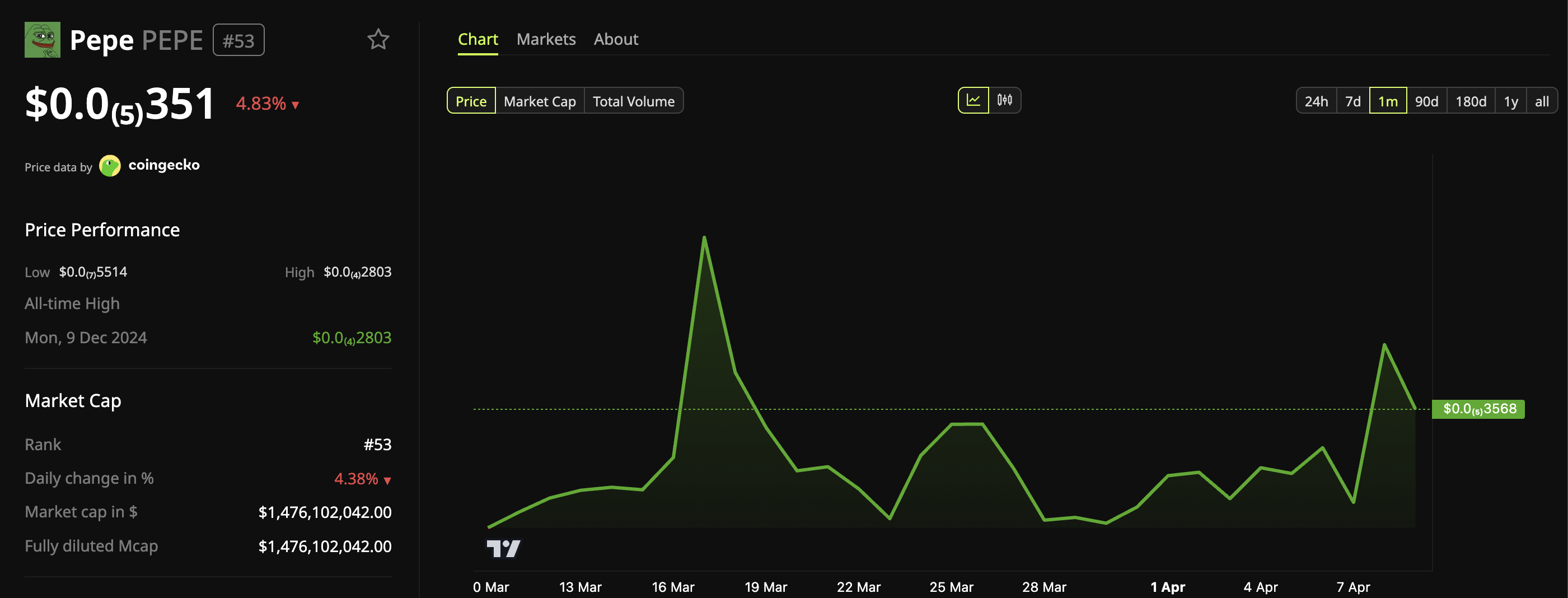
The token fell by more than 4.8% over 24 hours as broader geopolitical uncertainty continued to pressure risk assets.
Subscribe to our YouTube channel to watch leaders and journalists provide expert insights
The post Canary Capital Pushes Crypto ETF Frontier Further With PEPE Filing appeared first on BeInCrypto.


Bitcoin’s push toward $73,000 has lost traction, leaving the market exposed to renewed downside risks as macro uncertainty returned.
Summary
- Bitcoin rally to $72,698 stalled at resistance, triggering over $150M in long liquidations.
- Ceasefire tensions resurfaced after officials called the deal a “fragile truce” and reports pointed to violations.
The flagship cryptocurrency climbed to a weekly high of $72,698 on Tuesday, gaining nearly 6% in under four hours as global markets responded to news of a two-week ceasefire agreement between the United States and Iran.
Bitcoin rose as risk sentiment improved, as expectations that the Strait of Hormuz could reopen helped ease supply concerns.
However, the short period of euphoria faded quickly near the $72,000 level. A wave of liquidations hit derivatives markets at that point. More than $150 million in long positions were wiped out, confirming that bullish conviction remains weak at higher levels.
Price action also continued to track movements in traditional markets, with Bitcoin showing a tight correlation to S&P 500 futures during the rally. The link points to a market still heavily influenced by macro headlines rather than internal crypto-specific drivers.
Now, tensions surrounding the ceasefire have since raised fresh concerns. US Vice President JD Vance described the agreement as a “fragile truce,” while developments on the ground painted a less stable picture.
Reports from the Levant indicated repeated violations, with Israel launching “Operation Eternal Darkness” targeting underground infrastructure tied to Hezbollah in Lebanon.
Israeli officials maintained that their operations fall outside the scope of the Iran ceasefire, citing strategic independence.
Further strain came after Iran’s parliamentary speaker accused Washington of violating “the spirit of the roadmap,” warning that Tehran could resume strikes if attacks on its allies continue.
Any breakdown in the agreement risks reigniting conflict, a scenario that could weigh heavily on risk assets, including cryptocurrencies.
Market positioning remains sensitive to these developments. Bitcoin has struggled to secure a firm hold above $70,000 over the past week, and a sustained move below that level could open the door for a retest of the $64,000 support zone.
At last check, Bitcoin was trading just above $71,000, down less than 1% over the past 24 hours, as traders weighed the combined impact of geopolitical instability and shifting policy expectations.
Attention has also turned to monetary policy signals. Minutes from the Federal Reserve’s March 17–18 meeting showed that officials voted 11–1 to keep rates unchanged at 3.5% to 3.75%, while leaving the door open for potential cuts later this year.
The details of the discussion, however, pointed to caution. Policymakers signaled that any move toward easing would depend on inflation staying contained, particularly as energy prices remain a concern. Some members indicated that a tighter policy could still be required if price pressures persist.
Interest rate expectations continue to play a key role in crypto market sentiment. While lower rates tend to support risk assets, uncertainty around the timing of cuts can dampen demand and increase volatility.
Despite all the negative geopolitical headwinds, Bitcoin price could find some support and potentially decouple from traditional risk-off sentiment if reports of Iran circumventing traditional financial sanctions by using Bitcoin to facilitate trade at the Strait of Hormuz are confirmed.
On April 8, several regional maritime intelligence outlets reported that the Iranian Revolutionary Guard Corps (IRGC) was charging transit fees for commercial vessels with the option for direct payment in Bitcoin. If this is confirmed, it could help keep momentum afloat by providing a fundamental floor of demand in the short-term.

Polygon Labs is reportedly in early-stage fundraising discussions to back a new stablecoin payments business, aiming to raise as much as $100 million.
The firm is looking to sell equity shares worth between $50 million and $100 million in the new stablecoin unit.
Follow us on X to get the latest news as it happens
The fundraising push comes as broader crypto markets remain under pressure. The new venture might be a strategic move for the firm “to diversify out of a market that has stalled,” The Information noted.
In January, Polygon signed definitive agreements to acquire payments firm Coinme and wallet infrastructure provider Sequence.
“Together with Polygon’s blockchain rails, these acquisitions complete the core infrastructure required to offer regulated stablecoin payments in the U.S. and beyond, forming the foundation for Open Money Stack,” the announcement read.
The timing of Polygon’s pivot aligns with strong growth across the stablecoin sector. In 2025, stablecoins processed $28 trillion in real economic volume, according to Chainalysis.
BeInCrypto also reported that stablecoin monthly transaction volume then reached $7.2 trillion in February 2026, overtaking the Automated Clearing House (ACH) network’s $6.8 trillion for the first time.
Industry projections reinforce the long-term thesis. At XRP Tokyo 2026, Ripple shared a flyer projecting $33 trillion in onchain stablecoin volume for 2026. Meanwhile, Chainalysis estimates that adjusted stablecoin volume could reach $719 trillion by 2035 through organic growth alone.
Subscribe to our YouTube channel to watch leaders and journalists provide expert insights
The post Polygon Reportedly Targets $100 Million for Stablecoin Venture as Crypto Market Stalls appeared first on BeInCrypto.
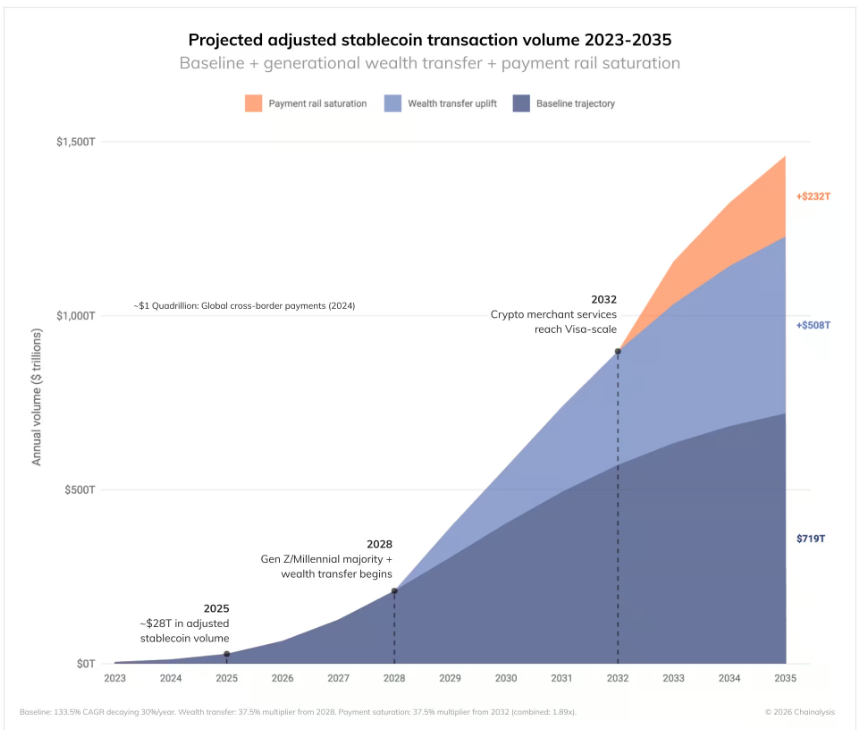
Blockchain analysis firm Chainalysis estimates that stablecoin volumes could hit a lofty $1.5 quadrillion within the next decade, beating the total volume of global cross-border payments today.
In a report on Wednesday, the Chainalysis team said that adjusted stablecoin volume could hit $719 trillion by 2035 just through organic growth, up from $28 trillion in 2025.
However, this figure could double by 2035 if two major catalysts come into play, said Chainalysis — the baby boomer generation passing $100 trillion in wealth to a crypto-loving generation and stablecoins knocking over traditional payment rails to become the default payment infrastructure.
“Factor in these catalysts, and our projections change: 2035 volumes could approach $1.5 quadrillion, a figure that would surpass the estimated $1 quadrillion in global cross-border payments today,” Chainalysis said.

The figure, should it come to pass, suggests that the stablecoin industry is extremely undervalued. It could be seen as a very generous estimate, as it would eclipse the annual volume of cross-border remittances, which was estimated at $865 billion in 2023 and $905 billion in 2024.
The number is even higher than World Population Review’s latest estimate of the total value of all global assets across banks, property and cash, which is around $662 trillion.
Even the $719 trillion would mean that stablecoins would need to continue their compound annual growth rate of 133% for the next decade.
$1.5 quadrillion stablecoin volume possible: Analyst
Rachael Lucas, a crypto analyst at Australian crypto exchange BTC Markets, told Cointelegraph $1.5 quadrillion is “a ceiling-case scenario, not a base case,” but said it could be possible, because growth is accelerating.
She also noted that volume measures how many times money moves, not how much exists; the same dollar can settle dozens of transactions a day.
Related: Stablecoin yields won’t harm banks, White House economists say
“The infrastructure is being built right now. Stripe acquiring Bridge, Mastercard partnering with BVNK, these are operational bets, not experiments. Add regulatory clarity from the GENIUS Act, and institutional participation can scale in ways that simply were not possible before,” she added.
“The generational wealth transfer will do the rest. Millennials and Gen Z are the first generations for whom on-chain is a default, not a deliberate choice.”
A January OKX survey found that among younger Americans, 40% of Gen Z and 36% of Millennials plan to increase their crypto activity this year, compared with 11% of Boomers.
Meanwhile, stablecoins are frequently cited as a major driver of crypto adoption. A September report by EY-Parthenon, the strategy consulting division of Ernst & Young, found that 13% of financial institutions and corporates globally use stablecoins and 54% of non-users expect to adopt them within 12 months.
Magazine: No more 85% Bitcoin collapses, Taiwan needs BTC war reserve: Hodler’s Digest
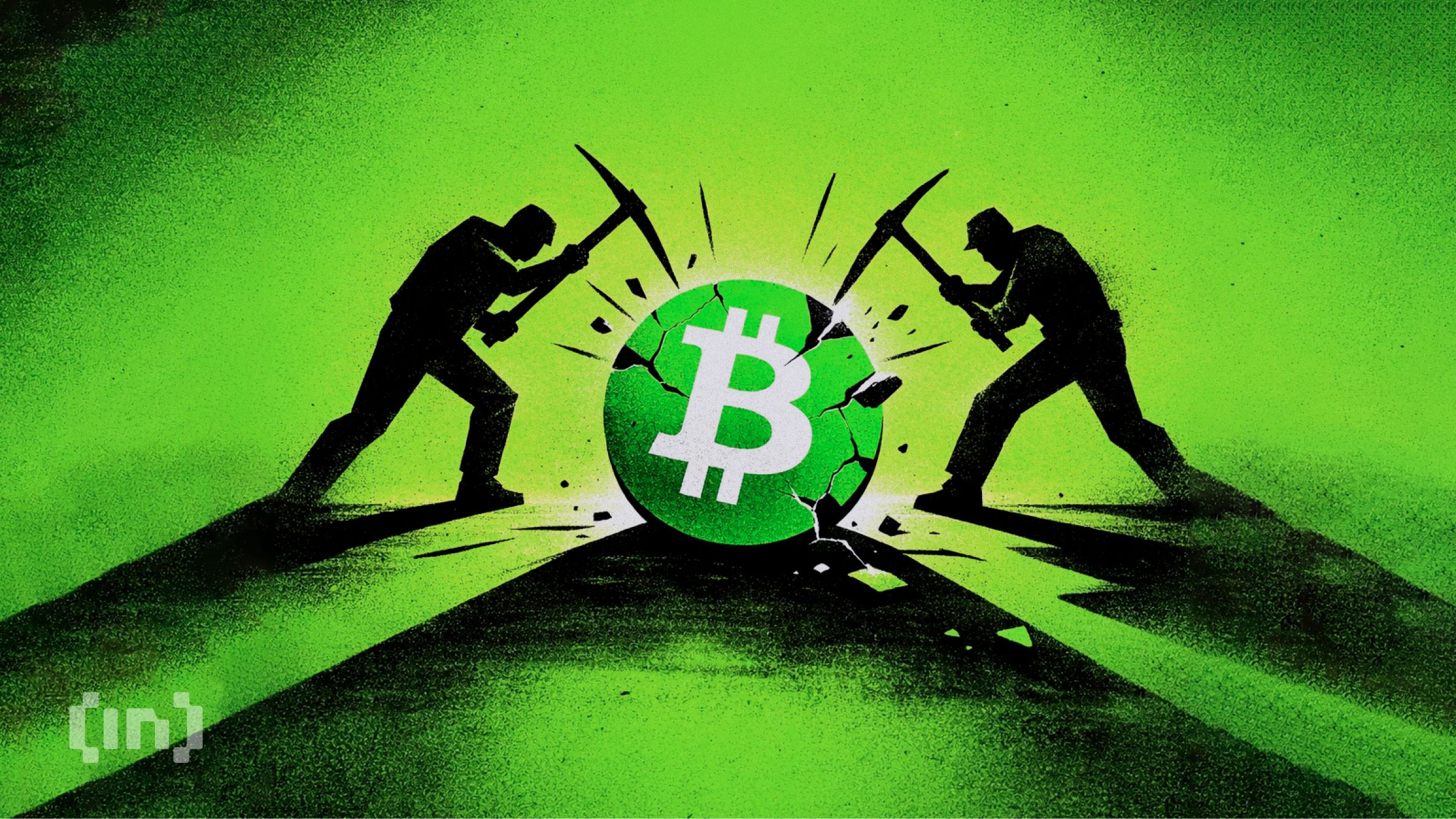
Bitcoin (BTC) miner Cango announced that it sold 2,000 BTC in March 2026. The firm used the proceeds to retire outstanding Bitcoin-backed loans.
The sale left the miner with a treasury of 1,025.69 BTC and $30.6 million in remaining loan obligations.
Cango Sheds 2,000 BTC and Debt in One Move
The firm said that this deleveraging, combined with recent capital infusions, including a $65 million equity investment from members of the company’s leadership team and a $10 million convertible bond from DL Holdings, has significantly strengthened its balance sheet.
“Collectively, these measures provide a solid financial foundation to navigate market volatility and support the Company’s planned transition into energy and AI infrastructure,” the press release read.
On the cost side, the company brought its average cash cost per coin down to $68,215 in March, a 19.3% drop from Q4 2025’s $84,552 in Q4 2025. It also decommissioned inefficient miners and shifted to hashrate leasing in regions with high hosting fees.
Subscribe to our YouTube channel to watch leaders and journalists provide expert insights
An Industry-Wide Bitcoin Selloff
Cango is not the only miner offloading BTC. Riot Platforms sold 3,778 BTC in Q1 2026 for roughly $289.5 million, more than 2.5 times its quarterly production. The company ended the quarter holding 15,680 BTC, down 18% from its 2025 close.
MARA went further, selling 15,133 BTC for approximately $1.1 billion in March. The firm directed the proceeds to retire over $1 billion in face value convertible debt.
On-chain tracker Lookonchain flagged additional transfers by both miners in early April, suggesting the selling has continued into Q2.
“Bitcoin miner MARA transferred out 250 BTC ($17.37 million) again,” the firm posted on April 7.
Follow us on X to get the latest news as it happens
Miners are selling into an environment where AI is increasingly competing for data center rack space. This shift is likely pushing Bitcoin mining towards more intermittent and cheaper power sources over the long term.
CoinShares estimates listed miners could derive as much as 70% of their revenue from AI by the end of 2026, up from roughly 30% at present.
The post Cango Sells 2,000 BTC to Retire Loans as Bitcoin Miners Ramp Up Liquidations appeared first on BeInCrypto.


The U.S. Treasury Department has laid out a fresh set of expectations for stablecoin issuers, focusing on how firms must address illicit finance risks under the GENIUS Act.
Summary
- Treasury has proposed AML and sanctions rules that will bring stablecoin issuers under Bank Secrecy Act compliance.
- Issuers are required to build systems to block, freeze, or reject transactions and have appointed a US based compliance lead.
In a notice issued Wednesday, the department confirmed that its Financial Crimes Enforcement Network and Office of Foreign Assets Control had jointly proposed rules aimed at translating the law into operational requirements.
The proposal stems from provisions within the GENIUS Act, signed into law in July 2025, as regulators continue working to translate the legislation into enforceable rules.
According to the proposal, payment stablecoin issuers will need to put in place anti money laundering and counter terrorism financing programs, alongside sanctions compliance frameworks. The rules also require firms to build systems capable of identifying and acting on suspicious activity, including the ability to “block, freeze, and reject” transactions when necessary.
Authorities are effectively placing stablecoin issuers within the same regulatory perimeter as traditional financial institutions. By bringing them under the Bank Secrecy Act, the framework requires issuers to support law enforcement efforts tied to financial crime detection and prevention.
Further, each issuer must appoint a designated individual responsible for compliance systems, with eligibility limited to U.S.-based personnel who have no record of financial misconduct such as fraud, cybercrime, or insider trading.
“President Trump is strengthening American leadership in digital financial technology,” Treasury Secretary Scott Bessent said, adding that the proposal would “protect the U.S. financial system from national security threats without hindering American companies’ ability to forge ahead in the payment stablecoin ecosystem.”
FinCEN has opened a 60-day public comment period for feedback on the proposed rules.
GENIUS Act enforcement begins to take shape
Work on implementing the GENIUS Act has been unfolding across multiple agencies. FinCEN and OFAC are the latest agencies who have outlined their approach, following recent proposals from the Federal Deposit Insurance Corporation and earlier guidance issued by the Office of the Comptroller of the Currency.
The FDIC clarified that stablecoin holders themselves would not receive deposit insurance under the framework, though reserves backing issued tokens would be protected.
Parallel discussions have also been underway on how oversight responsibilities will be shared between federal and state authorities, particularly for smaller issuers that may qualify for state level supervision if they meet required standards.
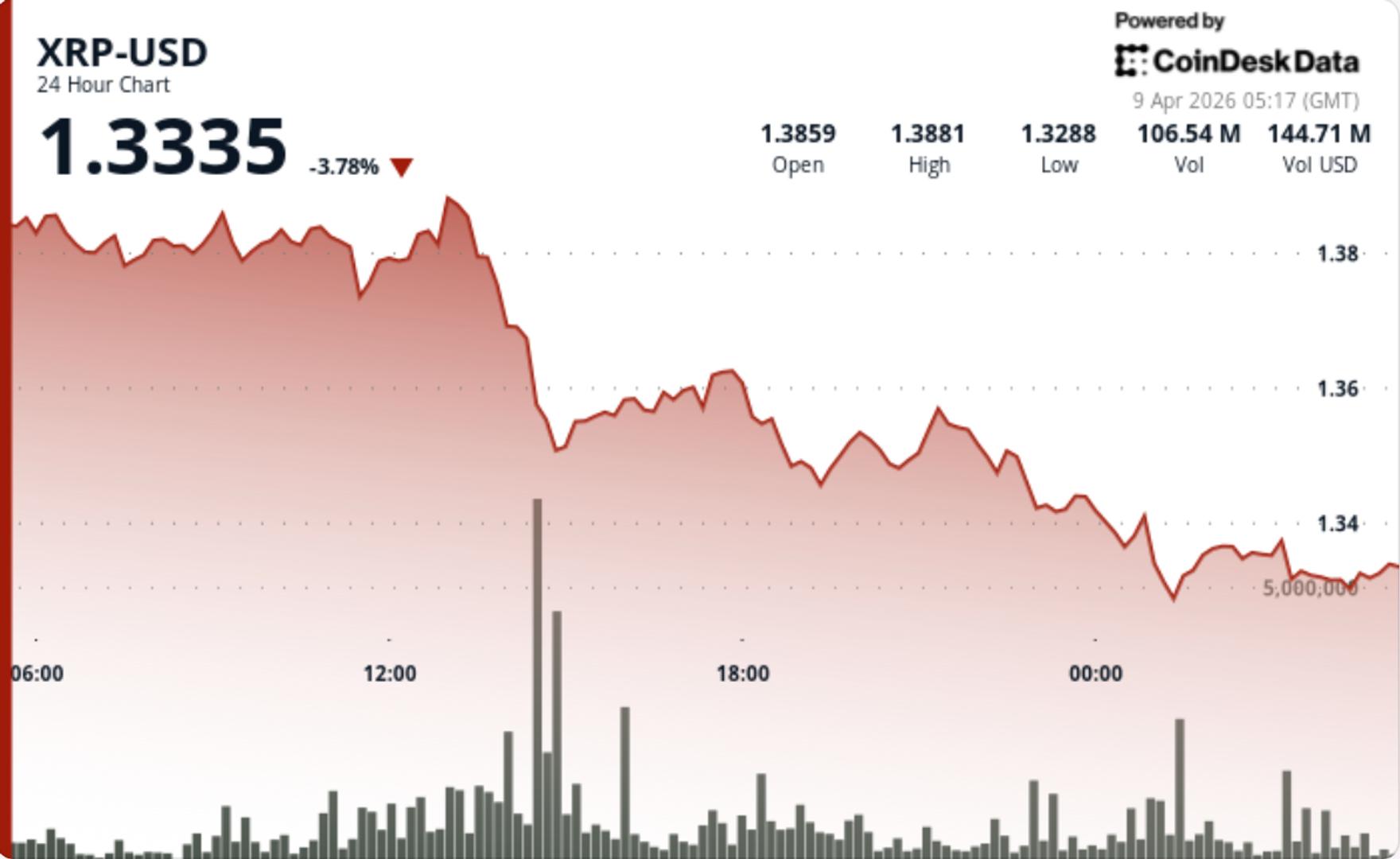
XRP dropped back toward $1.33 after failing to hold recent gains, with selling pressure still outweighing buying even as inflows turned slightly positive. The move suggests rallies are being used to exit positions, not build new ones, keeping the broader structure weak.
News Background
Ripple-linked products saw $3.32M in ETF inflows, marking a shift from March outflows but not enough to stabilize price.
At the same time, exchange liquidity has thinned sharply, increasing the risk of sharper moves once key levels break.
Price Action Summary
XRP declined from $1.37 to $1.33, with the breakdown accelerating after rejection near $1.38.
High-volume selling confirmed the move, with price failing to hold above $1.35 and forming lower highs into the close.
Late-session volatility pushed XRP to $1.31 before a minor stabilization, but recovery attempts remained weak.
Technical Analysis
The key signal is rising volume alongside falling price, which points to distribution rather than accumulation.
Repeated rejection near $1.37-$1.38 reinforces that supply remains heavy at those levels.
XRP also underperformed the broader market, showing capital is rotating elsewhere rather than into the token.
With price still below major moving averages and within a descending structure, the broader trend remains intact.
What traders should watch
$1.33 is immediate support, but the real level is $1.28 — a break there likely accelerates downside.
On the upside, XRP needs to reclaim $1.35 and then $1.38 to shift short-term momentum.
Until that happens, the setup remains one of weak bounces within a broader downtrend.


Summary
- OnchainLens flagged trader “Techno Revenant” unstaking about 2.4 million HYPE worth roughly $93.7 million after a six-month lock.
- The same address reportedly turned a $15 million seed bet on Trump-linked World Liberty Financial into about $250 million, or 1% of WLFI supply.
- No clear on-chain signal yet shows whether the HYPE will be sold, restaked, or used as collateral, leaving traders to front-run potential supply overhang.
A whale wallet tied to pseudonymous trader “Techno Revenant” has just unstaked roughly 2.4 million HYPE tokens after a six‑month lock-up, freeing an estimated $93.7 million worth of supply with no immediate indication of whether the position will be dumped, restaked, or redeployed into new trades, according to on-chain monitoring outlet OnchainLens. KuCoin’s community desk previously highlighted a similar move when “techno revenant is unstaking 2.42m $HYPE ($90.3m usd),” underscoring how quickly large unlocks around the $90–$120 million range can spook liquidity and order books. Tools like OnchainLens and Lookonchain have tagged multiple HYPE wallets to the trader, making his flows a de facto sentiment proxy for the broader market.
The same trader has a track record of outsized early-stage bets, most notably on the Trump-linked DeFi project World Liberty Financial (WLFI). “According to blockchain records, the trader allocated $15 million to WLFI during its token sale last year, acquiring 1% of the overall supply,” reported a September 2025 feature on the trade, which added that the position was worth around $250 million at launch. Research firm Arkham later labeled the top WLFI individual holder address moonmanifest.eth as belonging to Techno Revenant, noting that it had “invested about 15 million dollars in the first public round… which anchors a notable cost basis for potential inventory management.”
PANews, citing Lookonchain data, reported that a whale suspected to be Techno Revenant previously withdrew 2.39 million HYPE “valued at approximately $122 million,” accumulated nine months earlier at roughly $12 per token, leaving “unrealized gains exceeding $90 million.” That earlier withdrawal was framed as a classic supply-overhang event: “A whale (likely @Techno_Revenant) withdrew all 2.39M $HYPE($122M) 4 hours ago and could be selling for profit at any time,” one Binance Square alert warned.
In a previous crypto.news story on whale-driven volatility, analysts pointed out how concentrated positions can flip from silent support to sharp downside catalysts once unlocks hit and cost bases are deep in profit. Another crypto.news story on World Liberty Financial detailed how Trump’s political brand supercharged WLFI demand and liquidity, helping early whales like Techno Revenant exit with triple‑digit‑million windfalls. A third story on on-chain surveillance tools highlighted how feeds from platforms such as Arkham and Lookonchain have become must-watch for traders trying to front-run or fade the next whale move in thinly supplied tokens like HYPE and WLFI.
Iran to Impose Bitcoin Toll of Up to $2M on Tankers Crossing Strait of Hormuz

JD Vance Uses Painfully Awkward Analogy To Explain Iran Proposal

Live Trading || 08 APR || Vivek Yadav #btc #crypto #gold


-

 NewsBeat6 days ago
Steven Gerrard disagrees with Gary Neville over ‘shock’ Chelsea and Arsenal claim | Football
-

 Business6 days ago
No Jackpot Winner and $194 Million Prize Rolls Over
-

 Fashion6 days ago
Weekend Open Thread: Spanx – Corporette.com
-

 Business5 days ago
Expert Picks for Every Need
-

 Business3 days ago
Three Gulf funds agree to back Paramount’s $81 billion takeover of Warner, WSJ reports
-

 Sports4 days ago
India men’s 4x400m and mixed 4x100m relay teams register big progress | Other Sports News
-

 Tech1 day ago
How Long Can You Drive With Expired Registration? What Florida Law Says
-
Business4 days ago
No Jackpot Winner, Prize to Climb to $231 Million
-

 Fashion3 days ago
Massimo Dutti Offers Inspiration for Your Summer Mood Board
-

 Tech7 days ago
Commonwealth Fusion Systems leans on magnets for near-term revenue
-
Politics6 days ago
Wings Over Scotland | The quality of mercy
-

 Fashion2 days ago
Let’s Discuss: DEI in 2026
-

 Business4 days ago
Akebia Therapeutics, Inc. (AKBA) Discusses Pipeline Progress and Strategic Focus on Kidney Disease Treatments at R&D Day – Slideshow
-

 Fashion6 days ago
Statement Sunglasses: The Accessory Shaping Modern Fashion
-
Sports7 days ago
Justin Jefferson’s Situation Remains Unchanged after JSN’s Deal
-

 Tech7 days ago
Every 3D Printable Film Camera, In One Place
-

 Politics6 days ago
East Jerusalem Palestinian families eviction orders
-

 Tech7 days ago
Larger, More Spacious 2027 Kia Seltos Debuts With New Hybrid Variant
-

 Fashion7 days ago
Thursday’s Workwear Report: Merino Wool Blend Short-Sleeved Sweater
-

 Fashion6 days ago
For Love & Lemons’ Spring 2026 Line is for the Romantics
You must be logged in to post a comment Login