
Crypto World
Why is Crypto Up? Bitcoin Reclaims $71,000 as Market Shrugs Off Middle East Escalation

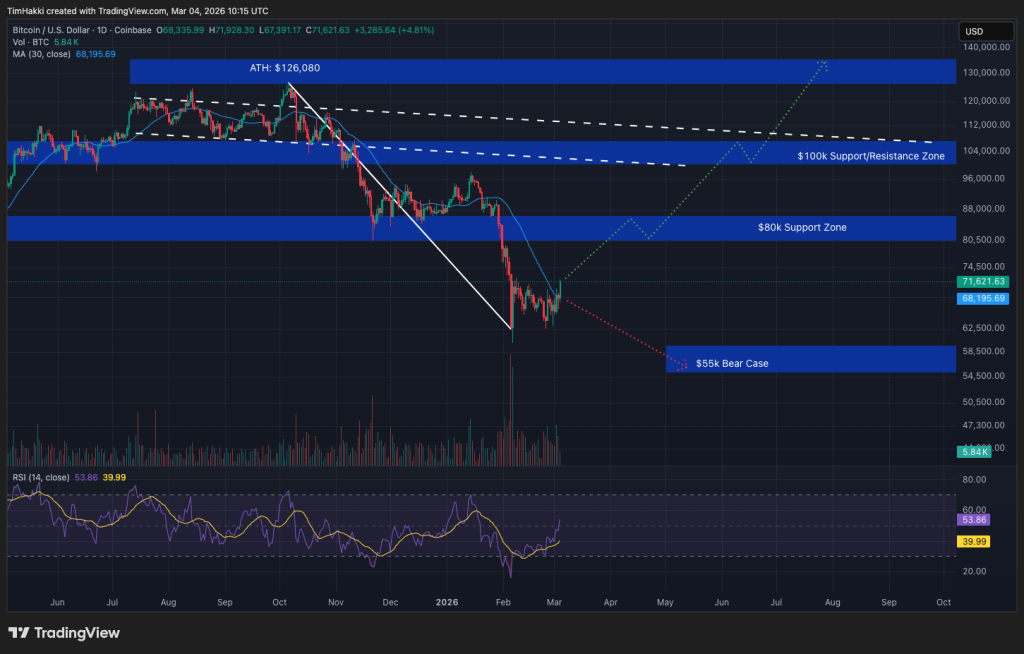
Why is crypto up today? Crypto progenitor Bitcoin (BTC) just staged a massive V-shaped recovery, reclaiming $71,000 hours after global headlines screamed war.
The weekend dip to $63,000, triggered by intensifying conflict involving Israel, the U.S., and Iran, looked like the start of a risk-off collapse.
It wasn’t. Instead, the market absorbed the shock, flushed the leverage, and kept buying. While traditional markets panicked over blocked supply lines in the Strait of Hormuz, crypto participants saw a discount. That matters. It signals a shift in market resilience that bears did not account for.
Discover: Crypto’s best pre-launch token sales.
Bitcoin Price Action: Institutional Resilience Meets Geopolitical Risk
The drop was sharp, but the recovery was cleaner. When news of the escalation broke, leverage got flushed immediately.
On-chain analysis indicates supply exhaustion from sellers at the $63,000 mark. Exchange flows remained neutral to negative, suggesting coins were moving to cold storage rather than flooding order books. Regional data supports this. Iranian exchange outflows suggest local capital flight seeking safety in digital assets, while global desks treated the geopolitical risk as a liquidity event to fill bids.
Tagus Capital noted in a recent newsletter that Bitcoin is exhibiting “defensive characteristics” despite its high-beta reputation. Where gold retreated after a brief spike, Bitcoin stabilized and reversed. The smart money absorbed the selling pressure. No capitulation.
Bitcoin Price Prediction: $71,000 Reclaimed, Is $75,000 Next?
The chart is painting a clear invalidation of the bear case. Reclaiming $71,000 changes the market structure entirely. The $65,700 level has now flipped from previous resistance to a fortress of support. The V-shape recovery confirms demand at lower levels was stronger than the panic.
If Bitcoin holds above $70,500, the path to $74,000 opens up quickly. Clear that cleanly, and $75,000 is the next logical target. However, if the price loses $69,000, we likely re-test the weekend lows.
The current setup aligns with the VanEck macro bottom thesis, suggesting the $60,000-$63,000 zone was the final shakeout before the next leg up. Momentum indicators on the 4-hour chart have reset, giving bulls room to run.
Discover: The hottest new crypto around.
Market Resilience: Why Crypto Outperformed Gold and Oil
Traditional safe havens reacted predictably to the conflict. Oil jumped 7% on supply fears. Gold added 2%. Yet, Bitcoin’s 12% bounce from the $63,000 lows outpaced them both. This decouples Bitcoin from the “risk-on only” narrative.
While altcoins like Cardano and Dogecoin are lagging behind Bitcoin, the broader crypto price prediction landscape is turning bullish.
Billionaire Ray Dalio recently dismissed Bitcoin’s safe-haven status, yet the market ignored him. Bitcoin gained despite the war escalating. Institutional desks used the weekend gap, when traditional equity markets were closed, to bid on the asset that never sleeps.
The post Why is Crypto Up? Bitcoin Reclaims $71,000 as Market Shrugs Off Middle East Escalation appeared first on Cryptonews.

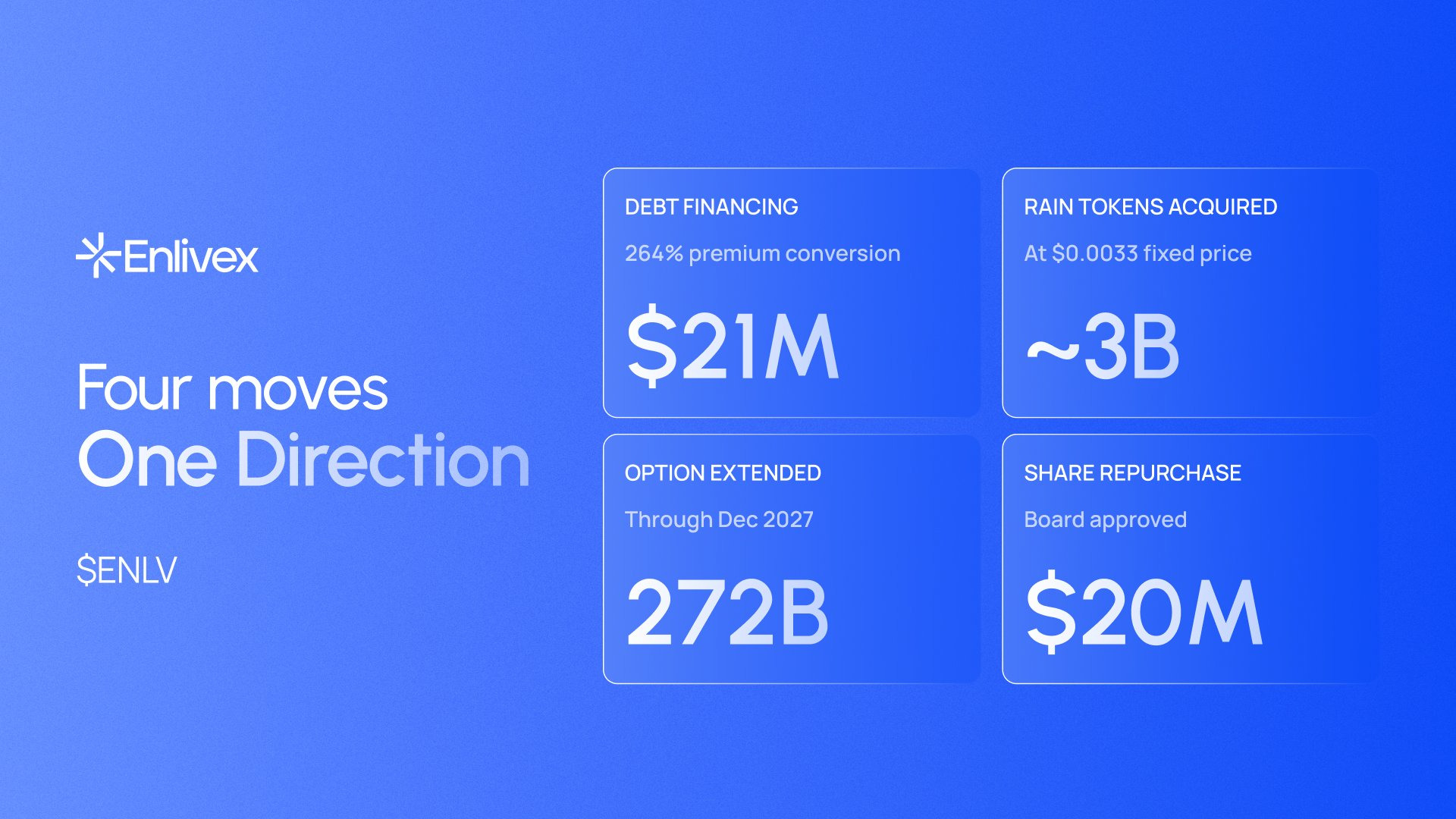
Immunotherapy company Enlivex has raised $21 million via a debt financing agreement to purchase another 3 billion tokens tied to the prediction market platform Rain.
Enlivex said on Tuesday it exercised an option to acquire another 3 billion Rain (RAIN) tokens at a 62% discount for $10 million on Sunday while extending its option to purchase another 272.1 billion RAIN tokens at the same price to December 2027. The debt financing came from The Lind Partners, a New York-based asset manager.
“We are continuing to execute our prediction markets treasury strategy, and we are pleased that Lind provided us with substantial capital, allowing us to continue the execution of our operating plan, as well as to acquire approximately three billion additional RAIN tokens,” said Enlivex executive chair Shai Novik.
Enlivex develops cell therapy solutions for knee osteoarthritis, but is one of several non-crypto companies that have purchased cryptocurrencies in the hopes that it will strengthen their balance sheets and attract a wider base of investors.
The company also said it approved a $20 million share buyback program, aimed at enhancing shareholder value.

The value of Enlivex’s RAIN treasury is directly tied to Rain’s decentralized prediction market platform, which has a built-in 2.5% fee that automatically buys back and burns RAIN tokens in a bid to boost the token’s supply-demand dynamics.
RAIN token, Envilex shares trade mostly flat
The Rain token rose 7% to $0.009 after Enlivex’s announcement before falling slightly to $0.0088, trading flat over the last 24 hours with a 0.3% gain, according to CoinGecko.
Shares in Enlivex (ENVL) also traded mostly flat on Tuesday and closed the trading day down 0.9% to $1.10, but gained 4.5% in after-hours trading, rising to $1.15.
Related: Kalshi, Polymarket eye $20B valuations in potential fundraising: WSJ
Rain runs on the Ethereum Layer-2 Arbitrum network and ranks among the top 10 prediction market platforms by total value locked and fees over the past seven days, DeFiLlama data shows.
Prediction markets have become one of the hottest use cases in crypto, with trading volumes increasing more than 1,200% to $23.3 billion between February 2025 and February 2026.
The market continues to be dominated by Kalshi and Polymarket, however, which account for more than 80% of trading volumes.
Magazine: IronClaw rivals OpenClaw, Olas launches bots for Polymarket — AI Eye
Whales Control More of DeFi Than You Think
(And they’re better at the game.)
DeFi sells a powerful narrative: open, permissionless, and fair. Anyone with a wallet can participate. No gatekeepers. No middlemen. Just code.
But beneath that ideal lies a quieter reality—one where a relatively small group of high-capital players, known as whales, exert outsized influence over markets, governance, and even protocol design.
It’s not exactly a conspiracy. It’s just math… and a lot of money.
Who Are the Whales?
In traditional finance, they’d be hedge funds, market makers, or ultra-high-net-worth individuals. In DeFi, they’re wallet addresses holding massive amounts of capital—often early adopters, crypto-native funds, or insiders who got in before things were cool.
While retail users are debating APRs on Twitter, whales are moving liquidity across protocols like chess pieces—strategically, quietly, and with a level of coordination that’s hard to track in real time.
Liquidity Is Power
In DeFi, liquidity isn’t just participation—it’s control.
Protocols rely on liquidity pools to function. The deeper the pool, the better the trading experience. But here’s the catch: whales provide a significant chunk of that liquidity.
That gives them leverage:
- They can move markets by adding or removing liquidity.
- They can farm incentives efficiently, capturing the majority of rewards.
- They can influence token price stability just by repositioning funds.
When a whale exits a pool, it’s not just a withdrawal—it’s a shockwave.
Governance: One Token, One Vote… Sort Of
On paper, DeFi governance is democratic. In reality, it’s closer to shareholder capitalism.
Voting power is typically proportional to token holdings. So when whales hold a large percentage of governance tokens, they effectively steer protocol decisions.
That includes:
- Emissions schedules
- Treasury allocations
- Protocol upgrades
- Incentive structures
Retail users can vote—but whales decide.
And if you’ve ever wondered why some proposals seem oddly favorable to large holders… well, now you know.
The Strategy Gap
It’s not just about capital. Whales are better at the game.
They have:
- Access to private deal flow (early token allocations, OTC trades)
- Custom tools and bots for execution and monitoring
- Teams and analysts tracking opportunities across chains
- Risk management frameworks that go beyond “ape and pray.”
While retail users chase yield, whales engineer it.
They hedge positions, loop strategies, and optimize gas like it’s a competitive sport. By the time a “hot opportunity” hits Crypto Twitter, whales have already extracted most of the value.
Incentives Are Designed Around Them
Here’s the uncomfortable truth: many DeFi protocols need whales.
High TVL looks good. Deep liquidity attracts users. Large holders stabilize ecosystems—until they don’t.
So protocols often design incentives that naturally favor bigger players:
- Tiered rewards
- Volume-based perks
- Early access programs
- Governance influence
It’s not malicious—it’s survival. But it does tilt the playing field.
So, Where Does That Leave Retail?
At a disadvantage? Yes. Completely powerless? Not quite.
Retail users still have advantages:
- Agility – You can enter and exit positions faster without moving markets.
- Narrative awareness – You’re often closer to emerging trends and communities.
- Lower expectations – You don’t need to deploy millions to win.
The key is understanding the game you’re in.
Stop assuming DeFi is a level playing field. It isn’t. But that doesn’t mean you can’t play smart.
Playing Smarter in a Whale’s Ocean
If whales dominate through capital and strategy, retail wins through awareness and timing.
A few mindset shifts:
- Follow liquidity, not hype
- Watch wallet movements, not influencer threads
- Prioritize sustainability over short-term APY
- Assume you’re late—and act accordingly
And most importantly: don’t confuse accessibility with equality.
Final Reflections
DeFi didn’t eliminate power dynamics—it just made them more transparent (if you know where to look).
Whales aren’t villains. They’re just better-equipped players operating in a system that rewards scale, speed, and strategy.
The real edge isn’t pretending they don’t exist.
It’s learning how they move—and positioning yourself before the splash hits.
REQUEST AN ARTICLE


Prediction markets are exciting, but they’re not reliable wealth builders for retail users.
Research by Citizens shows that retail prediction market users are losing more money than legal sports bettors, with the sharpest traders and market makers capturing returns on the other side of their flow which. The research note also reveals the platforms are drawing a younger demographic than traditional sportsbooks.
The median return for a prediction market user was -8% from July 2025 through mid-March, compared with -5% for sports book users over the same period, Citizens JMP Securities analyst Jordan Bender wrote, citing transaction data from analytics company Juice Reel.
Individuals trading more than $500,000 on prediction markets generated a median ROI of +2.6%, consistent with sharp-bettor benchmarks validated by professional players. Every cohort below that level was negative, sliding to -26.8% for users trading less than $100.
No cohort within legal sports betting was profitable either, but the decay is less severe: the $500,000-plus sports betting cohort posted -0.6%, and the smallest accounts came in at -29.3%.
One of the major differences between the two platforms is who is on the other side of the trade.
Prediction markets do not limit or ban profitable users the way regulated sportsbooks do, concentrating informed flow on the platforms. That flips the traditional model. In sportsbooks, the house manages risk and filters out winning players. In prediction markets, retail traders are directly exposed to professionals, market makers, and high-volume participants who consistently take the other side of less informed flow.
Two professional bettors on a Citizens JMP call last week said prediction markets offer a more attractive path to positive returns precisely because retail users provide the liquidity, the note reads.
Are prediction markets a threat to online gambling?
Gaming CEOs have dismissed the threat of prediction markets, according to the Citizens JMP report, which compiled executive commentary from 4Q25 earnings calls.
DraftKings’ Jason Robins said prediction markets are not materially incremental to existing customers. Flutter’s Peter Jackson said the company found no evidence of material cannibalization. BetMGM’s Adam Greenblat estimated a low-to-mid-single-digit percentage impact on betting revenue. Citizens JMP’s own estimate is around 5%.
The bigger issue may not be cannibalization but acquisition. About 24% of Kalshi users are under 25, with a median age of 31, compared with just 7% for DraftKings and FanDuel, where the median age is closer to 35, according to Sensor Tower data cited in the report. Roughly 90% of DraftKings revenue comes from users over 30, the report said.
FanDuel and DraftKings downloads fell 18% and 13% year-over-year from September 2025 through February 2026, per Sensor Tower data cited by Citizens JMP. Over the same stretch, Kalshi logged 6.3 million downloads.
Prediction markets may not be pulling existing sportsbook users away. They may be intercepting the next generation before they ever download DraftKings.

Whales Control More of DeFi Than You Think
(And they’re better at the game.)
DeFi sells a powerful narrative: open, permissionless, and fair. Anyone with a wallet can participate. No gatekeepers. No middlemen. Just code.
But beneath that ideal lies a quieter reality—one where a relatively small group of high-capital players, known as whales, exert outsized influence over markets, governance, and even protocol design.
It’s not exactly a conspiracy. It’s just math… and a lot of money.
Who Are the Whales?
In traditional finance, they’d be hedge funds, market makers, or ultra-high-net-worth individuals. In DeFi, they’re wallet addresses holding massive amounts of capital—often early adopters, crypto-native funds, or insiders who got in before things were cool.
While retail users are debating APRs on Twitter, whales are moving liquidity across protocols like chess pieces—strategically, quietly, and with a level of coordination that’s hard to track in real time.
Liquidity Is Power
In DeFi, liquidity isn’t just participation—it’s control.
Protocols rely on liquidity pools to function. The deeper the pool, the better the trading experience. But here’s the catch: whales provide a significant chunk of that liquidity.
That gives them leverage:
- They can move markets by adding or removing liquidity.
- They can farm incentives efficiently, capturing the majority of rewards.
- They can influence token price stability just by repositioning funds.
When a whale exits a pool, it’s not just a withdrawal—it’s a shockwave.
Governance: One Token, One Vote… Sort Of
On paper, DeFi governance is democratic. In reality, it’s closer to shareholder capitalism.
Voting power is typically proportional to token holdings. So when whales hold a large percentage of governance tokens, they effectively steer protocol decisions.
That includes:
- Emissions schedules
- Treasury allocations
- Protocol upgrades
- Incentive structures
Retail users can vote—but whales decide.
And if you’ve ever wondered why some proposals seem oddly favorable to large holders… well, now you know.
The Strategy Gap
It’s not just about capital. Whales are better at the game.
They have:
- Access to private deal flow (early token allocations, OTC trades)
- Custom tools and bots for execution and monitoring
- Teams and analysts tracking opportunities across chains
- Risk management frameworks that go beyond “ape and pray.”
While retail users chase yield, whales engineer it.
They hedge positions, loop strategies, and optimize gas like it’s a competitive sport. By the time a “hot opportunity” hits Crypto Twitter, whales have already extracted most of the value.
Incentives Are Designed Around Them
Here’s the uncomfortable truth: many DeFi protocols need whales.
High TVL looks good. Deep liquidity attracts users. Large holders stabilize ecosystems—until they don’t.
So protocols often design incentives that naturally favor bigger players:
- Tiered rewards
- Volume-based perks
- Early access programs
- Governance influence
It’s not malicious—it’s survival. But it does tilt the playing field.
So, Where Does That Leave Retail?
At a disadvantage? Yes. Completely powerless? Not quite.
Retail users still have advantages:
- Agility – You can enter and exit positions faster without moving markets.
- Narrative awareness – You’re often closer to emerging trends and communities.
- Lower expectations – You don’t need to deploy millions to win.
The key is understanding the game you’re in.
Stop assuming DeFi is a level playing field. It isn’t. But that doesn’t mean you can’t play smart.
Playing Smarter in a Whale’s Ocean
If whales dominate through capital and strategy, retail wins through awareness and timing.
A few mindset shifts:
- Follow liquidity, not hype
- Watch wallet movements, not influencer threads
- Prioritize sustainability over short-term APY
- Assume you’re late—and act accordingly
And most importantly: don’t confuse accessibility with equality.
Final Reflections
DeFi didn’t eliminate power dynamics—it just made them more transparent (if you know where to look).
Whales aren’t villains. They’re just better-equipped players operating in a system that rewards scale, speed, and strategy.
The real edge isn’t pretending they don’t exist.
It’s learning how they move—and positioning yourself before the splash hits.
REQUEST AN ARTICLE


Ripple is testing whether its stablecoin can replace the manual payment processes that have slowed cross-border trade for decades, and Singapore’s central bank is giving it a sandbox to prove it.
The company said in a note shared with CoinDesk on Wednesday that it is participating in BLOOM, a Monetary Authority of Singapore initiative designed to extend settlement capabilities for tokenized bank liabilities and regulated stablecoins.
As part of the plan, Ripple is partnering with Unloq, a supply chain finance technology provider, to pilot a system where cross-border trade payments using RLUSD are released automatically when predefined conditions are met, such as shipment verification.
Traditional trade finance is built on layers of manual verification, documentary credits, and correspondent banking relationships that can take days or weeks to settle. The Ripple-Unloq pilot uses Unloq’s SC+ platform to bundle trade obligations, settlement conditions, and financing workflows into a single execution layer, with RLUSD on the XRP Ledger handling the actual money movement.
Singapore has positioned itself as the regulatory testing ground for institutional digital asset use cases, and BLOOM specifically targets the infrastructure layer rather than speculative products.
Getting into the program signals that MAS considers the RLUSD-on-XRPL stack credible enough for regulated experimentation, which matters more for Ripple’s enterprise pipeline than another exchange listing or payments corridor ever could.
This is the third significant Ripple announcement in three weeks.
The company expanded Ripple Payments into a full-stack stablecoin infrastructure platform, secured an Australian financial services license through acquisition, and now has a central bank-backed pilot for trade finance.
Ripple is building the regulatory and institutional credibility layer that turns RLUSD from a stablecoin with modest adoption into the settlement asset for enterprise use cases that require compliance and programmability.
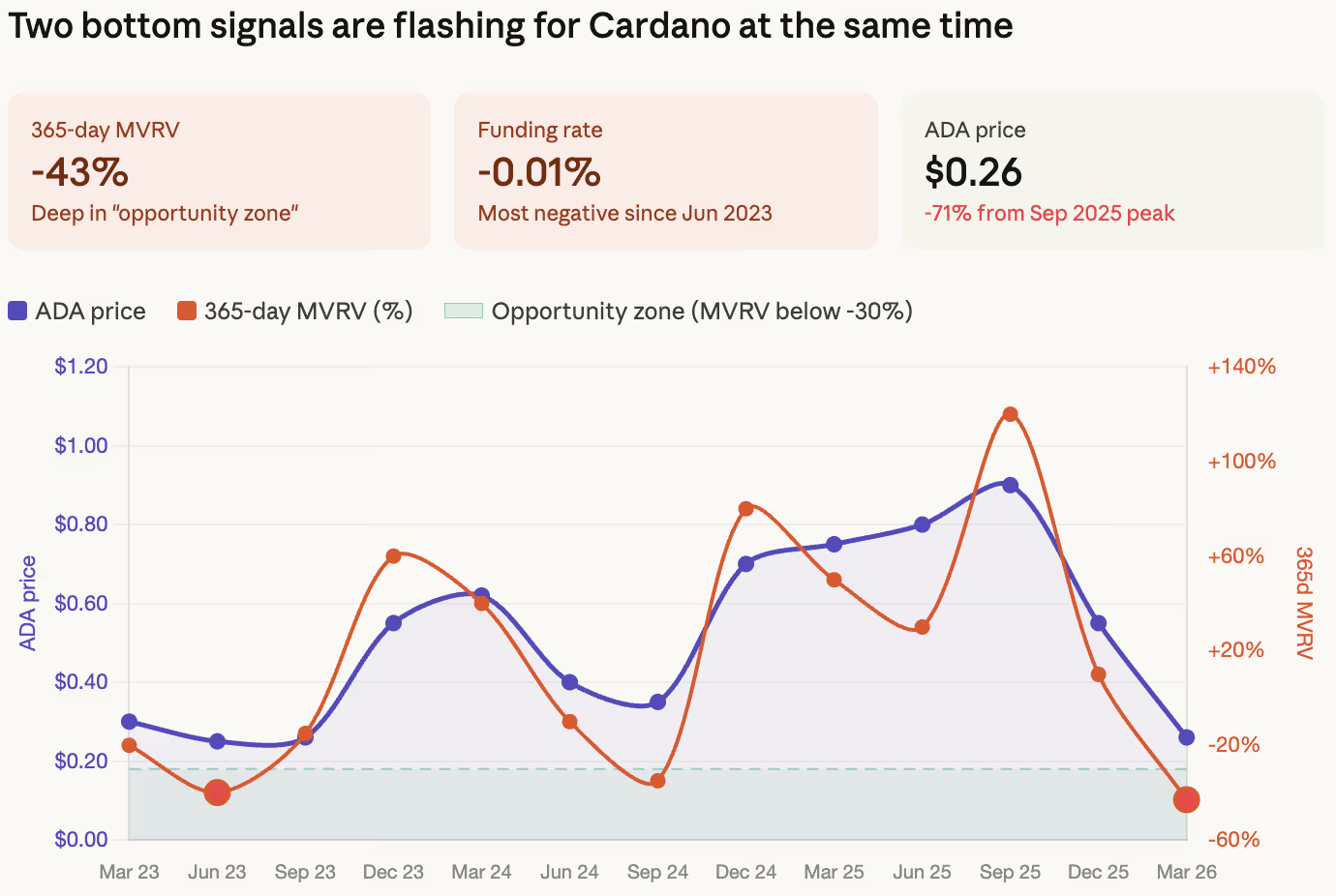
The average Cardano holder who bought in the past year is down 43%. The derivatives market is betting it gets worse. But both of those things happening at once have historically meant the opposite.
Santiment data shows ADA’s 365-day Market Value to Realized Value (MVRV) ratio has fallen to -43%, meaning wallets that have been active on the Cardano network over the past year are sitting on an average loss of 43% on their positions.
The metric is deep in what Santiment labels the “opportunity zone,” a band that previous instances in 2023 and late 2024 preceded recoveries as the MVRV mean-reverts toward zero.

MVRV measures average trading returns across a given timeframe, and it always gravitates back toward zero over time. When it’s extremely negative, the holders most likely to panic-sell have already sold. The remaining supply sits in hands that are either committed to holding or have already accepted the loss. That’s the kind of positioning that reduces further selling pressure and sets up the conditions for a bounce when any catalyst arrives.
At the same time, Binance’s weekly average funding rate for ADA has turned to its most negative reading since June 2023. Funding rates reflect the balance between long and short positioning in perpetual futures. A deeply negative rate means shorts are dominant and paying longs to keep their positions open. In simpler terms, the derivatives market is crowded on the bearish side.
That crowding is what makes it a contrarian signal. When shorts are this concentrated, any positive price movement triggers liquidations that force short sellers to buy back their positions, which pushes the price higher, which triggers more liquidations.
The cascade works in reverse too, but the historical pattern on ADA shows that funding rate extremes of this magnitude have preceded short squeezes more often than they’ve preceded further declines.
The last time both signals aligned this clearly was mid-2023, when ADA was trading around $0.25 before rallying roughly 300% over the following 18 months. That doesn’t mean the same outcome is guaranteed, however, as ADA is down 71% since its September peak, the broader market is dealing with a war, sticky inflation, and no rate cuts in sight, and Cardano’s ecosystem metrics haven’t produced the kind of usage growth that would justify a fundamental repricing.
But bottom signals aren’t about fundamentals. They’re about positioning. And the positioning on Cardano right now, with average holders at -43% returns and shorts at a three-year high, is the kind of setup where the next move catches the majority off guard.
ADA was trading at $0.26 on Tuesday, down roughly 7% on the week.
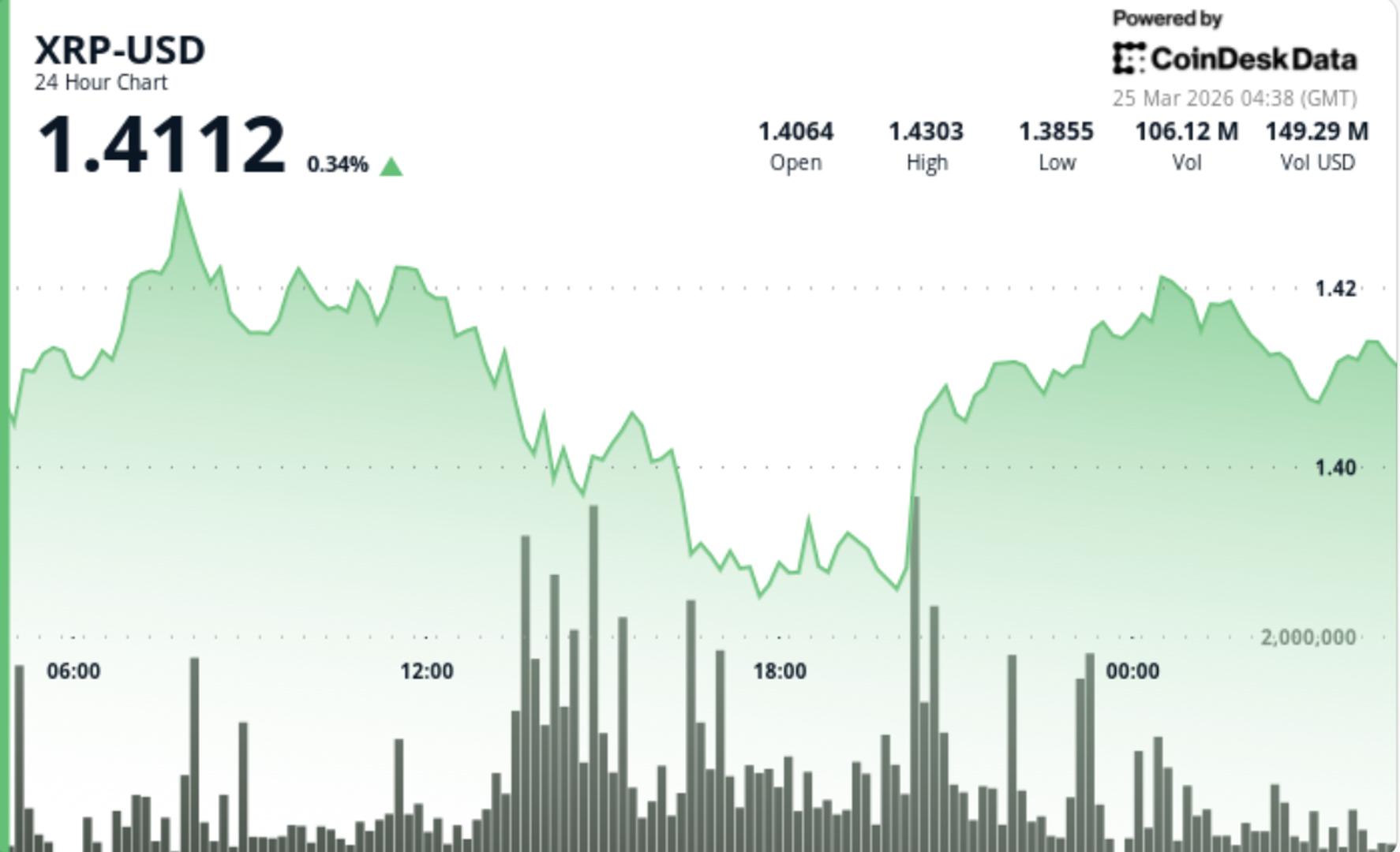
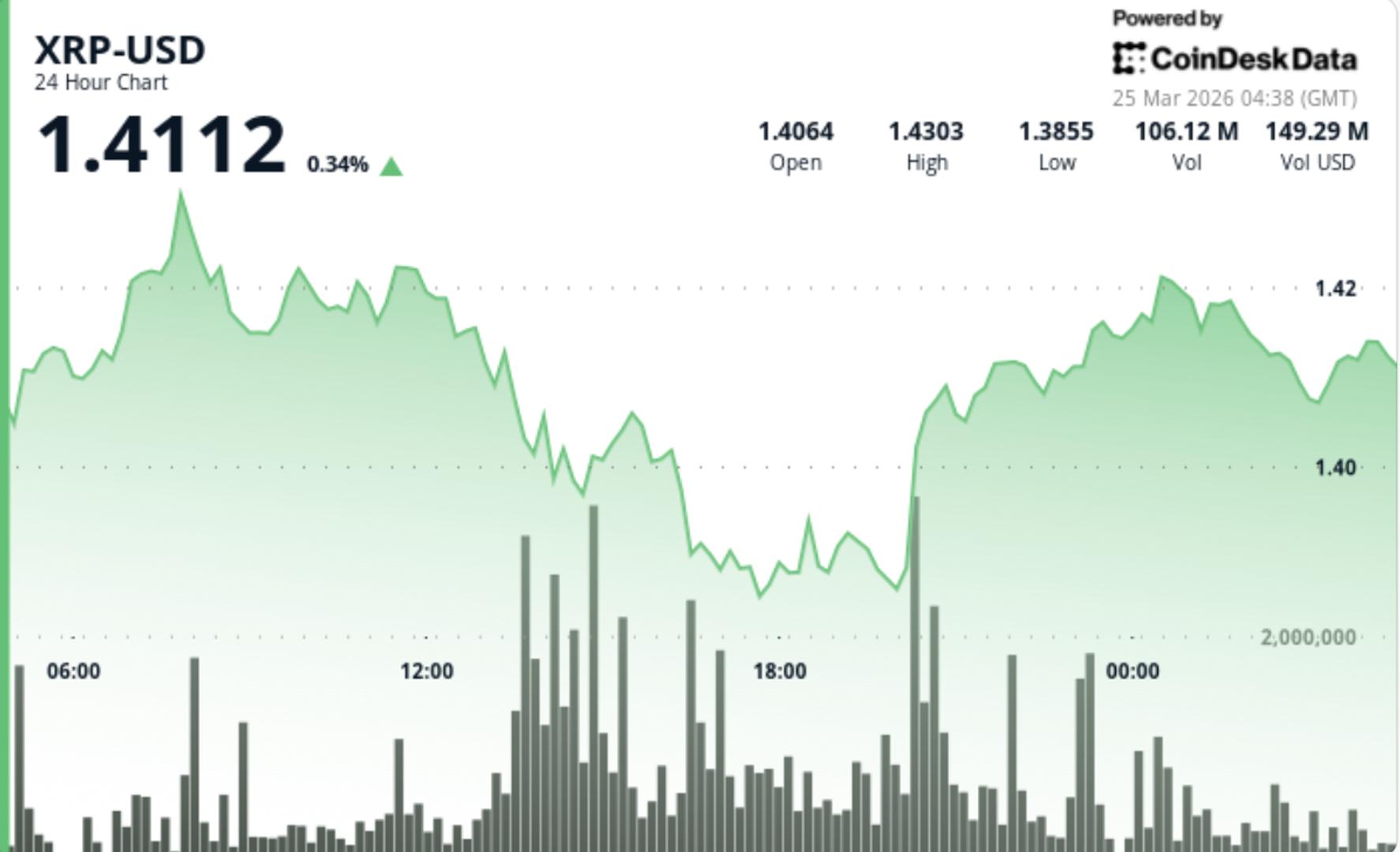
XRP is holding near $1.41 after a steady session, but price is stuck in a tight range, with neither buyers nor sellers taking control. The longer it stays compressed between support and resistance, the more likely a sharper move becomes.
News Background
- XRP traded in line with the broader crypto market, with no major token-specific catalyst driving price action.
- Whale wallets added roughly 40 million XRP over the past week, suggesting accumulation during consolidation.
- Market sentiment remains tied to macro conditions, with crypto reacting cautiously to interest rate expectations.
Price Action Summary
- XRP gained about 0.6%, moving from roughly $1.38 to $1.41
- Price traded within a tight $1.38–$1.43 range
- Repeated rejection near $1.42 capped upside
- Buyers defended dips near $1.38, forming higher lows
Technical Analysis
- XRP is trading in a tightening range, with support near $1.38 and resistance around $1.42.
- Higher lows suggest buyers are slowly stepping in, but lack of strong follow-through keeps momentum muted.
- The structure resembles a compression setup, where price coils before a larger move.
- Volume is slightly elevated but not strong enough yet to confirm a breakout.
What traders say is next?
- Traders are watching a break above $1.42 for a move toward $1.45–$1.50.
- If $1.38 support fails, downside could extend toward $1.30.
- For now, XRP remains range-bound, with the next move likely driven by a break on either side of this tightening range.
Stock and crypto trading platform Robinhood has approved to buy back $1.5 billion worth of its shares.
Robinhood said in a Securities and Exchange Commission filing on Tuesday that the company’s board of directors approved the $1.5 billion share repurchase program, which it will carry out over the next three years.
The program includes $1.1 billion in new incremental capacity, with the remainder rolled over from an older repurchase program.
“Robinhood is a generational company with a massive long-term opportunity,” Robinhood financial chief Shiv Verma said in a statement. “This authorization reflects the confidence of our management team and board in our ability to continue delivering innovative products for customers and creating value for shareholders while returning capital over time.”
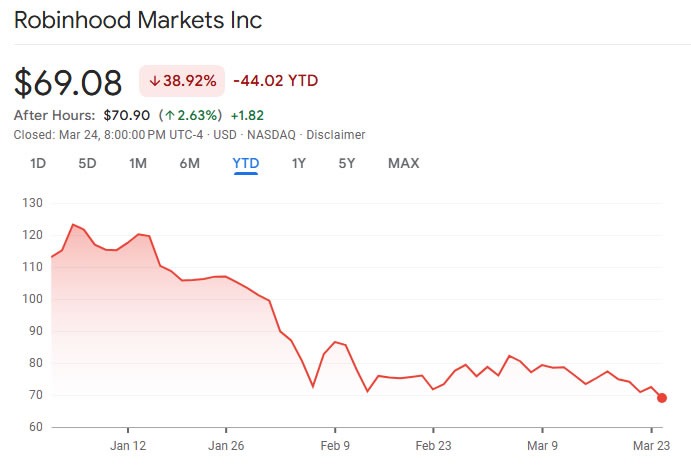
The stock buyback, typically seen as signaling that a company believes its stock is undervalued, comes as shares in Robinhood (HOOD) have struggled so far this year amid a broad downturn in stocks and crypto.
Robinhood also said that its subsidiary, Robinhood Securities, entered a $3.25 billion revolving credit facility with JPMorgan Chase, replacing the prior $2.65 billion facility. It can expand by up to $1.62 billion, bringing the maximum credit to $4.87 billion.
Robinhood stock tanks nearly 5%
Shares in Robinhood ended trading on Tuesday, down 4.7% to $69.08, closing at the lowest level this year. The stock slightly recovered to $70.90 after hours.
Robinhood’s stock is down almost 39% so far this year and has lost 54.7% since its October all-time high of $152.46, as broader macroeconomic concerns and the Iran war impact stocks.

However, Robinhood’s share price over the past 12 months has seen it gain nearly 43% as its expanded into other products such as prediction markets and banking.
Analyst sentiment aggregator TipRanks puts the 12-month average Robinhood stock price forecast at $123.85 and agrees that the stock is a “strong buy” based on 16 Wall Street analysts.
Related: SEC gives go-ahead to Nasdaq for tokenized trading trial
Robinhood Chain to launch this year
Despite its share price woes, Robinhood remains committed to crypto and real-world asset tokenization, launching its own Ethereum layer-2 network to testnet in February.
CEO Vlad Tenev said that the network processed 4 million transactions in its first week of public testnet activity.
Robinhood Chain is designed to support tokenized equities, exchange-traded funds (ETFs) and other traditional financial instruments, and the mainnet launch is planned for later this year.
Magazine: Banks want to run Vietnam’s crypto exchanges, Boyaa’s $70M BTC plan: Asia Express
Tokenized deposits and stablecoins need tokenized central bank money as a public settlement anchor if Europe’s tokenized financial markets are to scale, Piero Cipollone, a member of the European Central Bank’s Executive Board, said on Monday.
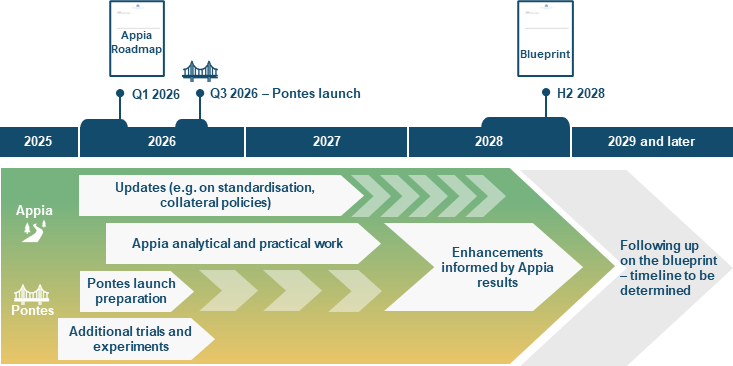
Cipollone pointed to Pontes, the Eurosystem’s distributed ledger technology (DLT) settlement initiative, which is designed to connect market DLT platforms with the Eurosystem’s TARGET Services and provide settlement in central bank money.
“Without tokenised central bank money, a seller of a tokenised security may receive payment in an asset they are not comfortable holding – one exposed to price volatility or credit risk – which limits the market’s ability to scale,” Cipollone said in a speech at the House of the Euro in Brussels on Monday.
The ECB said Pontes is due for an initial launch in the third quarter of 2026, allowing market participants to settle DLT-based transactions in central bank money. The comments build on the ECB’s broader Appia initiative, published on March 11, which is intended to produce a blueprint for a future European tokenized financial ecosystem by 2028.
Related: ECB opens digital euro work on ATMs and payment terminals
Europe’s tokenized markets need legal clarity
Beyond settlement in central bank money, Cipollone said Europe also needs closer public-private cooperation and a legal framework that matches the technology.
One of Appia’s building blocks serves as an interoperability standard for assets, ensuring that tokenized assets can be transferred across different DLT platforms via a compatible data format and smart contract standards.

Cipollone urged market infrastructure operators, banks, custodians and technology providers to explore and submit feedback related to the Appia roadmap, seeking to foster more public-private partnerships.
Related: Sweden’s H100 eyes Europe’s No. 2 Bitcoin treasury with 3,500 BTC deal
Cipollone also said Europe may ultimately need a dedicated legal framework to support the seamless issuance and transfer of tokenized assets across the bloc.
He called the European Commission’s proposal to extend the DLT Pilot Regime an “important development,” but cautioned that the absence of a holistic tokenization framework introduces the risk of “building advanced settlement infrastructure on a patchwork of regulations, leaving us unable to fully reap the benefits.”
The comments come days after stablecoin issuer Circle submitted feedback to the European Commission’s Market Integration Package on March 20, urging lawmakers to expand the existing DLT Pilot Regime and provide e-money token (EMT) cash account services to authorized crypto-asset service providers.
Magazine: How crypto laws changed in 2025 — and how they’ll change in 2026
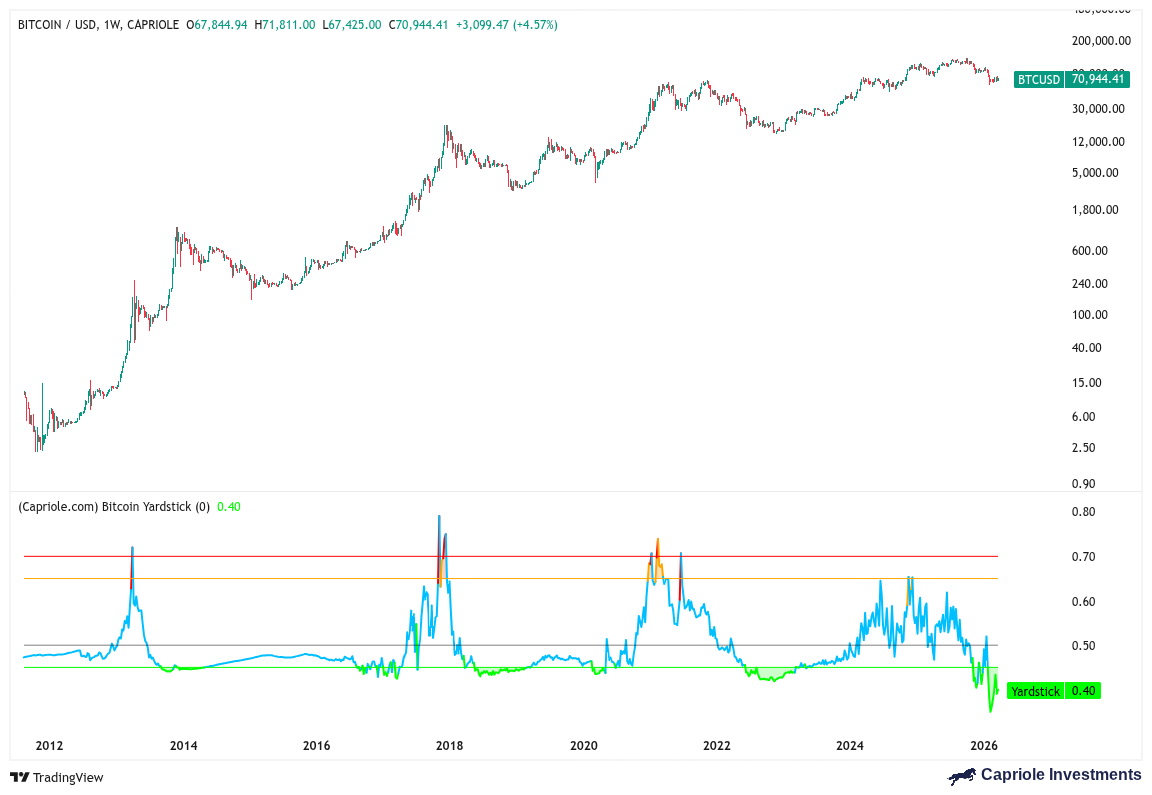
Bitcoin Yardstick data confirmed a new record for BTC price “deep value” in February as miners battled the lowest price levels in 15 months.
Bitcoin (BTC) is “off the chart” in terms of value-for-money as price diverges from hash rate, a market analyst says.
Key points:
-
Bitcoin price action is diverging from hash rate to an extent never seen before.
-
The Bitcoin Yardstick metric shows that price is in its “deep value” range.
-
Hash rate continues to circle its historical highs despite a 40% BTC price drawdown.
Bitcoin Yardstick shows record “deep value”
Updating X followers on his Bitcoin Yardstick metric, Charles Edwards, founder of Bitcoin and digital asset hedge fund Capriole Investments, confirmed that it was in new territory.
The Bitcoin Yardstick divides market cap by hash rate, normalized over a two-year period. The result is an expression of Bitcoin’s “value” at a given price point and hash rate level.
“Similar in concept to a ‘PE Ratio,’ except instead of stock earnings, the Bitcoin Yardstick is taking the ratio of energy work done to secure the Bitcoin network in relation to price,” Edwards explained while introducing the metric in 2022.
“Lower readings = cheaper Bitcoin = better value.”

In February this year, Bitcoin generated its lowest Yardstick numbers on record, going far beyond the lows of the 2022 bear market.
After hitting 15-month lows near $59,000 earlier that month, the Yardstick fell to 0.35 — below the one standard deviation of its mean, the level Edwards describes as a prerequisite for Bitcoin being “cheap.”
The Yardstick currently measures 0.40, still well within “cheap” territory relative to hash rate.
“Bitcoin yardstick is literally off the chart in deep value,” Edwards told X followers this week.

Hash rate weathers 40% price decline
Bitcoin miners have struggled this year as price has fallen, but hash rate remains around the one zettahash per second (ZH/s) level, per data from BitInfoCharts.
Related: Gold slides as traders eye sub-$50K BTC: Five things to know in Bitcoin this week

The result is a lower hash rate decline compared to price, which is currently more than 40% below its all-time highs from October 2025.
Earlier in March, Edwards noted a “measured collapse” in miners’ BTC selling as price recovered from the lows, something that historically has always been “bullish.”
Measured collapse in Bitcoin miner selling after a price drop are ALL BULLISH pic.twitter.com/2OGI65zi8l
— Charles Edwards (@caprioleio) March 13, 2026
Previously, Cointelegraph reported on declining miner influence over price in the era of institutional investment.
This article does not contain investment advice or recommendations. Every investment and trading move involves risk, and readers should conduct their own research when making a decision. While we strive to provide accurate and timely information, Cointelegraph does not guarantee the accuracy, completeness, or reliability of any information in this article. This article may contain forward-looking statements that are subject to risks and uncertainties. Cointelegraph will not be liable for any loss or damage arising from your reliance on this information.

Pfizer: Time To Buy The Turnaround

Cardi B Tackles Hair Care With New Grow-Good Line

If You Earn 100k And Above, Learn This Money Management Secret | Pastor Ibukun Awoshika


-
 Crypto World4 days ago
NIO (NIO) Stock Plunges 6.5% as Shelf Registration Sparks Dilution Worries
-

 Fashion4 days ago
Weekend Open Thread: Adidas – Corporette.com
-

 Politics4 days ago
Jenni Murray, Long-Serving Woman’s Hour Presenter, Dies Aged 75
-

 Crypto World3 days ago
Best Crypto to Buy Now: Strategy Just Spent $1.57 Billion on Bitcoin During Fear While Early Investors Quietly Enter Pepeto for 150x Potential
-

 News Videos7 days ago
RBA board divided on rate cut, unusually buoyant share market | Finance Report | ABC NEWS
-

 Crypto World3 days ago
Bitcoin Price News: Bhutan Sells $72 Million in BTC Under Fiscal Pressure, but the Smart Money Entering Pepeto Sees What the Market Does Not
-

 Politics7 days ago
The House | The new register to protect children from their abusers shows Parliament at its best
-

 Tech5 days ago
inKONBINI Lets You Spend Summer Days Behind the Register
-

 Crypto World7 days ago
Canada’s FINTRAC revokes registrations of 23 crypto MSBs in AML crackdown
-

 Sports2 days ago
Remo Stars and Kano Pillars Strengthen Survival Hopes in NPFL
-
 NewsBeat6 days ago
Residents in North Lanarkshire reminded to register to vote in Scottish Parliament Election
-

 News Videos7 days ago
PARLIAMENT OF MALAWI – PAC MEETING WITH REGISTRAR OF FINANCIAL ON AMARYLLIS HOTEL – INQUIRY LIVE
-

 Politics5 days ago
Gender equality discussions at UN face pushbacks and US resistance
-

 Business3 days ago
No Winner in March 21 Drawing as Prize Rolls to $133 Million for Next
-

 Business6 days ago
Who Was Alex Pretti? 5 Key Facts About the ICU Nurse Killed by Federal Agents in Minneapolis
-

 Sports2 days ago
Gary Kirsten Accuses Pakistan Cricket Board Of ‘Interference’, Mohsin Naqvi Responds
-

 Tech2 days ago
Give Your Phone a Huge (and Free) Upgrade by Switching to Another Keyboard
-

 Tech6 days ago
Inventec’s bizarre VeilBook laptop hides its touchpad under a sliding keyboard just to give cooling fans a little breathing room
-
Sports6 days ago
Vikings Free Agency Enters Phase 2 with Key Questions
-

 Sports5 days ago
2026 Kentucky Derby horses, odds, futures, preview, date: Expert who nailed 12 Derby-Oaks Doubles enters picks
You must be logged in to post a comment Login